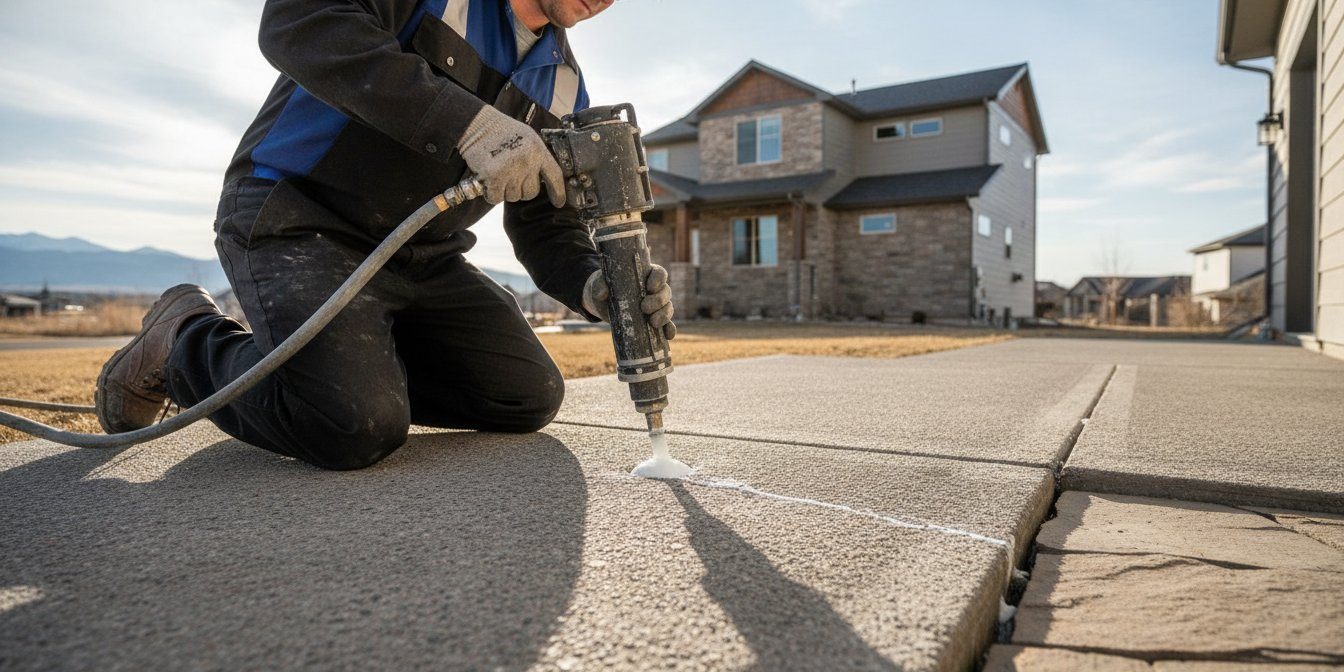
A sinking slab is rarely just a cosmetic nuisance; it is a direct signal that the ground beneath your property has failed to maintain its structural integrity. In the Front Range, where expansive clay soils swell and shrink with the seasons, traditional fixes often fail because they add heavy, unnecessary weight to already unstable earth. Polyurethane concrete lifting represents a shift toward geotechnical precision, using high-density foam to not only level the surface but to physically reinforce the soil structure itself.
You likely recognize the stress of watching a sidewalk become a tripping hazard or seeing water pool dangerously close to your foundation. It’s natural to worry that the only permanent solution is a costly, disruptive tear-out and replacement. This guide will show you how modern foam technology provides a durable, non-invasive alternative that reaches 90% of its full strength in as little as 15 minutes. We will detail the technical advantages of this lightweight material, explain why it’s the superior choice for Colorado’s unique geology, and help you understand how to achieve a level, safe surface without the chaos of a major construction project.
Key Takeaways
- Learn why high-density polymers are the modern choice for permanent slab restoration instead of temporary cosmetic fixes.
- Understand the chemical expansion process that allows liquid foam to fill microscopic voids and stabilize the soil structure.
- Discover how polyurethane concrete lifting prevents future sinking by weighing significantly less than traditional mudjacking materials.
- Identify the specific role of Colorado’s expansive Bentonite clay in concrete failure and how to break the “heave and sink” cycle.
- See how technical mastery in both lifting and post-tension installation ensures long-term structural security for your property.
Understanding Polyurethane Concrete Lifting: The Modern Alternative to Replacement
Polyurethane concrete lifting is an advanced structural intervention designed to address the root cause of slab failure. Unlike cosmetic patches, this method involves the strategic injection of high-density polymers directly beneath the concrete surface. These materials expand with immense force, filling voids and compacting the underlying soil before lifting the slab back to its original grade. This process has largely superseded traditional mudjacking because it addresses the weight issues that often plague older repair methods.
The evolution of this field has moved away from the heavy, messy slurries of the past toward cleaner, more precise chemical solutions. Concrete leveling with polyurethane foam provides a durable alternative that cures in minutes rather than days. Rather than adopting a “tear out and replace” mentality, which is both expensive and wasteful, we focus on a “lift and stabilize” approach. This preserves your existing investment while fixing the underlying geotechnical issues that caused the problem in the first place.
The Mechanics of Concrete Settlement
Concrete doesn’t sink on its own; it follows the path of the soil. When water flows beneath a slab, it can wash away the fine particles of the sub-grade, eventually creating a hollow space or “void” that leaves the heavy concrete without a foundation. Poor soil compaction during original construction also plays a role, as the weight of the slab slowly presses out air pockets over time. Slab settlement is the result of gravity exceeding the soil’s load-bearing capacity.
Why Sunken Concrete is a Structural Liability
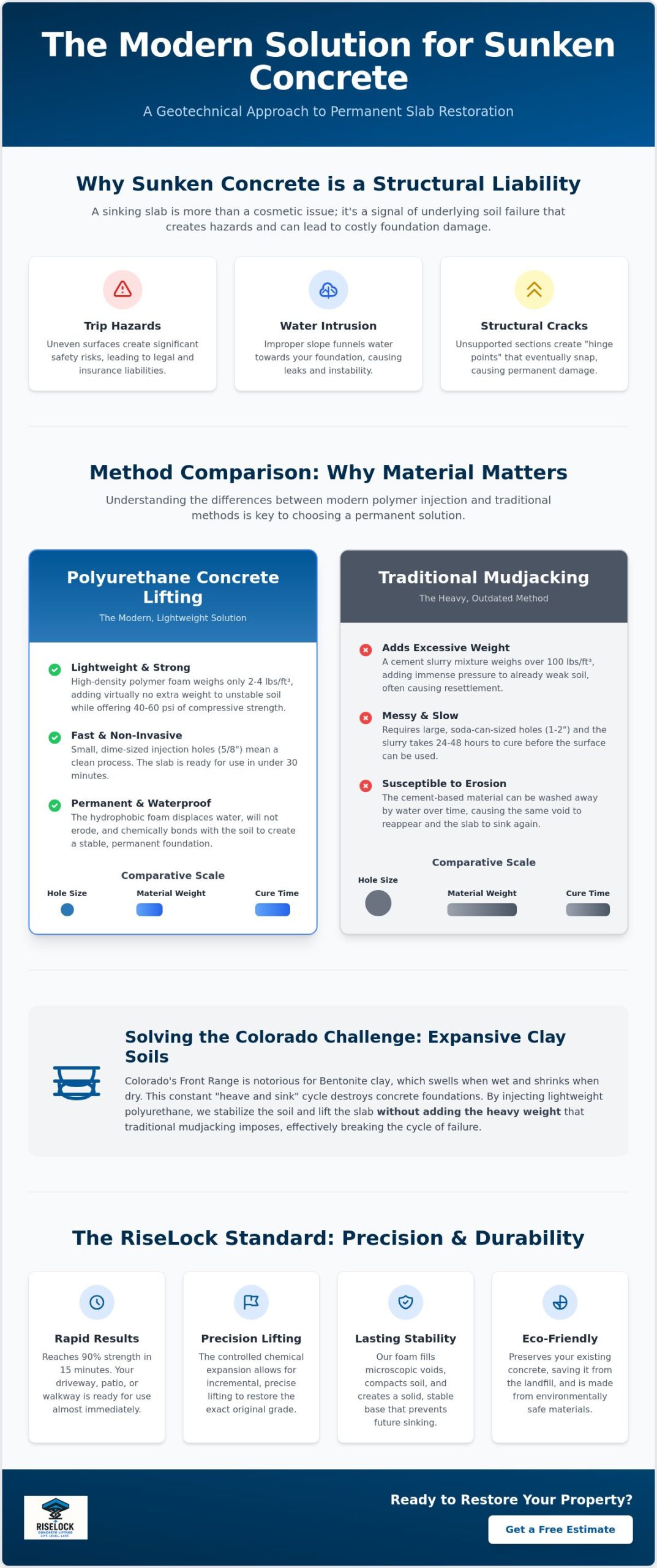
A settled slab is more than an eyesore. It’s a functional failure. For property owners, uneven concrete creates significant trip hazards that carry serious legal and insurance implications. Beyond the immediate safety risks, sunken slabs often redirect water toward the home. If a driveway or patio slopes toward a structure, it acts as a funnel, pushing hundreds of gallons of water toward the foundation during a storm. This can lead to basement leaks, mold growth, and further foundation instability.
Left unaddressed, the stress of settlement leads to a “hinge point” where the supported part of the concrete meets the unsupported section. This concentration of pressure eventually forces the slab to snap, resulting in permanent structural cracking. Addressing the issue early with polyurethane concrete lifting prevents these secondary damages and maintains the long-term value of the property.
- Speed: Surfaces are ready for use in under 30 minutes.
- Precision: High-density foam allows for incremental, controlled lifting.
- Cleanliness: Small injection holes mean no heavy equipment tracks or dusty demolition.
- Stability: The foam is hydrophobic and won’t wash away or erode.
The Precision Science: How High-Density Foam Restores Slab Integrity
The effectiveness of polyurethane concrete lifting lies in the controlled chemical reaction between two distinct components: an isocyanate and a polyol resin. When these liquids meet at the tip of an injection gun, they begin a rapid expansion process that generates significant structural force. This liquid travels through the path of least resistance, flowing into the smallest crevices and voids beneath the concrete before hardening into a rigid, lightweight solid. Unlike traditional materials, this foam is hydrophobic; it displaces standing water and maintains its integrity even in saturated conditions, ensuring the repair isn’t compromised by rain or snowmelt.
Technical reliability is a hallmark of this method. High-density polymers used in structural repairs typically offer a compressive strength between 40 and 60 psi, which is more than sufficient to support heavy residential and commercial loads. This performance is supported by ASCE research on expansive soils, which demonstrates how polymer injection can effectively mitigate the unpredictable movement of clay-heavy sub-grades. If you’re noticing early signs of settlement, investigating professional concrete leveling can prevent these minor voids from becoming major structural failures.
High-Density Polyurethane vs. Standard Expanding Foams
It’s a common misconception that professional-grade polymers are similar to the “can foam” found at hardware stores. DIY expanding foams are typically open-cell, meaning they’re porous, soft, and absorb water over time. In contrast, structural polyurethane concrete lifting utilizes a closed-cell structure. This creates a moisture-proof barrier that’s incredibly strong yet lightweight, weighing only 2 to 4 pounds per cubic foot. This high strength-to-weight ratio allows the material to lift tons of concrete without adding significant “overburden” or weight to the soil, which prevents the cycle of sinking from restarting. Property owners who want to understand how long polyurethane concrete lifting lasts and what drives its multi-decade durability will find that this closed-cell composition is the primary reason the repair outlasts the concrete itself.
The Injection Process: A Step-by-Step Technical Breakdown
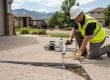
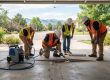
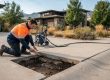
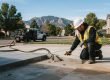
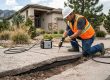
The process is designed for minimal property disruption and maximum precision. We begin by drilling a series of small, 5/8-inch holes in the affected slab; these are roughly the size of a penny and are much less intrusive than the large holes required for older methods. We then inject the polymer in short, controlled bursts. This allows the technician to monitor the lift in real-time, ensuring a perfectly level finish that aligns with adjacent slabs.
Because the material reaches 90% of its full strength within 15 to 30 minutes, the area is ready for foot or vehicle traffic almost immediately. This efficiency eliminates the days of downtime associated with pouring new concrete or using traditional slurries. The final step involves patching the small injection holes with a color-matched cement grout, leaving the surface safe, stable, and aesthetically restored.
Polyurethane vs. Mudjacking: Evaluating Durability and Value
Traditional mudjacking has served as the standard for decades, yet it possesses an inherent flaw when applied to unstable soils. The process involves pumping a heavy slurry of sand, soil, and Portland cement beneath the slab. This mixture is dense, often weighing 100 pounds or more per cubic foot. When this heavy material is injected into a sub-grade that has already failed to support the weight of the concrete, it often triggers the “overburden” effect. This added weight can cause the underlying soil to compress further, leading to secondary settlement and the need for additional repairs within just a few years. Understanding the full scope of the disadvantages of mudjacking and why heavy slurry accelerates recurring settlement helps explain why so many property owners find themselves scheduling repeat repairs.
In contrast, polyurethane concrete lifting utilizes a material that weighs only 2 to 4 pounds per cubic foot. It provides the necessary lift and structural support without taxing the soil’s load-bearing capacity. Because the polymer is inert and hydrophobic, it won’t wash away during heavy rains or shrink during dry spells. This chemical stability ensures the repair remains permanent, whereas the organic components of mudjacking slurry can erode or decompose over time, leaving new voids in their wake.
Cleanliness is another significant factor in the comparison. Mudjacking requires large mixing trucks, heavy hoses, and the drilling of 2-inch wide holes. The process is often messy, with slurry occasionally splashing onto siding or landscaping. Polyurethane systems are contained within a single small rig, and the material is delivered through tiny injection ports. This precision prevents property damage and eliminates the need for intensive cleanup once the job is finished. For a deeper look at how foam concrete lifting compares to traditional methods as a complete slab restoration solution, the technical distinctions become even more compelling.
Operational Downtime and Property Access
For many owners, the most critical difference is the time required for the surface to become functional. Mudjacking slurry requires a significant amount of water to flow, which means the slab must remain undisturbed for 24 to 72 hours while the mixture cures. This isn’t feasible for a busy warehouse, a retail entrance, or a primary residential driveway. Polyurethane cures through a chemical reaction rather than evaporation. It’s ready for full traffic in 15 to 30 minutes, allowing for zero-loss productivity in commercial environments and immediate convenience for homeowners.
Total Cost of Ownership
It’s true that the raw material for high-density foam is more expensive than the sand and dirt used in mudjacking. However, looking at the total cost of ownership reveals a different story. Mudjacking is often a temporary fix that requires repeat visits every few years as the heavy slurry sinks. Our “one and done” philosophy focuses on durable polyurethane concrete lifting that addresses the problem permanently. By investing in a more advanced material upfront, you avoid the recurring labor costs and the eventual necessity of a total concrete replacement. Colorado homeowners who are weighing these options should review the evidence on how long polyurethane concrete lifting lasts compared to mudjacking’s shorter service life before committing to a repair strategy.
- Weight: 2-4 lbs (Poly) vs 100+ lbs (Mudjacking) per cubic foot.
- Cure Time: 15-30 minutes vs 24-72 hours.
- Durability: Waterproof and permanent vs erodible and temporary.
- Impact: Minimal footprint vs heavy equipment and large drill holes.
Solving the Colorado Challenge: Managing Expansive Soils in Denver
The Denver Metro area is geographically defined by high concentrations of Bentonite, a type of expansive clay soil that reacts aggressively to moisture changes. In our semi-arid climate, the ground frequently transitions from periods of extreme drought to sudden, heavy snowmelts. This creates a “heave and sink” cycle; the clay swells as it absorbs water, pushing concrete upward, and then shrinks as it dries, leaving the slab unsupported. For property owners in Aurora, Centennial, and Castle Rock, this constant movement is the primary catalyst for uneven driveways and settled patios.
Applying polyurethane concrete lifting in this environment offers a unique geotechnical advantage. Because the high-density foam is hydrophobic, it creates an impermeable moisture barrier between the slab and the volatile soil. This prevents surface water from reaching the clay directly beneath the concrete, which helps stabilize the moisture content of the sub-grade. If you’re dealing with significant settlement in these conditions, you can request a professional concrete lifting evaluation to determine if foam injection is the right path for your property.
The Freeze-Thaw Cycle on the Front Range
Winter on the Front Range introduces the risk of ice-jacking. When water enters the voids beneath a settled slab and freezes, it expands by approximately 9% in volume. This force is often enough to snap concrete from below, leading to jagged, unsightly cracks. By filling these voids with closed-cell foam, we eliminate the space where water typically accumulates. The material remains flexible enough to handle the thermal expansion and contraction of the concrete itself, ensuring the repair doesn’t fail during Denver’s rapid temperature swings.
Identifying Candidates for Lifting in Colorado
Not every damaged slab is a candidate for restoration. While we can successfully lift slabs with clean, structural cracks, concrete exhibiting “spider-web” or map cracking often indicates that the internal matrix has failed entirely. In such cases, the material may crumble during the lifting process. It’s also vital to evaluate the health of post-tension cables in modern Colorado foundations before beginning any injection. Homeowners in Boulder and Colorado Springs should look for early settlement signs, such as doors that stick or gaps appearing between the driveway and the garage floor, to address the issue before replacement becomes the only option. Understanding the mechanics of post tension installation and how tensioned cables resist expansive soil movement can help property owners make more informed decisions about their foundation’s long-term resilience.
The RiseLock Standard: Precision Leveling and Structural Mastery
RiseLock approaches structural restoration with a commitment to quiet authority and technical mastery. We don’t view a sinking slab as a simple cosmetic flaw to be patched; we see it as a complex geotechnical challenge that requires a precise, engineered solution. By utilizing specialized injection equipment and high-grade polymers specifically formulated for the high-altitude environment of the Front Range, we ensure that every intervention meets a standard of performance that exceeds industry norms. Our team views your property’s structural integrity as a personal priority, acting as a dependable partner to lead you away from the stress of damage toward long-term security.
Technical proficiency in polyurethane concrete lifting requires more than just the ability to operate an injection gun. It demands a deep understanding of how various structural elements interact. At RiseLock, we bridge the gap between advanced material science and traditional structural ethics. This means we don’t just “drill and fill.” We analyze the load paths, the soil composition, and the specific construction of the slab to ensure the restoration is both effective and permanent. This methodical approach ensures that the “why” behind the settlement is addressed alongside the “how” of the repair.
Integrated Structural Reinforcement
A significant portion of modern Colorado construction utilizes post-tensioned slabs, which contain high-strength steel cables under immense tension. Understanding the nuances of post tension installation and the role of high-strength tendons in structural concrete reinforcement is critical when performing repairs on these surfaces. Many contractors who offer standard polyurethane concrete lifting lack the specialized knowledge required to navigate these internal reinforcements safely. At RiseLock, our expertise in post-tension systems allows us to follow strict safety protocols, ensuring that we protect the cables and the overall reinforcement during the drilling and injection process.
Our experience spans the entire Denver Metro area, from residential driveways in suburban neighborhoods to complex commercial foundations in industrial centers. This breadth of work has allowed us to refine our methods across diverse soil conditions and structural designs. We maintain a small operational footprint, using precision rigs that allow us to work in tight spaces without damaging the surrounding landscaping or property features.
From Assessment to Restoration
The RiseLock process begins with a thorough diagnostic evaluation. We don’t believe in generic quotes; we believe in accurate diagnoses. Our technicians examine the drainage patterns, crack formations, and soil stability to determine if the concrete is a viable candidate for lifting. This grounded, ethical approach ensures that you receive a solution tailored to the specific needs of your property rather than a one-size-fits-all patch. We take professional pride in our work, standing behind our results with a guarantee of reliability and technical excellence.
Structural issues don’t resolve themselves; they typically accelerate as water and gravity continue to compromise the sub-grade. Taking action early preserves your existing concrete and prevents the need for a total, expensive replacement. We invite you to experience the peace of mind that comes from a high-precision intervention. Schedule a professional concrete assessment with RiseLock today.
- Diagnostic Focus: We identify the root cause of settlement before proposing a solution.
- Cable Safety: Specialized protocols to protect post-tensioned foundations.
- High-Grade Materials: We use only structural-grade, closed-cell polymers.
- Professional Partnership: A commitment to ethical service and long-term property security.
Securing Your Property’s Foundation for the Long Term
Structural stability is a permanent investment in your property’s safety and value. By choosing polyurethane concrete lifting, you address the root cause of settlement with a material that is engineered to withstand the unique stressors of the Front Range. This modern approach eliminates the risks associated with heavy mudjacking slurries and provides a moisture-resistant barrier that stabilizes volatile soils.
While structural stability is the first step in property preservation, interior aesthetics are equally vital; for those seeking inspiration on high-end renovations, you can explore Modern Kitchens to see how bespoke craftsmanship can further elevate a home’s value.
RiseLock brings a standard of technical mastery to every project, combining advanced high-density foam technology with specialized expertise in post-tension installation. We serve the entire Denver Metro area, including Aurora, Centennial, and Boulder, ensuring that your sidewalks, driveways, and foundations are restored with surgical precision. Rather than accepting the disruption of a total concrete replacement, you can choose a non-invasive solution that prioritizes long-term durability.
Our team is ready to act as your professional partner in navigating these structural challenges. Get a Professional Concrete Lifting Quote from RiseLock to start the process of reclaiming a level, safe surface. You don’t have to manage the stress of sinking concrete alone; reliable, expert intervention is just a step away.
Frequently Asked Questions
How long does polyurethane concrete lifting actually last?
Polyurethane foam is a permanent structural solution that does not biodegrade or shrink over time. Once the material cures, it maintains its shape and compressive strength indefinitely. Because it is an inert polymer, its lifespan typically exceeds that of the concrete slab it supports, provided the underlying soil remains stable.
Is polyurethane foam environmentally safe for my yard?
High-density polyurethane foam is environmentally inert once it has cured. It does not leach harmful chemicals into the surrounding soil or groundwater. The closed-cell structure ensures the material remains stable and non-reactive even in saturated conditions, making it a safe choice for residential landscaping and gardens.
Can you lift concrete that has post-tension cables inside it?
Yes, concrete with post-tension cables can be lifted safely if the technician understands the internal reinforcement layout. We use specific safety protocols to protect these high-tension cables during the drilling and injection process. Our expertise in post-tension systems ensures that the structural integrity of the slab remains uncompromised during restoration.
How much does polyurethane concrete lifting cost compared to replacement?
Polyurethane concrete lifting is significantly more cost-effective than a total tear-out and replacement. While pouring new concrete involves extensive demolition, debris disposal, and long curing times, lifting utilizes your existing slab. This approach reduces labor intensity and eliminates the logistical expenses associated with heavy equipment and material disposal.
Will the injected foam ever wash away or break down underground?
The injected foam is a closed-cell, hydrophobic material that will not wash away or erode. Unlike traditional mudjacking slurry, which is often composed of organic materials susceptible to water erosion, polyurethane remains a solid structural component. It is unaffected by groundwater, heavy rain, or the sudden snowmelts common in Colorado.
Can I drive my car on the driveway immediately after it is lifted?
You can drive a vehicle on the surface within 15 to 30 minutes of the repair. Polyurethane foam reaches 90% of its full compressive strength almost immediately after the chemical reaction occurs. This rapid curing process ensures minimal disruption to your daily routine, allowing for immediate use of driveways and garage floors.
What is the difference between polyjacking and mudjacking?
Polyjacking uses lightweight, high-density polymers weighing only 2 to 4 pounds per cubic foot. Mudjacking uses a heavy slurry that can exceed 100 pounds per cubic foot. Polyurethane concrete lifting provides a lightweight alternative that doesn’t overburden the sub-grade, preventing the cycle of secondary settlement often caused by the weight of mudjacking material.
How do I know if my sinking concrete is a candidate for lifting or if it needs to be replaced?
Concrete is a candidate for lifting if the slab is mostly intact but has settled or tilted. If the concrete has shattered into many small pieces or the surface is crumbling and scaling, replacement is likely necessary. A professional foam concrete lifting assessment identifies whether the internal matrix of the slab is strong enough to withstand the lifting process.