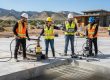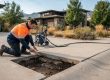
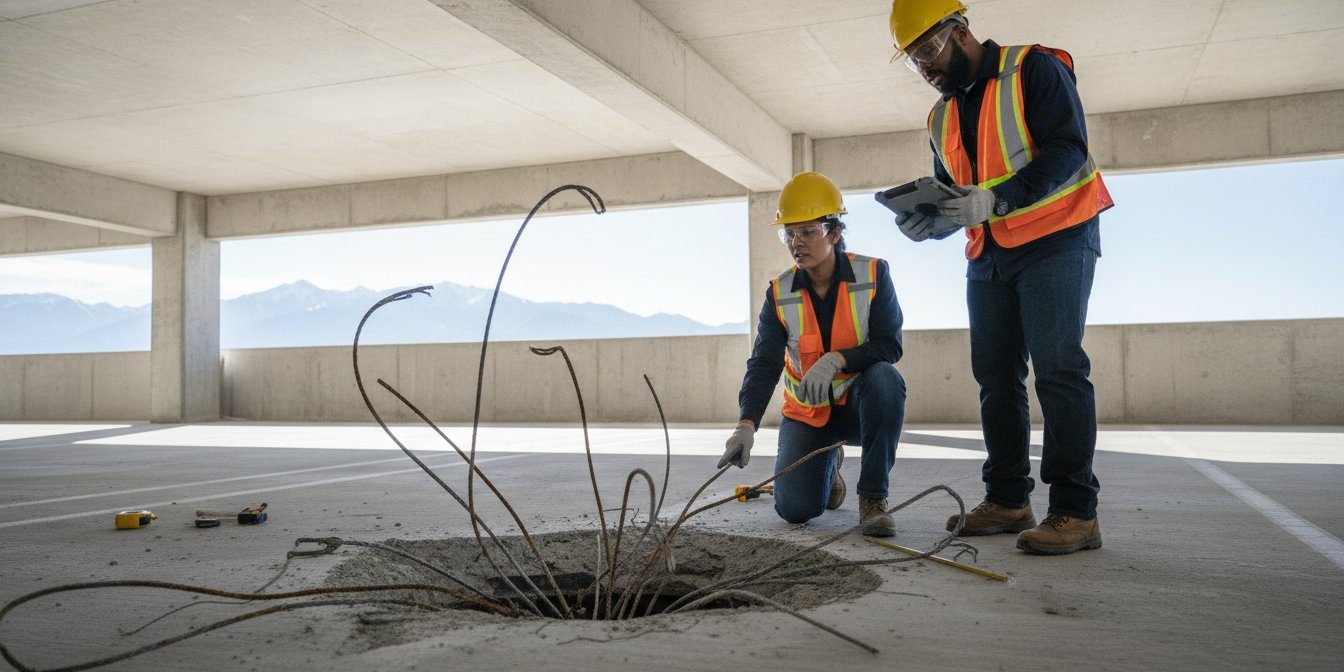
A single half-inch post-tension tendon can hold as much as 33,000 pounds of force. This makes a sudden failure more than just a maintenance issue; it is a high-energy structural event. When a cable snaps or erupts through the concrete surface, the immediate priority shifts from observation to professional intervention. Effective post tension cable blowout repair requires more than a simple patch of concrete. It demands a technical understanding of tension distribution and the specialized equipment necessary to restore the slab’s integrity without compromising the surrounding structure.
You’re likely feeling the weight of this situation, concerned about the immediate safety of your property and the potential for mounting repair costs. We understand that finding a qualified specialist in Colorado who can handle these high-tension systems is a stressful process. This guide provides the clarity you need to move forward. You’ll learn the critical steps to safely diagnose, stabilize, and repair post-tension cable blowouts to protect your property’s structural integrity. We will walk through the stabilization process, the engineering standards required for a certified fix, and the modern techniques used to prevent future corrosion and failures.
Key Takeaways
- Understand the physics behind a blowout and why 33,000 pounds of force requires specialized intervention rather than simple concrete patching.
- Identify the primary catalysts for failure in Colorado, such as moisture-driven corrosion and de-icing salt infiltration, to better protect your foundation.
- Follow a structured engineering approach to post tension cable blowout repair that involves precise excavation, tendon replacement, and hydraulic re-tensioning.
- Implement proactive maintenance strategies, including anchorage inspections and crack sealing, to extend the lifespan of your post-tensioned slab.
- Learn why certified PT expertise is non-negotiable for structural restoration and how to distinguish specialized technicians from general concrete contractors.
What is a Post Tension Cable Blowout?
A post tension cable blowout is a high-energy structural failure where a high-strength steel tendon snaps or detaches from its anchorage, violently forcing its way through the concrete slab. Unlike a standard settling crack or surface spalling, a blowout represents a sudden release of stored potential energy. In a typical residential or commercial slab, each half-inch diameter tendon is stressed with approximately 33,000 pounds of force. When this tension is lost, the cable can whip through the concrete, creating a hazardous exit point and compromising the slab’s load-bearing capacity. When a failure occurs, the need for professional post tension cable blowout repair becomes immediate to prevent further degradation of the structural system.
Post-tensioning is a specialized form of prestressed concrete that uses these high-strength steel tendons to provide active compression to the slab. This compression allows concrete to bridge longer spans and resist soil movement more effectively than traditional rebar. However, because the system relies on this constant state of tension, any breach in the tendon’s integrity changes the physics of the entire floor. A blowout is fundamentally different from cosmetic damage; it is a breach of the building’s active support system that requires precision-engineered restoration.
Identifying the Signs of a Blowout
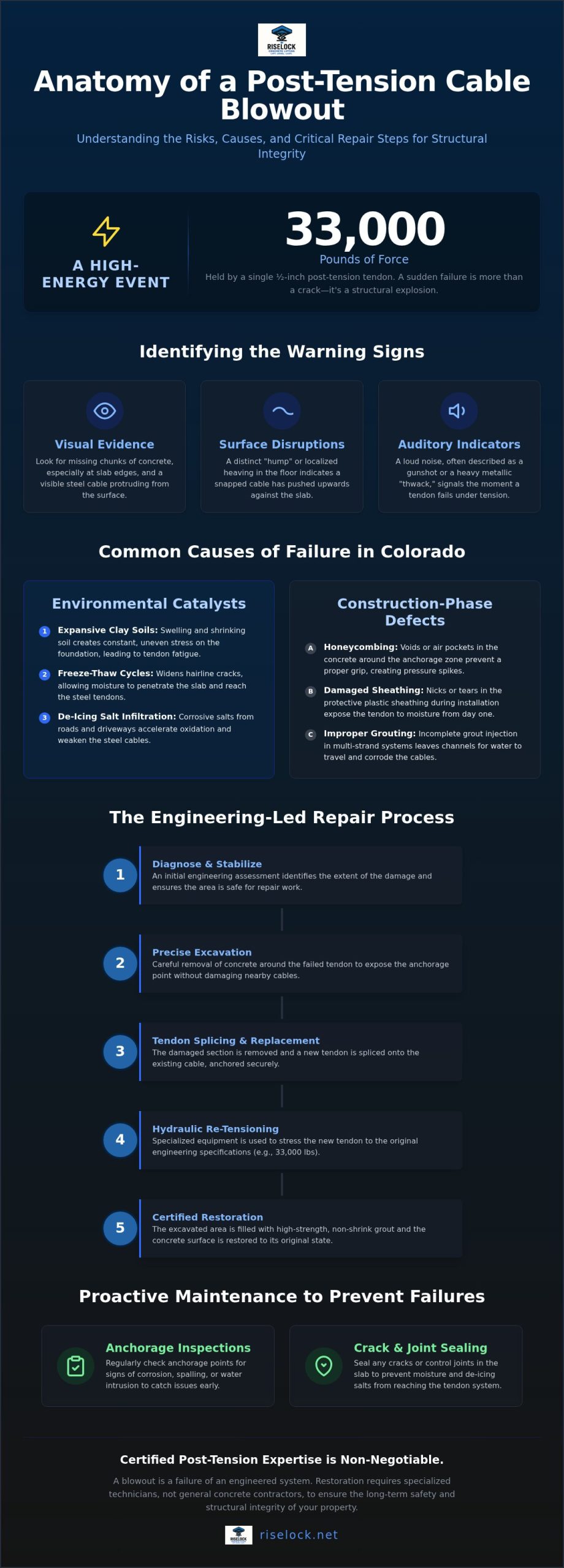
The indicators of a blowout are often unmistakable, though some damage can remain hidden within the slab for a period. You should look for these specific signs:
- Visual Evidence: Chunks of concrete missing specifically from the slab edge or anchorage zones, often accompanied by a visible steel cable protruding from the concrete.
- Surface Disruptions: A “hump” or localized heaving in the floor where a cable has snapped and pushed upward against the finished surface.
- Auditory Indicators: Occupants often report a sound resembling a gunshot or a heavy metallic “thwack” when the tendon fails under tension.
The Danger of Neglecting a Broken Tendon
Ignoring a failed cable initiates a dangerous chain reaction within the slab. Because post-tensioned systems are designed as a grid, the failure of one cable forces the remaining tendons to carry an unintended redistribution of loads. This extra stress can lead to secondary failures in adjacent cables. Furthermore, the exit hole created by the blowout provides a direct path for moisture and de-icing salts to reach the remaining steel. In the Colorado climate, this leads to rapid oxidation and systemic corrosion. Neglecting the early indicators of a blowout makes subsequent post tension cable blowout repair more complex and can lead to significant liability or insurance complications for property owners if the structural integrity is not professionally certified.
Common Causes of Post-Tension Failures in Colorado
Understanding why a system fails is the first step toward a successful post tension cable blowout repair. In Colorado, failures rarely stem from a single source. Instead, they often result from a combination of aggressive environmental conditions and subtle construction defects. The high-tension nature of these cables means that even minor compromises in the protective sheathing or the surrounding concrete can lead to a violent release of energy over time.
The Impact of Colorado Soils and Climate
The expansive clay soils found throughout the Denver metro area and Colorado Springs are a primary driver of structural stress. These soils swell when wet and shrink when dry, creating an active environment that constantly pushes against the slab. If the foundation wasn’t engineered to handle these specific regional movements, the resulting uneven stress can lead to tendon fatigue. Colorado’s freeze-thaw cycles further exacerbate this by widening hairline cracks in the concrete. This allows moisture and corrosive de-icing salts from driveways and roads to penetrate the slab, reaching the steel tendons and initiating the oxidation process. Once corrosion begins, the cross-sectional area of the steel decreases until it can no longer hold its design tension.
Installation Errors vs. Long-Term Wear
Construction-phase mistakes often remain hidden for years before manifesting as a blowout. Honeycombing, which refers to voids or air pockets in the concrete around the anchorage zone, is a frequent culprit. These voids prevent the concrete from properly gripping the anchor, leading to localized pressure spikes. Additionally, if the protective plastic sheathing is nicked or torn during the original pour, the steel is left vulnerable to the elements from day one. Over-stressing the tendons before the concrete has reached its full compressive strength can also create micro-fractures that weaken the system’s longevity. It’s a fundamental truth that post tension installation must be done correctly the first time to avoid these issues. Adhering to Post-Tensioning Institute (PTI) specifications during the build or repair phase is the only way to ensure long-term stability. If you’re concerned about the original quality of your slab, a specialized concrete inspection can help identify these hidden defects before they escalate into a full post tension cable blowout repair project.
The Post Tension Cable Blowout Repair Process
Executing a professional post tension cable blowout repair requires a rigorous, multi-stage sequence. It isn’t a task for generalists; it demands a methodical technical approach to restore the active forces within the slab. The process begins with a comprehensive engineering assessment to determine the extent of structural loss and identify the precise load paths that have been compromised. This evaluation often references established data on common causes of tendon failures to ensure the repair addresses the root cause rather than just the symptom. Once the scope is defined, technicians perform a surgical excavation, carefully removing the concrete to expose the damaged tendon without impacting adjacent cables.
Splicing and Cable Replacement
Restoring the continuity of a snapped tendon involves the use of specialized high-strength couplers. These components allow technicians to join a new section of steel to the existing, healthy portion of the tendon. During this phase, it’s vital to ensure the grease-filled sheathing is completely restored. This protective layer is the primary defense against moisture, and any gaps in the sheathing will lead to future oxidation. Technicians must also perform precise measurements of the cable. Calculating the expected elongation is a critical quality control step; if the cable doesn’t stretch according to engineering benchmarks during the final pull, the repair may not be providing the intended structural support.
Hydraulic Re-Tensioning and Stabilization
The most technical phase of the repair is the re-application of force. Using specialized hydraulic equipment, the technician pulls the new tendon to the original design specifications, typically reaching approximately 33,000 pounds of force. Once the target tension is achieved, the wedges are “locked off” into the anchorage, permanently securing the cable. This high-energy event requires extreme precision to ensure the slab is stabilized without over-stressing the surrounding concrete.
To finish the project, the anchorage pocket must be grouted with non-shrink, high-strength material. We integrate advanced concrete repair denver colorado techniques to ensure the new concrete bond is seamless and watertight. This final seal protects the anchor from the corrosive de-icing salts common on Colorado roads, providing a permanent restoration that meets or exceeds the original building standards. By following this deliberate cadence, we move the structure from a state of failure back to long-term security.
Preventing Blowouts: Maintenance and Inspection
Proactive maintenance is the most effective strategy for ensuring the long term security of a post-tensioned structure. While the initial engineering of these slabs is robust, the active nature of the system means that environmental changes can gradually introduce risks. In Colorado communities like Thornton and Parker, where soil settlement is a persistent challenge, maintaining the integrity of the slab requires a vigilant approach. Regular professional inspections of the anchorage zones are essential. We specifically look for rust staining, which serves as an early indicator that moisture has bypassed the protective sheathing and reached the steel tendon. Addressing these minor signs of oxidation early can prevent the need for a full post tension cable blowout repair later.
Waterproofing and crack management are the primary defenses against systemic failure. Sealing cracks as soon as they appear prevents moisture and corrosive de-icing salts from reaching the cables. For commercial properties, implementing a long term maintenance schedule that includes professional moisture testing and anchorage pocket reviews is a standard industry practice. These steps ensure that the active compression within the slab remains consistent and that the tendons are protected from the elements.
Visual Red Flags for Property Owners
Property owners can often identify the early stages of tendon degradation through simple visual checks. You should monitor your slab for rust colored streaks emanating from the edge of the concrete; this is a definitive sign of internal corrosion. Additionally, spalling concrete near the cable ends suggests that the pressure at the anchorage point is becoming uneven or that the steel is expanding due to rust. The presence of efflorescence, a white powdery salt buildup on the concrete surface, indicates significant moisture migration through the slab. If you notice these signs, it is time to schedule a professional structural assessment to evaluate the health of your post-tensioning system.
Strategic Slab Stabilization
Soil movement creates uneven tension across a slab, which is a leading contributor to tendon fatigue. By utilizing polyurethane concrete lifting, we can stabilize the soil beneath a post-tensioned slab to reduce this mechanical stress. This process involves injecting high density foam into the voids created by soil shrinkage or erosion, providing a stable platform that supports the slab’s intended load paths. There is a clear synergy between soil stabilization and cable health; when the slab is properly supported from below, the tendons aren’t forced to compensate for sagging or settlement. This modern approach to restoration offers a technical advantage over traditional methods, providing a clean and efficient way to preserve the structural integrity of your property.
Choosing a Post Tension Repair Specialist in Denver
General concrete contractors are highly skilled in pouring and finishing, but structural post-tensioning is a separate engineering discipline entirely. A successful post tension cable blowout repair requires more than a standard patch; it demands specialized hydraulic equipment and calibrated gauges capable of managing 33,000 pounds of force safely. Generalists often lack the specific training to handle high-energy tendon releases, which can lead to improper tensioning or accidental damage to adjacent cables. This lack of specialization either leaves the slab under-supported or risks a secondary, more violent failure. RiseLock Concrete Lifting focuses exclusively on the technical nuances of these systems across the entire Denver metro area, including Aurora, Boulder, and Colorado Springs.
The RiseLock Concrete Lifting Difference: Precision and Reliability
We view every structural challenge as a personal priority because we understand the stress that foundation failure causes property owners. Our commitment to technical mastery is reflected in our comprehensive concrete lifting solutions and structural restoration services. We don’t just fix the surface; we restore the active engineering that keeps your property stable. Clients have direct access to Alex Mon and our team of structural experts, ensuring that every project is guided by professional authority and ethical standards. This hands-on leadership ensures that your post tension cable blowout repair is handled with the precision required for long-term security and building code compliance.
Next Steps for Your Property
Restoring your slab begins with a thorough structural assessment to determine the exact state of the compromised tendons. To help the team at RiseLock Concrete Lifting provide the most accurate diagnosis, we recommend providing original building plans or structural drawings if you have them. These documents allow us to map the exact layout of the tendons and the original design tension specified by the engineer of record. Once we evaluate the site, we provide a clear, logical progression for the restoration, moving from immediate stabilization to the final grouting and pocket finishing. The peace of mind that comes from a professional, certified repair is invaluable for maintaining property value. By choosing a specialist who understands the unique regional challenges of Colorado soils and climate, you ensure that your property remains a safe and durable asset for years to come.
Restoring Structural Confidence in Your Property
A post-tensioned slab is a sophisticated engineering system that provides active support to your structure. When a blowout occurs, it isn’t just a surface issue; it’s a disruption of the slab’s internal equilibrium that compromises the safety of the entire foundation. Addressing this failure requires a methodical approach that combines local environmental knowledge with technical mastery of hydraulic re-tensioning. We’ve explored how Colorado’s expansive soils and freeze-thaw cycles contribute to tendon fatigue, and why a certified repair sequence is the only way to ensure long-term stability.
Choosing a partner who understands these technical complexities is vital for the longevity of your property. RiseLock Concrete Lifting brings specialized hydraulic re-tensioning equipment and a deep understanding of regional challenges to every post tension cable blowout repair. We serve the entire Denver metro area, Aurora, and Colorado Springs with a commitment to precision and professional integrity. You don’t have to manage the stress of structural damage alone. Request a Professional Post-Tension Assessment from RiseLock Concrete Lifting today to secure your foundation with modern, high-precision restoration. Your property’s stability is our personal priority.
Frequently Asked Questions
Is a broken post-tension cable an emergency?
Yes, a broken cable is a structural emergency that requires immediate professional attention. Each tendon provides critical active compression that keeps the slab stable. When a cable snaps, that force is lost and the load is redistributed to adjacent tendons, which can lead to a chain reaction of failures. The energy released during a blowout can also cause secondary damage to floor finishes or internal walls, making immediate stabilization a priority.
How much does it cost to repair a post-tension cable blowout?
The cost of post tension cable blowout repair varies based on the specific conditions of the failure. Factors that influence the final price include the number of damaged tendons, the depth of the concrete excavation required, and the accessibility of the anchorage zones. Because this work requires specialized hydraulic equipment and engineering oversight, it’s a technical investment in the long term security of your property. We provide detailed assessments to outline the necessary restoration steps.
Can I drive on a slab with a broken post-tension cable?
Driving on a slab with a broken tendon isn’t advisable until a structural assessment is completed. Post-tensioned slabs are designed to handle heavy vehicle loads through active compression. When a cable fails, that compression is lost, making the concrete more susceptible to cracking and deflection under weight. Continuing to use a compromised garage or parking slab can accelerate the deterioration of the surrounding concrete and put unnecessary stress on the remaining healthy tendons.
How long does a post-tension cable repair take to complete?
Most single-cable repairs are completed within one to two business days. The timeline depends on the complexity of the excavation required to expose the damaged tendon and the curing time for the high-strength grout used to seal the anchorage pocket. While the technical re-tensioning process is relatively quick, the preparation and finishing stages are methodical. This ensures the repair meets engineering standards and provides permanent protection against moisture and future corrosion.
What happens if a post-tension cable is not repaired?
Neglecting a broken cable leads to systemic structural degradation and much higher repair costs over time. The failure site creates a direct entry point for moisture and de-icing salts, which causes the remaining steel to oxidize rapidly. As adjacent cables take on the extra load, they become more likely to fail under the added stress. Ignoring the issue can eventually compromise the entire slab’s integrity, leading to significant liability risks or total foundation failure.
How do I know if my building uses post-tensioned concrete?
You can often identify a post-tensioned slab by looking for a “Do Not Cut or Drill” warning stamped into the concrete, usually near the garage entrance or slab edge. Another indicator is the presence of small, circular plastic caps or patched pockets along the exterior foundation wall. These represent the anchorage points where the cables were originally stressed. If your Colorado building was constructed on expansive soils after the 1980s, it likely utilizes this system.
Can a blown-out cable be spliced or does it need full replacement?
Splicing is the standard professional method for restoring a failed tendon without removing the entire slab. Technicians use specialized high-strength couplers to join a new section of steel to the healthy portion of the existing cable. This approach is highly effective because it restores the full design tension specified by the original engineer. A full replacement is typically only necessary if the entire length of the tendon has suffered from systemic corrosion that prevents a secure splice.
Are post-tension blowouts common in Denver foundations?
While not every foundation fails, blowouts are a recognized issue in the Denver metro area due to our unique soil conditions. The expansive clay common in Colorado puts constant mechanical stress on slabs, while our heavy use of de-icing salts increases the risk of tendon corrosion. Because so many local homes and commercial buildings rely on PT systems to manage soil movement, specialized post tension cable blowout repair has become a critical service for maintaining regional property values.