A concrete lifting warranty’s headline term can sound reassuring, but what matters is the written scope. If you’re comparing a concrete lifting warranty in Colorado Springs, look for clear answers about what work is covered, how long coverage lasts, what happens if a slab settles again, and which conditions may be excluded.
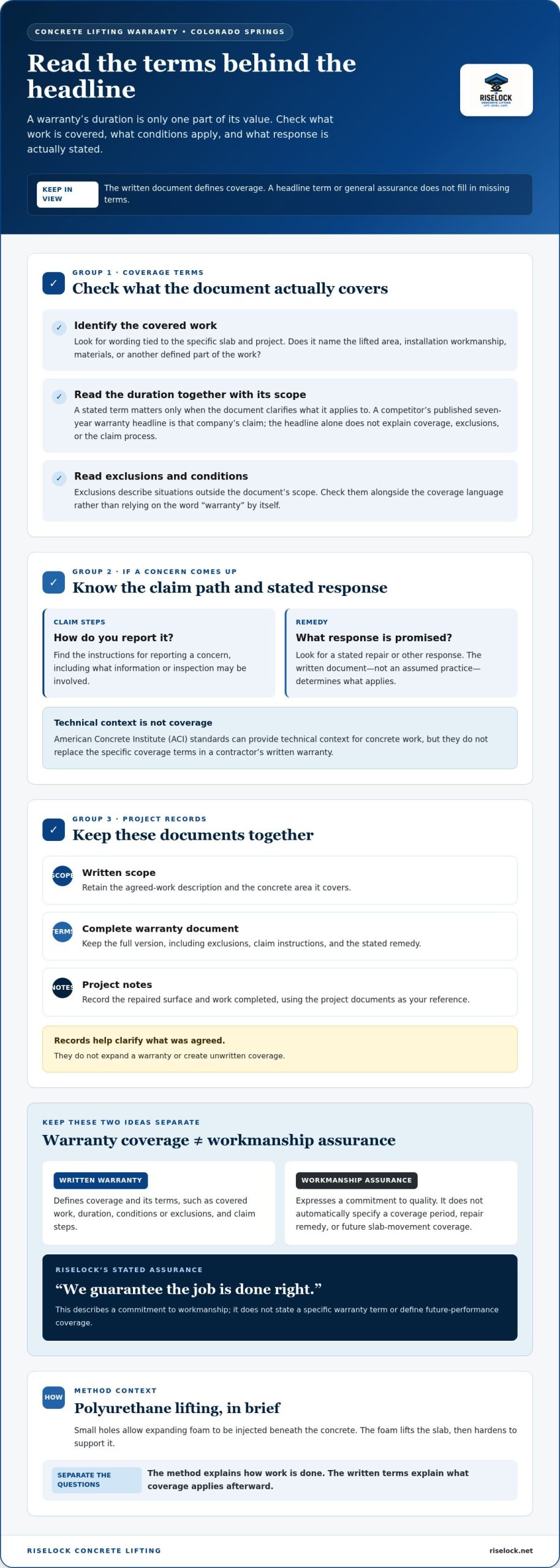
A written warranty and a workmanship assurance are not the same thing. A warranty sets out its coverage and limits; a workmanship assurance expresses a commitment to doing the job properly, but does not automatically define a coverage period or remedy. RiseLock’s stated assurance is, “We guarantee the job is done right.” It describes a commitment to workmanship, not specific warranty coverage.
This article explains which warranty terms to read, what project records to keep, and how material details differ from coverage terms. It also explains RiseLock’s polyurethane lifting process and workmanship assurance, so you can set clear expectations before work begins.
Key Takeaways
- A concrete lifting warranty Colorado Springs property owners can understand should identify the covered work, duration, exclusions, and claim steps.
- A warranty’s stated length is only one consideration. Its conditions and the remedy offered matter just as much.
- Compare published warranty wording carefully, and distinguish stated terms from details that are not provided.
- Document the concern, understand the agreed work, and keep project records to refer to if the slab’s condition changes.
- RiseLock’s workmanship assurance is: “We guarantee the job is done right.” It is distinct from a written warranty with defined coverage terms.
What Does a Concrete Lifting Warranty Mean in Colorado Springs?
If a lifted slab moves again, what happens next? For a Colorado Springs property owner, that question can matter as much as how the concrete is raised. A driveway may become uneven again, a sidewalk may show a change in level, or a garage floor may not look as expected after the work. A warranty’s written terms help clarify what the contractor has agreed to cover if a defined issue occurs.
A concrete lifting warranty is written coverage that identifies the work covered, its duration, applicable conditions or exclusions, and the steps for making a claim. The word “warranty” alone does not explain what happens if a slab shifts. Read the scope and process carefully: coverage may apply only to specified work, and the document may set conditions that must be met before a claim is considered.
Warranty coverage versus a workmanship guarantee
A warranty defines coverage and its terms. A workmanship guarantee, by contrast, is an assurance about the quality of the work. Do not assume it provides a particular coverage period, repair remedy, or promise about future slab movement unless those terms are expressly stated.
RiseLock’s stated assurance is: “We guarantee the job is done right.” This communicates a commitment to workmanship. It does not state a specific warranty term or define future-performance coverage, so it should not be read as a written warranty with those provisions.
This distinction also matters when reading other companies’ advertisements. For example, a competitor’s published seven-year warranty headline is that company’s claim. It does not describe RiseLock’s guarantee or, by itself, explain the coverage, exclusions, or claim process behind the competitor’s term. A duration is useful only when the document clarifies what it applies to.
Why Colorado Springs property owners ask about coverage
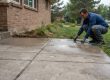
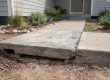
Concrete lifting can address driveways, sidewalks, patios, and garage floors. After the work, owners may wonder whether a later change in height or condition qualifies for attention or falls outside the agreed scope. The answer depends on the written terms and the work performed, not simply on the word “warranty.”
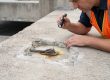
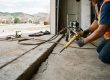
Understanding the repair method can put coverage language in context. Slabjacking, also known as concrete lifting, describes approaches that raise a settled slab by introducing material beneath it. With polyurethane lifting, small holes allow expanding foam to be injected under the concrete. The foam lifts the slab, then hardens to support it. The method explains how the work is done; warranty terms explain what coverage applies afterward.
To assess a concrete lifting warranty Colorado Springs property owners are considering, separate three questions: what work was done, what written coverage applies to that work, and what RiseLock’s workmanship assurance says. Keeping those distinctions clear helps set realistic expectations without treating a headline term or general assurance as more than it states.
What Concrete Lifting Warranty Terms Should You Read Closely?
A warranty’s duration is only one part of its value. To understand what the document offers, identify the specific work covered, the conditions that apply, any exclusions, and the remedy described if a qualifying issue occurs. Terms can differ between providers, so do not assume one company’s wording sets a standard for another.
When reviewing a concrete lifting warranty in Colorado Springs, check whether the document connects coverage to the specific slab and work performed. The stated term alone does not explain what must happen for a claim to qualify, how the condition will be assessed, or what response the document provides.
Scope, exclusions, and remedy
Start with the scope. Does the language refer to the area that was lifted, installation workmanship, materials, or another clearly defined part of the project? A document that identifies the covered work helps distinguish the original repair from adjacent concrete or separate issues.
Next, read the exclusions and claim steps alongside the coverage. Exclusions describe situations outside the document’s scope; claim instructions explain how to report a concern and what information or inspection may be involved. Then look for the stated remedy. It may describe a repair or another response, but the document, not an assumed industry practice, determines what applies. The American Concrete Institute (ACI) standards provide technical context for concrete work, but they do not replace the specific coverage terms in a contractor’s written warranty.
Project records that help clarify expectations
Keep the project description, any warranty document provided, and related records together. These documents connect the written terms to the work completed, especially if questions arise about which part of the property was addressed.
- Written scope: Retain the description of the agreed work and the concrete area it covers.
- Warranty document: Keep the complete version, including exclusions, claim instructions, and the stated remedy.
- Project notes: Record the repaired surface and the work completed, using the project documents as your reference.
For process context, RiseLock’s guide to polyurethane concrete lifting explains how this method restores existing slabs. Understanding the process can help you follow the project description; the written terms remain the source for any defined coverage.
These records do not expand a warranty or create unwritten coverage. They help you understand what was agreed and locate the applicable terms if the concrete’s condition becomes a concern. RiseLock provides polyurethane concrete lifting, and most projects are completed in hours. Learn more about the method and RiseLock’s concrete lifting services.
How Do Colorado Springs Concrete Lifting Warranty Claims Compare?
Published warranty terms can help you start a comparison, but they do not tell the whole story. A duration matters only in relation to the work and conditions it covers. When evaluating a concrete lifting warranty in Colorado Springs, separate each provider’s published wording from details not included in the published material.
Warranty comparisons require scope and conditions alongside duration. The summary below reports the claims and details available for comparison. It does not rank providers or establish how their coverage would apply to a particular project.
Compare like with like, not just warranty periods
Look for the defined work, the issue that may qualify, exclusions, and claim steps. If those details are not published, treat them as unknown rather than filling in the gaps. A long headline term and a shorter one cannot be meaningfully compared unless you can also see what each covers.
| Provider or source | Published wording | Available detail | Unknown details |
|---|---|---|---|
| Save My Concrete | Seven-year warranty | A seven-year term is presented as a warranty claim. | The available page material doesn’t establish the covered work, qualifying issue, exclusions, remedy, or claim steps. |
| Level Up My Concrete | Two-year one-time lift warranty; incomplete three-year reference | The two-year wording specifies a one-time lift warranty. The additional three-year reference is truncated. | The available material doesn’t explain the full conditions, exclusions, or claim process, and the incomplete reference can’t be interpreted. |
| Facebook post | No verifiable warranty wording available | The extracted post doesn’t provide accessible details for comparison. | Coverage, duration, conditions, and claim steps can’t be assessed from the available content. |
| RiseLock | “We guarantee the job is done right.” | This is RiseLock’s stated workmanship assurance. | The statement doesn’t specify a fixed warranty period or warranty coverage terms. |
The table keeps each statement in context. A competitor’s seven-year or two-year claim belongs to that provider, while RiseLock’s wording is an assurance about doing the job right. It should not be recast as a fixed warranty term or a promise about future slab movement. For technical context on repair work, readers can also consult resources from the International Concrete Repair Institute (ICRI). Those resources do not replace the terms of an individual provider’s written coverage.
What RiseLock’s published assurance says
RiseLock states, “We guarantee the job is done right.” This expresses a commitment to workmanship, but does not define duration, exclusions, or a specific remedy for later movement. Keeping the distinction clear helps property owners compare published language without treating an assurance as more detailed than it is.
For broader context on concrete lifting options and service selection, review RiseLock’s guide to concrete lifting solutions. Use the comparison as a starting point, then focus on written terms that explain the scope and process for the specific work being considered.
What Should You Do Before and After Concrete Lifting?
A clear project record makes it easier to understand what was addressed and which written terms apply. Before work starts, note the concern and the affected concrete. Afterward, retain the project documents and follow any instructions supplied for the work. These steps support a more informed approach to a concrete lifting warranty Colorado Springs property owners may need to refer to later.
Before the lifting work begins
Start by documenting the area. Note whether the concern is on a driveway, sidewalk, patio, or garage floor, and describe what you have observed, such as an uneven section or a change in how the slab meets adjacent concrete. Keep the description factual. It gives you a reference for comparing the original concern with the agreed scope of work.
Then review the project description and any warranty document that applies. Make sure you understand which area is included and what work is planned. Keep a copy of the written scope with the warranty paperwork so you can refer to both documents together rather than relying on memory of a conversation.
RiseLock uses polyurethane foam to fill voids beneath existing concrete and lift the slab. The process involves drilling small holes, injecting expanding foam, raising the slab, and allowing the foam to harden as support beneath it. Knowing this sequence helps clarify the work involved; it does not add terms to a warranty. Most RiseLock lifting projects are completed in hours.
After the work is completed
Keep the project description, any warranty document provided, and instructions for your specific work together. If the instructions describe care or follow-up, use those directions rather than assuming a general rule applies to every slab or project. The work can differ by surface and scope, so project-specific guidance is the relevant reference.
If a concern comes up later, refer to the documents before drawing conclusions about coverage. Compare the condition you observe with the area and work described in the project scope, then follow the claim steps in any applicable written terms. A record of what was addressed makes that comparison more precise.
For broader information about uneven slabs and restoration approaches, RiseLock’s concrete leveling guidance provides additional context. The guide can help explain the issue, while the written project documents remain the reference for the agreed work and applicable terms.
These steps do not change the scope of a warranty, but they can reduce uncertainty about the project later. If you are considering polyurethane concrete lifting, explore RiseLock’s concrete lifting services to learn about the work and how it may address an existing slab.
Concrete Lifting in Colorado Springs: RiseLock’s Workmanship Assurance
Choosing concrete lifting is about more than raising a slab. Property owners also want to understand the work, know what to expect, and feel confident their concerns are taken seriously. RiseLock’s stated assurance is: “We guarantee the job is done right.” This is a workmanship assurance, not a published warranty term. It does not set a coverage period or define a remedy for future slab movement.
RiseLock is a PTI-certified contractor and fully insured. The company provides polyurethane lifting and straightening for concrete surfaces such as driveways, sidewalks, patios, and garage floors. Describing the affected surface and planned work clearly helps make the project easier to understand from the outset. That clarity matters, as does distinguishing a workmanship commitment from the separate terms of any written warranty.
A precise, minimally disruptive lifting approach
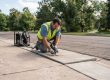
Polyurethane lifting raises existing concrete without tearing out the slab. Small holes are drilled in the concrete, expanding foam is injected beneath it, and the foam lifts the slab before hardening into support. This allows the existing concrete to be lifted instead of demolished and replaced. RiseLock describes the material this way: “waterproof foam won’t wash out or break down over time.” These process and material details explain the approach, but they are not additional warranty terms.
Discuss your Colorado Springs concrete lifting project
To start a useful project conversation, describe the affected surface and the main concern, such as an uneven section of a driveway or a sidewalk slab that no longer sits level. This gives the discussion a practical starting point: the location, the condition you have noticed, and the outcome you want. RiseLock can discuss polyurethane lifting in relation to the concrete work involved, without confusing the process with a warranty promise.
Most RiseLock lifting projects are completed in hours, though the timing for an individual project depends on its scope. This describes the work, not a warranty period or a promise about future performance. If you are weighing a concrete lifting warranty Colorado Springs, keep the distinctions clear: workmanship assurance, project method, and written coverage each communicate different things.
A sound decision starts with understanding the work and what the company’s stated assurance means. RiseLock’s commitment is clear: “We guarantee the job is done right.” For a direct conversation about the surface you are concerned about and the lifting work it may need, Discuss your concrete lifting project with RiseLock.
Move Forward With Clear Expectations
Turn what you have learned into a project conversation centered on your property and priorities. Understanding what a concrete lifting warranty Colorado Springs work may involve can help you explain the condition you see and the outcome you want, without assuming that a workmanship assurance means specific written warranty coverage.
RiseLock approaches concrete concerns with customer-focused care and a commitment to doing the work right. As a PTI-certified contractor and fully insured company, RiseLock is a point of contact for discussing your concrete lifting needs. Most lifting projects are completed in hours, though timing depends on the project.
Share which surface needs attention and what concerns you. Discuss your concrete lifting project with RiseLock and take the next step with clear expectations and a practical plan.
Frequently Asked Questions
Does RiseLock offer a concrete lifting warranty in Colorado Springs?
RiseLock’s published assurance is, “We guarantee the job is done right.” This states a workmanship commitment; it does not set a concrete lifting warranty period or describe specific warranty coverage. RiseLock serves Colorado Springs and communities including Denver, Aurora, Centennial, Parker, Englewood, Littleton, Lakewood, Arvada, Thornton, Wheatridge, Castle Rock, Castle Pines, and Boulder. Distinguish the quoted assurance from any defined written terms.
What does a concrete lifting warranty usually cover?
A concrete lifting warranty covers only the work and conditions described in its document. For example, the document might define coverage by the specific lifted section rather than the entire driveway. That is an illustration, not a universal term. Read the scope alongside exclusions, claim instructions, and any stated remedy. If a detail is not addressed, do not assume how it applies to your slab; rely on the written language.
Is a workmanship guarantee the same as a concrete lifting warranty?
No. A workmanship guarantee communicates an assurance about how work is performed, while a warranty describes defined coverage and its terms. RiseLock’s statement, “We guarantee the job is done right,” is its published workmanship assurance. It does not state a fixed coverage period or specify what remedy applies if concrete changes later. Keeping these meanings separate helps prevent a general assurance from being mistaken for a detailed warranty document.
How do I compare concrete lifting warranties in Colorado Springs?
Compare the written scope, qualifying issues, exclusions, claim steps, and remedy, not just the advertised term. For a concrete lifting warranty Colorado Springs comparison, put each provider’s published wording beside the details available to support it. If a page gives a duration but does not explain conditions or coverage boundaries, record those details as unknown rather than assuming the term applies to every slab or future change.
Can polyurethane concrete lifting come with a guarantee?
A contractor may describe an assurance or provide written warranty terms for polyurethane lifting, but the wording determines what it means. The lifting method and coverage are separate: using polyurethane foam does not establish a particular term or remedy by itself. RiseLock’s stated assurance is, “We guarantee the job is done right.” That is a workmanship commitment, not a defined promise about future slab movement or warranty coverage.
What should I keep after concrete lifting is completed?
Keep the written project description, any warranty document provided, and instructions supplied for your work together. Add a brief note identifying the repaired surface, such as the driveway section or patio area, so you can connect the records to the right location later. Dated photos can also help you remember the area’s appearance at completion. If a concern arises, use these records alongside the applicable written terms.
How long does concrete lifting take in Colorado Springs?
Most RiseLock lifting projects are completed in hours. This is a general description of project duration, not a guaranteed schedule for every job. The timeframe should not be confused with warranty duration, which is a separate term defined by written coverage when provided. Keep the project timing, agreed work, and any written coverage as distinct details in your records.