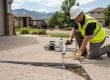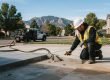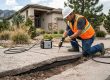


A hollow sound is a clue, not a diagnosis. If your patio, driveway, or walkway sounds different underfoot, the slab may have less contact with the material beneath it. But sound alone can’t confirm a void or show how extensive it is. Understanding what causes hollow spots under concrete Denver homeowners notice starts with considering what may be happening under the slab.
Water can wash soil away, poorly compacted fill can settle, and shifting ground can leave gaps beneath concrete. These causes may produce similar sounds, so the right response depends on the pattern of changes and the surrounding slab’s condition. A hollow note in one area doesn’t automatically mean the entire surface is settling.
This guide explains common causes of lost support beneath Denver-area concrete and what a hollow sound can and can’t tell you. You’ll learn which signs to observe, what details to record, and when it may make sense to consider concrete lifting and leveling.
Key Takeaways
- Learn what causes hollow spots under concrete Denver homeowners may notice, and why sound alone can’t establish the cause or extent.
- Understand how soil movement, settlement, erosion, and placement conditions can affect support beneath a slab.
- Look for patterns across the concrete, including whether changes are isolated or accompanied by cracks or uneven areas.
- Record the location, visible changes, recurrence, and nearby water or drainage conditions to provide useful context.
- The appropriate next step depends on the cause and slab condition. Some situations may call for further evaluation or monitoring rather than immediate lifting.
What Does a Hollow Spot Under Concrete Mean in Denver?
You’re walking across a driveway, patio, or walkway when one step sounds unexpectedly hollow. That change can be unsettling, especially if the slab looks intact. It may mean the concrete has less contact with the material beneath it, but the sound doesn’t reveal exactly what is happening underground.
A suspected subsurface void is a possible gap or area of reduced contact beneath a concrete slab. Visible surface damage is something you can see, such as a crack or uneven edge. The two can occur together, but one doesn’t automatically confirm the other. A hollow sound alone can’t establish a gap’s size, cause, or effect on the slab.
Denver-area ground conditions are relevant context, not a diagnosis. For example, expansive clay can swell and shrink as moisture levels change; Expansive Clay provides a general explanation of this soil behavior. Whether a specific slab is affected depends on its support and condition.
How a gap beneath a slab can change its sound
Concrete responds to a tap or footfall through the support beneath it. Where contact is reduced, the vibration may sound different from areas resting firmly on supporting material. That contrast can help you note where the sound changes, but tapping is an informal observation, not a way to confirm a void or measure its extent.
Consider sound separately from visible signs. Cracks, rocking, or uneven edges can indicate movement or a change in the slab, while a surface may also sound hollow without obvious damage. Recording where each clue appears is more useful than relying on sound alone.
Does a hollow sound always mean the slab is failing?
No. A hollow sound by itself doesn’t prove that a slab is unsafe, failing, or in need of repair. Its significance depends on where and how extensively the sound occurs, whether the concrete moves underfoot, and whether cracking or unevenness follows a pattern. Treat one sound as a clue to observe, not a conclusion.
Pay attention to changes over time. Progressing movement, widening cracks, or increasingly uneven edges deserve closer attention than an isolated sound that remains unchanged. Note the location, movement, crack patterns, and recurrence to provide a clearer picture of what causes hollow spots under concrete Denver homeowners notice in a specific area.
How Do Voids Form Beneath Concrete Slabs?
A concrete slab depends on consistent support from the material below it. That support can change if soil compresses, shifts, or washes away, or if fill was not placed and compacted evenly before the concrete was poured. A gap may develop in one area while the rest of the slab remains supported, so causes and patterns can vary from property to property.
Voids can form when supporting material moves, settles, erodes, or is inconsistently placed, but no single mechanism explains every hollow spot. Knowing the possibilities can help you make sense of clues around a slab without assuming that a crack or hollow sound points to one specific cause.
Soil movement, settlement, and inadequate support
Settlement occurs when soil or fill compresses under the slab’s weight, reducing support over time. Erosion or displacement is different: material may move out from beneath part of the concrete, potentially leaving a localized gap. Uneven compaction during construction, or later changes in the supporting fill, can also create areas that respond differently to loading.
Uneven support can contribute to movement, but a crack alone doesn’t prove settlement. Its location, pattern, and changes over time matter. For more context on assessing damaged concrete, see this concrete repair guide for Denver properties.
How water and drainage can contribute to an underlying void
Water can affect support in more than one way. Runoff directed toward a slab, a leaking water line, or poor drainage may carry fine soil away or alter moisture conditions in the supporting ground. If soil shifts or material washes away, contact beneath the concrete can become uneven. Nearby water is a possible clue, not proof of what caused a particular hollow spot.
Some Colorado soils expand when wet and shrink as they dry. The Colorado Geological Survey on Expansive Soil describes the potential effects of expansive soils in the state. This helps explain why moisture changes can matter, but it doesn’t identify the cause at an individual property.
For a useful record, note whether downspouts discharge near the slab, water pools after rain, soil appears washed out, or drainage has changed. Also write down when you first noticed the sound or any visible movement. These observations can help clarify whether drainage or lost support may be relevant before a repair approach is selected.
If a slab has lost support, polyurethane concrete lifting and leveling may be an option, depending on the cause, slab condition, and extent of the issue. RiseLock provides polyurethane concrete lifting and leveling using high-density foam.
Why Hollow Spots Can Develop Under Concrete Around Denver
Denver’s ground conditions can help explain why concrete support may change, but location alone can’t identify the cause beneath a particular driveway, patio, or walkway. Soil type varies, and a slab’s history matters. Grading, drainage, the type and placement of fill, and construction practices can all influence how consistently the ground supports concrete.
Some Colorado soils contain expansive clay, which can swell as it takes on moisture and shrink as it dries. The Colorado Geological Survey’s overview of expansive soil describes this hazard in the state. It provides useful context, but it doesn’t mean every Denver-area slab sits on expansive soil or that soil movement explains every hollow sound.
Colorado soil and moisture: useful context, not a diagnosis
Changes in moisture can affect some soils, while fill placed or compacted unevenly may provide inconsistent support. The same hollow sound can have different explanations on two nearby properties. Drainage, grading, and construction history are all relevant. Surface clues can guide an assessment, but they don’t reveal soil conditions beneath a slab on their own.
Seasonal changes, drainage, and the slab’s setting
Wetting and drying may influence moisture-sensitive ground, and freeze-thaw exposure can add to seasonal changes in soil conditions. These are possible influences, not automatic causes of a void. Note the location of a suspected hollow area in relation to water flow: a downspout, slope, irrigation zone, or persistent pooling could help determine whether drainage is relevant.
The table shows how to treat these clues. Each points to a question worth recording, not a conclusion about what lies below.
| Possible local condition | Clue to record | What the clue can’t prove |
|---|---|---|
| Expansive or variable soil | Changes noticed after periods of wetting or drying | That this soil is present beneath the slab or caused the sound |
| Downspout or slope directing water nearby | Water flow, pooling, or visible washout near an edge | That soil has eroded below the concrete |
| Irrigation or persistent moisture | Repeated wet areas or a change in drainage pattern | That moisture has weakened slab support |
| Freeze-thaw exposure | When movement or surface changes were first observed | That seasonal freezing is the sole cause |
For homeowners asking what causes hollow spots under concrete Denver properties may show, local conditions are only part of the answer. Record where the sound occurs, whether nearby water patterns have changed, and whether the slab itself is changing. Those observations help put the site and the concrete into context.

How to Assess a Suspected Hollow Spot Without Guessing
A useful record starts with what you can observe, not a theory about what lies under the slab. Note the sound’s location, visible changes, and whether the condition recurs or progresses. This helps distinguish a one-time impression from a pattern worth examining.
- Locate the sound. Mark the area on a simple sketch or describe it in relation to a fixed feature, such as the garage door, patio edge, or walkway joint. Avoid repeatedly striking the concrete; simply note where the sound seemed different during normal use.
- Photograph the area. Take a wider image showing the slab’s setting, then closer images of cracks, edges, or uneven transitions. Include the date and take comparison photos from similar positions if you notice changes later.
- Record visible movement or damage. Note whether an edge appears lower, the slab rocks, a transition feels uneven, or a crack changes. Describe what you see without deciding that it proves a void or settlement.
- Track timing and surroundings. Write down when you first noticed the sound or movement, whether it recurs, and any nearby downspouts, irrigation, pooling, slope, or recent drainage changes.
What to observe around the suspected hollow area
Look at the surrounding concrete, not only the spot that sounds different. Record cracks, edge settlement, rocking, and uneven transitions, especially if they change. Note whether the area is near a downspout, irrigation, a slope, or standing water. Dated photos can help you compare conditions over time more reliably than memory alone.
A useful record includes the sound’s location, dated photos, visible changes, recurrence, nearby water sources, and when you first noticed the condition. These details are clues, not a diagnosis of what causes hollow spots under concrete Denver properties may develop.
When a professional assessment is a sensible next step
Consider having the slab assessed if movement is progressing, the surface is becoming uneven, or cracks are changing noticeably. A hollow sound alone doesn’t establish a hazard or dictate a repair. Avoid drilling into the slab or attempting invasive tests yourself, since those steps can alter the area without clarifying the cause.
RiseLock provides polyurethane concrete lifting and leveling for concrete concerns. If your notes show a changing condition or you’re unsure how to interpret what you see, contact RiseLock about your concrete to discuss whether concrete leveling may suit the slab’s condition.
What Happens After a Denver Concrete Void Is Identified?
Identifying a possible void is the start of a decision, not an automatic instruction to lift the slab. The appropriate response depends on what affected the support, the concrete’s condition, the location and extent of the suspected loss, and how the area can be accessed. Consider these factors before selecting a repair approach.
In some cases, monitoring or further evaluation may make more sense than immediate lifting. A hollow sound without visible change or movement, for example, calls for considering the surrounding conditions before deciding whether work is needed. If the slab is shifting, becoming uneven, or showing changing cracks, those symptoms add important context. The goal is to understand the support issue rather than treat every hollow-sounding area the same way.
Why identifying the cause matters before selecting a repair
Changing a slab’s position without understanding the conditions contributing to lost support may leave the underlying issue unaddressed. Consider the concrete’s condition and position alongside signs of uneven support, drainage clues, and the site context. These details help distinguish a localized concern from a broader pattern and inform whether monitoring, further evaluation, or repair is appropriate.
That’s why understanding what causes hollow spots under concrete Denver homeowners notice matters beyond explaining a sound. A hollow area can relate to different site conditions, and no single repair method suits every slab. The findings should guide the response rather than the sound alone determining the work.
Where polyurethane concrete lifting may fit
When the slab’s support and elevation need attention, polyurethane concrete lifting and leveling may be suitable, depending on the concrete and site conditions. RiseLock uses high-density polyurethane foam to lift and level sunken concrete, offering an alternative to concrete replacement and traditional mudjacking. The method is not a universal answer for every suspected void; suitability depends on the slab and the extent of support loss.
The first priority is understanding the support concern and selecting a response that fits the slab. Monitoring or further evaluation may be appropriate in some situations; in others, lifting and leveling may be considered. To learn how the method works, read about polyurethane concrete lifting, or contact RiseLock about a concrete concern in the Denver area.
Take the Next Step With a Clearer Picture
A hollow sound doesn’t have to leave you guessing. Track what you notice and whether the slab’s condition is changing. If you’re still unsure what causes hollow spots under concrete Denver homeowners find, concrete lifting and leveling can address sunken or uneven slabs when the method suits their condition.
RiseLock specializes in polyurethane concrete lifting and leveling for residential and commercial clients. The company serves Denver and surrounding Colorado communities, including Aurora, Centennial, Parker, Colorado Springs, Englewood, Littleton, Lakewood, Arvada, Thornton, Wheatridge, Castle Rock, Castle Pines, and Boulder. The right approach starts with understanding the concrete and its support, then determining whether lifting fits the conditions.
Contact RiseLock about polyurethane concrete lifting and leveling to discuss your Denver-area concrete concern and take a considered next step.
Frequently Asked Questions
What causes hollow spots under concrete in Denver?
Hollow areas may form when soil beneath a slab settles, shifts, compresses, or erodes, reducing contact with the concrete. Water movement and construction conditions can also contribute, but neither a hollow sound nor a Denver address identifies the cause. A slab beside a downspout, for example, has different site clues from one installed over fill. The slab, drainage, soil conditions, and construction history all provide useful context.
Does a hollow sound under concrete mean there is a void?
Not necessarily. A hollow sound can suggest reduced support, but it can’t confirm a void or reveal its size. Concrete thickness, the material beneath it, and how sound travels can affect what you hear. Treat the sound as one clue, then note whether other conditions are changing. A new crack or an edge that sits differently from an adjoining slab provides useful context, though neither proves the cause on its own.
Can water cause hollow spots beneath a concrete slab?
Yes. Water can contribute if it moves soil or carries fine material away from beneath a slab. A leaking line, runoff, or irrigation may be relevant, but water isn’t always the cause. Note whether a wet area appears after irrigation or rain, whether pooling is new, and whether a downspout’s direction has changed. These details help describe the site without requiring you to determine what happened underground.
Are hollow spots under concrete common in Denver?
Hollow-sounding areas can occur in Denver, but causes vary from property to property. Neighborhood soil descriptions don’t reveal conditions beneath an individual slab. Grading, fill, drainage, and construction history also matter. RiseLock provides concrete lifting and leveling in Denver, Aurora, Centennial, Parker, Colorado Springs, Englewood, Littleton, Lakewood, Arvada, Thornton, Wheatridge, Castle Rock, Castle Pines, and Boulder. The condition of a particular slab depends on its own site and support.
Can a hollow spot under concrete get worse over time?
It may remain stable, or it may change if the conditions affecting support continue. Watch for a crack that lengthens, a walkway transition that becomes more uneven, or a slab edge that appears to move relative to a fixed feature. Dated photos taken from the same position can help show changes. If movement progresses, use those observations to explain the timeline when discussing the slab.
Can I check for a void under concrete without drilling?
You can document surface conditions without drilling, but you can’t confirm a void this way. Mark where the sound seems different, photograph the surrounding slab, and note nearby drainage features or visible changes. Avoid drilling or other invasive tests, since they can alter the concrete without establishing what lies beneath it. Surface observations alongside the slab’s condition and site context can help inform next steps.
Does every hollow spot under concrete need to be repaired?
No. A hollow sound alone doesn’t establish that repair is needed. The decision depends on the slab’s condition, whether it’s moving, and the extent and cause of any lost support. An unchanged sound with no visible movement may call for monitoring or further evaluation, while a changing slab may warrant a repair plan. Concrete leveling may suit some conditions, but the response depends on the specific slab.