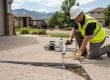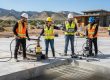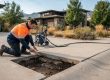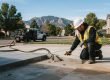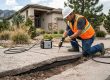

A garage floor that looks damaged may not need replacement. The underlying issue could be settled support beneath the slab. If the floor has dropped or become uneven, it’s reasonable to ask whether polyjacking for garage floors Englewood can lift it effectively, or whether the concrete needs a different repair.
The right choice starts with the cause, not appearance alone. Cracks, surface wear, and changes in floor level can point to different problems. A professional assessment helps determine whether lifting, surface repair, or replacement better suits the slab. RiseLock Concrete Lifting assesses settled concrete and provides polyurethane lifting for suitable slabs. This guide explains how polyjacking works, how it compares with other repair options, and what to consider when planning an assessment and repair in Englewood.
Key Takeaways
- Look for sloping, uneven transitions, or gaps beneath the slab, and distinguish possible settlement from surface wear or spalling.
- Learn how polyurethane foam injection can lift or stabilize a garage slab and what the assessment and repair process involves.
- Compare polyjacking, surface repair, and replacement by considering which problem each method addresses and the slab’s condition.
- Use the preparation checklist to describe affected areas, access, and your goals for the garage floor.
- See how an assessment can determine whether polyjacking for garage floors Englewood suits your slab.
Polyjacking for Englewood Garage Floors: Signs the Slab May Need Lifting
A sloping garage floor, an uneven transition at the doorway, or a gap beneath a slab edge can indicate that the concrete has shifted or lost support. These changes can affect how you use the garage and may make the floor look noticeably out of level. The first step is to work out whether the concern is the slab’s position, its surface, or both.
Look for patterns rather than focusing on an isolated mark. Note whether the floor appears to slope toward a different area, whether water follows a changed path, or whether the garage slab sits at a different height from adjoining concrete. These observations help describe the issue, but they don’t establish its cause. The general process of lifting settled concrete is described in Slabjacking, also known as concrete leveling.
What garage-floor changes may indicate slab settlement?
A height difference where the garage floor meets a driveway, threshold, or neighboring concrete may suggest movement. A visible gap beneath an edge is also worth documenting, especially if it appears to be growing. A crack alone, however, doesn’t prove that lifting is needed. Cracks can occur alongside settlement, but some are limited to the concrete surface.
Before an assessment, take clear photos from a few angles and include a nearby reference point, such as the doorway or adjoining slab. Record which areas feel uneven underfoot, where water appears to flow, and whether the condition has changed. This information helps show where the issue is and how it relates to the rest of the floor.
When is the problem more than a surface defect?
Surface spalling, shallow chips, and worn or peeling coatings affect the visible finish. If the slab remains at a consistent level and its support hasn’t changed, the concern may be limited to the surface. A noticeable elevation change, uneven joint, or gap below an edge raises a different question: whether the slab has settled or lost support.
A coating or patch can improve appearance or address localized surface damage, but it won’t raise a settled slab. Polyjacking for garage floors Englewood may suit a slab that needs lifting or stabilization, but visible symptoms alone can’t determine the right repair. Severe, spreading, or changing cracks, substantial displacement, or concerns about stability call for a professional evaluation before deciding on a surface repair or lift.
- Photograph: Capture the floor, cracks, gaps, and transitions from clear angles.
- Compare: Note differences in level between the garage and adjoining concrete.
- Describe: Record where the issue appears and any changes you’ve observed.
A careful assessment separates surface wear from changes in slab elevation or support. That distinction helps determine whether polyurethane lifting, concrete repair, or another approach better matches the garage floor’s condition.
How Polyjacking Lifts and Stabilizes an Englewood Garage Slab
Polyjacking is a concrete-lifting method that injects polyurethane foam beneath a slab to raise it or help restore support when conditions are suitable. The material is placed below the concrete, so the work addresses the slab’s position and support, not its visible finish. For polyjacking for garage floors Englewood, the repair plan should reflect the condition and layout of the garage rather than follow a fixed pattern.
The process is controlled and guided by the slab’s response. A professional assesses the concrete, identifies injection areas, introduces foam, and monitors the slab as it moves. The goal is to address the identified elevation or support concern with measured adjustments, then evaluate the result. Injection-point placement and the work’s scope depend on the garage floor.
What happens during a polyurethane lifting project?
First, the slab and affected areas are evaluated to determine whether lifting is appropriate and where injection may help. The assessment considers the floor’s condition and its relationship to adjoining concrete. Once the plan is set, injection points are selected to access the area beneath the slab.
- Assess: Review the slab’s condition, level changes, and repair objectives.
- Locate: Identify suitable injection areas based on the affected section and site layout.
- Inject: Introduce polyurethane foam beneath the concrete in a controlled manner.
- Monitor: Observe how the slab responds during injection and adjust the work as needed.
- Evaluate: Review the floor after lifting against the repair objectives.
This sequence is a framework, not a guarantee that every garage will follow the same procedure. A narrow settled section presents a different layout from a broad area with several connected transitions. Assessment guides the injection placement and scope, keeping the work focused on the slab area that needs attention.
What polyjacking does, and what it doesn’t repair
Polyurethane lifting addresses the position or support of a concrete slab when its condition makes lifting suitable. It doesn’t automatically repair every visible defect. A crack may need separate concrete repair, while worn or peeling coatings call for surface treatment. Resurfacing can change the finish, but it won’t raise concrete that has settled.
Foam injection also shouldn’t be treated as a complete solution to every drainage or soil concern. If water continues to affect the area or another condition contributes to movement, that issue may need separate attention. An assessment helps distinguish the slab-lifting scope from related repairs instead of assuming one procedure will resolve every cause.
RiseLock Concrete Lifting provides polyurethane concrete lifting and leveling for residential and commercial slabs, including garage-floor projects in Englewood. A polyurethane concrete lifting assessment can clarify whether the slab’s condition and your repair goals fit this approach.
Polyjacking, Resurfacing, or Replacement: Choosing for an Englewood Garage
An uneven-looking garage floor doesn’t determine the repair by itself. The key question is whether the problem lies in the slab’s elevation or support, the concrete surface, or the slab’s overall condition. Polyjacking for garage floors Englewood may suit some settled slabs, while surface repair or replacement may better match other conditions. A project-specific assessment helps distinguish among the options.
| Repair method | What it addresses | What it does not address | May suit |
|---|---|---|---|
| Polyjacking | Slab elevation or support, when lifting is appropriate | It does not refinish the floor or automatically resolve every crack, drainage, or soil concern | A settled slab that remains suitable for lifting |
| Surface repair or resurfacing | Localized surface damage or the visible finish | It does not raise a settled slab or restore lost support | A slab with surface wear when elevation and support are not the central issue |
| Slab replacement | A slab that is too deteriorated or otherwise unsuitable for lifting or surface repair | It is not a surface-only treatment, and the full project scope depends on site conditions | Extensive deterioration or a slab whose condition calls for removal and replacement |
When may lifting be preferable to replacing a garage slab?
A settled slab that remains in suitable condition may be a candidate for professional evaluation for polyurethane lifting. This method works with existing concrete by addressing its position or support, rather than removing and replacing the entire slab. That difference can affect the scope of work, but it doesn’t guarantee savings or mean lifting suits every floor. The slab’s condition and your goals should guide the decision.
For a deeper explanation of the method and how it fits into slab restoration, see RiseLock’s polyurethane concrete lifting guide.
When might resurfacing or replacement be more appropriate?
Resurfacing addresses the concrete’s visible finish. It may be relevant when the slab is level and supported but has surface wear. Applying a new surface alone won’t correct a change in elevation. Replacement may be appropriate when deterioration is extensive or the concrete isn’t suitable for lifting. These are project-specific judgments, not decisions to make based on one crack or one uneven spot.
During assessment, consider what needs to change: the floor’s level, its surface, or the slab itself. Also note how the affected area meets adjoining concrete and how you use the garage. This context helps define a repair scope rather than defaulting to either the most limited or most extensive option. RiseLock evaluates settled concrete and provides polyurethane lifting and leveling for suitable slabs. The assessment helps determine whether the floor needs lifting, concrete repair, or another scope.

Preparing for Polyjacking: What Englewood Garage Owners Should Expect
A useful assessment starts with a clear picture of the garage floor and how you use it. Before discussing polyjacking for garage floors Englewood, note the areas that feel uneven, the transitions to adjoining concrete, and any access constraints. These details help frame the evaluation, but they don’t determine the cause or repair on their own.
What information helps assess a settled garage floor?
Describe where you see a slope, crack, or gap, and whether it is near a doorway, wall, or another concrete surface. Clear photos can show the affected area and its relationship to the rest of the floor. If you remember when the change first became noticeable or have seen it change over time, share that context too.
- Symptoms: Note uneven areas, cracks, gaps, or changes in drainage direction.
- Location: Identify the affected part of the garage and where the slab meets adjoining concrete.
- Photos: Capture the floor and transitions from more than one angle.
- Access: Describe any constraints around reaching the affected floor area.
- Use: Explain how you use the garage and what you want the repair to address.
These observations give the assessment a practical starting point. They also help separate your main objective, such as addressing a noticeable level change, from concerns about cracks or surface wear.
How to think about local site conditions
Being in Englewood is useful context, but location alone doesn’t explain why a particular slab has moved. Site-specific details matter more: where water collects or flows, how the garage floor meets the driveway, and whether nearby concrete appears to sit at a different level. Share what you’ve observed without assuming drainage, soil, or weather caused the change.
An assessment should consider the slab’s condition, adjoining surfaces, access, and your project objectives together. The scope and logistics depend on the garage itself, so don’t assume every floor has the same access needs or repair plan. The expected duration and final surface appearance are also project-specific and can’t be determined from a photo alone.
For broader context on evaluating concrete repair approaches, RiseLock’s concrete leveling solutions guide can help you understand how lifting fits into structural restoration decisions.
When you’re ready to discuss a settled garage slab, request an assessment from RiseLock. A review of the floor’s condition and your goals can clarify whether polyurethane concrete lifting is an appropriate scope for the project.
RiseLock Polyjacking for Garage Floors in Englewood: Assessment to Next Steps
A sunken or uneven garage slab calls for a repair plan based on the concrete’s actual condition. RiseLock Concrete Lifting provides polyurethane concrete lifting and leveling for residential and commercial slabs, including garage floors in Englewood. Polyjacking can be an alternative to replacement when the existing slab is suitable for lifting, but it isn’t right for every floor. An assessment helps establish the appropriate scope before selecting a repair method.
What RiseLock’s garage-floor service is designed to address
Polyurethane lifting is designed to raise or stabilize settled concrete when the slab’s condition supports that approach. It addresses slab position and support, not surface refinishing, and it shouldn’t be treated as a fix for every crack or site condition. The foam concrete lifting guide explains the method in broader detail. For a garage, an assessment connects the method to the affected slab and your repair objectives.
The next step is to understand what the floor needs, rather than assume that visible unevenness automatically means lifting. RiseLock assesses settled concrete and provides polyurethane lifting and leveling for suitable slabs. The assessment helps establish whether lifting, concrete repair, or another repair scope best fits the floor’s condition.
- Share the location: Provide the Englewood project address or location details so the assessment is tied to the right property.
- Describe the symptoms: Point out where the floor slopes, feels uneven, or meets adjoining concrete, and explain what has changed.
- Show the affected areas: Clear photos can help illustrate the floor and its transitions.
- Explain your goal: Say whether you’re primarily concerned with the slab’s level, its surface condition, or how you use the garage.
These details help frame the assessment, but they don’t replace a review of the slab. Its condition, adjoining surfaces, and the intended outcome all matter when deciding whether lifting or another repair is suitable. The recommendation should reflect the garage rather than apply a fixed method to every project.
How to take the next step in Englewood
RiseLock serves Englewood and nearby Colorado communities, including Denver, Aurora, Centennial, Parker, Colorado Springs, Littleton, Lakewood, Arvada, Thornton, Wheatridge, Castle Rock, Castle Pines, and Boulder. If an uneven garage floor is affecting how you use the space, share the symptoms and project location to start a discussion about the slab’s condition and repair needs. Discuss your Englewood garage floor with RiseLock and take the next step toward an assessment based on the concrete and your goals.
Make a Clear Plan for Your Garage Floor
Turn what you’ve noticed into a focused repair discussion. Think about how you want the garage to function, which areas concern you most, and what you’d like an assessment to clarify. That gives the conversation a practical direction, whether your priority is a more even transition, a stable slab, or understanding which repair scope fits the floor.
For polyjacking for garage floors Englewood, RiseLock brings specialized polyurethane concrete lifting and leveling services to the assessment. The aim is to understand the slab before recommending a course of action, so you can make an informed decision about what comes next.
Discuss your Englewood garage floor with RiseLock and take a considered next step toward a repair plan that reflects your floor and priorities. A clear assessment can help turn uncertainty into a practical way forward.
Frequently Asked Questions
Is polyjacking a good option for every garage floor?
No. Suitability depends on the slab’s condition, the nature of any settlement, and what you want the repair to achieve. Polyjacking may address elevation or support when the concrete is appropriate for lifting, but it won’t correct every surface defect or underlying issue. For polyjacking for garage floors Englewood, an assessment of the actual floor is the way to determine whether lifting fits the project.
Can polyjacking fix cracks in a garage floor?
Not necessarily. A crack and slab settlement are related concerns only when the concrete’s condition indicates they are; a crack alone doesn’t establish that lifting is needed. Polyurethane injection may lift or support suitable concrete, but it won’t automatically close every crack or restore a worn finish. The crack’s cause, whether it is changing, and the slab’s overall condition help determine whether separate crack repair or other work should be considered.
How long does polyjacking take on a garage floor?
There isn’t one standard duration for every garage floor. The work involved depends on factors such as the affected area, slab condition, access, and repair scope. An assessment provides a clearer basis for understanding the project and its scheduling. It’s also the time to discuss when the garage can return to its usual use, since that depends on the work planned.
Will polyjacking make my garage floor look new?
No. Polyjacking addresses the slab’s position or support, not the appearance of newly poured concrete. Existing stains, cracks, spalling, or worn coatings may still be visible after lifting. If appearance is a priority, include it in the repair discussion. Cosmetic concrete repair or resurfacing is a separate consideration, and the finished look depends on the slab’s condition and the work included.
Is polyjacking different from mudjacking?
Yes. Both methods lift concrete, but polyjacking injects polyurethane foam beneath the slab, while mudjacking uses a cement-based slurry. Those material differences describe the methods, not a guarantee about a project’s speed, strength, cost, or lifespan. RiseLock provides polyurethane concrete lifting and leveling rather than traditional mudjacking. The suitable approach depends on the slab and repair objective, which should be evaluated before choosing a method.
What should I do if my garage floor is still uneven after repair?
Document the area and arrange a follow-up evaluation of the slab and completed repair scope. Note where the floor remains uneven, whether the height difference appears to have changed, and how the area meets adjoining concrete. Include any changes in water flow too. These details help describe the concern without presuming its cause or assuming a particular remedy is needed.
Does Englewood weather cause garage floors to settle?
Weather alone can’t explain why a particular garage slab has settled. Moisture, drainage, soil conditions, construction, and seasonal changes may be relevant, but their effects vary from property to property. Location isn’t a diagnosis. Whether a garage is in Englewood or another nearby community, evaluate the actual slab and site conditions instead of attributing movement to a general climate or soil claim without project-specific evidence.