

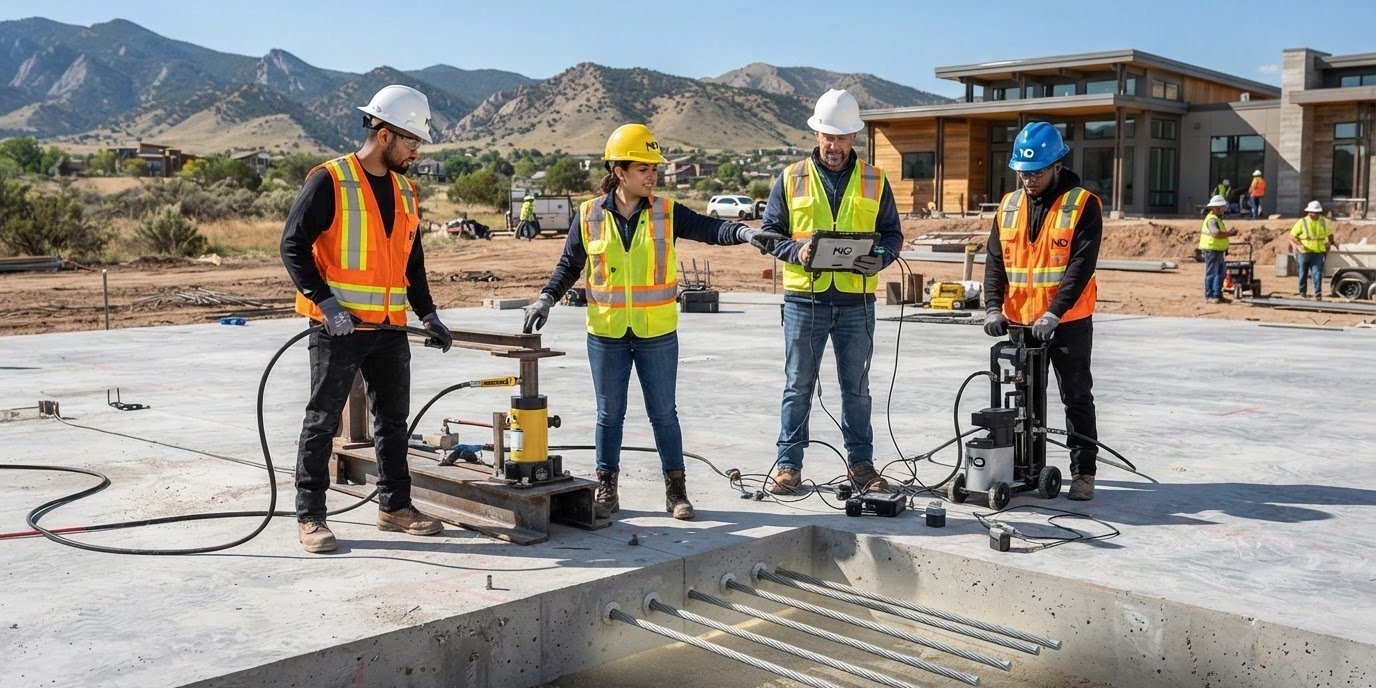
A load test proves only the engineered condition it measures. It doesn’t certify a post-tension slab for every future use. That distinction matters when Parker property owners researching “post tension slab installation Parker” are planning new work or addressing a concern about an existing structure.
It’s reasonable to ask how load testing differs from other assessments and whether testing could disturb embedded tendons or damage the concrete. The answer depends on the question being asked and how an engineer defines the test. A load test evaluates a specific response under specified conditions; it isn’t a universal verdict on the slab.
This article explains what a test can establish, where its limits lie, and what information helps an engineer define an appropriate scope. That includes the intended use, available plans, and known slab conditions. You’ll also learn how to connect findings to practical project decisions in Parker. RiseLock Concrete Lifting provides post-tension installation and concrete reinforcement for projects where those services are needed.
Key Takeaways
- Start with the decision you need to make about the slab. That question helps determine whether load testing is appropriate.
- Visual inspection, records review, structural analysis, and load testing provide different kinds of information.
- Gather available plans, repair history, site details, and intended-use information to support an engineer’s assessment.
- For a post tension slab installation Parker project, connect installation planning with engineering criteria and structural performance goals.
- RiseLock provides post-tension installation and concrete reinforcement in Parker, with project planning centered on the slab’s requirements.
Post-Tension Slab Load Testing in Parker: What It Can, and Cannot, Show
A slab load test is an engineer-planned assessment of how a structure responds when a defined load is applied under specified conditions. The engineer sets the purpose and scope around a particular question, such as whether the slab’s observed response is consistent with a proposed use. The result applies to that test condition. It doesn’t automatically establish the slab’s overall condition or suitability for every future use.
A load test measures a slab’s response to a defined loading condition, not its universal capacity or fitness for every use. Depending on the engineering plan, observations may relate to movement, cracking, or other response indicators. Acceptance criteria must be established for the specific structure and question. There is no single pass/fail result that applies to every post-tension slab.
Other assessment methods provide different evidence. A visual inspection documents visible conditions, such as cracking or unevenness, but doesn’t reveal every concealed feature. A records review examines available drawings and construction information. Structural analysis uses those details and engineering calculations to evaluate expected performance. Load testing observes actual response under a planned condition. An engineer may use one method or combine them; none replaces every other method.
What makes a concrete slab post-tensioned?
Post-tensioned concrete contains steel tendons that are tensioned after the concrete has hardened. The tension in those tendons compresses the concrete and influences how the slab carries loads. An anchorage is the component that holds a tendon at its end and transfers its force to the concrete. For a basic overview of the system and how it differs from pre-tensioning, see Post-tensioned concrete.
Slab drawings and construction records can help explain tendon layout, anchorage locations, and design assumptions. Records may be incomplete, so an engineer considers the available documentation alongside the slab’s observed condition. This context matters before defining an assessment that could affect or rely on the structure.
When might a Parker project consider load testing?
A property owner might ask about testing after a proposed change in use or when a project needs information about the slab’s response to a particular capacity demand. These examples don’t mean testing is always the right next step. A structural engineer determines whether a test can answer the question, what conditions it should address, and what other information is needed.
For owners planning post tension slab installation Parker projects, a clear engineering question helps connect design, assessment, and practical decisions. RiseLock provides post-tension installation in Parker, with a focus on concrete reinforcement and structural integrity. An engineer-defined scope keeps an evaluation tied to the project’s needs rather than treating a test result as blanket approval.
How Engineers Plan Post-Tension Slab Load Testing
A useful test plan begins with a decision, not a loading procedure. The engineer first identifies what the property owner needs to know, then determines whether testing can provide relevant evidence. Planning also distinguishes a load test from a visual inspection or structural analysis. Each method contributes different information, and records or analysis may be enough to address the question.
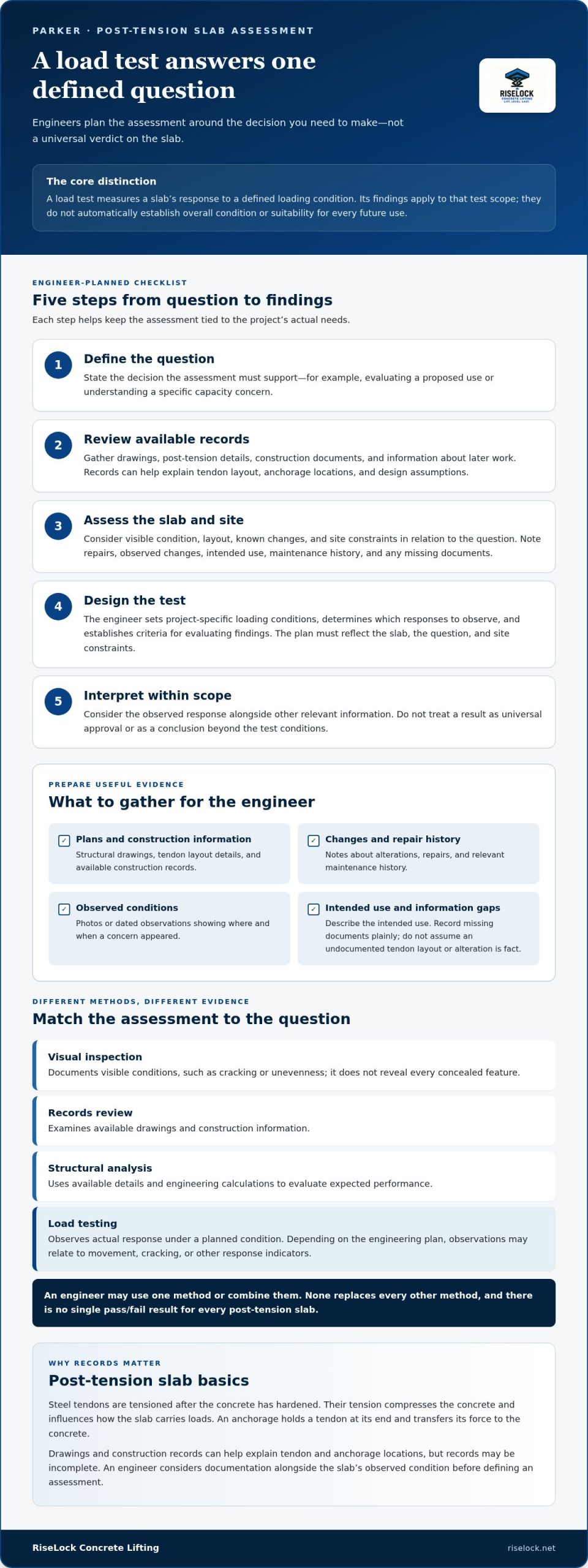
The planning sequence typically moves through five connected steps:
- Define the question. State the decision the assessment must support, such as evaluating a proposed use or understanding a specific capacity concern.
- Review records. Examine available drawings, post-tension details, construction documents, and information about later work.
- Assess the slab. Consider its visible condition, layout, known changes, and relevant site constraints in relation to the question.
- Design the test. The engineer establishes project-specific loading conditions, what responses will be observed, and the criteria for evaluating the findings.
- Interpret results. Consider findings within the test’s defined scope and alongside other relevant information. Don’t treat them as universal approval.
These steps keep the assessment focused. For example, a question about a planned change in use must be translated into appropriate engineering criteria for that structure. Test conditions and acceptance criteria depend on the slab and the engineering plan. Any technical standard or code reference must be verified for current applicability before it is named or used to frame a conclusion.
What project information helps define the test?
Gather available structural drawings, post-tension layout details, and construction records, along with notes about alterations, repairs, observed changes, intended use, and relevant maintenance history. Photos or dated observations can help show when and where a concern appeared. If documents are missing, record that gap plainly. An engineer can account for uncertainty, but an assumed tendon layout or undocumented alteration shouldn’t be treated as fact.
Why test design and safety planning matter
Test design must reflect the slab, the question being investigated, site constraints, and a suitable plan for observing and documenting the response. The engineer also considers how the work can proceed without relying on guesswork about the structure. Only qualified project professionals should determine whether testing is appropriate and how it proceeds. Owners shouldn’t create test loads or attempt to locate, drill near, handle, or alter tendons.
This project-specific approach applies to existing slabs and post tension slab installation Parker projects. Clear records and a defined engineering question help connect assessment findings to decisions about design, use, or next steps. RiseLock provides post-tension installation in Parker, with a focus on concrete reinforcement and structural integrity. For a project discussion about post-tension work in Parker, have the intended scope and available documentation ready.
Load Testing, Inspection, and Structural Analysis: Which Answers Do They Provide?
Structural assessment methods answer different questions. Choosing the right one depends on the concern, the information available, and the decision the findings need to support. An engineer may use one method or combine several to build a clearer picture of a post-tension slab.
Inspection observes condition, while a load test evaluates response under defined conditions. Neither method alone answers every question about a slab. Understanding the difference helps you decide what information to gather and what to discuss with an engineer.
| Method | Question answered | Typical information used | Key limitation |
|---|---|---|---|
| Visual inspection | What visible conditions or changes are present? | Accessible slab surfaces, observed cracking, unevenness, and owner-reported concerns | Visible observations don’t establish hidden capacity or tendon condition. |
| Records review | What was documented about the slab’s design and construction? | Available structural drawings, post-tension details, construction records, and alteration history | Records may be incomplete or may not reflect later changes. |
| Structural analysis | How does the structure appear to address a defined engineering question? | Design information, known conditions, intended use, and engineering calculations | Conclusions depend on the quality and relevance of the available information and assumptions. |
| Engineer-designed load testing | How does the slab respond under specified test conditions? | The test plan, defined conditions, observed response, and relevant records | Findings apply to the scope and conditions of that test, not every possible use. |
What a visual inspection can reveal
An inspection can document visible cracking, surface changes, or areas that appear uneven. These observations describe what’s happening at the surface and may help an engineer decide whether records review, analysis, or further evaluation is warranted. They don’t prove the condition of concealed tendons, reveal every internal feature, or certify structural performance on their own.
When analysis or testing may address the project question
Structural analysis uses design and condition information to evaluate a defined issue, such as whether available documentation supports a proposed use. If important details are uncertain or the question calls for evidence of actual response, an engineer may consider a load test under specified conditions. Testing isn’t automatically necessary, and analysis isn’t automatically sufficient. The appropriate approach depends on the structure and the question.
For either method, an engineer interprets findings in light of the defined scope and available records. A test result shouldn’t be detached from its conditions and treated as general approval. An analytical conclusion should likewise be understood in relation to the information and assumptions behind it.
Questions identified during post tension slab installation Parker projects can also benefit from this distinction. Observations, design records, calculations, and measured response each contribute a different kind of evidence. Keeping those roles clear helps owners focus on the decision at hand without expecting one assessment method to answer every structural question.
Preparing for a Post-Tension Slab Assessment in Parker
Good preparation helps an engineer focus an assessment on the decision you need to make. For a property in Parker or a nearby Colorado community, organize what you know about the slab, how it’s used, and what has changed. Complete records can be helpful, but identify missing information clearly rather than filling gaps with assumptions.
A practical information checklist for the project team
Gather what’s available before the project discussion. A concise folder of documents and observations can connect the assessment question to the slab’s history and current use.
- Structural drawings, post-tension details, tendon layout plans, and construction records.
- Prior engineering reports, repair documents, and records of alterations or additions.
- The slab’s location in the property, its current and intended use, and any proposed change in use.
- Factual descriptions of observed concerns, including where and when they appeared, with dated photos if available.
- Relevant maintenance history and site access constraints that could affect assessment planning.
Describe what you see without diagnosing the cause. For example, note the location and appearance of a crack rather than concluding that a tendon is damaged. Surface signs alone don’t establish the condition of concealed components. If records or details can’t be found, note what’s missing and when the information was last available.
For background on the role of post-tensioning in concrete reinforcement, RiseLock’s post-tension installation guide provides context for a project conversation. If your plans involve post tension slab installation Parker, clear project goals and available design information can support coordinated planning.
Questions to resolve before a test is specified
Before a test is considered, make the intended decision explicit. Is the assessment meant to inform a proposed use, address a particular concern, or guide another project choice? A focused question helps the engineer determine whether a load test is suitable or whether records review, inspection, analysis, or a combination of methods may be more useful.
Clarify project roles and deliverables with the professionals responsible for the assessment. The engineer should define the test conditions and evaluation criteria, along with how monitoring, interpretation, and reporting fit the project scope. Property decision-makers also need to know how findings will be documented and explained, including the limits of conclusions drawn from the available records and assessment.
For owners planning post-tension work in Parker, RiseLock provides post-tension installation with a focus on concrete reinforcement and structural integrity. Discuss your post-tension project with RiseLock as you organize project details and define the work ahead.
Post-Tension Installation and Project Next Steps with RiseLock in Parker
Assessment and installation are related, but they serve different purposes. A load test evaluates how a slab responds under engineer-defined conditions. Post-tension installation is construction work guided by the project’s engineering design and requirements. Keeping those roles distinct helps property owners understand what each part of a project contributes without treating installation as a substitute for structural evaluation.
RiseLock provides post-tension installation and concrete reinforcement in Parker. Sound project planning connects the engineering criteria with the work being performed. For background before discussing a project, the post-tension installation guide explains the role of post-tensioning in structural concrete reinforcement.
How installation expertise fits into structural planning
Post-tension installation is one part of a larger structural plan. The design establishes project requirements, and installation needs to follow the applicable engineering design and project scope. RiseLock provides installation and concrete reinforcement work, while assessment decisions and interpretation of load-test findings remain separate engineering matters. Installation alone doesn’t establish how an existing slab will perform under a particular test condition.
For a post tension slab installation Parker project, clear coordination helps keep the work aligned with its design intent. Project documents and engineering criteria provide a basis for understanding what the installation needs to address. The scope depends on the project; an installation description can’t establish a test result or guarantee a structural outcome.
A clear next step for Parker property and project teams
Before a project discussion, prepare a short summary of the slab or planned work, the objective, and the structural documents you have. Include the intended use and any known changes or concerns. This gives the conversation a practical starting point and helps clarify the installation scope. If your question concerns an existing slab’s capacity or response, keep that engineering assessment distinct from discussion of new installation work.
Property owners and project teams in Parker can bring those details to a conversation about post-tension work with RiseLock. The purpose is to discuss the project and relevant installation scope, not to predetermine a test result or promise a particular outcome. A project-specific discussion helps coordinate concrete work with engineering criteria.
Discuss your Parker post-tension project with RiseLock and take the next step with the project objective and available documents in hand.
Planning a post tension slab installation Parker project
For a new slab, begin with the project’s structural design, intended use, and site requirements. Keep the installation scope tied to the engineering criteria, and organize the relevant drawings and project details before work is planned. RiseLock provides post-tension installation and concrete reinforcement in Parker.
RiseLock also serves property and project teams in Denver, Aurora, Centennial, Parker, Colorado Springs, Englewood, Littleton, Lakewood, Arvada, Thornton, Wheatridge, Castle Rock, Castle Pines, and Boulder. The same practical starting point applies across these communities: clarify the project objective and gather the available design information.
Set a Clear Direction for Your Parker Project
The most useful next step is to turn a broad concern into a clear project brief: what decision is ahead, what information is available, and what remains uncertain. This framing helps keep engineering review, assessment planning, and construction coordination aligned without asking a load test to answer beyond its defined scope.
If you’re planning post tension slab installation Parker, gather relevant drawings and describe how the slab will be used. For an existing structure, note observed changes and project goals without assuming their cause. A focused discussion can clarify how installation planning fits alongside engineering criteria and what information should guide the work.
RiseLock provides post-tension installation and concrete reinforcement for Parker projects. Share your project objective and available documents to begin a practical conversation about scope and next steps. Discuss your Parker post-tension project with RiseLock and move forward with a clearer basis for planning.
Frequently Asked Questions
What is a load test on a post-tension slab?
A load test is an engineer-planned assessment of how a post-tension slab responds under specified loading conditions. It can help address a defined project question, such as whether the slab’s response under a planned condition is consistent with a proposed use. It isn’t a general certificate of condition. The engineer sets the scope and evaluates observations against project-specific criteria, which should be understood before using results to make decisions.
Is load testing required for every post-tension slab in Parker?
No, a load test isn’t automatically needed for every post-tension slab in Parker. Whether it’s appropriate depends on the project question, available design information, and the slab’s known condition. A test may not be the most useful way to address a concern; records review or engineering analysis may be more relevant. The engineer should identify the decision the assessment needs to support before specifying testing.
Can a load test identify a damaged post-tension cable?
Not by itself in a definitive, cable-specific way. A load test measures the slab’s response under planned conditions; it doesn’t directly reveal the condition or location of an individual concealed tendon. If cable damage is a concern, tell the engineer what prompted it and provide relevant records or observations. The engineer can determine whether additional assessment is needed and how the test findings fit with other evidence.
How is load testing different from a visual inspection?
A visual inspection records observable surface conditions, such as a crack or change in level. A load test evaluates the slab’s response under specified conditions. For example, an inspection might document where a crack appears, while a test might assess a defined response related to a project question. Neither method alone establishes every aspect of slab performance, and visible signs shouldn’t be treated as proof of concealed tendon condition.
How long does post-tension slab load testing take?
There isn’t one reliable duration that applies to every test. The schedule depends on the engineer’s scope, preparation, site access, planned observations, and how results will be documented. Time needed to review records and assess the site may also affect the overall project schedule. Ask the engineer to distinguish planned on-site work from analysis and reporting so you can coordinate access and communicate timing with the property team.
What information should I gather before discussing a slab assessment?
Gather any structural plans, tendon details, prior reports, alteration records, and notes about the slab’s intended use and observed concerns. Dated photos and a clear description of the decision you need to make can help focus the discussion. This is useful for Parker and nearby communities including Denver, Aurora, Centennial, Colorado Springs, Englewood, Littleton, Lakewood, Arvada, Thornton, Wheatridge, Castle Rock, Castle Pines, and Boulder.
Who interprets post-tension slab load-test results?
The structural engineer responsible for the assessment interprets results in relation to the test plan, evaluation criteria, and available project information. Ask for an explanation that separates what was observed from the conclusions drawn and identifies any limits or remaining questions. This helps property decision-makers understand what the findings support, what they don’t establish, and whether the information is relevant to the specific use or project under consideration.