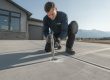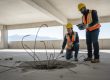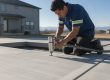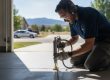

In the Denver Metro area, the ground beneath your feet is a shifting force of bentonite clay that exerts thousands of pounds of pressure on every foundation. This expansive soil is the primary driver of structural failure across the Front Range, often turning traditional concrete slabs into a map of expensive cracks. You’ve likely seen this damage firsthand or worried about the escalating costs of traditional thick-slab reinforcement. It’s a legitimate concern for anyone building in a climate where soil movement is a certainty, not a possibility.
Professional post tension installation Denver provides an active defense system, transforming concrete into a high-strength, flexible asset that resists the tensile stresses of our local geology. This article details how precision-engineered tendons protect your investment from soil heave while ensuring full compliance with the 2025 Denver Building and Fire Codes. We’ll explore the technical mastery required for successful installation, the critical role of geotechnical reports, and how modern repair techniques maintain structural integrity for the long term.
Key Takeaways
- Understand why Denver’s expansive bentonite clay requires active structural reinforcement to prevent foundation failure and long-term settlement.
- Learn how the technical process of tendon stressing allows for thinner, more efficient concrete slabs without sacrificing load-bearing capacity.
- Discover how professional post tension installation Denver maximizes commercial floor space and reduces overall material costs through structural mastery.
- Identify the critical warning signs of a post-tension cable blowout and the safety protocols required for effective structural repair and stabilization.
- Explore the technical synergy between post-tensioning and polyurethane stabilization for comprehensive slab health across the Colorado Front Range.
Understanding Post-Tension Installation in Denver’s Geological Context
Denver’s landscape presents a unique set of structural challenges that require more than standard concrete solutions. The ground here is rich in bentonite clay, a material known for its high expansive potential. When this clay absorbs moisture, it swells with enough force to lift entire structures; when it dries, it shrinks, leaving foundations unsupported. Professional post tension installation Denver addresses these volatile conditions by treating the concrete slab as an active structural element rather than a passive weight.
At its core, post-tensioning is a sophisticated method of Prestressed concrete that utilizes high-strength steel tendons to reinforce the slab. While concrete is exceptionally strong under compression, it’s naturally brittle and weak when subjected to tension. In a post-tensioned system, steel cables are laid in a specific grid before the concrete is poured. Once the slab reaches a predetermined strength, these cables are tensioned with hydraulic jacks, effectively squeezing the concrete together. This active compression mechanism ensures the slab remains under constant inward pressure, which counteracts the external forces exerted by shifting soils.
The Challenge of Colorado’s Expansive Soils
In the Front Range, soil movement isn’t a possibility; it’s a certainty. Bentonite clay acts like a sponge, and the resulting “heave” can easily snap traditional reinforced slabs that rely on passive rebar. Standard rebar only begins to work after the concrete has already started to stretch and crack. By contrast, the active reinforcement provided by tensioned cables prevents those cracks from forming in the first place. By keeping the concrete in a state of permanent compression, the system allows the entire foundation to move as a single, rigid unit, significantly reducing the risk of structural failure during seasonal moisture cycles.
Post-Tensioning vs. Traditional Reinforcement
The choice between post-tensioning and traditional reinforcement often comes down to both performance and economics. Post-tensioned slabs typically offer a higher load-bearing capacity while requiring less material. Because the internal steel tendons do the heavy lifting, engineers can specify thinner slabs without compromising integrity. This leads to several practical advantages for Denver builds:
- Material Efficiency: Projects often use less concrete and steel, which can offset the costs of the specialized tensioning process.
- Reduced Weight: Thinner slabs put less stress on the underlying soil and supporting structures in multi-story commercial decks.
- Crack Control: The constant compressive force minimizes shrinkage cracks, leading to a more durable finished surface.
Post-tensioning is a method of active structural reinforcement that applies permanent internal compression to concrete, allowing it to withstand the intense tensile stresses caused by Denver’s shifting bentonite clay.
The Technical Process: From Tendon Placement to Stressing
A successful post tension installation Denver project is defined by the precision of its earliest stages. Unlike traditional reinforcement where rebar is simply tied into a grid, post-tensioning is a dynamic system that requires exact placement to function as intended. Every component, from the high-strength steel tendons to the anchors, must be installed with surgical accuracy. This ensures the slab can effectively withstand the immense pressures of Colorado’s shifting soils without compromising its structural integrity.
Laying the Foundation: Tendon and Anchor Placement
The layout phase begins with placing tendons according to the project’s specific engineering blueprints. These cables are protected from corrosion by a specialized plastic sheathing and a layer of high-performance grease. This grease serves a dual purpose. It prevents rust and allows the steel to slide smoothly within the sheathing when tension is applied later. To maintain the structural integrity of the design, we use “chairs” to create a specific vertical profile or “drape.” This drape ensures the compressive force is distributed exactly where the concrete is most vulnerable to tension. Adhering to the standards set by the Post-Tensioning Institute is essential for ensuring these components perform reliably under load. Before the concrete pour, anchors are securely fastened to the formwork, providing the fixed points where the cables will eventually be locked into place.
The Stressing Phase: Applying the Load
Timing is everything when it comes to stressing. We don’t apply tension until the concrete reaches a specific compressive strength, typically 3,000 PSI, which usually occurs three to seven days after the pour. Using calibrated hydraulic jacks, our technicians pull the tendons to a calculated force, often reaching 33,000 pounds of pressure. This is a critical moment where safety is the priority. We establish strict exclusion zones to protect personnel from the unlikely event of a cable or anchor failure. Once the tension is applied, we carefully measure and record the “elongation” of each cable. These measurements are compared against the engineer’s theoretical calculations to verify that the slab has been properly compressed. If you are planning a project that requires this level of technical mastery, RiseLock offers the expertise to manage every phase of the installation with professional reliability.
Strategic Advantages for Denver Commercial and Residential Builds
Choosing post tension installation Denver is more than a structural requirement; it’s a strategic decision that optimizes the entire building process. By moving beyond traditional reinforcement, developers and homeowners gain significant advantages in material efficiency and architectural flexibility. These benefits are particularly pronounced in the local market, where rising labor costs and strict adherence to the 2025 Denver Building and Fire Codes demand high-performance solutions that provide long-term reliability.
Commercial Applications: Longer Spans and Thinner Decks
In the commercial sector, the ability to span longer distances without the intrusion of support columns is a primary driver for post-tensioning. This architectural freedom is essential for modern office spaces in districts like RiNo or specialized healthcare facilities where open floor plans are required. By reducing the number of necessary columns, builders can maximize usable floor space and simplify interior layouts. This creates a more versatile environment for tenants and increases the overall value of the property.
Post-tensioned slabs are also significantly thinner than standard reinforced concrete. This reduction in thickness lowers the overall weight of the building and decreases material costs for both concrete and steel. In multi-story construction, even a slight reduction in floor-to-floor height can lead to substantial savings in facade materials, vertical piping, and mechanical systems. The resulting structure is lighter, more efficient, and better equipped to handle the load-bearing requirements of large-scale parking garages or warehouse floors. For a detailed look at the engineering specifications behind these systems, see our Post Tension Installation pillar.
Residential Benefits: Protecting Denver Foundations
For residential projects, post-tensioning serves as the gold standard for foundations built on Colorado’s challenging hillsides and expansive soils. These areas often feature volatile clay that causes standard concrete to buckle or separate under pressure. Traditional basement walls are frequently prone to “stair-step” cracks as the ground shifts unevenly beneath them. A post-tensioned slab acts as a rigid, active raft that resists these localized movements by keeping the entire foundation under constant compression.
This design ensures that the foundation remains a single, cohesive unit. It prevents the structural separation that typically leads to moisture intrusion and damage to interior finishes. RiseLock Concrete Lifting prioritizes technical mastery during these residential installs to ensure that even as the Front Range ground moves, your home remains level and secure. This long-term stability translates into lower maintenance costs and provides peace of mind for homeowners navigating Denver’s unique geological landscape. By investing in an active system, you’re protecting the structural integrity of the home against the predictable cycles of Colorado soil expansion.

Addressing Structural Failures: PT Cable Repair and Stabilization
While a professional post tension installation Denver project is designed for decades of service, external factors like moisture intrusion or accidental impact can compromise the system. Identifying a failure early is critical for maintaining structural safety. Most owners recognize a cable blowout by a distinct, loud popping sound similar to a gunshot, or by noticing a steel anchor head protruding from the edge of the slab. These signs indicate that the internal compressive force has been lost, leaving the concrete vulnerable to the very soil pressures the system was meant to resist.
One of the greatest risks to these systems is “blind” drilling or cutting during renovations. Because the tendons are under high tension, hitting a cable with a masonry bit can cause an immediate and violent release of energy. This not only destroys the structural integrity of the slab but also poses a severe safety hazard to anyone on-site. Before any invasive work begins on a post-tensioned slab, professional locating is mandatory to prevent catastrophic damage.
The Risks of Broken Post-Tension Cables
A broken tendon represents more than a localized crack; it signifies a total loss of structural capacity in that specific zone of the slab. When a cable snaps, the concrete reverts to its natural, brittle state, often leading to rapid deflection or settlement. In Denver’s expansive soils, this loss of compression can cause the slab to heave or sink unevenly. Immediate intervention is required because the failure of one tendon often places excessive stress on adjacent cables, potentially triggering a progressive failure that compromises the entire foundation.
Modern Repair Techniques: Splicing and Re-Tensioning
Restoring a failed system requires a methodical approach that combines technology with technical mastery. We begin by using Ground Penetrating Radar (GPR) to map the exact path of the surrounding tendons, ensuring the repair process doesn’t cause further damage. Once the break point is located, we carefully excavate the concrete to expose the damaged steel. We then install specialized high-strength splices to rejoin the tendon ends. The final step involves re-stressing the cable to its original engineering specifications, effectively restoring the “active” load to the slab.
In cases where structural failure has led to significant slab settlement, RiseLock Concrete Lifting often utilizes a dual-phase approach. By combining cable repair with polyurethane concrete lifting, we can first stabilize the subgrade and level the slab before re-establishing the internal tension. This synergy ensures the foundation is supported both from within and from below. If you suspect a cable failure or need a structural assessment, contact the experts at RiseLock Concrete Lifting to discuss a precision repair plan.
Partnering with RiseLock Concrete Lifting for Precision Post-Tension Services
Selecting a partner for post tension installation Denver requires more than just hiring a contractor; it demands a relationship with a specialist who understands the gravity of structural integrity. RiseLock Concrete Lifting approaches every project with a sense of quiet authority and a commitment to high standards that mirrors the precision of the work itself. We don’t just install cables; we engineer long-term security for your investment. Our team brings a unique perspective to every site because we understand the full lifecycle of a slab, from the initial pour to complex concrete repair in Denver. This dual expertise allows us to anticipate potential failure points and implement preventative measures that standard installers might overlook.
Our service area extends across the entire Front Range, providing professional reliability from Boulder down to Colorado Springs. This regional focus means we’re intimately familiar with the local building codes in Arvada, Aurora, and Centennial, as well as the specific geological stressors that define Colorado construction. Whether you are managing a high-rise commercial development in Lakewood or a custom residential build in Castle Rock, our presence ensures that your foundation is handled with technical mastery and ethical care.
A Methodical Approach to Structural Integrity
Identifying the “why” behind the “how” is central to the philosophy at RiseLock Concrete Lifting. We believe that every structural challenge has a root cause that must be addressed to ensure a permanent solution. This is why we avoid hyperbolic marketing claims in favor of grounded, engineering-first assessments. We prioritize transparency and technical accuracy, providing you with a clear understanding of the forces acting upon your structure. Our dedication to the ethical standards of a traditional service provider means we view your property’s stability as our personal priority. We use active verbs and precise methods to describe our work because structural stabilization is a dynamic, ongoing commitment to safety.
Getting Started with Your Denver Project
The path to a stable foundation begins with a professional site investigation. When you request a structural assessment, our experts conduct a thorough review of your project’s blueprints and the specific soil conditions of your site. During the consultation phase, you can expect a detailed breakdown of the necessary tensioning profiles and a clear timeline for the stressing process. We provide the technical documentation required for code compliance and the peace of mind that comes from working with a modern innovator. To begin your project with a partner who values precision and durability, Request a Structural Assessment from RiseLock Concrete Lifting today. We act as your professional guide, moving you away from the stress of potential structural failure toward a future of dependable stability.
Building for Longevity in Denver’s Shifting Landscape
Success in Colorado construction requires a proactive approach to structural integrity. As we’ve explored, post-tensioning serves as an active defense against the immense pressures of expansive bentonite clay. By maintaining constant internal compression, these systems prevent the structural separation and cracking that often plague traditional reinforced concrete. Whether you’re maximizing commercial floor space or protecting a residential foundation, the technical mastery involved in the stressing and anchoring phases is the deciding factor in your property’s long-term health.
Professional post tension installation Denver provides the precision-engineered structural stabilization necessary for our unique geological environment. At RiseLock, we combine expert Front Range soil knowledge with advanced GPR locating and cable repair to ensure every slab performs as intended. We view your structural challenges as our personal priority, applying a methodical approach to every installation and restoration project. You deserve a partner who values technical accuracy over hyperbolic marketing. Secure Your Structure with RiseLock Post-Tension Services and move forward with the confidence that your foundation is built to last.
Frequently Asked Questions
What is the main difference between post-tensioning and standard rebar?
The primary difference is that post-tensioning is an active reinforcement system, while standard rebar is passive. Rebar only provides strength after the concrete begins to stretch or crack. A professional post tension installation Denver uses high-strength steel tendons to compress the concrete from within, allowing the slab to resist the intense tensile forces caused by Denver’s expansive bentonite clay before damage occurs.
How much does a post-tension cable repair cost in Denver?
The cost for post-tension cable repair in Denver depends on several variables, including the depth of the cable and the accessibility of the anchors. Every structural failure requires a unique excavation and splicing plan to restore the tendon’s tension safely. We recommend a professional site investigation to determine the specific scope of work required to stabilize your foundation and prevent further structural damage.
Can you drill into a post-tension slab for plumbing or electrical?
You can drill into a post-tensioned slab, but it requires extreme caution and professional locating. Because tendons are under thousands of pounds of pressure, hitting one with a drill bit can trigger a violent blowout. This poses a significant safety risk and compromises the structural integrity of the building. Always use non-destructive scanning to map cable paths before any penetrations.
How do I know if a post-tension cable in my foundation has snapped?
A snapped cable often announces itself with a loud, explosive noise that sounds like a gunshot. Physical indicators include steel anchor heads protruding from the slab’s edge or sudden, deep cracks in the concrete surface. If you observe these signs, the slab has lost its compressive force. Immediate stabilization is necessary to prevent the structural failure from progressing across the entire foundation.
Is post-tensioning better for residential driveways in Colorado?
Post-tensioning is highly effective for residential driveways in Colorado, particularly in areas with volatile soil. Unlike traditional slabs that rely on expansion joints, a post-tensioned driveway acts as a single, compressed unit. This design significantly reduces the risk of separation and cracking during the Front Range’s intense freeze-thaw cycles. It provides a level of durability and longevity that standard reinforced concrete cannot match.
How long does a post-tension slab installation take to complete?
A standard post tension installation Denver project generally requires three to seven days for site preparation and the concrete pour. Following the pour, the concrete must cure until it reaches a specific compressive strength, which typically takes another three to seven days. Only then can the stressing phase begin, where technicians apply the final hydraulic load to the tendons to stabilize the structure.
What happens if a post-tension cable is cut accidentally?
If a cable is cut accidentally, the stored energy is released instantly and violently, which can cause the concrete to shatter or the cable to whip out of the slab. The structural capacity of the slab is immediately diminished, as the internal compression is gone. Restoring the slab requires specialized splicing and re-tensioning to re-establish the active load and ensure long-term stability.
Does RiseLock provide GPR services for locating tendons?
RiseLock integrates Ground Penetrating Radar (GPR) into our structural assessments to ensure the highest level of precision. This technology allows our technicians to locate the exact depth and path of tendons before beginning any repair or stabilization work. By using GPR, we avoid accidental cable strikes and provide a data-driven plan for restoring the integrity of your post-tensioned system.