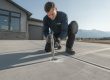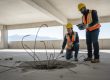


Repairing a crack in a post-tensioned slab isn’t a standard masonry task; it’s a high-stakes surgical procedure where one wrong move can compromise the entire foundation. When you notice a fissure in your Denver home, it’s natural to feel a sense of dread about potential structural collapse or the technical mystery of tendon blowouts. You’re right to be cautious. Unlike traditional reinforced concrete, post-tensioned slabs are held together by steel cables under immense internal pressure, making post tension slab crack repair a task that requires both precision and specialized technical mastery.
You deserve a home that feels solid and a repair process that doesn’t leave you guessing about safety. This guide provides a clear path forward by helping you identify the severity of different crack types and outlining a safe repair plan that preserves cable tension, adhering to professional standards like PTI DC80.3-12. We’ll explore how to stabilize your foundation using modern methods like polyurethane lifting and ensure your property remains level for years to come. By the end of this article, you’ll have the professional framework needed to move from the stress of structural damage toward the peace of mind offered by a stable, secure foundation.
Key Takeaways
- Understand that post-tensioned slabs rely on active cable tension, which requires a fundamentally different approach than standard reinforced concrete.
- Learn to distinguish between minor hairline fissures and critical structural warning signs like spalling near anchors that indicate cable corrosion.
- Discover why professional post tension slab crack repair requires advanced GPR scanning to map internal tendons before any invasive work begins.
- Explore how high-density polyurethane injection provides a non-invasive solution for stabilizing the foundation before sealing surface cracks.
- Identify key preventative measures for Colorado properties, including site drainage strategies to protect your foundation from expansive soil movement.
What is a Post Tension Slab and Why Do Cracks Occur?
A post-tensioned slab represents a sophisticated engineering solution designed to handle high loads while minimizing concrete thickness. Unlike traditional reinforced concrete that uses passive rebar, a post-tension (PT) system utilizes high-strength steel cables, or tendons, that are stressed after the concrete has reached a specific strength. This process creates a permanent compressive force that keeps the slab in a constant state of “readiness” against heavy loads. Understanding What is a Post-Tension Slab is the first step in recognizing why these structures require specialized care. Because the slab is active, any sign of damage demands a specific approach to post tension slab crack repair that accounts for the immense energy stored within the cables.
How Post-Tensioning Works
The system consists of steel tendons housed within grease-filled plastic sheaths to prevent corrosion and allow movement during the stressing phase. These tendons are anchored at the slab’s edge. Once the concrete cures, hydraulic jacks pull the cables to a precise tension, typically thousands of pounds of force, before they’re locked into place with metal wedges. You can often see evidence of this system along the exterior edge of your foundation. Look for small, circular patches of mortar, known as “pockets,” which cover the anchor points where the cables were stressed. This design allows the slab to resist deflection more effectively than passive reinforcement, but it also means the slab is under constant, purposeful stress.
Shrinkage vs. Settlement Cracks
Not every line in your concrete indicates a structural failure. Surface shrinkage cracks often occur during the initial curing process as moisture evaporates; these are generally shallow and don’t threaten the internal tendons. However, settlement cracks are a different matter entirely, especially in the Denver metro area. Colorado’s expansive clay soils expand and contract with moisture changes, putting localized pressure on the slab that can lead to deeper fissures.
If a crack is wider than 1/8 inch or shows signs of vertical displacement, it may indicate that the soil has shifted enough to strain the internal cables. A failing tendon often reveals itself through “spalling,” where chunks of concrete break away near an anchor point. This is the primary warning sign for your foundation. When structural movement occurs, post tension slab crack repair must involve more than just filling the gap. It requires stabilizing the soil and protecting the cables from moisture that could lead to catastrophic corrosion or a cable blowout.
Assessing the Severity of Post Tension Slab Cracks
Evaluating the health of a post-tensioned foundation requires a disciplined eye for detail. While hairline shrinkage is common in any concrete structure, a structural crack indicates the slab is no longer managing internal stresses effectively. Determining the appropriate path for post tension slab crack repair begins with precise measurement. Any fissure exceeding 1/8 inch in width or exhibiting vertical lippage, where one side of the crack is physically higher than the other, suggests significant movement that threatens the integrity of the internal cables.
Beyond width, the location of the damage is critical. Spalling near the slab edge, specifically around the anchor points, is a primary indicator of cable corrosion. If moisture penetrates the grease-protected sheaths, the steel can rust and expand, eventually causing the concrete to flake away. Industry standards set by the Post-Tensioning Institute (PTI) emphasize that early detection of moisture ingress is the most effective way to prevent long-term structural decay. In extreme cases, a cable blowout occurs. This is a sudden failure where a snapped tendon exerts enough force to erupt through the slab surface, leaving a distinct crater or a protruding cable end.
The Colorado Soil Factor
Homeowners in Denver, Aurora, and Centennial face unique challenges due to high concentrations of bentonite clay. This soil is notoriously expansive, heaving with moisture and shrinking during dry spells. This constant cycling creates a “jacking” effect on the foundation. When combined with the harsh freeze-thaw cycles of the Front Range, even minor cracks can widen quickly, allowing salt and water to reach the internal tendons. Distinguishing between normal seasonal shifting and a true structural failure requires an understanding of local geological behavior that general contractors often lack.
When to Call a Post Tension Specialist
General home inspectors often miss the nuanced warning signs of early-stage PT failures. If you observe cracks wider than 1/8 inch, vertical displacement, or rust stains leaching from the concrete, you should consult a professional immediately. High-precision tools like Ground Penetrating Radar (GPR) are essential for mapping the tendon grid before any work begins. This technology allows technicians to see through the concrete, ensuring that the high-tension cables remain intact during the restoration process. If you’re concerned about the stability of your foundation, a specialized concrete repair evaluation can provide the technical clarity needed to protect your property’s long-term value.
The Critical Risks of Improper Post Tension Repair
Attempting a post tension slab crack repair without a comprehensive understanding of the internal mechanics is a dangerous proposition. The primary hazard lies in the stored energy of the tendons. Each cable is typically stressed to approximately 33,000 pounds of force, and a breach doesn’t just result in a structural gap; it can create a projectile that erupts through the concrete surface. The American Concrete Institute provides specific guidance on Professional Methods for Post Tension Slab Crack Repair, highlighting the necessity of specialized intervention to mitigate these physical risks. Treating an active slab like a passive one often leads to ‘blind’ drilling or improper excavation, which can sever a cable and compromise the safety of everyone on site.
Property owners often consider over the counter epoxy injection kits as a cost effective alternative. While these materials might fill a visible fissure, they frequently trap moisture against the internal steel. If a crack has already breached the grease sheath of a tendon, sealing it from the outside without addressing the internal environment creates a localized rust chamber. This accelerates the degradation of the steel, turning a manageable surface issue into a deep seated structural failure. Improper patching also hides growing structural voids, giving a false sense of security while the foundation continues to shift and settle underneath.
Cable Blowouts and Physical Safety
The consequences of a cable failure are immediate and severe. In residential settings, particularly in garages, a snapped tendon can exert enough force to damage vehicles or penetrate interior walls. These blowouts usually occur when a cable has been weakened by corrosion or accidentally nicked during a renovation. At RiseLock Concrete Lifting, we prioritize safety by utilizing high precision locating technology before any repair begins. This ensures that every tendon is mapped, allowing us to stabilize the structure without risking a catastrophic release of tension. Precision is not just a standard; it’s a requirement for maintaining the physical safety of your home.
Corrosion: The Silent Slab Killer
Rust is the most persistent threat to post-tensioned systems. When salt and water penetrate the slab, they initiate a chemical reaction that slowly eats away at the high strength steel. Surface patches fail because they don’t stop the creeping corrosion already moving along the length of the tendon. For those seeking the long term value of professional concrete repair in Denver, Colorado, it’s vital to recognize that effective restoration must stop moisture at the source. By addressing both the visible crack and the underlying soil stability, you prevent the silent degradation that eventually leads to total foundation failure.

Professional Methods for Post Tension Slab Crack Repair
A systematic approach to post tension slab crack repair begins with a non-invasive structural evaluation. Before any physical work commences, technicians use Ground Penetrating Radar (GPR) to map the exact location and depth of every internal tendon. This data creates a precise grid that prevents accidental damage during the stabilization and injection phases. Once the internal anatomy is understood, the repair moves through a logical progression from soil stabilization to structural bonding and cable protection.
Polyurethane Stabilization and Lifting
Polyurethane concrete lifting serves as the essential first step in a successful restoration. By injecting high-density foam into the voids beneath the slab, we create a stable and uniform support system that prevents further movement. This modern method is significantly more effective than traditional mudjacking for post-tensioned structures; the foam is lightweight, waterproof, and exerts a controlled expansion force that won’t overstress the tendons. Stabilizing the soil first ensures that the subsequent crack repairs aren’t compromised by ongoing settlement.
Epoxy Injection and Structural Bonding
Once the slab is level and supported, the focus shifts to restoring the concrete’s monolithic integrity. We utilize high-strength structural resins to “weld” the fractured segments back together. Pressure injection techniques are used to ensure the resin reaches the full depth of the slab, filling even the smallest microscopic voids. It’s critical to use materials that match the slab’s thermal expansion properties. This precision prevents the repair from debonding during Colorado’s extreme temperature shifts, which can cause concrete to expand and contract significantly within a single 24 hour period.
Tendon Capping and Grease Injection
If the cracks have exposed the internal cables, specialized tendon repair is required to prevent long-term failure. This process involves cleaning any surface oxidation from the steel and re-injecting moisture-displacing grease into the tendon sheaths. We then seal the anchors with specialized caps to prevent “end-point” corrosion. This technical intervention protects the high-tension cables from environmental damage, ensuring they continue to provide the compressive force the slab requires. If you are noticing signs of structural distress, a professional concrete repair plan can stop the damage before it requires more invasive reconstruction.
Protecting Your Colorado Foundation: Long-Term Maintenance
Maintaining a post-tensioned foundation is a continuous process that extends beyond the initial repair. Because these slabs are designed to float on expansive soils, their health is inextricably linked to the moisture levels in the ground surrounding your property. Proactive management of your home’s exterior is the most effective way to minimize the need for future post tension slab crack repair. By controlling the environment, you ensure the internal tendons remain protected from the stressors that lead to corrosion and structural shifting.
Drainage and Moisture Control
In the Front Range, moisture management is your first line of defense. Colorado’s clay heavy soils undergo significant volume changes when they transition from wet to dry, creating a shrink-swell cycle that puts immense pressure on a concrete slab. You must ensure that gutters and downspouts are clear and extend at least five feet away from the foundation edge. Properly designed swales and grading should direct surface water away from the structure, preventing it from pooling against the slab where it can seep into the tendon anchors. Consistent moisture levels around the perimeter help maintain soil stability, which prevents the heaving and settling that often results in new fissures.
Sealing the joints between your driveway and garage is another critical maintenance step. These transition points are frequent entry nodes for water and de-icing salts, both of which accelerate cable degradation. Annual inspections should include a thorough check for rust stains, new hairline cracks, or signs of spalling near the slab edges. If you notice early signs of settlement, utilizing professional concrete leveling can serve as a proactive tool. By filling voids before they cause the slab to deflect, you protect the high-tension cables from unnecessary strain and preserve the structural integrity of the entire system.
The RiseLock Advantage for Denver Property Owners
Choosing a partner for foundation care requires a focus on technical mastery and ethical reliability. At RiseLock, we understand that post-tensioned systems are specialized structures that general contractors aren’t always equipped to handle. Our expertise in post tension installation and repair allows us to provide a level of precision that ensures long term security. We view your property’s structural health as a personal priority, recommending only the interventions that are truly necessary to stabilize and protect your home. Whether you are in Denver, Colorado Springs, or Boulder, our team is ready to provide a professional assessment and a clear, high-precision path to a stable foundation.
Restoring Stability to Your Front Range Foundation
Addressing a failing foundation requires more than a surface-level patch. You’ve learned that distinguishing between minor shrinkage and structural spalling is vital for your home’s safety. A successful post tension slab crack repair depends on technical precision, starting with GPR scanning to protect internal tendons and high-density polyurethane to stabilize the underlying soil. By prioritizing moisture control and professional intervention, you can effectively stop the cycle of damage caused by Colorado’s expansive clay soils.
RiseLock brings specialized post-tension installation expertise to every project, ensuring your home remains level and secure for years to come. We combine advanced GPR scanning with modern polyurethane lifting to provide a non-invasive, high-precision solution for property owners across Denver and the Front Range. You don’t have to navigate these structural concerns alone or worry about the risks of improper repairs. Secure your foundation with a professional post-tension assessment from RiseLock today. We’re here to provide the technical mastery and ethical guidance you need to protect your investment and restore your peace of mind.
Frequently Asked Questions
Is it normal for a post-tension slab to have cracks?
Yes, hairline shrinkage cracks are common as concrete cures and loses moisture. These surface fissures usually don’t affect structural integrity. However, if a crack widens or shows signs of movement, it may indicate a deeper issue with the tensioning system. Professional post tension slab crack repair becomes necessary when these gaps allow moisture to reach the internal steel tendons, risking long term corrosion.
How can I tell if a crack in my garage floor is structural?
A structural crack is typically wider than 1/8 inch or exhibits lippage, where one side of the concrete is higher than the other. In a garage, look for cracks that run perpendicular to the direction of the cables or those that originate near the slab edges. Spalling or flaking concrete near the anchor points is a significant warning sign that the internal cables are under excessive stress.
Can you drill into a post-tension slab to fix a crack?
You shouldn’t drill or anchor into a post-tensioned slab without professional GPR scanning to map the tendon grid. Severing a high-tension cable can cause a catastrophic blowout, leading to property damage or serious injury. Professionals use specialized locating equipment to identify safe zones before performing any invasive repairs, ensuring the slab’s active compressive forces remain intact and the work environment stays secure.
What does a broken post-tension cable look like?
A broken tendon often results in a blowout, which looks like a small crater or a jagged hole in the concrete surface. In some cases, you may see the end of a steel cable protruding from the slab edge or the garage floor. Other indicators include sudden, loud popping sounds or rust stains leaching from a crack, which suggests the grease-protected sheath has failed and the cable is corroding.
How much does it cost to repair a post-tension slab crack in Denver?
The investment for repair in the Denver area depends on the crack’s width, depth, and whether the internal tendons have been compromised. Factors such as the linear footage of epoxy injection and the need for polyurethane stabilization will influence the total scope. Because these repairs require specialized engineering and high-precision equipment, we recommend a professional assessment to determine the specific requirements for your foundation’s unique soil conditions.
What happens if you don’t fix cracks in a post-tension foundation?
Ignoring cracks in a post-tensioned foundation allows water and salts to penetrate the concrete and reach the steel cables. Over time, this leads to creeping corrosion that weakens the tendons, eventually causing them to snap under the slab’s internal pressure. This loss of tension results in significant slab deflection, unlevel floors, and potential structural failure that is far more expensive to remediate than early stage crack sealing.
Is polyurethane foam safe for post-tensioned slabs?
High-density polyurethane foam is an exceptionally safe and effective material for stabilizing post-tensioned slabs. Unlike traditional mudjacking, which uses heavy cement slurries, polyurethane is lightweight and exerts a controlled expansion force. It fills voids beneath the slab without adding excessive weight or overstressing the tensioned cables. This makes it a preferred method for leveling and supporting PT structures in Colorado’s expansive soil environments.
How long does a professional post-tension repair last?
A professional repair using structural epoxy injection and polyurethane stabilization is designed to last for the remaining life of the structure. The epoxy creates a bond that is often stronger than the original concrete, effectively welding the slab back together. To ensure longevity, property owners must maintain proper site drainage to prevent the soil movement that caused the initial cracking, protecting the repair from future environmental stressors.