If you’re staring at a sunken driveway or a porch that’s pulling away from your home, you might think a full demolition is your only path forward. But what if the most expensive and disruptive option is actually the least effective way to address the underlying problem? Most homeowners feel the weight of liability when a sidewalk becomes a trip hazard, or they worry about water pooling near the foundation during a Colorado spring. With Denver averaging over 140 freeze-thaw days annually, it’s frustrating to see your property value dip because of shifting soil. You’re likely looking for a way to fix sunken concrete without replacement that doesn’t involve weeks of construction dust and heavy machinery.
This guide reveals how you can permanently restore your slabs using precision polyurethane technology, providing a level surface that lasts without the mess of a new pour. We’ll explore why traditional methods often fail in the Front Range’s expansive clay soils and how modern high-density foam offers a surgical, cost-effective alternative for total structural stabilization. By understanding the science of soil voids and the technical advantages of foam concrete lifting, you can secure your home’s integrity with minimal disruption to your daily life.
Key Takeaways
- Understand how Denver’s expansive clay soils fluctuate with moisture, creating the specific sub-grade voids that lead to structural sinking.
- Evaluate the total cost of ownership between traditional demolition and modern restoration to make a more informed financial decision for your property.
- Explore the technical precision of polyurethane injection, a surgical method to fix sunken concrete without replacement using discreet 5/8-inch ports.
- Discover how high-density foam provides lightweight stabilization and allows you to return to full service on your concrete in as little as 15 minutes.
- Identify why technical mastery of Colorado’s unique geology is essential for ensuring a permanent, level surface and long-term structural integrity.
Understanding Why Concrete Sinks: The Colorado Soil Factor
Concrete slabs don’t simply sink on their own; they respond to the ground beneath them. In the Front Range, several environmental factors contribute to this instability. Poor soil compaction during initial construction often leaves pockets of air that eventually collapse under the weight of the concrete. Erosion from heavy rain or snowmelt can strip away the sub-base, leaving the slab suspended over a hollow void. When these structural foundations vanish, gravity takes over. Homeowners often try to solve this by pouring a new layer of concrete over the existing mess, but this approach fails because it ignores the unstable soil. To truly fix sunken concrete without replacement, the restoration must address the invisible gaps beneath the surface.
The Problem with Expansive Clay
Much of the Denver metropolitan area sits atop expansive clay soils, such as the Denver Formation and Pierre Shale. These minerals act like a sponge, swelling significantly when they absorb moisture and shrinking as they dry out. During Colorado’s frequent dry spells, the clay pulls away from the concrete, creating large subterranean gaps. When the next heavy storm hits, the unsupported slab settles into these spaces. This cycle of movement makes it difficult to maintain a level surface without addressing the soil itself. Effective concrete repair in Denver Colorado requires more than just a surface fix; it necessitates a solution that stabilizes these shifting layers and provides long-term support.
Erosion and Drainage Issues
Water management is often the invisible culprit behind sunken sidewalks and driveways. Improperly placed gutter downspouts or poor yard grading can direct a high volume of water directly under your concrete. This flow carries away the fine particles of the sub-grade, a process that accelerates during Denver’s 140 annual freeze-thaw cycles. As water enters these gaps and freezes, it exerts immense pressure, further widening the voids. You might notice signs of “pumping,” where vehicle traffic actually forces water and soil out from the edges of the slab, leaving it even more vulnerable.
Understanding various Concrete leveling techniques helps homeowners realize that the goal is to fill these voids and restore the base. If you want to fix sunken concrete without replacement, you must first stop the erosion and stabilize the ground to prevent future settlement. Simply ignoring these drainage issues ensures that even the best repair will eventually succumb to the same environmental pressures. Precision restoration focuses on creating a stable environment where the concrete can remain level for years to come.
Repair vs. Evaluating Your Options
Choosing how to handle a settled slab requires a long-term perspective. While tearing out and pouring new concrete feels like a fresh start, it’s often an expensive “band-aid” that ignores the unstable sub-grade. The total cost of ownership for a new pour includes demolition, disposal fees, and the loss of use for several weeks while the material cures. In contrast, choosing to fix sunken concrete without replacement preserves the existing material and addresses the root cause of the settlement. From an environmental standpoint, restoration prevents thousands of pounds of debris from entering local landfills while maintaining the structural integrity of your property.
Aesthetics also play a role. Matching the color and texture of twenty-year-old concrete with a new pour is nearly impossible; the resulting patch often looks mismatched and lowers curb appeal. When you fix sunken concrete without replacement, you maintain the visual continuity of your surfaces while saving significant time. New concrete requires 28 days to reach full strength. Modern restoration allows you to use your driveway or walkway almost immediately.
The Pitfalls of Traditional Mudjacking
Traditional slabjacking, or mudjacking, involves pumping a heavy cement and soil slurry beneath the concrete. This method adds significant weight to already stressed ground. Because Colorado’s expansive soils are prone to shifting under pressure, this extra weight can actually accelerate future sinking. The process also requires large, “penny-sized” injection holes that are difficult to hide once the job is finished. A more precise alternative is polyurethane concrete lifting, which uses a lightweight foam that expands to fill voids without adding a heavy burden to the sensitive sub-grade.
When Replacement is Unavoidable
Restoration isn’t a universal cure. If a slab exhibits “spider-web” cracking, deep structural fissures, or surface scaling where the concrete is literally crumbling, lifting cannot restore its integrity. These conditions suggest the material itself has reached the end of its lifespan. However, if the slab is mostly intact but simply out of level, concrete leveling is the superior choice for both your budget and the environment. Determining the health of your slab is the first step toward a permanent solution. If you aren’t sure which path is right for your property, consulting with a structural specialist can provide the clarity you need to move forward with confidence.
The Polyurethane Injection Process: A Surgical Approach
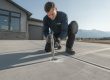
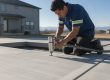
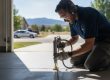
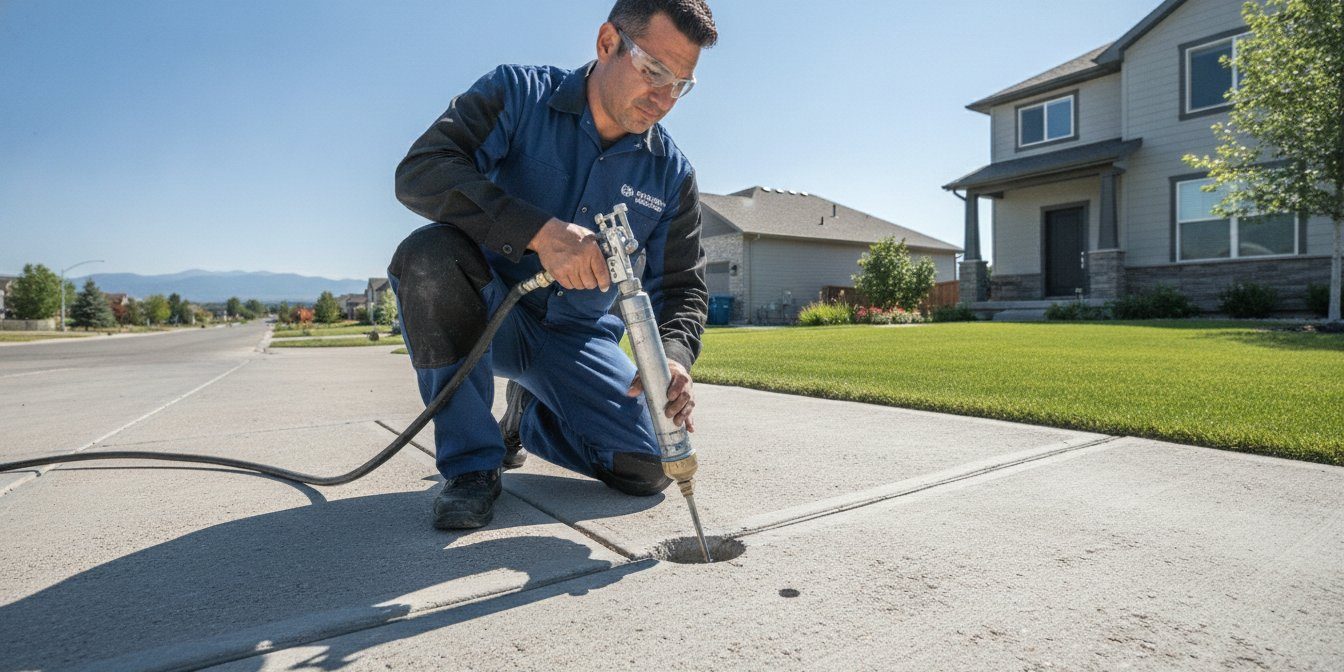
The actual execution of the repair is where technical mastery becomes visible. Unlike the blunt force of heavy machinery used in demolition, this method relies on chemical precision and controlled expansion. To fix sunken concrete without replacement, the process begins with a series of strategically placed 5/8-inch injection ports. These holes are roughly the size of a dime, making them significantly less invasive than the large bores required by traditional methods. Professional technicians determine these locations based on the specific settlement patterns and the location of the underlying voids.
Once the ports are established, a high-density, two-part polyurethane foam is injected beneath the slab. This material travels through the voids in the sub-grade, expanding in all directions to fill the empty spaces identified in the previous sections. Technicians monitor the progress using laser levels, ensuring the lift occurs in increments as small as 1/32 of an inch. This level of control is necessary to restore the original grade without over-lifting or causing stress fractures in the material. Finally, the ports are cleaned and sealed with a color-matched concrete sand, leaving the surface nearly indistinguishable from its original state.
Hydro-Insensitivity and Void Filling
The chemistry behind foam concrete lifting is specifically engineered for durability. The two-part liquid undergoes a rapid exothermic reaction upon injection, expanding into a rigid, closed-cell structure. Because this material is hydro-insensitive, it can be installed in wet environments without losing its structural integrity. It doesn’t just push the slab up; it fills every microscopic void and compacts the surrounding soil. This creates a lightweight, permanent root system that supports the concrete long after the initial repair is complete. It won’t wash away or erode during the next Colorado storm.
Precision and Post-Tension Safety
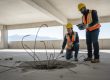
Safety is a critical component of any structural intervention. Many modern Colorado homes utilize post-tension installation systems, where high-strength steel cables are embedded within the slab under immense pressure. Accidental contact with these cables during drilling can be catastrophic for the home’s structural integrity. Professional contractors use expert layouts or Ground Penetrating Radar (GPR) to identify these hidden hazards before the first hole is drilled. By controlling the lift speed and monitoring pressure levels, the team prevents secondary cracking. This methodical approach ensures that you fix sunken concrete without replacement while maintaining the absolute safety of your home’s foundation.
Benefits of Choosing Foam Over Replacement
The decision to fix sunken concrete without replacement offers advantages that extend far beyond the initial cost savings. While a traditional tear-out requires heavy machinery and a week of restricted access, polyurethane injection is remarkably efficient. You can drive a vehicle over a repaired driveway section just 15 to 30 minutes after the injection is complete. This rapid return to service is possible because the high-density foam reaches 90% of its full compressive strength within minutes of the chemical reaction. Polyurethane injection is also highly cost-efficient, typically costing 50% to 70% less than a full tear-out and replacement. This allows property owners to allocate their budget toward other maintenance while still achieving a professional, level finish.
Another technical advantage involves the weight of the repair material itself. Traditional mudjacking or a new concrete pour adds thousands of pounds of weight to the sub-grade. If the soil is already prone to settlement, this extra load often triggers a secondary sinking cycle. Polyurethane foam is incredibly lightweight, adding almost no measurable weight to the sensitive soil. It provides the necessary lift and support without taxing the ground’s load-bearing capacity. This makes it a sustainable way to fix sunken concrete without replacement in areas with historically unstable soil profiles.
Long-Term Structural Stability
The high-density foam does more than just lift the slab; it actively improves the environment beneath it. As the material expands, it binds loose soil particles together, creating a unified and reinforced base. This process effectively turns the sub-grade into a stable, waterproof platform. Because the foam is closed-cell and impervious to water, it won’t wash away or erode during heavy rain or snowmelt. It also provides a thermal insulation effect that helps mitigate the impact of Denver’s frequent freeze-thaw cycles on the soil immediately under the concrete. These concrete lifting solutions are designed to be a permanent intervention rather than a temporary patch.
Minimal Property Disruption
Restoration is a surgical process that respects your existing landscaping and curb appeal. There’s no need for heavy trucks to drive across your lawn or for jackhammers to echo through the neighborhood for days on end. The equipment is typically contained within a single truck, and the delivery hoses can reach far into the property without disturbing flower beds or irrigation systems. The process is clean, quiet, and produces zero demolition waste. If you’re ready to restore your property’s safety and value with a professional approach, you can request a technical assessment of your concrete today.
Expert Concrete Restoration in the Denver Metro Area
Local expertise is a technical requirement for effective structural repair in Colorado. The Front Range presents a unique set of geological challenges that generic repair methods often overlook. RiseLock Concrete Lifting approaches every project with a deep understanding of the Denver Formation and the specific ways moisture interacts with our local sub-grades. This commitment to technical mastery ensures that when we fix sunken concrete without replacement, the result is a stabilization that respects the long-term health of the structure. Our team maintains a standard of professional pride that builds long-term security for your property.
A successful restoration requires a partner who understands how the history of a home’s construction intersects with current environmental conditions. By focusing on precision and utilizing advanced high-density polymers, we provide a level of reliability that traditional alternatives cannot match. This methodical approach ensures that your concrete remains stable even as the local weather continues its unpredictable cycles. Choosing an expert who specializes in these modern techniques is the most effective way to fix sunken concrete without replacement while avoiding the stress of future settlement.
Serving the Front Range
Our service coverage extends across the key hubs of the Front Range, from Boulder down to Colorado Springs. In established neighborhoods like Highlands Ranch and Cherry Creek, we frequently address settlement in aging driveways and patios where the original soil compaction has reached its limit. Meanwhile, in areas like Aurora and Centennial, we often encounter unique drainage challenges that require specific intervention to prevent ongoing sub-grade erosion. Our technical solutions are tailored to the environment, whether we’re stabilizing a residential walkway in Lakewood or reinforcing a high-traffic commercial warehouse floor in Thornton. We understand the specific load-bearing requirements for various applications and adjust our injection patterns to meet those demands.
Your Next Steps for a Level Surface
The best time to address a settling slab is before it develops the deep structural fissures that make restoration impossible. During a RiseLock Concrete Lifting site evaluation, a specialist performs a comprehensive assessment of the concrete’s current state and identifies the underlying causes of the movement. We look for the voids and drainage issues identified during the inspection to ensure our intervention is both surgical and permanent. This thorough evaluation removes the guesswork from the repair process, providing you with a clear path toward a level, safe surface. If you’re ready to secure your property’s integrity with a non-invasive solution, Schedule your professional concrete assessment with RiseLock Concrete Lifting today.
Secure Your Property with Precision Structural Restoration
Settlement is a natural consequence of Colorado’s shifting environment, but it does not have to result in the expense and mess of a full demolition. By addressing sub-grade voids with high-density polymers, you can effectively fix sunken concrete without replacement while ensuring the repair remains stable for years. This modern approach prioritizes technical precision, utilizing lightweight materials that stabilize the soil without adding an unnecessary burden to your home’s foundation.
As Denver’s leading experts in polyurethane restoration, RiseLock Concrete Lifting brings a commitment to high standards and specialized expertise in post-tension slab safety. Our durable, high-density foam solutions provide a permanent root for your concrete, allowing you to return to daily life in minutes. Don’t let minor settlement evolve into a significant structural liability or a safety hazard. Get a Free Estimate for Precision Concrete Lifting and restore your property’s value with confidence. A level, secure surface is within reach.
Frequently Asked Questions
Can polyurethane foam support the weight of a heavy SUV or truck?
High-density polyurethane foam is specifically engineered to support heavy vehicular loads. It provides a stable base for driveways and garage floors by compacting the underlying soil during the expansion process. Once the material reaches its full compressive strength, it can easily support the weight of heavy SUVs, trucks, and even commercial machinery without shifting. This makes it an ideal solution for both residential and high-traffic industrial applications.
How long does the concrete leveling process take from start to finish?
Most residential concrete leveling projects are completed in just a few hours. Unlike traditional replacement, which involves days of demolition and weeks of curing, the foam injection process is remarkably fast. You can drive a vehicle on your driveway or walk across your patio roughly 15 to 30 minutes after the technicians finish the work. This efficiency ensures minimal disruption to your daily schedule and property access.
Will the foam used for concrete lifting eventually wash away or rot?
The high-density foam used for structural restoration is a closed-cell material that will not wash away or rot. Because it is hydro-insensitive, it remains completely stable even when exposed to saturated soil or heavy groundwater. Once the material expands and hardens, it becomes a permanent part of the sub-grade. It doesn’t degrade over time, ensuring the support beneath your concrete slab remains intact for the long term.
Is polyurethane concrete leveling environmentally friendly and safe for my lawn?
The polymers used in this process are environmentally inert and safe for use around your lawn and landscaping once cured. They don’t leach harmful chemicals into the soil or affect the local ecosystem. Choosing this method is an ethical and sustainable way to fix sunken concrete without replacement; it keeps thousands of pounds of old concrete out of landfills while preserving your existing property features.
What is the price difference between mudjacking and polyurethane foam lifting?
Polyurethane foam lifting involves a higher upfront cost for materials and specialized equipment compared to traditional mudjacking. However, the investment often pays for itself by providing a more durable, lightweight solution that doesn’t add weight to unstable soil. This prevents the secondary settlement often seen with heavy mudjacking slurries. It is a long-term structural investment that reduces the need for future repairs or total slab replacement.
Can you fix sunken concrete in the winter during Colorado freeze-thaw cycles?
Concrete leveling can be performed during the winter months as long as the ground is not frozen several inches deep. While Colorado’s freeze-thaw cycles create the voids that cause sinking, professional equipment allows technicians to maintain the proper chemical temperature during injection. This ensures the foam reacts correctly even in colder weather. Addressing trip hazards in the winter prevents them from worsening during the spring snowmelt.
Do I need to be home while the concrete lifting team is working?
You don’t necessarily need to be present while the concrete lifting team is working on exterior slabs. As long as the technicians have clear access to the work area and a standard power source, they can complete the restoration independently. The process is clean and quiet; it won’t disturb your neighbors or your daily routine. We can provide a thorough summary of the structural stabilization once the project is finished.
How small are the holes drilled into the concrete for the foam injection?
The injection ports drilled into the slab are only 5/8-inch in diameter, which is roughly the size of a dime. These small holes are significantly less invasive than the large bores required for mudjacking. This precision is a hallmark of the modern process used to fix sunken concrete without replacement. Once the lift is complete, technicians patch each port with color-matched concrete sand to ensure a seamless finish.