Why do most concrete repairs in the Front Range seem to fail after just a single season? You’ve likely experienced the frustration of watching a fresh patch crumble or seeing a dangerous trip hazard reappear on your driveway just months after a repair. To achieve genuine, long lasting concrete repair Denver property owners must look beyond the surface to the volatile environmental factors unique to Colorado. It’s exhausting to invest in your home only to face the same foundation instability fears year after year because the root cause was never addressed.
At RiseLock Concrete Lifting, we agree that a permanent restoration should be a one-time investment rather than a recurring headache. This guide will show you how modern stabilization techniques move past temporary patches to solve the underlying soil issues that plague our region. We’ll explore the technical advantages of polyurethane lifting and explain how this non-invasive process creates a stable, level surface that remains secure for a decade or more. By understanding the mechanics of soil expansion and void filling, you can finally move away from the stress of structural damage toward long-term peace of mind.
Key Takeaways
- Understand why Colorado’s expansive clay soils cause standard surface patches to fail and how to address the structural movement beneath the slab.
- Learn how high-density polyurethane foam provides a long lasting concrete repair Denver homeowners can trust by creating a waterproof, stable subgrade.
- Discover why concrete leveling is significantly more cost-effective than full replacement while avoiding the disruption of demolition and landscaping damage.
- Explore the role of post-tension installation in reinforcing foundations against the high-risk soil conditions found throughout the Front Range.
- Identify the technical criteria for selecting a repair partner who utilizes precision engineering to solve structural issues permanently.
Why Conventional Concrete Repairs Fail in Denver’s Climate
Many property owners in the Front Range find themselves trapped in a cycle of repetitive maintenance. They apply a high-quality patch to a driveway crack, only for the same fracture to reappear after a single winter. This failure isn’t usually due to the quality of the patching material itself. Instead, it’s a fundamental misunderstanding of why the concrete moved in the first place. Achieving long lasting concrete repair Denver requires looking beneath the surface to the complex geological and climatic forces at work.
Conventional repairs are often purely cosmetic. They treat the crack as an isolated blemish rather than a symptom of subgrade instability. When a slab sinks or cracks, it’s because the soil supporting it has shifted or washed away. Filling a gap with a rigid bonding agent does nothing to stabilize the ground. Without addressing the underlying void, the weight of the concrete and the vehicles parked on it will inevitably cause the slab to settle further, rendering the surface repair useless.
The Role of Colorado’s Expansive Soils
The Denver basin is characterized by high concentrations of Bentonite clay. This specific type of soil is exceptionally volatile. When it absorbs moisture from melting snow or spring rains, it expands with tremendous force. This phenomenon, known as “heaving,” pushes concrete slabs upward. As the soil dries during our arid summers, it shrinks and pulls away, leaving the concrete unsupported. Traditional rigid patches cannot accommodate this seasonal movement. They lack the flexibility to survive the ground’s natural rhythm, leading to delamination and further structural degradation.
The Freeze-Thaw Cycle and Hydrostatic Pressure
Denver’s high-altitude environment creates one of the most demanding climates for masonry in the country. Water enters expansion joints and hairline fractures, eventually pooling under the slab. During a typical winter night, this water freezes and expands by approximately 9%. This creates “ice lenses” that exert massive upward hydrostatic pressure. Standard big-box store repair kits are designed for milder climates. They lack the technical specifications to withstand these intense pressure cycles. Professional Concrete leveling techniques are the only way to counteract these forces by replacing empty air pockets with stable, non-porous materials that block water infiltration. Permanent restoration is only possible when you solve the problem of the void, ensuring the slab has a reliable foundation regardless of the weather.
The Science of Longevity: High-Density Polyurethane Stabilization
The most effective way to address slab settlement isn’t to fight the soil, but to stabilize it permanently. While traditional methods rely on heavy cement-based slurries, modern engineering favors the precision of high-density polymers. Achieving long lasting concrete repair Denver property owners can rely on requires a material that remains unaffected by the geological volatility of the Front Range. High-density polyurethane provides this stability by creating a lightweight, waterproof foundation that addresses the root cause of movement without adding excessive weight to already stressed soils.
How Polyurethane Foam Stabilizes the Subgrade
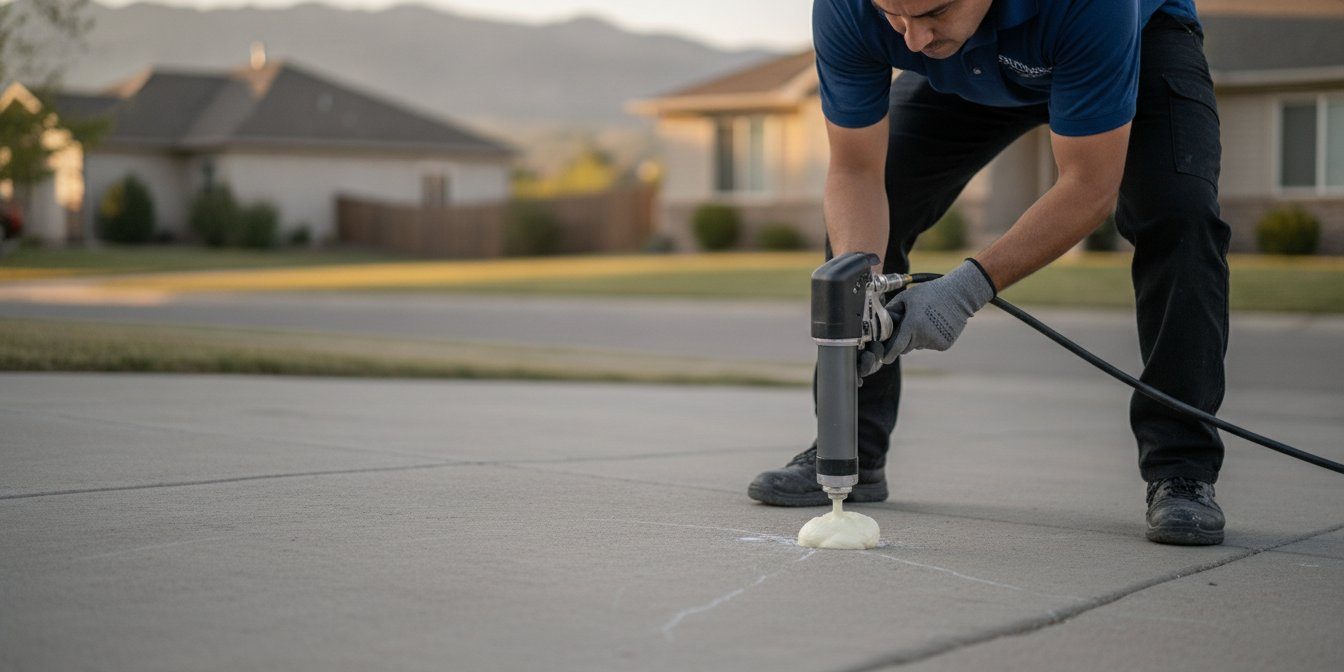
The process begins with a sophisticated chemical reaction. When the two-part polymer is injected beneath the slab, it expands rapidly, seeking out and filling even the smallest voids in the soil structure. This expansion doesn’t just fill gaps; it compacts the surrounding earth to increase its load-bearing capacity. Because the material is hydrophobic, it acts as a permanent moisture barrier. Unlike soil-based fillers that erode or soften when exposed to groundwater, polyurethane will never wash away. This is particularly vital when dealing with Colorado’s expansive soils, as the foam prevents water from reaching the clay layers that cause heaving and settlement. The result is a subgrade that remains dimensionally stable regardless of seasonal moisture levels.
Precision Leveling and Structural Support
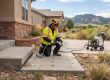
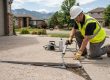
Precision is the hallmark of the “lift and lock” method. We utilize specialized equipment to control the injection process, allowing us to raise sunken slabs to within 1/10th of an inch of their original position. This level of accuracy is essential for restoring proper drainage on driveways and patios, ensuring that water flows away from your foundation. The installation is remarkably non-invasive. We drill holes the size of a penny, which are far less conspicuous than the large ports required for outdated mudjacking techniques.
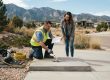
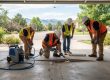
Consider a recent project where we utilized polyurethane concrete lifting to restore a heavily settled three-car driveway in a Denver suburb. The slabs had dropped nearly four inches, creating a significant trip hazard and allowing water to pool against the garage door. In just a few hours, we stabilized the subgrade and returned the driveway to its original elevation. One of the most practical benefits of this technology is the immediate return-to-service time. Because the polymer reaches 90% of its compressive strength within minutes, you can drive your vehicle onto the repaired surface in as little as 15 minutes. Property owners seeking a permanent resolution to their structural challenges can consult with a structural specialist to evaluate their specific subgrade conditions and develop a targeted restoration plan.
Comparing Long-Term Costs: Repair vs. Leveling vs. Replacement
Choosing between restoration and replacement isn’t just a matter of immediate aesthetics; it’s a technical decision that impacts your property’s structural health for the next decade. Many Denver homeowners assume that pouring new concrete is the only way to achieve a long lasting concrete repair Denver requires. However, replacement often overlooks the primary reason the original slab failed: the soil. If you pour four inches of new concrete over the same unstable Bentonite clay without addressing the subgrade, you’re simply resetting the clock on a future failure.
The financial argument for restoration is compelling. Industry data indicates that concrete leveling is typically 50-70% more cost-effective than a full replacement. Beyond the material costs, replacement involves significant hidden expenses. The 2025 Denver Building Code requires permits for most new concrete projects, adding administrative fees and inspection timelines. You must also account for demolition, hauling fees, and the inevitable damage to your landscaping caused by heavy machinery. Leveling avoids these disruptions entirely, preserving your existing slab while fixing the foundation beneath it.
The ROI of Concrete Leveling
When you evaluate the return on investment, stabilization offers immediate value. It eliminates trip-hazard liabilities and restores the curb appeal of your home in a single afternoon. Professional concrete lifting solutions do more than just level the surface; they prevent water from channeling toward your foundation, which can save you tens of thousands in future structural repairs. From an environmental standpoint, keeping your existing slab is the responsible choice. It keeps tons of debris out of Colorado landfills and avoids the high carbon footprint associated with new cement production.
Why Replacement Often Fails in Colorado
New concrete is surprisingly vulnerable during its first year. The intensive curing period can last weeks, during which the slab is susceptible to Denver’s extreme temperature swings. If the subgrade hasn’t been properly stabilized, the weight of the new, heavy concrete can actually accelerate soil compression. We’ve seen many instances where new driveways began to sink within 24 months because the installer ignored the underlying voids. At RiseLock Concrete Lifting, we ensure the subgrade is fully compacted and waterproofed before any work begins. This methodical approach ensures that your investment remains stable, whereas a standard replacement might leave you facing the same cracks and shifts in just a few seasons.
Post-Tensioning: The Ultimate Reinforcement for Denver Foundations
For a truly long lasting concrete repair Denver properties located on active clay soils often require reinforcement that goes beyond surface-level fixes or subgrade stabilization. While polyurethane foam addresses the ground beneath the slab, post-tensioning addresses the structural integrity of the concrete itself. This engineering approach is particularly vital in the Front Range, where the sheer force of soil expansion can overcome standard concrete slabs. By understanding how these systems function, you can identify when your foundation requires specialized intervention to remain secure.
What is a Post-Tensioned Slab?
Post-tensioning represents the pinnacle of residential structural engineering for expansive soils. Unlike traditional rebar, which simply sits inside the concrete to provide passive support, post-tension installation involves placing high-strength steel cables under immense tension. These cables are stressed to thousands of pounds of pressure after the concrete has cured, effectively “squeezing” the slab together. This creates a state of permanent compression that allows the concrete to bend and flex with the ground’s movement without cracking. Many modern developments in Aurora and Parker utilize this technology because it provides a level of durability that traditional rigid reinforcement simply cannot match.
Repairing and Maintaining Post-Tension Systems
Despite their strength, post-tensioned systems require specialized care. The most common failure is a “cable blowout,” which occurs when a tendon loses its tension or snaps due to corrosion or accidental damage during renovations. Identifying these issues early is critical. You might notice plastic caps protruding from the edge of your foundation or small, localized “explosions” in the concrete surface where a cable has released its energy. In some cases, a sudden, wide crack appearing overnight can indicate a loss of structural tension.
Repairing these systems isn’t a task for a general contractor. It requires high-precision hydraulic jacks and a deep understanding of structural physics to safely re-tension or replace a damaged tendon. RiseLock Concrete Lifting is recognized as a leading concrete repair denver colorado specialist because we maintain the technical mastery required for these complex PT repairs. We don’t just patch the hole; we restore the internal tension that keeps your home’s foundation stable. If you suspect a cable failure or see exposed steel at the edge of your slab, you should schedule a structural assessment immediately to prevent further degradation of your property’s integrity.
Choosing a Strategic Partner for Concrete Restoration in Colorado
Finding a long lasting concrete repair Denver provider requires more than just comparing estimates. It involves selecting a partner who understands the mechanical relationship between your structure and the ground it sits on. At RiseLock, we approach every project with a commitment to technical precision and quiet authority. We don’t rely on guesswork or generic patches. Instead, we utilize advanced stabilization methods that respect the integrity of your property while providing a permanent solution to settlement issues. Our goal is to move you away from the stress of recurring damage toward the security of a stable foundation.
The Importance of Local Soil Knowledge
A “one-size-fits-all” repair is a primary reason why many local projects fail within a single season. The geology of the Front Range is diverse and demanding. The expansive clay found in Parker behaves differently than the soil transitions in Castle Rock or the urban fill in Denver. We tailor the density of our polyurethane foam to the specific neighborhood’s soil profile. This ensures the material provides sufficient lift without over-compressing the subgrade or creating new pressure points. By serving communities throughout the Denver Metro area and extending south to Colorado Springs, we’ve developed a deep repository of local geological data that informs every lift we perform.
The RiseLock Guarantee of Reliability
We’ve intentionally moved away from traditional mudjacking because it lacks the longevity and precision required for modern structural restoration. Our high-density polyurethane is a cleaner, more durable alternative that doesn’t add the weight of heavy slurry to your foundation. When you schedule a professional consultation, you can expect a thorough diagnostic phase. We analyze crack patterns, measure slab elevations, and check for subgrade voids before proposing a specific solution. Our ethical framework is simple: we only recommend the interventions your structure actually needs to remain stable. RiseLock views every structural repair as a personal priority for long-term security.
Taking the first step toward a stable surface is a matter of professional assessment. Rather than waiting for a minor crack to become a major structural liability, you can secure the future of your property now. Our team is ready to provide the technical expertise and reliable guidance needed to restore your concrete permanently. Scheduling an evaluation allows us to identify the root cause of your slab’s movement and implement a high-precision strategy that lasts for the next decade.
Securing Your Property’s Structural Integrity
Permanent restoration in the Front Range is a matter of engineering, not just aesthetics. By moving past cosmetic patches and addressing the volatile Bentonite clay through high-density polyurethane stabilization, you protect your investment from Colorado’s harsh freeze-thaw cycles. We’ve discussed how post-tensioning and foam lifting offer a more durable, cost-effective alternative to the disruption of full concrete replacement. Achieving long lasting concrete repair Denver depends on using materials specifically engineered for our unique soil challenges.
RiseLock brings technical mastery to every project, serving the entire Front Range from Fort Collins to Colorado Springs. Our specialization in polyurethane technology and post-tension cable repair ensures that your home or business remains level and secure regardless of environmental shifts. Secure your property’s foundation with RiseLock’s precision concrete repair today. It’s our priority to help you restore your peace of mind through high-precision structural intervention.
Frequently Asked Questions
How long does polyurethane concrete repair actually last in Denver?
Polyurethane restoration is designed to remain stable for the remaining lifespan of the concrete slab, often exceeding twenty years. Because the high-density polymer is hydrophobic, it won’t wash away or erode when exposed to groundwater or heavy snowmelt. This durability makes it a primary choice for long lasting concrete repair Denver homeowners utilize to avoid the recurring costs of temporary surface patches.
Is foam concrete lifting better than mudjacking for Colorado’s expansive clay?
Foam lifting is significantly more effective than mudjacking in our region because it’s lightweight and waterproof. Traditional mudjacking uses a heavy slurry that adds thousands of pounds of weight to already unstable clay soils, which often leads to secondary settlement. Polyurethane stabilizes the subgrade without adding significant mass, preventing the “heaving” cycle common in the Front Range.
Can you fix a post-tension slab if the cables are already broken?
Yes, broken post-tension cables can be repaired through a specialized process of tendon replacement or re-tensioning. We use high-precision hydraulic jacks to restore the internal compressive force that keeps the slab structurally sound. It’s a technical procedure that requires specific engineering expertise to ensure the safety and longevity of your home’s foundation after a blowout occurs.
How much does long-lasting concrete repair cost compared to replacement?
Choosing restoration over replacement typically saves property owners between 50% and 70% on their total project costs. While a full replacement requires expensive demolition, hauling fees, and new material permits, leveling utilizes your existing slab. You also avoid the secondary costs of repairing landscaping or irrigation lines that are frequently damaged during the heavy equipment operation required for a new pour.
Will concrete leveling fix the cracks in my driveway permanently?
Leveling addresses the root cause of the fracture by filling the underlying void and stabilizing the ground. While the physical crack in the concrete will still be visible, the slab will no longer shift or sink, which prevents the crack from widening. Once the structure is stabilized, we recommend high-quality caulking to seal the surface and prevent future water infiltration.
How soon can I drive on my driveway after foam lifting and repair?
You can typically return your driveway to full service in as little as 15 to 30 minutes after the injection is complete. The industrial-grade polymers we use reach 90% of their full compressive strength almost immediately. This is a major advantage over new concrete, which requires several days of curing before it can support the weight of a standard passenger vehicle.
What are the signs that my Denver foundation needs structural concrete repair?
Common indicators include interior doors that suddenly stick, gaps appearing between the baseboard and the floor, or large diagonal cracks in the drywall. Outside, you might notice that your porch or stairs are pulling away from the main structure. These symptoms suggest that the expansive clay beneath your home is shifting, necessitating a professional technical assessment to prevent further structural degradation.
Does RiseLock offer services in cities like Aurora, Centennial, or Castle Rock?
We provide specialized structural services throughout the entire Front Range corridor. Our team regularly manages projects in Aurora, Centennial, and Castle Rock, as well as communities stretching from Fort Collins to Colorado Springs. We understand the specific geological challenges of these different municipalities and tailor our stabilization techniques to the local soil profiles found in each neighborhood.