
Did you know that a single post-tension cable within your concrete slab is under as much as 200,000 psi of tensile stress? This incredible force is what keeps modern structures stable, but it also means that a failure is more than just a maintenance issue; it’s a significant safety concern. It’s natural to feel a sense of unease when you notice a new crack in your foundation or parking deck. The uncertainty of whether you’re looking at a superficial blemish or a catastrophic failure can be overwhelming, especially when the most dangerous damage is often hidden from view. Mastering broken post tension cable detection is essential for protecting both your investment and everyone who steps foot on your property.
In this guide, you’ll learn how to identify the subtle visual warning signs that indicate a cable has reached its breaking point. We’ll walk you through the latest 2026 industry standards, including the ACI-PTI 320-25 code, and explain how advanced tools like ground-penetrating radar provide a non-destructive window into your concrete. By the end of this article, you’ll have a clear understanding of the detection process and the precision-focused solutions available to restore your building’s structural integrity with confidence.
Key Takeaways
- Understand the critical distinction between high-impact cable blowouts and the “silent” failures caused by internal corrosion.
- Identify immediate visual warning signs, such as popped grease caps or concrete spalling at the anchorage zones of your slab.
- Learn how non-destructive technologies like Ground Penetrating Radar (GPR) facilitate accurate broken post tension cable detection without invasive drilling.
- Discover why the expansive bentonite soils of the Colorado Front Range pose a specific risk to the integrity of post-tensioned systems.
- Explore how specialized repair and re-tensioning techniques provide a precise, high-standards alternative to traditional concrete replacement.
Understanding Post-Tension Cable Failure and the Need for Detection
Post-tensioning is a sophisticated method of reinforcing concrete by using high-strength steel tendons that are tensioned after the concrete has hardened. This process creates a compressed slab that is significantly more resilient and flexible than traditional reinforced concrete. For a deeper look into the mechanics of this system, Understanding Post-Tensioned Concrete provides a helpful foundation on how these unbonded and bonded systems function. By applying this internal pressure, engineers can design thinner, lighter slabs that can span larger distances without the need for excessive support columns.
Failures in these systems typically manifest in two distinct ways. An explosive blowout occurs when the stored energy of a cable, which is often under 33,000 pounds of force or more, is suddenly and violently released. This often results in concrete being ejected from the slab edge or surface. Conversely, a silent failure occurs when internal corrosion severs the tendon without a visible surface rupture. These hidden snaps are the reason why professional broken post tension cable detection is a requirement for maintaining long-term safety and structural integrity.
A single cable failure isn’t an isolated event. It’s a high-stakes balance. When one tendon snaps, the structural load it once carried is immediately transferred to the remaining cables. This sudden redistribution increases the stress on the rest of the system, potentially exceeding design limits and triggering a “zipper effect” where adjacent cables fail in rapid succession. Early detection prevents this localized damage from evolving into a widespread structural crisis.
The Role of Tension in Structural Integrity
PT cables allow for thinner slabs that can span longer distances while maintaining high load-bearing capacities. In regions like Denver and Colorado Springs, these systems are vital because they provide the strength needed to resist significant soil movement. Active reinforcement is the primary differentiator of PT systems, as the cables exert a constant, internal pressure that keeps the concrete in a state of compression even under external stress.
Why Broken Cables Often Go Unnoticed
Most residential and commercial PT systems use unbonded tendons encased in a plastic sheathing filled with grease. While this protects the steel, it also acts as a mask. If a cable snaps mid-slab, the sheathing can contain the break, leaving the surface looking perfectly intact. In high-moisture areas like parking garages, water can seep into the anchors, causing silent failures where the steel corrodes away while the exterior concrete shows no distress. This makes periodic broken post tension cable detection the only reliable way to verify the true health of the foundation.
Identifying the Visual Warning Signs of Broken Post-Tension Cables
Visual inspection is the first line of defense in maintaining structural health. While internal failures aren’t always immediately obvious, many snapped tendons leave behind clear physical evidence at the slab’s perimeter or on the floor surface. Understanding these cues allows property owners to initiate broken post tension cable detection before a single failure leads to a more expensive, multi-cable crisis. It’s a matter of knowing exactly where to look and what the concrete is trying to tell you.
Exterior Anchorage Zone Inspections
The anchorage zone, often located along the slab edge or “pour strip,” is where the cables are secured and stressed. You should look specifically for “blowouts,” which are jagged, missing chunks of concrete that indicate a violent release of tension. These are distinct from cosmetic chips because they often expose the internal hardware, such as the anchor plate or the small steel wedges used to grip the tendon. If you see a “popped” grease cap or a steel strand protruding from the concrete, the cable has likely failed. These zones are technically complex; the National Academies Press provides extensive Non-Destructive Evaluation Methods for those who need to understand the rigorous standards used in high-stakes infrastructure inspections.
When performing a walk-through, keep a checklist of these visual red flags:
- Concrete Blowouts: Missing chunks at the slab edge or anchorage pockets.
- Exposed Hardware: Visible wedges, anchor plates, or protruding steel strands.
- Parallel Cracking: Straight cracks that follow the path of the internal tendons.
- Rust Staining: Reddish-brown efflorescence leaking from the concrete.
Internal Slab Surface Indicators
Inside the structure, the signs of a broken cable are often more subtle but equally dangerous. Look for cracks that run in straight lines parallel to the known direction of the PT tendons. These “mapping” cracks suggest the concrete is no longer under the required compression. You may also notice localized heaving, where the floor finish appears to “hump” upward, or conversely, a noticeable sagging in the center of a bay. It’s important to be cautious if you’ve recently had work done to address floor flatness. While Concrete Leveling is an effective tool for restoring a smooth surface, it can sometimes mask the underlying deflection caused by a snapped cable if the technician isn’t trained in PT systems.
Monitoring for rust stains or efflorescence is another critical step. Reddish-brown streaks leaking from cracks or anchor pockets indicate that moisture has bypassed the protective sheathing. This corrosion weakens the steel until it can no longer hold the design load. If you observe these symptoms, a professional Concrete Repair specialist should be consulted to perform a high-precision assessment. Early broken post tension cable detection ensures that the repair remains a localized fix rather than a full-scale structural overhaul.
Advanced Non-Destructive Testing (NDT) for Hidden Cable Damage
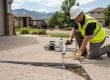
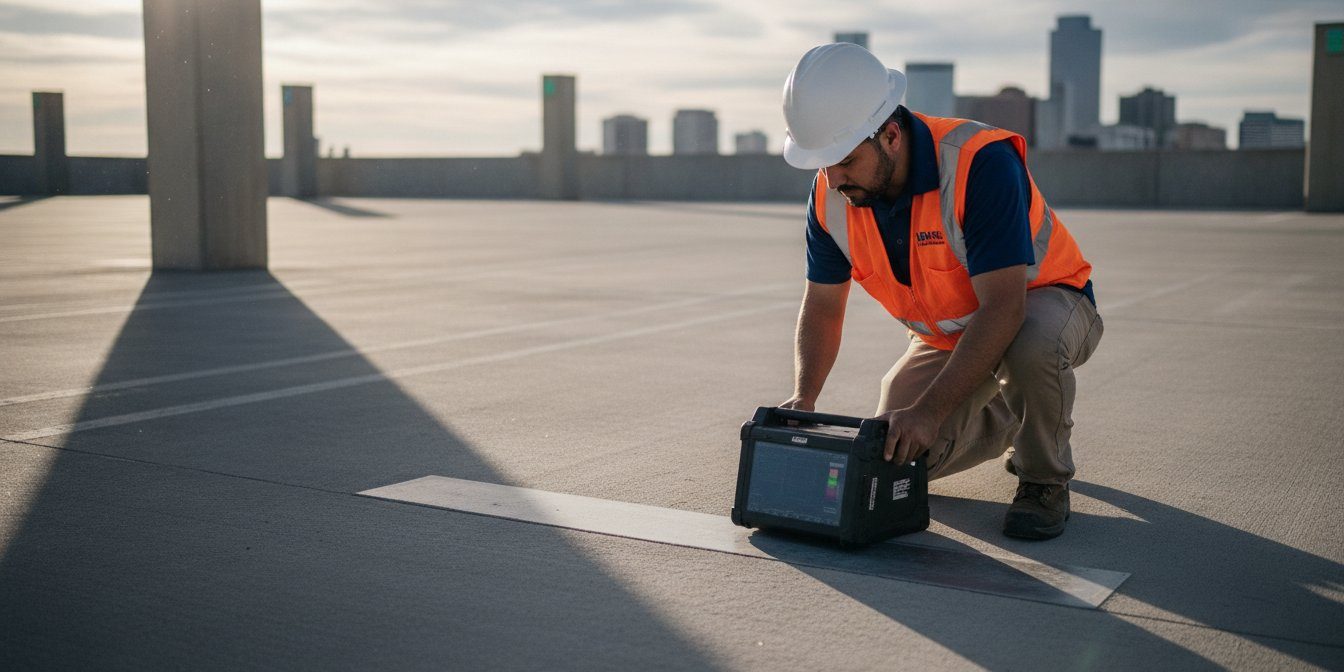
Ground Penetrating Radar (GPR) has revolutionized the way we approach broken post tension cable detection by providing a clear, non-invasive view of what lies beneath the concrete surface. This technology utilizes high-frequency radio waves to map the location and depth of internal tendons without the need for destructive drilling or coring. While visual signs like blowouts are obvious, GPR allows us to see the “silent” failures where a cable may have snapped internally while the exterior remains deceptively calm. Following Post-Tensioning Institute guidelines, these NDT methods are essential for any structural assessment performed in 2026.
Other specialized tools, such as Ultrasonic Pulse Velocity (UPV) and magnetic imaging devices like Pachometers, offer additional layers of precision. UPV is particularly effective at identifying internal voids or determining if a tendon has lost its connection with the surrounding concrete. Pachometers help technicians determine the exact depth and spacing of reinforcement, which is critical for calculating the remaining load-bearing capacity of a slab. Comprehensive mapping is the only way to ensure structural safety before any coring, drilling, or plumbing repairs are attempted.
How GPR Scanning Works in Post-Tension Slabs
When performing a scan, technicians look for specific hyperbola patterns on the radar screen. These shapes represent the reflection of radio waves off metallic objects within the concrete. Distinguishing between standard rebar, high-tension cables, and live electrical conduits requires significant technical mastery and experience. For modern, multi-story structures, 3D imaging provides a spatial map that accounts for the complex, draped profile of PT tendons as they move through different bays. This level of detail is necessary to avoid misidentifying a healthy cable as a broken one.
When to Request a Comprehensive Structural Scan
Buildings with post-tension foundations often require a scan as part of pre-renovation due diligence to ensure no critical components are damaged during construction. In the Denver and Colorado Springs regions, where soil movement is a constant factor, periodic scanning can act as a form of predictive maintenance. If a tenant or manager hears a sudden, loud “pop” resembling a gunshot, an immediate scan is necessary to locate the failed tendon and assess the surrounding area. Utilizing GPR reduces liability by preventing accidental cable strikes that could lead to catastrophic injury or repair costs that often exceed $100,000 per incident.
Why Colorado Property Owners Face Unique Post-Tension Risks
Colorado’s Front Range presents a specific set of geological challenges that aren’t found in other parts of the country. For property owners in Denver, Aurora, and Castle Rock, the primary antagonist is bentonite, an expansive clay that swells significantly when moisture is present. While post-tensioned slabs are designed to handle horizontal tensile loads, the vertical force exerted by “soil heave” creates a type of stress the system wasn’t originally intended to absorb. This upward pressure can lead to anchor failures and snapped tendons, making localized broken post tension cable detection a critical part of property management in this region.
The environmental conditions in our high-desert climate further complicate structural stability. Colorado’s extreme freeze-thaw cycles cause concrete to expand and contract rapidly, which inevitably leads to micro-fractures. These cracks act as conduits for water and aggressive de-icing chemicals. When snowmelt carrying magnesium chloride or road salts reaches the internal steel, corrosion accelerates at an alarming rate, often bypassing the cable’s protective grease layer entirely.
Soil Dynamics in the Front Range
In communities like Parker and Highlands Ranch, shifting foundations can easily snap anchors if the slab wasn’t properly engineered for the local soil profile. High-quality Post Tension Installation must be paired with precise soil stabilization to be truly effective. Many “floating” slabs in Colorado are particularly vulnerable because they lack the deep pier support found in more traditional foundations, leaving the cable tension as the only thing holding the structure together against the heaving earth.
Environmental Corrosion Factors
Parking garages and exposed decks face the highest risk from winter treatments. As vehicles track in snow and salt, the runoff penetrates the slab edges and “pocket” grouting. If this grouting is poorly maintained, it allows corrosive moisture to pool directly against the cable anchors. Properties in Boulder and Colorado Springs also face challenges from high water tables, which can introduce moisture from below. This constant exposure weakens the protective plastic sheathing over time, leading to silent failures that only professional broken post tension cable detection can uncover. If you’re concerned that soil movement has compromised your foundation’s integrity, reach out to RiseLock for a precision-focused structural evaluation.
Professional Post-Tension Cable Inspection and Repair with RiseLock
RiseLock approaches structural restoration as a high-precision discipline rather than a general construction task. Identifying a failure is only the first step; the transition from broken post tension cable detection to technical remediation requires a specialized skill set that balances safety with structural longevity. We view each project as a partnership, ensuring that the integrity of your property is restored using methods that minimize disruption while maximizing durability. Our team focuses on grounded, confident solutions that prioritize the technical mastery required for high-tension systems.
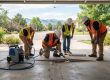
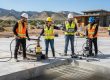
Our multi-point inspection process begins with a comprehensive visual walk-through to correlate surface anomalies with internal conditions. Once we deploy targeted NDT scanning, our team collaborates with structural engineers to analyze the data and determine the exact extent of the failure. We provide property managers and owners with clear, actionable reports that categorize risk levels, allowing for informed decision-making before any physical work begins. This methodical approach ensures that every repair is backed by data and professional oversight.
Our Structural Assessment Process
Precision is the hallmark of our diagnostic phase. By combining GPR data with engineering collaboration, we move beyond guesswork to pinpoint the precise location of snapped tendons or compromised anchors. This thoroughness ensures that our repair plan addresses the root cause of the failure, whether it’s localized corrosion or soil-induced stress. We believe in providing a transparent look into the slab’s health, giving you the peace of mind that comes with expert intervention.
Restoring the Integrity of Your Foundation
True structural restoration often requires a multi-layered approach to address both the reinforcement and the soil beneath. In many cases, we find a powerful synergy between Polyurethane Concrete Lifting and cable re-tensioning. While the cables provide the necessary horizontal compression, polyurethane injection stabilizes the subgrade and restores levelness to slabs affected by Colorado’s expansive soils. This dual-action method ensures the foundation is supported from both the interior reinforcement and the exterior environment.
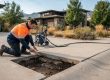
Handling cables under extreme tension is a task that demands technical mastery and an uncompromising commitment to safety. Our technicians are trained to execute specialized repair and re-tensioning methods that meet the latest industry standards. If you’re managing a property in the Front Range and suspect structural distress, our team is ready to provide a definitive solution through expert Concrete Repair in Denver. Protecting your investment starts with professional broken post tension cable detection; contact RiseLock today to secure your building’s structural future.
Securing Your Property’s Structural Future
Maintaining a post-tensioned building requires a proactive approach that balances visual vigilance with advanced technical assessment. We’ve explored how identifying early warning signs, such as anchorage blowouts or localized floor heaving, can prevent the “zipper effect” of cascading cable failures. In Colorado’s challenging environment, the combination of expansive bentonite soils and aggressive winter salts makes regular monitoring an essential part of your maintenance strategy. Taking these steps ensures that minor issues don’t evolve into catastrophic structural challenges.
Utilizing modern, non-destructive technology ensures that broken post tension cable detection is both accurate and non-invasive. This precision allows you to address structural vulnerabilities without the need for destructive exploration. RiseLock brings specialized expertise in Colorado’s unique soil dynamics and a commitment to high-precision structural repair, positioning us as your dependable partner in long-term building security. Our focus on technical mastery and ethical service helps lead you away from the stress of damage toward lasting stability.
Don’t leave your foundation’s health to chance. Schedule a Professional Post-Tension Inspection with RiseLock to gain a clear, data-driven understanding of your building’s integrity. Taking action today provides the peace of mind that your structure remains safe and stable for years to come.
Frequently Asked Questions
What does a broken post-tension cable sound like when it snaps?
A snapping post-tension cable typically produces a loud, sharp sound similar to a gunshot or a heavy metallic “pop.” This occurs because the stored energy, often exceeding 30,000 pounds of force, is released instantaneously. The sound may be accompanied by a slight vibration felt in the floor or walls. If you hear such a noise in a building with a post-tension foundation, it’s a primary indicator that you need an immediate structural evaluation.
Is a building safe if only one post-tension cable is broken?
While a single broken cable rarely causes an immediate collapse, it significantly compromises the structural safety factor of the slab. Post-tensioned systems are designed with redundancy, but one failure shifts the intended load to adjacent cables. This increased stress can lead to a “zipper effect” where more tendons fail over time. Professional broken post tension cable detection is necessary to determine if the remaining cables can safely support the design load.
How much does it cost to detect a broken post-tension cable?
The cost of broken post tension cable detection varies based on the size of the area being scanned and the complexity of the internal reinforcement. Factors like the depth of the slab and the presence of electrical conduits or multi-layered rebar also influence the final investment. Utilizing non-destructive methods like GPR is a precise way to identify issues without the high costs and structural risks associated with invasive concrete removal.
Can you repair a broken PT cable without replacing the entire slab?
Yes, it’s possible to repair individual cables without replacing the entire concrete slab. Modern techniques allow technicians to locate the break, excavate a small area near the anchor, and splice or replace the damaged tendon. Once the new strand is in place, it is re-tensioned to the original design specifications. This specialized approach restores structural integrity while saving the property owner from the massive expense of a full slab tear-out.
How long does a GPR scan take for a standard residential foundation?
A standard GPR scan for a residential foundation typically takes between two and four hours to complete. The exact duration depends on the square footage and the level of detail required for the mapping. Technicians move the radar unit in a grid pattern to ensure every tendon is accurately accounted for. This efficient process provides immediate data that can be used to create a comprehensive structural health report.
What happens if you accidentally drill into a post-tension cable?
Accidentally drilling into a live post-tension cable can cause a violent release of tension that endangers everyone in the vicinity. The cable may snap back through the slab or blow out through the anchorage zone with enough force to cause severe injury. Beyond the physical danger, a cable strike causes immediate structural damage that requires a complex repair. Always perform a scan before any coring or drilling to avoid these risks.
Are all concrete slabs in Denver post-tensioned?
Not all concrete slabs in Denver are post-tensioned, but the method is extremely common for new construction in the Front Range. Because our region deals with expansive bentonite clay, engineers often specify PT foundations to resist the upward force of soil heave. If your home or commercial building was constructed after 1980, there’s a high probability that it utilizes a post-tensioned system to maintain stability against Colorado’s shifting ground.
How often should I have my post-tensioned parking garage inspected?
Post-tensioned parking garages should undergo a professional visual inspection at least once a year. Because these structures are exposed to moisture and de-icing salts, they face a higher risk of silent corrosion. A more detailed structural assessment involving NDT scanning is recommended every three to five years. Regular intervals of broken post tension cable detection help catch internal degradation before it leads to an expensive or dangerous failure.