Imagine arriving at your facility to find a warehouse door that won’t close or a jagged trip hazard stretching across your main entryway. In a busy commercial or residential environment, a sudden structural shift is more than an inconvenience; it’s a liability that demands an immediate response. When you’re facing these urgent settlement issues, the traditional mess and multi-day downtime of mudjacking simply aren’t viable options. You need a solution that restores stability without paralyzing your daily operations or leaving a lasting mess on your property.
We understand that a failing slab feels like a personal priority that threatens your safety and your investment. This guide explores how specialized concrete lifting Englewood services utilize high-density polyurethane foam to provide a durable, precision-engineered fix in a fraction of the time required by legacy methods. You’ll learn how this advanced material reaches structural bearing capacity in as little as 15 minutes, allowing for almost immediate pedestrian and vehicle traffic. We also detail the essential role of Ground Penetrating Radar in protecting post-tension foundations during the restoration process. We’ll provide a clear path from the stress of structural damage to the peace of mind offered by high-precision intervention.
Key Takeaways
- Learn how high-density polyurethane foam provides a rapid structural cure, allowing for full pedestrian and vehicle traffic in less than an hour.
- Identify the specific thresholds where concrete settlement becomes an immediate liability or operational hazard for your property.
- Discover why specialized concrete lifting Englewood requires precise technical mapping to safeguard the high-tension cables found in modern post-tension foundations.
- Understand the advantages of the non-invasive injection process, which utilizes small, 5/8-inch ports to restore slabs without the mess of traditional demolition.
- Explore how local geotechnical knowledge of Englewood’s expansive soils leads to more durable stabilization compared to generic repair methods.
Identifying Critical Concrete Emergencies in Englewood
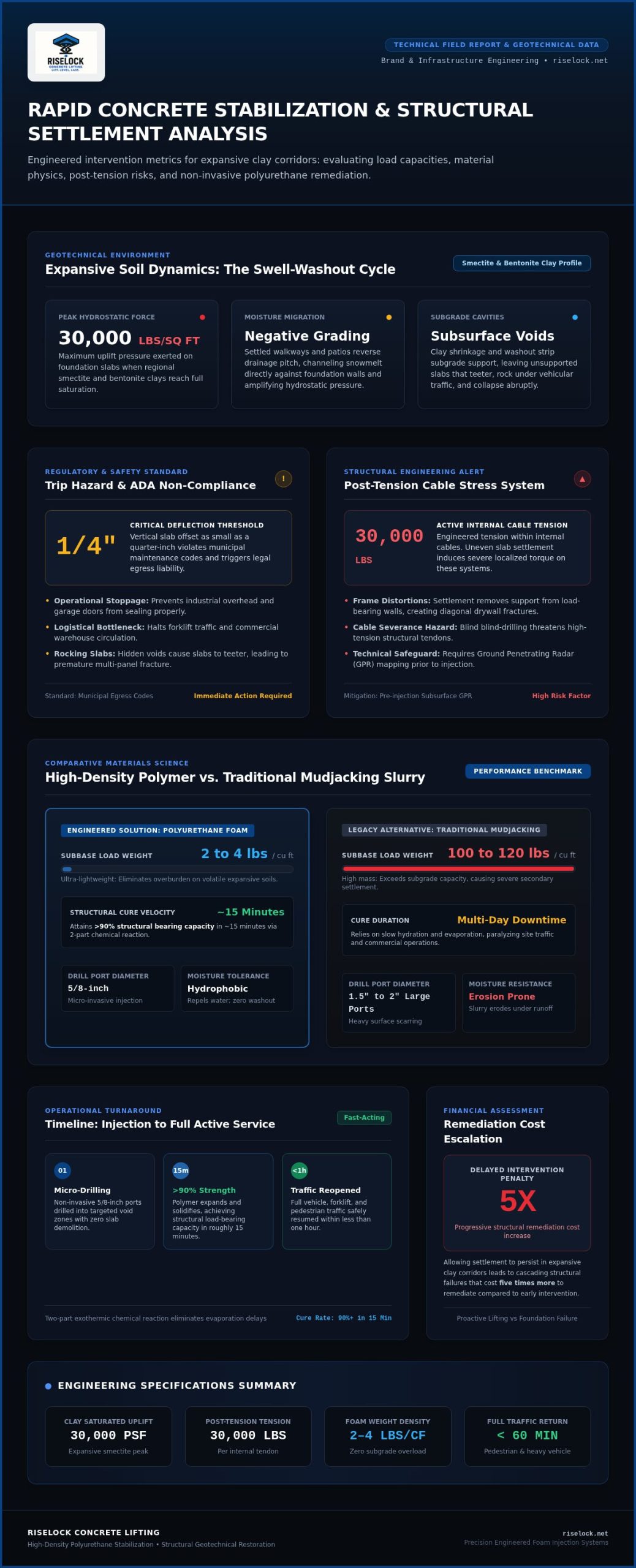
Englewood is situated within Colorado’s expansive soil corridor, a region defined by high concentrations of smectite and bentonite clays. These soils are notoriously volatile, exerting uplift pressures as high as 30,000 lbs per square foot when saturated. When the soil dries or the subgrade washes out, the lack of support causes heavy concrete slabs to drop abruptly. This movement often creates immediate operational crises, such as garage doors that no longer seal or warehouse floors that prevent forklift access. Addressing these shifts through professional concrete lifting Englewood services is essential to prevent secondary damage to the building’s envelope.
Drainage failure represents another category of structural emergency. When a patio or walkway develops negative grading, it directs seasonal snowmelt and rainwater toward the foundation rather than away from it. This concentrated moisture accelerates soil expansion and can lead to basement flooding or foundation wall bowing. Utilizing modern expanding structural foam leveling techniques allows for the rapid restoration of proper pitch, effectively shielding the foundation from hydraulic pressure.
Safety and Liability Red Flags
Vertical offsets are the most common indicators of a liability risk. A height difference of just 1/4 inch between slabs is frequently cited as a significant trip hazard in municipal property maintenance codes. In Englewood’s commercial districts, maintaining ADA compliance isn’t optional; it’s a legal requirement to ensure safe egress. Rocking slabs are particularly deceptive hazards. These slabs have developed large subsurface voids, causing them to teeter under the weight of pedestrians or vehicles. This instability eventually leads to slab cracking and complete structural failure if the underlying void isn’t filled with high-density polymer.
Structural Threats to Englewood Properties
Sunken concrete near load-bearing walls is a critical red flag for property owners. When the slab-on-grade settles, it removes the uniform support required by the building’s framing, often manifesting as sticking doors or diagonal cracks in drywall. Many residential and commercial builds in the area utilize post-tensioned foundations to resist clay swelling. These slabs contain cables stressed to 30,000 lbs of tension. If the concrete settles unevenly, it places localized stress on these cables, potentially compromising the entire system’s safety. Allowing concrete settlement to persist in expansive Colorado clays invites progressive foundation failure that often costs five times more to remediate than early intervention.
Why Polyurethane Foam is the Standard for Rapid Stabilization
Polyurethane foam has transformed the technical landscape of concrete lifting Englewood by prioritizing speed without sacrificing structural integrity. Unlike traditional materials that rely on evaporation or hydration to harden, high-density geotechnical foam utilizes a two-part chemical reaction. This process allows the polymer to expand and achieve over 90% of its structural load-bearing capacity within approximately 15 minutes. For an Englewood business owner facing a blocked loading dock or a homeowner with a dangerous trip hazard, this means the area can return to full service in less than an hour.
The material’s lightweight nature is particularly critical when dealing with the Colorado Geological Survey’s findings on expansive soils. Traditional repair slurries are heavy, often weighing between 100 and 120 lbs per cubic foot. This added weight can actually overload the already weak subgrade, leading to secondary settlement. In contrast, closed-cell polyurethane weighs only 2 to 4 lbs per cubic foot while providing the same uplift force. It stabilizes the slab by filling voids and compacting the soil beneath it, creating a durable foundation that doesn’t contribute to further sinking.
Englewood’s seasonal weather patterns, including rapid snowmelt and intense freeze-thaw cycles, require a repair material that isn’t compromised by water. Our specialized foam is hydrophobic, meaning it repels water during the injection process. It won’t wash out or erode under hydrostatic pressure, ensuring the repair remains stable even during the wettest spring months. If you’re currently dealing with a shifting slab, a professional concrete leveling assessment can determine the exact volume of material needed for permanent stabilization.
Foam vs. Traditional Mudjacking in Emergencies
In emergency scenarios, the primary drawbacks of mudjacking are the extended cure times and the significant mess. Mudjacking requires drilling large, two-inch holes and pumping a thick cementitious slurry that can take 24 to 72 hours to dry. Polyurethane injection uses penny-sized, 5/8-inch ports, resulting in a much cleaner job site that is ideal for high-traffic commercial zones. For more on why we avoid older, heavy methods in favor of modern polymers, see our guide on polyurethane vs mudjacking.
Load-Bearing Capabilities of High-Density Foam
High-density foam is engineered to withstand the rigorous demands of industrial and warehouse environments. It possesses high compressive strength, allowing it to support heavy vehicle traffic and machinery without compressing or degrading over time. Because the material is non-biodegradable, it creates a permanent subgrade that is impervious to microbial attack or chemical breakdown. This technical mastery ensures that once a slab is lifted, it stays level, providing long-term security for Englewood’s commercial infrastructure.
Structural Precision for Englewood Post-Tension Slabs
Many modern residential and commercial developments in Englewood rely on post-tensioned foundations to counteract the intense expansive soil hazards in Colorado. Unlike standard rebar-reinforced slabs, post-tensioned systems use high-strength steel tendons that are stressed to extreme loads after the concrete has cured. This design provides superior resistance to the heave and sink cycles typical of the Front Range, but it introduces significant complexity during restoration. When performing concrete lifting Englewood projects, understanding the exact layout of these tendons is a critical safety requirement rather than a secondary concern.
Our approach treats every slab as a complex engineered system. Before any drilling begins, it’s essential to identify the location of cable anchors and the path of internal tendons. High-pressure polyurethane injection requires precision port placement to avoid interfering with these structural components. By combining our knowledge of soil mechanics with an expert understanding of how post-tensioned concrete behaves under stress, we provide a lifting solution that restores the surface while protecting the underlying structural reinforcements.
The Danger of Unqualified Lifting
A standard concrete slab might tolerate a misplaced drill hole, but a post-tensioned slab stores massive mechanical energy. If a drill bit strikes a pressurized tendon, the result is an explosive release of tension that can cause catastrophic slab failure or severe injury. Many general contractors lack the specialized equipment and technical mastery to map these cables before beginning an injection. In some cases, we are called to perform an emergency broken post tension cable repair because a previous, unqualified attempt at leveling severed a tendon. Our process includes meticulous site assessment to ensure that every injection port is placed with mathematical precision, far away from any active cable runs.
Stabilizing Foundations with Post-Tension Mastery
True structural restoration requires more than just filling a void; it requires balancing the lifting force of the foam with the existing tension of the slab. We integrate our deep knowledge of post tension installation into every lifting project we undertake. This dual-discipline approach allows us to coordinate the expansion of high-density foam with the mechanical requirements of the PT system, maintaining structural equilibrium throughout the lift. By monitoring the slab’s reaction in real-time, we ensure that the lift doesn’t inadvertently overstress the tendons or create new fracture points. Because post-tension systems are the regional standard for managing soil movement, comprehensive PT knowledge is now a mandatory requirement for any modern Colorado concrete repair professional.
The Emergency Response Process: From Call to Cure
When a structural shift threatens the safety or accessibility of your property, the response must be both rapid and methodical. Our emergency protocol for concrete lifting Englewood begins with an immediate site assessment to determine the root cause of the settlement. We don’t just look at the surface; we evaluate the subgrade conditions and the presence of any utility lines or post-tension cables. This initial precision ensures that the stabilization plan addresses the specific geotechnical challenges of your site while maintaining the integrity of the surrounding infrastructure.
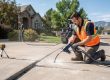
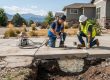
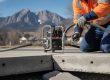
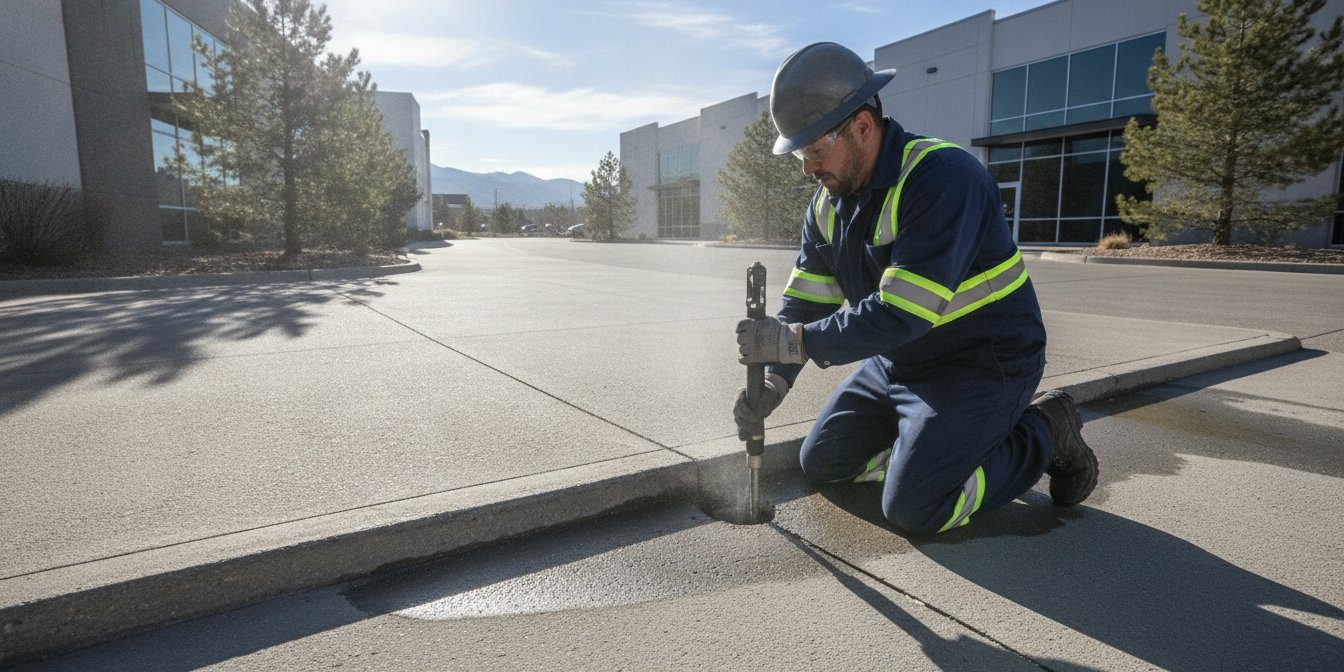
The physical restoration begins with the creation of injection ports. Unlike traditional methods that require large, invasive holes, we use specialized bits to drill penny-sized ports measuring just 5/8 of an inch in diameter. These small access points are strategically placed to maximize the reach of the expanding polymer while minimizing the visual impact on your concrete. This approach is particularly valuable for high-traffic commercial entryways and decorative residential surfaces where aesthetics and structural strength are equally important.
Step-by-Step Injection Protocol
Our “measure twice, inject once” philosophy is central to our technical mastery. The process starts with sub-slab void filling, where we pump high-density foam into the empty spaces created by soil erosion or compaction. This creates a solid, uniform foundation before any lifting occurs. Once the void is remediated, we begin the incremental lifting phase. We monitor the slab’s elevation in real-time using laser levels capable of detecting movements as small as 1/32 of an inch. This level of control allows us to restore the slab to its original grade with surgical accuracy. After the lift is complete, we seal the injection ports with a color-matched concrete grout, leaving the surface ready for use within minutes. If you need immediate assistance with a sunken slab, you can schedule an emergency site evaluation to begin the restoration process.
Post-Lift Inspection and Testing
The final phase of our process is a rigorous verification of the repair’s success. Because our geotechnical foam achieves 90% of its load-bearing capacity in just 15 minutes, we can test the slab’s stability under actual weight almost immediately. We conduct a thorough customer walkthrough to verify that all trip hazards are eliminated and that doors or gates operate correctly. For commercial clients, we provide detailed documentation of the repair, which serves as essential proof of maintenance for insurance providers or liability mitigation. This transparent, professional approach ensures that the peace of mind we provide is backed by verifiable results and long-term structural security.
RiseLock: Englewood’s Partner in Immediate Restoration
Choosing a partner for structural restoration requires more than just finding a contractor with the right equipment. It requires a relationship with a team that understands the specific geotechnical demands of the Front Range. RiseLock is built on a foundation of quiet authority and technical mastery, providing concrete lifting Englewood services that prioritize the long-term stability of your property. We view every sunken slab or failing foundation as a personal priority, applying rigorous engineering standards to ensure that our intervention is both precise and permanent.
Property managers and facility owners in Englewood face unique challenges, particularly when balancing the need for immediate repairs with the constraints of a high-traffic environment. This is why many local professionals choose RiseLock for commercial concrete leveling. They value a partner who can resolve critical trip hazards and structural drops without the messy downtime of traditional demolition. Our focus on high-density polyurethane foam allows businesses to maintain their operations while we address the underlying subgrade issues that lead to settlement.
Englewood Service Highlights
Our commitment to quality extends across both residential neighborhoods and commercial corridors in Englewood. Whether you are managing a retail space along South Broadway or a private residence near Belleview Avenue, you receive the same level of professional reliability. This dedication is backed by the leadership of Alex Mon, whose commitment to quality ensures that every project meets our high internal standards for structural integrity. If you are currently dealing with an urgent structural issue, you can request a priority consultation to receive an expert assessment of your concrete’s condition.
Long-Term Peace of Mind
The durability of our high-density polyurethane solutions is a cornerstone of our service. Because the material is non-biodegradable and hydrophobic, it provides a permanent subgrade that will not erode or degrade over time. We prevent future settlement by using advanced concrete leveling techniques that address the “why” behind the sinkage, compacting loose soils and filling deep-seated voids. This methodical approach leads the way from the stress of structural damage toward the peace of mind offered by specialized, high-precision intervention. When you are ready to secure your property, Contact RiseLock for Emergency Concrete Lifting in Englewood to schedule your structural assessment.
Securing Your Foundation for the Long Term
Addressing a sunken slab is a matter of both immediate safety and long-term structural preservation. We’ve examined how modern technology has replaced invasive, heavy methods with precision-engineered solutions that respect the complex mechanics of your property. By utilizing high-density polyurethane technology, we provide a stabilization method that cures in minutes and withstands the unique pressures of Colorado’s expansive soils. Our specialized post-tension structural expertise ensures that even the most complex foundations are restored without compromising the integrity of internal tendons.
When you’re facing a structural emergency, you need a partner who views your problem as a personal priority. We serve Englewood and the Front Range with professional reliability, offering the technical mastery required to resolve liabilities quickly and cleanly. Our team provides specialized concrete lifting Englewood services that prioritize both speed and safety. Don’t let a minor shift become a catastrophic failure. You can Request an Emergency Concrete Lifting Quote in Englewood to begin your restoration today. We’re here to help you move away from the stress of damage toward the lasting security of a level surface.
Frequently Asked Questions
How quickly can I use my concrete after an emergency lifting service?
You can typically resume full use of your concrete within 15 to 60 minutes after the injection process is complete. High-density polyurethane foam achieves over 90% of its full structural load-bearing capacity in just 15 minutes, which is significantly faster than the days required for traditional cement-based methods. This rapid cure time makes it the ideal choice for emergency repairs in high-traffic commercial zones or residential driveways where immediate access is a priority.
Is polyurethane lifting safe for my post-tension foundation in Englewood?
Polyurethane lifting is safe for post-tension foundations when performed by specialists who understand the mechanics of stressed tendons. Because we also specialize in post-tension installation, we possess the technical mastery required to identify cable anchors and tendons before drilling. We use precision mapping and 5/8-inch ports to ensure that the structural integrity of your Englewood home’s foundation remains undisturbed during the lifting and stabilization process.
Can you lift concrete during a typical Colorado winter?
Yes, we can perform concrete lifting Englewood services throughout the Colorado winter as long as the subgrade isn’t completely frozen. The chemical reaction that causes the polyurethane foam to expand is exothermic, meaning it generates its own heat during the curing process. This allows the material to expand and harden effectively even in colder temperatures, providing a reliable solution for trip hazards that emerge during the freeze-thaw cycles common in the Denver metro area.
What causes concrete to sink so suddenly in the Englewood area?
Sudden settlement in the Englewood area is primarily caused by the region’s expansive bentonite and smectite clays. These soils swell significantly when saturated and shrink abruptly during dry periods, creating subsurface voids that leave concrete slabs unsupported. When a heavy rain event or a broken downspout introduces concentrated moisture, the soil structure can shift rapidly. This movement causes the slab to drop, resulting in the sudden appearance of trip hazards or structural offsets.
How does the cost of emergency lifting compare to concrete replacement?
Emergency polyurethane lifting is substantially more cost-effective than a full concrete replacement, often saving property owners between 50% and 75% in total project costs. By choosing to lift rather than replace, you eliminate the expenses associated with demolition, debris disposal, and the long curing times of new concrete. Additionally, because the process is non-invasive and rapid, you avoid the indirect costs of business downtime or extended residential street closures.
Will the foam wash away if there is heavy rain or a pipe leak?
The high-density foam we use is hydrophobic, meaning it repels water and won’t wash away or degrade during heavy rain or plumbing leaks. Once the polymer cures into a closed-cell structure, it becomes an inert, non-biodegradable material that is impervious to moisture. This ensures that the stabilization remains permanent even if the subgrade is subjected to hydrostatic pressure or seasonal snowmelt, providing a long-term fix that traditional soil-based fills cannot match.
How long does an emergency concrete lifting appointment usually take?
Most emergency concrete lifting appointments are completed within two to four hours, depending on the size of the slab and the volume of the subsurface voids. Our streamlined process involves drilling small injection ports, pumping the polymer, and sealing the holes with color-matched grout. Because there is no heavy equipment or large-scale excavation required, our team can arrive, restore the structural integrity of your concrete, and leave the site clean in a single morning or afternoon.
Can you lift a sunken garage floor that has heavy equipment on it?
We can successfully lift sunken garage floors even when they are supporting heavy vehicles or industrial equipment. The high-density polyurethane used in our process has exceptional compressive strength, allowing it to exert thousands of pounds of upward pressure to move heavy slabs back to their original grade. This capability is essential for Englewood warehouses and residential garages where moving heavy machinery or vehicles isn’t always practical during an emergency structural repair.