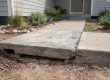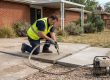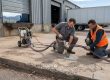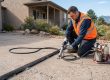
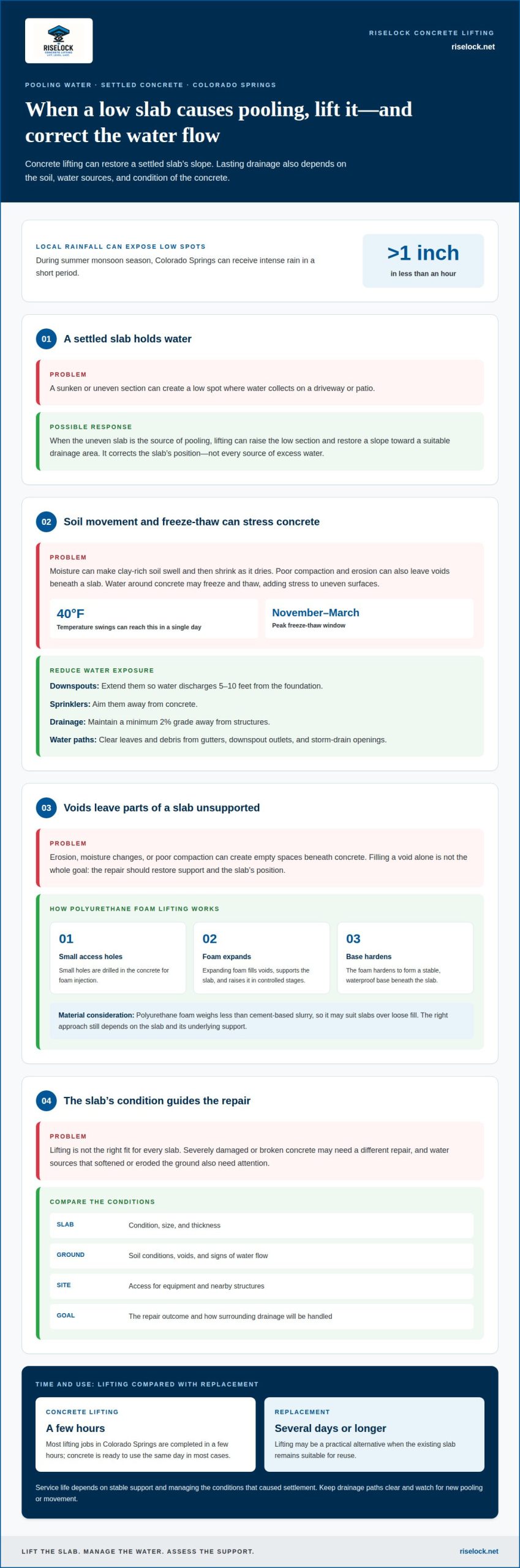
Concrete lifting to stop water pooling in Colorado Springs can restore a settled slab’s slope so water drains away instead of collecting on its surface. It works when uneven concrete is the source of the pooling, but correcting drainage problems around the slab also matters to reduce the chance of future settlement. Colorado Springs can receive more than 1 inch of rain in less than an hour during summer monsoon season, making low spots hard to ignore.
It’s understandable to focus on the puddle, but the slab’s movement and the soil beneath it may also be part of the problem. Water can affect Colorado Springs’ clay-rich soils, which may swell when wet and shrink as they dry, changing the support beneath concrete.
This guide explains how polyurethane foam lifting raises sunken concrete and when another repair may be appropriate. You’ll learn how slab and soil conditions affect the solution, why drainage corrections matter, and which signs may point to movement beyond a surface slab.
Key Takeaways
- Reduce the chance of repeat settlement by directing downspout and sprinkler water away from concrete and maintaining a slope away from the home.
- Polyurethane foam lifts settled slabs by expanding into voids beneath them, with small access holes used for injection.
- Choose a lifting approach based on soil conditions, slab size and thickness, access, and the repair goals.
- Watch for signs such as stair-step wall cracks or doors that become difficult to operate, which may point to movement beyond a surface slab.
Sinking Concrete in Colorado Springs?
Colorado Springs’ soil, drainage, and freeze-thaw cycles can all contribute to sinking slabs. When a driveway or patio settles unevenly, lifting can restore its slope so water drains instead of pooling.
Local Soil and Freeze-Thaw Conditions
Colorado Springs has Pierre Shale in the east and decomposed granite near the foothills. In clay-rich soil, moisture can cause swelling, followed by shrinkage as the ground dries. Poor compaction and erosion can also create voids beneath a slab. Look for sinking, cracks, or movement alongside persistent puddles.
Temperature swings can reach 40 degrees in a single day, and November through March is the peak freeze-thaw window. Water that collects around concrete can freeze and thaw, adding stress to already uneven surfaces.
Lifting Concrete to Redirect Pooling Water
When a low section causes pooling, lifting can raise the sunken slab and restore a slope toward a suitable drainage area. This helps water flow off driveways and patios rather than sit on the concrete. Lifting corrects the slab’s position, but it does not address every source of excess water.
For lasting drainage, extend downspouts so they discharge 5-10 feet from the foundation, and aim sprinklers away from concrete. Clear leaves and debris from gutters, downspout outlets, and storm-drain openings so water can flow. Homes and commercial sites both need clear paths that keep runoff away from slabs and entrances.
Permits, Drainage Slope, and Maintenance
Permit requirements depend on the project’s scope and location; lifting a slab and changing site drainage are different work. For a local answer, identify the exact work and its location before proceeding. A property should have a minimum 2% grade away from structures to direct surface water outward.
The service life of lifted concrete depends on stable support and managing the conditions that caused settlement. Keep gutters and storm drains clear, direct downspouts away from slabs, and watch for new pooling or movement. These steps help limit renewed water exposure beneath the concrete.
Choosing a Licensed, Insured Contractor
Choose a contractor who clearly explains the planned work and provides current licensing and insurance details. Match the proposed repair to the affected area, whether it’s a residential patio, commercial walkway, or driveway with standing water.
Before work begins, ask for a written description of how the slab will be raised and how drainage concerns will be handled. A clear scope distinguishes lifting concrete from correcting surrounding water flow.
Polyurethane foam injection for lifting sunken concrete
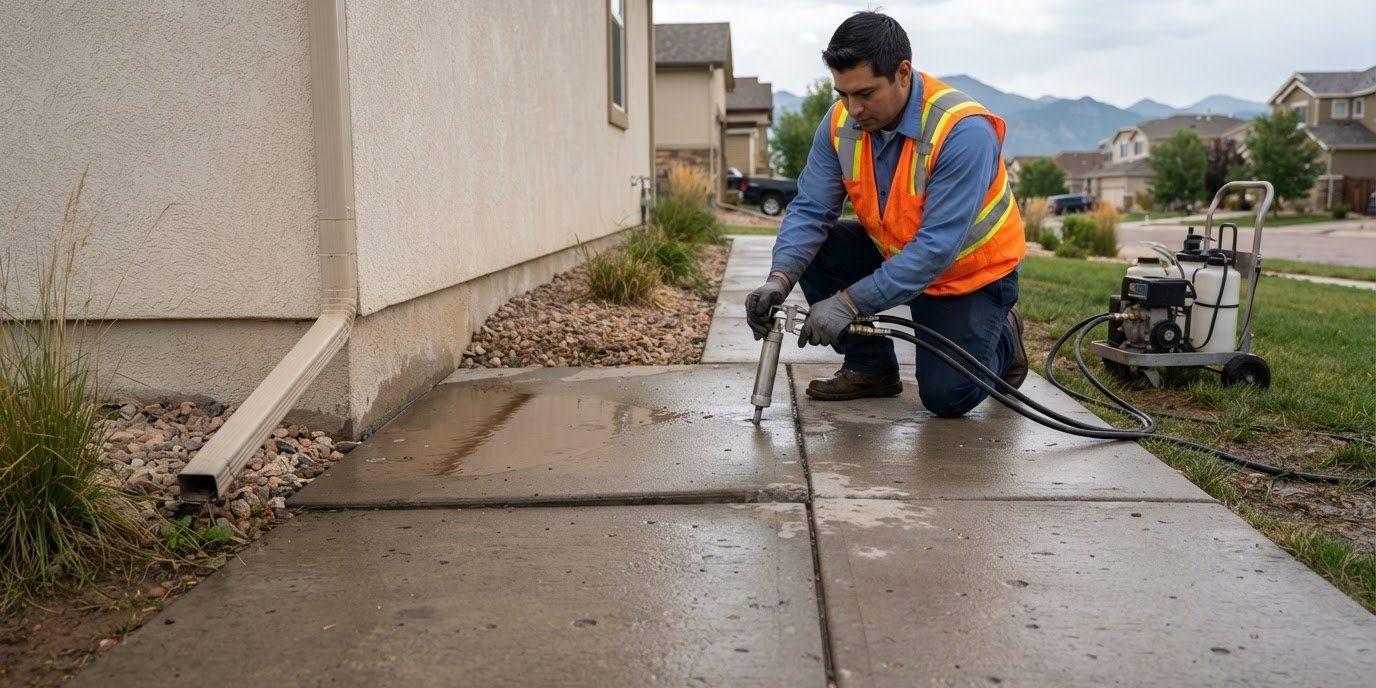
Polyurethane foam injection raises settled concrete by filling voids beneath the slab. Small holes drilled in the concrete provide access for the foam without removing the entire surface. As the specialized foam expands, it fills voids, supports and lifts the slab, then hardens to form a stable, waterproof base. This method can address settled driveways, patios, and garage floors.
How foam lifting and slabjacking work
Slabjacking is a general term for raising concrete by injecting material beneath it. With polyurethane foam lifting, small drilled holes provide access to the space under the slab. Expanding foam fills voids and raises the surface toward a more even position. This can restore a drainage slope where settlement has created a low area.
Polyurethane foam weighs less than cement-based slurry, so it may suit slabs over loose fill. The right approach still depends on the slab’s condition, access, and underlying support. Lifting corrects the slab’s position, but water sources that may have eroded or softened the ground also need attention.
Leveling, control, and replacement
For concrete leveling, the goal is a stable, more even surface, not simply filling every void. Controlled foam injection supports the settled area and raises it in measured stages. This matters near garage doors, where an uneven transition can affect vehicle access, or beside a patio where a low edge holds water.
Most lifting jobs in Colorado Springs are completed in a few hours, and concrete is ready to use the same day in most cases. Replacement can take several days or longer. Lifting may therefore be a practical alternative when the slab remains suitable for reuse; severely damaged or broken concrete may require a different repair.
For a settled slab, polyurethane concrete lifting can restore level and support without full-slab replacement. The repair plan should account for the slab’s condition and the voids beneath it.
Comparing lifting methods by soil and slab conditions
In Colorado Springs, the suitable lifting method depends on the soil, slab, access, and repair goals. Comparing these conditions helps distinguish a localized void from broader ground movement.
Soil and Terrain Considerations
Colorado Springs terrain includes Pierre Shale in the east and decomposed granite near the foothills. Moisture, poor compaction, and erosion can each create voids beneath concrete. An assessment considers the slab’s location, settled edges, and signs of water flow. These conditions help guide the repair estimate and leveling method.
Soil conditions matter alongside slab size and thickness. Access also shapes the repair plan, especially where a narrow walkway or nearby structure limits equipment placement.
Void Filling and Soil Stabilization
Concrete void filling targets unsupported spaces beneath a slab. Polyurethane foam expands into those spaces and can lift settled concrete, while traditional mudjacking uses cement-based slurry. Because the materials differ in weight, foam may suit slabs over loose fill. The goal is to restore support and position, not simply fill every opening.
Selecting a method means considering the slab’s dimensions, thickness, access, and repair goals. An estimate should explain how the proposed work addresses the observed voids.
Water Intrusion and Soil Washout
Water intrusion can erode or displace soil beneath concrete, leaving gaps that reduce support. A leaking downspout or runoff across a driveway can concentrate moisture along one edge. Assessing where water pools and how nearby drainage flows helps identify possible contributing conditions.
Lifting can correct a settled slab, but addressing the water source matters too. If runoff continues to wash soil away, the ground may lose support again. Concrete repair should account for both the slab’s position and drainage conditions.
Diagnosing Pooling and Lifting Limitations
To diagnose pooling, assess the slab’s slope, low areas, visible cracks, drainage paths, and signs of washout. Compare these observations with the slab’s size, thickness, and access before selecting a lifting method. This helps distinguish a concrete-leveling need from a wider foundation concern.
Lifting addresses settled slabs, not every structural condition. Foundation settlement may require piers reaching stable soil rather than slab lifting alone. Correcting the concrete’s position will not, by itself, stop ongoing moisture or soil movement.
Colorado Springs clay soils and water pooling
Colorado Springs’ clay-rich soils can swell when wet and shrink as they dry, changing support beneath residential slabs. This movement can leave a patio corner or garage floor uneven, with water collecting in a low area. Concrete lifting to stop water pooling in Colorado Springs can correct the slab’s position when settlement creates that low spot, but the surrounding drainage pattern also needs attention.
Trace recurring puddles after rain, from downspout outlets to driveway edges and foundation areas. Poor grading or erosion can create voids beneath concrete, while continuing runoff may disturb the ground further. Stair-step cracks in brick or block walls can indicate settlement or shifting, particularly where expansive clay soils move with moisture. These signs can help distinguish an isolated slab issue from movement affecting nearby structures.
Standing water can create practical hazards for homeowners and commercial property owners. In warm summer months, mosquitoes can breed in water as shallow as 1/4 inch. Pooling at a sidewalk or entrance can affect access, while water near a foundation may contribute to moisture intrusion. Owners can note where water remains and whether adjacent concrete or floors show signs of movement.
Concrete lifting to stop water pooling in Colorado Springs is most useful when a settled slab contributes to the puddle; it won’t redirect runoff from a leaking outlet. Direct downspouts away from the house and keep drainage paths clear. For public-facing sidewalks, the City of Colorado Springs says property owners should report problems with adjacent sidewalk concrete, and reporting doesn’t remove their legal liability. If a settled surface is part of the issue, explore concrete leveling options to address it with precision.
RiseLock Concrete Lifting: Polyurethane Concrete Lifting
RiseLock Concrete Lifting uses polyurethane foam lifting to address settled slabs when uneven concrete contributes to pooling. The process raises and supports suitable slabs, helping restore a more functional surface without full replacement. Address drainage sources too when runoff or soil erosion contributed to settlement.
For driveways, patios, and other sunken concrete, concrete leveling can help restore the slab’s position. If the concrete is cracked or damaged, concrete repair may also be appropriate. The right approach depends on the slab’s condition and what caused its movement.
If a low spot continues to collect water, contact RiseLock Concrete Lifting to discuss the concrete and drainage concerns at your property.
Take the Next Step Toward a Drier, More Stable Surface
A recurring puddle can reveal where a property needs attention. Before choosing a repair, consider whether the slab’s position, surrounding drainage, or both contribute to the problem. That distinction helps shape a practical plan for concrete lifting to stop water pooling in Colorado Springs, addressing the cause as well as the visible low spot.
RiseLock Concrete Lifting provides polyurethane concrete lifting and concrete leveling for uneven concrete, along with post-tension installation for projects requiring that service. The right work depends on the concrete and the conditions affecting it. Discussing the affected area helps establish a practical next step without assuming every drainage concern has the same solution.
If you’re ready to discuss a sunken or uneven slab, contact RiseLock Concrete Lifting. A careful assessment can help you move forward with a solution suited to your property.
Frequently Asked Questions
Do you serve communities near Colorado Springs?
RiseLock serves Colorado Springs and communities across Colorado, including Denver, Aurora, Centennial, Parker, Englewood, Littleton, Lakewood, Arvada, Thornton, Wheatridge, Castle Rock, Castle Pines, and Boulder. When contacting the company, describe the property location and concrete problem to help focus the discussion on the right service.
How Do I Know if My Concrete Needs Leveling?
Concrete may need leveling if adjoining sections sit at different heights or a slab rocks underfoot. A raised edge between sidewalk panels, for example, can create a trip point, while a garage floor that no longer meets its threshold may signal movement. Check the full slab, not just the most visible low spot. An assessment can distinguish uneven concrete from a damaged slab that needs repair.
How long does concrete lifting take?
Most concrete lifting projects are completed in hours, though work time depends on the slab and repair conditions. A driveway with several settled sections may require a different amount of adjustment than an isolated patio panel. Before work begins, clear vehicles and movable items from the affected area. The crew can explain when the surface is ready for use based on the project.
What is concrete lifting for fixing water pooling around a home?
Concrete lifting raises a sunken slab so its surface can drain more effectively. If a settled patio corner holds rainwater, for example, lifting can correct the low section without replacing the entire patio. The method addresses the concrete’s position, not water flowing from a leaking gutter or poor yard drainage. Managing runoff alongside slab correction helps address both parts of the problem.
How does concrete slabjacking compare with polyurethane foam lifting?
Slabjacking is a general term for raising concrete by injecting material beneath it. Traditional mudjacking uses cement-based slurry, while polyurethane foam lifting injects expanding foam into voids. Foam weighs less than cement-based slurry, which may matter for slabs over loose fill. The right method depends on the slab, soil, access, and repair goals. RiseLock provides polyurethane foam lifting, not traditional mudjacking.
How much does concrete lifting cost per square foot in Colorado Springs?
Concrete lifting pricing depends on the project and is provided after a quote request. Relevant factors include slab size and thickness, how much it has settled, equipment access, and the voids beneath it. Drainage conditions may also affect the repair plan. A per-square-foot figure alone may not reflect the work needed for a specific driveway, patio, or walkway.