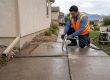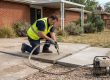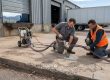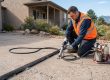
The most common DIY concrete lifting mistakes in Arvada start with treating the surface instead of the support beneath it. Self-leveling compound can smooth an uneven top, but it won’t fill voids below or stop soil from settling. When connected slabs sit at different heights, their joint can become a trip hazard. Lifting may correct uneven surfaces when the slab and its support conditions are suitable.
It’s understandable to look for a quick fix when a patio, driveway, or walkway starts to slope. But the visible edge is only part of the problem: poorly compacted soil, moisture changes, and water erosion can weaken support below concrete and contribute to sinking.
This article explains why surface patching and improvised lifting can miss the cause, how connected slabs affect uneven transitions, and what to consider when deciding whether concrete lifting is appropriate. You’ll also learn when an assessment can help distinguish a surface issue from a slab that needs support beneath it addressed.
Key Takeaways
- Look beyond the concrete’s surface: soil settlement, moisture changes, and erosion can leave a slab without stable support.
- Consider drainage and nearby tree roots when investigating why a driveway, patio, or walkway has shifted.
- Uneven slabs may be candidates for lifting, but connected sections and hidden obstructions can affect how the work should proceed.
- Avoid forcing a slab upward with uneven jacking or added concrete; the right repair depends on the cause and the slab’s condition.
Adding self-leveling compound instead of addressing underlying voids or soil settlement
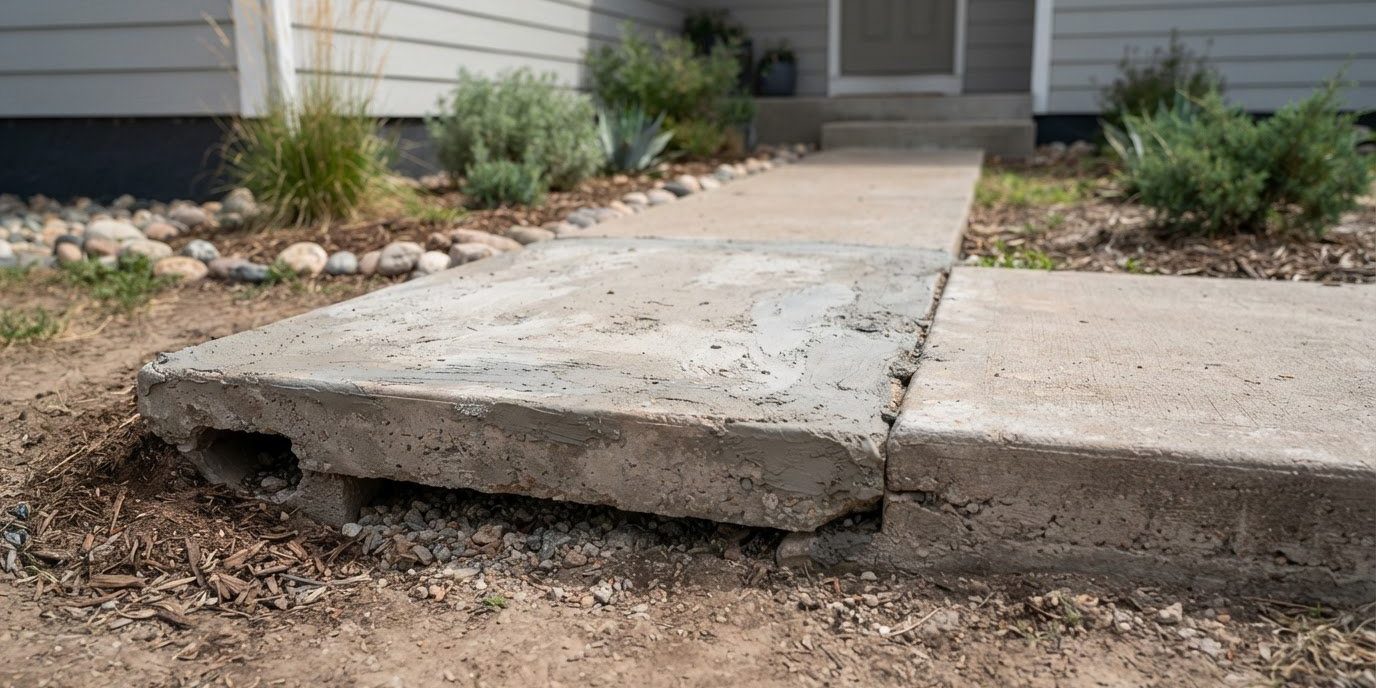
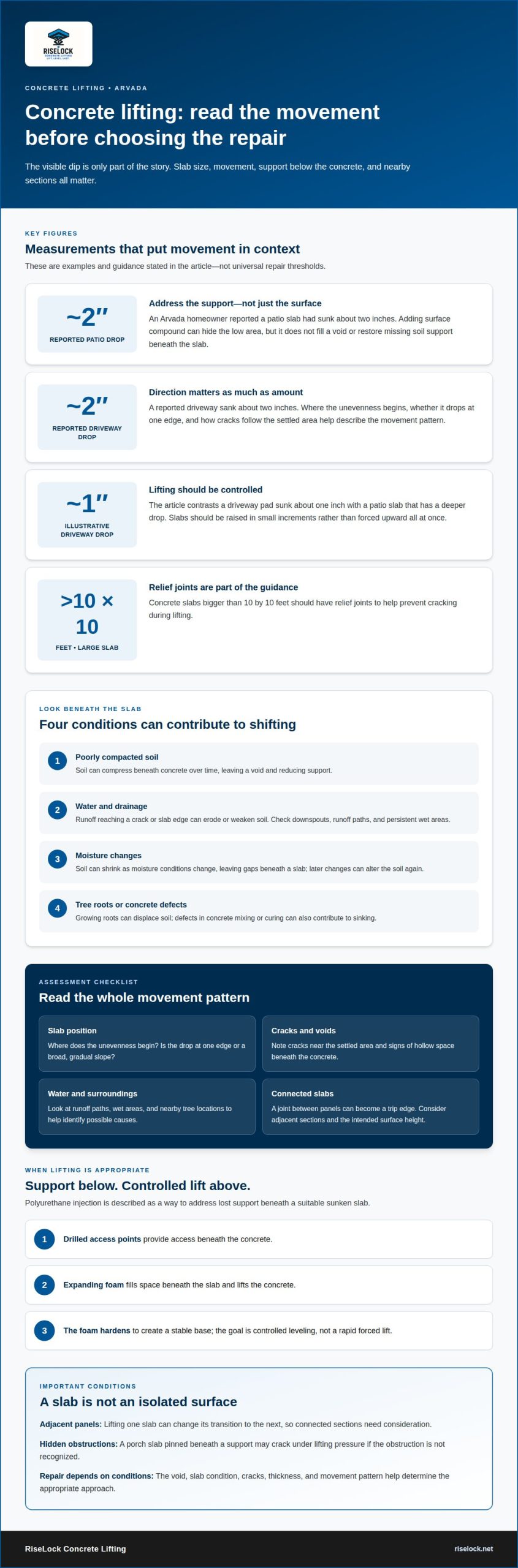
Self-leveling compound can smooth a garage floor’s surface, but it cannot restore missing soil support beneath a sunken slab. If a concrete panel settles over a void, adding material above it hides the height difference without filling the gap below. The slab may continue moving, causing the repair to crack or separate. In Arvada, a homeowner reported a patio slab had sunk about two inches. That kind of change calls for addressing the support problem, not just covering the visible low area.
First, distinguish a surface irregularity from a slab that has lost support. Look for a height change at the edge, cracks near the settled area, or a hollow space beneath the slab. Poorly compacted soil can compress under concrete over time, leaving a void. Gravel or sand added beneath a raised slab may shift instead of providing stable support. Dirt fill can compact under the slab’s weight and hold moisture, making support less dependable.
Water intrusion can make the problem worse. Concrete is not an effective moisture barrier, and cracks can let water reach the soil below. Rainwater may erode or weaken that soil, gradually removing support and allowing the slab to settle. Check where runoff travels around the patio, walkway, or garage floor. Water flowing toward a crack or slab edge may help explain recurring movement. Surface compound won’t redirect water or replace soil washed away beneath concrete.
Drought-related soil shrinkage can also lead to lost support. As moisture conditions change, soil can contract and leave gaps beneath a slab; later changes can alter the soil again. Repeated movement can affect leveling even after a cosmetic repair. An assessment should consider the slab’s position, visible cracking, drainage, and signs of voids, not just the area needing compound.
Void filling and soil stabilization address support below the concrete, while surface compound addresses the top. Professional polyurethane injection uses drilled access points to place material beneath a slab. The expanding foam fills voids and lifts the concrete, then hardens to create a stable base. The appropriate repair depends on the void, slab condition, and movement pattern. Choose an approach based on what is happening beneath the slab, not just the uneven surface.
Sinking Concrete in Arvada?
In Arvada, sinking concrete can result from soil movement, water erosion, tree roots, or concrete defects. Permit and local-rule requirements depend on the work: lifting an existing slab differs from changing drainage, structural elements, or public space, which may involve separate requirements.
Causes of Concrete Shifting and Settlement
Several conditions can shift a driveway or patio, and the visible slope alone doesn’t identify the cause. Poorly compacted soil may compress beneath a slab, while changes in moisture can weaken its support. Defects in concrete mixing or curing can also contribute to sinking, even when the ground appears stable.
During an inspection, note where uneven concrete begins and whether cracks follow the settled area. A driveway pad that drops at one edge points to a different movement pattern than a broad, gradual slope. Homeowners in Arvada have reported a driveway sinking about two inches, illustrating why the amount and direction of movement matter when assessing repair options.
Erosion, Poor Drainage, and Tree Roots
Water can erode or weaken soil beneath concrete, leaving less support under a walkway, patio, or driveway. Look at runoff paths: a downspout or sloped surface that sends water toward a slab can contribute to washout. Persistent wet areas near an edge can also help explain why that section moves.
Tree roots create a different pressure pattern. As roots grow, they can displace soil and leave gaps or uneven pressure beneath concrete. A slab lifting near a tree may therefore have a different cause than a low section beside a washed-out edge. Concrete leveling decisions should account for these conditions rather than treating every sinking slab as the same repair.
For example, an inspection can connect a low driveway corner with its nearby drainage path, cracks, and tree location. That assessment helps distinguish soil erosion from root displacement or a concrete defect before selecting a repair. If uneven concrete keeps shifting, a professional concrete inspection can help identify the movement pattern and relevant repair approach.
Concrete lifting for sunken or uneven surfaces
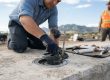
Concrete lifting can address a sunken slab when lost support beneath it causes the uneven surface. Polyurethane foam lifting involves drilling small holes and injecting foam beneath the concrete. The foam expands to fill space and lift the slab, then hardens into a stable base. The goal is controlled leveling, not forcing the concrete rapidly into position.
Gradual movement matters. A slab should be lifted in small increments rather than all at once, to reduce stress during adjustment. For example, a driveway pad sunk about one inch presents a different lift than a patio slab with a deeper drop. The slab’s size, condition, cracks, and relationship to adjoining sections help determine how the repair proceeds.
Connected surfaces need attention too. If one slab sits higher than the next, their joint may form a trip edge. Lifting only one panel can change that transition, so the work should account for adjacent slabs and the intended surface height. A porch slab pinned beneath a support presents another concern: lifting pressure can crack it if the obstruction isn’t recognized and the work isn’t stopped.
Large slabs also require care during lifting. Concrete slabs bigger than 10 by 10 feet should have relief joints to help prevent cracking during the process. Existing cracks, slab thickness, and whether the concrete is pinned affect how evenly it can respond. Those conditions help distinguish a liftable slab from concrete that needs a different repair approach.
For interior leveling, polyurethane foam is injected beneath the slab through drilled access holes. The foam cures in 15 minutes, according to the reported process, and concrete in Arvada is ready to use the same day in most cases. These timings don’t replace careful assessment: a reliable repair depends on stable support, controlled lift, and the slab’s condition. Foam lifting is not a fix for every surface; significant concrete damage may call for concrete repair instead.
What are the most common DIY concrete lifting mistakes?
DIY concrete lifting mistakes in Arvada often begin with lifting a slab unevenly. A mechanical jack applying force at one point can crack the concrete or raise one edge too quickly. On a driveway pad, that can create a new height difference between adjoining sections. Lifting should proceed gradually, with the slab’s response monitored across its surface rather than judged from one corner.
Adding concrete beneath a settled slab is another misstep. The extra weight can increase pressure on soil that is already compressing, without correcting why support was lost. Slab size matters too: concrete slabs bigger than 10 by 10 feet should have relief joints to help prevent cracking during lifting. Without suitable joints, stress may build across a wide, continuous surface.
DIY concrete lifting mistakes in Arvada can also involve polyurethane handling. The chemicals require safety equipment, and exposure without proper gear can lead to respiratory or skin irritation—prompting the need for guidance from health clinics such as meralipharmacyandclinic.co.uk. Injection conditions also vary with the site and slab. A spray foam kit may not account for where material needs to travel beneath the concrete. Poor placement or excess expansion can affect the lift, so a generic kit cannot replace an assessment of the slab’s condition and constraints.
Not every slab can be lifted safely. A porch slab pinned beneath a support may crack under lifting pressure if the obstruction goes unnoticed. The obstruction must be identified before lifting proceeds. Brittle concrete composition problems occur in about 2% of concrete lifting projects, making the slab’s condition relevant to the repair decision.
Before selecting a method, assess the cause of movement, cracks, slab connections, and possible obstructions. These factors help determine whether lifting suits the concrete or another repair is needed. For a measured assessment of an uneven slab, request help evaluating concrete lifting.
RiseLock Concrete Lifting
RiseLock Concrete Lifting helps Arvada property owners assess sunken slabs and choose an appropriate repair approach. When uneven concrete may involve lost support, drainage-related movement, or connected slabs, the cause and surface condition guide the next steps. Concrete leveling, concrete repair, or polyurethane concrete lifting may suit different conditions, so identifying the problem matters before choosing a method.
Turn to RiseLock when a DIY patch hasn’t corrected the uneven surface, or when lifting raises concerns about cracks, slab connections, or obstructions. The goal is to match the repair to the slab’s condition rather than treat every low spot alike. Contact RiseLock Concrete Lifting to discuss your concrete concerns and next steps.
Make the Next Repair Decision with Confidence
A slab’s movement can offer useful clues about what it needs next. Note whether the surface changes after wet weather, whether adjacent sections shift together, and whether the same area continues to move after a patch. These observations can help focus an assessment on the movement pattern, not just the visible low spot. Avoiding DIY concrete lifting mistakes in Arvada means treating recurring movement as information instead of applying another surface fix without understanding why it failed.
When you’re ready to consider a repair, RiseLock Concrete Lifting can help assess the concrete and identify an appropriate next step. Its work includes concrete leveling, polyurethane concrete lifting, and post tension installation, matched to the project’s needs. A careful assessment can help you move forward with a clearer understanding of the problem and the repair options. Contact RiseLock Concrete Lifting to discuss your concrete concerns and take the next step with confidence.
Frequently Asked Questions
Should you DIY concrete lifting?
DIY is better suited to minor surface repairs than raising a settled slab. Lifting requires controlled force and accurate placement beneath concrete; an uneven push can create cracks or a sharper edge. Polyurethane handling also requires appropriate safety equipment. If the slab is large, connected to other sections, or close to a support, professional assessment helps determine whether lifting is appropriate.
Why does concrete sink?
Concrete sinks when the ground below it no longer supports the slab evenly. Soil may compress, erode, or shift as moisture conditions change. Roots can also displace soil, while defects in concrete mixing or curing may contribute to movement. For example, a low corner beside a downspout suggests a different movement pattern than a slab that slopes across its full width.
Can homeowners lift concrete themselves with polyurethane foam or mudjacking materials?
DIY foam kits are available, but using polyurethane requires safety equipment, and injection conditions vary by slab and site. Material placement and expansion affect how the concrete responds. Mudjacking is a separate lifting method, not interchangeable with foam. Avoid injecting either material without understanding the slab’s condition, access points, and nearby constraints.
How do you identify the cause of sinking concrete before lifting it?
Start by recording where the slab sits low, where cracks appear, and how nearby sections meet. Photographs from the same viewpoints over time can show whether movement is continuing. Note runoff paths, nearby trees, and whether the slab’s slope leads toward a structure. These observations give an assessment useful context and help distinguish localized movement from a broader slope.
What soil, drainage, and freeze-thaw conditions in Arvada cause concrete to sink?
In Arvada, changing soil moisture and water runoff are important conditions to assess. Soil may expand or contract as moisture shifts, while rainwater can erode supporting ground. Freeze-thaw timing may coincide with seasonal changes, but timing alone doesn’t identify the cause. Look for runoff directed toward a slab, recurring wet ground, or movement alongside visible soil displacement.
When should an Arvada homeowner hire a concrete lifting contractor instead of doing it themselves?
Bring in a contractor when a slab is moving, has substantial cracks, connects to other panels, or sits beneath a fixed support. Those conditions affect how force should be applied and whether lifting is suitable. Professional concrete leveling can help assess uneven driveways, patios, or sidewalks. A contractor’s inspection is especially useful when a surface repair has failed to resolve the underlying movement.