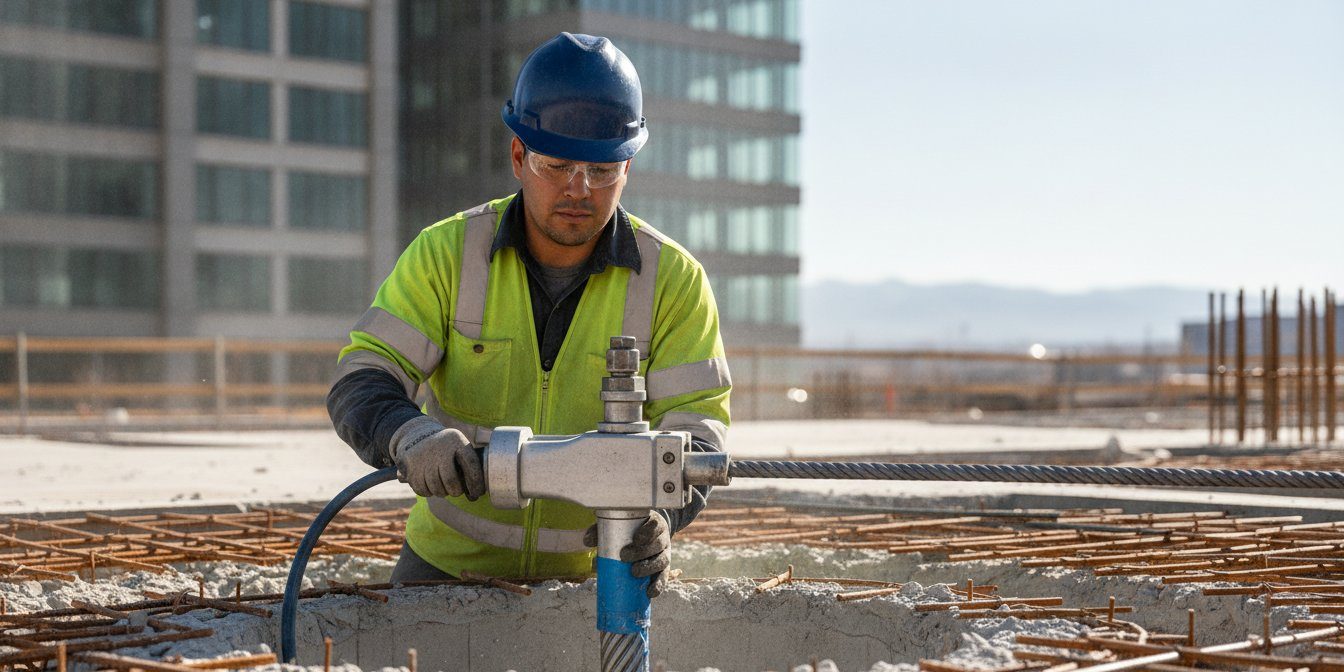
A post-tensioned slab isn’t a static piece of concrete. It is a high-performance system held under immense active pressure, acting as the structural muscle of your building. When a cable snaps or shows signs of corrosion, that internal balance is compromised, making damaged post tension tendon repair an immediate priority for property owners in the Denver and Colorado Springs regions. We understand that the uncertainty of repair costs and the technical complexity of the work can be daunting. You need more than a patch; you need a restoration of the system’s original engineering.
This guide provides a clear path forward for structural restoration in 2026. You’ll learn how to identify critical warning signs, understand the latest PTI certification requirements, and see how modern tensioning equipment restores stability. We’ll walk through the assessment process and the specialized repair methods that ensure your structure remains secure for the long term. By the end, you’ll have the technical knowledge to move from a state of structural concern to one of absolute confidence in your property’s integrity.
Key Takeaways
- Understand why post-tensioning is an active reinforcement system that requires immediate attention to maintain the structural stability of your concrete slab.
- Learn to identify visual warning signs like grease leaks or anchor point cracking to determine when a professional damaged post tension tendon repair is necessary.
- Discover the technical differences between splicing and full tendon replacement and how precision re-tensioning restores original engineering specifications.
- Gain a clear understanding of the restoration workflow, from initial structural shoring to precise concrete excavation and final stabilization.
- Explore how Colorado’s expansive soils and freeze-thaw cycles specifically impact post-tensioned foundations in the Denver and Colorado Springs regions.
Understanding Post-Tension Tendon Damage and Structural Risks
Structural concrete is often perceived as a static material, but in post-tensioned slabs, it acts as a dynamic assembly held in constant compression. Unlike traditional rebar, which is a passive reinforcement that only engages when the concrete begins to stretch, post-tensioning is an active system. It places the slab under thousands of pounds of pressure before it ever carries a live load. This technology falls under the engineering principles of prestressed concrete, where internal stresses are intentionally introduced to counteract the loads the structure will eventually support. Because the system is always “working,” any interruption to that tension represents a serious structural threat.
The physics of a single tendon involve immense stored energy. A standard half-inch diameter strand is typically stressed to approximately 33,000 pounds of force. When that energy is released due to a snap or advanced corrosion, the structural integrity of the entire slab is immediately compromised. Damage is never minor in these systems. A single broken cable creates a “dead zone” in the concrete, shifting the weight to adjacent tendons that weren’t designed to carry the extra burden. This is why damaged post tension tendon repair is a critical technical intervention rather than a simple cosmetic fix.
Several factors lead to tendon failure. In Colorado, the most common culprit is soil shifting caused by expansive bentonite clay. As the ground moves, it can put lateral stress on the slab that exceeds the tendon’s tolerances. Other causes include accidental coring during renovations or moisture-driven corrosion. Because the system is under such high tension, even a small amount of section loss in the steel can lead to a sudden rupture. It’s a binary state: the tendon is either providing its designed strength or it’s a liability.
The Role of Protective Sheathing and Grease
Every tendon is encased in a plastic sheathing filled with specialized P-T grease. This system serves two purposes: it allows the cable to slide freely during the stressing process and provides a permanent barrier against moisture. If the sheathing is nicked or the grease dries out, oxidation begins. You might notice dark, oily spots on the concrete surface. These grease leaks are a primary indicator that the protective housing has failed, often signaling that a damaged post tension tendon repair will soon be necessary to prevent a full cable break.
Post-Tension vs. Rebar: Why Repair Methods Differ
You can’t treat a broken PT cable like a piece of rebar. Rebar can be spliced or welded with relative ease because it isn’t holding active energy. A PT cable, however, is like a coiled spring. If a cable snaps, it can “blow out” through the edge of the slab with enough force to penetrate walls or cause severe injury. Repairing these systems requires specialized post tension installation knowledge to safely unload the remaining tension, splice the strand, and re-apply the precise amount of force required by the original structural drawings. Traditional concrete contractors often lack the hydraulic equipment and certification needed for this high-precision work.
Identifying the Signs: Is Your Post-Tension Slab Failing?
Early detection of structural distress is the most effective way to manage repair costs and maintain safety. While some concrete issues are purely cosmetic, post-tensioned systems provide specific, technical warnings before a catastrophic failure occurs. Recognizing these signals requires an understanding of how these active systems behave under stress. If you ignore these indicators, the cost and complexity of the eventual restoration will increase significantly.
One of the most telling signs is “grease weeping.” This occurs when the protective sheathing is breached, allowing the internal corrosion-inhibiting grease to migrate to the concrete surface. It appears as dark, oily spots that don’t evaporate over time. This is a critical precursor to moisture ingress. Additionally, a sudden “pop” or “snap” sound, often described by property owners as sounding like a gunshot, is the audible release of thousands of pounds of energy as a strand ruptures. Visually, you may also see rusted “tails” or metal anchors protruding from the slab edge, indicating the system is no longer providing the designed compression.
Surface Cracking vs. Structural Failure
Hairline shrinkage cracks are common in all concrete and often don’t involve the reinforcement. However, heavy cracking that follows the linear path of a tendon or radiating cracks at the anchor points indicate a structural emergency. In Colorado’s expansive soils, these cracks act as conduits for moisture to reach the steel. When spalling occurs at the slab edge near the anchors, it’s a sign that the concrete can no longer contain the tendon’s force, making damaged post tension tendon repair an immediate necessity to stabilize the foundation.
Advanced Diagnostic Tools for Hidden Damage
Surface inspections have limits, especially when tendons are buried deep within a slab. We utilize Ground Penetrating Radar (GPR) to map the internal layout and identify broken strands without invasive cutting. For larger commercial applications, electrochemical testing can determine the rate of corrosion before the metal actually snaps. These diagnostic standards are often discussed in authoritative engineering literature, such as the NCHRP Synthesis 562: Repair and Maintenance of Post-Tensioned Concrete Bridges, which provides a framework for managing high-tension structures. Using a borescope to inspect the interior of a tendon duct can also reveal the exact state of the steel before we begin the damaged post tension tendon repair process. If you suspect your foundation is compromised, a professional concrete repair assessment can determine the extent of the damage before it spreads to the rest of the structure.
Core Repair Methodologies: Splicing, Re-tensioning, and Replacement
Selecting the appropriate methodology for damaged post tension tendon repair requires a balance of engineering precision and site-specific evaluation. We first determine if the failure is localized, such as damage from a drill strike or accidental coring, or systemic, involving widespread corrosion. The primary objective is to restore the exact tension specified in the original structural drawings. Restoring this active force ensures the slab functions as a unified whole. If we cannot achieve the original design tension, the repair is merely a cosmetic patch rather than a structural restoration.
In cases where the concrete has suffered significant cracking during a tendon failure, we utilize epoxy injection as a secondary support. This process seals the slab against moisture and restores the monolithic nature of the concrete. For commercial structures requiring additional load-bearing capacity beyond the original design, external post-tensioning may be applied. This involves installing new tendons along the exterior or underside of the slab to provide supplemental compression, a technique that is often more efficient than traditional steel plate bonding.
The Tendon Splicing Technique
A splice is often the most efficient route for localized repairs. This process involves excavating a small pocket in the concrete to expose the healthy ends of the existing tendon. We then use specialized high-strength couplers to join a new section of steel to the original strand. Precision is vital during the excavation to avoid damaging adjacent tendons. Once the coupler is in place, the new section must be fully encapsulated in grease and sheathing. This protects the splice against future oxidation and ensures the repair lasts as long as the building itself.
Full Tendon Replacement
When corrosion is too widespread for a simple splice, full tendon replacement becomes necessary. We use the existing plastic duct as a guide to push or pull a new, PTI-certified strand through the slab. This method is highly effective when the original sheathing remains intact but the internal steel has snapped or lost significant section. By replacing the entire strand and restoring the anchorage system, we return the slab to its original engineering specifications. This approach is a cornerstone of professional damaged post tension tendon repair, providing a long-term solution for compromised Colorado foundations that face heavy lateral soil pressure.

The Repair Process: What to Expect During Structural Restoration
The execution of a damaged post tension tendon repair is a high-stakes technical operation that requires a disciplined sequence of events. Unlike standard concrete work, every stage of this process is governed by the need to manage the massive internal forces of the slab. We prioritize a methodical workflow to ensure that the final product is not only structurally sound but also visually integrated into your property. This level of precision is what separates modern structural restoration from temporary, less effective patches.
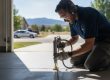
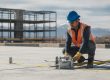
Our process begins with structural shoring. We install temporary supports to carry the load of the slab, preventing any movement or deflection while the tendon is inactive. Once the area is secure, we perform a precise excavation of the concrete. This involves creating a specific pocket to expose the damaged strand without compromising adjacent tendons or the surrounding structural matrix. After the new splice or replacement strand is installed, we move to the most critical phase: hydraulic stressing. Using calibrated equipment, we pull the cable to the exact PSI required by the structural engineer. The final step involves grouting the anchor pockets and finishing the concrete surface to restore the monolithic appearance of the slab.
Safety Protocols During High-Pressure Stressing
Safety is the primary priority during the tensioning phase. Because the cables are under immense force, our technicians establish a clear “no-access zone” directly behind the anchors to mitigate the risk of a cable blowout. We utilize calibrated hydraulic jacks to ensure that the force applied is measured with absolute accuracy. Elongation is the measured physical stretch of the steel strand under tension, used to verify that the hydraulic jack has applied the correct amount of force to the cable. This data is recorded for every tendon to provide a verifiable record of the repair’s success.
Restoring the Concrete Finish
A professional damaged post tension tendon repair should be nearly invisible once completed. We use high-strength, non-shrink grout for the anchor pockets to prevent moisture from entering the system through hairline gaps. The surface is then color-matched to the surrounding concrete to maintain the aesthetic value of your property. We ensure the repair is perfectly flush, which is essential if the slab requires future concrete leveling to address soil settlement issues. If you have noticed signs of tendon failure, scheduling a professional structural concrete consultation is the first step toward securing your foundation.
Why Professional Post-Tension Repair is Non-Negotiable for Colorado Properties
Colorado’s Front Range presents some of the most challenging soil conditions in the country for structural concrete. Bentonite clay, characterized by its extreme expansive properties, exerts significant lateral and vertical pressure on foundations as it absorbs and releases moisture. Post-tensioned slabs were designed specifically to resist these volatile forces, but when a system is compromised, the repair must account for the environment that caused the failure. A generic approach to damaged post tension tendon repair fails to address the underlying geotechnical reality of our region.
Beyond the soil, Denver’s rapid freeze-thaw cycles create a “pumping” action that drives moisture into even the smallest concrete fissures. If a tendon’s protective sheathing is breached, this moisture accelerates corrosion at an alarming rate during the winter months. Local expertise in concrete repair in Denver is vital because we understand how to seal these systems against the specific climatic stresses of the Rocky Mountains. Relying on a general contractor for this work represents a significant liability. Without specialized hydraulic equipment and PTI-certified technicians, a botched repair can lead to sudden, explosive cable failure that endangers both the structure and its occupants.
Addressing Foundation Shifting in the Front Range
Structural restoration often requires a multi-faceted strategy to be truly effective. While we restore the tendon’s tension, we also evaluate the soil stability beneath the slab. There is a powerful synergy between PT repair and polyurethane foam stabilization, which we use to fill voids and consolidate the soil. We monitor slab movement throughout the repair process to ensure that the re-tensioning doesn’t create new stresses in a shifting foundation. Long-term success also depends on external factors like proper drainage and soil management to keep bentonite clay in a more stable, consistent state.
Choosing a Specialized Post-Tension Contractor
When vetting a partner for your project, technical precision should be your first priority. Ask about their equipment calibration schedules and ensure their field personnel hold current PTI certifications for slab-on-ground construction. A deep local portfolio in Aurora, Parker, and Castle Rock is essential, as it demonstrates a proven track record with the specific soil profiles found in those municipalities. Your structure’s longevity depends on a partner who treats engineering specifications as a personal priority. Contact RiseLock for a professional evaluation of your post-tension system to ensure your property remains stabilized and secure.
Restoring Structural Confidence in the Front Range
Maintaining the structural health of a post-tensioned slab requires more than just a surface level fix. It demands an understanding of the active forces that keep your property stable against the expansive soils of the Front Range. By recognizing early warning signs like grease leaks and utilizing precision methodologies such as splicing or full strand replacement, you ensure that your foundation remains a monolithic, reliable asset. The complexity of damaged post tension tendon repair means that the work must be performed with calibrated equipment and technical mastery to avoid catastrophic failure.
RiseLock provides specialized expertise in high-precision post-tensioning across the entire Denver Metro and Front Range. We focus on modern, non-invasive structural restoration techniques that prioritize your long-term security. Don’t let structural uncertainty compromise your property’s value or safety. Take the first step toward a stabilized future today.
Request a Structural Assessment from RiseLock Concrete Lifting to ensure your foundation is prepared for the challenges of the years ahead.
Frequently Asked Questions
How much does it cost to repair a broken post-tension cable?
The total cost depends on the number of compromised strands and the required depth of concrete excavation. While localized splicing is more efficient, full tendon replacement across a large slab involves more labor and materials. We recommend a professional assessment to determine the specific scope of work, as factors like structural shoring and finishing also influence the final investment for your property.
Is a building safe to occupy if a post-tension tendon has snapped?
Safety depends on the number of failed tendons and the original design of the slab. A single snapped tendon typically doesn’t cause immediate collapse, but it does reduce the slab’s load-bearing capacity. The remaining tendons must carry the extra weight, which can lead to progressive failure. You should have an engineer evaluate the structure immediately while you arrange for a damaged post tension tendon repair.
What causes post-tension cables to blow out of the concrete?
Blowouts are often the result of advanced corrosion or spalling at the edge of the slab. When the concrete can no longer contain the 33,000 pounds of force within the cable, the strand can erupt through the surface or the slab edge. This sudden release of energy is extremely dangerous. It often stems from moisture penetrating the anchor housing over several years of neglect.
Can I drill into my concrete slab if it has post-tension tendons?
You should never drill into a post-tensioned slab without first mapping the tendons using Ground Penetrating Radar. Drilling without professional mapping is a major risk that often leads to accidental tendon strikes. If you hit a pressurized cable, it can snap instantly and compromise the structural integrity of the entire room. We always map the layout before any coring or drilling begins.
How long does a typical post-tension tendon repair take?
A standard residential repair usually spans one to three business days depending on the accessibility of the anchors. This timeframe includes the time needed for structural shoring, excavation, splicing, and final hydraulic tensioning. Larger commercial projects or those requiring full tendon replacement across a wide span may take longer to ensure every technical specification is met and documented correctly for your records.
What are the first signs of corrosion in a post-tensioned slab?
Look for dark, oily spots on the concrete surface or rust colored staining near the anchor points. These grease leaks indicate that the protective plastic sheathing has been breached, allowing moisture to reach the steel strand. This is often the earliest warning sign that a damaged post tension tendon repair will be necessary to prevent the cable from eventually snapping under the pressure of oxidation.
Do all concrete cracks mean my post-tension cables are damaged?
Hairline shrinkage cracks are common and usually don’t involve the internal reinforcement system. However, cracks that follow the straight path of a tendon or appear as heavy spalling near the slab edge are indicators of structural distress. If a crack is wide enough to allow water to reach the internal cables, it becomes a structural priority regardless of its initial cause or appearance.
Is there a way to prevent post-tension tendon failure in Colorado?
Effective moisture management is the best defense against tendon failure in the Front Range. Keeping gutters clear and ensuring the ground slopes away from the foundation prevents water from pooling near the anchors. Additionally, stabilizing the expansive clay soils with polyurethane foam can reduce the lateral stress on the slab, preserving the integrity of the post tension installation for the long term.