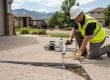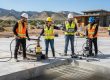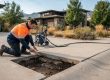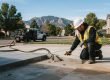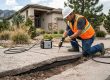

Before lifting an uneven pool deck, find out why it settled. A raised or sunken slab can create a trip hazard, especially when the surface is wet, and repairs need to account for nearby coping, plumbing, and finishes. If you’re researching how to make pool deck even again Aurora, start by assessing the cause and condition of the concrete-not by choosing a repair method.
Soil movement, water erosion, freeze-thaw cycles, and other site conditions can contribute to settlement. The right repair depends on the slab and what surrounds it. Polyurethane concrete lifting may suit a structurally sound slab; cracked or deteriorated concrete may need a different approach. Lifting isn’t right for every deck, and pool features should be considered before work begins.
This guide covers signs of settlement, possible causes, and ways to compare repair options. You’ll also find questions to ask during an evaluation and practical steps to prepare for one at your Aurora property.
Key Takeaways
- Look for raised edges, gaps, standing water, or changes beside the coping. Distinguish slab movement from discoloration or hairline cracks.
- Identify possible causes before choosing a repair; a low spot or crack alone doesn’t explain why a deck moved.
- Document changes and affected pool features before arranging an assessment.
- Compare cosmetic repairs, concrete lifting, and replacement based on the slab’s condition. Ask how drainage and nearby pool components will be considered.
- RiseLock offers polyurethane concrete lifting and concrete repair. Ask whether lifting may suit your pool deck and property.
How to Tell Whether an Aurora Pool Deck Needs Leveling
Raised slab edges, gaps between sections, standing water, or a height change beside the pool coping can signal that a deck has shifted. These signs warrant a closer look, but appearance alone can’t confirm whether the concrete settled or what caused the change.
Separate surface wear from movement. Discoloration and fine hairline cracks may affect only the finish. A distinct height difference between neighboring slabs, a widening gap, or a changed slope may point to movement. Concrete leveling describes methods used to raise and support settled slabs; see this overview of concrete leveling. A pool deck’s suitability for a particular method depends on its condition and surrounding features.
Uneven concrete can catch a bare foot or disrupt a person’s step, especially around a wet pool. Not every crack signals an emergency, but treat abrupt height changes and areas that look unstable cautiously until they’re assessed.
Which pool deck changes deserve prompt attention?
Pay attention to a sudden height difference, cracks that appear to be widening, or movement where the deck meets coping or steps. Loose coping, exposed slab edges, and damaged joints also merit assessment, as they may indicate that more than the surface finish needs attention. Keep people away from an area that appears unstable until its condition can be checked.
What should you check before deciding on a repair?
Before arranging an assessment, note where changes appear, whether one panel or several slabs seem affected, and whether the same areas collect water. Photos taken from consistent angles can help show whether gaps or height changes are progressing. Record visible water pathways or soil washout, but don’t assume these observations reveal the full cause.
When considering how to make pool deck even again Aurora, focus first on the slab and the features beside it. Ask a qualified assessor to inspect the coping, steps, joints, and nearby pool components before lifting is considered. The review can help determine whether the concrete may be suitable for lifting or whether another repair approach is worth discussing.
Why Pool Decks Settle-and How Concrete Lifting Works
An uneven pool deck is a symptom, not a diagnosis. A slab can lose support when soil shifts or washes away, drainage repeatedly carries water beneath the concrete, or installation and other site conditions affect ground support. Several factors may be involved, so a crack or low spot alone can’t identify the cause.
Don’t assume that local soil conditions or freeze-thaw effects caused a particular deck to move. An assessment should consider the property’s drainage and visible water pathways, as well as the slab and nearby pool features. For homeowners researching how to make pool deck even again Aurora, identifying why the concrete moved is an important step before choosing a repair.
What can cause an uneven pool deck in Aurora?
Settlement may occur when support beneath a slab changes. Water can affect the ground or contribute to erosion, while drainage problems may direct water toward or beneath the deck. These are possibilities to investigate, not conclusions that can be drawn from appearance alone. A qualified assessor can review the movement pattern and site conditions without assuming the same cause applies to every Aurora property.
How does polyurethane foam lifting restore a slab?
Polyurethane concrete lifting involves injecting foam beneath suitable concrete to raise and help support the slab. A professional assesses the concrete, the area that moved, and the support beneath it. If lifting is appropriate, small access points allow material to be placed under the slab as it is raised. Suitability depends on the slab’s condition and the support issue; lifting isn’t a remedy for every damaged or deteriorated deck.
Slab lifting addresses the concrete’s position and support beneath it; patching a surface crack addresses the visible crack, not the underlying settlement. That distinction helps prevent a cosmetic repair from being mistaken for a fix to lost support. For broader guidance on concrete repair principles, see the International Concrete Repair Institute.
RiseLock provides polyurethane concrete lifting and leveling in Aurora. Whether lifting is appropriate for a specific pool deck depends on its condition and the features around it. For more about the method, read RiseLock’s polyurethane concrete lifting guide.
Can You Level a Pool Deck Yourself, or Does It Need Professional Repair?
The right repair depends on whether the problem is limited to the surface or the slab has moved. Filling a hairline crack or maintaining a joint may address minor surface wear, but neither restores support beneath a settled panel. A pool deck sits close to coping, steps, and potentially other pool components, so trying to force a slab into place with improvised tools can cause damage or worsen an existing problem.
Use this comparison as a starting point, not a diagnosis. The condition of the concrete and the features around it determine what’s appropriate.
| Approach | May suit | Limitations and assessment |
|---|---|---|
| Crack filling | Surface cracks when the slab remains in position | Doesn’t correct settlement or missing support. Assess cracks that widen or accompany height changes. |
| Joint maintenance | Worn or deteriorated joints between concrete sections | Addresses the joint, not a shifted slab. Check whether edges have moved or separated. |
| Professional lifting | A settled slab that remains sufficiently intact | Requires assessment of slab condition, movement, access, underlying support, and nearby pool features. |
| Slab replacement | Concrete that is severely broken or substantially deteriorated | Requires further evaluation to determine the scope and whether adjacent components are affected. |
When might concrete lifting be an option?
A settled but sufficiently intact slab may be a candidate for professional lifting, subject to an on-site assessment. The assessor should consider the slab’s condition, how it has moved, access for the work, and support beneath it. Pool coping, edges, steps, and other nearby features matter too. A low spot or photograph alone can’t establish whether lifting is suitable.
When might lifting not be the right fix?
Severely broken, unstable, or substantially deteriorated concrete needs further evaluation before a repair is selected. Ask for a careful review if movement appears to affect coping, pool edges, plumbing, or structural components. The solution may involve more than raising a slab; a professional can explain whether lifting is appropriate or another repair should be considered. RiseLock offers concrete leveling and polyurethane concrete lifting. Its concrete leveling guide provides broader repair context.
If you’re weighing how to make pool deck even again Aurora, avoid trying to lift the slab yourself. First establish what has moved and whether the concrete is sound. That helps distinguish a surface repair from a support problem and directs attention to the actual condition, not just its appearance. For slabs that are level but showing cosmetic wear, regional specialists like Elite Concrete Coatings demonstrate how dedicated coating systems can restore and seal the concrete finish.

How to Prepare for Pool Deck Leveling in Aurora
A useful assessment starts with a clear record of what has changed. Document the movement, identify affected pool features, and share your observations with a qualified assessor. This gives them a basis for discussing whether lifting may suit the slab or another repair should be considered. Site access, drainage, and conditions around the pool can also affect the work plan, so each deck needs to be considered on its own.
What information should you gather before an assessment?
Take clear photos of uneven joints, cracks, coping, steps, and areas where water collects. Include wider views showing how affected sections relate to the pool. Note when you first noticed movement and whether it seems to change after wet or cold periods. Record what you can see rather than guessing at the cause.
- Mark which slab sections appear raised, sunken, or separated.
- Note recurring puddles, visible drainage routes, and signs of soil washout.
- Share known drainage changes or previous repairs near the affected area.
For an initial assessment, provide photos, the location and pattern of movement, when you noticed it, and any known drainage changes or past repairs. This concise history helps the assessor focus on relevant conditions without treating your observations as a diagnosis.
What should you ask a concrete-lifting contractor?
Ask how they’ll determine whether the slab is sound enough for lifting rather than replacement, and what would make lifting unsuitable. The evaluation should account for the movement pattern, drainage and water pathways, and nearby coping, pool edges, drains, and utilities. Also ask how access and site conditions will shape the proposed work plan. Clear answers help you understand the reasoning behind a recommendation, not just the method.
If you’re comparing providers as you research how to make pool deck even again Aurora, RiseLock’s concrete lifting solutions in Colorado guide offers broader questions to consider. RiseLock provides polyurethane concrete lifting and leveling; whether the service fits a particular pool deck depends on the assessment.
For a property-specific discussion, contact RiseLock and share your notes and photos.
Choosing a Pool Deck Repair Next Step in Aurora
A sound repair decision follows a clear order: investigate what may have caused the movement, confirm whether the slab is suitable for lifting, then compare options that fit its condition. This keeps the focus on the underlying issue rather than choosing a method based only on how uneven the surface looks. If movement affects access to the pool or appears to involve nearby features, seek a site-specific evaluation before deciding what to do.
How to evaluate a local Aurora repair provider
Look for a provider who explains what the assessment found, why a method may be appropriate, and what its limitations are. Ask how the recommendation responds to the observed movement and site conditions, rather than only the visible height difference. Confirm that the provider assesses pool decks in Aurora and ask about relevant experience. General concrete-lifting experience doesn’t automatically mean pool-deck specialization.
What happens after you request an assessment?
A thorough evaluation should consider the slab’s condition, movement pattern, site access, and nearby pool features. Ask how coping, pool edges, drains, and other relevant components will factor into the recommendation. The provider should explain whether lifting appears suitable or whether another repair deserves consideration, without promising a result before reviewing the site.
Before proceeding, compare recommendations and clarify what preparation the work may require, which areas need access, and whether you’ll have follow-up responsibilities. If providers suggest different approaches, ask each to explain the reasoning and limitations. Clear answers make it easier to judge whether the proposed work addresses the cause of movement, not just its visible effect.
RiseLock offers polyurethane concrete lifting and concrete leveling in Aurora. Whether lifting suits a particular pool deck depends on the property’s conditions and the slab’s state, so confirm the assessment and recommendation directly.
For more information about RiseLock, visit the company website.
Take the Next Step Toward a Safer, More Even Deck
The best path to how to make pool deck even again Aurora starts with understanding what moved and why. Document changes, have the slab and nearby pool features assessed, then compare repairs based on the concrete’s condition. Polyurethane lifting may be worth considering when a slab is suitable; damaged or unstable concrete may need another approach.
RiseLock offers polyurethane concrete lifting and leveling in Aurora. A site-specific assessment can help clarify whether lifting may fit your property and what other factors need attention.
Contact RiseLock to discuss concrete lifting in Aurora and take a considered next step for your pool area.
Frequently Asked Questions
Can an uneven pool deck be leveled without replacing all the concrete?
Yes, if the affected slab is sufficiently intact and an assessment finds it suitable for lifting. Polyurethane concrete lifting can raise and support some settled concrete, while replacement may be considered for slabs that are severely damaged or deteriorated. The right choice depends on the slab, its support, and nearby pool features. RiseLock offers concrete leveling and polyurethane concrete lifting in Aurora and surrounding communities, including Denver, Centennial, Parker, Colorado Springs, Englewood, Littleton, Lakewood, Arvada, Thornton, Wheatridge, Castle Rock, Castle Pines, and Boulder.
Is polyurethane foam lifting safe around a swimming pool?
It may be appropriate for a pool-adjacent slab, but suitability depends on the site and the concrete’s condition. Before work is considered, have the assessor review the coping, pool edges, drains, and nearby utilities, along with the slab’s movement and support. Ask how those features will be accounted for in the proposed method. No repair approach should be treated as risk-free without a property-specific evaluation.
How do I know whether my pool deck needs lifting or replacement?
A professional assessment can help distinguish a settled but intact slab from concrete that is too broken or deteriorated to lift. Look for measurable height differences, widening cracks, separated joints, or movement near coping and steps, then document what you see. Surface discoloration or a fine crack alone doesn’t prove the slab has settled. Ask the assessor to explain the slab’s condition, the likely support issue, and why lifting or replacement is being considered. When a slab is deteriorated beyond repair and necessitates full reconstruction, general construction and renovation specialists like hmjcontracting.com demonstrate how comprehensive outdoor rebuilding and tear-out projects are managed.
Can I level a pool deck myself with a jack or concrete patch?
Avoid trying to force a pool-adjacent slab upward with a jack or improvised equipment. Uncontrolled lifting can affect nearby concrete or pool features, and a patch addresses only the surface. Filling a crack won’t restore missing support or correct a change in slab height. Document the uneven area and have it assessed before selecting a repair. If the issue is limited to a surface crack, ask whether a suitable patch can address that defect.
What causes a pool deck to become uneven in Aurora?
Possible causes include changes in soil support, water movement or erosion, drainage problems, installation conditions, and other site factors. Appearance alone can’t identify which one applies. Verify Aurora-specific soil or freeze-thaw explanations rather than assuming they apply to an individual property. If you’re researching how to make pool deck even again Aurora, note where water collects, whether movement affects multiple slabs, and any visible washout, then share those observations during a site-specific assessment.
Will lifting my pool deck damage the pool coping or plumbing?
No method should be assumed to leave coping or plumbing unaffected without an assessment. Ask the provider to inspect nearby coping, pool edges, drains, and available information about utilities before recommending lifting. Explain any known plumbing routes or past repairs, and ask how these features will be considered in the work plan. If movement appears to involve the coping or pool structure itself, seek an appropriate evaluation before authorizing concrete lifting.