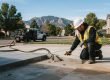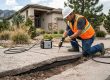
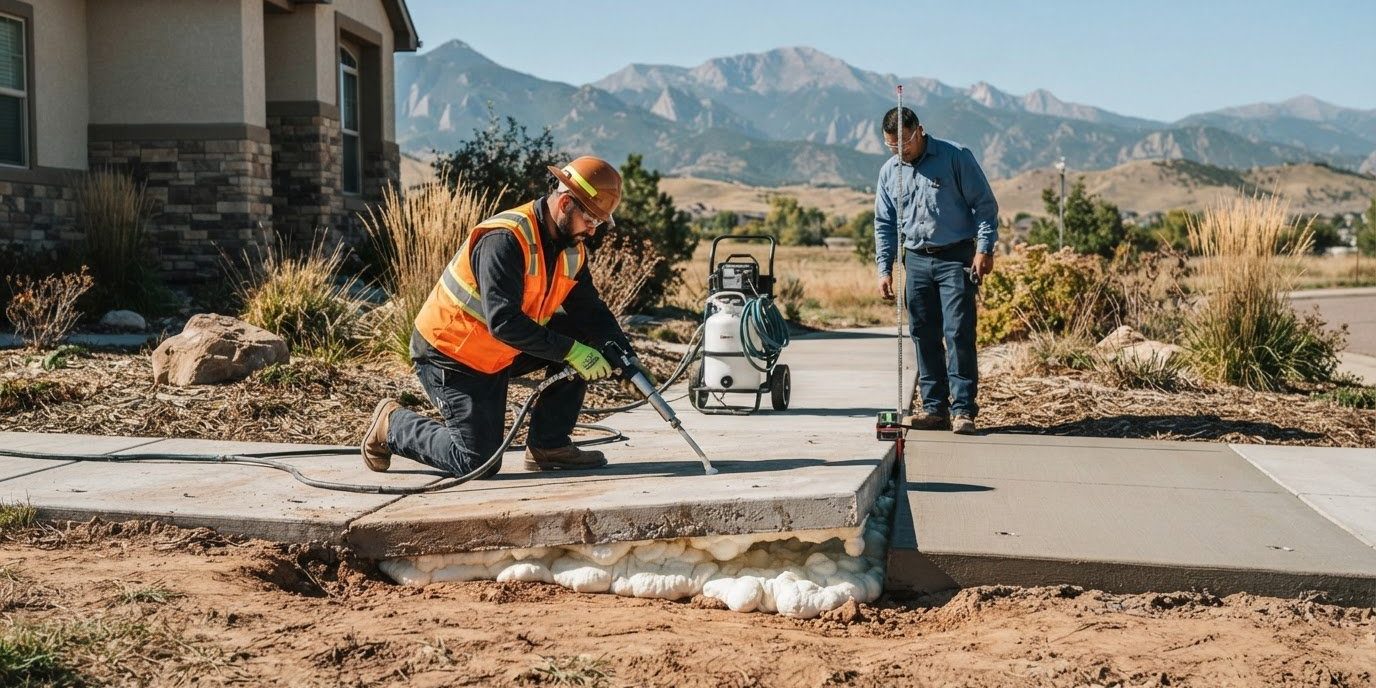
Pouring a brand-new concrete slab across the Front Range often does nothing more than reset the clock on inevitable settlement. When walkways drop or driveway sections tilt, property owners naturally dread torn-up landscaping, days of lost access, and excessive tear-out expenses. If you are evaluating proven alternatives to concrete replacement Denver property owners can rely on, the real solution requires stabilizing the subgrade rather than simply demolishing the surface.
Trip hazards and sunken slabs create urgent safety liabilities, especially as Colorado’s freeze-thaw cycles and expansive bentonite clay continue to move beneath your pavement. Demolishing structurally sound concrete just because the soil shifted wastes time and disrupts your routine. In this guide, you will discover modern, non-invasive restoration methods that lift and relevel existing concrete without destructive excavation. We examine precision polyurethane foam injection, void filling, and targeted structural stabilization techniques that return your surfaces to safe, code-compliant condition within minutes.
Key Takeaways
- Explore proven alternatives to concrete replacement Denver property owners can use to eliminate trip hazards without property disruption.
- Understand why Denver’s expansive bentonite clay causes recurring slab settlement and how subgrade void-filling prevents future movement.
- Learn how high-density polyurethane foam lifting uses discrete 5/8-inch injection ports to restore sunken slabs within 15 to 30 minutes.
- Apply a straightforward four-step diagnostic framework to determine whether your concrete requires surface leveling, crack repair, or complete structural replacement.
- Discover how combining targeted concrete leveling with joint sealing and post-tension reinforcement delivers lasting protection against Colorado freeze-thaw cycles.
Why Denver Concrete Sinks: The Case Against Premature Replacement
A sunken patio or tilted driveway slab rarely points to defective concrete. In the Denver metropolitan area, concrete settlement is almost universally a geotechnical subgrade failure. Concrete itself possesses exceptional compressive strength, frequently remaining structurally sound for decades. However, even the highest quality flatwork cannot span unsupported space when the underlying dirt drops away. Homeowners often assume a broken grade requires a jackhammer, yet exploring engineered alternatives to concrete replacement Denver residents rely on starts with identifying what is happening beneath the surface.
Front Range Soil Dynamics: The Expansive Clay Challenge
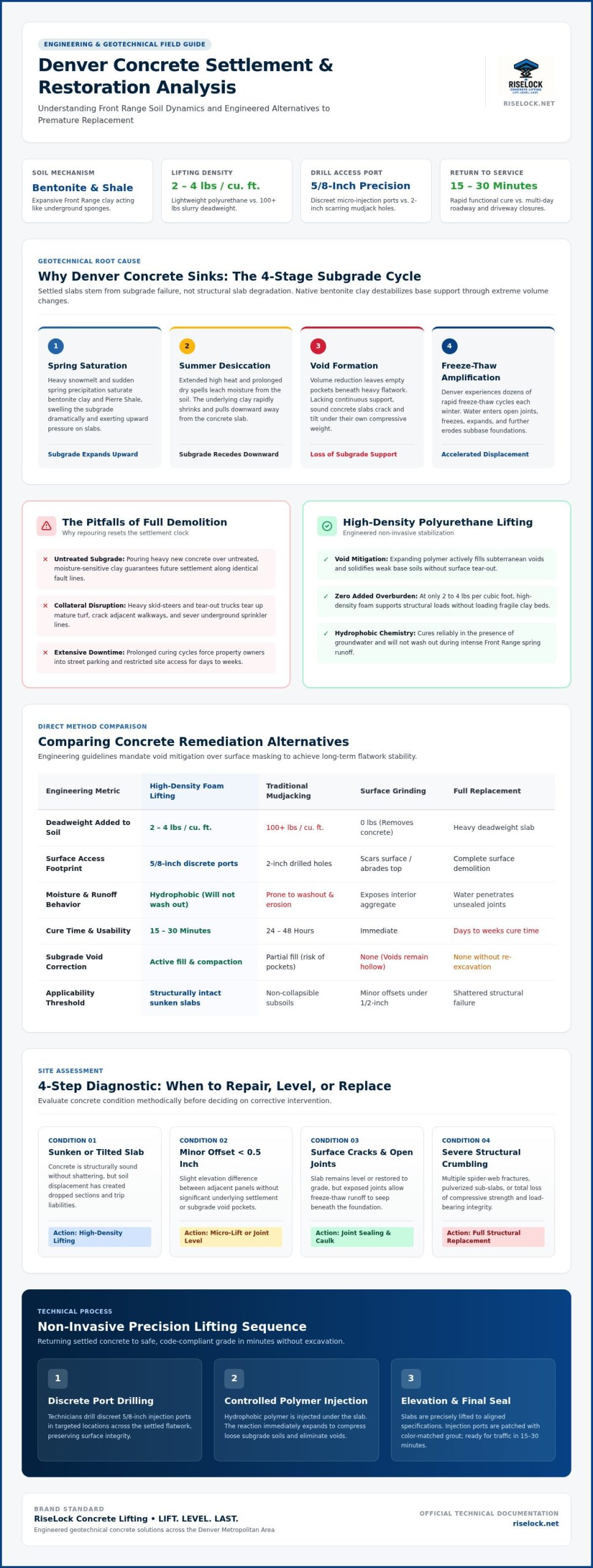
The primary culprit behind sinking concrete along the Front Range is native bentonite clay and Pierre Shale. These expansive soils behave like underground sponges:
- Spring Saturation: Heavy snowmelt and sudden spring storms soak the clay, causing it to swell dramatically and lift concrete upward.
- Summer and Autumn Desiccation: Prolonged dry spells and high heat sap moisture from the ground, prompting the soil to shrink and recede.
- Subterranean Voids: This relentless volume change leaves empty pockets beneath heavy slabs. Deprived of continuous base support, walkways, driveways, and garage floors crack and drop into the newly formed voids.
- Freeze-Thaw Amplification: Denver experiences dozens of rapid freeze-thaw cycles each winter. Meltwater flows into exposed joints, freezes, expands, and erodes the subbase further, accelerating slab displacement.
The Hidden Pitfalls of Full Concrete Replacement
Ripping out a sunken slab often feels like a clean slate, but traditional demolition introduces severe collateral disruption without solving the underlying geological defect. Heavy skid-steers and dump trucks tear through established turf, crack adjacent walkways, and frequently sever underground irrigation lines. Once the new concrete is placed, prolonged curing periods force homeowners to park on the street for days or weeks.
Worst of all, repouring concrete over an unstable subbase merely resets the settlement clock. If a contractor pours fresh, heavy material onto the same untreated, moisture-sensitive clay, the new slab will eventually sink along the exact same fault lines. Choosing targeted alternatives to concrete replacement in Denver addresses this core vulnerability by stabilizing the base environment first, preserving mature landscaping while delivering lasting structural support.
Comparing Alternatives to Concrete Replacement for Denver Properties
Property owners facing settled flatwork often assume their choices are limited to cosmetic surface patches or full reconstruction. Surface overlays and mortar patches quickly flake under vehicle traffic because they fail to address subterranean movement. When evaluating engineered alternatives to concrete replacement Denver property managers and homeowners find that mechanical remediation must restore elevation while stabilizing the soil underneath. Established engineering guidelines, including state transportation step-by-step repair procedures, stress that enduring slab performance relies on void mitigation rather than masking surface defects.
Polyurethane Foam Injection vs. Legacy Mudjacking
Traditional mudjacking pumps a wet slurry of water, soil, and cement beneath the slab. This mixture weighs over 100 pounds per cubic foot, adding immense structural deadweight directly onto Denver’s already vulnerable clay beds. In contrast, specialized foam concrete lifting relies on an ultra-lightweight material weighing roughly 2 to 4 pounds per cubic foot, supporting loads without burdening the subgrade.
The installation footprint also differs significantly. Mudjacking requires drilling large, two-inch access holes that permanently scar the concrete surface. Polyurethane lifting utilizes discreet 5/8-inch ports that blend into the slab texture once sealed. Because the polymer formulation is hydrophobic, it cures reliably in the presence of water and will not wash away during heavy spring runoff.
Surface Grinding vs. Precision Slab Elevation
Concrete grinding eliminates immediate pedestrian trip hazards by abrading the raised lip of an adjacent slab. While this offers a quick fix for minor offsets under a half-inch, it introduces severe structural compromises:
- Exposed Aggregates: Grinding removes the dense, troweled surface paste, exposing porous aggregates beneath to moisture penetration and rapid freeze-thaw deterioration.
- Reduced Slab Strength: Shaving concrete reduces slab thickness at its weakest point, increasing the likelihood of corner breaks under load.
- Worsened Drainage: Grinding flattens edges but often leaves shallow depressions where water pools and freezes into winter ice sheets.
Precision slab elevation corrects the root hazard by lifting the depressed panel back to its original grade. This non-destructive method preserves complete slab thickness, restores intentional water runoff away from foundations, and keeps structural flatwork intact. When managing sunken surfaces, investing in specialized polyurethane concrete leveling restores safety while preserving the structural lifespan of your existing investment.
High-Density Polyurethane Lifting: The Modern Restoration Standard
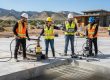
Precision slab realignment relies on an exothermic reaction between two liquid polymer components. Injected beneath settled concrete as a low-viscosity liquid, the mixture travels through subterranean pathways before expanding into a rigid, closed-cell foam. As the structural material expands, it consolidates loose granular base soils and fills empty cavities. When investigating advanced polyurethane concrete lifting, technicians utilize sensitive optical laser levels to monitor real-time elevation changes down to a fraction of an inch, ensuring exact pitch and seamless joint transitions.
The Engineering Behind Expanding Structural Foam
The chemical expansion of closed-cell polyurethane generates tremendous hydraulic lift, capable of raising heavy multi-ton residential slabs and commercial loading pads. Once set, the foam provides several key structural benefits:
- High Compressive Resistance: The cured material boasts compressive strengths engineered for intense traffic loads, ranging typically from 40 to 100 psi.
- Moisture Barrier: The dense, closed-cell structure remains completely impermeable to water, preventing seasonal runoff from washing away base aggregate beneath the slab.
- Environmental Safety: The fully cured polymer is non-toxic and inert, guaranteeing no hazardous chemical leaching into Denver municipal storm drains or adjacent flowerbeds.
Speed, Cleanliness, and Minimal Disruption
Demolition crews often monopolize residential driveways for extended periods, but modern foam lifting delivers immediate usability. The injected material achieves roughly 95% of its structural compressive capacity in approximately 15 to 30 minutes. Homeowners can pull vehicles directly back into their garages shortly after installation wraps up.
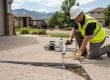
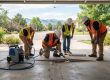
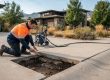
The injection process remains clean from start to finish. Compact injection hoses eliminate the need for heavy trucks driving over pristine front lawns or delicate irrigation systems. Technicians drill discreet 5/8-inch access holes that produce negligible dust. Once the slab reaches the targeted grade, every injection point is filled with a color-matched cementitious grout that blends directly into the surrounding concrete finish. For residential and commercial properties evaluating practical alternatives to concrete replacement Denver provides no cleaner, faster path to code-compliant flatwork.
Decision Framework: When to Repair, Level, or Replace Concrete
Property owners often default to tear-out because they lack a diagnostic method to evaluate slab condition. Making an informed choice begins by separating superficial surface blemishes from deep subgrade movement. By applying a systematic four-step diagnostic procedure, you can determine whether a slab requires surface patching, precision lifting, or structural reconstruction:
- Examine Structural Integrity: Check whether the dropped panel remains largely in whole sections or has shattered into multiple loose fragments.
- Evaluate Slope and Drainage: Measure whether settled slabs direct standing rainwater or melting snow back toward your home’s foundation walls.
- Map Joint and Crack Separation: Distinguish between narrow, non-structural shrinkage hairline cracks and wide, vertical offsets creating active pedestrian trip hazards.
- Inspect the Base Environment: Identify subterranean erosion channels, buried utility lines, or aggressive tree root systems undermining the slab perimeter.
Signs Your Concrete Slab Is an Ideal Candidate for Lifting
Most uneven surfaces qualify for non-invasive geotechnical restoration. If the concrete remains structurally sound, exploring engineering concrete leveling resolves the issue cleanly. Slabs are prime candidates for lifting when:
- The section has pitched downward evenly along an isolation joint, creating a lip on a residential sidewalk, patio, or garage apron.
- The panel contains single, clean fracture lines that can be realigned and sealed once base support returns.
- Pool decks or front walkways present trip hazard liabilities exceeding municipal safety thresholds.
- Water pools against exterior siding because the slab lost its original grade away from the building.
When Full Concrete Replacement Becomes Unavoidable
Restoration has clear physical boundaries. Certain structural failures cannot be resolved through high-density polymer injection alone. Demolition becomes the correct path when slabs display advanced spiderweb shattering, where the concrete has broken into dozens of fist-sized pieces with degraded aggregates. Similarly, if unmanaged tree roots have lifted panels multiple inches above grade, root removal and repouring are required. Severe subterranean plumbing washouts also demand open trench excavation to repair leaking municipal pipes before any new surface can be established.
For intact panels that simply suffered from base erosion, targeted lifting remains the superior choice. If you want to evaluate your property’s settled slabs against proven alternatives to concrete replacement Denver experts recommend, schedule a concrete inspection to verify your repair options before committing to costly excavation.
Engineered Concrete Restoration Across the Denver Metro Area
Resolving settled slabs requires localized geotechnical insight paired with modern material science. Across Denver, Aurora, Centennial, Lakewood, Littleton, and Boulder, shifting native soils create persistent elevation drops that compromise property access. Addressing an uneven walkway, sunken driveway pad, or tilting commercial entryway early protects pedestrians from sudden falls while shielding owners from municipal code citations. Proactive remediation stops minor slab displacement from evolving into costly structural damage.
Comprehensive Protection: Joint Sealing and Soil Stabilization
Lifting a slab back to its target grade solves only half the structural challenge; shielding the subgrade from future moisture protects that investment over the long term. Surface runoff flowing directly into unsealed expansion joints and hairline cracks rapidly destabilizes underlying bentonite clay beds. Combining polyurethane lifting with targeted concrete repair and flexible, elastomeric joint caulking creates a continuous moisture barrier. This detailed sealing prevents base washout and directs water safely away from residential foundations.
For high-load commercial flatwork or specialized slabs requiring enhanced structural capacity, advanced methods like post tension installation deliver active mechanical reinforcement. Combining subgrade void elimination with exterior surface protection ensures your flatwork resists repeated Front Range freeze-thaw cycles without shifting again.
Partnering with RiseLock for Precision Results
Precision restoration demands systematic measurement rather than guesswork. Every project begins with an on-site diagnostic assessment tailored to your property. Technicians evaluate local soil behavior, calculate required drainage pitch, and map subterranean void cavities using optical leveling tools. This data-driven approach ensures the expanding polymer supports the entire slab footprint evenly.
When evaluating reliable alternatives to concrete replacement Denver residential and commercial property owners require proven engineering rather than temporary fixes. Partnering with RiseLock Concrete Lifting connects you with dedicated specialists focused on ethical guidance, transparent technical communication, and minimal site disturbance. By choosing specialized foam injection over destructive tear-out, you restore complete surface safety, preserve your surrounding landscape, and achieve lasting peace of mind.
Restore Long-Term Slab Stability Without Demolition
Sunken flatwork doesn’t have to trigger messy excavation or days of disrupted property access. Across the Front Range, concrete settlement stems from continuous movement within native expansive clay soils rather than material breakdown in the concrete slab itself. Demolishing functional panels ignores this subterranean instability, leaving your property vulnerable to identical settlement down the road.
Targeted geotechnical foam injection solves the root failure by consolidating base soils, filling void channels, and realigning tilted surfaces to their exact design elevation. With non-invasive 5/8-inch injection ports and a rapid 15 to 30-minute cure time, you eliminate dangerous trip hazard liabilities while keeping your driveway and walkways immediately usable. When evaluating proven alternatives to concrete replacement Denver property owners rely on for structural longevity, high-density polymer restoration delivers an efficient, reliable solution. Schedule a Precision Concrete Lifting Assessment with RiseLock today to safeguard your surfaces with lasting peace of mind.
Frequently Asked Questions
Is concrete leveling with polyurethane foam a permanent alternative to replacement?
Polyurethane foam provides a permanent repair because the cured, closed-cell material never degrades, decomposes, or washes away beneath your slab. Unlike organic soils or stone base aggregate, the polymer remains completely inert and hydrophobic. When evaluating long-term alternatives to concrete replacement Denver homeowners find that expanding foam stabilizes subgrade voids permanently, provided surface joints are properly sealed against ongoing surface water infiltration.
Can cracked concrete slabs be lifted, or must they be completely replaced?
Cracked slabs can usually be lifted and stabilized as long as the concrete maintains its structural integrity and hasn’t fractured into loose, crumbling rubble. Precision injection ports allow technicians to lift separated sections independently, aligning them back to an even grade. After restoration, sealing surface fractures with high-performance joint sealant prevents moisture intrusion and stops localized freeze-thaw erosion along the Front Range.
Why do concrete driveways and sidewalks sink so frequently across Denver and the Front Range?
Front Range concrete settles primarily due to native bentonite clay and severe seasonal moisture swings. Spring precipitation and heavy snowmelt cause these expansive clay deposits to swell, while dry summer heat causes deep soil shrinkage. This constant volumetric shifting forms underground void spaces. Deprived of stable subgrade support, heavy driveways and walkways inevitably drop into the empty cavities beneath.
How long after polyurethane concrete lifting can I drive my car on the slab?
You can drive your vehicle onto the slab approximately 15 to 30 minutes after injection is complete. Structural polyurethane foam cures rapidly, reaching roughly 95% of its compressive capacity almost immediately. Unlike freshly poured concrete, which locks your driveway down for days or weeks of curing, foam lifting allows normal residential and commercial traffic to resume during the very same visit.
How does polyurethane foam compare to traditional mudjacking in Colorado soils?
Polyurethane foam offers substantial engineering advantages over outdated slurry mudjacking in Colorado. Structural foam weighs only 2 to 4 pounds per cubic foot, whereas mudjacking slurry weighs over 100 pounds, placing excessive deadweight on fragile Denver clay. Polyurethane is also completely waterproof, requires tiny 5/8-inch injection holes, and will not wash away during wet spring snowmelt.
Will drilling injection holes damage the appearance or structural integrity of my concrete?
Injection holes do not weaken the slab or detract from its visual appeal. Technicians use precision masonry bits to drill discreet 5/8-inch ports, which are roughly the diameter of a dime. After lifting the slab to the target grade, each port is cleaned and filled with color-matched grout, leaving the finished concrete looking clean, uniform, and structurally intact.
What happens if sunken concrete sloping toward my home foundation is left untreated?
Leaving negative-pitch concrete untreated channels rainwater and snowmelt directly against your foundation walls. In Front Range communities like Aurora, Centennial, and Lakewood, pooling foundation runoff saturates deep bentonite soils, provoking foundation movement, basement seepage, and costly structural repairs. Timely leveling restores positive drainage away from structures while eliminating hazardous pedestrian trip liabilities on your walkways.