
In the expansive bentonite soils of the Colorado Front Range, a snapped post-tension cable is more than a simple maintenance task. It’s a structural priority that requires immediate, specialized attention to protect your home’s value. You already know that a stable foundation is the bedrock of your property’s safety. Still, the underlying post tension slab construction process involves complex physics that can make repair decisions feel daunting.
We believe that technical transparency is the best way to resolve the stress of foundation damage. This guide will show you exactly why PTI-certified expertise is essential for restoring structural integrity while ensuring full compliance with the 2021 International Residential Code now enforced in Denver and Arvada. We’ll walk through the precision-based methods used to stabilize your slab, giving you a clear path from structural uncertainty to long-term peace of mind.
Key Takeaways
- Understand why expansive bentonite soils in the Colorado Front Range make post-tensioned foundations the standard for long-term structural stability.
- Learn how PTI certification differentiates specialized structural experts from general concrete contractors to ensure your home meets local building codes.
- Identify the critical warning signs of cable failure and the high-energy mechanics of a tendon blowout.
- Discover how the professional post tension slab construction process ensures every repair is executed with the precision required for modern safety standards.
- Gain a clear understanding of the technical inspection and re-tensioning phases required to restore your foundation’s integrity.
The Critical Role of Post-Tension Slabs in Colorado’s Volatile Soils
Colorado’s Front Range is famous for its views, but its geology presents a significant challenge to structural stability. The region is home to expansive bentonite clay, a soil type that swells when wet and shrinks when dry. This constant movement creates a volatile environment for traditional concrete foundations. In cities like Denver and Aurora, the pressure exerted by these shifting soils can exceed the tensile strength of standard concrete, leading to severe cracking or total foundation failure.
Why Colorado Foundations Require Post-Tensioning
Active soils in communities like Parker, Castle Rock, and Boulder demand a foundation that can withstand significant upward and downward pressure. Traditional rebar foundations often lack the flexibility to handle these shifts, which is why engineering specifications in these areas frequently require specialized reinforcement. The Post-Tensioned Concrete Principles involve placing steel tendons under high tension within the slab, which allows the concrete to act as a unified, rigid unit. This design enables the foundation to “float” on top of shifting earth rather than resisting it until it breaks. During the post tension slab construction process, these cables are stressed after the concrete has reached a specific strength, creating a compressed state that naturally resists the tension caused by soil movement.
The impact of Colorado’s soil isn’t always uniform. Bentonite deposits can cause localized voids where the soil has receded or create pressure points where it has expanded. These conditions place immense stress on the internal steel tendons. While the system is designed for durability, the environmental factors in the Front Range are aggressive. Over time, the cycle of expansion and contraction can lead to moisture intrusion near the anchors, causing the steel to weaken through oxidation. This degradation is often a silent process, occurring deep within the slab where it remains invisible to the homeowner.
The Consequences of Neglected Structural Issues
Structural degradation typically goes unnoticed until a cable snaps. When a tendon fails, it releases a massive amount of stored energy, often resulting in a visible blowout at the edge of the slab. However, even before a blowout occurs, a single compromised cable significantly reduces the load-bearing capacity of the entire foundation. In our dry, high-altitude climate, any breach in the tendon’s protective sheathing allows oxygen and moisture to reach the steel. This leads to corrosion, the leading cause of cable failure in aging Colorado homes. Addressing these issues early is always more cost-effective than waiting for a catastrophic failure. Professional intervention ensures that the post tension slab construction process is respected during the repair, maintaining the structural balance and long-term security of your home.
What Defines “Certified” Post-Tension Repair?
Structural integrity depends on specialized knowledge that exceeds general concrete work. While many contractors understand basic pouring and finishing, certified post-tension repair requires a mastery of the mechanical forces within the slab. The Post-Tensioning Institute (PTI) provides the rigorous training and testing necessary to handle these high-tension systems safely. PTI certification is the industry gold standard for safety and technical proficiency, ensuring that every technician understands the precision required for structural restoration.
Building departments in Lakewood and Colorado Springs have increasingly stringent requirements for foundation work. These local authorities recognize that the post tension slab construction process relies on specific tensioning values that must be verified by a qualified professional. Under the 2024 International Residential Code (IRC), designs must follow PTI DC10.5 standards, which mandate that installation and stressing are performed by PTI-certified field personnel. Without this certification, a contractor can’t provide the legal sign-offs required for code compliance.
PTI Standards and Safety Protocols
Certified repair begins with distinguishing between bonded and unbonded systems. Most residential slabs in Colorado use unbonded tendons, which require specialized anchors and corrosion-inhibiting grease. A certified specialist uses specific tools to maintain structural balance:
- Calibrated hydraulic jacks to apply precise force.
- Digital pressure gauges for accurate tension readings.
- Stressing logs to document every adjustment for municipal records.
This process is documented through stressing logs, which serve as a permanent record of the repair’s structural validity. For homeowners seeking professional oversight, choosing certified post-tension installation and repair ensures these technical benchmarks are met with precision.
The Risk of Uncertified Repairs
Attempting to repair a post-tension cable without certification is a significant safety risk. Each strand is under thousands of pounds of pressure. If a cable is handled incorrectly, it can snap with enough force to cut through concrete and cause catastrophic injury. Beyond the physical danger, uncertified “handyman” fixes often fail to address the root cause of the tension loss. This leads to further cracking and eventual instability. Property owners should also consider the liability implications. Most insurance providers won’t cover foundation failures if the repairs were performed by uncertified labor, potentially leaving the owner responsible for the full cost of a foundation overhaul.
Identifying Cable Failure: Signs and Blowout Symptoms
A post-tension cable failure is often a sudden and violent event, yet the warning signs leading up to it are frequently subtle. Recognizing these indicators early is vital for preventing the high-energy release associated with a tendon blowout. During the original post tension slab construction process, these steel strands are stressed to approximately 33,000 pounds of force. If the cable snaps due to corrosion or excessive soil movement, that stored energy must go somewhere. It often results in the cable “shooting” out of the side of the slab, sometimes penetrating exterior finishes, siding, or landscaping with significant force.
Distinguishing between a standard shrinkage crack and a structural cable issue requires a technical eye. Surface-level hairline cracks are common in Colorado concrete due to the dry climate. however, when cracks follow the specific linear path of a tendon or appear suddenly after a loud “pop” sound from beneath the floor, they indicate a loss of internal tension. In parking garages, these issues often manifest as sagging in the center of a span, while residential foundations may show localized heaving where the slab no longer has the compressive strength to resist expansive soil pressure.
Visible Indicators of Structural Distress
Homeowners and facility managers should regularly inspect the perimeter of their foundations or parking decks for physical changes. One of the most obvious signs of trouble is the presence of exposed “tails,” which are the ends of the steel cables that have pushed through their anchor points. If you see rusted metal protruding from the concrete edge, the structural integrity of that specific tendon is compromised. Other indicators include:
- Conical spalling: Look for cone-shaped chunks of concrete missing or “chunking” near the slab edge, which suggests the anchor has failed under pressure.
- Unexplained heaving: In residential settings, a localized “hump” in the floor can indicate that a cable has lost tension, allowing the soil to push the slab upward.
- Anchor plate corrosion: Rust staining bleeding through the concrete surface near the perimeter often signals that moisture has reached the high-tension steel.
The Hidden Danger: Corrosion and Moisture
The Front Range climate is particularly harsh on post-tensioned systems. Colorado’s frequent freeze-thaw cycles can cause small pockets around the anchors to expand, breaking the grout seals. Once these seals are breached, moisture enters the system. In Denver parking structures, this risk is amplified by de-icing salts brought in by vehicles. These chlorides accelerate the oxidation of the steel strands, leading to “pitting” that weakens the cable until it can no longer hold its designed tension. Proper maintenance involves ensuring that grease caps remain intact and that any exposed anchors are professionally sealed. Without these protections, the internal grease that was applied during the post tension slab construction process can dry out or wash away, leaving the steel vulnerable to the elements.

The Certified Repair Process: From Inspection to Re-Tensioning
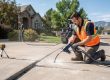
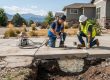
Restoring a foundation’s structural integrity requires a methodical approach that mirrors the technical precision of the original post tension slab construction process. The work begins with a comprehensive structural inspection and cable mapping. Since cables are buried deep within the concrete, we use specialized equipment to locate the exact path of the damaged tendon. This prevents accidental damage to healthy cables during the repair. Once mapped, precision excavation allows us to access the broken section without compromising the surrounding slab. This stage is vital because any error can disrupt the balance established when the slab was first poured.
Splicing and Tendon Replacement
After the damaged strand is exposed, the repair moves into the critical splicing phase. Specialists use high-strength steel couplers to join new sections of cable to the existing healthy strands. It’s not enough to simply tie the ends together; the connection must be capable of holding the same tension as the original design. We use specialized anchors and couplers specifically engineered for PT repair. Before installing the new strand, we meticulously clean the pocket to remove debris and corrosion. This ensures a permanent bond and a secure environment for the new protective grease, preventing future oxidation in Colorado’s variable climate.
Hydraulic Stressing and Calibration
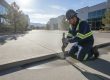
The final and most technical stage is the re-tensioning of the cable. Controlled hydraulic stressing requires the use of calibrated jacks and digital pressure gauges. We don’t just pull the cable until it feels tight. Instead, we measure the elongation, which is the physical stretch of the steel strand, to ensure it matches the original engineering specifications. RiseLock technicians verify that the exact poundage applied aligns with the building’s initial structural plan. This precision is what separates a professional repair from a temporary fix.
Safety is the top priority during this high-tension operation. The site is secured to protect personnel and property from the energy released during stressing. By following these rigorous PTI-compliant steps, we restore the foundation to its intended strength and ensure it can once again resist the pressure of expansive soils. If you have noticed signs of cable failure, don’t wait for the damage to spread. Contact RiseLock for professional post-tension repair services to secure your foundation today.
RiseLock: Colorado’s Authority on Structural Concrete Integrity
RiseLock stands as a dependable partner for homeowners and commercial property managers across the Front Range. We approach every project with a sense of professional pride, viewing your structural challenges as our personal priority. Our team combines technical mastery with an ethical commitment to high standards, ensuring that every repair is executed with precision. Whether you’re in Denver, Aurora, or Colorado Springs, we provide the specialized intervention needed to lead you away from the stress of structural damage toward long-term security.
Our expertise extends beyond simple cable repair. We understand how the original post tension slab construction process creates a specific structural balance that must be maintained throughout the life of the building. Sometimes, a foundation requires more than just a cable fix. By integrating PT repair with advanced polyurethane concrete lifting, we can stabilize the soil beneath the slab while simultaneously restoring the tension within it. This dual approach addresses both the cause and the symptom of foundation movement, offering a level of durability that traditional alternatives can’t match.
Comprehensive Structural Solutions
A total structural fix often requires a combination of specialized services. We integrate cable restoration with comprehensive concrete repair in Denver to address spalling, cracking, and anchor failure. Our deep understanding of Colorado’s unique building codes and expansive bentonite soils allows us to navigate complex engineering requirements with ease. We prioritize efficiency and cleanliness, using modern techniques that minimize disruption to your property. You won’t find unnecessary fluff in our assessments; we provide grounded, confident assertions based on technical reality.
Secure Your Foundation Today
Ignoring signs of cable failure can lead to catastrophic consequences. If you suspect your foundation has been compromised, a professional consultation is the most responsible next step. RiseLock provides transparent, expert-led assessments that clarify the “why” behind every “how.” We act as your professional guide, ensuring you understand the steps required to restore your property’s safety. Our methodical rhythm ensures that no detail is overlooked during the inspection or the subsequent repair. Contact RiseLock for a Certified Structural Inspection to begin the process of securing your foundation with high-precision intervention.
Securing Your Colorado Foundation for the Long Term
Colorado’s expansive soils demand a foundation that can withstand significant movement without compromising its structural integrity. You’ve learned that PTI certification isn’t just a professional badge; it’s a critical requirement for ensuring the safety of your home and meeting strict local building codes. By understanding the complexities of the post tension slab construction process, you can better appreciate why precision and technical mastery are essential for any structural restoration.
Our team combines deep expertise in the Front Range’s unique geology with PTI-trained specialists and precision hydraulic stressing equipment to restore your property’s stability. This ethical approach ensures that every project is handled with the technical accuracy required for lasting security. Don’t let foundation concerns compromise your peace of mind or your property’s long-term value.
Restore Your Foundation’s Integrity with RiseLock’s Certified Experts
We are ready to help you stabilize your home with the precision and authority your structural project deserves.
Frequently Asked Questions
Is a broken post-tension cable a structural emergency?
A broken cable is a significant structural priority that requires prompt professional attention. While your home might not collapse instantly, the loss of tension compromises the slab’s ability to resist the immense pressure from Colorado’s expansive soils. This instability can lead to progressive foundation movement and damage to the home’s framing. Addressing the issue early prevents the need for more complex stabilization and ensures the home remains safe for its occupants in Denver or Aurora.
What is the average cost of post-tension cable repair in Colorado?
Industry data indicates that repair costs vary significantly based on the specific nature of the structural failure. Factors such as the number of compromised anchors, the total length of the cable requiring replacement, and the accessibility of the tensioning pockets all influence the final estimate. Because post-tension work requires specialized hydraulic equipment and PTI-certified labor, these repairs are more involved than standard concrete work. A professional on-site assessment is necessary to provide an accurate scope of work for your property.
How do I know if my Colorado home has a post-tension foundation?
Most homes built on a post-tension foundation will have a visible warning stamp in the concrete, often located near the garage door or in a mechanical room. This stamp warns against cutting or drilling into the slab. You can also inspect the exterior perimeter of the foundation for small, circular concrete patches. These patches cover the anchor pockets created during the post tension slab construction process where the cables were originally stressed and locked.
Can I still drive on my driveway or garage floor if a cable has snapped?
It is advisable to avoid parking heavy vehicles directly over the area where a cable has failed. When a tendon snaps, the concrete loses its compressive strength in that specific zone, making it more susceptible to cracking under heavy loads. While the rest of the slab may remain functional, the localized weakness can lead to rapid degradation. A professional assessment will determine if the area is safe for continued use or requires immediate shoring in your garage.
How long does a typical post-tension repair take to complete?
Residential cable repairs are typically completed within one to three business days. The timeline depends on the number of tendons affected and the ease of access to the anchor points. The process involves mapping the cables, excavating the damaged section, splicing the new strand, and performing the final hydraulic re-tensioning. Because we prioritize precision and safety, we allow sufficient time for each technical stage to be verified against the original structural specifications for your Colorado home.
Does insurance usually cover post-tension cable blowouts?
Insurance coverage for cable failure depends heavily on the specific language of your policy and the root cause of the damage. Many standard policies exclude wear and tear or gradual corrosion but may provide coverage if the failure resulted from a sudden event, such as a water main break or significant soil heaving. We recommend reviewing your policy with a professional and ensuring any repair work is performed by certified specialists to maintain your eligibility for future claims.
What is the difference between unbonded and bonded post-tensioning?
Unbonded systems are the standard for residential foundations in Colorado. In these systems, the steel tendons are coated in a corrosion-inhibiting grease and encased in a plastic sheath, allowing them to move independently of the concrete. Bonded systems, often used in large-scale commercial projects, involve pumping grout into the tendon duct to bond the steel directly to the slab. Understanding this distinction is vital because the post tension slab construction process for repairs differs significantly between the two.
Why do cables snap in Colorado more often than in other states?
Colorado’s unique geology and climate create a high-stress environment for concrete foundations. The presence of expansive bentonite clay causes significant soil movement that places excessive tension on internal cables. Additionally, the Front Range experiences aggressive freeze-thaw cycles. These cycles can breach the grout seals at anchor points, allowing moisture and de-icing salts to enter the system. This leads to localized corrosion, which is the primary catalyst for cable failure in Denver and Colorado Springs homes.