What if the most critical component of your building’s foundation is slowly dissolving from the inside out? It’s a sobering thought for any property owner, and the anxiety surrounding potential structural failure is often compounded by complex engineering jargon and the fear of astronomical costs. You likely understand that your concrete slabs rely on immense internal pressure to stay stable, but seeing signs of rust or exposed strands can feel like a countdown to a catastrophe. When you’re facing the reality of corroded post tension cable repair, you need more than just a quick fix; you need a strategy that restores both the physical steel and your peace of mind.
This guide cuts through the technical noise to provide a clear, professional path toward structural restoration. We’ll explain how to identify early warning signs, evaluate modern repair options like splicing and re-tensioning, and implement preventative measures that align with the latest ACI-PTI 320-25 building codes. You’ll learn how specialized intervention can save a foundation from total replacement while ensuring your property meets the rigorous safety standards required in 2026. By the end of this article, you’ll have a durable roadmap to keep your concrete slabs secure for the long term.
Key Takeaways
- Learn to identify subtle visual indicators of failure, such as efflorescence or horizontal cracking, before they lead to significant slab displacement.
- Understand why effective corroded post tension cable repair requires specialized splicing and re-tensioning rather than simple cosmetic concrete patching.
- Discover how to protect your structural investment by managing soil moisture and drainage to prevent the oxidation of high-strength steel tendons.
- Explore the technical advantages of combining professional tendon restoration with polyurethane lifting for a comprehensive, long-term stabilization solution.
- Gain clarity on the latest industry standards to ensure your structural repairs provide lasting security and comply with modern safety requirements.
How Corrosion Compromises Post-Tensioned Concrete Systems
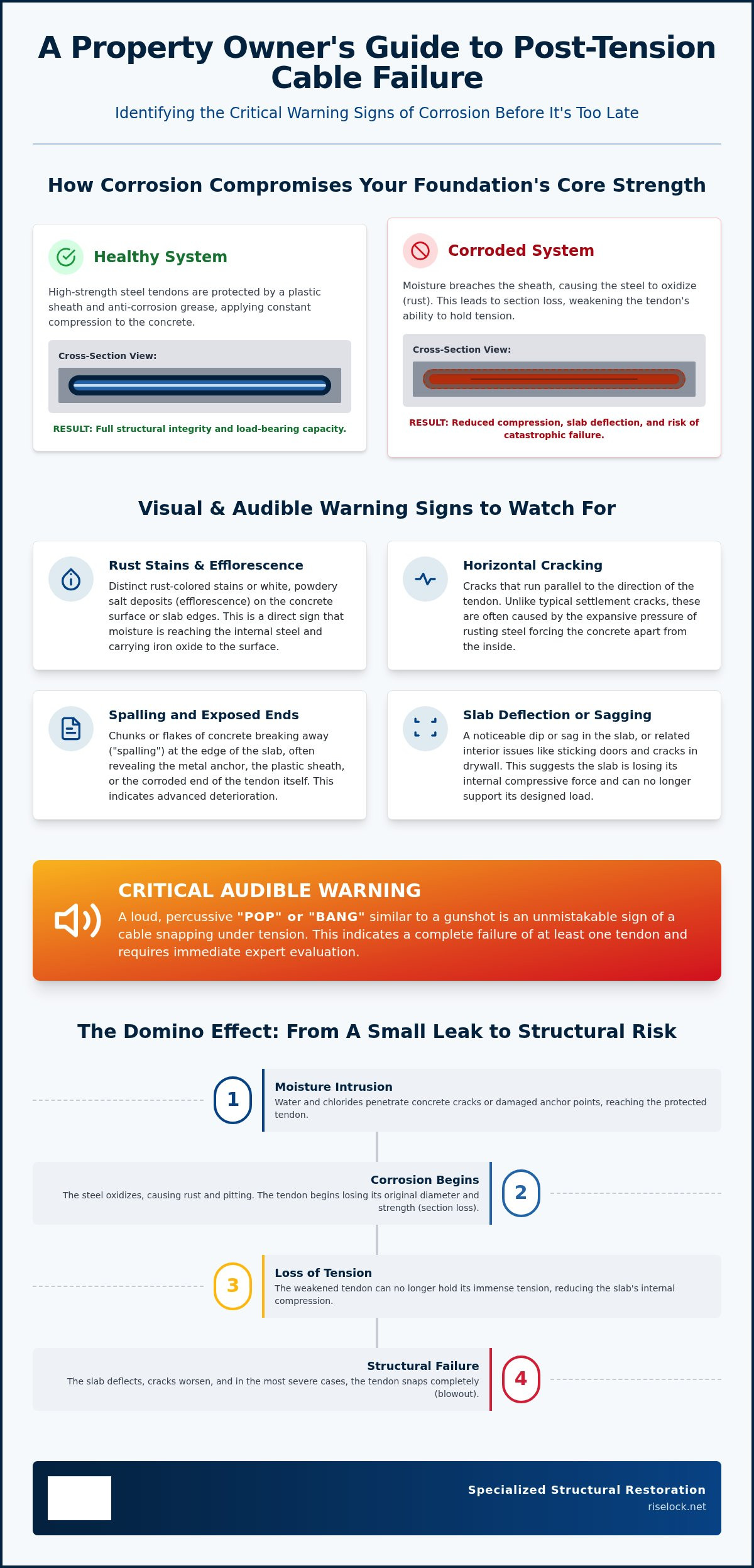
Post-tensioning functions as the active structural engine of a concrete slab. Unlike traditional rebar, which remains passive until the concrete cracks, post-tensioned systems use high-strength steel tendons to apply constant compressive force. As a specialized application of Prestressed concrete, this method allows for thinner slabs and longer spans. However, the integrity of the entire system relies on the health of the steel strands. These strands are protected by a plastic sheath and a layer of specialized grease designed to block oxygen and moisture. When this barrier is breached, the need for corroded post tension cable repair becomes an inevitable reality.
The primary threat to these systems is section loss. This occurs when moisture reaches the steel, causing it to oxidize and flake away. Because these cables are under immense tension, often between 25,000 and 200,000 psi, even a minor reduction in the steel’s diameter significantly weakens the strand. Once the cross-sectional area of the cable decreases, it can no longer support the design loads it was intended to carry, leading to a gradual loss of the slab’s internal compression.
The Chemistry of Tendon Deterioration
Corrosion isn’t a single event but a chemical progression. It often starts when chlorides, frequently from de-icing salts or coastal air, penetrate the concrete matrix and reach the cable anchorages. These chlorides act as catalysts that accelerate the oxidation process. While general surface rust is a concern, the real danger lies in pitting corrosion. This localized attack creates deep, microscopic craters in the steel. These pits act as stress concentrators where cracks can easily form and propagate. In unbonded systems, moisture that enters at one point can travel the entire length of the cable inside the sheath, causing hidden damage far from the initial entry point.
Structural Risks of Ignoring Corroded Cables
Ignoring signs of cable decay leads to severe structural consequences. As tendons weaken, the slab may begin to deflect or sag, causing interior finishes to crack and doors to stick. The most dangerous outcome is a cable blowout. When a severely corroded post tension cable repair is neglected, the strand can eventually snap under its own tension. This sudden release of energy can cause the cable to burst through the concrete surface or the slab edge with enough force to cause significant property damage. Beyond the physical risks, failing to address these issues early often results in diminished property values and potential complications with structural insurance coverage.
Recognizing the Indicators of Post-Tension Cable Corrosion
Identifying the early signs of failure is the most effective way to manage the eventual scope of corroded post tension cable repair. While internal damage is often hidden from view, the concrete slab frequently provides visual and audible warnings that the internal reinforcement is at risk. One of the most common cues is efflorescence, a white, powdery salt deposit that forms when moisture migrates through the concrete. When this moisture carries iron oxide from a deteriorating tendon, it leaves distinct rust colored staining on the slab surface or at the anchorage points. These stains aren’t merely cosmetic; they’re the byproduct of steel actively dissolving inside your foundation.
Horizontal cracking along the known path of a tendon is another significant structural signal. Unlike vertical settlement cracks, these horizontal fissures often indicate that the internal pressure of expanding rust is forcing the concrete apart from within. At the slab edge, you might notice “spalling,” where chunks of concrete break away to reveal the metal anchor or the plastic sheath. In extreme cases, a cable failure is unmistakable. A snapping tendon under high tension produces a loud, percussive pop similar to a gunshot, which often vibrates through the entire structure. If you hear this sound, it’s a clear indication that at least one cable has lost its ability to provide compressive force.
Surface vs. Subsurface Damage
It’s vital to distinguish between cosmetic settlement and structural distress. Hairline cracks in a post-tensioned slab shouldn’t be dismissed without an expert evaluation, as they often serve as conduits for water and chlorides. This moisture penetration is especially aggressive in Colorado, where frequent freeze-thaw cycles expand trapped water and accelerate the degradation of the protective grease. Following established durability design guidelines is essential for maintaining the barrier between the environment and the steel. If you notice missing pocket formers or exposed tendon tails at the slab edge, the system is already vulnerable to rapid oxidation and requires immediate attention.
Professional Diagnostic Methods
When visual cues suggest a problem, specialists use technical tools to confirm the extent of the damage. Ground Penetrating Radar (GPR) allows technicians to map the location and condition of tendons without invasive drilling. For a more definitive assessment, a “lift-off” test measures the actual remaining tension in a suspect cable to see if it still meets original design specifications. If these non-destructive methods are inconclusive, selective demolition of the anchorage pocket may be necessary to visually inspect for section loss. If you suspect your foundation is showing these signs, a professional structural assessment can determine the most efficient path forward for your property.
Engineering the Solution: Modern Repair and Splicing Techniques
Effective corroded post tension cable repair is rooted in the restoration of the system’s original design tension. When a tendon fails, the slab loses the internal compression that keeps it from sagging or cracking under load. Simply applying a cosmetic concrete patch over a broken anchorage or a spalled edge provides no structural benefit. It’s like trying to fix a snapped rubber band by taping over the ends. To truly restore integrity, we must mechanically reconnect the steel strands and re-introduce the precise amount of force required by the original engineering specifications.
This level of precision is vital because, as noted in a Federal Highway Administration report on tendon failures, corrosion often leads to sudden snaps that compromise the safety of the entire structure. Modern solutions utilize specialized PT couplers and high-strength replacement strands that meet or exceed current ASTM standards. By using these advanced components, we ensure that the repaired section is as strong as, or stronger than, the original installation. The longevity of the repair depends on a meticulous barrier system, utilizing superior waterproofing membranes and high-performance grease to seal the steel against future oxidation.
The Step-by-Step Splicing Process
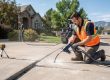
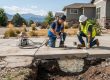
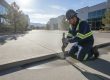
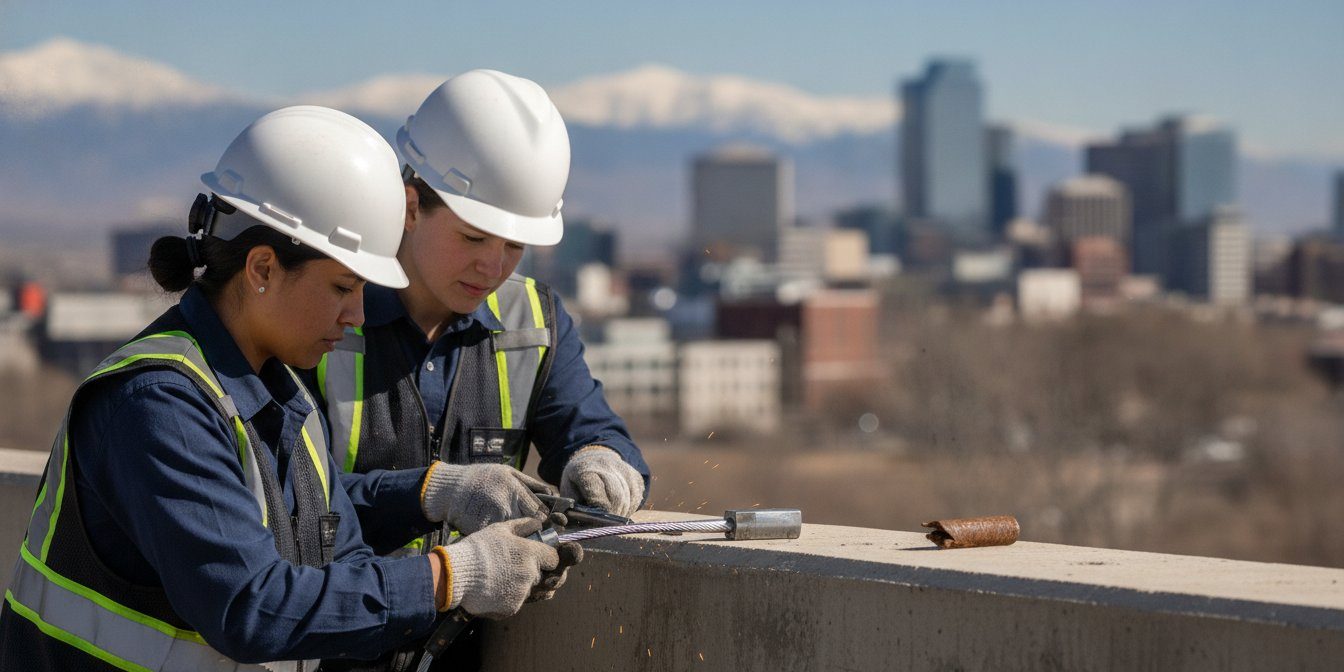
The repair begins with careful excavation. Technicians remove the surrounding concrete to expose the damaged section of the cable and identify healthy, uncorroded steel on either side. Once prepared, a specialized PT coupler is installed to join the new cable segment to the existing tendon. The final step involves the use of high-precision hydraulic jacks to pull the cable to its target tension. Re-tensioning is the process of applying calculated force to a tendon to restore slab compression. This ensures the slab behaves as a single, cohesive unit once again.
Grouting and Pocket Restoration
Once the cable is secured, the focus shifts to long-term protection. We seal the repair area using non-shrink, high-strength repair mortars that bond tightly to the existing concrete. It’s critical to restore the anchorage pockets properly to prevent future moisture ingress, which is the primary driver of recurring corrosion. We also apply specialized corrosion inhibitors to the surrounding concrete matrix to create a chemically resistant environment. This methodical approach ensures that the corroded post tension cable repair isn’t just a temporary fix but a permanent restoration of the building’s structural health.
Preventing Future Corrosion: Waterproofing and Soil Management
Success in structural restoration doesn’t end when the cable is spliced. To avoid recurring issues, property owners must address the environmental factors that triggered the initial damage. In the Front Range, this primarily involves moisture control and soil stabilization. Without a robust strategy for managing the surrounding environment, even the most precise corroded post tension cable repair remains vulnerable to the same oxidative forces that caused the first failure. Regular maintenance schedules, including annual inspections of slab edges and bi-annual reviews of deck coatings, are essential for identifying vulnerabilities before they require another round of corroded post tension cable repair.
Proper drainage is the first line of defense for any post-tensioned system. Ensuring that gutters, downspouts, and site grading move water away from the slab edges prevents the saturation of anchorage zones. For parking structures and exposed decks, applying high-performance polyurethane coatings creates an impermeable barrier. These sealants are specifically engineered to block chloride penetration from de-icing salts, which act as a primary catalyst for tendon degradation. By sealing the concrete matrix, you stop the chemical process of oxidation before it ever reaches the steel strands.
The Colorado Factor: Soil and Climate
Denver and the surrounding areas are characterized by expansive bentonite soils. These clays swell significantly when moisture is present, exerting immense upward pressure on concrete foundations. This movement can lead to structural cracking, which provides a direct path for water to reach the internal steel. In cities like Colorado Springs and Aurora, the frequent use of de-icing salts further complicates the issue by introducing corrosive chemicals into those cracks. Rapid temperature swings also cause concrete to expand and contract, necessitating flexible waterproofing solutions that can bridge small fissures without losing their integrity.
Long-Term Monitoring Strategies
Maintaining structural health requires a proactive approach rather than a reactive one. Establishing a baseline through periodic inspections allows engineers to track changes in the slab’s condition before they escalate into failure. For high-risk commercial systems, moisture sensors can be embedded during the repair process to provide real-time alerts if the internal environment becomes corrosive. Understanding the original Post Tension Installation design is essential for creating an effective monitoring plan that targets specific vulnerabilities. If your property is located in an area with high soil moisture, a professional drainage and structural evaluation is the most effective way to protect your investment from future decay.
Restoring Structural Integrity with RiseLock’s Specialized Expertise
RiseLock approaches structural restoration with a focus on precision and long-term durability. We understand that a successful corroded post tension cable repair is only one part of a larger structural ecosystem. Our team specializes in both post tension installation and repair, allowing us to view every project through the lens of the original engineering design. By utilizing non-invasive techniques, we restore the necessary compressive forces to your slab without the need for destructive demolition. This approach is particularly effective in the Denver Metro area, where minimizing disruption to occupied buildings is a priority for property managers and homeowners alike.
A unique advantage of our methodology is the synergy between tendon restoration and polyurethane concrete lifting. Often, cable corrosion is a symptom of soil settlement or moisture accumulation beneath the slab. While the splicing process restores the internal strength of the concrete, our foam lifting technology stabilizes the foundation by filling voids and providing uniform support from below. This dual-action strategy ensures that the root cause of the structural distress is addressed alongside the visible damage, creating a comprehensive solution that traditional repair methods often overlook.
Why Choose RiseLock for Structural Restoration?
Our reputation is built on technical mastery and an ethical commitment to building safety. We don’t believe in superficial fixes; every corroded post tension cable repair we perform adheres to the highest industry standards, including the latest ACI-PTI 320-25 codes. This dedication to precision has made us a trusted partner for structural projects across Lakewood, Arvada, and the broader Front Range. We pride ourselves on being a dependable guide for our clients, translating complex engineering challenges into clear, actionable restoration plans that prioritize the long-term security of the structure.
Taking the Next Step Toward Safety
Early intervention is the most effective way to prevent localized corrosion from escalating into a catastrophic failure. When you contact RiseLock for a structural assessment, our team conducts a thorough evaluation of your slab’s condition, from visual anchorage checks to advanced diagnostic mapping. We provide a transparent overview of your repair options, ensuring you understand the “why” behind every technical recommendation. For properties requiring broader Concrete Repair in Denver Colorado, we offer the specialized skills needed to restore both the surface and the internal reinforcement of your concrete assets.
Securing the Future of Your Concrete Assets
Maintaining the integrity of a post-tensioned slab requires both vigilance and technical precision. The transition from minor oxidation to a compromised tendon often happens silently beneath the concrete surface. By recognizing early indicators such as rust staining or slab edge spalling, you can address the need for corroded post tension cable repair before it escalates into a more invasive and costly failure. Restoring these systems isn’t just about cosmetic fixes. It requires the mechanical restoration of design tension through expert splicing and re-tensioning.
RiseLock stands as a dependable partner for property owners across Denver, Aurora, and the Front Range. As specialized post-tension installation experts, we provide precision-engineered structural solutions that prioritize the safety and longevity of your building. Addressing these issues today prevents the stress of future instability and preserves the value of your asset. We’re here to guide you toward a durable and secure structural future.
Secure your property’s foundation; contact RiseLock for a professional structural assessment today.
Frequently Asked Questions
Can a broken post-tension cable be repaired?
Yes, a broken cable can be repaired using a specialized process known as splicing. Technicians excavate the concrete to access the damaged segment, install a mechanical coupler, and then use hydraulic jacks to restore the original design tension. This method is far more efficient and less invasive than total slab replacement. In the Denver Metro area, this type of structural intervention ensures that your foundation continues to meet local building codes while maintaining its load-bearing capacity.
How much does it cost to repair a corroded post-tension cable?
The cost of corroded post tension cable repair depends on several factors, including the accessibility of the cable and the depth of concrete removal required. While minor repairs to exposed anchorages are relatively straightforward, complex splicing projects involving multiple tendons require specialized equipment and engineering oversight. Factors such as the thickness of the slab and the location of the damage in your foundation will ultimately influence the total investment required for a durable and safe restoration.
Is a building safe if one post-tension cable snaps?
A single snapped cable doesn’t usually cause an immediate collapse, but it does place additional stress on the remaining tendons. Over time, this redistribution of force can lead to slab deflection, interior wall cracking, and sticking doors. Ignoring a broken cable also increases the risk of a “blowout,” where the sudden release of tension causes the steel to burst through the concrete. Professional assessment is essential to verify the safety and long-term stability of your building.
What causes post-tension cables to corrode in the first place?
Corrosion is primarily caused by moisture infiltration and exposure to chlorides. In cities like Aurora and Colorado Springs, de-icing salts used on winter roads can penetrate the concrete matrix and reach the steel strands. If the protective plastic sheath or the internal grease layer is compromised, oxygen and water trigger oxidation. This process eventually leads to section loss, which weakens the cable until it can no longer support the necessary tension required to stabilize the slab.
How do I know if my concrete slab is post-tensioned?
You can often identify a post-tensioned slab by looking for plastic pocket formers or circular concrete patches along the slab edge. Many residential garages in the Front Range also feature a stamped warning in the concrete that reads “Post-Tensioned Slab; Do Not Cut or Drill.” If these visual cues aren’t present, a structural expert can use Ground Penetrating Radar to map the internal reinforcement and confirm if tendons are present before any renovation or repair work begins.
What happens if I ignore a corroded post-tension cable?
Ignoring a corroded cable leads to progressive structural decay and a significant decrease in property value. As the steel continues to dissolve, the slab loses its compressive strength, which often results in severe cracking and uneven floors. Furthermore, an unaddressed cable snap can become an insurance liability and a safety hazard during future renovations. Early intervention via corroded post tension cable repair is the most cost-effective way to preserve your foundation’s integrity and avoid catastrophic failure.
Can polyurethane lifting help a post-tensioned slab?
Polyurethane concrete lifting is an excellent companion to post-tension repair. While the PT repair restores the internal strength of the slab, high-density foam stabilizes the soil beneath it. In Denver’s expansive soils, voids often form under the concrete, leading to movement that can crack the slab and allow moisture to reach the cables. Filling these voids with polyurethane prevents future slab displacement and protects the newly repaired tendons from the environmental stress caused by shifting ground.
How long does a post-tension cable repair last?
A professional post-tension repair is designed to last for the remaining lifespan of the structure. Success depends on the quality of the waterproofing and the application of corrosion-inhibiting grease during the splicing process. By sealing the repair area with high-strength, non-shrink mortars and ensuring proper site drainage, you can prevent moisture from reaching the steel again. Regular inspections and maintenance of the slab’s exterior coatings further extend the durability and effectiveness of the structural restoration.