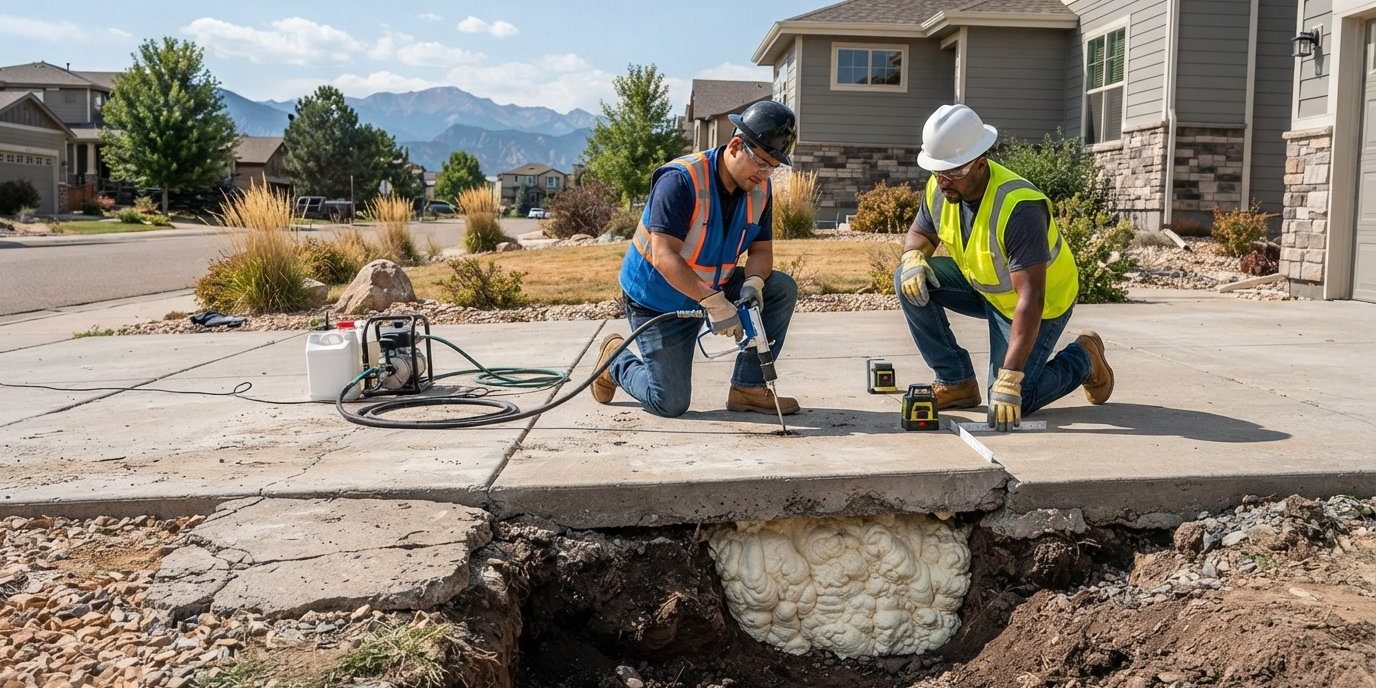
Expansive soils in Colorado inflict more than $15 billion in property damage every year, exceeding the combined impact of floods, tornadoes, and earthquakes. In Centennial, the high concentration of bentonite clay creates a relentless cycle of shrinking and swelling that leaves driveways sunken and sidewalks dangerously uneven. You’ve likely noticed pooling water near your foundation or a vertical offset that violates ADA safety standards. It’s frustrating to watch your home’s value dip because of shifting ground, but a full slab replacement is rarely the most efficient answer. When you look to get a quote for concrete lifting Centennial experts provide, you’re seeking a permanent stabilization method rather than a cosmetic patch.
We’ve designed this guide to help you secure an accurate, transparent quote for polyurethane concrete lifting while explaining why modern foam injection is the superior choice for the Front Range. You’ll discover how high-density polymers provide a lightweight, waterproof solution that won’t wash away like traditional mudjacking slurry. We’ll detail the technical precision required to lift slabs without damaging post-tension cables and how our process delivers a flat, safe surface ready for traffic in minutes. By the end of this article, you’ll understand the variables that dictate repair costs and how to ensure your restoration survives the 149 freeze-thaw cycles we face each year.
Key Takeaways
- Learn how Centennial’s expansive bentonite clay and frequent freeze-thaw cycles create the subsurface voids that lead to uneven slabs.
- Understand why high-density polyurethane foam provides a lightweight, hydrophobic barrier that prevents future settlement better than traditional methods.
- Identify the specific data points needed to get a quote for concrete lifting Centennial residents can rely on for long-term budget accuracy.
- Discover the importance of specialized scanning and drilling techniques when working on properties with unbonded post-tensioned foundations.
- Gain insight into the professional evaluation process that prioritizes technical mastery and structural stabilization over quick cosmetic fixes.
Understanding Concrete Sinking in Centennial, CO
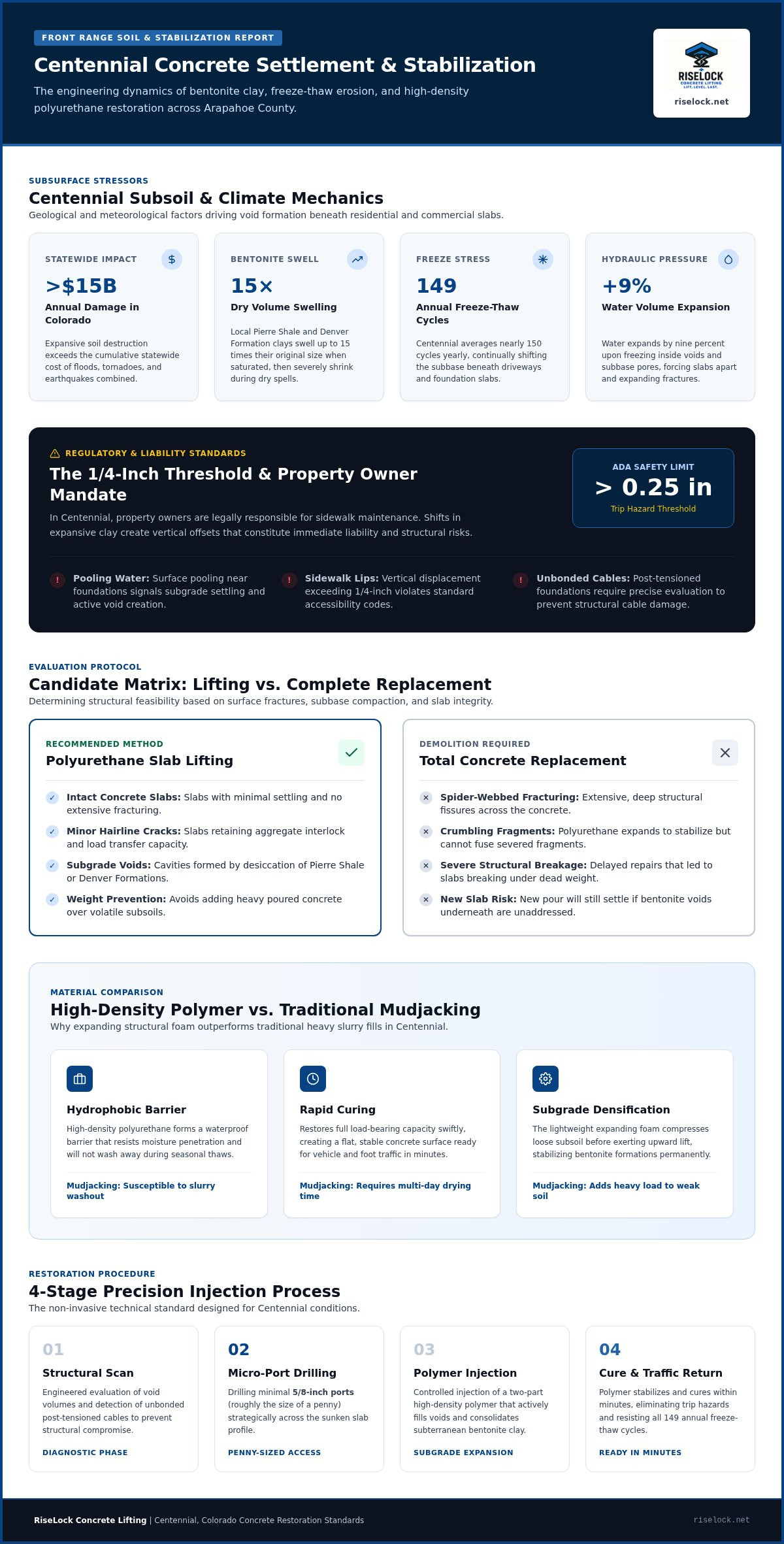
Centennial’s geography presents unique challenges for structural stability. Most residential and commercial properties in Arapahoe County sit atop bentonite clay formations, such as Pierre Shale or the Denver Formation. This specific soil type is notorious for its expansive properties, swelling up to 15 times its dry volume when saturated. When you see a sidewalk lip or a sunken garage floor, it’s often a direct result of these underground pressure shifts. The ground literally moves beneath your feet, and your concrete isn’t flexible enough to follow.
The Centennial Soil Challenge
The cycle of soil movement in the South Denver Metro is relentless. During wet spring thaws, the ground heaves upward; during hot, dry summers, the soil desiccates and shrinks, leaving massive voids beneath your concrete slabs. Traditional replacement often fails because it simply places a new, heavy slab over the same unstable soil. If you don’t address the underlying void, the new concrete will likely sink within a few seasons. This is why many homeowners choose to get a quote for concrete lifting Centennial specialists provide, as it allows for subgrade stabilization without the waste of a total tear-out.
Our climate adds another layer of stress. Centennial averages approximately 149 freeze-thaw cycles annually. When water enters the pores of your concrete or the voids beneath it, it expands by 9% as it turns to ice. This hydraulic pressure forces slabs apart and widens existing cracks. Identifying early warning signs, like pooling water near your foundation or a vertical offset exceeding the 1/4-inch ADA threshold, is critical to preventing long-term damage. In Centennial, property owners are legally responsible for sidewalk maintenance, making these trip hazards a significant liability risk.
When to Lift vs. When to Replace
Not every slab is a candidate for restoration. We evaluate the structural integrity of the existing concrete before recommending a specific intervention. Generally, if a slab is intact or has only minor hairline fractures, it can be successfully restored using modern concrete leveling techniques. However, if the concrete is “spider-webbed” with deep, structural cracks or is crumbling into small fragments, replacement may be necessary. Polyurethane injection works by filling the void and providing a stable base, but it cannot “glue” a shattered slab back together.
Lifting offers a significant advantage in both time and cost. It typically avoids the mess of demolition and prevents the heavy weight of new concrete from further compressing unstable soil. When you get a quote for concrete lifting Centennial experts can analyze the degree of settlement and the volume of the underlying void to determine if polyurethane injection is the right path for your property. Delaying this repair often leads to the slab breaking under its own weight, turning a simple lift into a complex and expensive replacement project.
The Polyurethane Advantage: Precision Slab Restoration
Polyurethane concrete lifting, often referred to as polyjacking, represents a significant advancement in structural restoration. Instead of relying on heavy cementitious slurries, this method utilizes a two-part high-density polymer that expands into a rigid, structural foam. When you get a quote for concrete lifting Centennial homeowners should understand that this process does more than just raise the surface. It actively stabilizes the subgrade by filling the voids created by shifting bentonite clay. By addressing the root cause of the settlement, we provide a solution that is both durable and precise.
According to the Colorado Geological Survey’s guide on expansive soils, the moisture fluctuations in our region create constant movement. Polyurethane addresses this by densifying the loose soil layers before the lifting force begins. This creates a stable foundation that resists future settlement, even as environmental conditions change. If you’re ready to restore your property’s safety, you can schedule a professional site evaluation to see if polyjacking is the right fit for your driveway or patio.
How the Injection Process Works
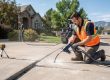
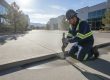
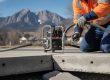
The injection process is remarkably non-invasive. We drill small, 5/8-inch ports, roughly the size of a penny, into the affected slab. This contrasts sharply with traditional mudjacking, which requires large 2-inch core holes that can weaken the concrete’s structural integrity. Once the liquid polymer is injected, a chemical reaction occurs. The foam expands rapidly, providing a powerful yet controllable lifting force. This allows our technicians to achieve level surfaces with sub-millimeter precision, ensuring that trip hazards are eliminated and drainage is restored to its original design.
Why Foam Outlasts Mudjacking
Weight is a critical factor in long-term success. High-density polyurethane weighs approximately 2 to 4 pounds per cubic foot. In comparison, traditional mudjacking slurry weighs between 100 and 120 pounds per cubic foot. Adding that much dead weight to already unstable, settlement-prone soil often causes the slab to sink again, worsening the original problem. Foam is also hydrophobic, meaning it is entirely waterproof. It won’t wash away during heavy Colorado rains or snowmelt. You can learn more about these technical advantages in our Polyurethane Concrete Lifting: The Precision Guide. This resilience ensures that once your concrete is lifted, it stays in place for years to come.
Factors That Influence Your Centennial Concrete Lifting Quote
Determining the investment required for structural restoration involves more than a simple measurement of surface area. While the visible “drop” is a primary indicator of settlement, the true scope of the project often lies hidden beneath the slab. When you get a quote for concrete lifting Centennial property owners should look for a technician who prioritizes sub-surface analysis over quick visual estimates. Several variables converge to define the final scope of work, ranging from geological voids to site logistics.
Accessibility is another practical consideration. A front driveway is typically straightforward, allowing our equipment easy access. In contrast, a backyard patio or a tiered pool deck may require additional setup time or extended hose lengths to reach the injection points. We also assess the condition of existing concrete joints and cracks. If the concrete is heavily fractured, it may require more injection ports to ensure an even lift across all segments. Following the FTC contractor evaluation guidelines can help you vet providers to ensure they’re accounting for these site-specific details in their written proposals.
Void Volume and Material Usage
The amount of high-density polyurethane foam required is the most significant variable in any project. The distance a slab has sunk is only one part of the equation; the size of the “washout” or void beneath it is equally critical. Soil erosion from poor drainage can create large cavities that aren’t visible until we begin the injection process. We utilize precision monitoring during the lift to track material usage in real time. This ensures we fill the entire void to provide a stable base without over-injecting or wasting material, which keeps the process efficient and the results predictable.
Structural Add-ons and Joint Sealing
A successful lift is only the first step in long-term stabilization. To protect the newly leveled surface, it’s essential to address the pathways that allowed water to undermine the soil in the first place. Sealing cracks and expansion joints prevents moisture from the 149 annual freeze-thaw cycles from reaching the subgrade. This extra layer of protection is a vital component of a comprehensive repair. When you get a quote for concrete lifting Centennial experts should explain how these preventative measures extend the life of your concrete. You can find a deeper breakdown of these secondary protections in our Concrete Leveling: The Definitive Guide. By sealing the surface, you ensure the high-density foam remains protected from the elements, maintaining the structural integrity of your property for years.
Evaluating Centennial Concrete Leveling Contractors
Selecting a partner for structural repair requires a focus on technical mastery rather than marketing polish. In Centennial, where soil dynamics are complex, you need a contractor who understands the specific engineering requirements of the Front Range. Always verify that a company carries local licensing and comprehensive insurance specific to Arapahoe County operations. A technician who views your project as a structural priority is far more valuable than a salesman focused on high-volume quotas. When you review a warranty, look for terms that guarantee the stability of the lift itself. If a contractor still suggests traditional mudjacking for a residential slab, it is a clear red flag; adding heavy slurry to expansive clay often accelerates the very settlement you are trying to fix.
Questions to Ask During Your Estimate
When you prepare to get a quote for concrete lifting Centennial residents should probe for technical specifics to ensure long-term results. Ask about the compressive strength and density of the foam used. Driveways and garage floors require a higher density than a simple decorative walkway to support vehicle weight. Crucially, ask how the team handles post-tension slabs. Many homes in the South Denver Metro utilize unbonded cables under high tension. Drilling into these without specialized mapping can lead to catastrophic structural failure. Finally, confirm that site cleanup and port patching are included in the transparent quote, so there are no hidden fees once the stabilization is complete.
Preparing for Your Quote Appointment
To ensure your site visit is productive, a small amount of preparation goes a long way. Clear the area of vehicles, patio furniture, and debris so the technician has a clear view of the slab’s edges and any existing fractures. Identify where your gutter downspouts terminate. Negative drainage is the primary driver of soil erosion in Centennial, and addressing this is essential for the longevity of the repair. Having your property plat or marked utility locations ready can also help the technician assess the subgrade safely. This preparation allows for a more precise evaluation of the void volume and the required lift distance, leading to a more accurate financial estimate.
Ready for a professional assessment of your property? Contact RiseLock to get a quote for concrete lifting Centennial and restore your property’s structural integrity with precision.
Requesting Your Quote with RiseLock Concrete Lifting
RiseLock operates with a sense of professional pride and a commitment to high standards. We view your structural challenges as a personal priority, moving beyond simple cosmetic patches to deliver permanent subgrade stabilization. Our team brings specialized knowledge in post tension installation to every project. This expertise allows us to navigate the complexities of modern foundations in Centennial with a level of precision that traditional contractors often lack. By understanding the reinforcement systems within your slabs, we ensure that our restoration techniques maintain the structural integrity of the entire assembly.
The RiseLock Precision Process
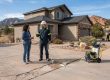
Our engagement begins with a methodical assessment of your property’s specific settlement patterns. During the Centennial site visit, a technician identifies the root causes of soil failure, such as drainage issues or expansive clay voids. We believe in incremental information sharing, ensuring you understand the “why” behind our restoration methods before we begin. You’ll receive a detailed proposal that outlines the exact scope of work with transparent pricing. We don’t believe in hidden “mobilization” fees or administrative fluff. Our goal is to provide a logical progression from initial contact to the final walkthrough, where we verify the stability and level of your restored surfaces.
As a dedicated partner to the South Denver community, we maintain the ethical backbone of a traditional service provider while utilizing industry-leading technology. This balance of modern innovation and reliable service ensures your repair survives the harsh Colorado climate. We take pride in our craft, treating each sidewalk, driveway, and patio as a critical component of your home’s long-term security. Our process is designed to be efficient and clean, minimizing disruption to your daily routine while delivering results that last for years.
Schedule Your Centennial Estimate Today
The first step toward a safer, more valuable property is a professional evaluation. When you are ready to get a quote for concrete lifting Centennial experts from our team will provide a thorough, no-nonsense analysis of your structural needs. We serve homeowners and commercial asset managers across the entire Front Range, bringing technical mastery to every job site. We act as a professional guide, leading you away from the stress of structural damage toward the peace of mind offered by specialized, high-precision intervention.
Don’t let sunken slabs create liability risks or devalue your investment. By choosing a partner that prioritizes structural integrity over quick fixes, you gain peace of mind and a durable repair. For a deeper look at the technologies and materials we use to stabilize Colorado properties, consult our Concrete Lifting Solutions Guide. You can get a quote for concrete lifting Centennial residents trust by contacting us today to schedule your site visit and secure your property’s future.
Securing Your Property’s Structural Future
Restoring sunken concrete requires a deep understanding of Centennial’s specific geological challenges. High-density polyurethane foam offers a sophisticated solution that addresses the root cause of settlement by stabilizing the subgrade. This method avoids the heavy, temporary fixes of the past. It provides a lightweight, waterproof foundation that withstands the Front Range’s aggressive freeze-thaw cycles. By focusing on structural integrity rather than just surface appearance, you ensure your driveway or sidewalk remains safe and level. It’s a process that prioritizes longevity over temporary patches.
As Front Range soil experts and high-density polyurethane specialists, RiseLock remains committed to technical mastery and ethical service. We view every project as a priority, ensuring our specialized methods protect your property’s value. When you’re ready to get a quote for concrete lifting Centennial residents can rely on, our team is prepared to provide a transparent, professional assessment. Take the first step toward a permanent repair today. Get a Free, Precise Quote for Centennial Concrete Lifting and enjoy the peace of mind that comes with a stable, high-precision surface.
Frequently Asked Questions
How much does concrete lifting cost in Centennial?
The investment for restoration depends on several technical variables including the volume of the underlying void and the required vertical lift. While we don’t provide flat rates, lifting typically costs significantly less than full slab replacement. When you get a quote for concrete lifting Centennial technicians will analyze your specific site conditions. Factors like soil erosion and accessibility play a role in the final scope. This ensures you pay for a permanent stabilization solution.
How long does polyurethane concrete lifting last in Colorado?
Polyurethane lifting is a long-term solution designed to last 10 to 15 years or more. Unlike organic fill materials, high-density foam is hydrophobic and entirely waterproof, meaning it won’t wash away during heavy Colorado rain or snowmelt cycles. It remains stable even in Centennial’s expansive clay soils. This durability makes it a superior choice for the Front Range climate, where traditional methods often fail due to moisture fluctuations and seasonal soil movement.
Is polyurethane lifting better than mudjacking?
Polyurethane is the modern standard for precision restoration. It weighs only 2 to 4 pounds per cubic foot, whereas traditional mudjacking slurry can weigh up to 120 pounds. Adding that much weight to Centennial’s already unstable clay often causes secondary settlement. Foam injection also requires much smaller holes, roughly 5/8-inch in diameter, which preserves the structural integrity of your concrete. It cures in minutes rather than days, allowing for immediate use of the surface.
Can you lift a driveway with a post-tension slab?
Yes, driveways with post-tension slabs can be safely lifted, but they require a contractor with specialized structural expertise. RiseLock focuses on post-tension installation and reinforcement, which allows us to safely map tendon layouts before drilling. Using high-precision techniques, we avoid damaging the unbonded cables that provide your slab’s strength. This specialized approach is essential for many Centennial homes where traditional drilling methods could lead to dangerous and expensive cable ruptures.
How soon can I drive on my concrete after it is lifted?
You can typically return your concrete to full service within 15 to 30 minutes of the injection process. High-density polyurethane foam reaches 90% of its compressive strength almost immediately after expanding. This rapid cure time is one of the primary advantages for Centennial homeowners who need to use their driveways or sidewalks without the 24 to 72-hour waiting period required by other methods. It’s an efficient, non-invasive way to restore safety in a single day.
Will the foam injection holes be visible when you are done?
Injection ports are remarkably discreet. We use 5/8-inch drill holes, which are approximately the size of a penny. Once the lifting process is complete, these ports are patched with a specialized concrete mixture to match your existing surface as closely as possible. Over time, these patches weather and blend into the surrounding slab. This is a much cleaner alternative to the large 2-inch core holes required by older methods, which often leave permanent, unsightly scars.
Does RiseLock offer a warranty on Centennial lifting projects?
RiseLock provides a professional warranty that emphasizes the long-term stabilization of your concrete. We stand behind our technical mastery and the durability of the high-density polymers we use. When you get a quote for concrete lifting Centennial residents receive a detailed explanation of our commitment to structural integrity. Our goal is to provide a permanent solution that survives the 149 annual freeze-thaw cycles common in the South Denver Metro, ensuring your investment remains protected.
What happens if my concrete is too cracked to lift?
If a slab is shattered into small fragments or is “spider-webbed” with deep structural cracks, it may be too compromised for lifting. Polyjacking requires the concrete to have enough integrity to act as a single unit during the expansion process. During our site visit, we evaluate the surface condition to determine if restoration is viable. If the concrete is failing structurally, we will provide an honest assessment, as lifting a crumbling slab won’t provide a lasting solution.