Boulder’s picturesque landscape hides a volatile secret: expansive clay soils that can exert immense pressure against a standard foundation. For developers and homeowners, a traditional concrete slab often isn’t enough to withstand these shifting subterranean forces. This is why professional post tension installation in Boulder has become a critical engineering requirement rather than a luxury. You likely understand that the structural integrity of your project depends on more than just the quality of the concrete. It requires a reinforcement system designed to counteract the unique geological challenges of the Front Range.
We recognize the stress that comes with navigating the 2024 International Building Codes and the fear of structural settlement or cable failure. This guide explores how precision-engineered post-tensioning provides the necessary tensile strength to protect your investment against soil movement. You’ll discover the technical advantages of modern monostrand systems, the importance of the stressing phase, and how to ensure your project meets the City of Boulder’s rigorous local amendments. By the end, you’ll have a clear roadmap for achieving a foundation that remains stable and secure for decades.
Key Takeaways
- Understand why Boulder’s expansive clay soils require active reinforcement to mitigate the risk of structural settlement and foundation damage.
- Learn how professional post tension installation in Boulder uses high-strength tendons to create a compressed slab that resists cracking under pressure.
- Compare the technical advantages of post-tensioning against traditional rebar, focusing on thinner slab profiles and enhanced material efficiency.
- Explore the multi-phase installation process, highlighting why precision during formwork and concrete pouring is vital for long-term stability.
- Gain insights into selecting a qualified contractor with the specialized equipment and expertise required to navigate local structural engineering standards.
Understanding Post Tension Installation in Boulder’s Unique Landscape
Post-tensioning is a sophisticated method of reinforcing concrete that employs high-strength steel cables, known as tendons, which are tensioned after the concrete has reached a specific curing strength. It falls under the broader category of Prestressed Concrete, providing active reinforcement that keeps the slab in a constant state of compression. In a region like Colorado, professional post tension installation in Boulder serves as a primary defense against the volatile geological conditions that threaten structural longevity. By compressing the concrete, we create a monolithic slab that behaves as a single, rigid unit. This unity allows the structure to “float” or move as one during soil shifts, effectively preventing the localized cracking and differential settlement that plague traditional reinforcement methods.
The Geology of the Front Range and Structural Risk
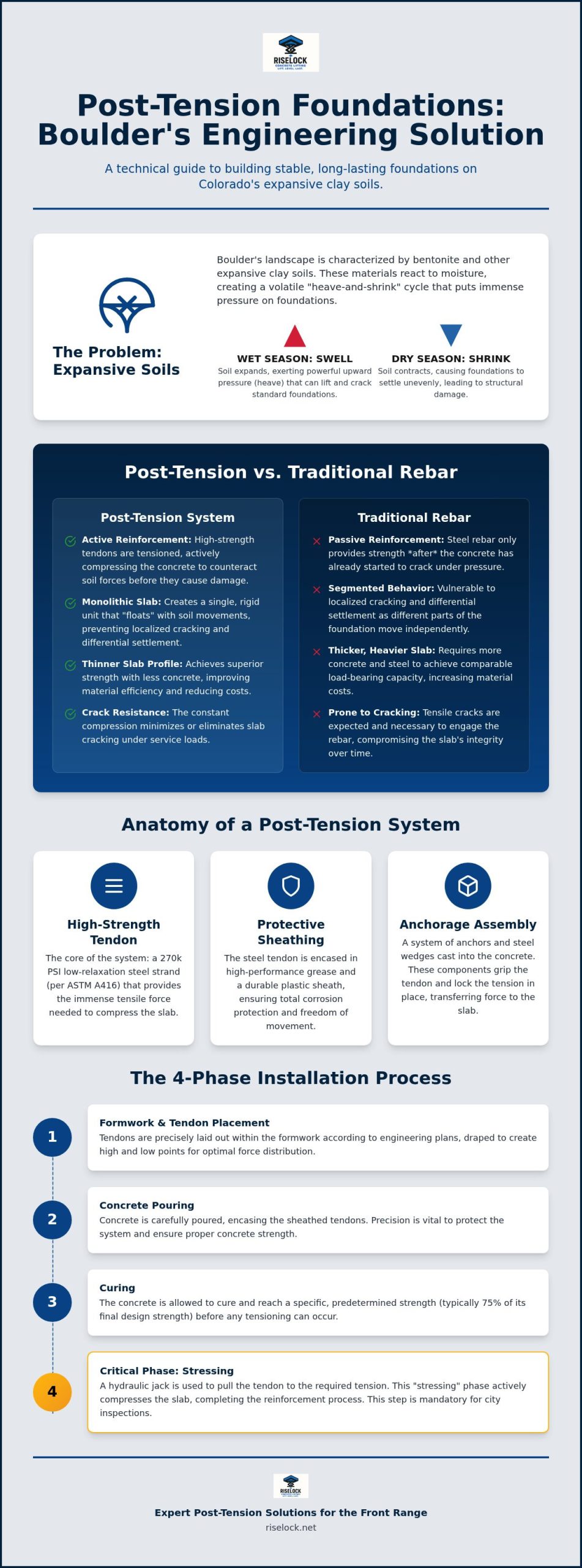
Boulder’s geography is defined by the presence of bentonite and other expansive clay soils. These materials are highly reactive to moisture; they swell significantly when wet and shrink during dry spells. Traditional rebar foundations rely on passive reinforcement, which only activates after the concrete begins to crack. In the Front Range, this passive approach often fails because the upward pressure from clay heave exceeds the concrete’s natural tensile strength. We choose post-tensioning for high-risk sites because it provides an active force that counteracts these soil cycles. This engineering logic ensures that residential foundations, parking structures, and commercial decks remain stable despite the seasonal heave-and-shrink cycles typical of the Colorado climate.
Boulder Building Codes and Post-Tension Requirements
Navigating the local regulatory environment requires a clear understanding of the 2024 International Building Codes, which the City of Boulder adopted in August 2025. These codes, along with specific local amendments in Title 10 of the Boulder Revised Code, set high standards for structural integrity in multi-family and commercial builds. Professional installation is mandatory to meet rigorous city inspection standards, particularly during the critical stressing phase. While some property owners view PT as a specialized addition, it’s actually a strategic cost-saving measure. Choosing post tension installation Boulder services ensures that your project meets these standards while providing a superior return on investment through reduced maintenance and repair needs over the building’s lifecycle.
The Technical Components of a Post-Tensioning System
Every high-performance foundation relies on the synergy of its internal parts. For a successful post tension installation in Boulder, we utilize an unbonded system where the steel never actually touches the concrete. This design allows for maximum flexibility and tensioning accuracy during the construction process. The system consists of three primary elements: the high-strength tendon, the corrosion-protective coating, and the anchorage assembly. The quality of these individual components determines the ultimate lifespan and reliability of the reinforcement, especially when facing the environmental pressures of the Front Range.
High-Strength Steel Tendons and Sheathing
The core of the system is the 270k PSI high-strength steel strand. This material provides the immense tensile force needed to keep a concrete slab compressed against expansive soil. Because Colorado’s climate can introduce moisture through soil contact, we prioritize multi-layered corrosion protection. The steel is coated in specialized, high-performance grease and then extruded in a durable plastic sheath. This ensures the cable remains functional and moves freely for the life of the building. ASTM A416 standards define the specific physical and chemical properties required for these low-relaxation steel strands in regional structural projects.
Anchors and Wedges: The Grip of the System
Force transfer occurs at specific anchorage points. The “dead end” anchor is cast into the concrete at one side of the slab, while the “live end” anchor is positioned where the hydraulic stressing jack will eventually be applied. Two-piece steel wedges grip the cable inside the anchor housing, locking the tension in place once the desired force is achieved. Precision during anchor placement ensures that the force is distributed evenly across the slab’s cross-section. Poorly seated anchors are the leading contributor to structural failures in PT systems, which is why we emphasize technical mastery during every phase of the setup.
The technical superiority of these components is well-documented in any cost-benefit analysis of reinforcement methods. While the assembly is more complex than traditional rebar, the result is a foundation with unmatched durability and resistance to settlement. Ensuring these parts are handled with care is a priority at RiseLock, where we treat your project’s structural integrity as our own professional mission. By using higher-grade materials and precise installation techniques, we provide a reliable solution for Boulder’s most challenging building sites.
Post Tension vs. Traditional Rebar: A Boulder Cost-Benefit Analysis
Choosing between traditional rebar and post tension installation Boulder services involves more than comparing upfront material costs. While rebar provides passive reinforcement, only activating after the concrete has already begun to stretch and crack, post-tensioning exerts an active compressive force. This internal pressure significantly improves the slab’s flexural strength, allowing engineers to design thinner slabs without compromising load-bearing capacity. By reducing the overall volume of concrete required, developers can often offset the specialized labor costs associated with PT systems while achieving a more resilient finish.
The long-term maintenance advantages are equally compelling. A compressed slab is naturally resistant to the water penetration and freeze-thaw cycles that accelerate structural decay. By minimizing surface cracking today, property owners significantly reduce the likelihood of needing corrective measures like polyurethane concrete lifting in the future. Additionally, the speed of construction improves because PT slabs often reach their required strength for loading faster than traditional rebar mats, accelerating the project timeline on busy Boulder job sites.
Structural Performance in Expansive Soils
In the Front Range, the primary threat is the “stair-step” cracking that occurs when a foundation settles unevenly. Rebar foundations often lack the necessary stiffness to bridge the gaps created by shifting bentonite clay. Post-tensioned slabs act as a rigid, monolithic unit that distributes loads across the entire footprint. This active reinforcement keeps the concrete in a state of compression, which effectively closes micro-cracks before they can expand into structural failures. It’s a proactive approach to engineering that accounts for the soil’s inevitable movement.
Economic Considerations for Developers
For large-scale commercial builds, the economic benefits of post-tensioning extend to the architectural design itself. Research indicates that post-tensioning becomes a highly cost-effective solution for spans greater than 28 feet in commercial construction. While the initial investment in specialized hardware and certified labor is higher, the lifecycle savings are substantial. Reducing concrete volume lowers both material costs and the project’s carbon footprint, making it an attractive option for the environmentally conscious Boulder market. Over a 20-year period, the reduction in structural repairs and the increased durability of the slab typically result in a much lower total cost of ownership.
The Step-by-Step Post Tension Installation Process
Successful post tension installation in Boulder requires a disciplined, multi-phase approach that begins long before the first concrete truck arrives. It’s a choreographed sequence where every step, from the initial tendon layout to the final hydraulic stressing, follows a precise engineering blueprint. During the first phase, we establish the formwork and layout the tendons according to the structural engineer’s specifications. This layout creates the internal skeleton that will eventually bear the building’s load. The second phase involves the concrete pour, which requires careful management of concrete flow to ensure the delicate cable configurations aren’t displaced or damaged by the weight of the wet mix.
Once the pour is complete, the third phase focuses on the cure. We monitor the concrete’s compressive strength through field-cured cylinders to ensure it’s ready for stress. The final critical phase is the application of hydraulic force. This stage transforms the slab into a monolithic structural unit capable of resisting the upward pressure of Colorado’s expansive soils. Each of these stages must be documented and verified to ensure the finished product meets both engineering standards and local building codes.
Tendon Placement and Chairing
Tendons must follow a specific vertical profile within the slab to optimize load distribution. We use specialized chairs to maintain these precise heights. A deviation of even a half-inch can significantly alter the slab’s load-carrying capacity, making precision a non-negotiable requirement. We secure live-end anchors firmly to the formwork, ensuring they remain accessible for the hydraulic jacks later in the process. This attention to detail during the layout phase prevents cable blowouts and ensures the force is applied exactly where the design dictates.
Stressing and Elongation Measurement
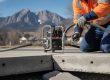
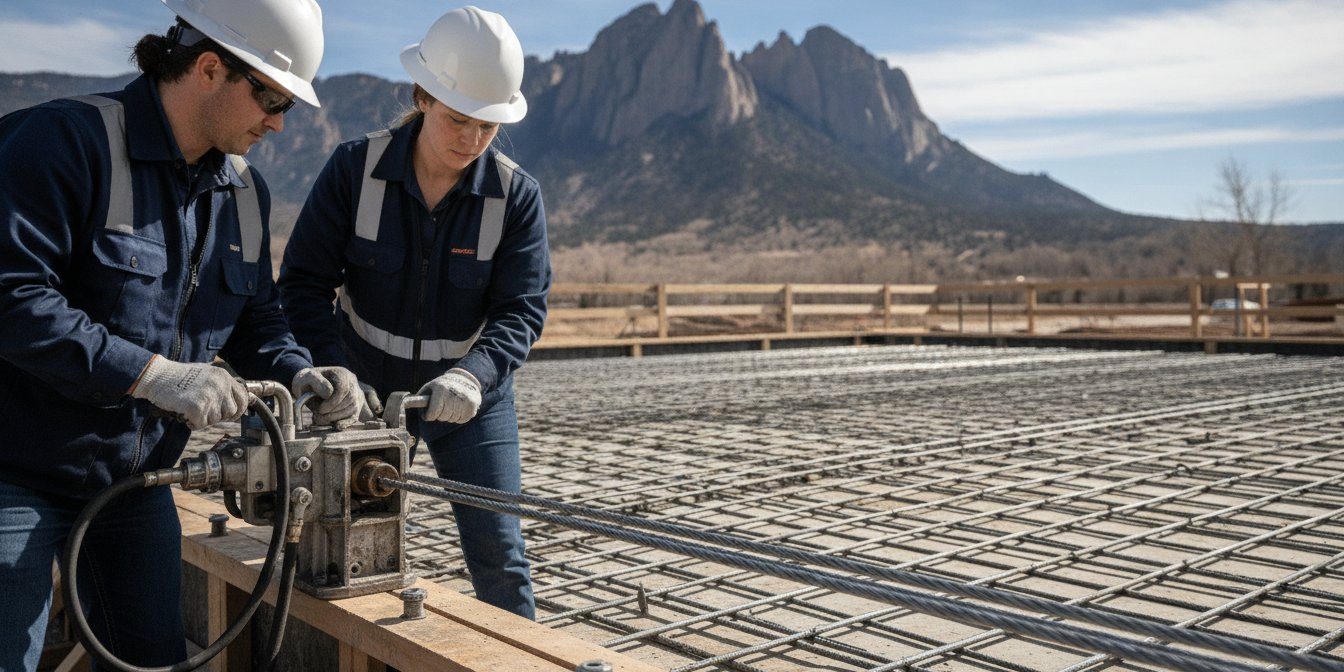
Once the concrete reaches the required PSI, we use calibrated hydraulic jacks to apply a specified force, typically around 33,000 lbs, to each strand. We don’t just pull the cable; we measure the “elongation” to verify the cable has stretched the expected amount. This data proves the force has been distributed throughout the entire length of the tendon. Safety is paramount during this stage. Stressing is the most critical phase of post tension installation, requiring strict adherence to safety protocols and exclusion zones to protect the crew and the structure.
Finishing and Capping
After the structural engineer approves the elongation reports, we cut the excess cable tails and apply grout caps. These caps provide permanent corrosion protection, which is vital for the long-term health of the system. This final step ensures the project is ready for inspection by the Boulder building department. If we’re working on a retrofit, we ensure the new system integrates seamlessly with the existing concrete repair denver colorado ecosystem. For projects requiring this level of technical mastery, consult with the RiseLock team to ensure your foundation is built for longevity.
Why Mastery Matters: Choosing a Post Tension Contractor in Boulder
Selecting the right partner for post tension installation Boulder projects is a decision that affects a structure’s safety for decades. While many general concrete contractors understand the basics of a standard pour, they often lack the specialized hydraulic equipment and technical certification required for precise PT stressing. At RiseLock, we view structural reinforcement as a personal priority. Our dual expertise in both installation and repair provides us with a unique perspective on structural longevity. Having repaired numerous systems across the Front Range, we understand the specific failure points that lead to a broken post tension cable, and that knowledge informs every anchor we set and every strand we pull.
Our commitment to the Boulder community is rooted in an ethical approach to engineering. We don’t just follow a blueprint; we apply a deep understanding of how local soil conditions interact with modern materials. This specialized focus ensures that your foundation isn’t just compliant with the 2024 International Building Codes, but is truly optimized for the specific challenges of the Colorado landscape. By choosing a specialist over a generalist, you’re investing in a level of technical mastery that guards against future settlement and structural failure.
Precision Equipment and Calibrated Results
In the world of structural engineering, “close enough” is a liability. We utilize modern hydraulic systems and digital tracking to capture real-time stressing data for every tendon. This level of precision ensures that the compressive force is uniform across the foundation, meeting the exact specifications of the structural design. By providing property owners with documented results, we offer a level of transparency and peace of mind that standard construction methods cannot match. Our equipment is regularly calibrated to ensure that the force applied is accurate to the pound, protecting your investment from the very beginning.
Integrating Stabilization and Reinforcement
Our commitment to structural health goes beyond the initial installation. We offer a holistic approach that integrates concrete leveling expertise with our deep knowledge of post-tensioned systems. This combined skill set is particularly valuable in Boulder, where expansive soils can create complex stabilization needs even for well-designed structures. We act as a professional guide, leading you away from the stress of structural damage toward the security offered by high-precision intervention. If you’re ready to secure your foundation with the experts at RiseLock Concrete Lifting, our team is prepared to deliver the specialized care your project deserves.
Build for Longevity in the Front Range
Navigating the complex interaction between Colorado’s expansive clay and concrete foundations requires more than standard reinforcement. Professional post tension installation in Boulder provides an active structural defense, creating a monolithic slab that resists the immense upward pressure of shifting soils. By prioritizing technical mastery and precision during the critical stressing phase, you ensure that your investment remains stable, durable, and compliant with the latest local building standards.
At RiseLock, we bring authoritative structural reinforcement mastery to every project. Our team utilizes specialized hydraulic stressing equipment and a deep understanding of Boulder’s unique geological risks to deliver results that exceed expectations. We view your structural integrity as our personal priority, guiding you away from the risks of settlement and toward long-term peace of mind. Your foundation is the most important part of your build. It’s time to treat it with the precision it deserves.
Request a Professional Post Tension Consultation from RiseLock today and secure the future of your property with confidence.
Frequently Asked Questions
What is the primary benefit of post tension installation in Boulder?
The primary benefit of post tension installation in Boulder is the slab’s ability to resist the immense upward heave of expansive clay soils. By keeping the concrete in a state of active compression, the system prevents the localized cracking and differential settlement that often compromise traditional foundations. This monolithic behavior allows the entire structure to move as a single unit, significantly extending the lifespan of the property while maintaining its structural integrity against the Front Range’s geological volatility.
How much does post tension installation cost compared to rebar?
While the initial material and specialized labor costs for post-tensioning are typically higher than traditional rebar, the long-term lifecycle savings are substantial. You’ll often see a reduction in the total volume of concrete required, which helps offset the investment in high-strength tendons and anchors. Over several decades, the decreased need for structural repairs and maintenance makes this a cost-effective choice for both residential and commercial developers seeking durability in challenging soil environments.
Can a broken post tension cable be repaired after the concrete is poured?
Yes, a broken post tension cable can be repaired by a qualified specialist even after the concrete has cured. We use specialized equipment to locate the break, excavate the area, and install a new strand or coupler to restore the required tension. This process is critical for maintaining the slab’s load-bearing capacity. Ignoring a snapped cable can lead to progressive structural failure, so immediate intervention by a professional contractor is always the safest course of action.
Is post-tensioning only for commercial buildings or can it be used for Boulder homes?
Post-tensioning is a standard structural solution for both large-scale commercial projects and modern residential foundations in the Boulder area. Many new homes built on highly expansive soils utilize this technology to ensure the foundation won’t crack under seasonal soil cycles. Whether you’re constructing a multi-family complex or a single-family residence, professional post tension installation in Boulder provides the necessary reinforcement to protect your investment from subterranean pressure and long-term settlement.
How long does the stressing process take during installation?
The actual stressing process typically takes one to two days, depending on the size of the slab and the number of tendons involved. However, this phase can only begin once the concrete has reached its required compressive strength, which we verify through cylinder testing. Once the engineer approves the PSI levels, our team uses calibrated hydraulic jacks to tension each cable. This methodical approach ensures that the force is applied accurately and documented for building department inspections.
What happens if a post tension cable blowouts during or after installation?
A cable blowout is a serious safety hazard that occurs when an anchor fails or a cable snaps under high tension. If this happens, the area should be cleared immediately and secured until a specialist can assess the damage. We then perform a detailed inspection to determine if the failure was caused by poor anchor seating or material defects. Repairing the system requires re-threading the tendon and replacing the anchorage to restore the slab’s internal compression safely.
Does a post tension slab require special maintenance over time?
A properly installed post-tensioned slab requires very little maintenance over its lifetime, as the tendons are protected by grease and plastic sheathing. Property owners should perform occasional visual inspections of the slab edges to ensure that the grout caps remain intact and free of corrosion. If you notice any exposed steel or signs of rust near the anchorage points, it’s important to contact a structural specialist to reseal the area and prevent moisture from reaching the high-strength cables.
How do I know if my Boulder property has a post tension foundation?
You can usually identify a post-tensioned foundation by looking for small, circular grout caps along the exterior edges of the concrete slab. These caps cover the pockets where the tendons were stressed and the excess cable was trimmed. Many homes with this foundation type will have a warning stamp or plaque in the garage floor stating that the slab is post-tensioned. This is a critical indicator that you shouldn’t cut or drill into the concrete without a specialist’s guidance.