Your driveway isn’t actually failing; the ground beneath it is simply retreating. In regions like Denver and Colorado Springs, the expansive bentonite clay creates a cycle of swelling and shrinking that leaves concrete slabs unsupported. When you invest in the polyurethane driveway leveling Colorado soils require, you’re addressing the root cause of those uneven garage thresholds and pooling water near your foundation. It’s a frustrating problem that many homeowners assume requires a complete, messy replacement.
We understand that a stable driveway is essential for both safety and property value. This guide demonstrates how high-density polyurethane foam provides a faster, cleaner, and more durable alternative to traditional methods. By utilizing these advanced polymers, we can restore your surface to its original elevation with surgical precision. You’ll discover why this lightweight material is the superior choice for stabilizing Colorado’s volatile ground, offering lasting stability that allows you to park your vehicles on the same day the work is completed.
Key Takeaways
- Understand how Colorado’s expansive bentonite clay and extreme freeze-thaw cycles create the subsurface voids that lead to driveway settlement.
- Discover why polyurethane driveway leveling Colorado homeowners choose is 95% lighter than traditional slurry, preventing the further soil compression caused by heavier methods.
- Learn how precision foam injection eliminates dangerous trip hazards and prevents water from pooling against your home’s foundation.
- See how the surgical injection process utilizes dime-sized ports to restore your driveway with minimal mess and zero downtime for your vehicles.
- Identify the importance of partnering with a specialist who understands the unique geological challenges of the Denver metro area and Colorado Springs.
Why Colorado Driveways Sink: The Role of Soil and Climate
Driveways in the Rocky Mountain region face environmental stressors that are virtually unique to this geography. While most homeowners view a sunken slab as a simple cosmetic flaw, it’s actually the visible symptom of a complex subsurface failure. Effective polyurethane driveway leveling Colorado homeowners rely on requires a deep understanding of how local geology interacts with extreme weather patterns. When the ground beneath the concrete fails, the slab has no choice but to follow.
Bentonite Soil: The Silent Enemy of Colorado Concrete
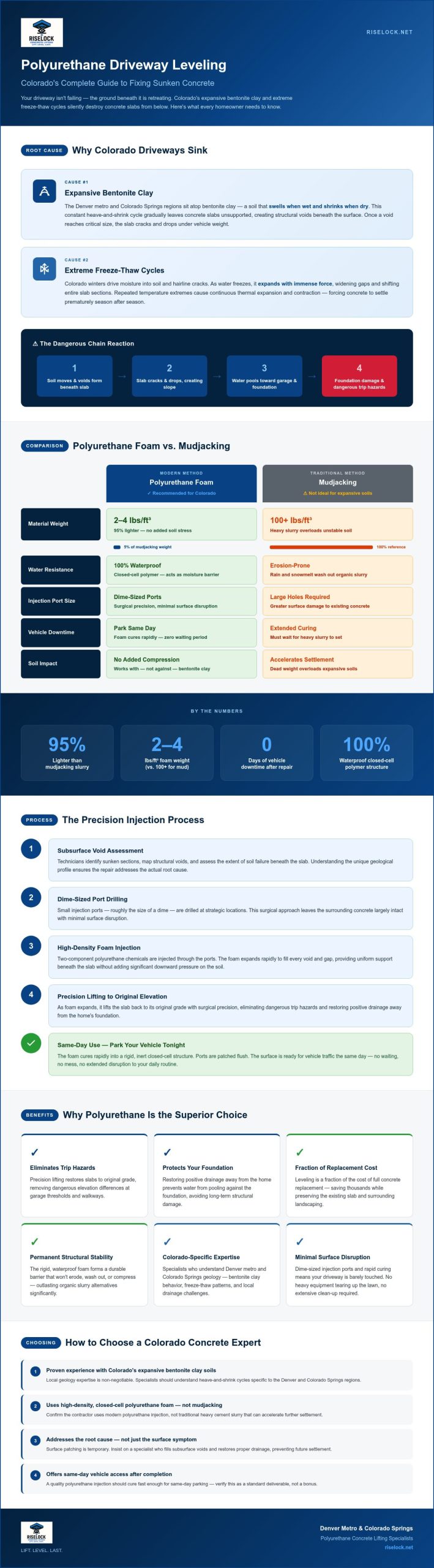
Much of the Denver metro area, including communities like Aurora and Centennial, sits atop expansive bentonite clay. This specific soil type acts like a sponge; it swells significantly when moisture is present and shrinks during our frequent dry spells. This constant movement creates a heave and shrink cycle that eventually leaves the driveway slab unsupported. Over time, these shifts result in a structural void, which is a hollow pocket beneath the concrete where the soil has either compressed or washed away. Once this void reaches a critical size, the weight of the concrete, or the weight of your vehicle, causes the slab to crack and drop.
The Freeze-Thaw Impact on Driveway Integrity
Colorado’s climate is defined by its intensity. During the winter, moisture that has seeped into the soil or into existing hairline cracks freezes and expands. This expansion exerts immense pressure on the concrete, often widening gaps and shifting entire sections of the driveway. The extreme temperature swings characteristic of the Rockies drive a continuous cycle of thermal expansion and contraction that forces concrete to settle prematurely. Traditional repair methods often involve adding heavy materials to an already unstable base, but modern polyurethane foam injection offers a lightweight alternative that doesn’t exacerbate soil compression.
Surface level patching is a temporary solution that ignores the underlying problem. When a slab sinks, it often creates a negative slope that directs water toward your garage threshold or foundation. If the structural void isn’t filled, water will continue to collect in the hollow space, further eroding the soil and potentially compromising your home’s foundation. Addressing these voids with high-density foam is the only way to ensure a permanent, level surface that can withstand the local climate. Because the foam is remarkably light compared to traditional cement based slurries, it stabilizes the slab without adding the dead weight that often causes further sinking in expansive soils.
Polyurethane vs. Mudjacking: Choosing the Right Colorado Solution
Choosing between traditional mudjacking and modern foam injection is often the first decision homeowners face when addressing a sunken driveway. While both methods aim to lift concrete, their technical approaches differ fundamentally in terms of weight, precision, and long-term stability. Mudjacking utilizes a heavy slurry of sand, cement, and soil, which can weigh over 100 pounds per cubic foot. In contrast, high-density polyurethane foam weighs approximately 2 to 4 pounds per cubic foot, making it roughly 95% lighter than its predecessor. This weight difference is critical when performing polyurethane driveway leveling Colorado residents need to ensure their repair doesn’t immediately fail due to excessive load.
Why Weight Matters for Colorado Soil Stabilization
The primary flaw of traditional mudjacking in our region is the sheer mass of the repair material. Adding thousands of pounds of heavy slurry on top of already unstable bentonite clay often accelerates further settlement, essentially overloading the soil. Our approach utilizes a no-load solution where the foam expands to fill voids without adding significant downward pressure. For a deeper look at this technology, you can explore our Polyurethane Concrete Lifting: The Precision Guide. By choosing a material that works with the soil rather than against it, we achieve a more permanent lift that respects the delicate balance of the local terrain.
Longevity and Erosion Resistance
Environmental factors frequently compromise mudjacking repairs because the organic slurry is susceptible to wash-outs. Heavy rain or melting snow can erode the mud-based mixture, leaving the slab unsupported once again. Polyurethane foam is a closed-cell polymer that is completely waterproof. Once the chemical reaction is complete, it forms a rigid, inert structure that acts as a moisture barrier beneath the concrete. This resistance to water is vital because expansive soils are considered Colorado’s most significant geologic hazard, often triggered by moisture fluctuations. The foam provides a permanent structural foundation that won’t degrade, rot, or wash away over time.
The aesthetic and logistical benefits are equally compelling. Mudjacking requires drilling large, 1 to 2-inch holes that are difficult to hide after the repair. Foam injection uses ports roughly the size of a penny, resulting in a nearly invisible finish. The cure time for high-density foam is also remarkably fast. While mudjacking slurry can take 24 to 72 hours to reach full strength, polyurethane typically cures to 90% capacity within 15 to 30 minutes. This efficiency allows you to resume normal use of your driveway almost immediately after the work is finished, ensuring your vehicles aren’t displaced for days at a time.
The Critical Benefits of Professional Driveway Leveling
Professional restoration of a sunken driveway isn’t merely a matter of aesthetics. It’s a strategic intervention that protects the structural integrity of your entire property. When you invest in the polyurethane driveway leveling Colorado homeowners trust, you’re addressing functional failures that can lead to expensive secondary damage if left unmanaged. A level driveway ensures that your property remains safe, accessible, and structurally sound for the long term.
Safety and Liability Mitigation
The most immediate benefit of leveling is the elimination of trip hazards. A vertical separation of just one or two inches at the garage threshold or along a sidewalk seam creates a significant liability risk. Guests, neighbors, and delivery drivers can easily trip on these uneven “lips,” potentially leading to injury claims. Beyond foot traffic, these abrupt transitions punish your vehicle. Repeatedly driving over a sunken slab edge causes unnecessary wear on tires and suspension components. By restoring a flush transition, you protect both the people visiting your home and the vehicles you drive every day.
Foundation and Post-Tension Protection
A sunken slab often creates a negative slope that directs rainwater and snowmelt toward your home’s foundation. In a region where expansive clay is considered Colorado’s most significant geologic hazard, moisture management is the first line of defense against foundation failure. When water is allowed to pool against the house, it saturates the soil, causing it to swell and exert hydrostatic pressure against foundation walls. This can lead to basement leaks or, worse, structural shifting.
Many modern residential structures in the Denver metro area utilize specialized reinforcement systems. If a driveway settles and pulls away from the garage, it can expose the edge of the foundation slab, leaving it vulnerable to the elements. For homeowners who want to understand the underlying mechanics of their home’s base, reviewing the technical details of Post Tension Installation provides valuable context on how these systems interact. Precision foam injection fills the voids that trap water, effectively sealing the gap between your driveway and your home’s structural footprint.
Finally, addressing concrete settlement preserves your property value. A cracked, uneven driveway is a red flag for potential buyers, often signaling deeper soil or foundation issues. High-density polyurethane provides the compressive strength necessary to support heavy SUVs and trucks without further compressing the subgrade. By choosing a surgical, permanent repair over temporary patching, you ensure your home maintains its curb appeal and marketability for decades to come.
The RiseLock Precision Injection Process: What to Expect
Restoring a sunken driveway requires a methodical approach that prioritizes structural stability over quick fixes. Our process for polyurethane driveway leveling Colorado homeowners rely on begins with a comprehensive site mapping. We don’t simply guess where the voids are; we analyze the settlement pattern to determine the exact injection points needed to achieve a uniform lift. This strategic assessment ensures that we address the root cause of the displacement rather than just the visible symptoms.
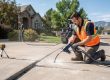
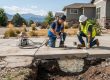
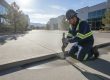
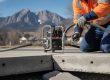
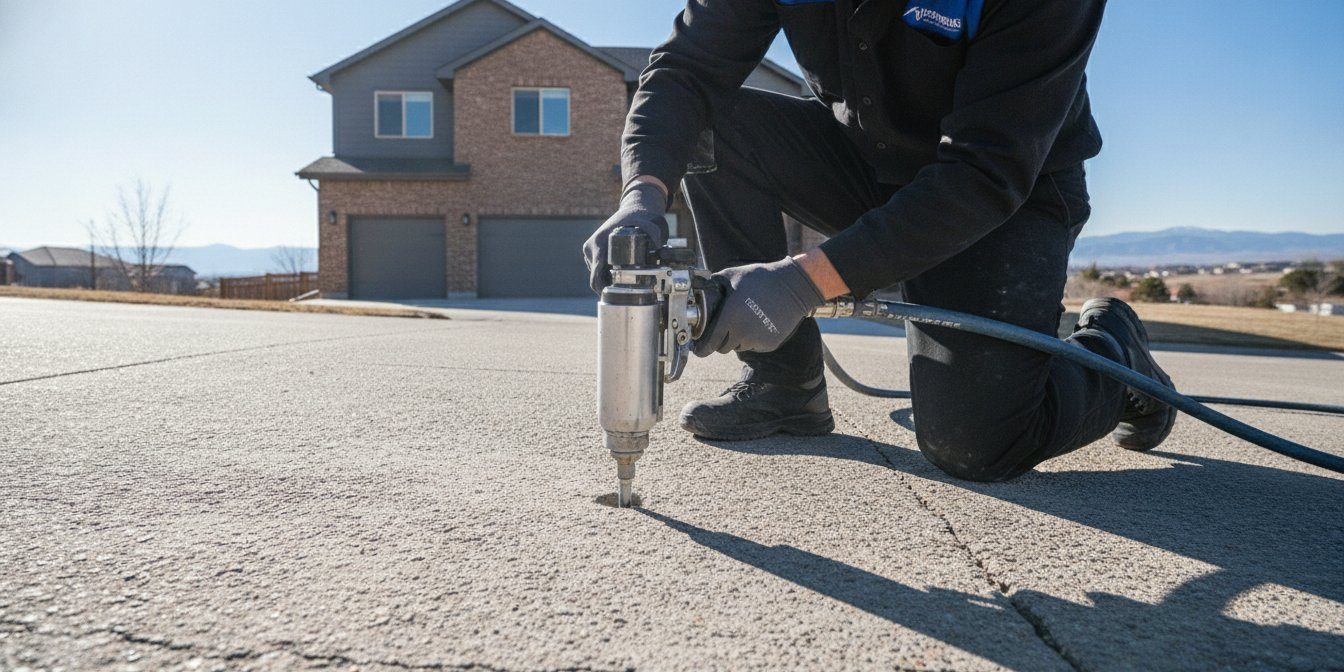
Once the mapping is complete, we move to the precision drilling phase. We use specialized equipment to create 5/8-inch injection ports through the concrete. These small, non-invasive holes are roughly the size of a penny, representing a significant aesthetic improvement over the large, disruptive holes required by outdated methods. These ports serve as the access points for our high-density polymer, allowing us to deliver the material exactly where it’s needed most.
The injection phase is where technical mastery becomes evident. As the foam enters the subsurface, it undergoes a controlled chemical reaction. It expands rapidly, filling every crevice and compressing the loose soil beneath the slab. We monitor the lift in real-time, using precise measurements to ensure the driveway returns to its original elevation without over-lifting or causing new stress fractures in the concrete. This surgical precision is what allows us to align the driveway perfectly with your garage threshold and sidewalks.
Precision Drilling and Injection
The 5/8-inch holes we drill are designed to be nearly invisible after the repair is finalized. Because the ports are so small, they don’t compromise the structural integrity of the existing concrete slab. During the injection, the foam’s expansion force provides the necessary lift to move thousands of pounds of concrete back into place. We maintain a sense of quiet authority throughout this phase, ensuring the material is distributed evenly to create a solid, permanent foundation that won’t shift during future weather cycles.
Immediate Use and Cleanup
A significant advantage of this modern intervention is the minimal downtime for your household. The cure time of polyurethane foam is under 30 minutes, meaning the material reaches the majority of its full compressive strength almost instantly. You won’t need to park on the street for days or wait for a heavy slurry to dry. Once we seal the injection ports with a color-matched concrete grout and clean the work area, your driveway is ready for immediate vehicle traffic. We take professional pride in leaving each site in better condition than we found it, ensuring the only evidence of our visit is a perfectly level surface. Schedule your precision driveway assessment to see the RiseLock difference firsthand.
Choosing a Colorado Concrete Leveling Expert
Selecting a contractor for structural restoration is a decision that impacts your property’s long-term stability. While many providers offer basic lifting services, the high-quality polyurethane driveway leveling Colorado homeowners require demands a partner with deep geological expertise. In cities like Arvada, Lakewood, and Littleton, soil conditions can vary significantly from one neighborhood to the next. A national chain often lacks the nuanced understanding of Front Range geology necessary to provide a permanent solution. Choosing a local expert ensures that the repair strategy is tailored to the specific expansive clay profiles found in your backyard.
Evaluating a professional should go beyond comparing the lowest bids. It’s essential to choose a contractor who views driveway restoration through the lens of structural engineering. Because we specialize in both concrete lifting and post-tension installation, we understand how a sinking slab affects the tensioned cables and foundation of your home. This holistic perspective allows us to identify potential risks that a standard “quick fix” provider might overlook. When you review our project galleries or local testimonials, you’ll see a consistent commitment to precision and technical mastery that sets us apart from high-volume, generic services.
The RiseLock Advantage in the Front Range
Our experience extends deep into the unique soil profiles of Castle Rock and Parker, where the “heave and shrink” cycle of the earth is particularly aggressive. We don’t just fill a void; we stabilize the subgrade using high-density polymers specifically formulated for Colorado’s climate. This dual expertise in lifting and structural reinforcement provides a comprehensive solution that addresses both the visible drop and the subsurface instability. We encourage homeowners to prioritize long-term reliability over the lowest possible bid. A repair that fails after two seasons isn’t a bargain; it’s a delay of the inevitable.
Getting Started with Your Driveway Restoration
Restoring your property’s safety and value shouldn’t be a source of stress. We’ve designed our process to be as efficient and transparent as possible. Obtaining an estimate for your specific project is a straightforward step toward reclaiming your garage threshold and eliminating trip hazards. Structural peace of mind is closer than you think, and it begins with a precise assessment of your concrete’s current state. Request your precision concrete leveling estimate from RiseLock today.
Secure Your Property’s Foundation with Precision Restoration
Addressing a sunken driveway is an essential step in protecting your home’s structural integrity against the volatile movement of Colorado’s expansive soils. By choosing modern foam technology over outdated, heavy alternatives, you ensure a repair that respects the delicate subgrade while providing permanent stability. The high-density polyurethane driveway leveling Colorado homeowners rely on provides a surgical solution that addresses both safety risks and drainage issues without the mess of traditional demolition.
Our process utilizes non-invasive, penny-sized injection ports to lift concrete with exactness, leaving your driveway ready for vehicle traffic in just minutes. We view every project as a partnership in maintaining your property’s long-term value and security. You don’t have to live with hazardous thresholds or pooling water when a professional, technical intervention is readily available. Restore your driveway’s integrity with RiseLock’s precision concrete leveling. We’re ready to help you reclaim a level, safe, and durable surface for your home.
Frequently Asked Questions
How much does polyurethane driveway leveling cost in Colorado?
The total investment for polyurethane driveway leveling Colorado homeowners choose depends on the size of the structural void and the amount of material required to restore the slab. While we determine the specific cost during a site assessment, this method is generally a more economical alternative to full concrete replacement. It saves you from the expenses of demolition and debris removal. Most residents find the value lies in the speed and long-term durability of the polymer.
Can you level a driveway in the winter in Denver?
We can perform concrete leveling in the winter months throughout Denver and the Front Range as long as the ground isn’t frozen deep beneath the slab. The chemical reaction that creates the high-density foam generates its own heat, allowing it to expand and cure correctly in colder temperatures. This flexibility is vital for addressing trip hazards caused by winter freeze-thaw cycles before they worsen during the heavy spring melt.
Is polyurethane foam strong enough to support my heavy truck or SUV?
High-density polyurethane is specifically engineered to support the heavy loads of modern SUVs and large trucks. Once cured, the material possesses a high compressive strength that rivals the soil’s natural load-bearing capacity. Unlike traditional mudjacking slurry, which adds significant weight to the subgrade, this lightweight foam stabilizes the slab from beneath without causing the underlying soil to compress further under the weight of your heavy vehicles.
How long will the polyurethane driveway repair last?
A professional polyurethane driveway repair is designed to last for the remaining lifespan of the concrete slab itself. The foam is an inert, closed-cell material that doesn’t biodegrade or break down when exposed to moisture or soil chemicals. Because it’s waterproof, it won’t wash away during heavy Colorado rainstorms or snowmelt cycles, providing a permanent foundation that maintains its structural integrity for decades without the risk of erosion.
Will the foam injection holes be visible on my driveway?
The injection ports are intentionally small, measuring approximately 5/8 of an inch, which is roughly the size of a penny. Once the lifting process is complete, we remove the ports and seal the holes with a color-matched concrete grout. This precision approach ensures that the repair is nearly invisible to the naked eye. It offers a significant aesthetic advantage over the large, unsightly holes left by outdated mudjacking equipment or traditional patching.
Is polyurethane concrete lifting better than replacing the whole driveway?
Choosing polyurethane concrete lifting is often superior to replacement if the existing slabs are not severely crumbled. Leveling is a surgical intervention that preserves your existing concrete while addressing the underlying soil voids. It’s significantly faster than replacement, allowing for immediate vehicle use, and it avoids the heavy equipment that can damage your landscaping. Replacement only solves the surface issue without necessarily stabilizing the unstable soil beneath the new slab.
What happens if I don’t fix my sunken driveway slab?
Ignoring a sunken driveway slab often leads to progressive structural damage and increased liability. Water naturally follows the negative slope created by the settlement, directing moisture toward your garage threshold and foundation. In Colorado’s expansive soils, this trapped water can cause foundation shifting or basement leaks. Additionally, the vertical “lip” at the edge of the slab remains a constant trip hazard for guests and delivery drivers who visit your property.
Does polyurethane foam harm the environment or my Colorado landscaping?
The high-density polyurethane foam used in our process is environmentally inert and non-toxic once it has cured. It doesn’t leach chemicals into the surrounding soil or groundwater, making it safe for use near your lawn, garden, or local waterways. Because the material is permanent and doesn’t break down, it won’t contribute to soil contamination, providing a clean solution for stabilizing your driveway without harming the local ecosystem or your home’s landscaping.