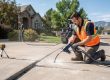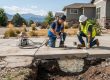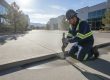
In the Front Range, the ground beneath your feet is rarely as stable as it looks. If you’ve noticed a sidewalk that no longer meets the porch or water pooling dangerously near your foundation, you’re witnessing the relentless effects of Colorado’s notorious bentonite clay. Addressing a sunken concrete slab repair in Colorado doesn’t have to mean enduring the noise, dust, and high costs of a full demolition and replacement. While traditional methods often struggle with our state’s unique geological shifts, modern innovation provides a much cleaner path forward.
It’s understandable to feel a sense of urgency when trip hazards appear or cracks begin to mar your property’s curb appeal. You want a solution that offers permanent stability, not a temporary patch that adds unnecessary weight to already stressed subsoil. This guide explores the specific science of soil stabilization and how modern polyurethane lifting offers a precise, non-invasive fix for your home or business. We’ll detail the technical advantages of high-density foam, explain why it’s the superior choice for expansive soils, and show you how to restore your property’s value with minimal disruption to your daily routine.
Key Takeaways
- Identify the specific geological triggers, such as expansive bentonite clay, that lead to foundation instability across the Front Range.
- Understand the methodology behind sunken concrete slab repair Colorado, focusing on why lightweight polyurethane is the sustainable choice for our local climate.
- Discover how precision foam lifting restores structural function in minutes, allowing for immediate use of sidewalks and driveways.
- Analyze the financial advantages of restoration over replacement, including the avoidance of landscaping damage and permitting delays.
- Learn how specialized post-tension installation preserves the underlying strength of your property’s concrete slabs.
Why Concrete Sinks in Colorado: The Shifting Soil Challenge
Concrete isn’t a static material; it’s a rigid surface resting on a dynamic foundation. In Colorado, that foundation is often composed of highly reactive soils that dictate the lifespan of your driveway or patio. Understanding the mechanics behind a sunken concrete slab repair in Colorado requires looking beneath the surface at the specific geological conditions of the Front Range. When the ground moves, the concrete has no choice but to follow.
Expansive Soils and the Bentonite Factor
The Denver Basin is heavily populated with bentonite clay, a specific type of expansive soil known for its extreme volume changes. This clay acts like a subterranean sponge. During wet spring months, it absorbs moisture and swells with immense force, pushing concrete upward. Conversely, the dry heat of a Colorado summer causes the clay to shrink and pull away, leaving a hollow void. This repetitive cycle of heave and settlement eventually exceeds the concrete’s ability to flex, resulting in the uneven slabs and structural cracks homeowners frequently see.
The Freeze-Thaw Cycle in the Front Range
Colorado’s climate is famous for its 300 days of sunshine, but those warm afternoons often transition into freezing nights. This rapid temperature fluctuation is brutal for concrete longevity. When moisture becomes trapped in the voids beneath a slab, it freezes and expands, forming ice lenses that exert upward pressure. As the sun returns and the ice melts, the support structure collapses, leaving the concrete unsupported. Frost heave is the process where freezing water in the soil pushes the ground upward, often displacing sidewalks and driveways in the process.
Beyond soil type, hydrostatic pressure plays a critical role in slab movement. When water isn’t properly diverted away from a foundation, it builds up beneath the concrete. This pressure can force slabs to shift or tilt, especially in newer developments like Thornton or Parker where soil hasn’t fully reached its natural compaction. While some settling is expected in new construction, poor drainage exacerbates the issue by saturating the subsoil and accelerating the erosion of the base material. When evaluating the best path forward, comparing Polyurethane Foam vs. Mudjacking reveals that modern solutions focus on stabilizing these soil conditions rather than just adding more weight to a failing base. Effectively managing a sunken concrete slab repair in Colorado starts with recognizing that the soil is the root of the problem.
Polyurethane Foam vs. Mudjacking: Choosing the Right Fix
When selecting a method for sunken concrete slab repair in Colorado, the decision often comes down to a choice between traditional techniques and modern engineering. While both methods aim to level a surface, they interact with our local soil in fundamentally different ways. Selecting the wrong approach can lead to a cycle of repeated repairs, especially when the underlying cause of the sinking isn’t properly addressed.
Why Traditional Mudjacking Fails in Colorado
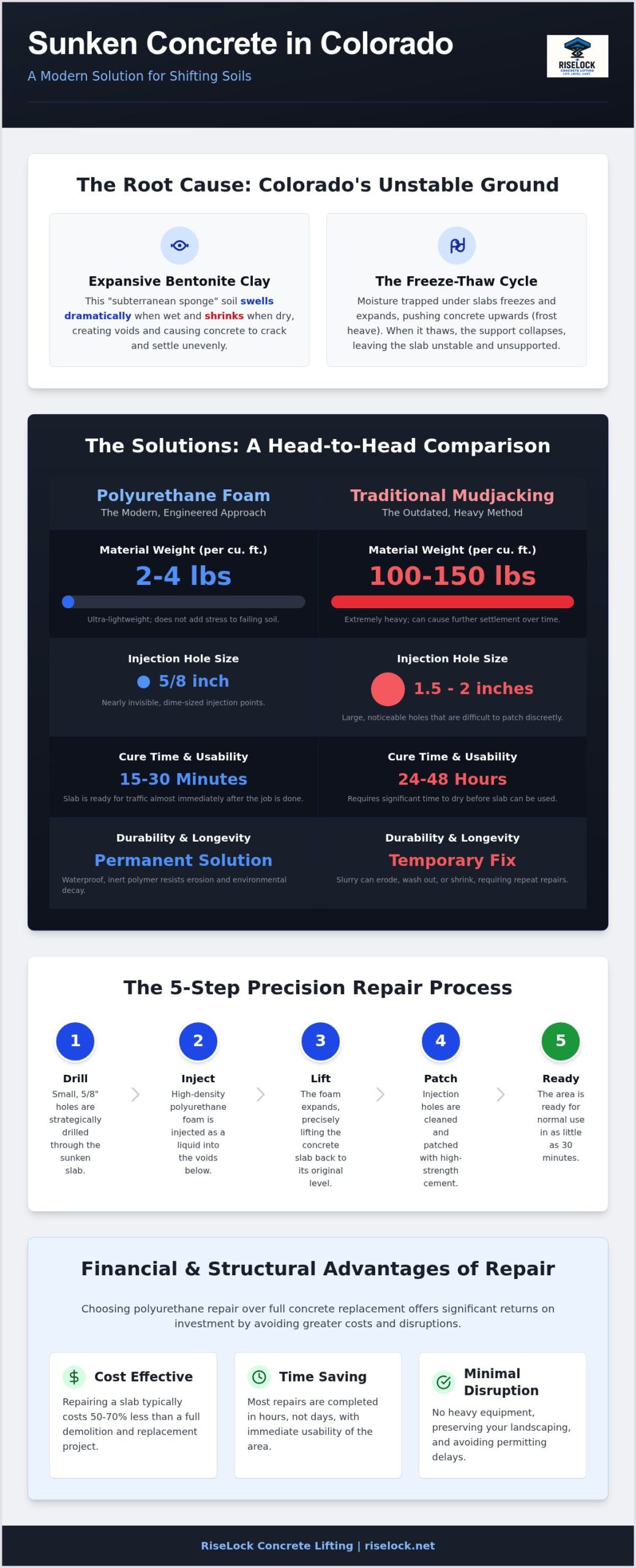
Mudjacking has been the industry standard for decades, but its limitations are becoming increasingly clear in the Front Range. This process involves pumping a heavy slurry of water, soil, and cement beneath the slab. This mixture is dense, weighing between 100 and 150 pounds per cubic foot. In the context of Why Concrete Sinks in Colorado: The Shifting Soil Challenge, adding this much mass to already compromised subsoil is often counterproductive. The sheer weight of the repair material can trigger secondary settlement, causing the slab to sink again under the burden of its own fix. Additionally, the organic components of the slurry are susceptible to erosion during heavy rains, potentially washing away and leaving the concrete unsupported once more.
The Engineering Advantage of High-Density Foam
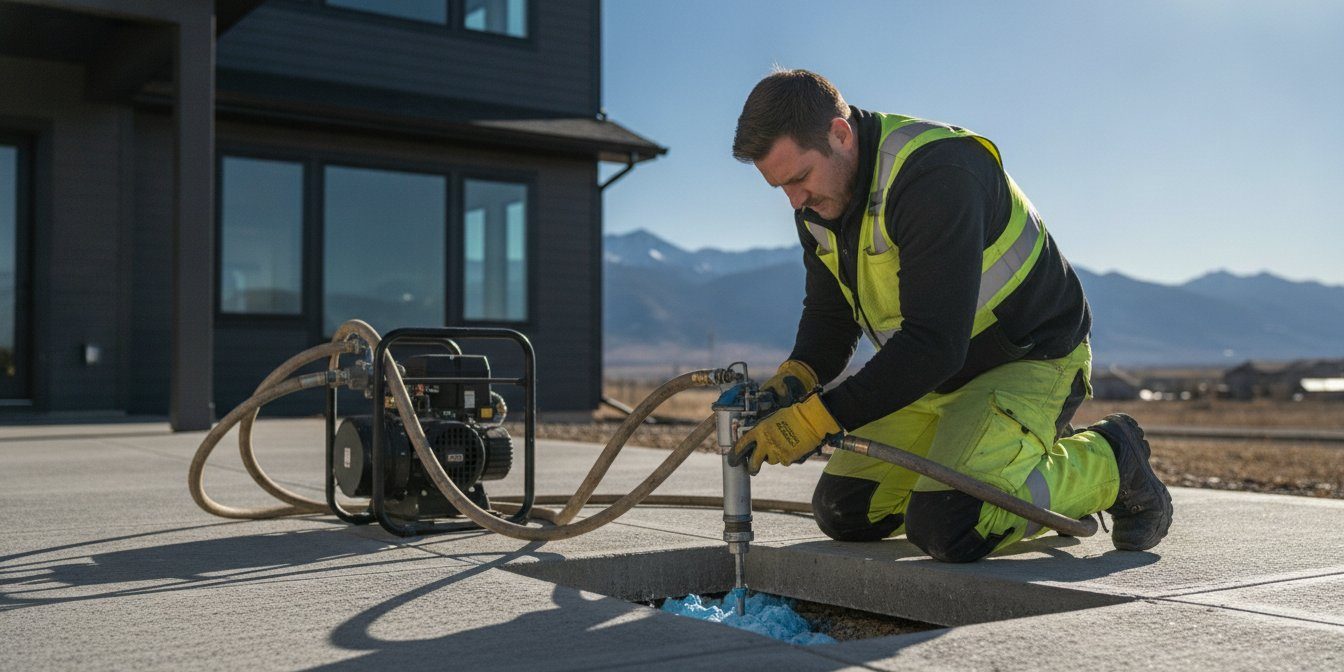
Polyurethane foam lifting offers a sophisticated alternative designed for longevity. Instead of relying on heavy fill, this method uses a high-density, closed-cell polymer that weighs only 2 to 4 pounds per cubic foot. As the liquid is injected, it undergoes a chemical reaction that causes it to expand, filling every micro-void and crevice beneath the concrete. This expansion provides a uniform lift and creates a waterproof barrier that resists rot and environmental degradation. It’s the preferred choice for heavy commercial slabs in Aurora and Lakewood because it stabilizes the soil without adding significant load. If you’re looking for a permanent solution, you can explore our specialized concrete leveling services to see how this technology applies to your specific project.
The practical differences between these two methods extend to the impact on your daily life. Precision is a hallmark of the polyurethane process, utilizing injection ports that are only the size of a penny. Mudjacking requires much larger, unsightly holes that are difficult to patch discreetly. Furthermore, the speed of modern foam is unmatched; the material reaches 90% of its full strength and is ready for traffic in roughly 15 minutes. In contrast, mudjacking slurry can take several days to cure before it’s safe to use. By choosing a lightweight, inert, and fast-curing material, you ensure a sunken concrete slab repair in Colorado that is both non-invasive and structurally sound for the long term.
The Cost of Delay: Repair vs. Replacement ROI
Delaying a structural fix rarely results in savings; it usually compounds the eventual expense. For property owners managing a sunken concrete slab repair in Colorado, the financial choice between restoration and replacement is clear when looking at the total lifecycle cost. While a full replacement might seem like a fresh start, it often ignores the underlying instability of the ground itself. Pouring new concrete over the same reactive clay without stabilization simply resets the clock on future sinking.
Industry data indicates that precision lifting typically costs between 50% and 70% less than the price of a total tear-out and pour. Beyond the raw materials, replacement carries hidden logistical burdens. Heavy demolition equipment can destroy established landscaping, and the process frequently requires municipal permits and significant operational downtime. By contrast, stabilizing the current slab addresses the root cause, which is often the behavior of Colorado’s expansive soil documented by the CGS. A stabilized slab often lasts longer than a new one because the repair process actively improves the load-bearing capacity of the subsoil.
Calculating the Real Value of Concrete Leveling
Restoration preserves the aesthetic consistency of your property. New concrete rarely matches the color or texture of existing sections, creating a patchwork appearance that can diminish curb appeal. A level, uniform surface is a critical factor in home appraisals and buyer confidence, as it signals a well-maintained structure. For a deeper look at these technical advantages, consult our Concrete Leveling: The Definitive Guide. Choosing to repair rather than replace maintains the structural integrity of the original pour while ensuring the surface remains functional.
Safety and Liability for Property Owners
Municipalities like Boulder and Denver often enforce strict standards for public paths, where any vertical displacement greater than a quarter inch is classified as a hazardous trip point. Ignoring these shifts increases your exposure to personal injury claims and legal liability. Beyond immediate safety, a sunken slab often directs runoff toward your home’s foundation. Properly graded concrete ensures water flows away from the structure, protecting your basement from seasonal flooding. Addressing a sunken concrete slab repair in Colorado today prevents minor settlement from evolving into a catastrophic foundation failure tomorrow.
The RiseLock 5-Step Precision Repair Process
Execution is the most critical component of any structural restoration. For a sunken concrete slab repair in Colorado, we rely on a systematic approach that eliminates guesswork and focuses on long-term stability. Our process is designed to address the specific soil challenges of the Front Range while ensuring the finished product is both functional and aesthetically pleasing. We view every project through the lens of technical mastery, moving carefully from assessment to completion.
- Step 1: Comprehensive Site Assessment. We begin by identifying the root cause of the sinking, whether it stems from poor drainage, soil erosion, or the expansive clay cycles discussed earlier.
- Step 2: Strategic Drilling. Our technicians drill penny-sized injection ports in a pattern designed to maximize the reach of the polyurethane foam without compromising the slab’s integrity.
- Step 3: High-Precision Injection. We inject specialized, high-density foam that expands to fill voids and compress the underlying soil, providing a steady, controlled lift.
- Step 4: Real-time Monitoring. Throughout the injection, we monitor the slab’s movement to ensure it returns exactly to its original grade.
- Step 5: Port Patching and Cleanup. Once the lift is complete, we patch the small injection holes with a color-matched concrete mixture, leaving the surface clean and ready for use.
Precision Injection and Monitoring
Precision is not a luxury in concrete restoration; it is a requirement. Our technicians utilize advanced laser levels to achieve 1/16th inch accuracy during the lifting process. This level of detail allows us to employ a lift-and-stabilize method, which focuses on providing uniform support across the entire slab to prevent over-correction or secondary cracking. For a more technical look at our methodology, you can read our Polyurethane Concrete Lifting: The Precision Guide. This rigorous monitoring ensures that the structural integrity of the concrete is preserved while the surface is restored to a safe, level state.
Cleanliness and Minimal Disruption
Modern slab restoration should not feel like a construction zone. Unlike traditional methods that require heavy trucks and large crews, our process has a remarkably small equipment footprint. This low-impact approach protects established landscaping and prevents damage to surrounding structures. In busy neighborhoods like Centennial, the immediate use benefit is particularly valuable. Because the high-density foam reaches its full load-bearing capacity in roughly 15 minutes, driveways and sidewalks are ready for traffic the moment we finish. If you are ready to restore your property’s safety and value, you can request a technical consultation with our team today.
Beyond the Lift: Post-Tension Integrity and Structural Security
A comprehensive sunken concrete slab repair in Colorado involves more than just restoring a level surface. For many homeowners in Denver and Colorado Springs, the challenge is inextricably linked to the internal reinforcement of the concrete itself. Because our local soils are so volatile, engineers frequently specify post-tension slabs for residential and commercial foundations. This specialized construction method provides the necessary strength to resist the ground movement discussed in previous sections, but it also adds a layer of complexity to any repair effort.
The primary danger in a shifting or sunken foundation is the potential for compromised post-tension cables. These high-strength steel tendons are under thousands of pounds of pressure. If a slab settles unevenly, it can create localized stress points that may cause a cable to snap or lose its effective tension. Addressing these issues requires a contractor who understands the physics of reinforcement as deeply as the mechanics of soil stabilization. Our team integrates slab lifting with specialized post-tension installation expertise, ensuring that the repair process preserves the structural framework of your home.
Understanding Post-Tension Slabs in Colorado
Post-tension slabs are specifically engineered to handle the “sponge effect” of our state’s bentonite clay. Unlike traditional rebar-reinforced concrete, which relies on the passive strength of steel, a post-tension system uses active compression. High-strength steel cables are stretched and anchored within the slab after the concrete has cured, pulling the material together and making it significantly more resistant to cracking and shifting. This tension allows the slab to act as a rigid unit, bridging small voids in the soil that might otherwise cause a standard slab to fail. To understand the technical specifics of these systems, you can refer to our Post Tension Installation: The Definitive Guide. Maintaining this tension is critical for the long-term structural security of any property built on expansive soil.
The RiseLock Professional Reliability
Technical mastery is the foundation of our work. When performing a sunken concrete slab repair in Colorado on a post-tensioned surface, precision drilling is mandatory. Our technicians are trained to locate and avoid structural cables, preventing accidental damage that could lead to catastrophic failure. We approach every project with the quiet authority of experts who view your property’s structural health as a personal priority. This ethical commitment to high standards is what defines our partnership with property owners. We act as your professional guide, moving you away from the stress of structural instability toward a secure and lasting solution. If you’ve noticed shifting or sinking in your foundation, request your structural assessment from RiseLock today to ensure your home remains safe and stable.
Restoring Stability to Your Colorado Property
Colorado’s geological landscape demands a repair strategy that respects the power of expansive soils and the Front Range’s unique climate. We’ve explored how high-density polyurethane provides a lightweight, waterproof alternative to the heavy, temporary fixes of the past. By choosing a precision-engineered approach, you protect the structural integrity of your post-tension systems and ensure your home remains a safe, level environment for years to come. Addressing a sunken concrete slab repair in Colorado today is a proactive investment in your property’s long-term value and your own peace of mind.
The RiseLock team serves the entire Front Range, from Fort Collins down to Colorado Springs, with a focus on technical excellence and ethical service. We specialize in the high-precision application of polyurethane foam and the preservation of complex post-tension cable systems. You can secure your foundation with a professional RiseLock assessment today. We are ready to act as your dependable partner, leading you away from the stress of structural damage toward a permanent, professionally managed solution. We look forward to helping you reclaim the safety and beauty of your property.
Frequently Asked Questions
How long does polyurethane concrete lifting last in Colorado’s climate?
Polyurethane concrete lifting is designed to be a permanent solution for Front Range properties. Unlike traditional organic slurries, high-density foam is waterproof and inert. It won’t wash away during heavy spring rains or rot over time. The material maintains its structural integrity despite Colorado’s intense freeze-thaw cycles; it provides a stable foundation that resists the shifting nature of our local bentonite clay soils indefinitely.
Is foam concrete lifting safe for the environment and my garden?
High-density polyurethane foam is environmentally safe and inert once it has fully cured. It doesn’t leach chemicals into the surrounding soil or groundwater, making it safe for use near gardens and landscaping. This is a critical consideration for homeowners in residential areas like Centennial or Littleton who want to restore their property without compromising the health of their outdoor living spaces or the local ecosystem.
Can you fix a sunken concrete slab in the middle of winter?
We can perform concrete lifting in the winter as long as the ground isn’t frozen solid. The exothermic chemical reaction that occurs during the foam’s expansion generates its own heat; this allows the material to cure properly even in cold Colorado temperatures. This capability allows us to address dangerous trip hazards and drainage issues year-round, ensuring your property remains safe regardless of the season.
How soon can I drive my car on the driveway after the repair?
You can typically drive a standard vehicle on the repaired surface within 15 minutes of the final injection. High-density polyurethane reaches approximately 90% of its full load-bearing capacity almost immediately after curing. This rapid turnaround is a major benefit for homeowners in busy neighborhoods like Aurora or Parker, as it minimizes the disruption to your daily routine and eliminates the long wait times associated with traditional methods.
Does concrete leveling fix the cracks in my slab?
Leveling restores the slab to its original grade, which frequently causes existing cracks to close as the concrete sections realign. However, the process doesn’t technically “fix” the physical break in the concrete material itself. After completing a sunken concrete slab repair in Colorado, we recommend sealing any remaining cracks to prevent water from reaching the subsoil, which helps maintain the long-term stability of the structural repair.
What happens if my post-tension cable is broken or exposed?
A broken or exposed post-tension cable represents a significant structural hazard that requires immediate expert attention. These high-strength steel tendons are under immense pressure to maintain the slab’s integrity. If a cable is compromised in your Denver or Colorado Springs home, the foundation’s load-bearing capacity is diminished. We integrate post-tension installation expertise into our services to ensure these critical structural components are properly managed and secured.
Is polyurethane lifting better than mudjacking for Colorado soil?
Polyurethane is the superior choice for Colorado’s expansive soils because it’s significantly lighter than traditional mudjacking materials. Mudjacking adds over 100 pounds per cubic foot to the subsoil, which often triggers further sinking. In contrast, high-density foam weighs only 2 to 4 pounds per cubic foot. It also creates a waterproof barrier that won’t erode, offering a more durable solution for our local climate and soil conditions.
How much does sunken concrete repair typically cost in Denver?
The cost of a sunken concrete slab repair in Colorado depends on the specific dimensions of the slab and the depth of the underlying voids. While we don’t offer fixed estimates without a site assessment, lifting is consistently more affordable than a full tear-out. Most property owners find that restoration costs roughly 50% to 70% less than replacement, providing a high-value solution that restores safety without the expense of new construction.