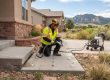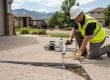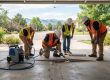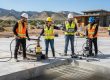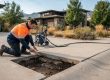

The most dangerous concrete on your property isn’t the slab that’s cracked beyond repair; it’s the one that’s shifted just enough to catch a foot. If you’ve been living with uneven sidewalks, a tilted driveway, or a patio that slopes toward your foundation, you already know the quiet anxiety that comes with it. Slab lifting foam injection in Denver offers a precise, modern answer to these problems, and it works in a fundamentally different way than the outdated methods many homeowners still assume are their only option.
You’re right to be skeptical. Denver’s expansive clay soils shift with every freeze-thaw cycle, and the reasonable concern is whether any repair material is actually strong enough to hold a concrete slab against that kind of relentless ground movement. It’s a fair question, and it deserves a direct answer.
This guide cuts through the confusion between traditional mudjacking and high-density polyurethane foam injection, explains why Denver’s specific soil conditions demand a lightweight, hydro-insensitive solution, and shows you what a lasting concrete restoration actually looks like from start to finish.
Key Takeaways
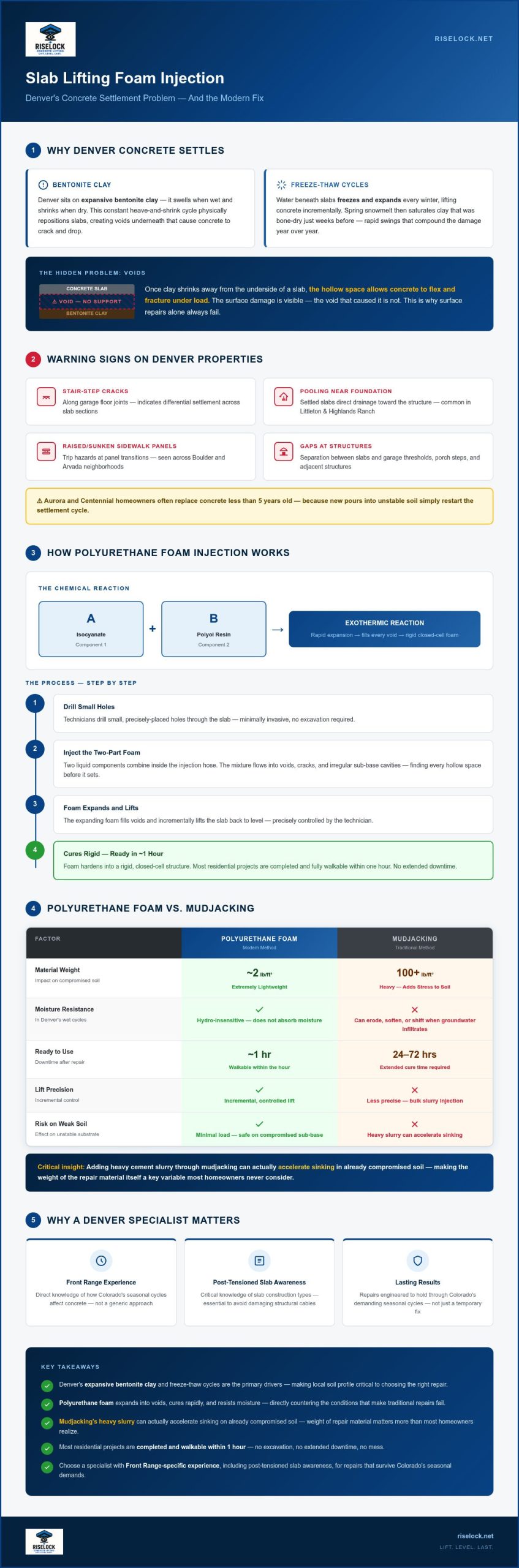
- Denver’s expansive bentonite clay soils and repeated freeze-thaw cycles are the primary drivers of concrete settlement, making the local soil profile a critical factor in choosing the right repair method.
- Slab lifting foam injection in Denver uses a high-density polyurethane that expands into voids, cures rapidly, and resists moisture — directly addressing the conditions that cause traditional repairs to fail over time.
- Adding heavy cement slurry through mudjacking can actually accelerate sinking in already compromised soil, making the weight of the repair material itself a key variable most homeowners don’t consider.
- The foam injection process is precise enough to lift slabs incrementally, with most residential projects completed and fully walkable within an hour — no excavation, no extended downtime.
- Selecting a specialist with direct experience in Denver’s Front Range conditions, including post-tensioned slab awareness, is essential to achieving a restoration that holds through Colorado’s demanding seasonal cycles.
Understanding Concrete Settlement in the Denver Front Range
Concrete doesn’t sink randomly. In the Denver metro area, settlement follows a predictable pattern driven by the geology sitting directly beneath your property, and understanding that geology is the first step toward choosing a repair that actually holds. The soil conditions across the Front Range create a uniquely aggressive environment for concrete slabs, one that generic repair approaches consistently underestimate.
Expansive Soils: The Invisible Enemy of Denver Concrete
Much of the Denver metro sits on bentonite clay, a highly expansive soil that absorbs water and swells dramatically, then contracts and shrinks as it dries. This cycle, known as heave and shrink, doesn’t just move soil; it physically repositions the concrete resting on top of it. During wet periods, the clay pushes slabs upward. During dry spells, it pulls away, leaving voids beneath the concrete surface. The slab, now unsupported, begins to crack and drop.
This is why homeowners in Aurora and Centennial often find themselves replacing concrete that’s less than five years old. Traditional replacement pours new concrete into the same unstable substrate. Without addressing the soil behavior underneath, the cycle simply restarts. The new slab settles just as the old one did, often faster, because the sub-base has already been disturbed.
Voids are the critical variable most homeowners don’t see. Once bentonite clay shrinks away from the underside of a slab, that hollow space allows the concrete to flex and fracture under load. The surface damage is visible; the void that caused it is not.
Common Signs of Slab Failure in Local Properties
Denver’s climate compounds the problem. The region’s semi-arid conditions mean soil moisture levels swing sharply between seasons, and those swings happen fast. A heavy spring snowmelt can saturate clay that was bone-dry two weeks earlier. That sudden moisture change triggers rapid expansion, and the concrete above it bears the full stress.
Freeze-thaw cycles add a second layer of pressure. Water that infiltrates beneath a slab expands when it freezes, lifting concrete incrementally with each winter cycle. Over several years, this produces the telltale signs that Front Range homeowners recognize:
- Stair-step cracks along garage floor joints, indicating differential settlement across slab sections
- Pooling water near foundations in areas like Littleton and Highlands Ranch, where settled slabs direct drainage toward the structure rather than away from it
- Raised or sunken sidewalk panels in Boulder and Arvada that create trip hazards at panel transitions
- Gaps between slabs and adjacent structures, including garage thresholds and porch steps
Each of these symptoms points back to the same root cause: soil instability beneath the concrete. That’s precisely why slab lifting foam injection in Denver addresses the problem from below the surface rather than at it. Filling voids and stabilizing the sub-base is the only way to interrupt the settlement cycle that Colorado’s soil profile keeps trying to restart.
The Science of High-Density Polyurethane Foam Injection
Polyurethane foam isn’t a filler. It’s a structural material created through a precise chemical reaction, and understanding that reaction explains why it performs so differently from anything that came before it.
The process begins with two liquid components, typically an isocyanate and a polyol resin, that remain inert until they meet inside the injection hose. The moment they combine, an exothermic reaction begins. The mixture expands rapidly, flowing into voids, cracks, and irregular sub-base cavities before hardening into a rigid, closed-cell foam. That expansion isn’t incidental; it’s the mechanism that makes the lift precise. The foam finds every hollow space before it sets, conforming to the underside of the slab with a fidelity that no poured material can replicate.
Closed-cell polyurethane is also hydro-insensitive by nature. Unlike cement-based slurries that can erode, soften, or shift when groundwater infiltrates, cured polyurethane doesn’t absorb moisture. In Denver’s climate, where snowmelt and heavy spring rain regularly saturate the soil beneath concrete, that characteristic isn’t a minor benefit. It’s a foundational requirement for any repair that’s expected to hold through multiple seasonal cycles.
The environmental profile of cured polyurethane is equally straightforward. Once the reaction is complete and the foam has set, it’s chemically inert. It won’t leach compounds into surrounding soil or groundwater, which makes it appropriate for use near landscaping, drainage systems, and residential foundations without special handling concerns.
How Polyjacking Creates a Permanent Foundation
The lift itself is only part of what happens during foam injection. As the expanding material fills voids beneath the slab, it simultaneously applies outward pressure against the surrounding soil. This compaction force, the lateral and downward pressure exerted by expanding foam against loose or settled sub-base material, is the key to long-term leveling because it densifies the soil rather than simply bridging across it. The result isn’t just a raised slab; it’s a stabilized substrate that resists future settlement. For slab lifting foam injection in Denver, where bentonite clay continues to shift seasonally, that sub-base stabilization is what separates a temporary fix from a durable restoration.
Weight vs. Strength: The Engineering Advantage
High-density polyurethane foam typically weighs between two and four pounds per cubic foot. Concrete weighs roughly 150 pounds per cubic foot. Soil runs between 75 and 100 pounds per cubic foot. The repair material, despite being a fraction of the weight of what it supports, achieves compressive strengths sufficient for residential driveways and commercial loading applications. Less mass added to an already compromised sub-base means less downward pressure on soil that’s already struggling to bear load. That’s not a coincidence in the design of this method; it’s the engineering principle that makes it structurally sound where heavier alternatives fail.
If you’re evaluating whether this approach is the right fit for your specific slab conditions, the team at RiseLock’s concrete lifting specialists can assess the sub-base profile and recommend the appropriate foam density for your application.
Polyurethane vs. Mudjacking: Why Denver Homeowners are Switching
Mudjacking has a long track record in Colorado. It’s also a method that works against itself in Denver’s specific soil conditions, and understanding exactly why reveals something most contractors won’t volunteer: the repair material itself can become part of the problem.
The core issue is weight. Mudjacking fills voids beneath a settled slab by pumping a cement-sand slurry through large holes drilled in the concrete surface. That slurry is dense. Adding substantial mass to a sub-base already compromised by expansive bentonite clay increases the load on soil that’s already struggling to bear what’s sitting on top of it. During the next wet cycle, when that clay absorbs moisture and loses bearing capacity, the slab plus the added slurry weight accelerates the very settlement it was meant to correct. It’s a weight trap, and Front Range soils are particularly unforgiving of it.
The practical differences between the two methods are also significant:
- Installation time: Foam injection is typically complete within an hour for most residential applications. Mudjacking requires the slurry to be mixed, pumped, and allowed to set, often stretching the project to half a day or more.
- Hole size: Foam injection uses 5/8-inch holes. Mudjacking requires holes closer to two inches in diameter, leaving visible surface scars that are difficult to conceal, particularly on decorative or finished concrete.
- Cure time: A foam-injected slab is walkable immediately and ready for vehicle traffic within minutes of the injection ports being capped. Mudjacking requires a cure window of 24 hours or longer before the surface can bear load.
For homeowners managing a daily driveway or a commercial property with foot traffic, that difference in downtime isn’t minor. It’s the difference between a morning appointment and a full day of disruption.
Long-Term Durability in Colorado’s Climate
Cement slurry is porous. Over time, groundwater infiltrates the mudjacking material, and Denver’s freeze-thaw cycles expand that moisture into internal fractures. The slurry begins to erode and lose cohesion, often within a few years of installation. Closed-cell polyurethane foam doesn’t absorb water. It acts as a permanent barrier against the moisture infiltration that drives sub-base deterioration in the first place. For a deeper look at how this material performs structurally, polyurethane concrete lifting covers the mechanics in full.
Cost-Benefit Analysis for Front Range Properties
Foam injection carries a higher upfront cost than mudjacking in most cases. The lifecycle math, however, tells a different story. Mudjacking repairs on Denver’s expansive soils frequently require retreatment within a few years, creating a repair-the-repair cycle that compounds cost over time. Foam’s resistance to erosion and its sub-base stabilization properties extend the repair interval significantly, lowering the true annual cost of keeping concrete level. There’s also an appraisal dimension: professionally leveled concrete that’s visibly well-maintained contributes to curb appeal in a market where buyers and appraisers notice deferred maintenance. Slab lifting foam injection in Denver isn’t just a structural decision; it’s a property value decision made with the long term in mind.
The Precision Slab Lifting Process: What to Expect
Knowing what happens on the day of a foam injection job removes the uncertainty that makes homeowners hesitant to schedule it. The process is methodical, and each phase serves a specific structural purpose. Here’s what a professional slab lifting foam injection Denver project looks like from arrival to completion.
Site assessment comes first, and it’s more than a visual inspection. A technician probes the slab edges, tests for flex under load, and identifies where voids have formed beneath the surface. The goal isn’t just to confirm that the slab has settled; it’s to map the settlement pattern and determine its cause. A slab that’s sinking uniformly along one edge tells a different story than one with a central low point, and the injection strategy changes accordingly.
Port placement follows the assessment findings directly. Holes are drilled at precise intervals, typically in a pattern that targets the void perimeter and the areas of greatest deflection. At 5/8 inches in diameter, these ports are small enough that the finished repair is nearly invisible once patched. Port location isn’t arbitrary; it’s calculated to ensure the expanding foam reaches every hollow space without over-pressurizing any single zone.
The lift itself is controlled and incremental. Foam is injected in measured sequences, not all at once. This approach allows the technician to observe how the slab responds before introducing additional material, preventing overshoot and protecting adjacent structures from unintended stress transfer.
Step-by-Step Injection Logistics
RiseLock technicians monitor the lift in real time using levels and elevation references placed across the slab surface before injection begins. This continuous feedback loop is what makes millimeter-level precision achievable rather than approximate. For patios and driveways, technicians verify drainage angles throughout the lift, confirming that the restored surface directs water away from the foundation rather than toward it. Once injection is complete, ports are capped with a color-matched cement patch that blends with the existing concrete surface, leaving no visible evidence of the repair beyond a clean, level slab.
Post-Injection Care and Usage
The cured foam supports foot traffic immediately. Vehicle traffic is typically appropriate within minutes of the ports being sealed, which is the timeline that distinguishes this method from anything requiring a cure window. There’s no barrier tape, no “stay off” period stretching through the next day.
Joint sealing is the final step, and it’s not optional. Open expansion joints and slab edges are the primary entry points for water infiltration that restarts the settlement cycle. Sealing them after the lift locks in the restoration and protects the stabilized sub-base from future moisture intrusion. For a full picture of how foam injection fits within a broader structural restoration plan, concrete repair in Denver Colorado covers the complete scope of options available to Front Range property owners.
If you’re ready to assess what’s happening beneath your slab, schedule a site evaluation with RiseLock to get a clear picture of the void profile and a restoration plan built around it.
Choosing a Denver Concrete Lifting Specialist: The RiseLock Advantage
Technical capability and local knowledge aren’t interchangeable. A contractor who’s spent years working Front Range soils understands something that no amount of general training replicates: how bentonite clay behaves differently in Castle Rock’s higher elevation compared to Aurora’s flatter terrain, and how that difference changes the injection strategy before a single port is drilled. That site-specific judgment is what separates a restoration that holds through five Colorado winters from one that requires retreatment by the third.
RiseLock’s work across the Denver metro is grounded in that kind of earned, local precision. The team doesn’t apply a standardized protocol to every slab and hope the geology cooperates. Assessment findings drive the approach, and the approach changes when the sub-base profile demands it. For homeowners who’ve watched previous repairs fail within a few seasons, that distinction is the one that matters.
Serving the Entire Front Range
RiseLock provides slab lifting foam injection across Denver’s full metro footprint, including Parker, Englewood, Littleton, Aurora, Centennial, and Castle Rock. Residential projects range from settled patios and garage aprons to sunken driveway sections and interior floor slabs. Commercial capabilities extend to warehouse floors, loading dock approaches, and high-traffic walkways where downtime tolerance is low and load requirements are demanding. For a complete picture of what modern concrete leveling covers across property types, RiseLock’s full service scope addresses both scales with the same standard of precision.
Protecting Your Investment
Settled concrete isn’t a cosmetic problem that can wait another season. A slab that’s shifted a quarter inch today is a liability exposure, a drainage problem, and a structural signal all at once. Waiting typically doesn’t preserve options; it narrows them. Voids grow as soil continues to shift, cracks propagate under repeated load cycles, and what was a straightforward slab lifting foam injection Denver project becomes a more complex repair or a full replacement conversation.
There’s also a structural dimension that goes beyond the slab itself. For properties with post-tensioned foundations, which are common across newer Denver-area construction, any concrete work requires a technician who understands the cable layout beneath the surface. RiseLock’s expertise in post tension installation means the team approaches every project with awareness of what’s embedded below, protecting both the repair and the underlying structural system.
Concrete that’s level, stable, and properly sealed doesn’t just reduce liability. It holds its contribution to property value rather than quietly eroding it. The cost of acting now is measurably lower than the cost of acting after one more freeze-thaw cycle does additional work on an already compromised sub-base.
Schedule your professional concrete assessment today and get a clear, site-specific picture of what’s happening beneath your slab before the next season makes the decision for you.
Your Concrete Won’t Wait for the Next Season
Denver’s expansive bentonite clay doesn’t pause between freeze-thaw cycles, and neither does the void growth beneath a settled slab. What this guide makes clear is that the soil conditions across the Front Range demand a repair approach built specifically for them: lightweight, moisture-resistant, and precise enough to stabilize the sub-base rather than simply bridge across it.
Slab lifting foam injection in Denver addresses the problem where it actually starts, below the surface, using high-density polyurethane technology that holds through Colorado’s most demanding seasonal shifts. There’s no extended downtime, no excavation, and no adding unnecessary weight to soil that’s already under stress.
RiseLock brings deep expertise in the Front Range’s specific soil profile and the structural awareness required for post-tensioned foundations that are common throughout the metro. That combination of local knowledge and modern technology is what makes a restoration last.
Don’t let one more winter cycle do additional work on a compromised sub-base. Get your free Denver concrete lifting estimate from RiseLock and take the first step toward a stable, level surface that’s built to hold.
Frequently Asked Questions About Slab Lifting Foam Injection in Denver
How much does slab lifting foam injection cost in Denver?
Pricing varies based on the size of the settled area, the number of injection ports required, and the severity of the void profile beneath the slab. A small settled sidewalk panel costs considerably less than a full driveway or commercial floor restoration. Because every sub-base situation is different, the most accurate path to a number is a site assessment that maps the actual void extent rather than estimating from surface appearance alone.
What’s worth factoring into any cost comparison is the lifecycle dimension. A repair that holds through multiple Colorado freeze-thaw cycles without retreatment carries a lower true annual cost than a cheaper option that requires follow-up work within a few years. Ask any contractor you’re evaluating to speak to expected longevity, not just the day-one invoice.
Is foam injection better than mudjacking for Colorado soil?
For Denver’s expansive bentonite clay, polyurethane foam injection is the more structurally sound choice. The core reason is weight: mudjacking adds dense cement slurry to a sub-base that’s already struggling under load, which can accelerate future settlement during wet cycles when clay loses bearing capacity. Foam achieves comparable lift at a fraction of the mass, reducing the downward pressure on compromised soil rather than compounding it.
Moisture resistance is the second critical factor. Colorado’s seasonal soil saturation cycles erode cement slurry over time, while closed-cell polyurethane doesn’t absorb water. That difference in material behavior is what makes slab lifting foam injection in Denver a more durable solution across the Front Range’s specific climate conditions.
How long does polyurethane concrete lifting last?
High-density polyurethane foam is chemically stable once cured and doesn’t degrade from moisture exposure, freeze-thaw cycling, or normal load bearing. The foam itself isn’t the variable that determines longevity; the soil beneath it is. If the sub-base continues to shift significantly due to ongoing drainage problems or soil instability that wasn’t addressed during the repair, additional settlement can occur around the stabilized zone.
This is why joint sealing after the lift matters. Protecting the stabilized sub-base from future water infiltration is what extends the repair interval. A properly executed restoration that includes sealing open expansion joints and slab edges is built to hold through Colorado’s seasonal demands for many years.
Can you drive on the concrete immediately after foam injection?
Yes. Polyurethane foam reaches structural cure rapidly, and vehicle traffic is typically appropriate within minutes of the injection ports being capped. There’s no cure window to manage, no barrier tape, and no scheduling disruption that stretches into the following day. For homeowners with active driveways or commercial properties with consistent traffic demands, that immediate return to use is a practical advantage that other methods can’t match.
Will the foam injection holes be visible after the repair?
The injection ports are 5/8 inches in diameter, which is small enough that the finished patch is nearly invisible on most concrete surfaces. Once the ports are capped with a color-matched cement patch, the evidence of the repair is minimal. The visual result is a clean, level slab rather than a surface marked by the large-diameter holes that mudjacking requires, which are closer to two inches and considerably harder to conceal on finished or decorative concrete.
Does foam injection work on cracked or crumbling concrete?
Foam injection addresses the cause of settlement, which is void space and sub-base instability beneath the slab, not the surface condition of the concrete itself. If a slab has settled and cracked as a result, lifting and stabilizing the sub-base can halt further damage and restore level. However, concrete that’s structurally compromised throughout its thickness, spalling, or crumbling from within may not be a candidate for lifting regardless of the method used.
A site assessment is the only way to determine whether the slab’s structural integrity is sufficient to support a foam injection repair. A qualified technician can distinguish between surface cracking caused by settlement stress and deeper deterioration that points toward replacement as the more appropriate path.
Is the polyurethane foam environmentally friendly?
Once the chemical reaction between the two liquid components is complete, cured polyurethane foam is chemically inert. It doesn’t leach compounds into surrounding soil or groundwater, which makes it appropriate for use near landscaping, drainage infrastructure, and residential foundations without special environmental handling requirements. The material stays where it’s placed and doesn’t break down in ways that affect the surrounding environment.
What is the difference between polyjacking and slab jacking?
Slab jacking is the broad term for any process that lifts a settled concrete slab by injecting material beneath it. Polyjacking, also called foam injection or polyurethane concrete lifting, is a specific method within that category that uses expanding high-density polyurethane foam as the lifting material. Traditional mudjacking is another form of slab jacking, using cement-sand slurry instead. The term you encounter often depends on the region and the contractor using it, but the material difference between foam and slurry is what drives the performance distinction.
When evaluating contractors, the terminology matters less than the specific material being injected and the density rating of the foam being used. High-density polyurethane formulated for structural applications behaves very differently from lower-density foam products, and that specification directly affects how well the repair holds under load and through seasonal soil movement.