A fast foam injection doesn’t tell you the full repair timeline. If you’re asking “how long does foam jacking take Denver,” the practical answer depends on more than the time spent pumping foam beneath the slab.
It’s reasonable to want to know when your driveway, walkway, or patio will be available again. The injection work, the complete appointment, and the point when you can use the concrete are separate parts of the schedule. Treating them as one fixed timeframe can leave you planning around the wrong estimate.
This guide explains what a foam-jacking appointment may involve and which project details can affect its length, including slab size, settlement, and site access. It also explains why completing the lift doesn’t automatically mean the surface is ready for use. RiseLock assesses each slab and its conditions to explain the expected work for that project, so you can plan around a realistic, project-specific timeline.
Key Takeaways
- For how long does foam jacking take Denver, the useful estimate depends on the full project, not injection time alone.
- Understand how site review, marking, lifting, curing, and finishing each contribute to the workday.
- Slab size, settlement, lift height, and access can all influence how smoothly the job progresses.
- Use a short preparation checklist to keep the affected area accessible for assessment and repair.
- RiseLock builds a project-specific timeline around the slab and site conditions, with clear guidance for the handoff.
How Long Does Foam Jacking Take in Denver? The Short Answer
Foam-lifting jobs are often described as taking hours, but that’s a general reference, not a guaranteed schedule for every Denver property. The answer to “how long does foam jacking take Denver” depends on the slab, the areas being lifted, site access, and the work needed to finish the repair. RiseLock assesses those conditions to develop a project-specific expectation rather than applying one duration to every job.
It also helps to separate the crew’s onsite work from foam reaction, finishing, and permission to use the concrete. These stages are related, but they aren’t interchangeable. A quick injection doesn’t tell you how long assessment and setup will take, whether leveling checks or patching are needed, or when the slab can handle foot traffic or a vehicle. Use RiseLock’s instructions for your project to determine when the repaired surface can be used.
For a neutral overview of the broader concrete leveling process, including foam-based methods, see Wikipedia. Published time ranges describe examples, not RiseLock’s estimate or a promise about your property.
What does “foam jacking time” include?
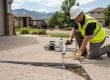
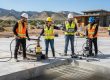
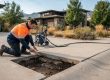
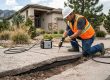
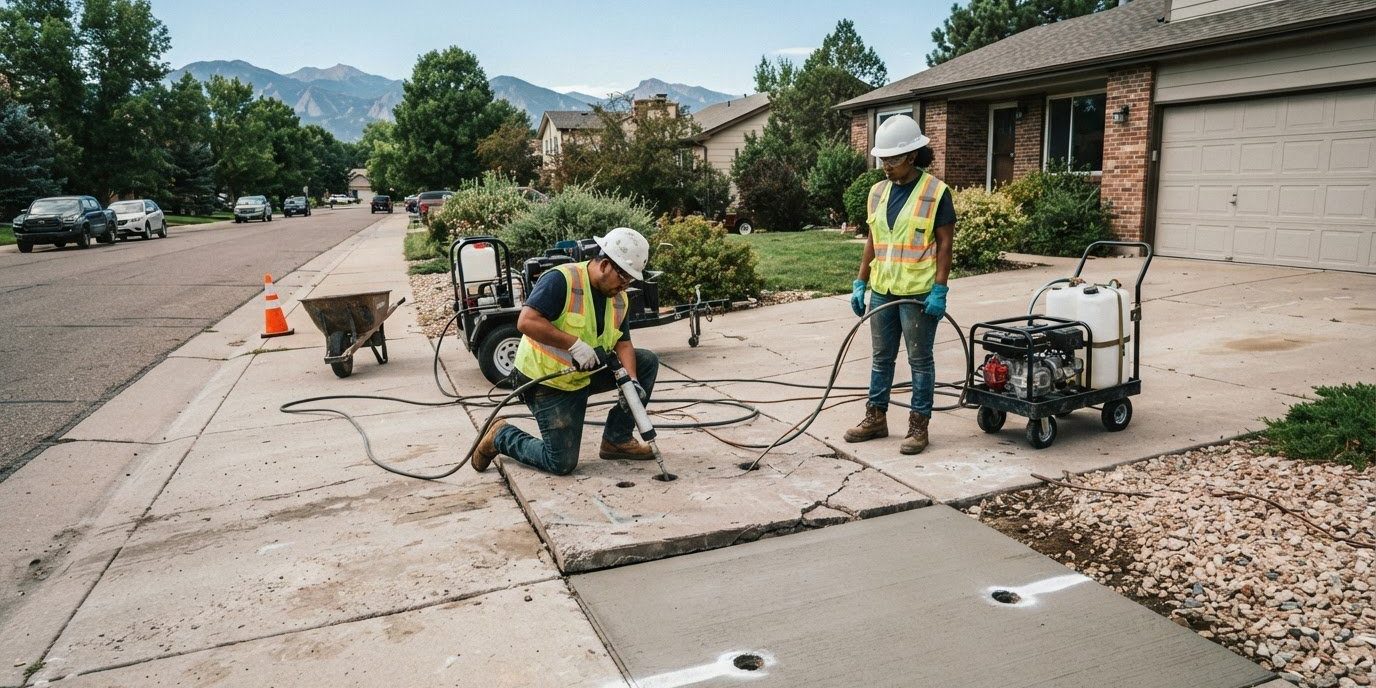
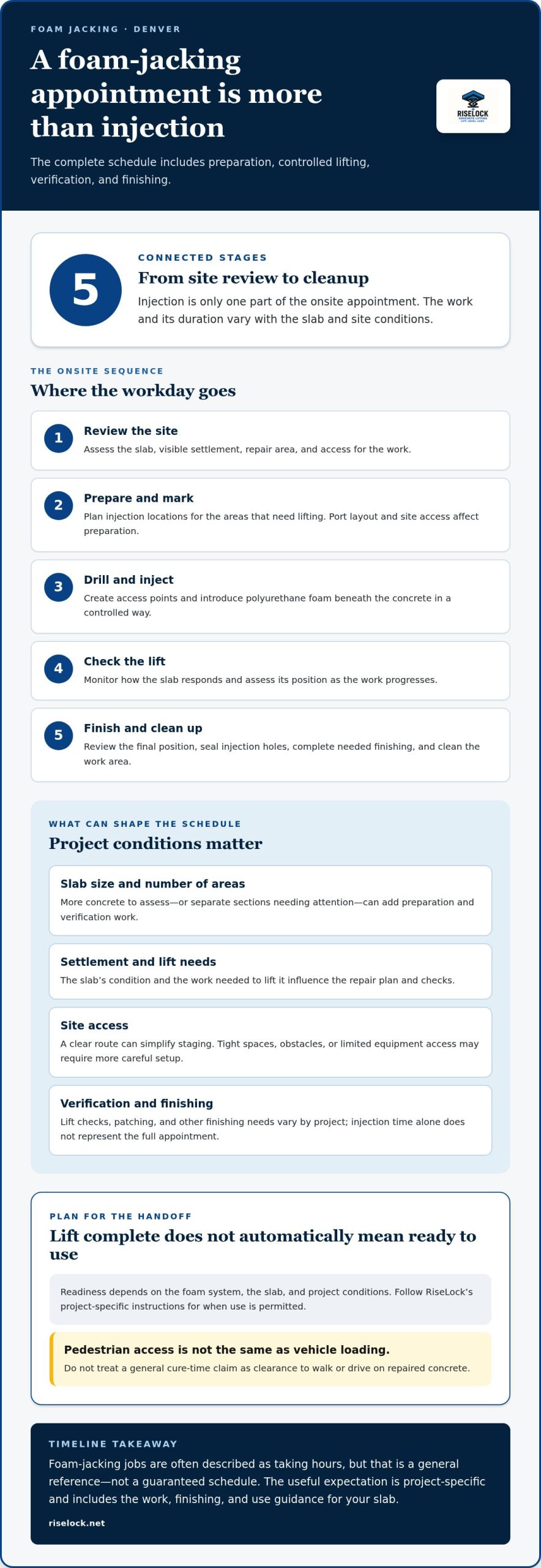
The onsite appointment can include arrival and setup, a review of the slab, marking injection points, drilling, controlled foam injection, and checks as the concrete is lifted. The crew then completes finishing work, such as patching injection holes, and cleans the work area. Injection is only one stage, so its duration alone doesn’t represent the full appointment. The amount of work varies with the slab and site conditions.
When can you walk or drive on lifted concrete?
Readiness depends on the foam system, the slab, and the project conditions. A surface that may be suitable for pedestrian access isn’t automatically ready for vehicle loading. Don’t use a general cure-time claim as clearance to walk or drive on the concrete. Follow RiseLock’s project-specific instructions, which explain what use is permitted and when.
Planning around these distinctions makes the timeline more useful. Understand what work happens onsite, what finishing remains, and what guidance applies to your intended use. That gives you a clearer basis for arranging driveway access or keeping people off a walkway while the repair is completed.
The Foam-Jacking Process: Where Time Goes During a Denver Job
A foam-jacking appointment involves more than injecting material beneath a slab. Each stage has a purpose, and the amount of preparation and verification can change with the slab’s condition, the repair area, and site access. For readers asking “how long does foam jacking take Denver,” understanding the sequence helps explain why a short injection phase doesn’t represent the full job.
In general, the work moves from site review and setup to drilling, controlled injection, lift checks, sealing, and cleanup. Assessment identifies the repair area; marking and access-port placement guide injection; monitoring helps control the lift; and final checks and finishing prepare the site for handoff.
Inspection, setup, and injection ports
Before lifting begins, the slab and its visible settlement need to be reviewed alongside the work area and available access. The location and number of injection ports depend on the repair layout, so a broad slab or a site with limited access may require more preparation than a straightforward area. RiseLock assesses the slab and project conditions rather than assuming every repair follows an identical schedule.
- Review the site: Identify the slab and visible areas of settlement, then consider access for the work.
- Prepare and mark: Plan injection locations so the foam can be placed where lifting is needed. Port layout and site access affect this preparation stage.
- Drill and inject: Create access points and introduce polyurethane foam beneath the concrete. Injection is controlled to support the intended lift.
- Check the lift: Monitor the slab’s position as work progresses. These checks guide the adjustment, rather than treating speed as the only goal.
- Finish and clean up: Review the final position, seal the access points, and leave the work area in order. Finishing needs vary by project.
Controlled lifting, verification, and cleanup
During injection, the slab is observed as the foam expands beneath it. The crew needs to see how the concrete responds and adjust the lift accordingly. Careful monitoring is part of controlled work, not wasted time. Once the target position is assessed, access points can be sealed and the work area cleaned. Finishing details depend on the project, so don’t assume a particular appearance or completion time.
Knowing these stages can help you understand the work plan for your slab. Learn more about RiseLock’s polyurethane concrete lifting and how the site review and repair scope shape the project timeline.
What Can Make Foam Jacking Take Longer or Finish Faster?
The schedule depends on the work a slab needs, not just its surface area. A single, accessible section with a straightforward lift may require less setup and monitoring than a broad driveway or several connected areas that need attention. That’s why the question “how long does foam jacking take Denver” can’t be answered accurately from a general job estimate alone.
How slab size, access, and condition affect the schedule
Several practical details shape the work plan:
- Slab size and number of areas: More concrete to assess and lift, or separate sections that need individual attention, can add preparation and verification work.
- Site access: A clear route to the affected slab can simplify staging. Tight spaces, obstacles, or limited equipment access may require more careful setup and movement around the property.
- Slab condition and lift height: The amount and pattern of settlement influence how the repair is approached and monitored. Existing cracks or unevenness can inform the assessment, but appearance alone doesn’t establish the cause or the full repair scope.
- Underlying support: If the assessment indicates voids or settlement below the concrete, that information may affect the planned work. The condition beneath a slab can’t be reliably judged from a photo or surface appearance alone.
For example, one open patio section may be simpler to access than a driveway with multiple connected panels and landscaping along its edges. The second site may involve more coordination, even if the visible sunken area appears modest. RiseLock evaluates the slab and site conditions so the expected work reflects the repair instead of relying on a one-size-fits-all duration.
Do Denver weather and soil conditions change the timeline?
Weather may influence whether a site is ready for scheduled work, but it doesn’t automatically mean the onsite repair will take longer. Appointment duration and scheduling are separate considerations. Conditions affecting suitable site access can influence when work proceeds, while slab scope and access influence the work itself.
Ground conditions can also matter if they affect the slab’s support or the repair plan. Don’t assume that a particular soil or seasonal pattern applies to every Denver property. A project assessment provides relevant information for that slab. Local conditions should be considered when they’re evident and pertinent, not used as a blanket explanation for every delay.
How to Prepare Your Denver Property for Foam Jacking
A little preparation can make the work area easier to assess and help the crew move through setup efficiently. It also gives you a clearer plan for parking and access while the affected concrete is unavailable. Since the answer to “how long does foam jacking take Denver” depends partly on site conditions, clearing the work area is a practical step you can take ahead of time.
Before the crew arrives
- Move vehicles: Park away from the driveway or other slab scheduled for lifting, so the area is accessible for assessment and repair.
- Clear personal items: Move furniture, planters, toys, and other belongings off the affected concrete where practical.
- Plan the route: Identify gates, narrow paths, parking restrictions, or other access details that could affect reaching the work area. Share relevant instructions for getting to the slab.
- Keep the area clear: Keep pets and bystanders away from the active work zone, and avoid placing items back on the slab during the repair.
These steps don’t change the repair itself, but they can reduce avoidable obstacles during site review and setup. Clear access also helps the crew see the affected slab and work around it efficiently.
Plan for access after the repair
Before work begins, understand RiseLock’s project-specific instructions for pedestrian access and vehicle use. Foot traffic and vehicle loading aren’t the same, and the guidance for your slab depends on the foam system and project conditions. Don’t rely on a general cure-time claim to decide when to reopen a driveway or walkway.
If the repair area blocks your usual parking spot or entrance, plan an alternate route or parking location for the period identified in your project instructions. You don’t need to assume the whole property will be inaccessible. Plan around the specific slab and access guidance for the job.
For a broader explanation of the method, read RiseLock’s polyurethane concrete lifting guide. Before the appointment, review your access plan and keep the affected area clear. Follow RiseLock’s project-specific directions for work-area access and post-repair use.
Ready to plan around your slab’s access needs? Explore RiseLock’s concrete lifting services and get a project-specific plan for the repair.
What a RiseLock Foam-Jacking Timeline Looks Like in Denver
A useful timeline is built around the concrete and the site, not copied from a generic online estimate. RiseLock’s polyurethane lifting and leveling work starts with understanding the affected slab, the areas involved, and the access available. That project-specific view helps explain the expected work and what to plan for, without promising the same duration for every property.
What a project-specific timeline should explain
A clear plan connects the repair stages to your property: which slab is involved, what work area needs to stay accessible, and how inspection, lifting, verification, and finishing fit together. It should also explain the handoff, including project-specific guidance for pedestrian access and vehicle use. For people asking “how long does foam jacking take Denver,” these details are more useful than a broad estimate because they clarify both the work and the next steps.
RiseLock assesses each slab and its conditions rather than treating one duration as universal. The schedule should reflect the repair scope and site access, not assume that a driveway, walkway, or commercial slab will follow an identical plan.
From a timing question to a clear next step
To make a project discussion more useful, be ready to describe:
- The concrete: Identify the slab type and location, such as a driveway, walkway, patio, or other residential or commercial surface.
- What you see: Note where the slab appears settled or uneven and whether more than one area is involved. Visible signs help frame the discussion but don’t replace an assessment.
- Site access: Mention gates, obstacles, parking limitations, or routes that could affect setup around the work area.
These observations help establish what needs assessment without requiring you to diagnose the cause yourself. RiseLock provides polyurethane concrete lifting and leveling in Denver, Aurora, Centennial, Parker, Colorado Springs, Englewood, Littleton, Lakewood, Arvada, Thornton, Wheatridge, Castle Rock, Castle Pines, and Boulder. The repair plan is tailored to the project’s conditions. For broader context on repair approaches, explore the concrete lifting solutions guide.
If you’re planning a repair, discuss your Denver-area concrete lifting project with RiseLock. A focused conversation about the slab, visible settlement, and access can help clarify the work plan and the use guidance you’ll need for a confident handoff.
Plan Your Concrete Repair With a Clear Timeline
The most useful answer to “how long does foam jacking take Denver” is based on the slab and site, not a universal time estimate. The full appointment includes assessment, setup, lifting checks, and finishing, while permission to walk or drive on the concrete depends on project-specific instructions. Slab size, condition, lift needs, and access can all shape the schedule.
Preparing the work area and sharing details about the affected concrete can make planning clearer. RiseLock specializes in polyurethane concrete lifting and leveling, assessing each project to explain the expected work and handoff. The company serves Denver and nearby Colorado communities, including Aurora, Centennial, Parker, Colorado Springs, Englewood, Littleton, Lakewood, Arvada, Thornton, Wheatridge, Castle Rock, Castle Pines, and Boulder.
For a grounded timeline and next steps tailored to your property, discuss your Denver-area concrete lifting project. Plan your repair and access afterward with RiseLock’s concrete lifting team.
Frequently Asked Questions
How long does foam jacking usually take in Denver?
Foam-lifting jobs are often described as taking hours, but the full onsite appointment depends on the slab and repair scope. The question “how long does foam jacking take Denver” includes more than injection: setup, assessment, lift checks, and finishing also take time. RiseLock evaluates each project individually, so general estimates aren’t a guaranteed schedule for your property. The project plan explains the work involved and what to expect at handoff.
Can I use my driveway right after foam jacking?
Don’t assume your driveway is ready for use immediately after injection. The timing and permitted use depend on the foam system, slab, and project conditions, and walking on the surface isn’t the same as driving or parking on it. Follow RiseLock’s instructions for your repair before reopening the area. If the driveway is your usual parking space, plan an alternate spot until the team’s guidance says vehicle use is permitted.
Does foam jacking take longer for a large concrete slab?
A larger slab or several connected sections can require more assessment, preparation, and monitoring than a smaller, accessible area. The amount of settlement, lift needed, and access for the work can also affect the plan. Size alone doesn’t determine the schedule, and visible cracks don’t reveal the full condition beneath the concrete. RiseLock assesses the slab and site so the expected work reflects the repair rather than a generic time range.
What happens during a foam-jacking appointment?
A foam-jacking appointment generally includes reviewing the slab and work area, preparing and marking injection locations, drilling access points, injecting polyurethane foam, checking the lift, and finishing the access points. Cleanup and handoff are also part of the overall work. The time spent injecting foam is only one stage. The sequence is similar across projects, but the amount of work at each stage varies with the slab, access, and repair scope.
Does Denver weather affect foam-jacking time?
Weather may affect whether a site is suitable for scheduled work, but it doesn’t automatically lengthen the onsite repair. Scheduling and appointment duration are separate considerations. Site readiness can influence when work proceeds, while the slab’s scope and access shape the work itself. Conditions vary by property, so don’t assume a particular Denver season or soil pattern will determine your timeline. RiseLock’s assessment and project-specific instructions provide relevant guidance.
Is foam jacking faster than replacing concrete?
Foam jacking can avoid the demolition and removal involved in replacing a slab, so it may be a faster, less disruptive option when the concrete is suitable for lifting. That doesn’t mean every repair takes the same time or that lifting is appropriate for every slab. The condition of the concrete and the work required matter. RiseLock assesses the slab to determine a project-specific approach and explain what the repair involves.
Will foam jacking fix every sunken concrete slab in one visit?
No single-visit outcome should be assumed for every sunken slab. The appropriate repair plan depends on the concrete’s condition, the extent and pattern of settlement, access, and the areas involved. An assessment helps determine whether polyurethane lifting and leveling fits the slab and what work is needed. RiseLock provides lifting for residential and commercial concrete, tailoring the plan to the project rather than promising one result or duration for every property.
How should I prepare my property for foam jacking?
Move vehicles and personal items away from the affected concrete where practical, clear the access route, and keep pets and bystanders out of the work area. Mention gates, parking restrictions, or other site-access details, and plan alternate parking if the repair blocks your usual space. These steps apply to properties in Denver, Aurora, Centennial, Parker, Colorado Springs, Englewood, Littleton, Lakewood, Arvada, Thornton, Wheatridge, Castle Rock, Castle Pines, and Boulder. Follow RiseLock’s project-specific access and use instructions.