That uneven lip between your driveway and garage isn’t just a trip hazard; it’s a clear signal that the ground beneath your home is shifting. It’s common to feel a sense of dread when you notice water pooling in corners or feel the jolt every time you pull your car inside, fearing that the only solution is a jackhammer and a massive bill for total concrete replacement. You want a stable surface that lasts, but the thought of losing access to your garage for weeks is often enough to delay necessary repairs.
The reality is that you can restore your floor to its original height and structural integrity without the mess of traditional demolition. Professional garage floor leveling Denver homeowners rely on now utilizes high-density polyurethane foam to provide a permanent, non-invasive solution that addresses the root cause of the sink. In this guide, we’ll explain why Denver’s expansive clay soils lead to these structural failures and how precision foam injection offers a surgical, long-lasting alternative to temporary cosmetic patches. You’ll discover how to achieve a flat, stable floor that remains secure for the life of your home.
Key Takeaways
- Identify how expansive bentonite clay and poor drainage create the subsurface voids responsible for sinking garage slabs in the Denver metro area.
- Understand the technical advantages of high-density polyurethane foam, which provides the necessary load-bearing capacity to support heavy vehicle traffic.
- Learn why professional garage floor leveling Denver services focus on filling subterranean voids rather than applying heavy, cosmetic surface toppings.
- Discover why modern foam injection is the preferred non-invasive method for restoring structural integrity with minimal downtime for the homeowner.
- Prepare for a professional site evaluation by identifying specific signs of movement and understanding the local soil conditions affecting your foundation.
Understanding Why Garage Floors Sink in the Denver Metro Area
The sinking of a concrete slab is rarely a random occurrence. In Colorado, it’s a predictable result of the local geology. When homeowners investigate concrete leveling, they’re often reacting to visible damage without realizing the complex soil mechanics happening beneath the surface. True restoration requires more than a surface patch; it requires an understanding of why the ground failed in the first place.
Colorado Soils: The Bentonite Factor
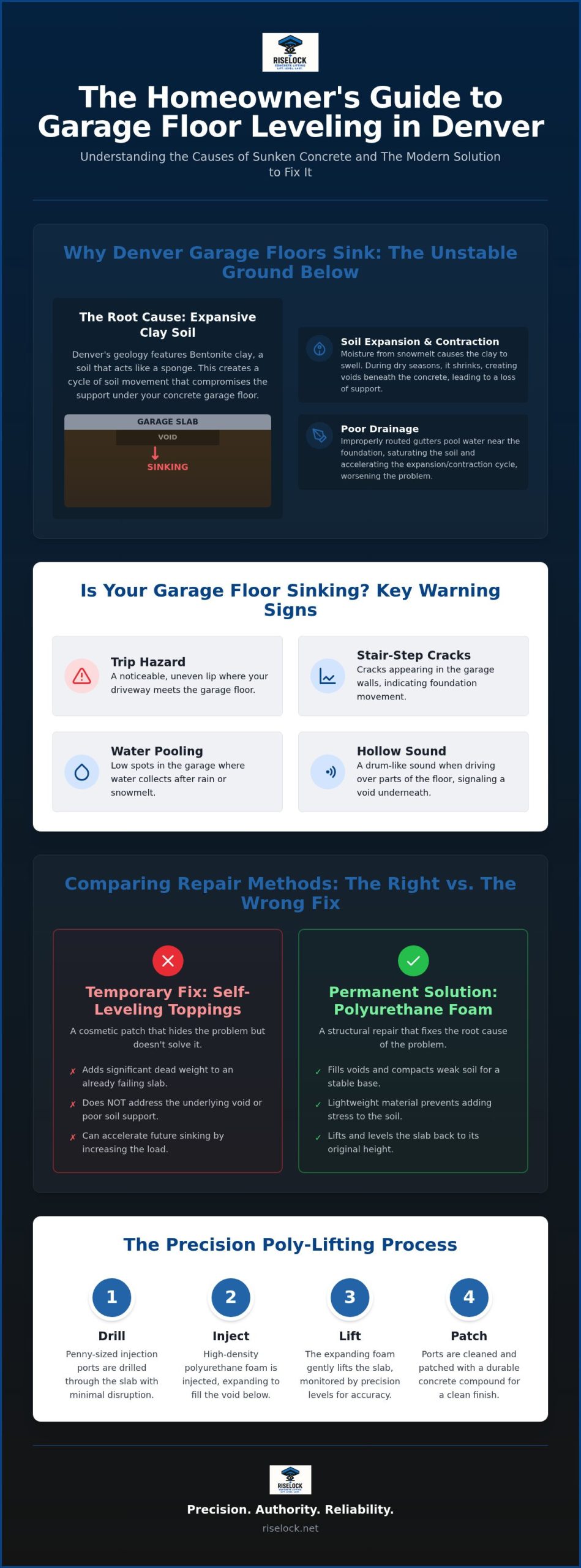
The Denver metro area, including Aurora and Centennial, sits atop significant deposits of bentonite clay. This soil is notoriously expansive. It acts like a structural sponge, swelling when saturated by snowmelt and shrinking during arid summer months. This cycle creates empty spaces or voids. When the soil retreats, the heavy concrete slab loses its support and drops. Even in newer developments in Parker or Castle Rock, the sheer force of soil movement can eventually overcome initial compaction. Colorado’s intense freeze-thaw cycles accelerate this, as moisture trapped in voids expands with enough pressure to shift even the heaviest slabs.
In communities like Arvada and Thornton, poor drainage often compounds these soil issues. When gutters aren’t directed away from the foundation, water pools near the garage, saturating the clay and causing rapid expansion. When that water eventually drains or evaporates, the soil settles more aggressively than before. This is why “settling” isn’t a one-time event that happens after a house is built. It’s a continuous process driven by the environment.
Signs of Structural Settlement vs. Surface Wear
Distinguishing between minor surface wear and true structural failure is vital for long-term safety. Homeowners should look for stair-step cracks in garage walls or a prominent trip hazard where the driveway meets the garage threshold. You might also notice a hollow, drum-like sound when driving over specific sections of the floor. These indicators suggest the slab is suspended over a void rather than resting on solid ground.
A common mistake is attempting to fix these issues with liquid self-leveling toppings. These products add significant dead weight to a failing slab without addressing the lack of support underneath. For effective garage floor leveling Denver homeowners must prioritize structural lifting. By injecting high-density materials to fill the subsurface void and lift the slab, you solve the root cause rather than just masking the symptoms with more weight that could accelerate the sink.
Polyurethane Foam Lifting: The Modern Standard for Garage Leveling
While traditional repairs often rely on adding more heavy material to an already failing foundation, modern structural restoration takes a more surgical approach. High-density polyurethane foam injection has become the preferred method for garage floor leveling Denver homeowners choose because it addresses the underlying instability without the intrusive nature of heavy machinery. This technique utilizes a specialized two-part polymer that expands upon injection, filling subterranean voids and compacting the surrounding soil to create a stable base for the concrete.
Because expansive clay is Colorado’s most significant geologic hazard, any repair must be lightweight yet incredibly strong. Polyurethane foam is significantly lighter than traditional cementitious slurries, which means it won’t add the dead weight that often causes further sinking in Denver’s volatile soils. This precision-based approach ensures that the repair doesn’t inadvertently worsen the problem it was meant to solve.
The Polyjacking Process Step-by-Step
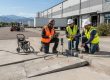
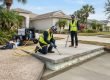
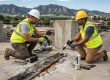
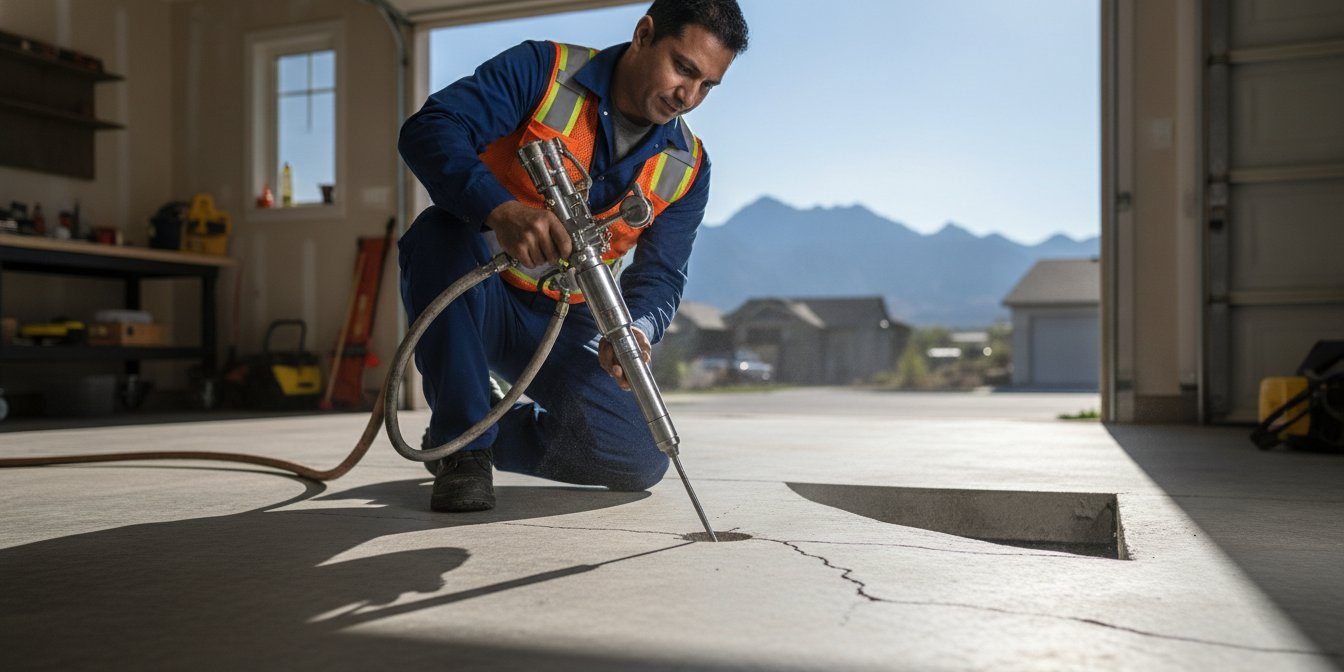
Professional foam lifting is a high-precision procedure. It begins with drilling penny-sized injection ports through the concrete slab. These holes are significantly smaller than those required for older methods, ensuring the aesthetic impact on your garage floor is minimal. Once the ports are prepared, a technician injects the two-part foam directly into the voids identified during the initial assessment.
As the foam expands, it exerts upward pressure on the slab. We monitor the lift using precision levels to ensure a perfect transition between the garage and the driveway. Once the slab reaches the desired height, the injection ports are patched with a matching concrete compound. The entire process is remarkably clean; there’s no heavy equipment on your lawn and no messy slurry to wash away after the crew leaves.
Durability and Load-Bearing Capacity
A common concern for homeowners is whether a foam product can truly support the weight of heavy SUVs or full-sized trucks. High-density polyurethane is engineered for exactly this purpose. Polyurethane foam used for slab jacking can have a compressive strength of 50 to 100 psi in a free-rise state. This is equivalent to 7,200 to 14,000 pounds per square foot of support, which is stronger than the load-bearing capacity of stiff clay or crystalline bedrock. It doesn’t just lift the concrete; it creates a rigid, supportive structure that resists compression from vehicle traffic.
The material’s hydrophobic nature is equally critical. Unlike soil or cement-based fillers, polyurethane foam won’t wash away or erode when exposed to groundwater or snowmelt runoff. Polyurethane lifting acts as a permanent soil stabilizer. This durability ensures that once the floor is leveled, it stays that way. Most homeowners find they can return to using their garage and parking their vehicles on the floor within 30 minutes of the completed injection. If you’re seeing signs of a sinking slab, exploring structural concrete repair options can prevent further foundation damage and restore your peace of mind.
Polyurethane Lifting vs. Self-Leveling Toppings: A Comparison
Choosing between a surface-level fix and a structural restoration is the most critical decision a homeowner makes when dealing with a sunken slab. Many property owners initially consider liquid self-leveling toppings because they appear to be a simple, cost-effective solution for uneven concrete. However, this approach often ignores the fundamental physics of soil mechanics. In Colorado, where expansive soils cause billions of dollars in damage annually, adding more weight to a failing foundation is rarely the correct path. Understanding the difference between masking a problem and solving it is key to protecting your home’s value.
When Surface Toppings Fail
Self-leveling cementitious toppings are designed for minor floor preparation, not for correcting structural settlement. The primary issue is the “layering” problem. New concrete does not naturally bond well to an old, shifting slab, especially one that has been exposed to garage contaminants like oil and road salt. Over time, the bond weakens. In unheated Denver garages, extreme temperature fluctuations cause the two materials to expand and contract at different rates, leading to delamination and unsightly cracking.
Perhaps more dangerously, liquid levelers add thousands of pounds of dead weight to an already unstable soil base. A standard two-car garage might require a significant volume of material to reach a level state. This extra mass increases the stress on the voids beneath the floor, essentially forcing the slab to sink further into the earth. It creates a cycle of repair and failure that eventually leads to the very thing homeowners fear most: a total and expensive concrete replacement.
The Structural Stability Advantage
In contrast, garage floor leveling Denver professionals utilize high-density polyurethane to provide a permanent, lightweight solution. Instead of adding weight on top, we inject a structural polymer beneath the slab. This material expands to fill the entire void, compacting the loose soil and creating a stable, waterproof base. This process addresses the root cause of the movement, ensuring the slab is fully supported from below.
By stabilizing the soil base, you protect more than just the floor. You also safeguard adjacent structures like garage walls, door frames, and interior entryways that may be pivoting along with the sinking slab. This method offers superior longevity and cost-effectiveness over the life of the property because it prevents future settlement. For a deeper look at how we achieve these results, you can explore our Polyurethane Concrete Lifting: The Precision Guide to modern slab restoration. Solving the subsurface instability is the only way to ensure your garage floor remains flat and secure for years to come.
Preparing for Professional Garage Floor Leveling in Denver
Successful slab restoration begins with a thorough understanding of the current damage. Before engaging a specialist for garage floor leveling Denver homeowners can perform several basic checks to determine the severity of the settlement. While visible cracks are an obvious sign, the most telling evidence often lies in the transitions between the slab and the surrounding structure. Identifying these issues early prevents minor settlement from becoming a major structural failure.
The DIY Assessment Checklist
Homeowners can use a simple checklist to gauge the health of their garage floor. These observations provide vital context for the repair crew and help prioritize the most critical areas of the lift. Check the following points during your next inspection:
- Measure the threshold drop: Use a ruler to check the vertical gap where the garage floor meets the driveway. A drop of even half an inch suggests the soil beneath the entrance has washed away or compacted.
- Inspect through-cracks: Look for cracks that appear to go through the entire depth of the slab rather than just the surface. These indicate that the concrete is bridging a void and is at risk of snapping under the weight of a vehicle.
- Observe water behavior: During heavy rain or when snow melts off your car, watch the flow. If water pools against the back wall or the interior entry door, the slab has lost its designed pitch.
Choosing the Right Denver Contractor
When you move from assessment to action, the professional site evaluation becomes the foundation of the project. A technician will use precision levels to map the slab’s topography and identify exactly where the support has failed. This technical mastery ensures that the injection ports are placed strategically to maximize the lift while minimizing stress on the concrete. It’s a surgical process that requires a deep understanding of how different soil types respond to pressure.
Selecting a partner requires verifying their expertise in Colorado’s specific conditions. You should ask about the specific density of the polyurethane they use; a high-density foam is mandatory for the load-bearing demands of heavy SUVs and trucks. Additionally, ensure the contractor offers a clear warranty that addresses the long-term stability of the repair. For a more exhaustive look at industry standards and modern techniques, read our Concrete Leveling: The Definitive Guide. If you’ve identified significant sinking in your home, you can request a professional structural evaluation to secure your foundation before the next seasonal shift.
Homeowners should also consider the logistics of the repair day. You’ll need to clear the garage of vehicles and any heavy equipment to provide the crew with full access to the slab. While polyurethane is hydrophobic and can be installed in damp conditions, extreme ground frost during Denver’s coldest months can affect expansion rates. Scheduling your repair during moderate temperatures often yields the most predictable and precise results.
The RiseLock Approach: Precision, Authority, and Reliability
RiseLock approaches structural repair as a commitment to long-term stability rather than a quick cosmetic fix. We recognize that garage floor leveling Denver homeowners require is more than just an aesthetic correction; it’s a necessary intervention to preserve the home’s structural backbone. Our methodology is built on technical mastery and a deep understanding of Colorado’s unique geological challenges. While traditional methods like mudjacking rely on heavy, water-saturated slurries that can further compress unstable soil, we’ve moved entirely toward modern polyurethane systems. This choice reflects our dedication to using materials that are lightweight, durable, and precise.
We view every project through the lens of engineering precision. Our technicians don’t just pump material into a void; they monitor the lift with surgical accuracy to ensure the slab returns to its intended pitch. This level of care is why we’ve become a trusted partner for homeowners in Denver, Aurora, and Lakewood who are seeking permanent solutions to sinking concrete. By addressing the physics of the soil first, we ensure that the restoration lasts as long as the house itself.
Beyond Leveling: Structural Reinforcement
Our background in complex concrete systems provides us with a distinct advantage in the leveling industry. Because we also specialize in post-tension cable systems, we understand the internal stresses and tension within a concrete slab better than a general contractor might. This expertise informs our leveling precision, ensuring that the lifting process doesn’t compromise the integrity of the slab or the cables within it. We ensure that your garage floor isn’t just flat, but structurally sound for the life of the property. For a deeper understanding of these systems, you can view our Post Tension Installation Guide.
Service Areas and Local Commitment
RiseLock serves the entire Front Range, providing specialized intervention from Fort Collins down to Colorado Springs. We understand that residential repairs can be disruptive, which is why we’ve established a “no-mess” guarantee for every garage project we undertake. Our equipment is minimally invasive, and because our polyurethane foam cures within minutes, you won’t be locked out of your garage for days at a time. We take professional pride in leaving your property exactly as we found it, with the exception of a perfectly stabilized and level floor.
Restoring the safety and value of your home shouldn’t be a source of stress. By choosing a partner that prioritizes technical precision and ethical service, you gain the peace of mind that comes with a permanent repair. You can schedule your professional garage evaluation with RiseLock today to begin the process of stabilizing your home’s foundation.
Restoring Structural Stability to Your Denver Garage
A sinking garage floor is a clear indication that the ground beneath your home has failed to provide necessary support. By understanding the impact of Colorado’s expansive clay and the risks of adding heavy surface toppings, you can make an informed decision about the longevity of your foundation. Effective garage floor leveling Denver homeowners trust focuses on subsurface stabilization rather than temporary cosmetic masks.
Utilizing specialized polyurethane injection technology allows for a non-invasive structural restoration that addresses the root cause of the shift. Our team combines local Colorado soil expertise with technical mastery to lift your slab with surgical precision; this ensures it remains stable for years to come. You don’t have to live with the stress of trip hazards or pooling water when a permanent solution is available.
Take the first step toward a secure and level garage floor. Get a Free Precision Estimate for Your Denver Garage and restore your property’s value today.
Frequently Asked Questions
Is garage floor leveling cheaper than replacement?
Garage floor leveling is significantly more cost-effective than a total replacement. Tearing out an existing slab involves expensive demolition, disposal fees, and the high cost of pouring new concrete. By choosing garage floor leveling Denver homeowners can restore their existing floor for a fraction of that investment. This method also eliminates the need for long curing times, allowing you to use your garage much sooner than if you had replaced the entire surface.
How long does polyurethane garage floor leveling last in Denver?
Polyurethane concrete lifting is considered a permanent solution for sunken slabs. The high-density foam used in this process is hydrophobic, meaning it won’t wash away or erode when exposed to Colorado’s heavy snowmelt or groundwater. Unlike traditional organic fillers, the polymer does not degrade over time. Once the material cures and stabilizes the underlying soil, it provides a rigid, supportive base that remains intact for the life of the concrete structure.
Can you level a garage floor with a post-tension slab?
Yes, you can level a post-tension slab, but it requires a contractor with specialized structural expertise. Many garages in the Denver metro area utilize post-tensioning systems for reinforcement. Because we specialize in both garage floor leveling Denver and post-tension installation, we understand how to lift these slabs without damaging the internal cable systems. Our precision injection method ensures the slab is restored to its original height while maintaining its intended structural tension.
Will the foam injection holes be visible when the job is done?
The injection ports used during the polyurethane lifting process are remarkably small, typically about the size of a penny. These holes are significantly less intrusive than the large ports required for outdated mudjacking methods. Once the lift is complete, our technicians patch each hole with a concrete compound that closely matches the existing floor. While the patches may be slightly visible initially, they fade over time and are easily covered by garage floor coatings.
How soon can I park my car on the garage floor after leveling?
One of the primary advantages of polyurethane foam is its rapid curing time. Most homeowners can park their vehicles on the leveled floor within 15 to 30 minutes of the completed injection. This speed is a sharp contrast to traditional concrete replacement, which requires days or weeks of curing before it can support the weight of a car. Our process ensures minimal downtime, allowing you to resume normal garage use on the same day.
Does garage floor leveling fix cracks in the concrete?
Concrete leveling is designed to restore the height and stability of a sunken slab, not to eliminate existing cracks. However, as the slab is lifted back into its original position, many settlement-related cracks will naturally close or tighten. While the physical separation remains in the concrete, the structural support is restored. We recommend sealing these cracks after the leveling process is complete to prevent moisture from reaching the newly stabilized soil beneath the floor.
Is polyurethane foam leveling environmentally friendly?
Polyurethane foam is an environmentally responsible choice for concrete restoration. Once the two-part polymer reacts and expands, it becomes an inert, stable solid that does not leach chemicals into the surrounding soil or groundwater. Because this method restores your existing concrete rather than replacing it, it also prevents large amounts of old concrete from being sent to Colorado landfills. This precision-based approach minimizes the overall environmental footprint of your home’s structural maintenance.
What happens if I don’t level my sinking garage floor?
Ignoring a sinking garage floor typically leads to more severe and expensive structural problems. As the slab continues to drop, it creates significant trip hazards and can cause water to pool against your home’s foundation, leading to moisture damage. Over time, the uneven weight distribution can stress your garage walls and door frames, potentially resulting in cracked drywall or doors that no longer close. Proactive leveling prevents these cascading failures and protects your property’s long-term value.