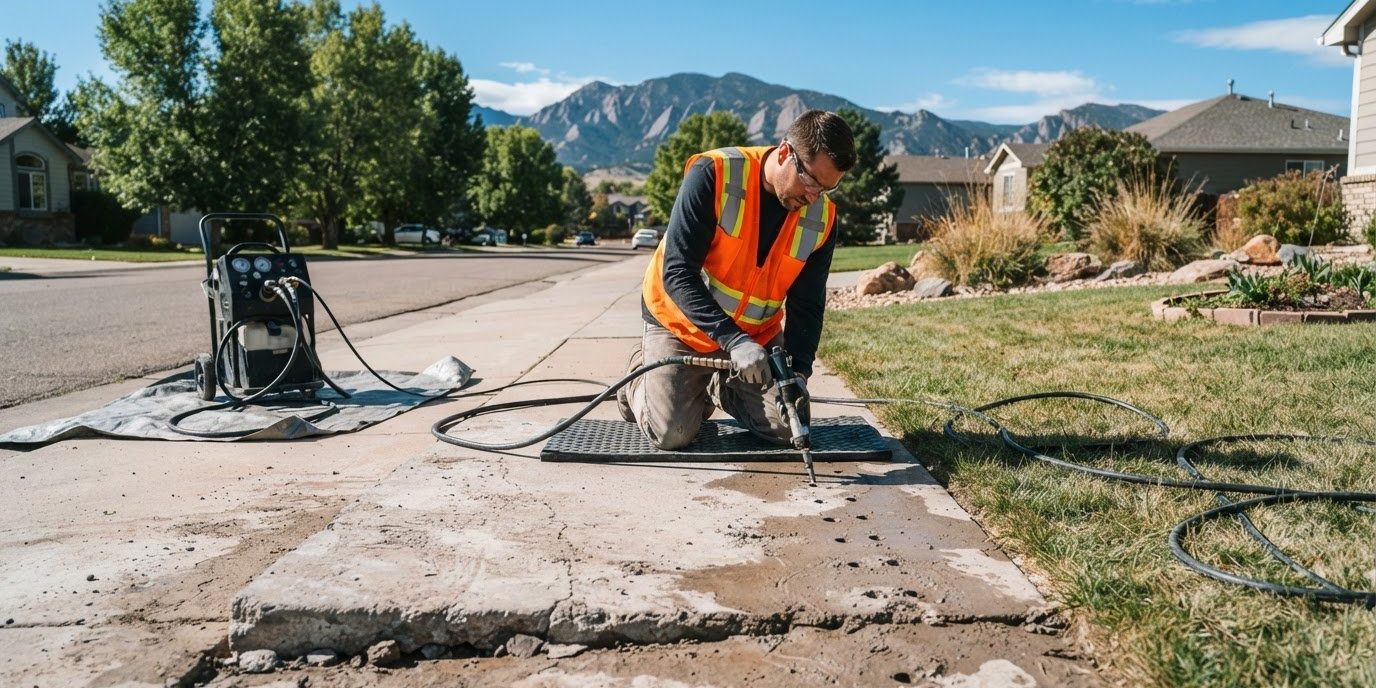
What if an uneven walkway could be lifted instead of torn out? For sunken concrete walkway repair Aurora homeowners often start with one question: can the existing slab be restored? A raised edge, low panel, or widening crack can make everyday access less comfortable and create a potential trip concern. Settlement may be linked to shifting soil, water exposure, Colorado’s freeze-thaw cycles, or expansive clay soils, but the right repair depends on the walkway’s actual condition.
It’s understandable to worry that fixing the problem means disruptive demolition and replacement. In many cases, polyurethane foam lifting offers another approach. Small holes allow expanding foam to fill voids beneath the concrete, raise the slab, and harden into a stable base without removing the existing walkway. Most projects are completed in hours, and waterproof foam won’t wash out or break down over time. This article covers visible signs and possible contributors to settlement, how foam lifting compares with replacement, and what to expect from an assessment in Aurora.
Key Takeaways
- For sunken concrete walkway repair Aurora homeowners can start by noting uneven panel edges, cracks, gaps, and changes in water flow.
- An assessment considers the slab’s condition and the repair goal to determine whether lifting or replacement is the better fit.
- Foam lifting uses small drilled holes to inject expanding polyurethane foam beneath the slab, helping fill voids and raise the concrete.
- Note where the walkway has shifted and when you first noticed the change to give the assessment a useful starting point.
- RiseLock’s Concrete Lifting and Straightening service can restore eligible walkways, with most projects completed in hours.
Sunken Concrete Walkway Repair in Aurora: Signs and Possible Causes
A sunken walkway is concrete that has settled below adjoining sections or its intended grade. The change may affect one panel or extend along part of the route, creating a noticeable height difference where people walk. For homeowners considering sunken concrete walkway repair Aurora, identifying visible changes is a useful first step. Those symptoms alone, however, can’t show what is happening beneath the slab.
A surface crack is a break in the concrete; a visibly settled slab has also shifted below the level of an adjoining section or the intended grade. Cracking can occur without settlement, and a settled panel may also show cracks. The distinction matters because an assessment should consider the slab’s position and condition, rather than treating every crack as evidence of the same problem.
What should Aurora property owners look for on a walkway?
Compare adjoining panels to see whether their edges still meet evenly. Look along the route for sections that sit lower than nearby concrete, as well as open joints, gaps, and cracks. Note any water that pools, runs in an unexpected direction, or reaches exposed ground through a gap. These are useful observations, not proof of what caused the walkway to shift.
Take photos from consistent angles, including a wide view of the route and closer views of affected edges, cracks, or gaps. Repeat the same views later if you want to document visible changes over time. Don’t test an uneven panel by jumping on it or trying to shift it. If an area appears unsafe to cross, limit access until it can be assessed.
Why might a concrete walkway settle?
Concrete needs support beneath it. If a void develops or the underlying support changes, a slab may lose contact with part of its base and settle. Drainage patterns, soil movement, and seasonal freeze-thaw cycles are possible contributors, but a surface photo can’t confirm the cause. In Colorado, freeze-thaw conditions and expansive soils may affect concrete; the specific cause at an Aurora property depends on the site.
Concrete’s performance also depends on its material properties and the conditions around it. A reference on the properties of concrete provides background, but it can’t diagnose a particular walkway. Cracks, gaps, and water reaching exposed ground can help identify what to examine, but each sign needs to be considered in context.
An on-site assessment can evaluate the slab’s position and condition, along with visible signs around it, before recommending a repair approach. That helps determine whether lifting may suit the walkway or whether its condition calls for another solution. A sound repair plan starts with the actual slab, not an assumption about why it settled.
How Polyurethane Foam Lifting Restores a Sunken Walkway
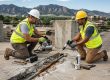
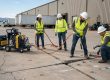
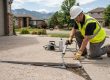
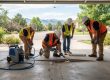
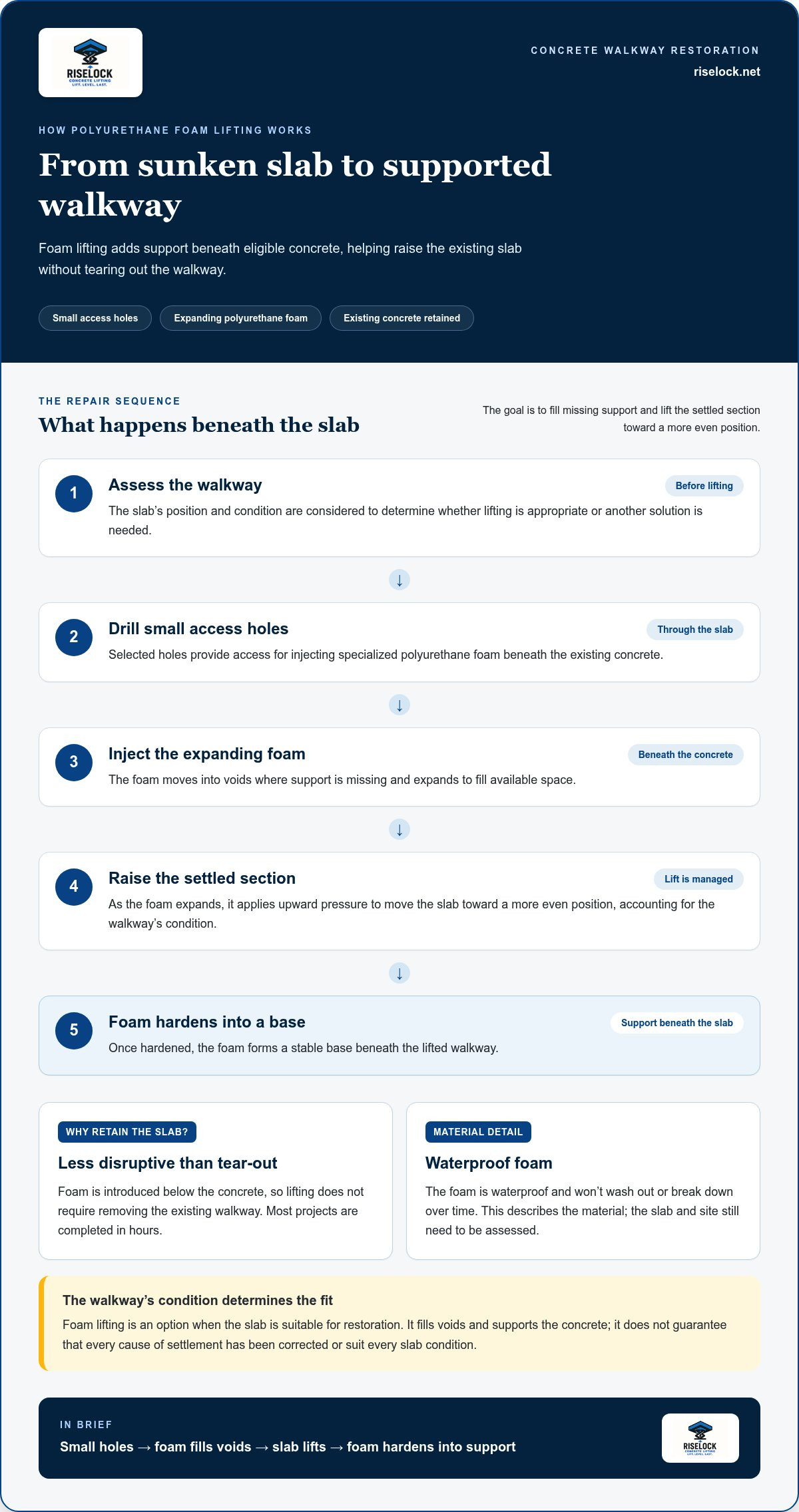
Polyurethane foam lifting restores an eligible sunken walkway by adding support beneath the existing slab. Instead of removing the concrete, RiseLock drills small access holes and injects specialized expanding polyurethane foam through them. The foam moves into voids beneath the slab, expands to fill available space, and lifts the concrete toward a more even position. As it hardens, it forms a stable base beneath the walkway.
Small access holes let expanding foam fill voids beneath a settled slab, lift the concrete, and harden into a stable base without tearing out the walkway. That’s the essential process behind foam lifting. It offers a way to address settlement while retaining the existing concrete when the slab’s condition makes restoration appropriate.
What happens during polyurethane foam walkway lifting?
The work starts with small holes drilled into the slab at selected access points. Specialized foam is injected beneath the concrete. As it expands, it fills spaces where support is missing and applies upward pressure to the slab. The lift is managed through the injection process, with the goal of raising the settled section while accounting for the walkway’s condition.
Because the foam is introduced below the slab, this method doesn’t require tearing out the existing concrete. That matters to homeowners concerned about demolition and the disruption of replacing a walkway. The repair addresses support beneath the concrete rather than simply covering a crack on its surface.
What makes the foam suitable for this repair method?
After injection, the expanding foam hardens beneath the slab and creates a base that helps support the lifted concrete. Its role is to fill voids and provide support, not conceal damage or compensate for every possible slab condition. The repair approach should therefore be based on an assessment of the walkway itself.
RiseLock uses waterproof foam. The material characteristic is straightforward: waterproof foam won’t wash out or break down over time. This describes the foam, not a guaranteed lifespan for every walkway or a promise that every cause of settlement has been corrected. The surrounding site and the slab’s condition still matter.
For homeowners researching sunken concrete walkway repair Aurora, foam lifting is a less disruptive alternative to removing and replacing concrete when the slab is suitable for lifting. Most projects are completed in hours. Learn more about RiseLock’s concrete lifting service and how it can address settlement in eligible concrete.
Concrete repair methods should match the work required. The American Concrete Institute standards for concrete repair provide a reference point for understanding concrete repair and rehabilitation. For an individual walkway, the practical decision is whether the slab needs support and leveling or a different repair approach based on its condition.
Foam Lifting or Walkway Replacement: How to Weigh the Options
A settled walkway doesn’t automatically need to be removed, but lifting isn’t right for every slab. The choice depends on the concrete’s condition, the support beneath it, and the repair goal. For sunken concrete walkway repair Aurora, an assessment can help distinguish a slab that may be lifted and stabilized from one whose damage calls for another approach.
| Consideration | Foam lifting | Replacement |
|---|---|---|
| Repair objective | Raise and support existing concrete | Remove and install new concrete |
| Existing slab | May suit a settled slab that can be restored | May be considered if lifting can’t meet the repair need |
| Disruption | Retains the existing concrete without tearing it out | Requires removal of the existing slab |
| Relative cost information | 50 %-75 % less than replacement | Serves as the comparison point |
When may lifting be a practical alternative to replacement?
Lifting may be appropriate when settlement is the main concern and the slab’s condition allows it to be raised and stabilized. Retaining usable concrete can avoid tearing out the walkway. The assessment considers the extent of cracking, the condition of the panels, and whether lifting can improve the support beneath them. No single visible sign determines the decision.
The repair objective matters. If the main need is to address a low section and improve its position, lifting may suit the goal. If the slab has damage that lifting won’t resolve, raising it alone may not provide the repair needed. Foam lifting is a repair method, not a promise to fix every damaged slab.
When might replacement need to be considered?
Replacement may be considered when the extent or nature of the damage means the existing concrete can’t be restored to meet the repair objective. Cracks should be evaluated alongside panel condition and settlement, rather than treated as an automatic reason to lift or replace. An on-site assessment helps establish what the slab can reasonably support and which approach fits its condition.
Use the comparison as a starting point, not a diagnosis. An assessment connects visible symptoms with the condition of the concrete and its underlying support. That makes it possible to consider whether lifting could address the settlement or whether replacement is more suitable. The aim is to match the repair to the walkway, rather than assume one method fits every property.
Preparing for a Sunken Walkway Assessment in Aurora
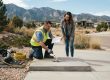
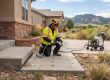
A useful assessment starts with clear observations, not a homeowner’s diagnosis. You don’t need to determine why the walkway settled or test whether a slab can be lifted. Note what has changed and make the area accessible for a visual review. These details help a repair professional understand the pattern of movement and consider the walkway’s condition before recommending an approach.
For homeowners exploring sunken concrete walkway repair Aurora, a few simple notes can make the assessment more focused. Walk the route only if it’s safe to do so. If a section looks unstable or presents a clear trip concern, keep people away rather than testing it underfoot.
What information helps assess a settled walkway?
Record which panels appear low and whether their edges sit at different heights from adjoining sections. Note cracks, open joints, gaps, or places where water flows or reaches exposed ground. These details describe what’s visible; they don’t establish the cause. If you remember when the change first appeared or noticed it becoming more pronounced, include that timeline too.
- Take overview photos that show the affected section in relation to the full walkway.
- Photograph uneven edges, cracks, and open joints from close range.
- Note visible pooling or runoff near the affected area, including where water travels.
- Share when you noticed the change and whether it appears to have progressed.
Keep the walkway accessible for a visual assessment, while limiting access to any visibly unsafe area. Don’t dig beneath a panel, lift an edge, or attempt a repair yourself. For broader context on slab restoration, RiseLock’s concrete leveling guide explains the subject in more detail.
What should property owners expect from a professional evaluation?
A professional evaluation considers the slab’s visible condition and the support beneath it. Your photos and observations explain what you’ve seen, while the on-site review relates those signs to the actual walkway. The findings guide the repair recommendation. Lifting may be appropriate if the slab’s condition supports that approach; another method may fit better if lifting can’t meet the repair need. One crack or low panel doesn’t determine the outcome.
Drainage patterns provide useful context, but they don’t prove that water caused settlement. Local soil or seasonal conditions also need to be considered in relation to what’s observed at the property. Leave diagnosis of those factors to the assessment. For more detail about the repair method, read RiseLock’s polyurethane concrete lifting guide.
Once you’ve gathered your notes and photos, arrange a RiseLock walkway assessment to discuss the slab’s condition and a repair approach suited to its needs.
Sunken Walkway Repair in Aurora with RiseLock
An uneven walkway needs a repair plan based on the concrete’s condition, not a one-size-fits-all assumption. RiseLock provides Concrete Lifting and Straightening for Aurora walkways using polyurethane foam. The assessment considers the slab and its support to determine whether lifting fits the repair need. This helps homeowners understand the approach before work begins and avoids treating every sunken section as if it requires the same solution.
How RiseLock approaches polyurethane walkway lifting
When lifting is appropriate, RiseLock drills small holes through the existing slab and injects expanding polyurethane foam beneath it. The foam fills voids, raises the concrete, and hardens into a stable base. Because the method works beneath the walkway, it can restore eligible concrete without tearing out the existing slab, offering a cleaner, less disruptive alternative to demolition and replacement.
The goal is to address settlement by restoring support beneath the concrete, with the repair tailored to the walkway’s assessed condition. Foam lifting isn’t a promise to correct every type of damage, and the slab’s condition helps determine whether it can be restored through this method. The documented relative savings are 50 %-75 % less than replacement. Most projects are completed in hours.
RiseLock is a PTI-certified contractor and fully insured. The company states, “We guarantee the job is done right.” For homeowners comparing repair approaches, the concrete lifting solutions guide offers broader guidance on concrete lifting decisions.
What is the next step for an uneven Aurora walkway?
Start with what you can observe safely: which panels sit unevenly, where cracks or gaps appear, and whether water follows a noticeable path near the affected area. Sharing these details gives the assessment a useful starting point. Don’t attempt a lift, probe beneath the concrete, or diagnose the cause yourself. A repair professional evaluates the slab’s condition and support, then uses those findings to guide the recommendation.
The assessment matters because the right repair depends on the actual walkway. If lifting can address the settlement and the slab’s condition allows restoration, foam injection may be a practical option. If it can’t meet the repair need, the findings can guide consideration of another approach. The goal is a reasoned recommendation, not a predetermined outcome.
If an uneven walkway is affecting access at your Aurora property, request an assessment from RiseLock to discuss its visible condition and repair needs. The repair approach should follow the slab’s assessed condition.
Take the Next Step Toward a Safer Walkway
An uneven walkway doesn’t have to leave you guessing about what comes next. An assessment can turn visible concerns into a practical repair decision based on the slab’s condition and what it needs. Beforehand, note the areas that feel uneven and any changes you’ve observed. If a section seems unsafe, keep people away until it’s assessed.
For sunken concrete walkway repair Aurora homeowners can start by discussing their observations with RiseLock. RiseLock is a PTI-certified contractor and fully insured, and states, “We guarantee the job is done right.” When lifting is suitable, it costs 50 %-75 % less than replacement, and most projects are completed in hours. The assessment comes first so the recommended approach reflects the walkway, not an assumption.
Request an assessment from RiseLock to talk through your walkway’s condition and possible next steps. A sound repair plan starts with understanding the concrete in front of you, a practical step toward more comfortable everyday access.
Frequently Asked Questions
Can a sunken concrete walkway in Aurora be lifted instead of replaced?
Yes, lifting can be considered when the slab’s condition allows it to be raised and stabilized. For homeowners seeking sunken concrete walkway repair Aurora, a lower panel beside an otherwise usable section is a reason to assess lifting, not proof that it’s suitable. RiseLock evaluates the concrete and its support to determine whether foam lifting fits the repair need. The recommendation depends on the actual walkway, not a general rule.
How long does sunken walkway repair take?
Most RiseLock projects are completed in hours, though that timeframe isn’t a guarantee for every walkway. The work involved depends on the concrete’s condition and the repair needed. Before work begins, discuss which sections are included and what the repair is intended to address. Foam lifting uses small drilled access holes, so removing the existing walkway isn’t part of the process.
Will polyurethane foam lifting fix cracks in my walkway?
Not necessarily. Foam lifting addresses settlement by supporting and raising concrete, but it shouldn’t be assumed to repair every crack or type of damage. If a walkway has both a low panel and visible cracking, point out both during the assessment. RiseLock can evaluate whether lifting addresses the settlement and whether concrete repair should also be considered based on the slab’s condition.
Does water affect polyurethane foam beneath a concrete walkway?
RiseLock uses waterproof foam that won’t wash out or break down over time. That characteristic applies to the foam beneath the slab; it doesn’t mean lifting alone corrects water flow around the walkway. If runoff crosses a joint or pools near a panel, note where it happens and whether you’ve observed a change. Those details provide useful context for assessing the site.
Is foam lifting less disruptive than replacing a concrete walkway?
It can be less disruptive because foam lifting works through small holes rather than requiring removal of the existing walkway. RiseLock documents savings of 50 %-75 % less than replacement, but that comparison isn’t a project quote. Suitability still depends on the slab. If lifting can’t meet the repair objective, another approach, including replacement, may need to be considered.
Can an uneven walkway create a trip concern?
Yes, a height difference between adjoining sections can make the walking surface uneven and create a potential trip concern. The level of concern depends on site conditions, so a photograph alone can’t establish how hazardous a particular area is. If you’re worried about crossing it, limit access and use another route if available while arranging an evaluation. Don’t try to pry up or lift the slab yourself.
What should I do if my Aurora walkway is still settling?
Record which sections appear to be changing, take photos from consistent viewpoints, and note when you first noticed movement. Include visible cracks, open joints, or nearby water flow, but leave diagnosis to an on-site assessment. RiseLock provides concrete lifting services in Aurora, Denver, Centennial, Parker, Colorado Springs, Englewood, Littleton, Lakewood, Arvada, Thornton, Wheatridge, Castle Rock, Castle Pines, and Boulder. These observations can help focus the discussion.