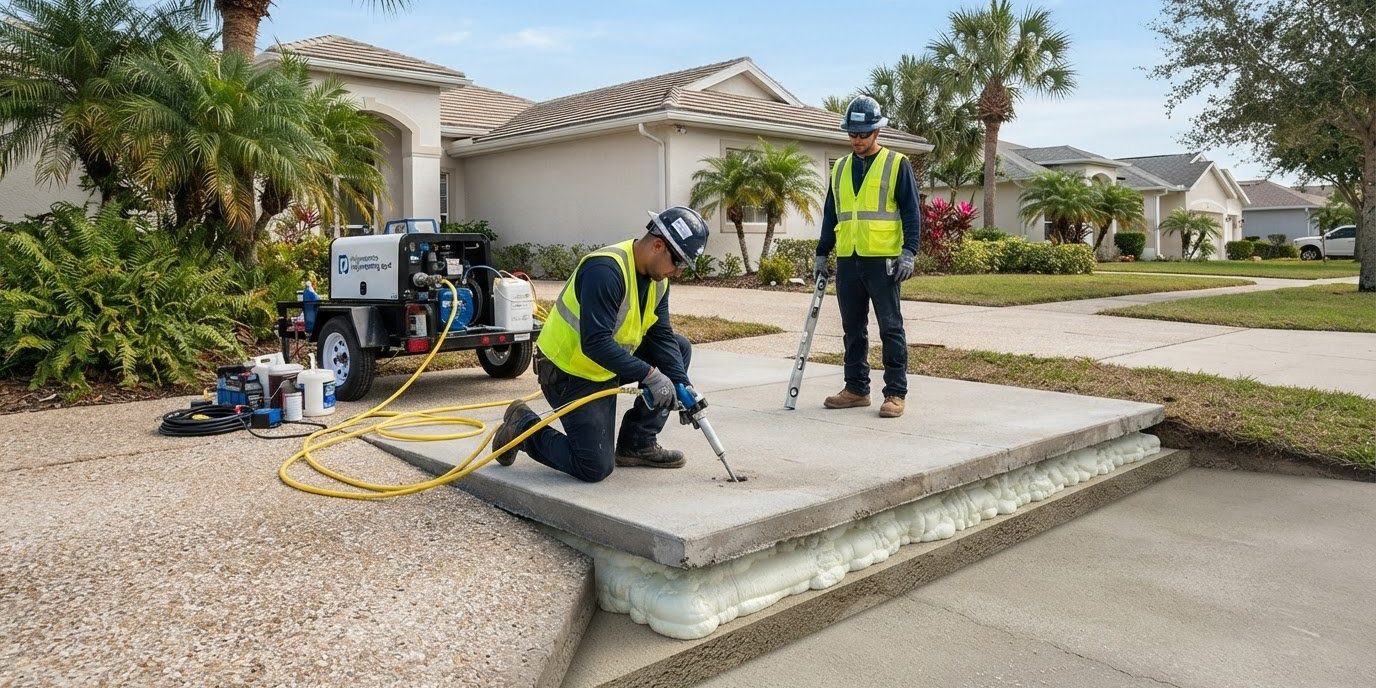
A sunken concrete slab may not need replacement to become level again. Polyjacking uses expanding polyurethane foam injected beneath concrete to fill voids and create support. For polyjacking services in Englewood, the right approach depends on the slab’s condition and the cause of settlement.
Uneven driveways, walkways, and other concrete surfaces can affect daily use. A repair should address the support beneath the slab, not just its appearance. Polyjacking is one lifting method; traditional mudjacking uses different material and a different process, so compare how each fits the concrete and site conditions.
This article explains how polyurethane foam injection works, how polyjacking compares with mudjacking, and what factors help determine which method may suit a property in Englewood, Florida. You’ll also learn what to expect from a concrete lifting assessment and how RiseLock Concrete Lifting’s concrete leveling and polyurethane concrete lifting services fit into the repair process.
Key Takeaways
- Polyurethane foam expands beneath sunken concrete to fill voids and support the slab, using small injection holes rather than full slab replacement.
- Polyjacking and mudjacking use different lifting materials; compare their curing time, moisture resistance, and fit for the slab’s condition.
- For driveways, sidewalks, patios, and pool decks, the cause and extent of settlement help determine the appropriate repair approach.
- An inspection and assessment can identify where concrete has settled and what support the surface needs before work begins.
- Polyurethane concrete lifting and concrete leveling can address uneven slabs, while concrete repair is relevant when the concrete itself also needs attention.
Concrete leveling in Englewood, Florida
In Englewood, Colorado, concrete leveling can restore support beneath a sunken or uneven slab. Small holes are drilled in the concrete, then polyurethane foam is injected below. It expands into voids, lifts the slab, and hardens into a supporting layer. Because the work is done beneath existing concrete, full slab replacement may not be necessary. A settled driveway panel beside a level panel is one example where lifting may correct a height difference.
Polyurethane foam lifting uses small injection holes and minimal excavation. Foam is placed beneath the affected slab to lift it toward a more even position. The foam used by RiseLock Concrete Lifting is waterproof and won’t wash out or break down over time. The work improves support below the slab, but it does not necessarily address every cause of movement across a property.
Traditional mudjacking also lifts concrete, but uses a slurry of soil, sand, and cement instead of expanding polyurethane foam. Both methods address settled slabs, but the materials and injection processes differ. When looking for reliable polyjacking services Englewood property owners should consider how the method suits the slab, the void beneath it, and the surface’s use. A sunken walkway and a large driveway may call for different lifting plans.
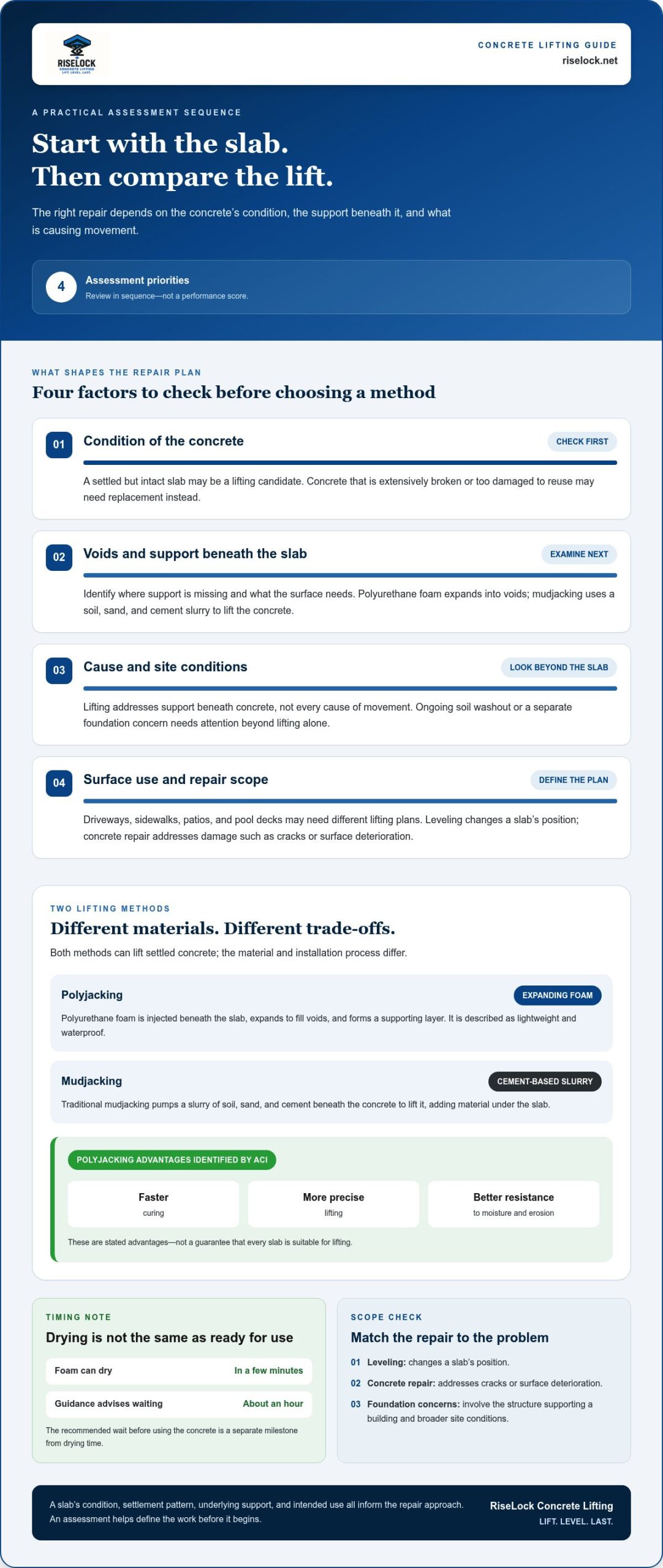
Concrete leveling, concrete repair, and foundation work address different problems. Leveling changes a slab’s position; concrete repair addresses damage such as cracks or surface deterioration. Foundation concerns involve the structure supporting a building and require attention to broader site conditions. One uneven patio panel alone does not establish that a home’s foundation has shifted. Distinguishing these issues helps define the right repair scope.
Settlement causes vary by region. For the Upper Midwest, ACI identifies freeze-thaw cycles, water infiltration, poor soil compaction, heavy vehicle traffic, and natural soil erosion as causes. Those regional causes shouldn’t automatically be assumed for Englewood, Colorado; the slab and its site conditions guide assessment. A practical sequence is to identify the affected area, examine the concrete and support, then select a lifting or repair approach suited to the problem.
Polyurethane foam used for lifting can dry in a few minutes, but guidance advises waiting about an hour before using the concrete. Drying time and recommended time before use are separate milestones. That distinction helps with planning access to a driveway or walkway. In Englewood, Colorado, professional polyjacking services Englewood may suit concrete that has settled but remains appropriate for raising; the slab’s condition, unevenness, and support needs inform the repair plan.
Polyjacking compared with mudjacking
Polyjacking and mudjacking both lift sunken concrete, but use different materials and installation processes. The right fit depends on the slab, the void beneath it, and the surface’s intended use. For a property in Englewood, Colorado, assess those conditions to determine whether lifting is suitable or damaged concrete needs another repair approach.
Polyurethane Foam Versus Mudjacking
Polyjacking injects expanding polyurethane foam beneath a slab. Traditional mudjacking pumps in a slurry of soil, sand, and cement. The foam expands to fill voids and support concrete; the slurry lifts through a different material. ACI identifies faster curing, more precise lifting, and better moisture and erosion resistance as polyjacking advantages over mudjacking.
Those differences matter for a Colorado driveway, patio, or walkway. Polyurethane foam is lightweight, while mudjacking slurry adds material beneath the slab. The material alone does not determine whether a repair will last: the slab’s condition, settlement pattern, and underlying support also matter. When comparing methods in Englewood, consider the repair process and the concrete’s condition, not just the method’s name.
Either lifting method may address settlement without removing an entire slab. Replacement may be more suitable when concrete is too damaged to lift or reuse. A settled but intact patio panel presents a different repair decision from one that is extensively broken.
Polyurethane Lifting Risks and Limitations
Polyurethane lifting addresses support beneath concrete, not every cause of movement. If water continues to wash soil away or a building has a separate foundation concern, lifting alone won’t correct that condition. An assessment should distinguish a settled slab from concrete damage or broader foundation movement before defining the repair scope.
Foam expands during injection, so placement and the slab’s response matter. The location of voids and the concrete’s condition help guide the work, whether the surface is a driveway, sidewalk, or patio in Englewood, Colorado. Lifting is not a substitute for repairing concrete that cannot remain intact.
Before repair work begins, review written warranty terms for coverage, exclusions, and duration. Insurance documentation should clarify applicable liability and workers’ compensation coverage. These details define protections and responsibilities, and terms can vary between providers.
RiseLock serves Colorado communities, including Englewood, Denver, Aurora, Centennial, Parker, Colorado Springs, Littleton, Lakewood, Arvada, Thornton, Wheatridge, Castle Rock, Castle Pines, and Boulder. Polyurethane lifting and concrete leveling are relevant services for settled slabs. The specific work depends on the concrete’s condition and the project’s needs.
Which is better for lifting concrete: polyjacking or mudjacking?
Polyjacking and mudjacking both lift settled concrete, but use different materials. The better fit depends on the slab, its support, and how soon the surface needs to return to use. For Englewood property owners, comparing these factors makes the choice clearer than relying on the method name alone.
The Polyjacking Repair Process
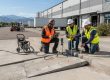
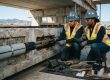
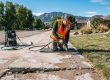
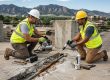
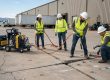
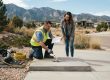
For a driveway, sidewalk, patio, or pool deck, work begins by assessing the slab and locating areas needing support. Small holes are drilled, then polyurethane foam is injected beneath the concrete. The expanding material fills voids and lifts the surface; injection points are plugged and patched afterward. This method can address uneven surfaces without removing the full slab. The assessment also considers cracking and whether the concrete can remain intact during lifting.
Permit requirements depend on the work location and applicable local rules. A private driveway and a sidewalk in a public right-of-way may have different requirements. Identify the property boundary and repair area before planning the work, especially if the sidewalk connects to a public route.
Repair Speed and Downtime
Polyurethane foam can dry in a few minutes, but that doesn’t mean the surface should immediately carry normal use. ACI says repaired concrete can often return to service the same day after polyjacking. Guidance also advises waiting about an hour before using the concrete. Plan access around that distinction, particularly for a driveway serving daily vehicle traffic.
ACI identifies faster curing and quicker return to service as advantages over mudjacking. A parking lot, sidewalk, or retail entrance may benefit when reduced downtime matters. The overall schedule depends on the repair area and work involved, so distinguish material curing from the job’s completion. Property owners comparing polyjacking services in Englewood can consider how access needs shape their repair decision.
Repair Costs and Turnaround
The estimate depends on the project, including the area’s size, site conditions, and the repair scope. For a driveway or parking area, the affected surface and slab condition help define the work. A clear estimate should reflect the specific repair needed rather than assume every sunken surface requires the same treatment.
Turnaround claims need context. ACI describes same-day return to service as common after polyjacking, while foam may dry in a few minutes. These are different milestones: curing, readiness for use, and completion. For Englewood property owners evaluating polyjacking services in Englewood, clarify which milestone matters for the driveway, sidewalk, or other surface.
When Polyjacking Is Suitable
Polyjacking may suit settled or uneven concrete when the slab remains liftable and voids beneath it need filling. Examples include a sunken driveway panel, sidewalk section, or patio. It may not suit concrete that is severely cracked, broken, or unable to remain intact during lifting. Concrete repair or replacement may better address extensive damage.
Water infiltration and soil erosion can contribute to settlement, so lifting alone may not resolve an ongoing cause. Polyurethane foam is waterproof and won’t wash out or break down over time, but the slab and its support still guide the repair choice. For cracked surfaces, distinguish damage to the concrete from sinking before choosing lifting over replacement.
Company experience and service approach
A sound concrete lifting plan begins with an inspection and assessment. The first step is identifying which concrete surfaces have settled, such as a driveway panel or warehouse floor. Next, the assessment considers the slab’s condition and the support beneath it. These observations help distinguish a leveling need from damaged concrete requiring repair. In Englewood, Florida, defining the work area also keeps the proposed repair focused.
The assessment should connect the visible problem to a practical repair scope. A sunken sidewalk section, for example, calls for attention to its height, condition, and intended use. A broad area of uneven driveway concrete may need a different plan. Concrete lifting addresses settlement beneath a slab; concrete repair addresses damage to the material itself. Separating those needs clarifies what the work is intended to correct.
Project planning also defines the affected area. An estimate reflects the size of the area, so identifying the boundaries of a sunken section matters. One isolated panel and several uneven surfaces are different scopes of work. Inspection establishes what needs attention before the repair plan is set, making the proposed leveling work easier to understand alongside the observed condition.
Slab replacement and concrete lifting address settlement differently. Replacement removes existing concrete and installs new material; lifting works beneath a slab that can remain in place. For a settled but intact patio, lifting may preserve the existing concrete. A severely damaged slab may need repair or replacement instead. The concrete’s condition, not simply its position, is central to the decision.
The estimate depends on the project, including area size, slab condition, and repair scope. Compare replacement with lifting by considering the work involved in removing and rebuilding the surface as well as the proposed lifting work. A driveway with one settled section, for example, is a different project from one with widespread cracking and deterioration.
When considering a concrete service in Englewood, focus on the specific project rather than a company label. The assessment should address the driveway, walkway, floor, or patio involved. Relevant experience shows in a disciplined approach to inspection, scope, and concrete leveling. The method still needs to match the site’s concrete surfaces and support conditions.
Concrete lifting works beneath the slab, while replacement removes the existing surface and rebuilds it. A careful assessment records the affected area, notes visible damage, and identifies whether leveling or concrete repair addresses the main issue. These steps help property owners understand the proposed work without assuming every sinking slab needs replacement.
Polyjacking and polyurethane foam injection
Polyjacking uses polyurethane injection to support an existing concrete slab from beneath. The foam expands into voids, then hardens into a supporting layer. Unlike surface patching, which addresses visible damage without filling space underneath, lifting supports the slab from below. A sunken driveway panel, for example, may need support beneath it before its position can be corrected.
The process begins by identifying where uneven concrete has lost support. Small holes are drilled through the slab to allow injection beneath the affected area. Foam fills the voids and lifts the concrete. The goal is controlled movement, not simply adding material. The slab’s condition, extent of settlement, and location of voids guide the injection work.
According to ACI, polyurethane foam is lightweight and places no excess stress on the soil below. Its expansion allows it to fill space beneath concrete without the heavier slurry used in mudjacking. ACI also says the foam resists water and moisture, which can help prevent future erosion beneath slabs. Those properties explain why the injection material matters to both lifting and support.
After lifting, the injection holes are plugged and patched with cement. The small patches may remain visible, while the existing concrete stays in place. This helps property owners understand what the finished surface looks like. Polyurethane foam injection is not a coating or a replacement slab; it works below the concrete through targeted access points.
Foam expansion is also why injection requires measured placement. The material must reach the voids that need support, while the slab is raised toward a more even position. ACI identifies more precise lifting as an advantage of polyjacking. For example, a sunken section beside a level driveway panel calls for attention to the transition between surfaces, not just the lowest point.
Polyurethane foam can dry in a few minutes, but guidance advises waiting about an hour before using the concrete. Drying and readiness for normal use are different milestones. Plan access around that wait for a driveway, walkway, or other frequently used concrete surface.
Polyurethane concrete lifting suits slabs that need renewed support beneath them; surface deterioration may require separate concrete repair. The practical takeaway is to assess the slab and its underlying voids together. For a settled concrete surface, request guidance on concrete leveling and the repair approach that fits the condition.
RiseLock Concrete Lifting: Polyurethane Concrete Lifting
RiseLock provides polyurethane concrete lifting for sunken or uneven slabs. If a driveway, walkway, or patio has settled but remains suitable for lifting, an assessment can identify the affected area and the support it needs. Concrete leveling addresses the slab’s position, while concrete repair is relevant when the concrete itself is damaged.
Describe the surface, visible settlement, and any cracking so the work can be matched to its condition. For an Englewood property with uneven concrete, this helps clarify whether lifting or repair best addresses the problem.
Contact RiseLock Concrete Lifting to discuss your concrete surface and repair needs.
Choose the Next Step for Your Concrete
Before arranging a repair, note which surface concerns you most and how unevenness affects daily use. A driveway, walkway, or patio may involve different priorities, from vehicle access to a level walking surface. Clear observations help focus the assessment on the slab and the work it needs.
For property owners considering polyjacking services in Englewood, RiseLock provides polyurethane concrete lifting and leveling for settled surfaces, along with post-tension installation. The right service depends on the project’s needs and the concrete’s condition. Contact RiseLock to discuss your observations and plan a practical next step.
Contact RiseLock Concrete Lifting to discuss your concrete project. A clear plan starts with understanding the surface and what you need it to do. From there, you can move forward with greater confidence in the repair decision.
Frequently Asked Questions
What is Polyjacking?
Polyjacking lifts and supports settled concrete without removing an intact slab. A technician injects expanding polyurethane beneath the surface to fill voids and restore support. It may suit a driveway, patio, sidewalk, or garage floor with settlement. The work addresses support below the concrete rather than rebuilding the surface from scratch.
What is polyjacking and how does polyurethane concrete lifting work?
Polyurethane concrete lifting uses foam injected through small holes in an existing slab. The foam expands beneath the concrete, fills spaces, and lifts the slab as it hardens. The injection points are then plugged and patched. For example, an uneven garage floor can be assessed to locate the settled area and determine whether the slab is suitable for lifting before injection is planned.
What affects the cost of polyjacking a driveway, sidewalk, patio, or foundation?
The estimate depends on area size, the slab’s condition, the extent of settlement, and the work required. A settled sidewalk section differs from a broad driveway area or a foundation concern. RiseLock serves Denver, Aurora, Centennial, Parker, Colorado Springs, Englewood, Littleton, Lakewood, Arvada, Thornton, Wheatridge, Castle Rock, Castle Pines, and Boulder.
How long does polyjacking take, and when can concrete be used afterward?
Most projects are completed in hours, though project duration and return-to-use timing are separate considerations. Polyurethane foam can dry in a few minutes, but guidance advises waiting about an hour before using the concrete. For a driveway, plan around that wait before bringing vehicles back onto the surface. The affected area and repair work shape the project schedule.
How do Englewood soil conditions and freeze-thaw cycles affect concrete settlement and polyjacking?
Freeze-thaw cycles can contribute to settling in colder regions, but they shouldn’t be assumed to explain a slab’s movement in Englewood, Florida. ACI identifies water infiltration, poor soil compaction, heavy vehicle traffic, and natural soil erosion among Upper Midwest settlement causes. For a Florida property, note where water collects or soil appears disturbed, then consider those site conditions during the concrete assessment.
What should homeowners expect during a polyjacking inspection and repair?
Expect an inspection to identify the affected slab, visible damage, and areas needing support. Before the visit, note which sections feel uneven and whether water flows or collects nearby. Photos of the surface and its transitions can help describe the concern. RiseLock Concrete Lifting serves Colorado locations, including Englewood, Colorado, not Englewood, Florida; its assessment can help define the appropriate concrete work for the property.
What warranties and insurance should Englewood polyjacking contractors provide?
Review written warranty terms for coverage, exclusions, and duration. Insurance documentation should clarify applicable liability and workers’ compensation coverage.