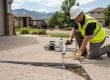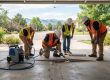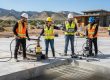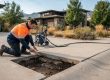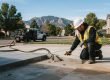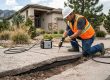
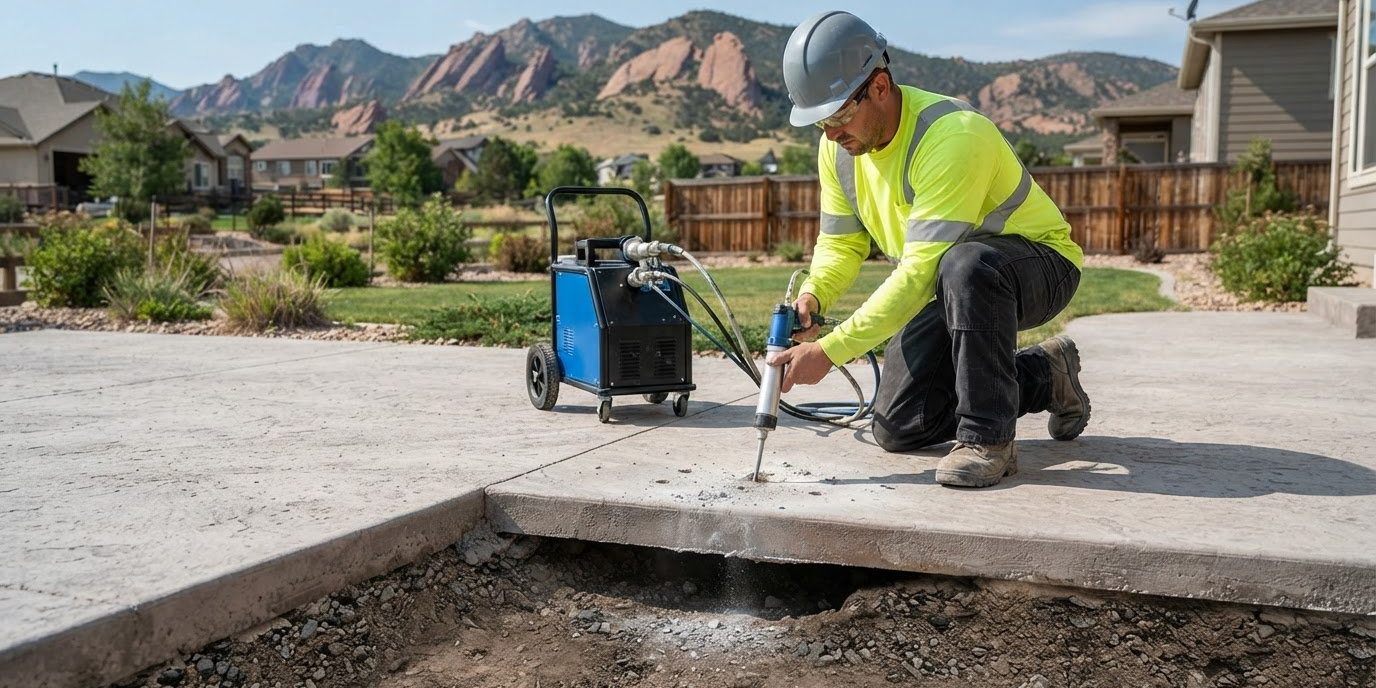
What if the rocking slab isn’t the real problem, but a sign that the ground beneath it has shifted? A search for “fixing a rocking concrete slab Castle Rock” often starts with a practical concern: an uneven surface feels unsafe and makes a walkway, patio, or driveway harder to use. The next question is whether the slab can be stabilized or needs a different repair.
The right answer depends on what is happening below the concrete and how much damage the slab has sustained. Uneven support can cause rocking, while cracks, surface deterioration, or ongoing movement may affect which repair is appropriate. Lifting is not the right solution for every slab, so identifying the cause comes before choosing a method.
This guide explains common warning signs and what a professional assessment can reveal. You’ll also learn how concrete leveling, polyurethane lifting for suitable slabs, and replacement compare, plus what to consider when planning a durable repair in Castle Rock. The goal is to help you understand the options and make an informed decision for your property.
Key Takeaways
- A slab that moves underfoot needs assessment. Surface cracks alone don’t show whether its support is unstable.
- A contractor can evaluate movement, slab condition, geometry, support, drainage, and intended use before recommending a repair.
- Polyurethane lifting may suit some sunken or uneven slabs, while extensive damage or other conditions may call for replacement.
- Before fixing a rocking concrete slab Castle Rock, note when the movement began and tell the contractor about drainage changes or previous repairs.
- Review the proposed repair scope and choose a method based on the slab’s condition, not on lifting as the default solution.
Why Is Your Concrete Slab Rocking in Castle Rock? Start With the Signs
A concrete slab that shifts underfoot can be unsettling, especially along a walkway or patio you use every day. Rocking calls for careful assessment, but movement alone does not reveal what caused it or which repair is appropriate.
A rocking slab moves against unstable or uneven support, so the condition of that support matters as much as the visible surface. A crack can be a surface imperfection without movement, while a slab may rock even if its surface appears mostly intact. The signs can occur together, but one does not automatically explain the other.
What causes a concrete slab to rock or shift?
If part of the base beneath a slab settles or erodes, a gap can form. The unsupported area may then move under ordinary foot traffic or other loads. Uneven support can also leave one edge higher or lower than another. Water movement, drainage changes, soil conditions, or a void beneath the concrete are possible contributors, but each needs site-specific confirmation. General causes of settlement include changes in soil moisture and erosion. Those possibilities should not be treated as a diagnosis of a particular Castle Rock property.
Which signs call for a professional inspection?
Look for movement you can feel, gaps that appear to change, edges that sit at different heights, or rocking that returns after the slab settles back. Note where the movement occurs and whether it changes over time. A small surface blemish without movement is different from a slab that shifts, separates from an adjoining surface, or becomes less stable.
- Notice whether one corner or a broader section moves.
- Record visible gaps, uneven edges, and nearby drainage changes.
- Pay attention to whether the movement recurs or worsens.
These observations help you describe the issue, but they cannot establish whether the cause is a support void, drainage, soil movement, or something else. Avoid repeatedly testing a visibly unstable slab. Limit use of the area until its condition has been assessed, particularly if the movement creates a trip concern.
If you’re considering fixing a rocking concrete slab Castle Rock, start by documenting what the slab does rather than guessing at a repair. A professional can assess the concrete and its support to determine whether lifting may be suitable or whether another approach should be considered.
How a Contractor Diagnoses a Rocking Concrete Slab Before Repair
A reliable repair recommendation starts with an on-site assessment, not a guess based on a photograph or a crack alone. A contractor should observe how the slab moves, inspect its condition and geometry, review its support and the surrounding drainage, then recommend a method based on those findings. This helps distinguish a slab that may be suitable for lifting and leveling from one that needs a different type of concrete repair.
What should the site assessment check?
The contractor can observe where and how the slab moves, check its level, and examine the surface for cracks, broken edges, or sections separated from adjoining concrete. The slab’s size, shape, thickness where it can be determined, and intended use also matter. A patio and a frequently used walkway may have different practical demands.
The assessment should also consider the ground around the slab and how water drains across or near it. These are factors to investigate, not proof that drainage or soil caused the movement. Whether repair is suitable depends on the concrete and its support at the specific site.
When is lifting not the right repair?
Lifting and leveling may be options for slabs that remain sound enough to stabilize, but extensive cracking, fragmentation, badly broken edges, or deeper structural concerns can change the decision. When shifting is tied to broader subgrade issues or serious structural movement, working with a team like Hercules Foundation Repair can provide comprehensive slab and foundation stabilization. Raising a slab cannot, by itself, resolve every type of concrete damage. The contractor should explain what the assessment indicates and why the proposed repair fits the slab’s condition.
For more detail on the method, read this guide to polyurethane concrete lifting. It can help clarify how lifting works, while an on-site evaluation determines whether it is appropriate for a particular slab.
Photos and notes about when the movement began can help inform the discussion, but they do not replace inspecting the concrete and its support in person. If you’re considering fixing a rocking concrete slab Castle Rock, ask the contractor to identify the condition being addressed, describe the limits of the recommended method, and explain what could make another repair more suitable.
Castle Rock property owners can discuss a rocking slab with RiseLock and ask about assessment and repair options, including polyurethane lifting for slabs found suitable.
Polyurethane Lifting or Replacement: Choosing a Repair for a Rocking Slab
A rocking slab does not automatically need to be removed, but lifting is not the right answer in every case. The repair should match the concrete’s condition and the support beneath it. A sound slab that has settled or become uneven may be a candidate for polyurethane lifting. Extensive deterioration or other site concerns may point toward replacement or another repair.
| Consideration | Polyurethane lifting | Replacement |
|---|---|---|
| Suitability | May suit stable, intact slabs that have settled or become uneven and can be supported through lifting. | May be considered when the slab is badly deteriorated or site conditions make lifting unsuitable. |
| Disruption | Works on the existing slab, so it does not require removing and repouring the whole section. | Involves removing the affected concrete and placing a new slab, with the work shaped by the project scope. |
| Scope | Focuses on raising and stabilizing suitable concrete by addressing support beneath it. | Replaces the damaged concrete rather than lifting the existing slab. |
When can polyurethane concrete lifting be considered?
RiseLock uses high-density foam for polyurethane lifting. For a suitable sunken or uneven slab, a contractor assesses the concrete and its support before recommending injection. The method is an option, not a universal fix. The slab must be in a condition where lifting is appropriate, and site findings guide that decision. For more detail, see this explanation of foam concrete lifting methods.
When might replacement or another repair be needed?
Significant deterioration, fragmentation, or structural concerns may mean the slab cannot be adequately addressed through lifting alone. When complete replacement is necessary, full-service concrete contractors like Born Integrated Construction can handle new slab work and paving to establish a properly compacted foundation. A photograph or single symptom cannot establish structural failure, so the recommendation should follow an on-site assessment. Ask the contractor what they found, how it affects the slab’s suitability, and why the proposed method fits your site conditions.
For homeowners weighing options for fixing a rocking concrete slab Castle Rock, the key question is not simply which method is less disruptive. It is whether the selected repair addresses the slab’s actual condition and support. A method that does not match the findings may leave the underlying issue unresolved.
Castle Rock property owners can discuss concrete lifting options with RiseLock and ask whether polyurethane lifting may suit their slab after assessment.
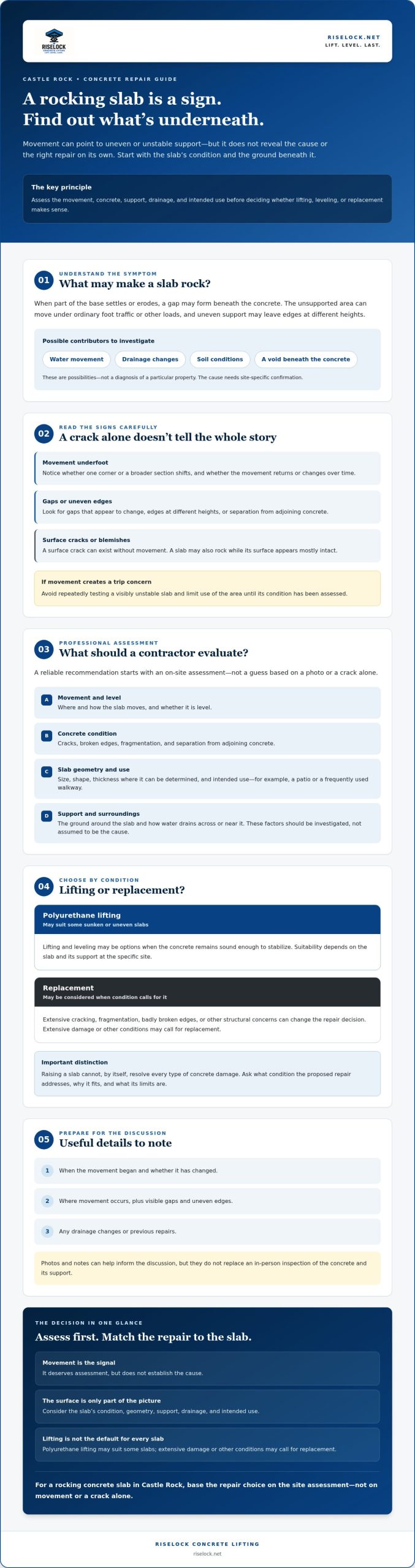
Before and During Concrete Slab Repair in Castle Rock
A little preparation can make a contractor’s assessment more useful and help you understand the proposed scope. For a rocking slab in Castle Rock, share clear observations, provide safe access, and discuss what the repair is intended to address. The site, slab condition, and access needs all affect the plan, so avoid assuming the work or its timing before an assessment.
How should you prepare for a contractor visit?
Document what you have observed before the visit. Take dated photos of the slab and nearby edges, and note where movement occurs, when you notice it, and whether it seems to be changing. Do not keep stepping on an unstable section to test it. Describe what you have already experienced and limit access if the movement creates a safety concern.
Share relevant site history, including previous concrete repairs, nearby drainage changes, or when the rocking first began. Point out downspouts and other nearby features that may be useful to review, without assuming they caused the movement. Clear a safe path to the slab so the contractor can inspect its surface and surroundings.
What questions help you evaluate a repair proposal?
Ask the contractor to explain the assessment findings before reviewing the proposed work. Useful questions include:
- What did you observe about the slab, its movement, and its support?
- Why is this repair method suitable for the slab’s condition?
- What work is included, and what site conditions could change the plan?
- Are there limitations or signs that would make another repair more appropriate?
Clear answers help you understand how the recommended scope relates to the observed problem. For additional background on leveling approaches, review this guide to concrete leveling.
During the repair, the contractor may need access to the slab and the surrounding work area. Confirm what should be moved or kept clear, and ask how the site will be managed as work proceeds. Access constraints or conditions discovered during the assessment may affect the plan. A professional should explain any proposed changes rather than leave you to infer what they mean.
If you’re planning fixing a rocking concrete slab Castle Rock, dated observations and relevant site history give the contractor a more useful starting point. Discuss your rocking slab with RiseLock to explore assessment and concrete repair options for your property.
Get a Professional Assessment for a Rocking Concrete Slab in Castle Rock
A sound repair decision follows a clear sequence: document how the slab moves, assess the concrete and its support on site, then choose a method based on those findings. Cracks or rocking alone cannot confirm the cause, and lifting is not appropriate for every slab. For homeowners considering fixing a rocking concrete slab Castle Rock, an assessment connects visible symptoms to the condition of the slab and the ground beneath it.
What to expect when discussing the slab with RiseLock
Be ready to describe where the slab is located, what movement or damage you have noticed, and when the rocking began. Mention known drainage changes, nearby water flow, or previous repairs, too. These details help frame the discussion, but the appropriate recommendation depends on the actual slab and site conditions, not on a description alone.
RiseLock serves Castle Rock and offers polyurethane concrete lifting and concrete leveling. These may be options when an assessment finds the slab suitable for lifting. If the concrete is significantly deteriorated or other conditions make lifting inappropriate, a different repair may need consideration. The goal is to match the recommendation to the findings rather than assume one method suits every case.
Arrange the next step for your Castle Rock property
Before reaching out, gather any photos and notes you have about the slab’s movement. Prepare questions about what an assessment would examine, which repair options may be considered, and what information is needed to discuss the property. The repair scope and next steps depend on the slab and site, so confirm those details directly rather than relying on a general description.
A useful conversation should clarify what is known, what still needs assessment, and why a proposed method may fit the concrete. That gives you a practical basis for deciding how to proceed without assuming a particular outcome or repair scope before the slab is evaluated.
If you’re ready to discuss your property, Discuss your concrete slab with RiseLock and ask about concrete lifting and leveling options for your Castle Rock slab.
Take the Next Step Toward a Stable Slab
A rocking slab is a reason to investigate, not an automatic sign that the concrete must be replaced. Note where and when it moves, then have the slab and its support assessed before choosing a repair. Polyurethane lifting may be appropriate for some slabs, while significant damage or site conditions may call for another approach.
That assessment-first process is central to fixing a rocking concrete slab Castle Rock. The right method depends on the condition of the concrete and what is happening beneath it, so a clear explanation of the findings can help you make a sound decision for your property.
RiseLock serves Castle Rock and other Colorado communities, offering polyurethane concrete lifting and concrete leveling for slabs found suitable after assessment. If you’re ready to discuss what you’re seeing and explore a practical next step, discuss your concrete slab with RiseLock.
With a careful evaluation and a repair matched to the site, you can move forward with greater confidence about how to address the problem.
Frequently Asked Questions
Can a rocking concrete slab be repaired without replacement?
Yes, a rocking slab may be repaired without replacement if its condition and support make lifting appropriate. For fixing a rocking concrete slab Castle Rock homeowners should start with an on-site inspection of the concrete, its movement, and the surrounding conditions. A badly deteriorated slab or one with structural concerns may need another approach. Do not assume injection can stabilize every slab. Ask the contractor to explain how the assessment supports the recommendation.
Why is my concrete slab rocking?
A slab may rock when its support is uneven or a void has formed beneath part of it. Water movement, drainage changes, and soil conditions can contribute, but the cause varies from property to property. Visible movement alone cannot confirm what is happening below the concrete. A contractor can assess the slab, its support, and the surrounding site to determine what may need attention before recommending a repair.
Is polyurethane concrete lifting suitable for a rocking slab?
Polyurethane lifting can be considered for suitable sunken or uneven concrete, but it is not right for every rocking slab. A contractor should assess the slab’s movement, visible damage, and support before recommending foam injection. Severe deterioration or structural concerns may call for a different repair. Ask what the inspection found and why those findings make lifting appropriate for your slab, rather than relying on a general description or photograph.
How does a contractor assess a rocking concrete slab?
A contractor observes where and how the slab moves, checks its level and visible condition, then considers its support and the surrounding site. They may ask when the movement began, whether drainage has changed, and whether the slab has been repaired before. This assessment helps determine whether lifting, leveling, or another repair may fit. A photograph or online description can provide context, but it cannot confirm the full site condition.
Can I fix a rocking concrete slab myself?
Avoid forcing a slab level or filling a suspected support void before understanding the cause. A surface patch may not stabilize the concrete and could make signs of movement harder to assess. Instead, note where the slab shifts and when you notice it. If the area feels unsafe, limit access while you arrange an assessment. A qualified contractor can explain whether lifting or another repair suits the slab’s condition.
How long does it take to repair a rocking concrete slab?
Repair time depends on the slab, site access, conditions found during assessment, and the method selected. There is no single duration that applies to every project. Before work begins, ask the contractor what the proposed repair involves, what preparation is needed, and when the area can be used again. Confirm project-specific timing directly, since the scope and site requirements can affect both the work and access to the slab.
Who can fix a rocking concrete slab in Castle Rock?
Look for a contractor who assesses both the concrete and its support before recommending a repair. Ask what the inspection covers and why the proposed method suits your slab. RiseLock Concrete Lifting serves Castle Rock and communities including Denver, Aurora, Centennial, Parker, Colorado Springs, Englewood, Littleton, Lakewood, Arvada, Thornton, Wheatridge, Castle Pines, and Boulder. The company provides polyurethane concrete lifting and concrete leveling. Confirm current service availability directly with RiseLock.