
When a concrete slab settles, what matters more: the foam or the diagnosis that guides where it goes? For the polyurethane foam injection process Thornton property owners should expect, careful assessment and controlled lifting are central to achieving a stable, even result. The work isn’t simply a matter of drilling and injecting. The slab’s condition and the space beneath it help determine whether this repair is appropriate.
It’s reasonable to want clear answers before work begins. Where will holes be drilled? How will the crew limit disruption, and what happens during cleanup? This guide explains each stage, from the initial inspection and repair plan through injection and the final level check. You’ll also learn which conditions can affect the approach and why foam lifting may not suit every settled slab or underlying problem. RiseLock provides polyurethane concrete lifting and leveling in Thornton for residential and commercial customers. Knowing what a contractor should explain about the scope, site conditions, and limitations can help you assess the proposed repair with greater confidence.
Key Takeaways
- The polyurethane foam injection process Thornton property owners can expect starts with evaluating the slab, its elevation, access, and surrounding surfaces.
- Injection points and drilling locations depend on site conditions, so the work plan may differ from one slab to another.
- Controlled lifting involves monitoring the slab’s response and comparing it with agreed elevation goals, not simply adding foam until it rises.
- Severe cracking or concrete deterioration may affect whether lifting is suitable. Ask the contractor to explain any limits or exclusions.
- Before an assessment, note visible changes, water pooling, and access constraints. Then ask how the proposed scope and final checks address your concerns.
What to expect from polyurethane foam injection in Thornton
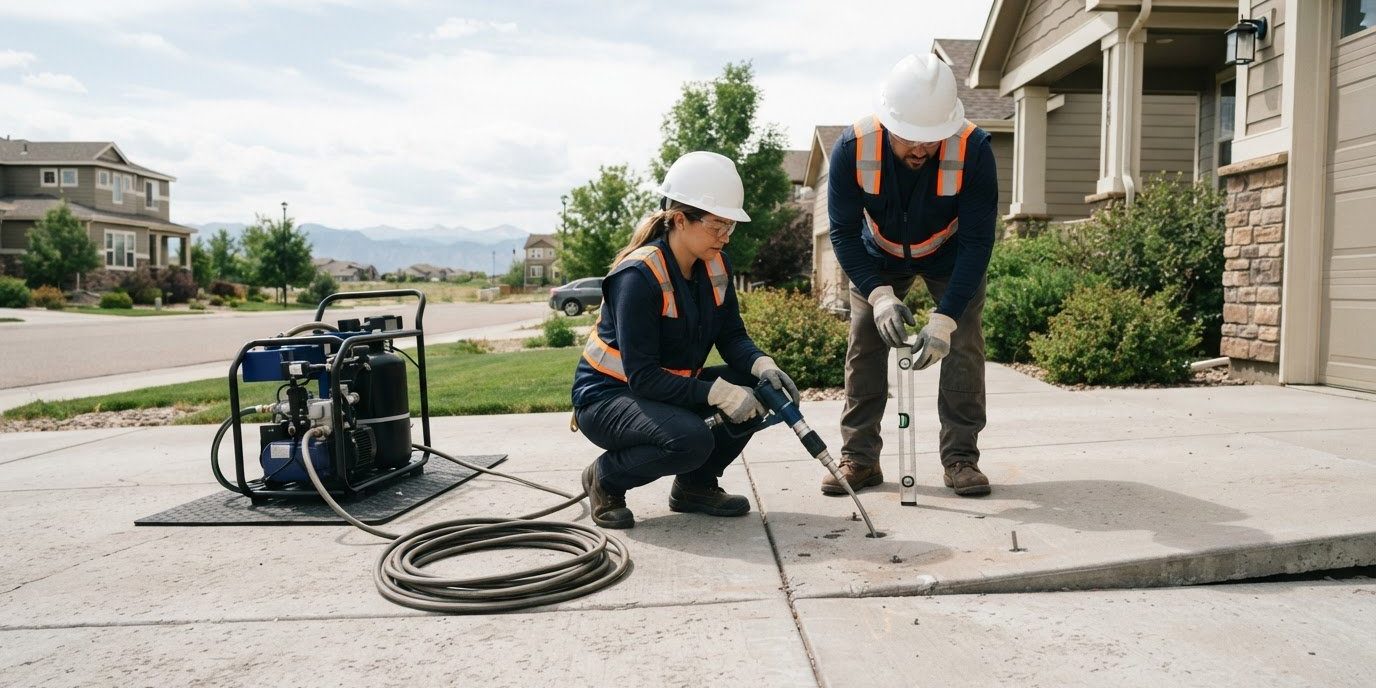
Polyurethane foam injection lifts and stabilizes a settled concrete slab by placing foam beneath it through small access holes. As the foam expands, it can fill spaces below the concrete and raise the slab toward an agreed elevation. For a plain-language overview of the broader method, see How concrete leveling works.
The polyurethane foam injection process Thornton property owners should expect begins with an assessment, not drilling. A contractor evaluates the slab’s condition and elevation, access for equipment, and nearby surfaces. Those details help determine whether lifting is suitable, where work may be needed, and what the repair is intended to address. The proposed plan should account for how the slab may respond and how it meets adjacent concrete, doors, steps, or other features.
Which Thornton concrete problems may suit foam injection?
A settled driveway section, walkway, patio, or garage slab may be a candidate for inspection. Uneven transitions, visible gaps beneath an edge, or water pooling near concrete can also be reasons to request an assessment. These signs don’t confirm what caused the problem or whether foam injection is the right repair. A professional needs to examine the slab and surrounding conditions before recommending a scope.
What foam injection can and cannot address
Polyurethane concrete lifting raises a settled slab by filling suitable voids beneath it with expanding foam. The goal is to improve the slab’s position and provide support beneath it, not to make every concrete defect disappear. Whether a lift is suitable and how it can be controlled depend on the slab’s condition and its response during the work.
Position and surface condition are separate concerns. Raising concrete may not repair cracks, restore deteriorated material, or resolve a drainage problem elsewhere on the property. Severe cracking or structural compromise may indicate that lifting alone won’t address the underlying issue. Ask the contractor to explain what the proposed work can correct, what it excludes, and whether another approach should be considered.
Foam lifting shouldn’t be presented as a guarantee against future settlement. The assessment should distinguish between a slab that may be lifted and stabilized and a broader problem that requires a different solution. In cases where settlement is tied to deeper structural shifts rather than just surface voids, specialized contractors such as Crown Leveling recommend evaluating the overall foundation before deciding on a repair method. Clear expectations help you judge the repair by its intended scope rather than assuming it will correct every visible symptom.
How the polyurethane foam injection process works, step by step
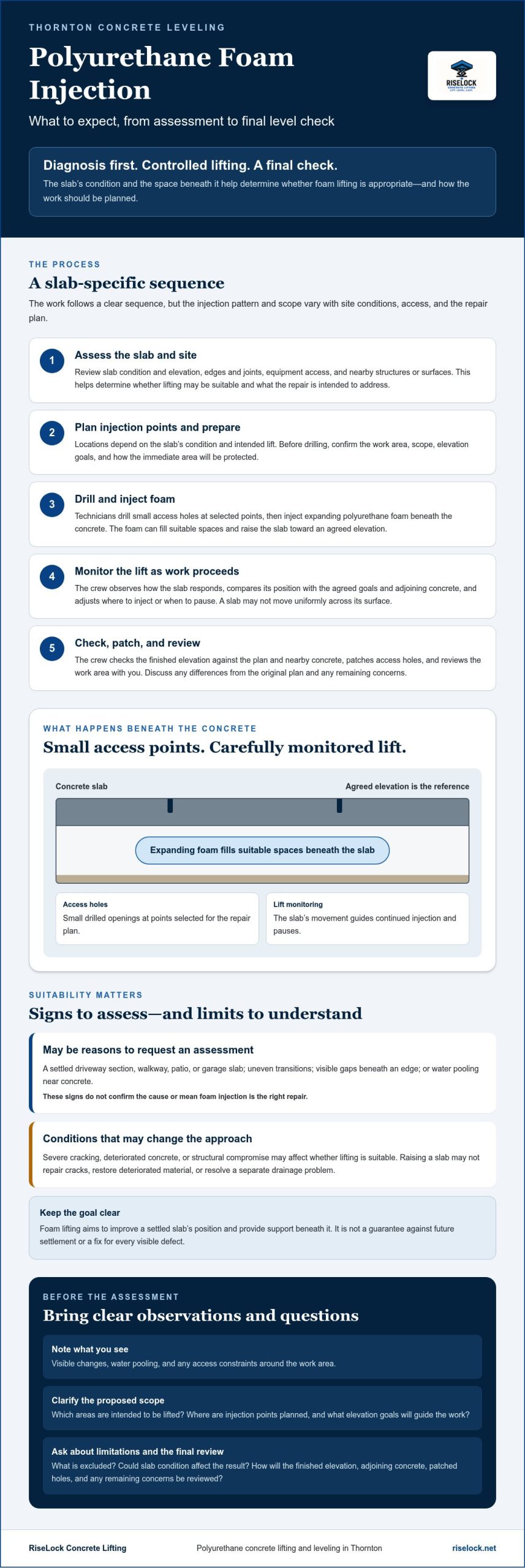
The work follows a sequence, but the injection pattern and scope depend on the slab, site access, and repair plan. A contractor should explain the intended lift and confirm what’s included before drilling starts. Understanding each stage makes it easier to follow the work and ask informed questions.
Assessment, injection-point planning, and preparation
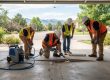
Before setting up, the crew reviews the slab’s movement and elevation, its edges and joints, access for equipment, and nearby structures or surfaces that could be affected. The contractor then selects injection points based on the slab’s condition and the planned lift. Before drilling, confirm the work area, agreed scope, and elevation goals. Ask how the crew will protect the immediate work area while carrying out the work.
Drilling, injection, and lift monitoring
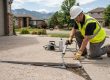
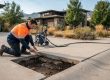
Once the locations are established, technicians drill small access holes at the selected points. They inject expanding polyurethane foam through these openings to place it beneath the slab. Rather than treating injection as one uninterrupted step, the crew can place measured amounts and observe how the concrete responds. The slab’s movement helps guide where to continue and when to pause.
Careful monitoring matters because a slab may not respond uniformly across its surface. The contractor watches its position in relation to the agreed elevation goals and adjoining concrete, adjusting the injection plan as needed. Access, slab condition, and project scope can all affect how the work proceeds, so the sequence is typical rather than identical for every job.
Elevation checks, patching, and final review
After injection, the crew checks the finished elevation against the planned goals and nearby concrete. This review helps confirm whether transitions and edges are in the intended position. The access holes are then patched, and the work area is reviewed with the customer. Ask which areas were lifted, whether the result differs from the original plan, and whether any concerns remain. Ask the contractor for curing and return-to-use guidance specific to the project.
A careful foam-lifting repair follows four core stages: assess the slab, inject foam, monitor its movement, and verify the finished elevation. That sequence is a practical way to understand the polyurethane foam injection process Thornton crews may use, while recognizing that site conditions can change the details. To learn more about RiseLock’s service, see polyurethane concrete lifting.
How contractors manage lift accuracy and decide whether foam is suitable
Accurate lifting depends on more than injecting foam beneath a low spot. The crew needs to observe how the slab responds, use controlled amounts of material, and compare movement with the elevation goals agreed on before work begins. Because concrete can react differently across a single surface, the plan may be adjusted as lifting progresses.
Suitability also depends on the condition of the concrete itself. A settled slab with sound material may be a candidate for lifting, while severe cracking, crumbling, or other signs of deterioration may require further evaluation. The polyurethane foam injection process Thornton property owners consider should include an honest discussion of what lifting can address and what it can’t.
What can affect a Thornton slab-lifting plan?
Slab dimensions and condition, equipment access, the likely location of voids, and proximity to steps, walls, joints, or other concrete can all influence the plan. Similar-looking slabs may have different causes of settlement, so appearance alone isn’t enough to determine the repair. Ask the contractor what they observed and how those site-specific details shape the proposed lift.
| Condition observed | Questions to assess | Further evaluation? |
|---|---|---|
| Settled slab with no obvious major deterioration | Can it be raised toward the agreed elevation, and how will its movement be monitored? | Assessment is still needed to confirm suitability. |
| Wide or extensive cracking, crumbling edges, or deteriorated concrete | Is the slab sound enough to lift, or could the material fail during the work? | Yes. Clarify whether lifting alone is appropriate. |
| Water pooling or signs of ongoing water flow | Is the issue related to slab position, or is there a separate drainage concern? | Yes. Lifting may not resolve the water problem. |
| Movement near structures or adjoining slabs | Could lifting affect transitions, joints, or nearby features? | Discuss the relationship and limits of the planned work. |
When lifting alone may not be the right answer
Extensive concrete deterioration, significant structural concerns, or unresolved water problems call for careful professional evaluation. Raising a slab doesn’t repair weakened concrete or correct a separate drainage issue. If the underlying cause remains, the visible problem may persist or return. Regional repair specialists such as Foundation Werks often point out that identifying underlying soil erosion is just as essential as the lift itself. A responsible contractor won’t promise that every slab can be lifted. They’ll explain uncertainties, limitations, and when another assessment may be needed.
How to prepare for polyurethane foam injection in Thornton
A useful assessment starts with clear information about what you’ve noticed. Before the site visit, record where the slab appears uneven, whether the condition seems to be changing, and whether water collects nearby. These details can help the contractor focus the inspection, but they don’t replace an on-site evaluation.
Preparation also means understanding the proposed work before approving it. The polyurethane foam injection process Thornton property owners are considering should have a defined scope, injection plan, and elevation goals. Ask what’s included and excluded, how the crew will access and protect the work area, and how the finished slab will be reviewed. For additional background on the method, see RiseLock’s polyurethane concrete lifting guide.
Questions to ask before approving a project
Ask the contractor to connect the proposed injection plan to observations about your specific slab. Find out how the crew will monitor movement, compare the result with the agreed elevation goals, and check adjoining concrete. Be direct about visible cracks, drainage concerns, or other defects: which are included in the proposed work, and which would need separate attention?
What to document before the site visit
Take photos that show both the problem area and its surroundings. A close view can capture a crack or uneven edge; a wider angle can show the slab’s relationship to steps, walls, joints, or adjacent concrete. Note when you first saw the change and whether it appears to have progressed. Also identify which areas you want assessed and any access constraints the crew should know about.
- Photograph uneven transitions, cracks, pooled water, and nearby structures.
- Record when the issue appeared and any changes you’ve observed.
- Point out affected areas and mention obstacles or limits on site access.
- Ask for the planned scope, injection locations, elevation goals, exclusions, and final review process.
These notes can make the assessment more focused, while the contractor’s inspection determines the appropriate plan. Before work begins, confirm how the area will be accessed and protected, and what the crew will review with you once injection is complete. If you’re considering polyurethane concrete lifting in Thornton, contact RiseLock to discuss your slab and the proposed repair scope.
Choosing a Thornton polyurethane foam injection contractor and next steps
A sound contractor selection comes down to the quality of the explanation, not a broad promise about results. The polyurethane foam injection process Thornton property owners are considering should be tied to observations about their specific slab. Look for clear reasoning about suitability, the proposed work area, how the lift will be monitored, and what the final checks will cover.
A proposal should also distinguish lifting from issues outside its scope. If cracks, deteriorated concrete, or drainage concerns are present, ask whether the proposed work addresses them or simply raises the slab. A careful provider will describe limitations plainly rather than suggesting that every defect can be corrected through injection.
What a clear project proposal should explain
Before approving work, review the proposal for a defined work area, an outline of the injection process, expected elevation checks, and clear exclusions. Ask who will perform the work and how site-specific questions will be handled if conditions differ from what was anticipated. A schedule or intended outcome is not the same as a guarantee, so make sure any assurance is documented and understood.
- Which observations support foam injection for this slab?
- How will the crew monitor movement and check the finished elevation?
- Which visible defects or drainage concerns are outside the proposed scope?
- How will changes to the plan be explained and approved?
For broader information about the method and its role in slab restoration, review RiseLock’s foam concrete lifting guide. Use it as background, then ask the contractor to connect the general process to your site’s conditions.
A practical next step for Thornton property owners
Gather your photos and questions, then request an assessment of the specific slab and surrounding area. Compare how contractors explain diagnosis, scope, lift monitoring, and limitations rather than relying on general performance claims. A clear discussion should help you understand what the proposed work is intended to correct and what may need separate attention.
RiseLock provides polyurethane concrete lifting and leveling for residential and commercial customers in Thornton. If you’re ready to discuss whether lifting may suit your slab, contact RiseLock about a concrete lifting assessment.
Move forward with a clear repair plan
A well-planned concrete lift starts with a careful assessment, a defined scope, and clear elevation goals. During the polyurethane foam injection process Thornton property owners should expect the crew to monitor how the slab responds and check the result against those goals. Just as important, foam lifting may not resolve severe concrete deterioration, separate drainage problems, or other structural concerns. A responsible recommendation should explain its limits.
Before choosing a contractor, make sure you understand what the proposed work covers, how lift accuracy will be checked, and which visible issues fall outside the scope. RiseLock lists polyurethane concrete lifting and leveling among its services and serves Thornton, along with Denver, Aurora, Centennial, Parker, Colorado Springs, Englewood, Littleton, Lakewood, Arvada, Wheatridge, Castle Rock, Castle Pines, and Boulder. A focused conversation about your slab can help clarify whether this approach fits the condition you’re seeing.
Contact RiseLock to discuss polyurethane concrete lifting in Thornton and the assessment your concrete may need. With clear information and a site-specific plan, you can take the next step with greater confidence.
Frequently Asked Questions
How does the polyurethane foam injection process work?
The polyurethane foam injection process Thornton property owners may encounter starts with an assessment of the slab and its elevation. The contractor identifies suitable injection points, drills small access holes, then injects expanding foam beneath the concrete while monitoring its movement. After lifting, the crew checks the result against the agreed elevation goals and patches the holes. The exact plan can vary with slab condition, access, and project scope.
How long does polyurethane foam injection take in Thornton?
Project duration depends on the size and condition of the slab, access to the work area, and the scope of injection and final checks. There isn’t enough information to give a reliable time estimate for every Thornton project. Ask the contractor for a project-specific schedule and clarify what it includes, such as setup, lifting, patching, and review. Don’t assume a general estimate applies to your site.
Can polyurethane foam injection fix cracked concrete?
Polyurethane foam injection can raise a suitable settled slab, but it doesn’t repair cracks or restore deteriorated concrete. A crack may remain visible after lifting, and extensive cracking or crumbling can affect whether the slab is suitable for the process. Ask the contractor to assess the concrete’s condition and distinguish the planned lifting work from any separate repair or structural concern.
Is polyurethane foam injection suitable for every sunken concrete slab?
No. Suitability depends on the slab’s condition, the cause and extent of settlement, access, and surrounding features. Concrete that’s severely cracked, deteriorated, or structurally compromised may need further evaluation before lifting is considered. Drainage or ongoing water issues may also require attention beyond raising the slab. Ask the contractor to explain what supports the recommendation and what limitations apply to your specific site.
What should I do before a concrete lifting assessment in Thornton?
Photograph the uneven areas, cracks, water pooling, and nearby structures from both close and wider angles. Note when you first noticed the change and whether it appears to be worsening. Identify which areas you want assessed, and share access restrictions or obstacles in advance. Bring questions about the proposed work area, injection plan, elevation goals, exclusions, and how the contractor will check the finished result.
Does polyurethane foam injection require large holes or major demolition?
Foam injection uses small access holes through the concrete to deliver material beneath the slab, rather than requiring major demolition as part of the injection method. The contractor determines where holes are needed based on the slab and lifting plan, then patches them after the work. Ask what drilling and cleanup will involve at your property, since access and project scope can affect the work area.
How do I choose a polyurethane foam injection contractor in Thornton?
Choose a contractor who explains the assessment, proposed scope, lift monitoring, limitations, and final elevation checks in terms specific to your slab. Ask who will perform the work and how site questions or changes will be handled. RiseLock Concrete Lifting provides polyurethane concrete lifting and leveling in Thornton, as well as Denver, Aurora, Centennial, Parker, Colorado Springs, Englewood, Littleton, Lakewood, Arvada, Wheatridge, Castle Rock, Castle Pines, and Boulder.