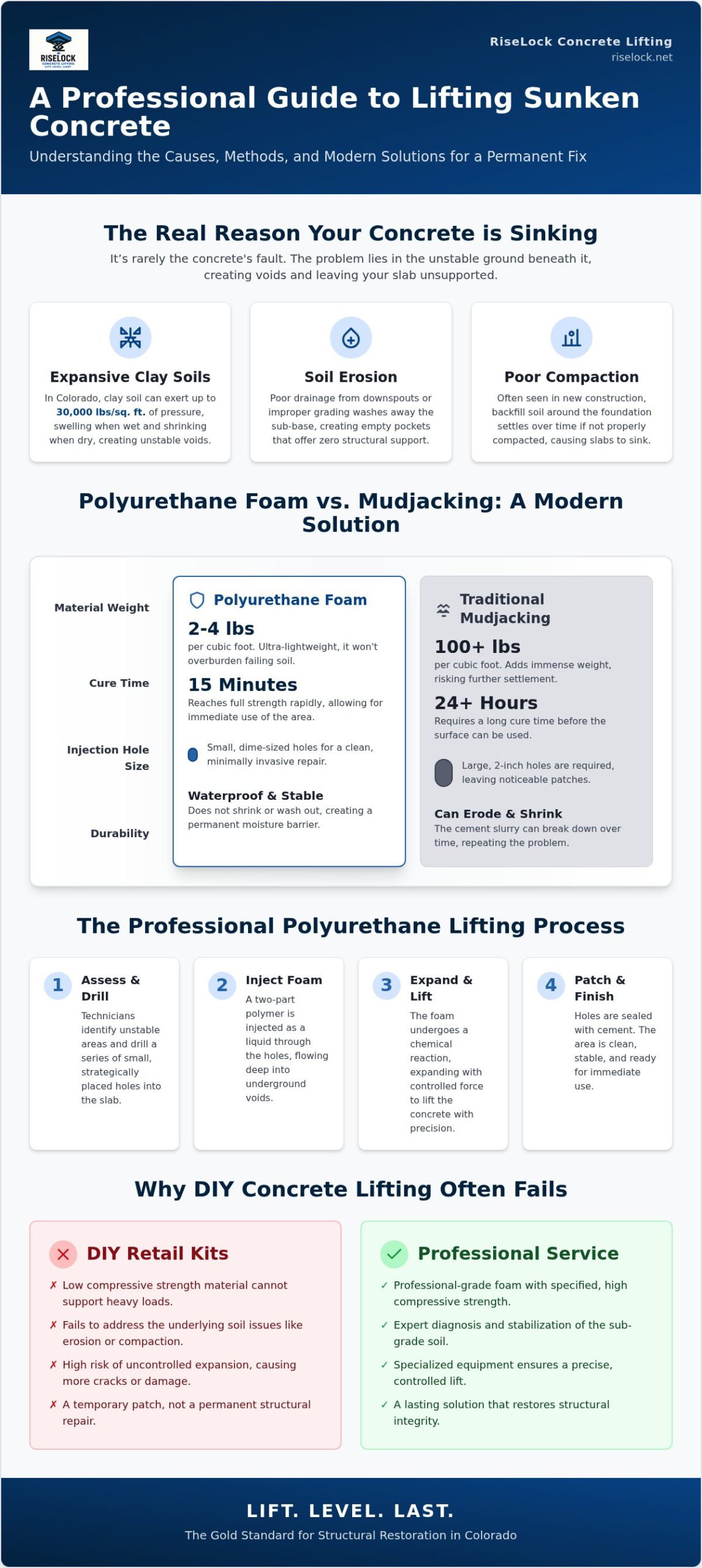
Expansive clay soils in Colorado can exert a force of up to 30,000 pounds per square foot against your concrete, essentially turning the ground beneath your home into a slow-motion hydraulic press. You have likely noticed the unsettling results: a driveway that no longer meets the garage floor, a dangerous trip hazard on the front walkway, or jagged cracks that ruin your curb appeal. It is natural to worry that a total, expensive replacement is your only path forward, especially when structural integrity is at stake.
You don’t have to endure the chaos of a demolition crew to reclaim your property’s safety and value. This guide provides a professional look at how to lift a sunken concrete slab, focusing on technical mastery and the permanent stabilization of the soil itself. We will examine the mechanics of modern polyurethane injection and explain why this high-precision, clean alternative has become the gold standard for structural restoration in 2026. By understanding the shift from traditional methods to advanced foam technology, you can move from the stress of property damage to the peace of mind that comes with a level, secure foundation.
Key Takeaways
- Identify the root cause of slab settlement, which typically stems from soil erosion or underground voids rather than a failure of the concrete material itself.
- Master the technical steps of how to lift a sunken concrete slab using high-density polyurethane injection to achieve a level surface without the mess of traditional mudjacking.
- Compare modern foam lifting against legacy methods to see how advanced materials provide superior durability and faster return-to-service times.
- Recognize the structural risks associated with retail DIY kits and why professional-grade compressive strength is necessary for a permanent repair.
- Learn how specialized restoration techniques address the unique challenges of Colorado’s expansive clay soils to prevent future shifting and cracks.
Understanding Why Your Concrete Slab is Sinking
Concrete slabs don’t simply sink on their own. They are rigid structures that rely entirely on the stability of the ground beneath them for support. Concrete leveling is the technical process of injecting specialized material under these slabs to restore their original elevation. When you are researching how to lift a sunken concrete slab, it is vital to realize that the concrete itself is rarely the problem. The real issue is the soil settlement and the formation of underground voids that leave the slab unsupported.
Along the Front Range, homeowners face a specific challenge: expansive bentonite clay. This soil acts like a sponge, swelling when wet and shrinking during dry spells. In Colorado, these clay soils can exert a force of up to 30,000 pounds per square foot. This constant cycle of movement creates pockets of air, or voids, which eventually cause the concrete to drop. Distinguishing between simple settlement and total structural failure is a critical first step. Settlement occurs when the slab remains mostly intact but drops in height; structural failure involves crumbling or deep webbing that may require replacement. Most issues in Denver and Colorado Springs are settlement-related, making them ideal candidates for professional restoration.
The Role of Soil Erosion and Compaction
Poor drainage is a primary driver of slab instability. When gutters or downspouts aren’t directed away from the concrete, water can wash away the sub-base material. This erosion creates voids, which are empty pockets of air that offer zero structural support. Interestingly, newly built homes in Denver often see slab sinking within five years. This typically happens because the backfill soil around the foundation wasn’t properly compacted during construction, leading to natural settlement as the ground finds its true density. Learning how to lift a sunken concrete slab involves addressing these voids to prevent the cycle from repeating.
Identifying Critical Trip Hazards
Safety is the most urgent reason to address sinking concrete. A vertical offset of just 1/4 inch can create a significant legal liability for homeowners and businesses alike. These hazards commonly appear in high-traffic areas:
- Garage thresholds: Where the driveway meets the garage floor.
- Pool decks: Where shifting slabs can create sharp edges.
- Public sidewalks: Which must remain level for pedestrian safety.
A sunken slab is a visible symptom of sub-grade instability.
Comparing Concrete Lifting Methods: Polyurethane vs. Mudjacking
Choosing the right technology is the most important decision when determining how to lift a sunken concrete slab. For decades, the industry relied on mudjacking, a process that involves pumping a heavy “slurry” made of sand, water, and cement under the concrete. While this traditional method can move a slab, its weight often exacerbates the very soil issues that caused the sinking in the first place. This is why RiseLock focuses exclusively on foam-based concrete leveling. Modern high-density polyurethane is a lightweight, high-performance alternative that solves the problem without adding unnecessary burden to the sub-grade.
Efficiency is another area where modern methods outperform the past. Mudjacking requires a cure time of at least 24 hours before the surface can support weight again. In contrast, polyurethane foam sets and reaches full strength in approximately 15 minutes. This speed allows homeowners and facility managers to return their driveways or loading docks to service almost immediately after the repair is finished.
Weight and Structural Load
A critical flaw in mudjacking is the sheer mass of the repair material. The slurry used in mudjacking typically adds over 100 pounds per cubic foot to the soil. If the ground is already failing under the weight of the concrete, adding several hundred pounds of cement slurry can trigger secondary settlement. Polyurethane foam weighs only 2 to 4 pounds per cubic foot. Because it is so light, it doesn’t overload the sub-base. As the foam is injected, it undergoes a chemical reaction that causes it to expand, allowing it to flow into microscopic voids and crevices that thick cement slurry simply cannot reach.
Durability and Environmental Impact
Precision is better achieved with smaller equipment. Traditional mudjacking requires drilling large, two-inch holes into the concrete to accommodate the thick slurry. Our foam-based approach uses injection ports that are only 5/8 of an inch wide, roughly the size of a penny. Once the ports are filled, the repair is nearly invisible. Beyond aesthetics, polyurethane is inherently waterproof. It won’t wash away during heavy Colorado rains or snowmelt, which is a common failure point for mudjacking slurry. This durability makes foam the more cost-effective choice over the lifespan of the property. If you’re ready to secure your foundation with a permanent solution, you can schedule a professional assessment to see the difference for yourself.
The Step-by-Step Professional Polyurethane Lifting Process
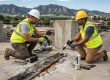
Successful concrete restoration is more of a surgical procedure than a construction project. When determining how to lift a sunken concrete slab, the process begins with a comprehensive site and soil evaluation. Our technicians analyze the drainage patterns and identify the exact locations of sub-grade voids to ensure the lift is both accurate and permanent. This diagnostic phase prevents the guesswork often associated with DIY attempts or less sophisticated methods.
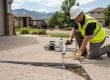
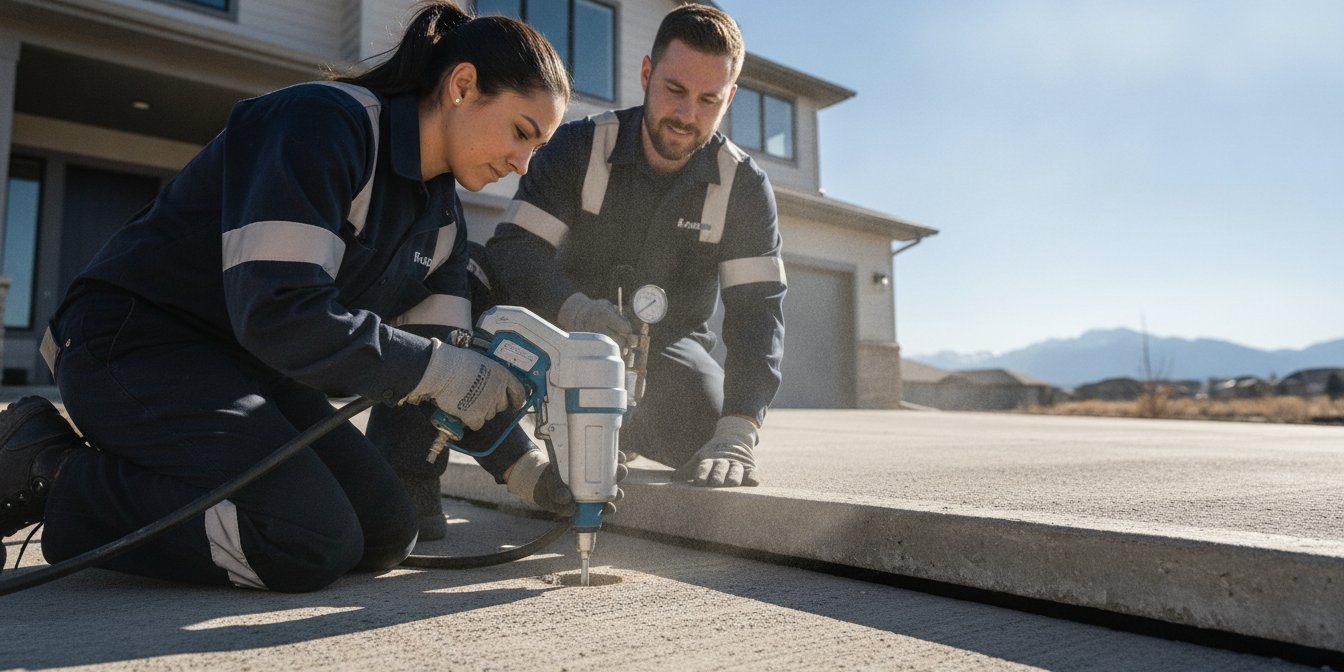
Once the mapping is complete, we move to precision drilling. Unlike the large, invasive holes required for mudjacking, polyurethane lifting utilizes a grid of small injection ports. These holes are only 5/8 of an inch in diameter, roughly the size of a penny. This minimal footprint preserves the aesthetic integrity of your driveway or patio while providing direct access to the voids beneath the surface.
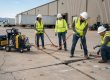
The most critical phase is the “Rise” itself. Technicians monitor the slab’s movement in real-time, often to within 1/10th of an inch of accuracy. When homeowners ask how to lift a sunken concrete slab with precision, the answer lies in this controlled expansion of the material. This level of accuracy ensures that the slab returns to its original grade without over-lifting or creating new stress points in the concrete.
Injection and Expansion
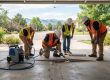
The lifting power comes from a two-part liquid polymer that initiates a chemical reaction upon injection. As the components mix, the liquid begins to expand into a high-density structural foam. This expansion happens in seconds, providing immediate lift while simultaneously compacting the surrounding loose soil. Technicians control the flow with specialized equipment, adjusting the volume of foam to ensure an even, level finish across the entire section.
Finishing and Port Sealing
After the slab has reached the desired elevation, the injection equipment is removed and the surface is thoroughly cleaned. We seal the small injection ports with a concrete-based grout that is color-matched to your existing slab’s texture and hue. This attention to detail ensures the repair is nearly invisible once cured. Because the foam hardens into a rigid, structural support almost instantly, the surface is “drive-on” ready within 15 minutes. This immediate return to service is a hallmark of professional foam concrete lifting.
Why DIY Concrete Lifting Often Fails (and When to Call an Expert)
The temptation to handle structural repairs independently is understandable, especially with the availability of retail foam kits. However, understanding how to lift a sunken concrete slab safely requires more than just a canister of propellant and a drill. Store-bought kits fail because they typically utilize low-density, open-cell foam designed for insulation rather than structural support. These materials lack the compressive strength necessary to hold the weight of a concrete slab long-term, especially when fighting against the shifting forces of Colorado’s expansive clay soils.
Precision is the primary barrier for the amateur. Without the high-precision monitoring equipment used by professionals, it is remarkably easy to “over-lift” a section. This creates uneven stress across the slab, often resulting in secondary cracks that are far more expensive to repair than the original settlement. The risk is real. In some cases, sinking isn’t just a surface issue; it can be a symptom of deeper foundation movement. A professional assessment determines whether you are looking at a simple void or a structural failure that requires a more comprehensive intervention.
The Post-Tension Danger Zone
In many residential developments across Denver and Aurora, homes are built using post tension installation. These slabs are reinforced with high-strength steel cables under extreme tension. For a DIYer, drilling into the concrete to inject foam is a high-risk gamble. Hitting one of these cables with a masonry bit can cause a catastrophic failure, resulting in the cable snapping and potentially bursting through the concrete surface. RiseLock’s deep expertise in post-tension systems allows us to navigate these slabs safely, using specialized mapping to avoid structural reinforcements.
The Cost of a Failed DIY Attempt
Correcting a botched DIY job is significantly more difficult than performing an initial restoration. Once low-quality, retail-grade foam cures under a slab, it is nearly impossible to remove without full demolition. Simply patching surface cracks with caulk or mortar does nothing to stop the underlying sinking cycle. Professional foam concrete lifting is a permanent fix that addresses the root cause of the problem by stabilizing the sub-grade.
If you are unsure about the structural reinforcement of your slab, don’t risk a DIY failure. You can contact RiseLock for a professional inspection to ensure your repair is handled with technical mastery.
Restoring Structural Integrity with RiseLock in Colorado
RiseLock provides a technical response to the environmental challenges of the Colorado Front Range. Our approach to how to lift a sunken concrete slab is rooted in a deep understanding of regional geology. We don’t just apply a surface fix; we provide a structural intervention that accounts for the expansive bentonite clay found throughout our service area. This commitment to precision ensures that your restoration is not a temporary patch but a long-term stabilization of your property’s foundation.
Our technicians bring a sense of professional pride to every project. We view structural issues as a personal priority, positioning ourselves as a dependable partner for homeowners and facility managers alike. By focusing on high-density materials and technical mastery, we move beyond the limitations of legacy repair methods. This authoritative expertise allows us to deliver results that are both efficient and enduring, creating an atmosphere of trust and security for our clients.
Serving the Denver Metro and Beyond
Local expertise is essential when dealing with the unique drainage profiles of Centennial, Parker, and Littleton. In these communities, specific soil moisture trends often dictate the rate of slab settlement. We provide comprehensive stabilization for both commercial and residential properties along the I-25 corridor, from the high-traffic loading docks of Aurora to the quiet driveways of Castle Rock and Colorado Springs.
Homeowners across the region trust our non-invasive polyurethane concrete lifting because it preserves their property during the repair. There is no need for heavy excavation or the messy slurry associated with mudjacking. Our process is clean, quiet, and designed to minimize disruption to your daily routine. We understand that your time is valuable, which is why our high-density foam allows for an immediate return to service.
Next Steps: Your Path to a Level Surface
The journey to a restored slab begins with a professional evaluation. We schedule a detailed site visit to assess the health of your concrete and the extent of any underground soil voids. This diagnostic phase is vital for determining the volume of material required and identifies any potential risks, such as post-tension cables or advanced structural failure. It is the most reliable way to learn exactly how to lift a sunken concrete slab on your specific property.
Our pricing is transparent and based on the technical requirements of your project, including material volume and complexity. We believe in providing a clear, honest assessment so you can make an informed decision about your home’s integrity. If you are ready to resolve your trip hazards and reclaim your curb appeal, you can request your professional concrete lifting estimate from RiseLock today. We are here to guide you toward a level, secure surface with the precision and reliability your property deserves.
Reclaiming Your Property’s Stability and Safety
Restoring a sunken slab is a strategic investment in your property’s longevity. By moving beyond traditional slurry methods and choosing high-density structural foam, you address the root cause of settlement without the burden of excessive weight. We have explored the technical nuances of how to lift a sunken concrete slab, from the precision of injection ports to the critical safety requirements of post-tensioned systems. Professional intervention ensures that your driveway, patio, or walkway is not just level, but stabilized against the unique pressures of Colorado’s expansive soils.
RiseLock specializes in these advanced restoration techniques across Denver and the Front Range. As post-tension cable repair experts, we bring a level of technical mastery to every project that retail kits simply can’t match. Our commitment to precision and ethical service provides you with a permanent solution that returns your surfaces to service within minutes. Don’t let trip hazards or unsightly cracks compromise your home’s value. You can secure your foundation with RiseLock’s professional concrete lifting and enjoy the peace of mind that comes with a perfectly restored landscape. Your property deserves the care of a dedicated structural partner.
Frequently Asked Questions
Is concrete lifting cheaper than replacement?
Yes, concrete lifting is a significantly more cost-effective alternative to total replacement. By choosing to restore rather than replace, you avoid the high costs associated with demolition, debris removal, and the pouring of new material. This method typically costs a fraction of a full replacement project. For homeowners in Aurora and Denver researching how to lift a sunken concrete slab, this approach provides a faster resolution that preserves the existing slab while stabilizing the sub-grade.
How long does polyurethane concrete lifting last?
Polyurethane concrete lifting is considered a permanent restoration method. Unlike traditional materials that can erode over time, high-density foam is waterproof and chemically inert; it won’t wash away or degrade in the soil. Once the foam cures and stabilizes the underlying voids, it remains a rigid support structure for the life of the slab. This durability is especially valuable in the Front Range, where soil movement is a frequent challenge for property owners.
Can you lift a concrete slab that is badly cracked?
You can often lift slabs with moderate cracking, provided the concrete retains its structural integrity. The injection process fills the voids beneath the sections, bringing them back into alignment. If the concrete is crumbling or has extensive “alligator” cracking, it may indicate a total structural failure that requires replacement. A professional evaluation in Centennial or Parker can determine if the slab is a candidate for restoration or if the damage is too advanced.
Will the foam wash away if my yard has drainage issues?
No, the high-density polyurethane foam used in our process is hydrophobic and entirely waterproof. It will not wash away, even if your property experiences significant drainage issues or heavy snowmelt. The foam can actually help mitigate further erosion by filling the underground voids where water typically collects. While the foam is permanent, we recommend that homeowners in Colorado Springs address the root cause of drainage problems to prevent new voids from forming.
How long after the injection can I drive on my driveway?
You can typically drive on your driveway just 15 minutes after the injection process is complete. This rapid return to service is one of the primary advantages of polyurethane over traditional methods. The chemical reaction that causes the foam to expand and harden occurs almost instantly, reaching over 90% of its full compressive strength within a quarter of an hour. This efficiency minimizes disruption for busy households and commercial facilities throughout the Denver metro area.
What happens if you drill into a post-tension cable?
Drilling into a post-tension cable can cause a catastrophic structural failure. These cables are kept under thousands of pounds of pressure; hitting one can cause it to snap and burst through the concrete surface, creating a safety hazard and compromising the slab’s integrity. Because many homes in Lakewood and Arvada use these systems, it’s vital to work with experts who specialize in post-tension installation and mapping to ensure the drilling process avoids all internal reinforcements.
Does concrete lifting work in the winter in Colorado?
Yes, we can perform concrete lifting throughout the Colorado winter. The polyurethane material is injected beneath the slab, where ground temperatures remain relatively stable compared to the surface air. Because the foam undergoes an exothermic chemical reaction to expand and cure, it isn’t negatively affected by the cold temperatures found in Thornton or Wheatridge. This allows property owners to address dangerous trip hazards year-round rather than waiting for a spring thaw to restore safety.
Is the polyurethane foam environmentally friendly?
The polyurethane foam used for lifting is environmentally friendly and safe for residential use. Once the material has cured, which happens in seconds, it becomes chemically inert and won’t leach harmful chemicals into the surrounding soil or groundwater. This makes it a responsible choice for projects near gardens, lawns, or local waterways in Boulder and Castle Rock. It provides a clean, non-toxic solution for those researching how to lift a sunken concrete slab responsibly.