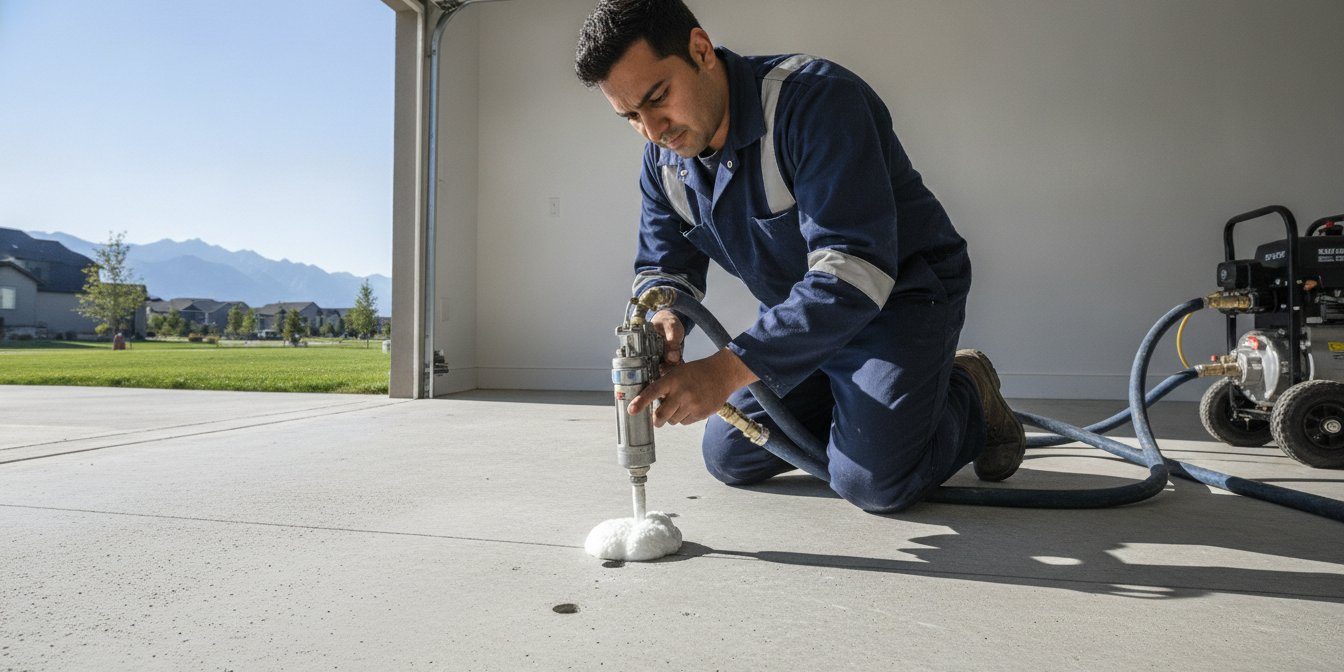
Does that hollow sound beneath your garage floor mean your entire foundation is at risk? In Parker, an echoing slab isn’t just a minor annoyance; it’s a warning that Douglas County’s expansive soils have shifted, leaving your concrete unsupported. You likely recognize the stress of seeing unsightly gaps or tripping hazards, and you’re right to worry about the underlying structural health of your home. Securing professional void filling under concrete slab Parker homes protects your investment before these gaps lead to catastrophic failure or expensive replacements.
This article demonstrates how high-density polyurethane provides a precise, non-invasive solution to soil erosion. You’ll discover how this advanced foam lifting process stabilizes surfaces and protects post-tensioned slabs with surgical accuracy. We’ll explain the technical advantages of modern polymers over outdated methods, ensuring you understand how to achieve a level, secure surface that stands up to Colorado’s challenging environment for years to come.
Key Takeaways
- Learn why Parker’s expansive clay soils create air pockets that compromise the structural integrity of your concrete surfaces.
- Understand why high-density polyurethane is the superior choice for void filling under concrete slab Parker properties compared to heavy, traditional methods.
- Discover the critical relationship between soil support and post-tension slabs to prevent internal cable failure and foundation shifting.
- Explore a non-invasive repair process that stabilizes your property without the mess or downtime of total concrete replacement.
- See how professional intervention protects your investment by restoring long-term grade support and eliminating tripping hazards.
Why Voids Form Under Parker Concrete Slabs: The Role of Expansive Clay
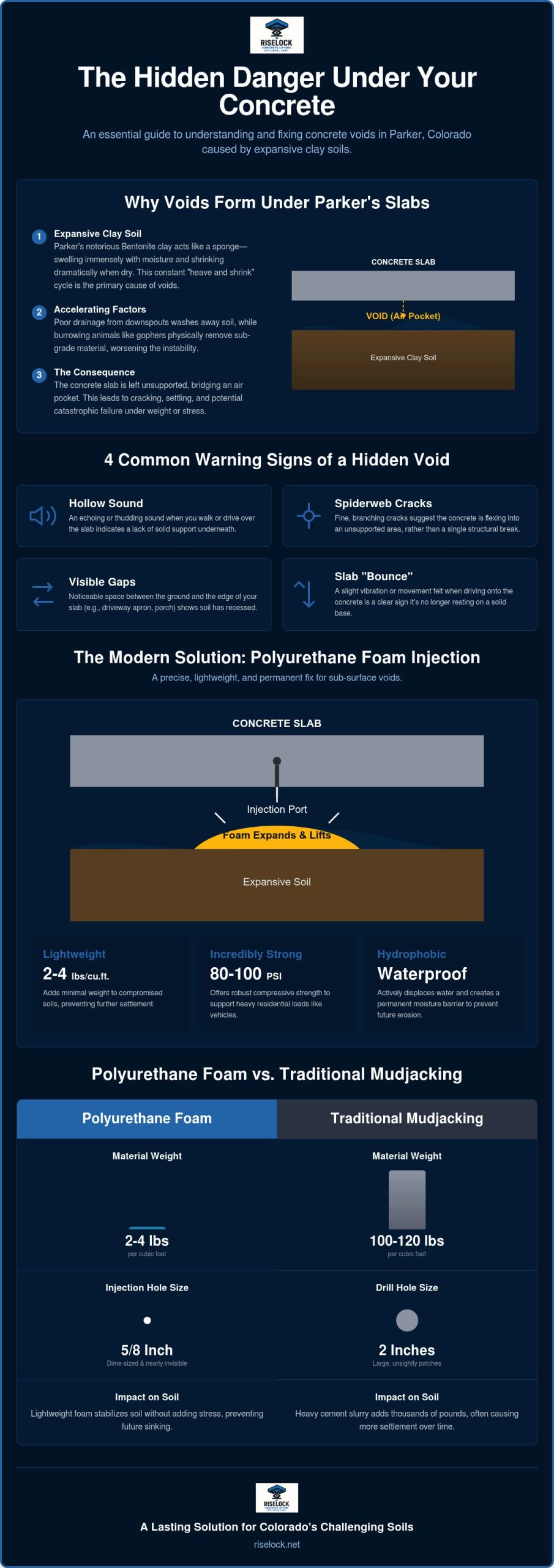
Voids are essentially hidden air pockets that develop when the ground beneath your concrete no longer provides uniform support. In Parker, this lack of support often manifests as a distinct hollow sound when you walk across your garage or patio. While the concrete might look intact from above, the absence of sub-grade contact means the slab is effectively bridging a gap. Without intervention like professional void filling under concrete slab Parker services, the weight of a vehicle or even seasonal temperature shifts can cause the concrete to snap under its own tension.
The primary culprit is the soil’s volume change. Colorado’s front range is notorious for expansive clay that acts like a sponge. When it rains, the clay swells with immense force; as it dries, it shrinks and pulls away from the concrete. This constant “heave and shrink” cycle creates structural instability over time. Secondary factors often accelerate this process. Poorly positioned downspouts dump concentrated water near foundation edges, washing away fines in the soil. Additionally, local wildlife like rabbits or pocket gophers frequently find these small gaps attractive for burrowing, which physically removes the material that supports your driveway.
The Douglas County Soil Profile and Your Foundation
Parker and Castle Rock sit atop high concentrations of bentonite clay. This specific mineral is highly reactive to moisture. During spring thaws, hydrostatic pressure builds up as snow melts, forcing water into the sub-grade. This water doesn’t just sit there; it often creates small channels that lead to significant soil washout. Even in newer developments like Canterberry Crossing, where modern mitigation is required, the natural settling of backfilled soil can still leave slabs vulnerable within just a few years of construction. The soil simply doesn’t stay put without professional stabilization.
Signs You Have a Sub-Surface Void
Identifying a problem early prevents total slab failure. Look for spiderweb cracking patterns, which often indicate the concrete is flexing into a void rather than shifting due to a single shear point. You might also notice visible gaps appearing under the “apron” of your garage or the edge of your front porch where the soil has visibly recessed. A simple “bounce” test is also effective. If you feel a slight vibration or a rhythmic thud when driving your car onto the driveway, it’s a clear indicator that the concrete is no longer resting on a solid base. Addressing these signs with void filling under concrete slab Parker techniques ensures the internal structure remains stable before the damage becomes irreversible.
Polyurethane Foam Injection: The Modern Solution for Void Filling
Modern structural restoration relies on the chemical precision of two-part high-density polyurethane foam. This material is engineered to address the specific geological challenges found in Douglas County. When we perform void filling under concrete slab Parker projects, we inject this liquid polymer through small access points where it undergoes a controlled chemical reaction. Within seconds, the liquid expands into a rigid, closed-cell structure that permeates every corner of the empty space beneath the concrete. This expansion force is powerful enough to lift heavy slabs, yet the material itself remains remarkably lightweight.
Traditional methods often rely on heavy cementitious slurries that add thousands of pounds of stress to already compromised soil. Polyurethane foam weighs approximately two to four pounds per cubic foot, compared to the 100 to 120 pounds of traditional grout. This weight difference is critical in Parker, where adding more mass to expansive clay often triggers secondary settling. Additionally, high-density foam is hydrophobic, meaning it doesn’t just tolerate water; it actively displaces it. By pushing out standing water and sealing the underside of the slab, the foam creates a moisture-resistant barrier that prevents future erosion. High-density polyurethane foam typically offers a compressive strength of 80 to 100 PSI, providing a stable foundation capable of supporting standard residential driveway loads without deformation.
Polyurethane vs. Traditional Mudjacking
The technical superiority of foam becomes most apparent during the installation process. Mudjacking requires drilling large, two-inch holes that can weaken the slab’s structural integrity and leave unsightly patches. In contrast, polyurethane injection uses holes only 5/8-inch in diameter, which are easily sealed and virtually invisible once the job is complete. Because the foam is so light, it doesn’t exacerbate the “sinking” phenomenon common in Parker’s soft bentonite soils. For a deeper technical breakdown, you can explore our polyurethane vs mudjacking comparison to see why modern foam is the ethical choice for long-term stability.
Load-Bearing Capacity and Durability
Durability is a primary concern for homeowners with heavy SUVs or frequent delivery truck traffic. High-density foam is designed for these high-load environments, maintaining its shape and support even under constant pressure. Unlike organic fill or soil-based grouts, polyurethane is chemically inert; it won’t wash away, rot, or degrade over time. The efficiency of the material also minimizes disruption to your daily routine. The foam reaches 90% of its full compressive strength in about 15 to 30 minutes, allowing you to use your driveway or garage almost immediately after the technicians finish. If you suspect your concrete is resting on empty space, a professional assessment can determine the exact volume of the void before structural cracks begin to form.
The Structural Impact of Voids on Post-Tension Slabs
Post-tension (PT) slabs are the engineering standard for residential foundations across Parker. These systems utilize high-strength steel cables, stressed to thousands of pounds of pressure, to counteract the volatile movement of Colorado’s expansive clay. However, the structural success of these slabs depends entirely on “grade support.” This means the concrete must rest firmly on the ground to distribute loads evenly. When soil shrinkage or erosion creates a gap, the slab is forced to bridge that space, causing it to flex beyond its design capacity. Professional post tension installation is a sophisticated process that requires a stable base to ensure the cables remain under the correct tension without compromising the concrete shell.
Executing void filling under concrete slab Parker homes is the primary defense against this type of structural failure. When a void is present, the weight of the home or a vehicle parked in the garage can cause the slab to deflect. This movement puts localized stress on the internal steel tendons that the system was never intended to handle. Without the resistance of the earth beneath it, the slab loses its rigidity, making the foundation susceptible to shifting and eventual cable failure.
How Voids Threaten Cable Integrity
The physics of concrete deflection is unforgiving. Concrete is remarkably strong in compression but lacks significant tensile strength; the PT cables are there to provide that missing tension. When a slab sags into a void, the load path is disrupted. This redirection of force places immense pressure on the internal steel cables and the anchors that hold them in place. If the slab flexes significantly, the risk of a cable blowout increases. This occurs when a cable snaps under extreme load and exits the side of the slab with enough force to penetrate walls. Homeowners should listen for loud, metallic popping sounds or look for concrete “spalling” near the slab edges. These signs indicate that the PT system is under dangerous levels of distress. RiseLock’s unique expertise in both lifting and PT repair allows us to restore grade support with the technical precision required for these sensitive systems.
Preventative Maintenance for Parker Homeowners
Proactive intervention is a financial necessity for any property owner in Douglas County. Addressing a sub-surface gap with void filling under concrete slab Parker properties today prevents a complex, five-figure post tension slab repair tomorrow. Once a cable loses tension or snaps, the restoration process requires invasive excavation and specialized hydraulic re-stressing equipment. It’s also vital to seal any visible surface cracks. Open cracks act as funnels, allowing water to reach the sub-surface void. This moisture accelerates soil erosion and can lead to the corrosion of the steel cables themselves. We recently stabilized a foundation in a local Parker neighborhood where a substantial void had formed under the garage apron. By injecting high-density foam to restore support before the cables reached their breaking point, the homeowner successfully avoided the catastrophic cost of a total foundation replacement.
The Step-by-Step Professional Void Filling Process in Parker
The RiseLock approach to structural stabilization is characterized by surgical precision and a commitment to non-invasive techniques. Our technicians view each project as a unique engineering challenge, requiring a methodical progression from diagnosis to final restoration. By utilizing advanced high-density polymers, we provide a permanent solution for void filling under concrete slab Parker properties without the heavy equipment or landscape destruction associated with traditional replacement. This process is designed to be efficient, leaving your property stable and your concrete looking nearly untouched.
Phase 1: Site Assessment and Drilling
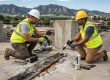
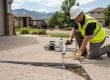
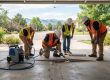
Before any material is injected, our team maps the sub-surface void using acoustic thumping or specialized sensors to identify the exact boundaries of the hollow space. We then drill 5/8-inch access points in a strategic grid pattern. These small holes are specifically placed to ensure 100% coverage under the slab, allowing the foam to reach the deepest corners of the void. Throughout this phase, we take care to protect your surrounding landscape and property, ensuring our equipment has a minimal footprint on your yard or driveway.
Phase 2: Injection and Monitoring
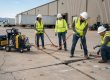
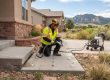
During the injection phase, we introduce the two-part closed-cell foam into the mapped air pockets. As the liquid expands, it fills every nook and cranny that the soil movement left behind. We utilize high-precision laser levels to monitor the slab in real-time. This specialized equipment allows our technicians to detect even a millimeter of movement, ensuring the slab remains stable or lifts to the exact desired height. It’s vital to recognize that void filling under concrete slab Parker projects often requires lower pressure and higher volume than standard lifting to ensure total displacement of air without putting undue stress on the concrete structure.
Phase 3: Patching and Curing
The final step focuses on aesthetic and structural completion. Once the void is fully stabilized, we remove the injection ports and patch the 5/8-inch holes with a custom concrete grout. We mix this grout on-site to match the color and texture of your existing surface as closely as possible. Because our high-density polyurethane reaches its load-bearing capacity in approximately 15 minutes, you can drive your car back into the garage or use your patio immediately after we finish. We conclude with a final inspection and offer drainage recommendations to help you prevent future soil erosion. If you’ve noticed a hollow sound under your driveway, contact RiseLock for a technical assessment to determine the extent of the sub-surface void before it leads to a collapse.
Strategic Concrete Restoration with RiseLock in Parker, CO
RiseLock’s approach to structural stabilization is rooted in a deep understanding of Colorado’s unique geology. Our use of high-density polyurethane is specifically chosen to withstand the intense freeze-thaw cycles and shifting clays that define the local environment. By prioritizing technical precision over marketing hyperbole, we ensure that every void filling under concrete slab Parker project provides a permanent foundation for your property. Choosing concrete leveling and stabilization over total replacement isn’t just a matter of convenience; it’s a strategic decision that saves homeowners significant capital while maintaining the structural integrity of the original slab. We view ourselves as a dependable partner in your home’s longevity, treating every structural challenge as a priority that requires a master’s touch.
Our commitment to professional reliability means we don’t just fill gaps; we restore the peace of mind that comes with a stable property. The volatile nature of Douglas County’s expansive soils requires a solution that’s both lightweight and durable, preventing the secondary sinking often caused by heavier, traditional materials. By intervening early, you prevent the progressive deterioration that leads to total foundation failure. Our process is designed to be efficient and ethical, providing you with a clear technical path toward a level, secure surface without the mess or disruption of heavy construction.
Serving Parker Neighborhoods
Our team is active throughout the local community, providing specialized support to homeowners in The Pinery, Stonegate, and Bradbury Ranch. We also serve the commercial districts of downtown Parker, where stable warehouse floors are critical for operational safety. Because we’re local, we have first-hand experience with the specific soil mitigation requirements and Douglas County building codes that govern foundation work in our area. This specialized knowledge allows us to offer reliable solutions for both residential driveways and high-traffic commercial surfaces, ensuring that every client receives a repair tailored to their specific site conditions and environmental stressors.
Your Next Steps for a Stable Foundation
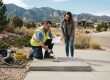
Taking action before a minor hollow sound turns into a major structural crack is the most effective way to protect your property’s value. When you contact RiseLock, our estimate process is straightforward and technical. We conduct a thorough site walk to identify subtle signs of settlement and determine the precise volume of the necessary polymer injection. Our goal is to provide a comprehensive diagnosis that addresses the root cause of the void, not just the surface symptom. If your property already shows signs of PT distress, our team coordinates directly with internal reinforcement experts to ensure that the cables are secured alongside the external lift. This dual focus on the slab’s surface and its internal structure is a hallmark of our professional standard. Don’t wait for the soil to shift further; schedule your professional void filling assessment in Parker today to restore the long-term security of your foundation.
Securing Your Foundation Against Colorado’s Volatile Soils
A hollow sound under your garage or a visible gap at the driveway apron is more than a cosmetic flaw; it’s a structural liability. Understanding the role of Douglas County’s expansive clay is the first step toward protecting your investment. By utilizing specialized high-density polyurethane technology, you can restore grade support without the invasive mess of traditional concrete replacement. This modern intervention is critical for post-tensioned slabs, where maintaining internal tension is essential for preventing catastrophic cable failure.
Professional void filling under concrete slab Parker projects ensure that your property remains stable despite Colorado’s volatile environment. RiseLock brings a standard of professional reliability to every project, combining technical expertise in post-tension structural integrity with a deep commitment to our local community. We’re proudly serving Parker and Douglas County homeowners who value precision and long-term security. Acting today prevents minor soil settlement from escalating into an expensive foundation overhaul. Take the first step toward a level and stable surface by requesting a technical evaluation from our team.
Get Your Free Parker Concrete Stabilization Estimate
Frequently Asked Questions
How do I know if I have a void under my concrete slab?
You can identify a sub-surface void by performing a simple “thump” test or listening for a hollow sound when walking across the slab. In Parker, visible gaps often appear where the driveway meets the garage floor or along the foundation’s perimeter. If you feel a slight vibration or bounce when driving your vehicle onto the concrete, it’s a clear indicator that the soil has settled, leaving the slab unsupported and vulnerable to cracking.
Is polyurethane foam safe for the environment and my Parker landscaping?
High-density polyurethane foam is an environmentally inert material that won’t leach chemicals into the surrounding Douglas County soil. Once the material cures, which happens within minutes, it becomes a stable, non-toxic solid that doesn’t react with groundwater or local vegetation. Our injection process is non-invasive, requiring only 5/8-inch holes, which ensures your landscaping and lawn remain undisturbed throughout the stabilization project. It’s a clean alternative to traditional messy grouts.
How much does void filling under a concrete slab cost in Parker?
The investment for void filling under concrete slab Parker properties depends primarily on the total volume of the hollow space and the amount of material required for stabilization. Factors such as the depth of the void and the accessibility of the injection points influence the scope of work. We recommend a professional on-site assessment to determine the exact requirements for your project, as filling a void early is significantly more cost-effective than a total slab replacement.
Can you fill voids under a post-tensioned garage floor?
Yes, we specialize in stabilizing post-tensioned slabs by restoring the grade support they require to function correctly. Because these slabs rely on internal steel cables under high tension, filling voids is a critical maintenance step to prevent the concrete from flexing and stressing the reinforcement system. Our technical team understands the precise pressure requirements needed to fill air pockets without interfering with the internal cable anchors or causing unwanted movement in the foundation.
How long does the polyurethane void filling process take?
Most residential void filling under concrete slab Parker projects are completed within one to three hours from arrival to final cleanup. The efficiency of the polyurethane injection system allows for rapid deployment compared to traditional methods. Because the high-density foam reaches its full load-bearing capacity in about 15 to 30 minutes, there’s minimal disruption to your schedule. You’ll have a fully stabilized surface in a single morning or afternoon visit without any messy excavation.
Will the foam ever wash away or break down under my driveway?
Polyurethane foam is a permanent solution that’s completely hydrophobic, meaning it won’t wash away or erode when exposed to groundwater. Unlike soil-based fills or traditional mudjacking slurries, this material is chemically stable and won’t rot or degrade over time. It maintains its compressive strength indefinitely, providing a consistent support structure that resists the moisture-related issues common in Colorado’s expansive clay soils. Once injected, the foam seals the underside of your concrete permanently.
Does void filling prevent my concrete from cracking in the future?
Void filling significantly reduces the risk of future cracking by eliminating the air pockets that cause concrete to flex under load. While no repair can prevent cracks caused by extreme seismic shifts or surface impacts, restoring grade support ensures your slab is no longer “bridging” empty space. By providing a solid foundation, you remove the primary cause of structural shear and spiderweb cracking, extending the lifespan of your driveway or garage floor for years.
Can I use my driveway immediately after the foam is injected?
You can return your vehicles to the driveway or garage almost immediately after the injection process is finished. The high-density polymer cures to 90% of its full strength within 15 to 30 minutes of application. This rapid cure time is one of the primary advantages of modern foam lifting over traditional grout, which often requires days of drying time. By the time our technicians finish patching the injection holes, your slab is ready for standard use.