
A single severed cable in a post-tensioned slab can release enough kinetic energy to punch through concrete and compromise an entire floor’s structural integrity. You likely invested in a post-tensioned system for its superior strength and ability to handle expansive soils, but that same internal tension requires a specialized approach to care. It is natural to feel a sense of urgency when you notice shifting or cracking, especially when traditional repair methods might accidentally strike a pressurized tendon and cause a “blowout.”
Mastering post tension slab maintenance is the only way to prevent catastrophic cable failure and ensure your building remains stable for decades. This professional guide provides the technical requirements for maintaining these complex systems, helping you protect high-tension tendons from corrosion and structural fatigue. We will examine the specific warning signs of tendon distress, establish a preventative inspection schedule based on the latest 2024 Post-Tensioning Institute standards, and explain why modern polyurethane solutions are the safest choice for stabilizing foundations without risking cable damage. By following these protocols, you can move away from the stress of potential failure toward the peace of mind offered by high-precision structural intervention.
Key Takeaways
- Effective post tension slab maintenance requires understanding that internal cable failures are often sudden and violent, making early detection of structural shifts a critical safety priority.
- Identify the “silent killers” of PT systems, such as moisture-driven corrosion and rust staining at anchor points, before they lead to catastrophic tendon blowouts.
- Learn how Colorado’s unique environmental factors, including expansive bentonite clay and intense freeze-thaw cycles, place specific stresses on post-tensioned foundations.
- Understand why high-density polyurethane foam is the superior choice for leveling PT slabs, offering precision control that protects delicate internal cables from the risks of traditional mudjacking.
- Establish a professional maintenance protocol with a clear annual checklist to monitor for efflorescence, spalling, and other indicators of tendon distress.
Understanding Post-Tension Slab Maintenance: Why Vigilance is Mandatory
A post-tensioned concrete slab is a sophisticated engineering solution that uses high-strength steel tendons to actively compress the concrete. This internal compression increases the load capacity and allows for thinner, more flexible slabs that can span longer distances without support. However, because these tendons are under immense tension, post tension slab maintenance isn’t just about surface aesthetics; it’s a critical safety requirement. Unlike traditional reinforced concrete that relies on passive rebar, PT slabs are active structures. The internal integrity of the steel is what holds the building together, and its health is paramount to the structure’s survival.
Maintenance for these systems differs fundamentally from standard concrete work. You aren’t just patching a surface; you’re protecting a pressurized mechanical system. Structural integrity often degrades internally long before the first visible crack appears on the surface. By the time you notice external signs of distress, the internal cables may have already suffered significant oxidation or fatigue. This hidden damage factor makes a proactive approach essential for any property owner.
The Mechanics of Active Reinforcement
These systems function through a series of plastic-sheathed cables tightened to thousands of pounds of pressure. This creates a living slab that responds to environmental loads as a single, cohesive unit. The anchorage system at the slab’s edge is the most vulnerable point, as it maintains the entire system’s compression. If the anchors fail or the tendons corrode, the slab loses its internal force. Traditional rebar logic, where localized rust might be manageable, doesn’t apply here. In a post-tensioned system, even minor oxidation can lead to a snapped cable and a complete loss of structural tension.
The Consequences of Neglect
Ignoring signs of distress can lead to a cable blowout, where a pressurized tendon snaps and bursts through the concrete edge. This isn’t just a structural failure; it’s a violent event that can cause severe injury or property damage. Beyond the immediate danger, a failed cable causes a significant loss of load-bearing capacity. You might notice the floor sagging or shifting as the concrete loses its internal support. Repairing a severed cable is a complex, high-cost surgical operation. Preventative post tension slab maintenance remains the most cost-effective way to avoid these high-stakes failures and ensure the long-term security of the foundation.
Identifying the Silent Killers: Corrosion, Voids, and Cable Failure
While the surface may appear level, the internal components of a post-tensioned system can be under active attack. Moisture infiltration is the most persistent threat in post tension slab maintenance. Water carries corrosive agents deep into the concrete, reaching the steel tendons that provide the slab’s strength. When moisture reaches these high-tension components, the resulting oxidation weakens the metal, potentially leading to a sudden release of energy. Comprehensive post tension slab maintenance focuses on identifying these threats before they compromise the steel.
Look for specific red flags during your walk-through. Efflorescence, a white powdery substance, indicates water movement through the concrete. Rust staining near the slab edges or localized spalling at anchor points often signals that the internal steel is already oxidizing. If you hear a loud, gunshot-like crack, it’s a definitive sign of a tendon snapping. Physical indicators include a “blowout” at the edge where the cable has physically exited the slab, or a sudden, unexplained heave in the floor as the tension balance shifts.
The Corrosion Cycle in PT Tendons
Chlorides from de-icing salts are particularly aggressive. They penetrate the concrete pores and break down the protective alkaline environment that naturally inhibits rust. In unbonded systems, the entire length of the cable relies on the integrity of the plastic sheathing and the internal grease to remain protected. Bonded systems, while encased in grout, can suffer if air pockets allow moisture to pool against the steel. A grease-cap is a protective plastic cover filled with corrosion-inhibiting grease that seals the tendon’s anchorage point against moisture and chemical entry. Regular inspection of these caps ensures that the most vulnerable part of the cable remains isolated from the elements.
Void Detection and Impact
Sub-slab voids create a lack of uniform support, which is significantly more dangerous for PT slabs than standard concrete. When a slab spans a void, it flexes under load. This rhythmic bending puts stress on the cables that can lead to fatigue failure over time. The Post-Tensioning Institute emphasizes that maintaining consistent soil contact is vital for the design assumptions of these foundations. To find these hidden anomalies without destructive drilling, we use Ground Penetrating Radar (GPR) to map the internal structure. This technology identifies air pockets or displaced cables by bouncing radio waves through the slab. If you suspect internal shifts or notice hollow sounds when walking across the floor, a professional structural assessment can pinpoint issues before they escalate into total cable failure.
The Colorado Challenge: Expansive Soils and Freeze-Thaw Cycles
Post-tensioned slabs are the standard for Colorado foundations because they resist the movement of expansive bentonite clay. However, this environment creates unique demands for post tension slab maintenance. The cycle of extreme soil swelling followed by severe drought can stress a slab beyond its initial engineering limits. Consistent vigilance is required to prevent these environmental forces from compromising the internal tendon system. When soil conditions shift rapidly, the active reinforcement within the concrete must bear loads it wasn’t originally designed to handle without support.
Perimeter drainage is another critical factor in local structural longevity. Without a clear path for runoff, water pools at the slab edge, saturating the soil and accelerating the heave process. In Denver’s climate, this moisture doesn’t just affect the soil; it threatens the cables themselves. Effective post tension slab maintenance must prioritize the management of the soil-to-structure interface to prevent the “edge drop” phenomenon seen during dry seasons.
Bentonite and PT Slab Movement
When bentonite clay absorbs water, it can exert upward pressure exceeding several thousand pounds per square foot. This soil “heave” can over-stress cables, pushing them past their intended design tension and risking localized fracturing. In areas like Castle Rock and Parker, we frequently see PT failures where uneven soil moisture causes the slab to warp, putting immense strain on the anchorage points. Maintaining consistent moisture levels around the foundation is your best defense against these shifts. Professional special inspection requirements often highlight the need to monitor these soil-to-structure interactions to ensure the active reinforcement remains within safe operating parameters.
Protecting Slab Edges in Denver
Denver’s intense freeze-thaw cycles present a direct threat to the slab’s perimeter. If water enters the cable sheaths during a winter thaw and subsequently freezes, the resulting expansion can crack the grout pockets or damage the protective plastic coating. Exposed anchor heads are the most common maintenance failure point we see in Colorado. These points must remain sealed to prevent moisture and de-icing salts from initiating the corrosion cycle. Soil shrinkage during prolonged drought periods often leads to “edge drop,” where the soil pulls away from the slab perimeter, leaving the edge unsupported. This lack of support increases the “flex” on the cables, accelerating fatigue. Any concrete repair denver colorado must account for local soil chemistry and these specific environmental stressors to be truly effective.
Modern Stabilization Strategies: Polyurethane Lifting for PT Slabs
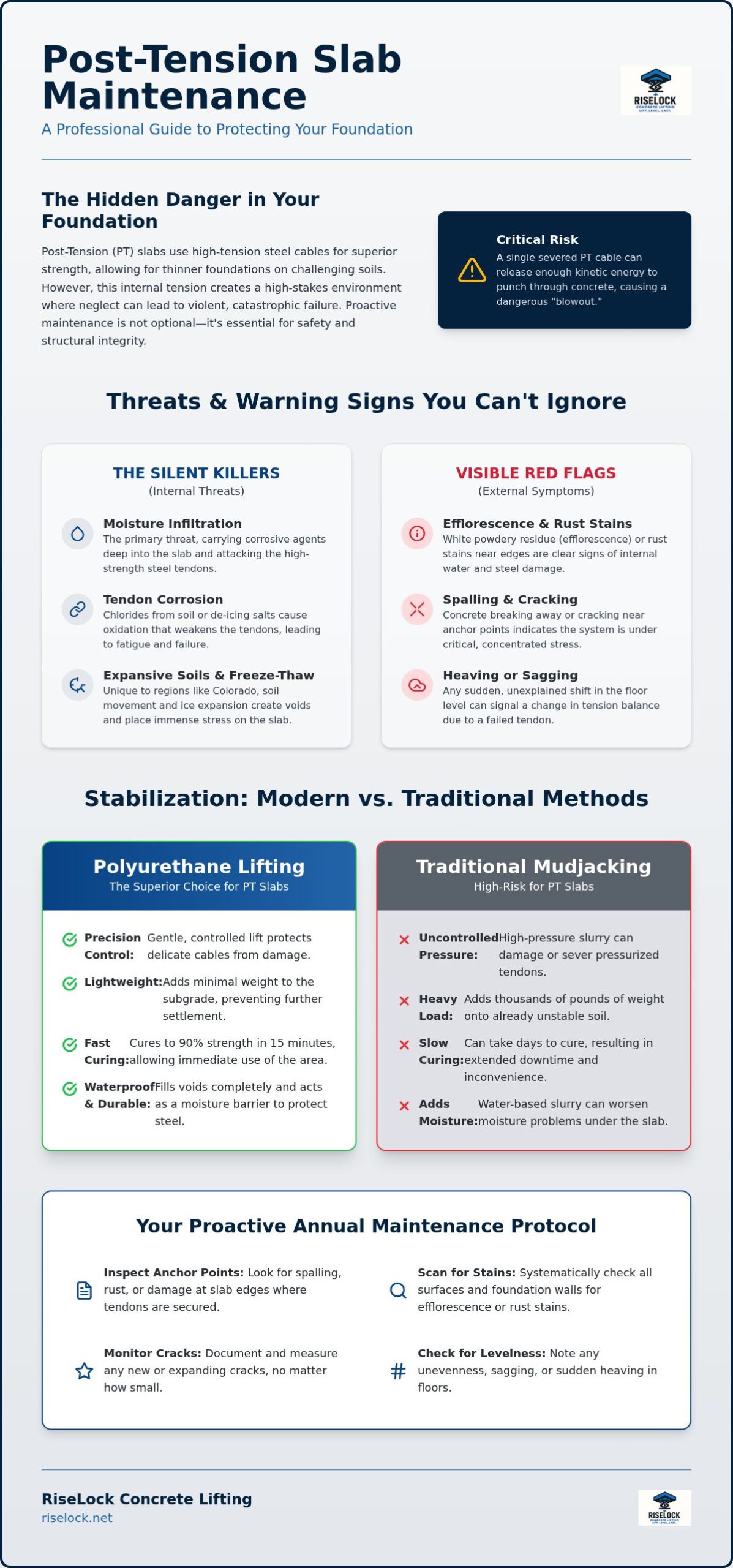
Stabilizing a settled post-tensioned slab requires a surgical touch that traditional methods simply cannot provide. Traditional repair often relies on heavy cementitious slurries that add thousands of pounds of dead weight to already failing soil. Polyurethane lifting provides a modern alternative that aligns perfectly with the technical requirements of post tension slab maintenance. Because this high-density foam is 90% lighter than traditional mudjacking material, it stabilizes the foundation without triggering further settlement through added mass. This weight reduction is critical for maintaining the delicate balance of an active PT system.
Precision control is the primary advantage of this technology. The injection process uses 5/8-inch holes, which are significantly smaller and less invasive than the large ports required for mudjacking. This minimizes the risk of accidentally striking a pressurized cable or damaging the protective plastic sheathing. By filling sub-slab voids with high-density foam, we restore the uniform support that PT cables need to distribute loads across the entire concrete footprint. When a slab is fully supported by the underlying soil, the internal tendons can function as originally engineered, reducing the risk of fatigue failure.
Polyurethane vs. Mudjacking for PT Systems
High-pressure mudjacking presents a significant danger to sensitive cable sheaths. The heavy, abrasive slurry can crush or displace tendons, leading to immediate structural instability. In contrast, polyurethane concrete lifting uses a controlled chemical expansion to fill voids. This expansion fills even the smallest air pockets that cause cable stress, creating a waterproof barrier that protects the slab’s underside from moisture. The non-invasive nature of small foam injection holes ensures that the slab’s structural integrity remains intact throughout the restoration process.
Precision Leveling and Structural Support
Lifting a post-tensioned slab back to its original engineered elevation requires incremental, high-precision adjustments. High-density foam allows for lift increments as small as 1/32 of an inch, ensuring the slab returns to its optimal position without over-stressing the internal cables. This stabilization stops the “flexing” motion that leads to cable fatigue and eventual snapping. In Colorado’s shifting soils, the hydrophobic properties of polyurethane ensure that the repair remains durable even when soil moisture levels fluctuate. If you notice uneven floors or gaps beneath your foundation, scheduling a professional polyurethane stabilization assessment can prevent these minor shifts from becoming catastrophic structural failures.
Professional PT Maintenance Protocols with RiseLock
Professional post tension slab maintenance is a specialized discipline that requires a deep understanding of both structural engineering and material science. At RiseLock, we view your foundation as a high-precision mechanical system rather than a static block of concrete. Our approach combines specialized technical knowledge with modern diagnostic tools to identify vulnerabilities before they manifest as structural failures. This methodology ensures that every intervention strengthens the slab’s internal tension rather than merely masking surface defects. By treating the structure as an active system, we provide a level of care that general contractors often overlook.
The RiseLock Precision Audit
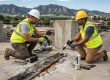
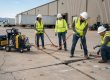
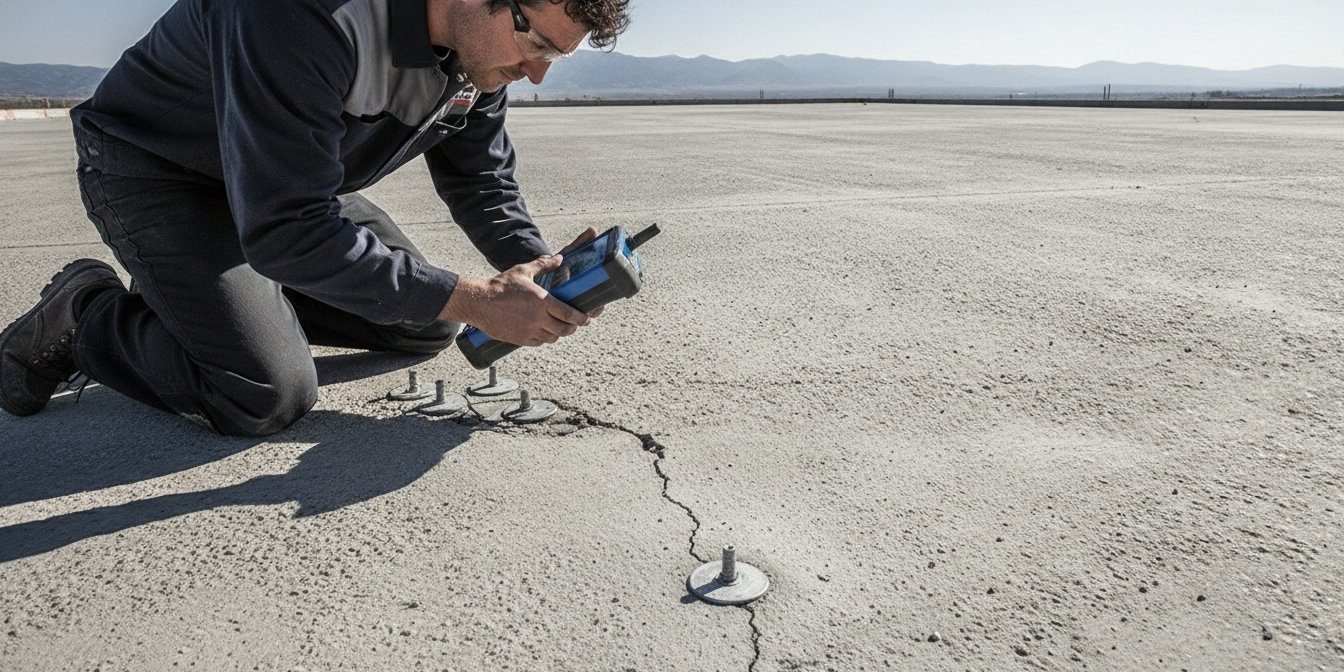
The foundation of any effective maintenance plan is the technical audit. We begin by assessing the health of the anchor heads and the integrity of the moisture barriers at the slab edges. These components are the first line of defense for the internal steel tendons. We use precision injection monitoring to map sub-slab voids, providing a clear picture of where the concrete has lost uniform support. This process ensures that any necessary stabilization or leveling adheres to the highest post tension installation standards, preserving the original design intent and safety of the structure.
Proactive Slab Health Management
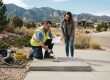
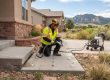
Property owners should conduct a visual walk-through every spring to identify potential issues early. Consistent post tension slab maintenance involves more than just reactive repairs; it requires a commitment to environmental management. This annual checklist serves as an early warning system for your foundation:
- Examine the slab perimeter for exposed metal, plastic sheathing, or signs of cable “blowouts.”
- Look for rust-colored staining or white salt deposits, known as efflorescence, on the concrete surface.
- Verify that expansion joints remain sealed and free of debris to prevent water infiltration.
- Check that downspouts and landscape grading direct water at least five feet away from the slab edge to maintain soil stability.
When visual signs like localized spalling or floor heaving appear, it’s time to move toward technical diagnostic testing. We utilize non-destructive methods to verify cable health and identify internal anomalies. Long-term health also depends on periodic sealant reapplications to prevent Denver’s intense freeze-thaw cycles from driving moisture into the cable channels. By managing soil moisture and maintaining the slab’s exterior barriers, you can extend the life of your post-tensioned foundation by decades. Contact RiseLock for a professional post-tension slab evaluation today.
Securing Your Structural Legacy through Proactive Care
Maintaining a post-tensioned system requires a shift from reactive repairs to a disciplined framework of active preservation. This guide has detailed how the unique combination of high-tension steel and Colorado’s expansive bentonite clay creates a structural environment where precision is the only path to safety. You now understand that identifying internal voids and managing slab edge moisture are critical steps in preventing the violent release of kinetic energy associated with cable failure. By choosing specialized stabilization over traditional methods, you protect the delicate internal architecture of your foundation.
Consistent post tension slab maintenance is the most effective way to ensure long-term stability and avoid the high costs of structural neglect. RiseLock provides the technical mastery required for these complex systems, utilizing PTI-trained technicians and precision polyurethane stabilization to restore uniform support. Our team serves property owners across Denver, Aurora, and the Front Range with a commitment to technical excellence and professional reliability. Secure Your Foundation with RiseLock Professional Maintenance and gain the peace of mind that comes from expert structural stewardship. Your foundation is the bedrock of your investment; let’s ensure it remains solid for decades to come.
Frequently Asked Questions
Can I drill into a post-tension slab for maintenance or renovations?
You should never drill or cut into a post-tension slab without first performing Ground Penetrating Radar (GPR) to locate the internal tendons. These cables are under thousands of pounds of pressure. Striking a tendon can cause a violent blowout that threatens the safety of everyone on site. If you are planning renovations in Denver or Aurora, always consult a specialist to map the slab’s internal architecture before any mechanical penetration.
What does a broken post-tension cable sound like?
A broken post-tension cable typically produces a loud, explosive sound similar to a gunshot or a heavy whip crack. This noise occurs when the steel strand snaps and the stored energy is suddenly released. In some cases, you may also feel a vibration through the floor or notice a physical blowout at the slab edge. If you hear this distinct sound, the slab’s structural integrity has been compromised and requires immediate professional evaluation.
How often should a post-tension slab be inspected in Colorado?
For properties in the Front Range, it’s recommended to have a structural specialist conduct a formal assessment every five to ten years. However, property owners should perform a visual post tension slab maintenance check every year. Colorado’s intense freeze-thaw cycles and expansive soils put additional stress on foundations in cities like Castle Rock and Parker. Regular monitoring for rust staining or shifting ensures that minor issues don’t escalate into catastrophic cable failure.
Is it safe to use polyurethane foam to lift a post-tensioned foundation?
Yes, high-density polyurethane foam is the safest and most effective method for lifting a post-tensioned foundation. Unlike traditional mudjacking, which uses heavy, abrasive slurries, polyurethane is lightweight and non-invasive. It fills sub-slab voids without putting excessive pressure on delicate cable sheaths. This precision is vital for maintaining the active reinforcement of the slab while restoring level surfaces in challenging local soil conditions found throughout the Denver metro area.
What are the first signs of corrosion in a post-tension system?
The earliest signs of corrosion in a post-tension system are often visible at the slab’s perimeter. Look for rust-colored staining near anchor points or white, chalky deposits known as efflorescence. Localized concrete spalling or cracking around the anchorage pockets also indicates that moisture has reached the internal steel. Identifying these indicators early is a critical part of post tension slab maintenance, as it allows for intervention before the tendon’s load-bearing capacity is lost.
How much does it cost to repair a broken post-tension cable in Denver?
The cost of repairing a broken post-tension cable varies significantly based on the location of the break and the accessibility of the tendon. Industry reports suggest these repairs are substantial because they require specialized equipment and often necessitate the temporary shutdown of the affected area. Factors like local permitting in Aurora or Denver and the need for precision engineering will influence the final budget. It is best to consult a structural expert for a site-specific evaluation.
Can a post-tension slab be repaired without complete replacement?
A post-tension slab can often be restored through localized repairs rather than a total replacement. Technicians can splice broken cables, re-tension tendons, or use polyurethane foam to stabilize the soil beneath the slab. These targeted interventions address specific structural deficits while preserving the majority of the original concrete. This approach is much more efficient and less disruptive for homeowners in communities like Centennial and Littleton who are facing foundation settlement or cable distress.
Why are post-tension slabs common in Colorado residential construction?
Post-tension slabs are the preferred choice in Colorado due to the high concentration of expansive bentonite clay in the soil. This clay swells when wet and shrinks when dry, which can easily crack traditional foundations. The active compression of a post-tensioned system allows the slab to move as a single unit, resisting the uneven pressures exerted by the earth. This design is essential for maintaining long-term structural stability in the Front Range’s volatile soil environment.