Most property owners in El Paso County don’t realize that the very soil supporting their structure is a shifting force capable of exerting immense pressure against a foundation. In the Pikes Peak region, the presence of expansive bentonite clay means that standard concrete slabs are frequently at risk of significant structural failure. Finding an expert post tension contractor Colorado Springs builders rely on is the most effective way to secure your investment against these environmental pressures. You’ve likely felt the anxiety that comes with spotting a new hairline crack or worrying about the long term costs of a shifting floor.
By utilizing high-strength steel tendons to compress the concrete, specialists create a slab that remains rigid even as the ground moves beneath it. This article will clarify the technical process behind modern post-tensioning, explain the 2026 building code landscape, and provide the specific criteria needed to verify a contractor’s expertise. You’ll gain the confidence to choose a structural partner who prioritizes precision and permanent stability for your project.
Key Takeaways
- Learn why the high expansion rates of Colorado’s bentonite clay make post-tensioned foundations the preferred choice for structural longevity.
- Understand the mechanics of high-strength steel tendons and how hydraulic stressing creates a slab capable of withstanding 270,000 PSI of tensile force.
- Discover the essential certifications and local code knowledge required when selecting a post tension contractor Colorado Springs property owners can trust for complex soil conditions.
- Identify the critical warning signs of structural compromise, such as cable blowouts, and why professional intervention is mandatory for high-tension systems.
- Gain insight into how specialized local expertise in the Pikes Peak region ensures your foundation meets the latest 2026 structural standards.
The Role of Post-Tensioning in Colorado Springs Construction
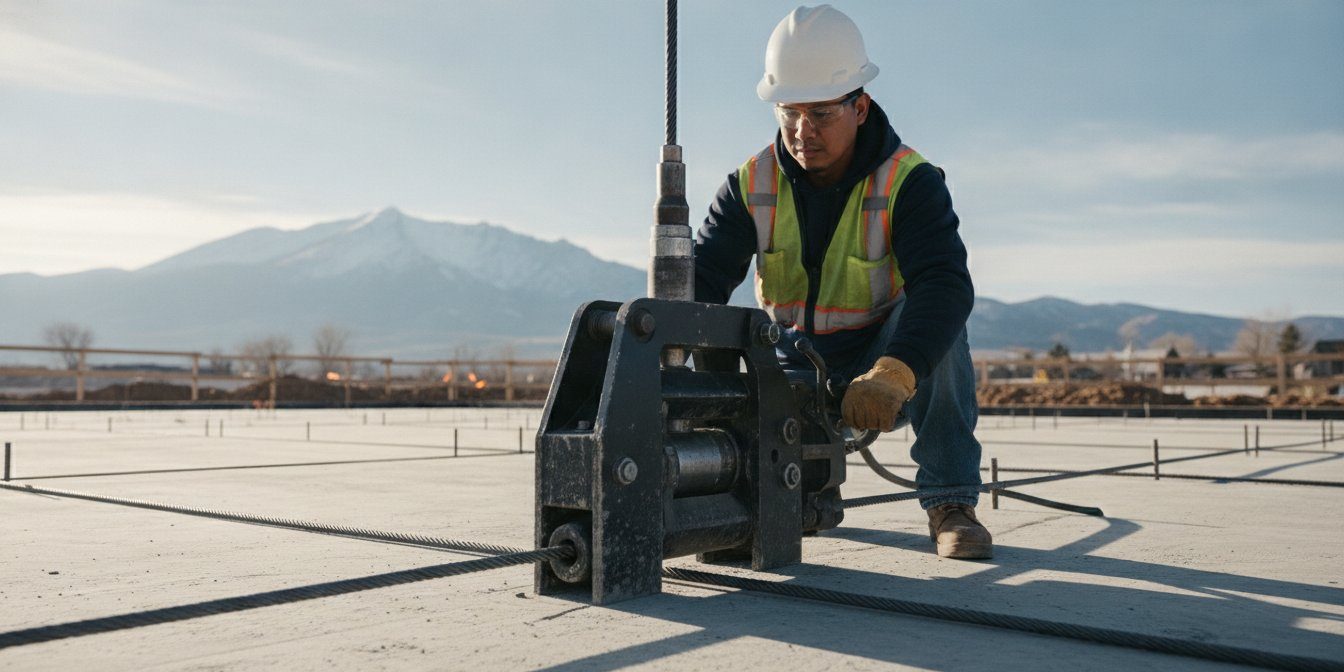
Post-tensioning is a sophisticated engineering method used to reinforce concrete by introducing internal stresses that counteract external loads. Unlike traditional reinforcement, this technique utilizes high-strength steel tendons that are tensioned after the concrete has achieved sufficient strength. This creates post-tensioned concrete, a material that is significantly more resilient than standard slabs. For property owners, hiring a qualified post tension contractor Colorado Springs builders rely on is a prerequisite for building on the region’s unique geological profile.
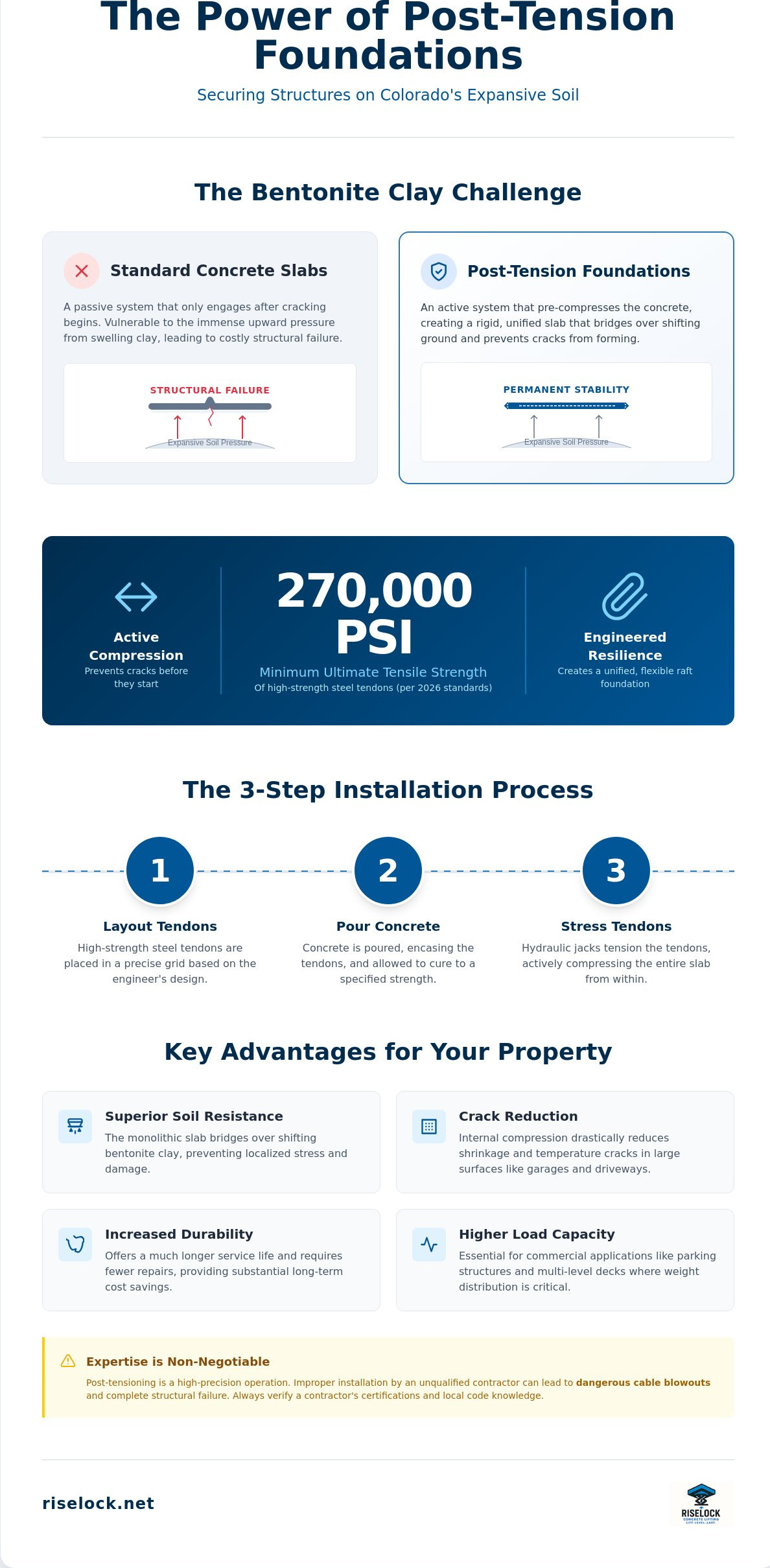
The primary difference between standard rebar and post-tensioning lies in the nature of the reinforcement. Rebar is a passive system. It only begins to provide support once the concrete has already started to crack or deflect. In contrast, post-tensioning is an active system. By stressing the internal cables to a specific tension, we compress the slab from within before it ever faces an external load. This internal compression allows for thinner, more efficient slabs that don’t sacrifice structural integrity. It’s a precise approach that favors modern engineering over bulk material.
Combating the Bentonite Challenge
The Front Range is notorious for high concentrations of expansive bentonite clay. This specific soil type acts like a sponge, swelling significantly when it absorbs moisture and shrinking as it dries. This seasonal cycle exerts massive upward pressure on foundations, often exceeding the structural capacity of conventional concrete. Post-tensioning provides a strategic counter-measure. The active force within the slab allows the entire structure to resist these localized soil movements. It creates a foundation that acts as a single, rigid unit, effectively bridging over the shifting soil rather than snapping under the pressure.
Benefits for Residential and Commercial Slabs
The advantages of this method extend beyond basic stability. In residential applications, post-tensioning drastically reduces the appearance of shrinkage cracks in large surface areas like garage floors and expansive driveways. For commercial builders, the increased load-bearing capacity is vital for parking structures and multi-level decks where weight distribution is critical. While the initial engineering requires more specialized skill, the long-term cost savings are substantial. A more durable slab requires fewer repairs and offers a much longer service life in the harsh Colorado climate. Partnering with a dedicated post tension contractor Colorado Springs ensures these technical advantages are realized through precise installation and stressing protocols.
How Post-Tension Slabs Protect Your Investment
A foundation is only as reliable as the internal tension held within its core. Building a structure that lasts in the Front Range requires more than just pouring concrete; it requires a calculated application of force. A professional post tension contractor Colorado Springs residents rely on understands that structural security is defined during the stressing phase. This process begins with the careful layout of high-strength steel tendons, followed by a pour that meets specific engineering requirements.
Selecting a post tension contractor Colorado Springs property owners trust ensures that the 2026 building codes are followed with precision. Once the concrete achieves its initial strength, technicians utilize specialized hydraulic jacks to stress the cables. This isn’t a simple pull. It’s a high-precision operation where every inch of elongation is measured against the engineer’s specifications. If the cable doesn’t stretch exactly as predicted, the structural integrity of the entire slab could be compromised. This active reinforcement style is vastly superior to passive rebar. While rebar only provides support after a crack has formed, post-tensioning applies a constant inward force that prevents the crack from ever initiating.
The Science of Concrete Compression
Concrete is naturally strong when being squeezed but brittle when pulled apart. By introducing internal tendons, we place the entire slab in a state of perpetual compression. This internal pressure effectively “pre-loads” the concrete, allowing it to resist the heavy loads and soil movements common in the Pikes Peak region. For 2026, the engineering standard for these high-performance systems is a minimum ultimate tensile strength of 270,000 PSI for all standard tendons. This immense strength allows the slab to act as a unified, flexible raft rather than a rigid, breakable plate.
Structural Longevity in the Pikes Peak Region
The primary threat to local foundations is the presence of expansive soils in Colorado. These clay-heavy soils swell and shrink with moisture changes, creating a constant heaving motion. Standard slabs often succumb to this pressure, leading to deep structural cracks that invite water damage. Post-tensioning mitigates this by keeping micro-cracks tightly sealed. To further ensure longevity, each cable is encased in high-density polyethylene (HDPE) sheathing. This protective layer prevents moisture from reaching the steel, eliminating the risk of corrosion even in high-moisture environments. With the 2023 Pikes Peak Regional Building Code now in full effect as of June 2026, meeting the PTI DC10.5-24 standards is a legal necessity. If you’re ready to secure your property’s future, the team at RiseLock can provide the technical mastery your project demands.
Choosing the Right Post Tension Contractor in Colorado Springs
Selecting a post tension contractor Colorado Springs property owners can rely on is a decision that dictates the structural viability of a project for decades. It’s not enough to hire a general concrete crew. Post-tensioning requires a specific set of technical competencies that standard flatwork does not demand. The first step in any vetting process should be the verification of certification from the Post-Tensioning Institute (PTI). As of June 2026, the Pikes Peak Regional Building Department strictly enforces the 2023 code, which mandates that installation and stressing be performed by PTI-certified field personnel. Without this credential, a contractor isn’t just unqualified; they’re operating outside the legal requirements of El Paso County.
Precision in this field is measured in fractions of an inch. A reputable contractor will maintain a clean safety record and provide transparent access to their stressing logs. These logs are the structural record of your foundation. They document the exact pressure applied to each tendon and the resulting elongation measurements. Any deviation from the engineer’s plan must be identified and corrected before the project moves forward. Third-party inspections provide an additional layer of security, ensuring that the work meets both the design intent and the rigorous standards of the 2021 International Building Code.
Technical Questions to Ask Your Contractor
When interviewing a potential partner, their answers should reflect a deep understanding of local soil dynamics and engineering standards. Ask specifically how they handle tendon repair if a cable is damaged during the pour. It’s also vital to understand their process for verifying tendon elongation and whether they provide comprehensive post tension installation documentation. A professional team will have these protocols ready for review, demonstrating their commitment to technical mastery and long-term security.
Red Flags in Concrete Reinforcement
Avoid contractors who show a lack of regard for the specific engineering requirements of the Front Range. One major red flag is a contractor who suggests ignoring soil report recommendations for tendon spacing to save on material costs. Similarly, a lack of specialized hydraulic equipment for proper stressing indicates a crew that isn’t equipped for high-precision work. Finally, never move forward with a provider who fails to provide current proof of insurance specifically for structural work. In the high-stakes environment of Colorado Springs construction, these omissions can lead to catastrophic financial and structural consequences.
Maintenance and Repair: Protecting the Structural Integrity
Maintaining the structural integrity of a post-tensioned foundation requires a vigilant eye and an understanding of how these high-tension systems behave over time. A post tension contractor Colorado Springs residents hire must understand both the creation and the restoration of these systems to ensure long-term security. While post-tensioning creates an incredibly resilient slab, environmental factors or accidental damage can occasionally compromise the internal tendons. Recognizing the early signs of distress is vital for preventing a localized issue from becoming a total structural failure.
A qualified post tension contractor Colorado Springs property owners consult will often look for synergy between different stabilization methods when a slab settles. For example, if a slab has subsided but the tendons remain intact, polyurethane concrete lifting provides a sophisticated, non-invasive solution. This process injects high-density foam beneath the slab to restore its level position without the need for heavy excavation that could damage the delicate HDPE sheathing protecting your cables. Attempting a DIY fix on these systems is exceptionally dangerous; these cables are under immense pressure, and a single mistake with a grinder or drill could trigger a catastrophic release of tension. Property owners across the broader Colorado region, including those seeking post tension foundation repair in Denver, face similar risks from expansive soils and should always engage certified specialists for any intervention.
Addressing Broken Post-Tension Cables
Cable blowouts are the most dramatic and dangerous sign of structural failure. These occur when a tendon snaps or an anchor fails, often causing the cable to erupt through the edge of the slab or even the floor surface. An uncontained cable blowout releases thousands of pounds of stored energy instantly, posing a severe risk of injury or property damage. Seeking a broken post tension cable repair is a matter of immediate safety. The restoration process involves excavating the anchor points, splicing the tendon with specialized couplers, and using hydraulic jacks to re-stress the system to its original design specifications.
When to Seek Professional Slab Restoration
Not every hairline crack indicates a cable failure, but ignoring signs of unusual slab heaving can lead to permanent damage. The post tension slab repair process begins with a technical assessment to differentiate between minor surface shrinkage and deep structural distress. In the Pikes Peak region, maintaining consistent moisture levels around the perimeter of your foundation is one of the most effective ways to prevent the soil movement that leads to these issues. If you suspect your foundation has been compromised or notice unusual movement, contact RiseLock for a professional evaluation of your structural system.
RiseLock: Your Expert Post Tension Contractor in Colorado Springs
RiseLock approaches structural concrete with a level of precision that mirrors the complexity of the Colorado landscape. We understand that a foundation is the most critical component of any build, particularly in the Front Range where soil dynamics are notoriously aggressive. As a specialized post tension contractor Colorado Springs property owners rely on, we provide a bridge between advanced engineering theory and practical, high-performance execution. Our work spans the entire region, from the urban density of Denver to the unique geological challenges of the Pikes Peak area, ensuring that every slab we install or repair meets the highest standards of the 2026 building codes.
Our team doesn’t just follow blueprints; we interpret them through the lens of local experience. We view the client’s structural problems as a personal priority, moving beyond the transactional nature of standard construction. This ethical backbone is paired with a commitment to modern innovation, utilizing the latest in hydraulic stressing technology and high-grade materials to ensure that every tendon is placed and tensioned with absolute accuracy. By maintaining a focus on technical mastery, we help our partners navigate the stress of structural requirements with confidence and peace of mind.
The RiseLock Advantage
The RiseLock difference is rooted in quiet authority and professional reliability. Led by Alex Mon, our senior technical team focuses on creating long-term security rather than temporary fixes. We utilize advanced materials, including high-density polyethylene sheathing and corrosion-resistant anchors, to protect the internal steel tendons from the moisture fluctuations common in Colorado’s climate. This meticulous attention to detail extends to our documentation process, where we provide clear, verifiable stressing logs that confirm the structural health of your foundation. Our clients benefit from direct access to our experts, ensuring that technical questions are answered with clarity and precision throughout the project lifecycle.
Start Your Structural Project Today
Building a post-tensioned slab requires seamless coordination between the property owner, the structural engineer, and the installation crew. RiseLock acts as your professional guide through this process, providing site evaluations and technical consultations that align with your specific project goals. We work closely with design professionals to ensure that tendon layout and stressing sequences are optimized for the unique load requirements of your structure. Whether you are breaking ground on a new commercial deck or need to secure a residential foundation against expansive clay, our team is prepared to deliver a high-precision intervention. Schedule your post-tension consultation with RiseLock to begin the process of securing your property’s structural future.
Building for Structural Permanence in the Front Range
Constructing a foundation that withstands the aggressive heave of Colorado’s bentonite clay requires more than standard concrete work. It demands a sophisticated understanding of internal tension and compression forces. We’ve detailed how active reinforcement through high-strength tendons provides a superior defense compared to passive systems, and why adherence to the latest 2026 building codes is non-negotiable for long-term security. Choosing an experienced post tension contractor Colorado Springs property owners trust ensures your project benefits from technical mastery and precise execution from the initial pour through the final stressing phase.
RiseLock remains dedicated to providing this level of specialized care across the entire Front Range. Our expertise in both new installation and complex structural repair allows us to view your property’s stability as a comprehensive, long-term priority. We prioritize technical precision and ethical service to lead you away from the stress of structural failure toward lasting peace of mind. Secure your foundation with RiseLock’s expert post-tensioning services. Your property deserves a foundation built with the quiet authority of modern engineering.
Frequently Asked Questions
What is the cost of post-tension installation in Colorado Springs?
The cost of post-tensioning is influenced by current steel tariffs and the specific engineering requirements of your soil report. In 2026, property owners should expect these systems to cost approximately 30% to 50% more than conventional rebar slabs. This investment covers specialized materials, PTI-certified labor, and the high-precision hydraulic equipment necessary for stressing. A qualified post tension contractor Colorado Springs builders trust will provide a detailed quote based on your project’s unique footprint.
How long does it take to stress post-tension cables after pouring concrete?
Tendons are typically stressed between three and ten days after the concrete pour. This timeline depends on how quickly the mix achieves its required compressive strength, which is usually around 3,000 PSI. Weather conditions in the Front Range can influence curing times. We verify strength through cylinder breaks or on-site testing before applying the final hydraulic force to ensure the slab can safely handle the internal compression.
Can you repair a post-tension slab if a cable breaks?
Repairing a broken cable is entirely possible through a process of excavation, splicing, and re-tensioning. If a tendon snaps or loses its anchor, specialized couplers are used to join the broken ends before a hydraulic jack restores the specified tension. These repairs must be performed by experts to ensure the structural integrity is fully restored. Ignoring a broken cable can lead to localized slab failure and long-term stability issues.
Is post-tensioning better than rebar for Colorado foundations?
Post-tensioning is specifically engineered to handle the expansive bentonite clay found throughout Colorado Springs. While rebar provides passive reinforcement, post-tensioning creates an active state of compression that prevents cracks from forming in the first place. This makes it the superior choice for builders who prioritize structural longevity. It allows the foundation to act as a unified raft that resists the upward pressure exerted by shifting soil.
How do I know if my Colorado Springs home has a post-tension slab?
You can often identify a post-tensioned slab by looking for a “Post-Tension” stamp in the garage floor or observing patched anchor points along the exterior foundation edge. These small, circular patches of concrete cover the anchors where the cables were originally stressed. If your home was built in an area with known expansive soils after the mid-1990s, it’s highly likely that this reinforcement method was utilized for your foundation.
What happens if a post-tension cable is cut during a renovation?
Cutting a cable during a renovation triggers an immediate and dangerous release of thousands of pounds of stored energy. This can cause the cable to erupt through the slab, potentially injuring workers or damaging the structure. Beyond the safety risk, the slab loses its internal compression, which can lead to rapid cracking and settlement. If a cable is accidentally severed, you must contact a post tension contractor Colorado Springs specialists recommend to stabilize the system.
Do post-tension slabs require special maintenance in winter?
The internal cables are protected by HDPE sheathing and don’t require specific winter maintenance. However, property owners should focus on maintaining consistent moisture levels in the soil around the foundation. Drastic freeze-thaw cycles can cause the ground to shift, so ensuring proper drainage away from the slab remains critical. Keeping the soil stable helps the post-tensioned system perform its job without facing unnecessary environmental stress.