The most common mistake in concrete repair isn’t ignoring the problem, it’s choosing a solution that weighs significantly more than the soil beneath it can support. If you’ve noticed trip hazards on your walkway or water pooling near your foundation, you’re likely weighing the choice of polyurethane lifting vs mudjacking. It’s frustrating to watch your investment sink, and it’s natural to want a fix that actually lasts without creating a messy construction zone in your front yard. You deserve a level surface that stays put, and you shouldn’t have to worry about your concrete cracking during the restoration process.
This guide examines why high-density foam has become the technical standard for structural stability in 2026. We’ll compare the technical benefits, long-term durability, and actual ROI of modern polyurethane versus traditional mudjacking methods. By understanding how material weight and cure times impact your property’s integrity, you can make an informed decision that secures your concrete for years to come. We’ll look at how the precision of modern materials prevents future settlement and provides a clean, non-invasive alternative to the heavy, invasive slurry used in the past.
Key Takeaways
- Learn why the dime-sized injection holes used in polyurethane lifting offer a cleaner, more aesthetic result than the large ports required for traditional mudjacking.
- Discover how high-density foam allows for immediate foot traffic and vehicle use within minutes, compared to the days-long curing process required for slurry.
- Understand the critical physics of polyurethane lifting vs mudjacking and why adding 100+ pounds of slurry to sinking Colorado soil often leads to further settlement.
- Evaluate the long-term return on investment by comparing the lifecycle costs of a single foam application against the recurring expenses of repeating traditional repairs.
- See how precision-engineered foam solutions provide a permanent stabilization method that protects your property’s structural integrity.
Understanding the Basics: Polyurethane Injections vs. Traditional Mudjacking
Restoring the structural integrity of a sunken slab requires a clear understanding of the materials used to support it. When evaluating polyurethane lifting vs mudjacking, the primary distinction lies in how the material interacts with the soil and the concrete. Traditional mudjacking relies on a heavy, semi-liquid mixture to displace air pockets and push the slab upward. In contrast, modern foam lifting utilizes a high-density, closed-cell polymer that expands upon injection. This shift toward polyurethane concrete lifting represents a move away from brute-force mechanical pressure toward precision chemical engineering.
The fundamental difference is one of physics. Mudjacking acts like a hydraulic jack, using the physical volume and weight of the slurry to force the concrete up. Polyurethane acts like a growing wedge, expanding into the soil structure and binding with it. This binding action stabilizes the sub-base, creating a lightweight yet incredibly strong foundation that won’t wash away or erode over time. At RiseLock, we view these structural challenges as a personal priority. Our commitment to high standards means moving away from traditional, less effective alternatives in favor of solutions that offer long-term security.
What is Mudjacking Exactly?
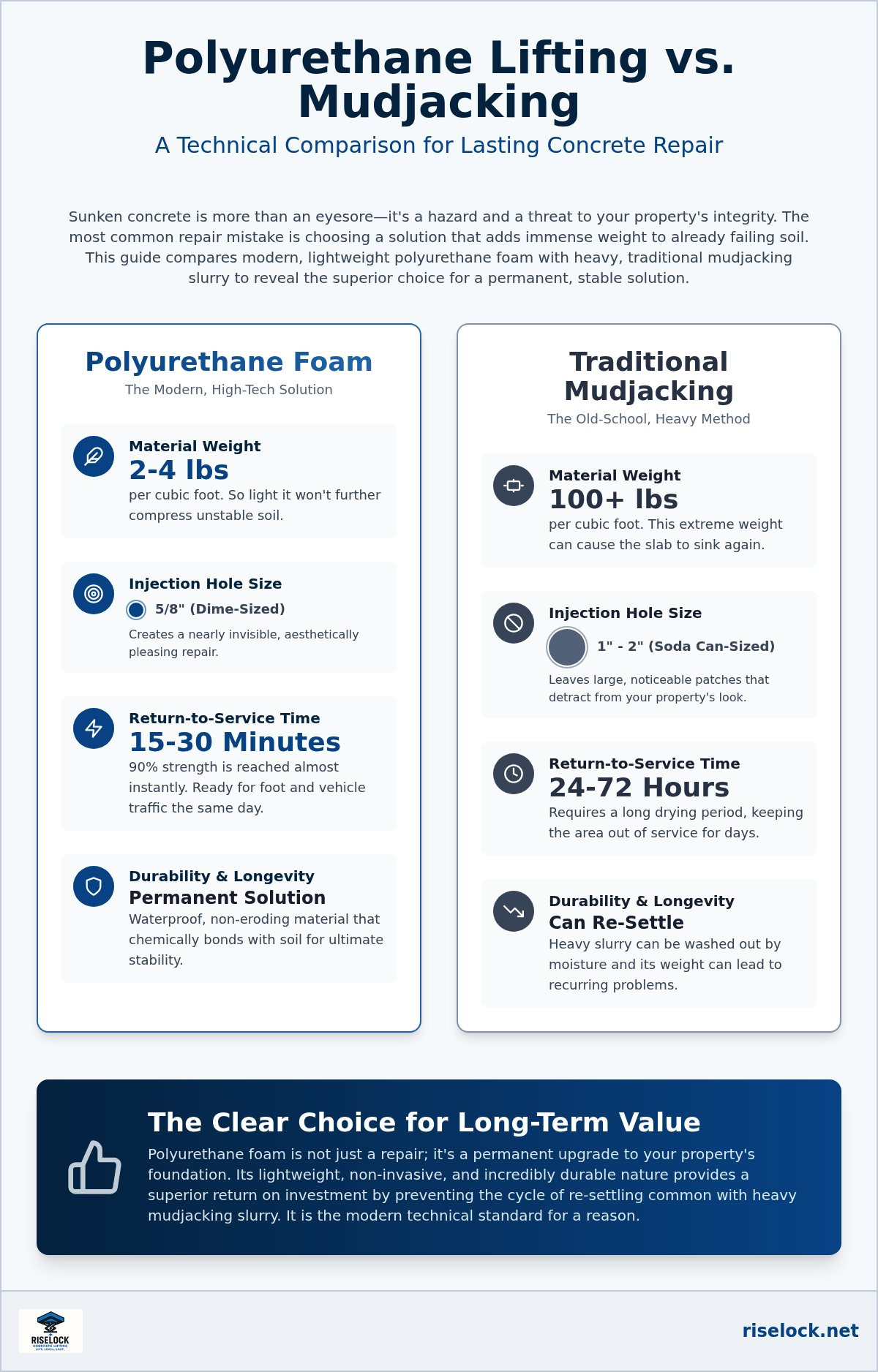
Mudjacking is an older form of concrete leveling that has served as the industry standard for decades. The process involves pumping a “slurry”—usually a combination of water, local soil, sand, and a small amount of Portland cement—underneath the concrete. Because this mixture is thick and heavy, contractors must drill large access holes, often up to two inches in diameter, to allow the slurry to flow. It’s a “wet” process that depends on the physical volume of the material to fill the void. While effective in some scenarios, the sheer weight of the slurry can eventually cause the underlying soil to compress further, leading to a recurrence of the original problem.
How Modern Polyurethane Foam Works
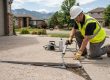
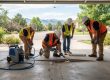
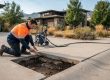
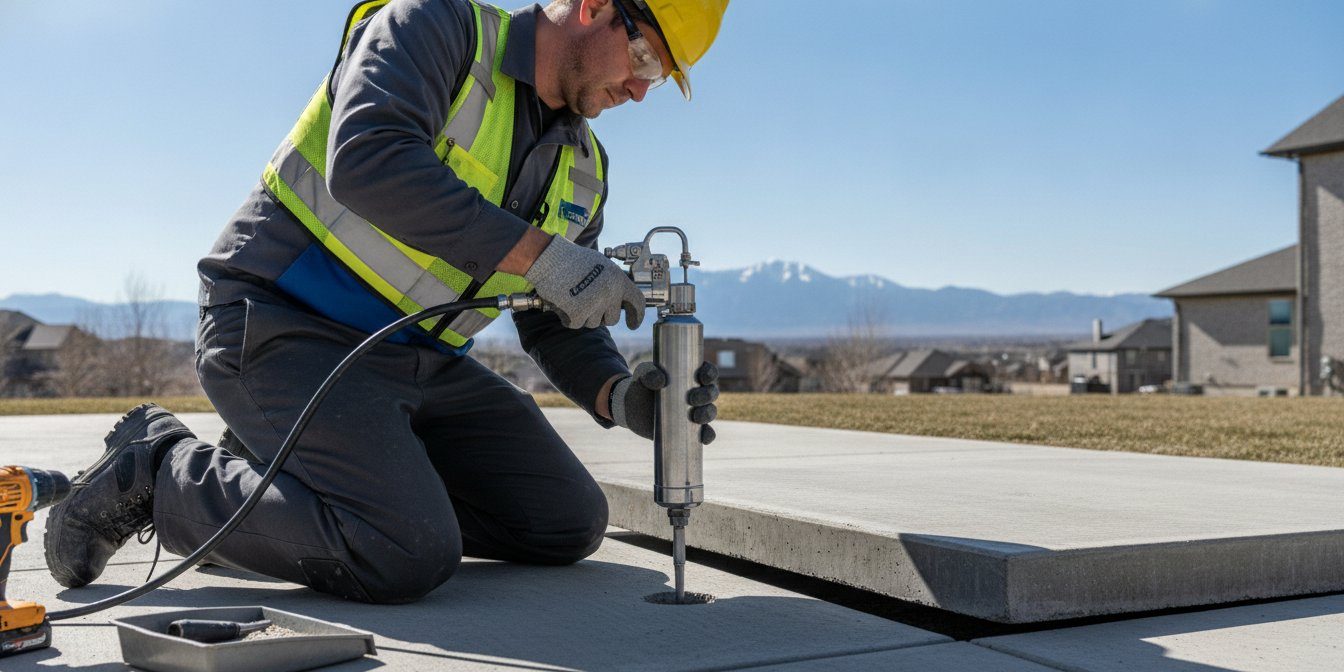
The modern alternative uses a two-part polymer that reacts chemically the moment it’s injected. As these components mix, they undergo a rapid expansion, creating enough force to lift even the heaviest residential slabs. Because the foam expands to find every tiny crevice, it requires significantly less entry space. We use tiny 5/8-inch holes, which are about the size of a dime, making the repair nearly invisible once finished. Unlike the days of waiting required for mudjacking slurry to dry, polyurethane foam reaches 90% of its full strength within 15 to 30 minutes. This speed allows homeowners to use their driveways or patios almost immediately after the crew leaves the site. It’s a clean, efficient, and technically superior method for stabilizing the ground beneath your feet.
Technical Comparison: How Modern Foam Outperforms Slurry
When analyzing the technical specifications of polyurethane lifting vs mudjacking, the differences in material performance become immediately apparent. Modern high-density foam provides a level of precision that traditional cementitious slurry simply cannot match. While mudjacking relies on a bulky, heavy mixture of soil and cement to fill space, polyurethane injection uses a lightweight polymer that expands to fill voids and stabilize the subgrade with surgical accuracy. This technical advantage is why the industry has moved toward polymer-based solutions for long-term structural reliability.
Speed and Return-to-Service
Time is a critical factor for any property owner dealing with sunken concrete. High-density polyurethane foam reaches 90% of its full compressive strength within just 15 minutes of injection. This rapid reaction allows for same-day traffic, even for heavy vehicles on driveways or commercial loading docks. In contrast, mudjacking requires a significant drying period, often keeping a surface out of service for 24 to 72 hours. For busy families or active businesses, the ability to restore access almost instantly is a primary advantage of modern foam technology.
Aesthetics and Cleanliness
The physical footprint of the repair process is another area where modern methods excel. Mudjacking requires drilling holes roughly the size of a soda can, usually between one and two inches in diameter. These large ports are difficult to patch and often leave a permanent, visible scar on the concrete. Foam injection utilizes tiny 5/8-inch holes, which are no larger than a penny. Because the foam is injected at a lower pressure and expands internally, the risk of messy blowouts, where slurry erupts from cracks or the sides of the slab, is virtually eliminated. This precise delivery leaves the concrete looking nearly untouched, preserving the curb appeal of your property.
Beyond aesthetics, the material’s reaction to the environment determines its longevity. Polyurethane is naturally waterproof and won’t erode when exposed to groundwater or heavy rain. Slurry mixtures, however, remain susceptible to the same water-based erosion that likely caused the original settlement. Despite being lightweight, high-density foam maintains a high compressive strength, capable of supporting thousands of pounds per square foot. This makes it an ideal choice for professional concrete leveling where structural integrity is a non-negotiable priority. By choosing a material that resists the elements, you ensure the stabilization remains effective for years rather than months.
The Weight Factor: Why Colorado Soils Demand Polyurethane
Structural restoration in the Rocky Mountain region requires a deep understanding of soil mechanics. When homeowners evaluate polyurethane lifting vs mudjacking, they often overlook the impact of material weight on the underlying subgrade. The physics of settlement are straightforward: if the soil failed to support the original weight of the concrete, adding more weight will only worsen the problem. Traditional mudjacking slurry is incredibly heavy, typically weighing between 100 and 150 pounds per cubic foot. In contrast, high-density polyurethane foam weighs only 2 to 4 pounds per cubic foot. By choosing a lightweight material, you avoid the “overburden” that frequently leads to secondary settlement in compromised or loose soils.
Navigating Expansive Clay in the Front Range
The Denver Metro and Colorado Springs areas are notorious for expansive clay soils. These soil types act like a sponge, swelling significantly when saturated and shrinking during our dry seasons. This constant movement creates voids and instability beneath driveways and foundations. Traditional mudjacking adds massive amounts of weight to these sensitive layers, which can actually accelerate the sinking process during the next moisture cycle. Utilizing foam concrete lifting allows for precise stabilization without taxing the soil’s bearing capacity. It provides the necessary lift while maintaining a minimal physical footprint, ensuring the repair doesn’t become the cause of the next failure.
Erosion and Hydrostatic Pressure
Water management is the most important factor in long-term concrete health. Mudjacking slurry is composed of organic materials like soil and sand mixed with water. Because it’s essentially a dirt-based product, it remains highly susceptible to erosion. When heavy rains or snowmelt saturate the ground, the slurry can wash away, leaving the slab unsupported once again. Polyurethane is a hydrophobic material, meaning it completely repels water. It doesn’t just fill the void; it acts as a permanent barrier against hydrostatic pressure. By sealing the underside of the concrete and filling every tiny crevice, the foam prevents future water accumulation that would otherwise lead to further erosion and soil displacement. This technical mastery ensures that the repair remains a permanent part of the property’s structural integrity.
Choosing a repair method that works with your property’s specific geology is an ethical priority for us. We focus on solutions that offer long-term security rather than temporary fixes. The lightweight nature of polymer foam isn’t just a convenience; it’s a technical necessity for the shifting landscapes of the Front Range. By addressing the root cause of settlement without adding unnecessary mass, we provide a level of stabilization that traditional methods simply cannot achieve in these specific environmental conditions.
Durability and ROI: Is Polyurethane Worth the Investment?
Evaluating the financial impact of structural repairs requires looking beyond the initial invoice. When comparing polyurethane lifting vs mudjacking, property owners often notice that polymer-based solutions carry a 20% to 30% premium over traditional slurry. This upfront difference reflects the advanced material costs and specialized equipment required for high-precision injection. While mudjacking appears more economical in the short term, its tendency to fail under its own weight often necessitates repeated interventions. A lifecycle analysis shows that paying for a permanent solution once is far more cost-effective than financing a series of temporary fixes that never address the underlying soil instability.
One common misconception is that foam lacks the strength to support heavy structural loads. High-density polyurethane is specifically engineered for high compressive strength; it won’t crush or deform under the weight of standard residential vehicles or commercial equipment. Unlike the large, unsightly patches left by mudjacking, which can diminish curb appeal and signal past structural issues to potential buyers, foam injection preserves the aesthetic value of your concrete. This technical mastery ensures that your investment adds to the property’s value rather than detracting from it.
The True Cost of ‘Cheap’ Repairs
Frequent “callbacks” are a hallmark of traditional mudjacking. Because the slurry remains susceptible to moisture and weight-based settlement, it’s common for slabs to re-sink within just a few seasons. The hidden costs of this cycle include repeated landscape disruption and the multi-day curing times that restrict access to your driveway or walkway. For a detailed breakdown of these financial considerations, refer to our concrete leveling buyer’s guide to understand how pricing frameworks align with long-term performance.
Long-Term Warranty and Reliability
Professional contractors typically offer more robust warranties for polyurethane than for mudjacking because the material is fundamentally more stable. Once the polymer has fully cured, it becomes an inert, permanent part of the soil structure that won’t leach chemicals or degrade over time. It’s a safe, environmentally responsible choice for homeowners who value both durability and ecological health. This reliability is why we prioritize high-density foam for every project we undertake. If you’re ready to secure your property with a precision-engineered solution, reach out to the experts at RiseLock for a professional consultation.
Choosing the Right Solution for Your Property with RiseLock
At RiseLock, we view structural challenges as a personal priority that requires a precise, technical response. When property owners weigh the benefits of polyurethane lifting vs mudjacking, the decision often centers on the level of stabilization required for a permanent result. We explicitly choose high-density foam for every project across the Front Range because it provides the surgical accuracy that traditional slurry cannot offer. Our methodology focuses on restoration and stabilization, ensuring that your concrete surfaces remain level without the risk of future erosion or soil overburden. We avoid the “old-school” mudjacking approach because we believe our clients deserve a solution that matches the modern engineering standards of 2026.
Our expertise extends beyond simple leveling. We often integrate our lifting techniques with post-tension installation to provide a comprehensive structural solution. This integrated approach is essential for modern properties that require advanced reinforcement to withstand the shifting soils of Colorado. By combining high-density foam with specialized reinforcement, we create a foundation that is both resilient and durable. This commitment to technical mastery ensures that we don’t just mask the symptoms of settlement; we address the structural health of the entire slab.
Protecting Your Foundation and Post-Tension Slabs
Many residential and commercial slabs in the Denver Metro area utilize internal tension cables for added strength. Precision lifting is critical for these structures; a single misplaced drill hole or uneven pressure application can compromise the entire slab’s integrity. We identify these structural risks before any injection begins, using specialized knowledge to ensure the safety of your foundation. Our process is designed to be clean and non-invasive, minimizing the footprint of our work while maximizing the structural benefit. Property owners can find peace of mind through our expert-led concrete repair in Denver, where we treat every project with the care and mastery it deserves.
Get a Professional Assessment Today
A RiseLock site evaluation is a methodical process designed to identify the root cause of your slab settlement. We examine soil conditions, slab thickness, and the specific drainage patterns affecting your property to develop a tailored restoration plan. This thoroughness ensures that our clients understand the “why” behind every technical recommendation we make. Our team serves the entire Front Range corridor, providing reliable assessments from Fort Collins down to Colorado Springs. If you’re ready to move away from the stress of structural damage toward long-term security, Contact RiseLock for a Professional Concrete Lifting Quote and let us guide you toward a stable, level future.
Investing in Long-Term Structural Health
Choosing a repair method for your concrete is an investment in your property’s future stability. We’ve seen that the primary cause of recurring settlement in Colorado is the addition of unnecessary weight to already compromised soil. High-density polyurethane provides a lightweight, hydrophobic alternative that stabilizes the ground without creating the heavy overburden associated with traditional slurry. This technical precision ensures your walkways and foundations stay level while avoiding the messy, invasive process of the past. By focusing on material performance and soil mechanics, you can move away from the cycle of temporary fixes.
The debate over polyurethane lifting vs mudjacking essentially comes down to the difference between a temporary patch and a permanent engineering solution. By prioritizing modern materials and specialized expertise in the Front Range’s unique soil conditions, you can achieve a non-invasive, same-day structural restoration that protects your home’s value for years to come. We’re committed to delivering high standards of technical mastery to every structural challenge we encounter. Request Your Precision Concrete Lifting Quote from RiseLock today. You don’t have to live with the stress of sinking concrete when a reliable, long-term solution is within reach.
Frequently Asked Questions
Is polyurethane lifting more expensive than mudjacking?
The initial investment for polyurethane lifting vs mudjacking is typically higher due to the advanced materials and specialized equipment involved. This price difference reflects the precision and durability of the polymer components. While the upfront cost is greater, most property owners find the long-term value superior because the material won’t wash away or contribute to further soil settlement. It’s an investment in a permanent fix rather than a recurring maintenance expense.
How long does polyurethane foam lifting last compared to mudjacking?
High-density polyurethane foam is considered a permanent solution because it’s an inert material that doesn’t degrade over time. In contrast, mudjacking slurry consists of organic soil and sand which remains susceptible to water erosion and decomposition. When evaluating polyurethane lifting vs mudjacking, the foam’s resistance to environmental factors ensures the repair lasts as long as the concrete itself. It provides a level of security that traditional methods simply can’t match.
Can polyurethane foam support the weight of a heavy vehicle or driveway?
High-density foam is specifically engineered to support significant structural loads, including heavy vehicles and commercial equipment. The material expands to fill every void and creates a stable, uniform sub-base that maintains high compressive strength. This ensures that driveways and garage floors remain level and secure even under constant daily use by SUVs or delivery trucks. It’s a technically superior method for stabilizing the ground beneath heavy residential slabs.
Will mudjacking holes be visible after the concrete is repaired?
Mudjacking holes remain visible after repair because the large access ports are difficult to blend with the original concrete. These holes often measure up to two inches in diameter, creating a prominent “polka-dot” appearance across the slab. Polyurethane injection uses much smaller, 5/8-inch holes that are easily patched and textured. This leaves the surface looking nearly untouched, which is a significant advantage for homeowners concerned about their property’s curb appeal.
Is the foam used in concrete lifting environmentally friendly?
Polyurethane resins used in concrete lifting are environmentally inert once they have fully cured. They don’t leach harmful chemicals into the surrounding soil or groundwater, making them a safe choice for residential landscaping. Because the material is permanent and won’t wash away, it also prevents the need for repeated repairs that consume more resources over time. It’s a sustainable solution that provides long-term stabilization without harming the local ecosystem.
How soon can I drive on my driveway after polyurethane lifting?
You can typically drive on your concrete surface within 15 to 30 minutes after the injection process is complete. The chemical reaction that creates the lift also causes the foam to reach 90% of its full strength almost immediately. This rapid cure time is a significant advantage over mudjacking, which often requires 24 to 72 hours of drying time before the surface is ready for vehicle traffic. It’s an efficient process that minimizes disruption to your daily routine.
Does mudjacking work on expansive clay soils like those in Denver?
Mudjacking is often counterproductive in regions with expansive clay soils because the heavy slurry adds excessive weight to an already unstable subgrade. This overburden can cause the clay to compress further during dry spells, leading to more sinking. Lightweight foam stabilizes the slab without taxing the soil’s bearing capacity, making it the technically superior choice for the Front Range. It’s a precise intervention designed for Colorado’s unique geological challenges.
Can polyurethane foam fill large voids under a concrete slab?
Polyurethane foam is exceptionally effective at filling large voids because of its expansive nature. As the liquid components react, they grow to many times their original volume, traveling into deep crevices that traditional slurry might miss. This ensures a complete, uniform support structure under the concrete, preventing the formation of air pockets that could lead to future cracking. It’s a thorough process that provides comprehensive stabilization for compromised slabs.