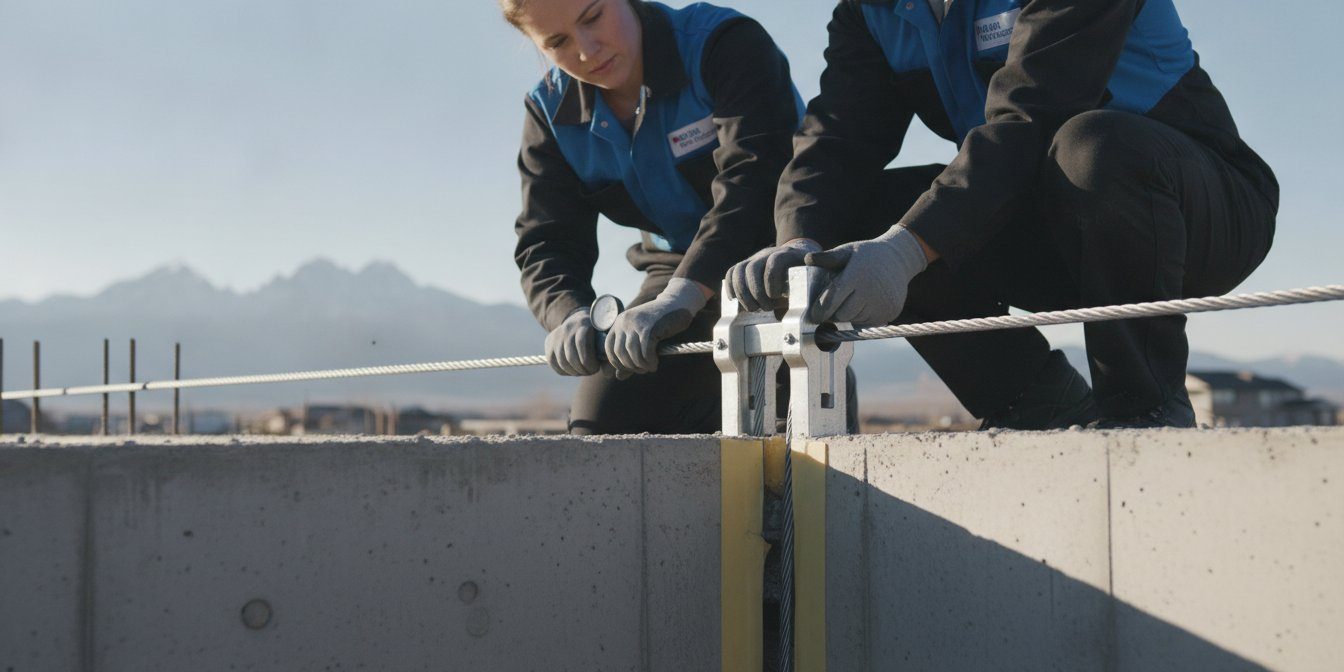
Expansive soils in Colorado cause more property damage annually than floods, tornadoes, and earthquakes combined. For homeowners across the metro area, this geological reality makes post tension foundation repair denver a high-stakes necessity rather than a routine maintenance task. You likely recognize that a post-tensioned slab isn’t a static piece of concrete; it’s a complex, active structural system held together by steel cables under immense internal tension. The concern over cable corrosion or structural shifts is a legitimate priority for anyone seeking to protect their property’s long-term value.
This guide provides the technical clarity you need to move from structural uncertainty to certified stability. We’ll explore the specialized methods used to restore cable integrity and the precise engineering required to counteract Denver’s unique soil dynamics. You’ll learn about the technical requirements of the 2025 Denver Building Code, the impact of 140 annual freeze-thaw cycles on your foundation, and the specific restoration methods that prevent future cable failure. This professional overview helps you identify the right path toward a permanent, engineered solution that ensures lasting peace of mind.
Key Takeaways
- Understand how Denver’s bentonite clay exerts extreme pressure on post-tension systems, necessitating a specialized approach to structural stabilization.
- Identify the critical signs of tendon failure, from visible “cable blowouts” to specific crack patterns that indicate a loss of internal tension.
- Master the technical details of post tension foundation repair denver, including the precision process of cable splicing and hydraulic re-tensioning.
- Navigate local compliance requirements, such as the necessity for engineered drawings and mandatory city inspections under current building codes.
- Learn why modern, high-precision restoration methods offer a more durable and reliable alternative to traditional foundation fixes.
Understanding Post-Tension Foundations in Denver’s Expansive Soil
A post-tension (PT) foundation is a high-performance structural system that uses high-strength steel tendons to compress the concrete slab. Unlike standard reinforcement, these cables are tensioned to thousands of pounds of force after the concrete has cured. This creates a Post-Tensioned Concrete grid that actively resists the heavy loads and shifting soil typical of the Front Range. In the context of post tension foundation repair denver, understanding this internal force is vital. The slab’s integrity depends entirely on the constant tension maintained within these cables. When that tension is lost, the concrete loses its primary defense against external pressure.
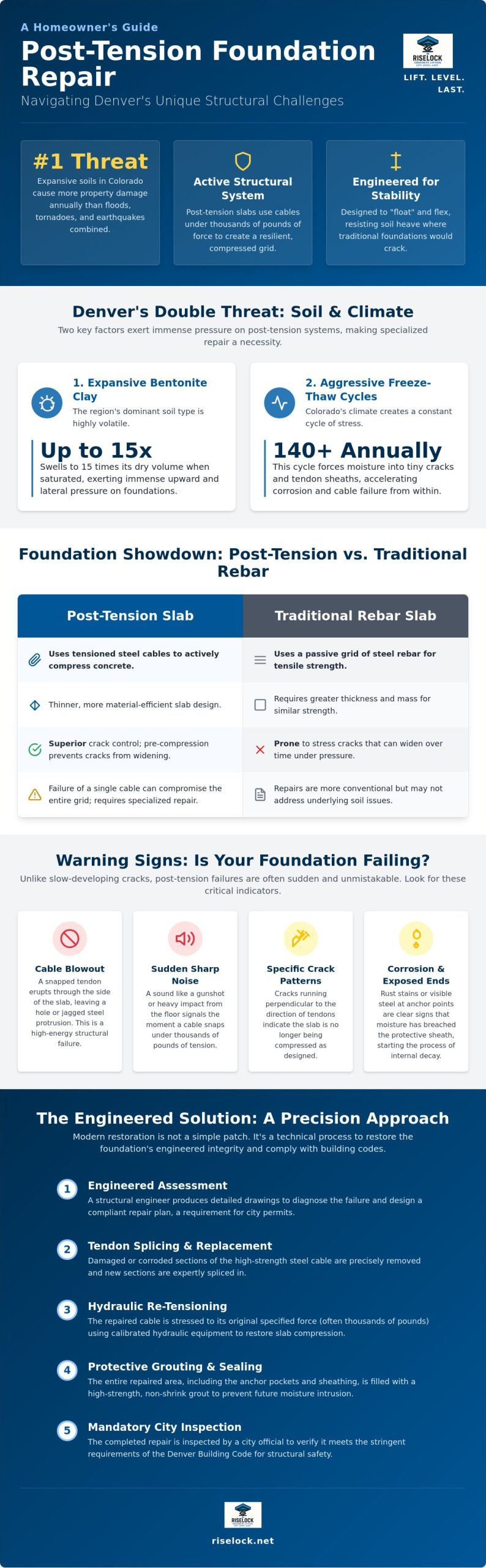
Denver’s geology presents a unique challenge: bentonite clay. This expansive soil can swell up to 15 times its dry volume when saturated, exerting immense upward and lateral pressure on residential and commercial structures. A traditional rigid slab often cracks under this stress, but a PT system is designed to flex and move as a single unit. However, this flexibility has a limit. When the soil’s swell-shrink cycle becomes too aggressive, it places localized stress on the tendons that can lead to snapping or corrosion. Because the system is interdependent, a single cable failure can eventually compromise the stability of the entire structural grid.
The Impact of Colorado’s Geologic Profile
In areas like Aurora and Centennial, seasonal moisture cycles create significant soil heave. PT slabs are often described as “floating” because they aren’t pinned deeply into the bedrock like some pier systems; instead, they rely on their internal strength to bridge gaps in soil support. If drainage isn’t managed correctly, water pools near the slab edges. This moisture doesn’t just cause soil expansion. It migrates into the tendon sheaths, leading to the hidden corrosion that eventually requires professional post tension foundation repair denver. With Denver now averaging more than 140 freeze-thaw cycles annually, the risk of moisture penetration and subsequent cable damage is a constant reality for property owners.
PT vs. Traditional Rebar Foundations
Traditional rebar foundations rely on the sheer mass of the concrete and the passive strength of the steel. In Colorado’s high-stress environments, these slabs often require greater thickness to achieve the same load-bearing capacity as a PT slab. Post-tensioned systems are typically thinner and more material-efficient, making them a preferred choice for large-scale commercial builds and modern residential developments. They offer superior crack control because the pre-compressed state of the concrete prevents minor fissures from widening into structural threats. While they’re more resilient, the complexity of their design means that any compromise to a cable isn’t just a minor crack; it’s a disruption of the engineered balance of the entire building footprint.
Identifying Failure: Signs Your Denver Foundation Needs PT Repair
Recognizing the early symptoms of tendon failure is critical for maintaining structural safety. Unlike traditional concrete cracks, which may develop slowly over years, post-tension failures often manifest through high-energy events. The most unmistakable sign is the “cable blowout.” This occurs when a tendon snaps under tension, causing the steel to erupt through the side of the concrete slab. This leaves a characteristic hole or a jagged protrusion of steel at the slab’s edge. Because these cables are stressed to high capacities, their failure is rarely silent.
Property owners often report hearing a sudden, sharp noise similar to a gunshot or a heavy impact echoing through the floor. This auditory warning is a definitive signal that the internal reinforcement grid has been compromised. Beyond these dramatic events, visual cues like cracks running perpendicular to the direction of the tendons indicate that the slab is no longer being compressed as designed. If you notice rust stains or exposed steel at the anchor pockets along the foundation perimeter, moisture has likely breached the protective sheath. This environment makes post tension foundation repair denver an urgent priority to stop the progression of internal decay.
Common Post-Tension Failure Modes
Tendon failure typically stems from three primary sources. Corrosion is the most frequent culprit in the Denver metro area. When unsealed anchor pockets allow de-icing salts or groundwater to reach the steel, the resulting oxidation weakens the cable until it can no longer hold its load. Construction defects, such as improper initial tensioning or poorly positioned tendons, also contribute to premature snapping. Finally, severe soil subsidence can leave sections of the slab unsupported. As the Post-Tensioning Institute notes, these slabs rely on uniform support; when the ground drops away, the sheer weight of the concrete can exceed the tendons’ tensile strength.
The Risks of Delayed Repair
Ignoring a single broken cable is a dangerous strategy due to the “zipper effect.” When one tendon fails, the structural load is immediately transferred to adjacent cables. This increased stress often triggers a chain reaction of subsequent failures, rapidly destabilizing the entire foundation. In commercial environments, this leads to uneven flooring and significant liability risks from trip hazards. You can see the progression of these issues in our Broken Post-Tension Cable Repair Case Study, which details the restorative steps required after multiple tendon breaks. Addressing these issues early through specialized concrete repair ensures that a localized failure doesn’t escalate into a total structural overhaul.
Strategic Repair Methods for Post-Tension Slabs
Restoring a post-tensioned system requires a methodical approach that respects the original engineering intent of the structure. In many instances, the foundation has settled or shifted due to Denver’s expansive soils before the tendons actually snap. To address this sequence of failure, we often utilize polyurethane concrete lifting to stabilize and level the slab before any cable work begins. This ensures the concrete is properly supported and aligned, providing a stable environment to re-introduce thousands of pounds of tension into the reinforcement grid. Without this initial stabilization, the repair might address the broken cable while leaving the underlying cause of the stress unaddressed.
The technical demands of post tension foundation repair denver require a deep understanding of how active reinforcement behaves under load. Once the slab is stabilized, the focus shifts to the physical restoration of the tendons. This involves a combination of high-precision splicing and hydraulic tensioning designed to return the slab to its original design strength. Every step is documented to ensure the system meets current safety certifications and provides long-term security against the Front Range’s challenging climate.
The Cable Splicing Process
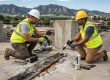
When a blowout occurs, the repair begins with careful excavation around the failure point to locate the “dead” ends of the broken cable. These cables often retract several feet into the slab after snapping. Because tendon failures are frequently caused by localized corrosion, we remove the damaged sections until we reach clean, uncompromised steel. A specialized coupler, or strand splice, is then used to bridge the gap. This hardware allows us to restore the cable’s continuity without the need to replace the entire run through the foundation. Maintaining the original cable path is vital to prevent structural eccentricity, which could cause the slab to bow or warp once tension is reapplied.
Restoring Tension and Anchoring
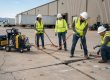
After the splice is secure, we use calibrated hydraulic jacks to apply the exact pound-force specified in the building’s original structural plans. This is a high-precision task; over-tensioning can cause new blowouts, while under-tensioning fails to provide the compression necessary for structural integrity. During this stage, we perform “back-stressing” to verify that the remaining length of the tendon is still bonded correctly and capable of holding its load. Finally, we inject high-pressure grease into the sheath and seal the anchor pocket with non-shrink grout. This encapsulation acts as a critical barrier against Denver’s freeze-thaw cycles, preventing moisture from initiating a new cycle of corrosion within the repaired system.
Considerations for Denver Property Owners: Cost and Regulations
Investing in structural restoration requires a clear understanding of the variables that drive project expenses. The post tension cable repair cost is primarily determined by three factors: the depth of the compromised tendons, the total number of failures within the grid, and the accessibility of the slab edges. While material costs for steel and grout are relatively stable, the labor required for precision excavation and hydraulic re-tensioning represents the bulk of the investment. Property owners should also account for the “expertise premium” associated with specialized contractors. Hiring a generalist who lacks specific PT experience often leads to catastrophic failure because they don’t possess the calibrated equipment or technical knowledge to manage stored energy safely.
Choosing a qualified partner for post tension foundation repair denver ensures that your project complies with all municipal mandates. As of July 2026, all foundation interventions must align with the 2025 Denver Building Code. This regulatory framework requires engineered drawings for any modification to a post-tensioned system. The city mandates at least two formal inspections: one to verify the repair prep and a final inspection upon completion. Working with a team that understands these local administrative hurdles prevents costly delays and ensures your safety certification is valid for future property transfers.
Evaluating Repair vs. Replacement
A post-tensioned slab is rarely a candidate for total replacement unless the concrete matrix itself has completely disintegrated. In the Denver market, professional restoration offers a high return on investment by preserving the structure’s original engineering while addressing localized failures. For commercial clients, the specialized methods used by RiseLock Concrete Lifting focus on minimizing business downtime. We use targeted excavation techniques that allow the facility to remain partially operational, avoiding the massive disruption and expense of a full slab pour. This strategic approach views the repair as a surgical intervention rather than a blunt demolition.
Local Compliance and Safety
Adherence to Post-Tensioning Institute (PTI) standards isn’t optional; it’s the baseline for structural safety. During the high-tension stressing phase, we establish a strict safety perimeter to protect occupants and crew from potential cable recoil. This level of precision is why a Post Tension Contractor Colorado Springs or Denver specialist is needed for local soil compliance. These professionals understand how to calibrate tensioning forces to account for the specific friction losses and soil pressures found along the Front Range. If you suspect your foundation has a broken tendon, reach out to our specialists for a professional structural assessment to protect your property’s integrity.
RiseLock’s Precision Approach to Post-Tension Restoration
RiseLock Concrete Lifting approaches every structural challenge with a commitment to quiet authority and technical precision. We view the restoration of your property’s integrity as our personal priority, ensuring that every intervention meets the highest standards of safety and durability. Our methodology is unique because it integrates advanced post tension installation knowledge with modern repair technology. This dual expertise allows us to anticipate the behavior of stressed systems, making us a dependable partner for post tension foundation repair denver. We don’t simply patch cracks; we restore the engineered balance that your building depends on for long-term stability.
Precision diagnostics are the cornerstone of our process. Before any physical excavation begins, we utilize non-destructive testing to map the exact location of every tendon within the concrete matrix. This step is vital for safety, as it prevents accidental damage to healthy cables while we target the failed components. By identifying the specific geometry of your foundation’s reinforcement grid, we execute a surgical repair that maintains the original design intent. This end-to-end service covers everything from the initial blowout repair to final slab stabilization, providing a seamless path from damage to certification.
Why Denver Trusts RiseLock Concrete Lifting
Our team has built a reputation for reliability across the entire Front Range, providing specialized services from Boulder to Castle Rock. We recognize that structural work can be stressful for property owners, which is why we emphasize clean, efficient job sites that respect both residential and commercial spaces. Our expertise isn’t limited to cable splicing; we understand the synergy between different restoration methods. For instance, we often combine tendon restoration with foam concrete lifting to ensure the slab is perfectly supported before we apply high-tension forces. This holistic approach addresses both the symptom of the failure and the environmental causes behind it, ensuring a repair that lasts.
Next Steps for Your Foundation
A suspected cable blowout is a structural emergency that requires immediate professional intervention. As discussed, the loss of a single tendon increases the load on the rest of the system, making early detection and repair essential for preventing a total foundation failure. Taking action now protects your investment and ensures the safety of everyone within the structure. Scheduling a professional structural assessment allows us to assess the extent of the damage and provide a clear, technical roadmap for restoration. Contact RiseLock for a Structural Evaluation to secure your property with precision post tension foundation repair denver.
Securing Long-Term Structural Stability
Restoring a post-tensioned foundation in the Front Range is a technical discipline that demands precision and localized expertise. We’ve explored how the interaction between bentonite clay and steel tendons necessitates a strategic approach to repair, moving beyond simple surface fixes to address the core tension of the system. By prioritizing early detection of cable failures and adhering to current engineering standards, you ensure your property remains resilient against Colorado’s extreme moisture cycles.
RiseLock provides the specialized mastery required for complex post tension foundation repair denver, delivering engineered solutions tailored to the unique soil conditions of the Denver metro area. Our team brings professional reliability to every project, from high-precision cable splicing to full structural stabilization. Don’t leave your property’s safety to chance when specialized intervention is available. Secure Your Structure: Schedule a Post-Tension Evaluation with RiseLock and gain the peace of mind that comes with certified structural integrity. We’re here to help you navigate these challenges with confidence and technical excellence.
Frequently Asked Questions
How do I know if I have a post-tension foundation in my Denver home?
You can typically identify a post-tensioned slab by looking for a stamp in the garage floor concrete that warns against cutting or drilling. Another common sign is the presence of small, circular grout patches along the exterior foundation beam. These patches cover the anchor pockets where the steel tendons were stressed during the original construction process. If your home was built on expansive clay in the Denver metro area after 1980, there is a high probability it utilizes this system.
Is a broken post-tension cable an emergency?
A broken cable is a serious structural issue that requires immediate attention to prevent further damage. When a tendon snaps, the compression it provided to the concrete is lost, which often leads to the “zipper effect” where adjacent cables take on extra load and fail in sequence. Prompt post tension foundation repair denver is necessary to restore the structural grid and prevent the slab from shifting or cracking under the pressure of Colorado’s expansive soils.
Can I repair a post-tension slab myself?
No, you should never attempt to repair a post-tensioned system yourself because the cables are under thousands of pounds of stored energy. Cutting or mishandling a stressed tendon can cause it to erupt from the slab with lethal force. Professional repair requires specialized hydraulic jacks, calibrated tensioning equipment, and a deep understanding of structural engineering. Hiring a specialist ensures the work complies with the 2025 Denver Building Code and maintains your property’s safety certification.
How much does post-tension foundation repair typically cost in Denver?
The investment for repair depends on several technical variables, including the number of failed tendons and the accessibility of the anchor points. If the slab has shifted significantly, the project may also require stabilization before the cable work can begin. Because every structural challenge is unique, it’s best to have a professional assessment to determine the specific scope of work required for your foundation. This ensures a permanent solution rather than a temporary patch.
How long does a post-tension cable repair take to complete?
Most localized cable repairs are completed within one to two business days. This timeframe covers the excavation of the blowout site, the installation of specialized splicing hardware, and the final re-tensioning of the tendon. If the project involves multiple cable failures or requires integrated slab leveling, the schedule may extend to ensure all components are properly calibrated. Our goal is always to restore structural integrity with minimal disruption to your daily routine.
What happens if a post-tension cable is accidentally cut during renovations?
If a cable is cut, the internal reinforcement of the slab is immediately compromised in that area. You will likely hear a loud, sharp noise as the tension is released, and the tendon may retract several feet into its sheath. You must stop all work immediately and establish a safety perimeter. A specialist must then be called to locate the retracted ends, perform a professional splice, and re-tension the system to restore the foundation’s original design strength.
Will repairing the cables fix my uneven floors?
Repairing the cables restores the internal strength of the concrete, but it may not automatically level a floor that has already heaved or settled. In many cases, we combine post tension foundation repair denver with polyurethane concrete lifting to address the underlying soil issues. This comprehensive approach levels the slab first and then restores the cable tension. This sequence ensures the floor is both functionally level and structurally reinforced against future movement.
Does insurance cover post-tension cable blowouts?
Coverage for cable failures depends on the specific cause of the damage and the language of your individual policy. Some insurance providers cover blowouts if they are the result of a sudden, accidental event, while others may exclude damage linked to the gradual movement of expansive soils. It’s advisable to have a professional structural report prepared to document the failure. This technical documentation is often essential when discussing a potential claim with your insurance agent.