
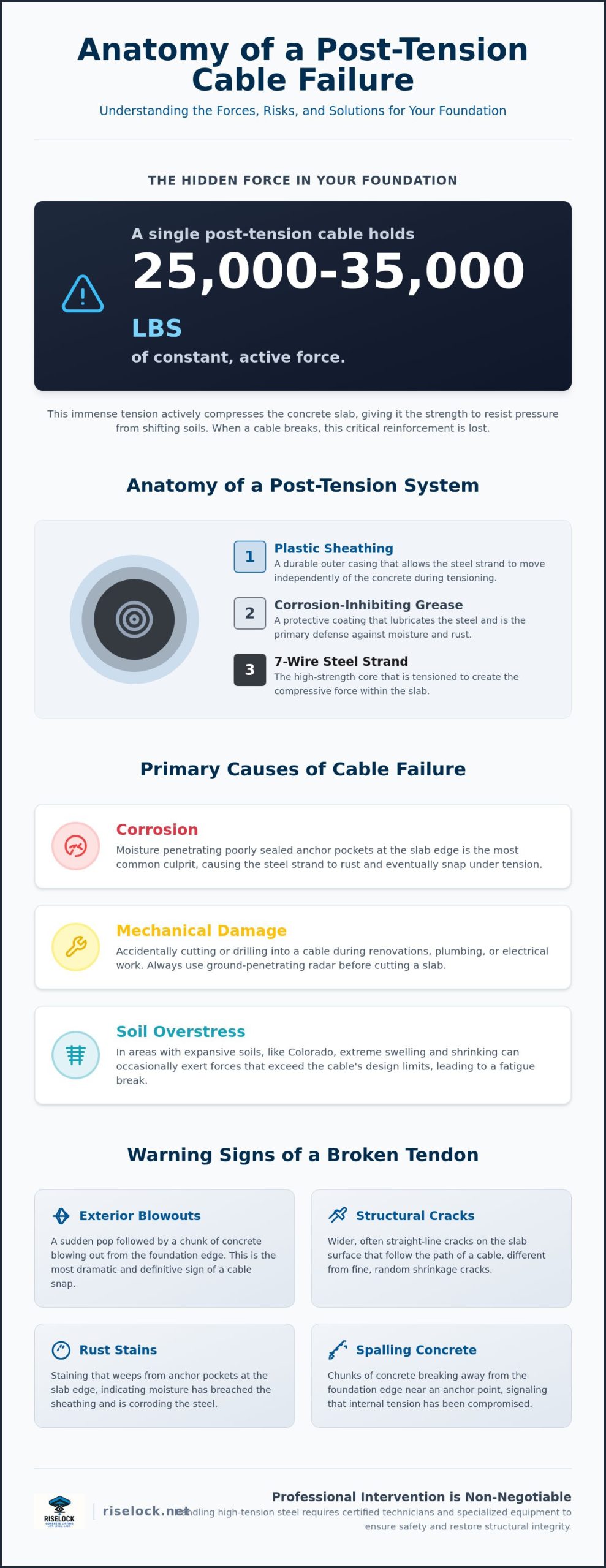
A single post-tension cable in a residential foundation holds between 25,000 and 35,000 pounds of force. When that tension is suddenly released, the sound can be as loud as a gunshot, leaving homeowners with a deep sense of unease about their property’s safety. You’re likely here because you’ve noticed a suspicious gap in your concrete or a cable end snapping through the exterior. It’s natural to worry that a broken post tension cable repair will involve a complete foundation overhaul or an impossible price tag, but understanding the mechanics of the fix is the first step toward peace of mind.
We believe that structural challenges deserve a transparent, technical response rather than a high pressure sales pitch. This case study demonstrates that while cable failure is serious, it’s a problem with a definitive, engineered solution. You’ll gain a clear understanding of how certified professionals identify failure points and use specialized hydraulic equipment to restore the necessary tension to your slab. We’ll walk through the technical process of stabilization and the rigorous safety standards mandated by the 2024 International Residential Code, giving you the confidence to move from structural stress to long term security.
Key Takeaways
- Understand the role of post-tension cables as the active reinforcement of your slab and how failure compromises the foundation’s load-bearing capacity.
- Identify the visual markers of a cable snap, such as exterior blowout patches, which differ significantly from common cosmetic cracking.
- Explore the technical stages of a professional broken post tension cable repair, from pinpointing the break to the precise application of hydraulic force.
- Review a Centennial case study that highlights how environmental factors like drainage cause corrosion and how specialized intervention restores integrity.
- Acknowledge the safety protocols and specialized certifications required to handle high-tension steel, ensuring the long-term security of your property.
Understanding Broken Post-Tension Cables: A Structural Emergency
A post-tensioned slab is fundamentally different from a standard rebar-reinforced foundation. Think of these cables as the active muscle of the concrete. While concrete is excellent at handling compression, it’s naturally weak under tension loads. By integrating high-strength steel strands that are pulled tight after the concrete cures, we create prestressed concrete. This internal force allows the slab to actively resist the pressure of shifting earth. When a cable fails, the foundation loses this vital reinforcement, shifting from a state of controlled equilibrium to a state of structural vulnerability.
The Anatomy of a Post-Tension System
Each system consists of a seven-wire steel strand coated in a corrosion-inhibiting grease and encased in a durable plastic sheathing. This sheathing is critical because it allows the steel to move independently of the concrete during the stressing process. At the edges of the slab, heavy-duty anchors and wedges lock the cable in place, maintaining a tension that typically ranges from 25,000 to 35,000 pounds. This high-energy environment is why a broken post tension cable repair is such a specialized task. The stored energy must be respected and managed with technical precision to ensure the safety of the structure and the technicians on-site.
In Colorado, the demand on these systems is particularly high. Our region is known for expansive bentonite soils that swell when wet and shrink when dry. This constant heaving puts immense pressure on a foundation. A post-tensioned system is designed to bridge these soil movements, but if a cable is compromised, the slab can no longer distribute these loads evenly. This often leads to secondary damage, such as drywall cracks, sticking doors, or significant slab tilting. Homeowners across the Front Range, from Denver to those seeking a qualified post tension contractor Colorado Springs residents trust, face these same expansive soil challenges that demand specialized engineering solutions.
Common Causes of Cable Failure in Denver
Failures rarely happen without a clear catalyst. In the Denver metro area, we frequently identify three primary culprits during an inspection:
- Corrosion: Moisture often enters through poorly sealed anchor pockets at the slab edge, causing the steel strand to rust and eventually snap.
- Mechanical Damage: Home renovations or plumbing repairs that involve cutting into the slab can accidentally sever a cable if its location isn’t mapped using ground-penetrating radar.
- Soil Overstress: Extreme soil movement can occasionally exceed the design limits of the cable, leading to a sudden fatigue break.
Ignoring a snapped cable is a risk to the long-term safety of the structure. A single break places additional stress on the remaining intact cables, which can trigger a sequence of failures over time. Initiating a broken post tension cable repair early prevents this progression and restores the original engineering intent of your foundation. It’s about moving from a state of uncertainty to a state of documented structural security. For Denver homeowners navigating these risks, understanding the full scope of post tension foundation repair Denver specialists provide can help clarify what a comprehensive, engineered restoration actually involves.
Signs of a Broken Tendon: From Surface Cracks to Blowouts
Identifying a failed tendon requires a keen eye for detail. While many homeowners expect a dramatic event, the signs are often subtle before they become catastrophic. Recognizing these early indicators is essential for a successful broken post tension cable repair. Unlike standard concrete cracks that occur during curing, tension-related failures often manifest as horizontal separations along the foundation’s perimeter or localized heaving where the slab loses its downward compression. These changes indicate that the internal forces meant to keep the slab rigid are no longer functioning correctly.
Visual Indicators on the Slab Surface
Concrete naturally develops hairline shrinkage cracks as it dries. These are usually cosmetic and do not threaten the home’s safety. However, structural tension cracks are wider and often occur in a straight line following the path of a cable. You should look for rust stains weeping from anchor pockets at the slab’s edge. This staining indicates that moisture has breached the plastic sheathing, leading to the corrosion of the steel strand. Spalling, where chunks of concrete break away from the foundation edge, is another clear signal that the internal tension has been compromised. The Post-Tensioning Institute emphasizes that these visual cues are often the only external warning of internal deterioration.
Not every cable failure is loud. In many cases, corrosion slowly thins the steel wires until the cable can no longer hold its design load. These silent failures are particularly dangerous because the slab loses its reinforcement without any immediate notification. Over months, this leads to sloping floors or stuck windows as the foundation settles unevenly. If you suspect your foundation is losing its integrity, a professional concrete repair evaluation can determine if your cables are still under proper tension.
The “Pop” and Its Implications
When a cable snaps under its full 33,000 pounds of force, the energy release is instantaneous. This event is often accompanied by a sound resembling a gunshot or a heavy object hitting the floor. In a blowout, the cable end can actually punch through the concrete anchor and exit the slab entirely. Because of the extreme tension involved, a snapping cable has the potential to whip through drywall, flooring, or even structural framing. This is why a broken post tension cable repair is never a DIY project. The physical risks are significant.
If you hear a loud pop or see a cable end protruding from your foundation, keep people away from that area. The remaining anchors may be under additional, uneven stress that could lead to further failures. Do not attempt to push the cable back in or cover it with a simple patch. Proper restoration requires technical recalibration that goes far beyond surface-level aesthetics. Immediate stabilization of the perimeter is the first priority to ensure the safety of the household while a repair plan is developed.
The Precision Process of Post-Tension Cable Repair
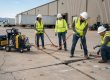
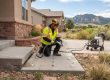
Restoring a foundation’s structural integrity is an engineering task that demands absolute accuracy. Unlike traditional concrete repairs, where the focus is often on surface aesthetics, a broken post tension cable repair is a recalibration of internal forces. The process begins with a rigorous site assessment and the establishment of a safety perimeter. Because a snapped cable can still harbor residual tension or cause secondary failures in adjacent tendons, stabilization is the first priority. Technicians then use specialized equipment, such as ground-penetrating radar, to map the cable’s path and pinpoint the exact location of the break without causing further damage to the slab.
Executing this work requires a deep understanding of how these systems respond to stress. The American Concrete Institute provides the technical framework for evaluating these failures, emphasizing that repair methods must account for the specific environmental factors that caused the initial damage. By following these established standards, we ensure that the restoration isn’t just a temporary patch but a return to the building’s original design specifications.
Excavation and Splicing Techniques
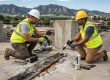
Once the break point is identified, we carefully chip away the concrete to expose the damaged tendon. This excavation is done with precision tools to avoid nicking other cables. After the steel strand is exposed, any corroded sections are removed. We then use a specialized coupler to join the existing cable to a new high-strength steel segment. It’s vital that the new section is packed with corrosion-inhibiting grease and encased in a matching plastic sheathing. This seamless barrier is what prevents moisture from reaching the steel, protecting the repair from the same forces that caused the original failure.
Hydraulic Re-Tensioning and Anchoring
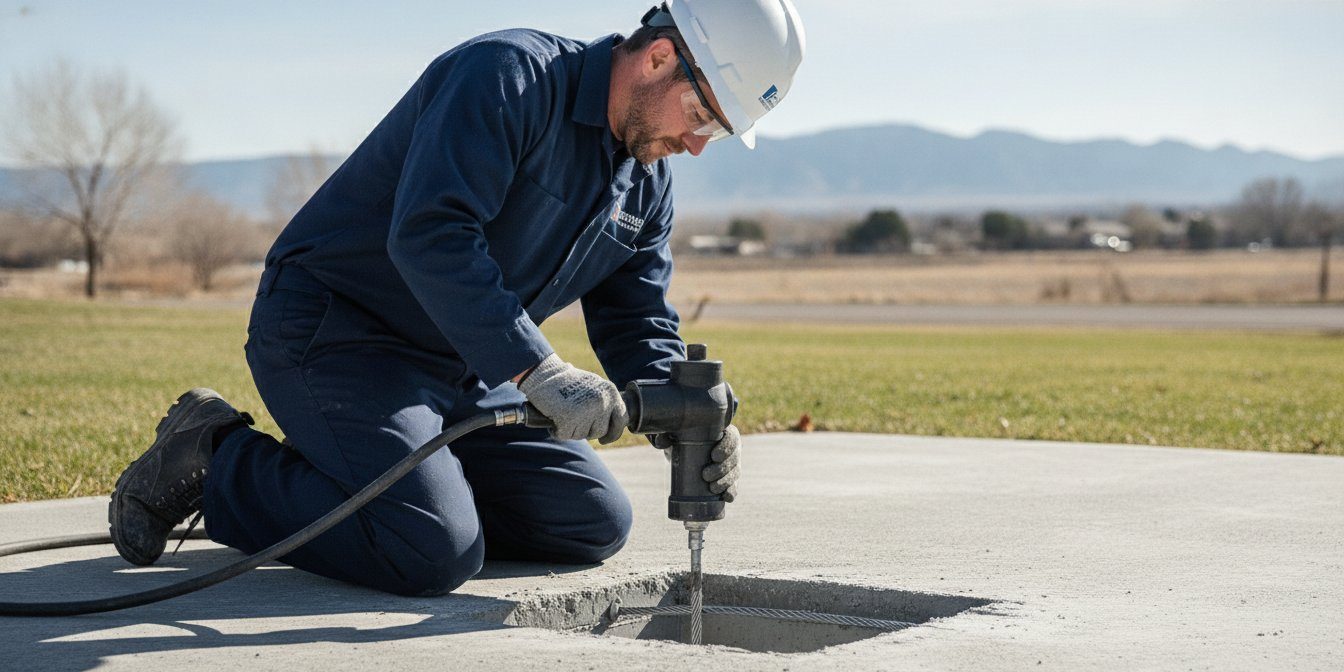
The final and most critical phase is the re-tensioning of the cable. RiseLock utilizes calibrated hydraulic rams to pull the cable back to its required tension, which typically ranges from 25,000 to 33,000 pounds. We don’t just pull until it’s tight; we measure “elongation.” By calculating how much the steel strand stretches, we verify that the precise amount of force has been applied. Once the target tension is reached, the wedges are locked into the anchor, and the excess cable is trimmed. The anchor pocket is then filled with a high-strength, non-shrink grout. This final seal protects the hardware from the elements and restores the smooth finish of your foundation’s edge.
Case Study: Restoring Slab Integrity in a Denver Foundation
A residential property in Centennial recently provided a clear example of how environmental stressors lead to significant cable failure. The homeowner noticed a slight slope in the kitchen floor and sticking doors, but hadn’t heard the loud “pop” often associated with a blowout. This scenario is common in the Denver metro area, where failures can happen gradually due to the high bentonite content in our local soil. When moisture isn’t managed correctly, it triggers soil expansion that places uneven, extreme stress on the foundation’s internal reinforcement.
Diagnosis of the Centennial Property
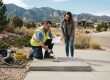
During a detailed structural assessment, our team identified four snapped cables. The failure wasn’t localized to one area; instead, the cables had failed at different points along the southern edge of the slab. Our diagnosis revealed that poor drainage had allowed water to pool near the foundation, causing the anchor pockets to stay damp for extended periods. This moisture breached the protective sheathing, leading to the corrosion and eventual snapping of the steel strands. We worked closely with structural engineers to design a plan that would not only fix the breaks but also stabilize the ground beneath the home.
Execution and Technical Milestones
The restoration required a multi-stage approach that combined mechanical repair with soil stabilization. We began by carefully excavating the concrete at the break points to prepare for splicing. Using high-grade couplers, we joined new steel segments to the healthy portions of the existing tendons. This project demonstrated the necessity of a comprehensive post tension slab repair strategy. Because the failed cables had allowed the slab to settle, we utilized polyurethane concrete lifting to fill the voids beneath the foundation before applying final tension.
Once the soil was stabilized and the slab was level, we moved to the re-tensioning phase. We used calibrated hydraulic rams to pull each cable to its specific design load, verifying the elongation of the steel to ensure accuracy. This broken post tension cable repair concluded with the application of non-shrink grout to the anchor pockets, creating a permanent seal against future moisture intrusion. The result was a foundation that met its original engineering specifications, providing the homeowner with a level floor and a documented guarantee of structural safety. If you’ve noticed similar signs of settlement or suspected cable failure, our team can provide a technical concrete repair evaluation to restore your property’s integrity.
Why Professional Intervention is Non-Negotiable
Attempting to address a compromised foundation without specialized training is a significant safety risk. The steel strands inside your slab are under immense tension, often reaching 35,000 pounds of force. If a cable is handled incorrectly during a broken post tension cable repair, that stored energy can release violently, causing severe injury or further structural damage. This isn’t a standard concrete project; it’s a high-stakes engineering task that requires calibrated hydraulic tools and a deep understanding of structural physics. While a general contractor might offer a quick patch, they often lack the equipment to verify if the cable has been returned to its original design load.
Professional restoration ensures that the repair complies with the 2024 International Residential Code (IRC), which now mandates specific design standards for post-tensioned slabs on expansive soils. By following these regulations, we provide more than just a visual fix. We deliver a documented, engineered solution that restores the active reinforcement your home needs to withstand Colorado’s shifting ground. Without this precision, a slab remains in a state of internal imbalance, which eventually leads to secondary failures in adjacent cables or the concrete itself. Homeowners seeking to understand the full regulatory and technical landscape of post tension foundation repair in Denver will find that compliance with current building codes is as critical as the mechanical repair itself.
The Risks of Improper Repair
Simple surface patches or un-tensioned splices are common mistakes that lead to long-term frustration. When a cable isn’t properly re-tensioned using a hydraulic ram, that section of the slab remains “dead,” meaning it offers no resistance to soil movement. This leads to uneven loading, which manifests as recurring wall cracks and door misalignment even after the “repair” is finished. Additionally, if the cable isn’t greased and sheathed correctly, corrosion will continue to eat away at the steel strand from the inside out. Beyond the physical risks, uncertified repairs create significant liability issues. When it’s time to sell your home, a lack of professional documentation for foundation work can stall a sale or lead to costly demands from a buyer’s inspector.
Partnering with RiseLock for Structural Security
Our team views every foundation as a personal priority, applying technical mastery to ensure your home’s longevity. We don’t just fix breaks; we provide a comprehensive approach that includes everything from initial diagnosis to expert post tension installation for new additions or full-scale restorations. Our expertise is tailored to the specific challenges of the Denver metro area, serving homeowners from Boulder to Colorado Springs who deal with the unique stresses of bentonite-rich soils. We act as your professional guide, moving you away from the stress of structural damage toward the peace of mind that comes with a high-precision intervention. Don’t leave your home’s safety to chance. Schedule a structural assessment with RiseLock today to ensure your foundation remains a stable, secure asset for years to come.
Restoring the Long-Term Integrity of Your Foundation
A failed tendon is more than a cosmetic flaw; it’s a disruption of the engineered forces that keep your home stable. Successful restoration requires a methodical approach that combines local soil knowledge with high-precision splicing and tensioning techniques. Engaging in a professional broken post tension cable repair ensures your slab returns to its original design specifications, protecting it against the unique pressures of Colorado’s expansive earth.
Our team utilizes specialized hydraulic tensioning equipment and comprehensive structural restoration services to provide a permanent solution. We view your home’s stability as our personal priority, offering the technical mastery needed for lasting peace of mind. Protect your foundation—Contact RiseLock for an expert evaluation. You don’t have to live with the stress of structural uncertainty. Taking action today preserves both your property value and your family’s safety.
Frequently Asked Questions
Is a broken post-tension cable a structural emergency?
A broken cable is a structural priority that requires prompt professional attention. While a single break might not cause an immediate collapse, it shifts the load to the remaining tendons and compromises the slab’s ability to resist soil heaving. Ignoring the issue often leads to secondary damage like wall cracks or foundation tilting. We recommend a structural assessment to determine the extent of the failure and prevent a localized issue from becoming a broader foundation emergency.
Can I still live in my house if I have a broken cable?
You can typically remain in your home, but the area surrounding a visible blowout should be cordoned off for safety. The high tension in these systems means that a snapped cable end can be dangerous until it is stabilized. While residential foundations are designed with a margin of safety, living with a compromised slab increases the risk of settlement. It’s best to have the system inspected to ensure the structural integrity remains sufficient for daily use.
How much does it typically cost to repair a post-tension cable in Denver?
The cost of a broken post tension cable repair varies based on several technical factors. These include the number of compromised cables, the depth of the slab, and whether the break occurred in a location that requires interior floor removal. Because every foundation is unique, we provide a detailed evaluation rather than a flat rate. Factors like local soil conditions in Denver and the complexity of the splicing required will influence the final scope of the project.
How long does the repair process take?
Most residential cable repairs are completed within one to three business days. The timeline involves several distinct phases, including locating the break, excavating the concrete, installing the splice, and performing the final hydraulic tensioning. If the project also requires polyurethane concrete lifting to level the slab, the duration might extend slightly. Our team prioritizes an efficient workflow to minimize the disruption to your daily routine while maintaining strict engineering standards.
Will the repair damage my flooring or interior finishes?
Interior damage depends entirely on where the cable failed and how it must be accessed. If the break is near the center of the slab, we may need to remove a small section of flooring to reach the tendon. However, many repairs can be performed from the exterior edge of the foundation at the anchor point. We use precision tools to limit the excavation area and work carefully to protect your home’s finishes throughout the restoration process.
Do all post-tension cables eventually break?
Post-tension cables are designed to last for the life of the building when they’re protected from the elements. Most failures aren’t due to age but result from moisture intrusion, poor drainage, or accidental mechanical damage. When the anchor pockets are sealed correctly and the plastic sheathing remains intact, the steel strands are shielded from corrosion. Regular maintenance of your home’s drainage system is the most effective way to prevent a broken post tension cable repair in the future.
What is the difference between a cable repair and standard foundation piering?
Cable repair restores the internal strength of the concrete, while piering addresses the soil’s inability to support the slab’s weight. Piering involves driving steel pipes deep into the ground to reach stable strata. In contrast, cable repair focuses on the muscle inside the concrete, ensuring the slab can handle tension loads as originally designed. Often, these two methods are used together to provide a comprehensive solution for a settling or compromised foundation.
Can RiseLock fix cables that were cut during a bathroom remodel?
RiseLock can certainly restore cables that have been accidentally severed during renovations or plumbing work. This type of mechanical damage is common when contractors cut into a slab without first mapping the tendons. We use specialized couplers to splice the damaged section, followed by hydraulic re-tensioning to restore the slab’s structural equilibrium. It’s a precise technical process that ensures your remodel doesn’t leave your foundation permanently weakened. Property owners throughout the region, including those working with a post tension contractor Colorado Springs specialists recommend, face these same renovation-related cable damage scenarios that require expert intervention.