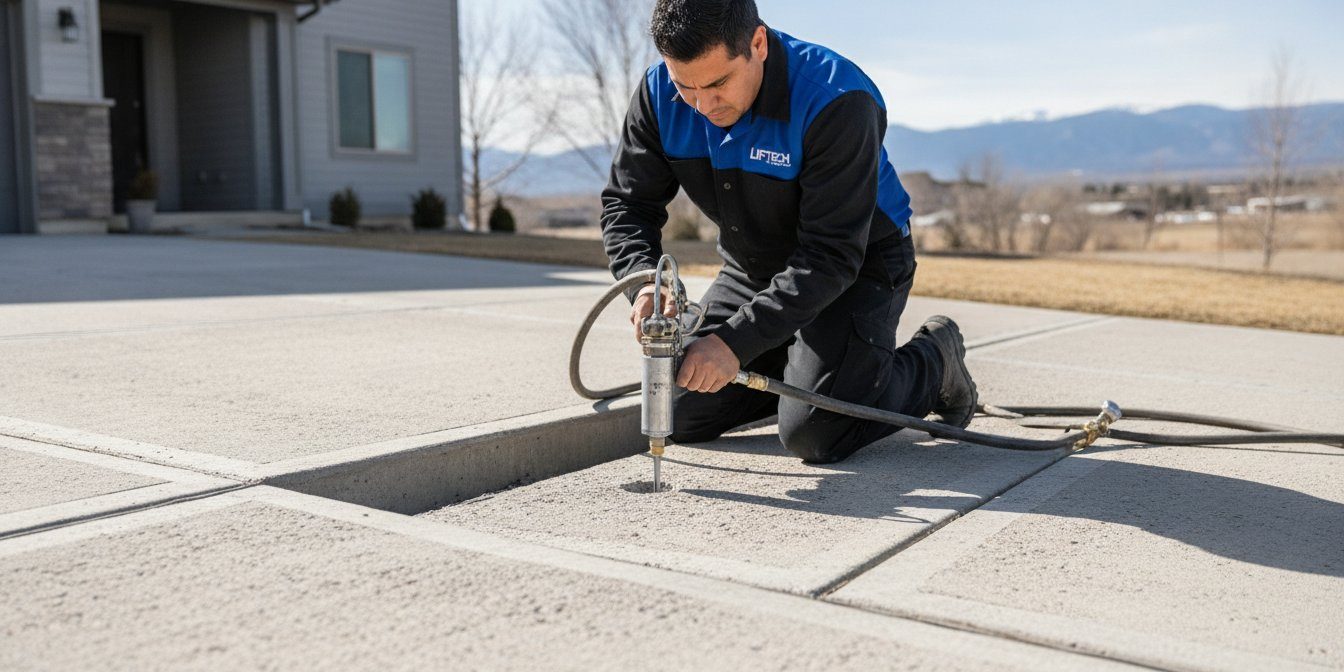
What if the jagged crack in your driveway or the unsettling dip in your garage floor isn’t a signal for a sledgehammer, but a candidate for a surgical, non-invasive cure? Most property owners assume that once concrete starts to sink or split, the only path forward is a costly, weeks-long demolition and pour process. It’s a stressful prospect that brings unwanted noise and debris. However, concrete slab repair without replacement has become a sophisticated reality through modern engineering, offering a way to restore your property without the typical disruption of a construction site.
We understand that a failing foundation or a dangerous trip hazard feels like an urgent crisis. You can achieve a level, safe surface and long-term structural stability by utilizing advanced materials that stabilize the underlying soil. This guide examines how high-density polyurethane injection and technical reinforcement provide a durable alternative to traditional replacement. We detail the precision of foam concrete lifting and explain why addressing soil voids is the only way to ensure your restoration lasts for years to come.
Key Takeaways
- Identify the underlying causes of settlement, including how soil erosion and moisture create unstable voids beneath your concrete.
- Learn why high-density polyurethane injection is a superior method for concrete slab repair without replacement, offering faster cure times and minimal disruption.
- Utilize a professional decision framework to evaluate whether your damaged slabs are candidates for restoration or require full structural replacement.
- Understand the unique geological challenges of Colorado, specifically how expansive bentonite clay and freeze-thaw cycles compromise concrete stability.
- Protect your property value and reduce liability by effectively mitigating trip hazards and reinforcing structural integrity.
Understanding Why Concrete Slabs Fail and the Case for Repair
Concrete durability is a standard expectation for any property owner, yet even the thickest slabs remain vulnerable to the ground they rest upon. Structural failure rarely begins with the concrete itself. It starts with the soil. When the earth beneath a driveway, patio, or garage floor shifts, the concrete loses its uniform support. This leads to settlement, cracking, and eventual structural instability. Opting for Concrete leveling and specialized concrete slab repair without replacement is often the most logical path forward. It addresses the root cause of the movement while bypassing the environmental and financial burden of total demolition.
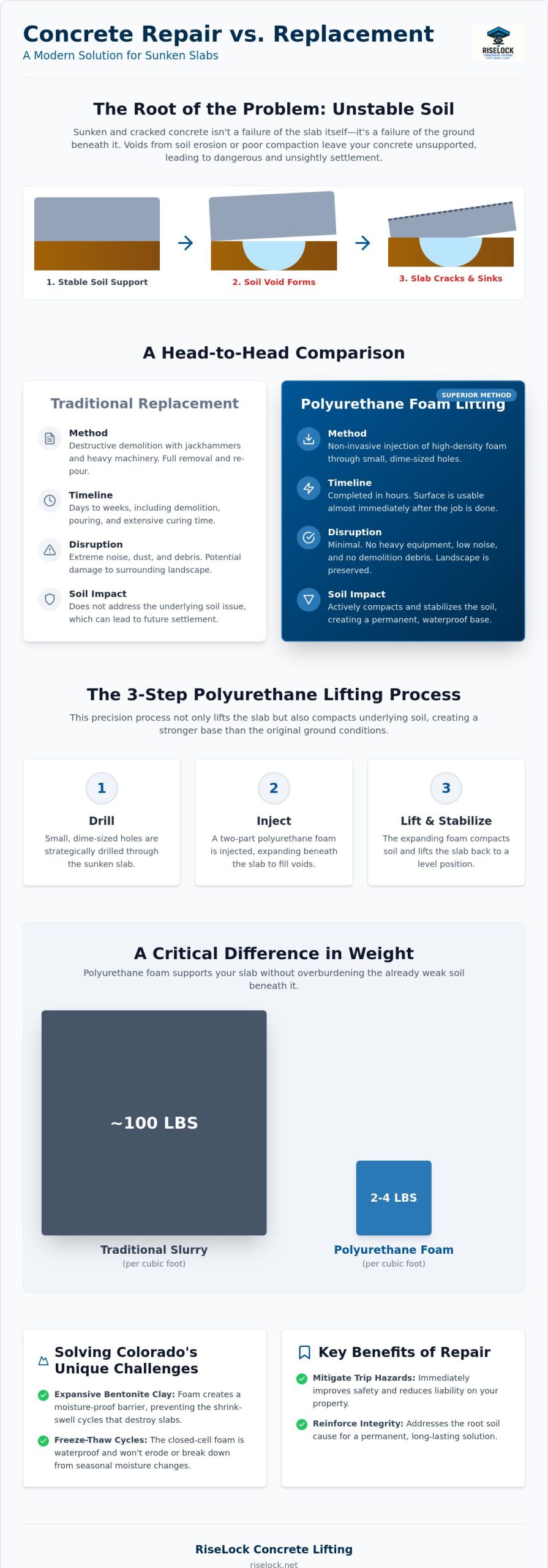
Voids are the silent architects of concrete failure. These empty spaces form when soil is no longer present to bear the weight of the slab. If you ignore a sunken slab, you’re not just dealing with a trip hazard; you’re allowing a structural weakness to persist that can eventually compromise your home’s foundation. Differentiating between a cosmetic surface crack and deep-seated structural settlement is vital. While a surface sealer might hide a crack, it won’t stop a slab from sinking further into a void. Addressing these gaps early prevents a localized issue from becoming a massive structural liability that requires far more invasive intervention later.
The Mechanics of Concrete Settlement
In many Colorado developments, such as those in Aurora or Parker, builders often utilize fill dirt that settles significantly over time if it wasn’t compacted with absolute precision during construction. Water runoff from poorly positioned gutters or heavy seasonal rains can wash this loose soil away, leaving the slab suspended over nothing. Heavy loads exacerbate these existing soil weaknesses. When you park a heavy SUV on a section of a garage floor that is essentially “bridging” a void, the concrete eventually snaps under the tension. This isn’t a failure of the material, but a failure of the support system beneath it.
Repair vs. Replacement: A Cost-Benefit Analysis
Traditional replacement is a destructive and resource-intensive process. It involves jackhammers, heavy trucks, and days of curing time where the surface remains completely unusable. In contrast, modern concrete slab repair without replacement typically takes only a few hours to complete. Because the original slab remains in place, you don’t have to worry about mismatched concrete colors or the heavy machinery damage that often ruins adjacent landscaping. Repairing your existing concrete preserves the aesthetic continuity of your property while providing a stabilization solution that is often stronger than the original soil conditions.
The Science of Polyurethane Foam Concrete Lifting
Polyurethane lifting represents the technical evolution of structural restoration. This process involves the targeted injection of a two-part, high-density closed-cell foam beneath a compromised slab to fill voids and restore elevation. Unlike traditional methods that rely on heavy, cementitious slurries, this method utilizes a sophisticated chemical reaction between isocyanate and polyol components. When these elements meet beneath the surface, they expand rapidly, creating a powerful upward force capable of raising thousands of pounds with millimeter precision. This engineered approach is the cornerstone of effective concrete slab repair without replacement, offering a permanent solution that doesn’t add undue stress to the ground.
The physical properties of the foam provide a distinct advantage over older alternatives. Traditional mudjacking material can weigh upwards of 100 pounds per cubic foot, which often causes further settlement by overloading the already weak soil. In contrast, high-density polyurethane foam typically weighs between two and four pounds per cubic foot. It achieves its structural integrity through its cellular structure rather than sheer mass. Once the material cures, it is environmentally inert and completely resistant to water. It won’t leach chemicals into the surrounding earth, and it won’t wash away during the heavy spring thaws common in the Rockies.
How High-Density Foam Stabilizes Soil
The lifting process does more than just move the concrete; it fundamentally improves the environment beneath it. As the foam expands, it seeks out the path of least resistance, filling every microscopic pocket and crevice within the soil. This expansion compacts the loose, uncompacted dirt, creating a reinforced, stable base that is significantly firmer than the original conditions. Because the foam is impermeable, it acts as a permanent barrier against future moisture intrusion. This prevents the cycle of erosion that typically causes slabs to fail. One of the most practical benefits is the speed of the cure. The material reaches 90 to 95 percent of its full structural strength in approximately 15 minutes, allowing for immediate return to service.
The Precision Injection Process
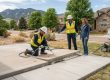
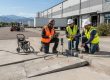
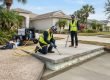
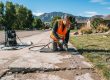
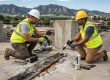
The application of this technology is remarkably non-invasive. Technicians drill small, penny-sized holes (approximately 5/8 inch) in a strategic grid pattern across the affected area. This allows for polyurethane concrete lifting to be performed with surgical accuracy. By monitoring the lift with laser levels, we ensure the surface returns to its original grade without over-correction. This level of control is essential for maintaining the structural integrity of the slab and avoiding the stress fractures that can occur with less precise methods. If you are concerned about the longevity of your driveway or patio, stabilizing your property with this advanced intervention ensures a level surface that stands the test of time.
Repair vs. Replacement: Evaluating Your Structural Options
Deciding between restoration and demolition requires a clear understanding of the slab’s current state and the underlying soil conditions. Most property owners fear that a sunken driveway or a cracked garage floor is a total loss. However, professional concrete slab repair without replacement is viable in the vast majority of cases. As a general industry guideline, we often refer to the 80/20 rule: approximately 80 percent of sunken or settled slabs can be successfully restored through professional lifting, while only 20 percent require total demolition. The key to this decision framework is determining whether the concrete still possesses its structural integrity or if it has transitioned into a state of material failure.
Structural reinforcement plays a critical role in this evaluation. When we stabilize a slab, we aren’t just moving the surface; we’re reinforcing the environment beneath it. If the concrete is still solid but has simply shifted due to soil voids, it’s a prime candidate for restoration. Ignoring these shifts often leads to secondary settlement, where the weight of the slab continues to compress the weak soil, making the eventual repair more complex. A professional assessment ensures you don’t spend money on a temporary fix for an unfixable slab, nor do you waste thousands on a replacement that wasn’t necessary.
Why Mudjacking is Outdated
While mudjacking was once the standard for leveling, it’s now considered a legacy method with significant drawbacks. The process involves pumping a heavy, water-based grout slurry beneath the concrete. This slurry can weigh 100 pounds or more per cubic foot, adding immense pressure to the very soil that already failed to support the slab. Additionally, mudjacking requires drilling large, two-inch holes that can weaken the concrete’s surface and leave unsightly patches. Because the slurry is water-based, it’s prone to shrinking as it dries and can eventually wash away, leading to a recurrence of the original problem.
When Replacement is Actually Necessary
There are specific scenarios where concrete slab repair without replacement is no longer an option. If the surface exhibits “alligator cracking”—a network of deep, interconnected fractures that resemble the skin of a reptile—the internal matrix of the concrete is likely compromised. Widespread surface spalling, where the top layer of the concrete is crumbling or peeling away due to chemical damage or extreme salt exposure, also indicates that the material has reached the end of its functional life. In these instances, the concrete lacks the tensile strength required to be lifted safely, and a full replacement becomes the only ethical and durable recommendation.
Solving Colorado’s Unique Concrete Challenges
Colorado’s geology presents a unique set of challenges that standard repair methods often fail to address. The primary culprit is bentonite, an expansive clay soil found throughout Denver, Centennial, and Littleton. This soil acts like a sponge, swelling significantly when moisture is present and shrinking drastically during dry spells. This constant volume change creates a cycle of heave and settlement that is particularly aggressive along the Front Range. Property owners looking for concrete slab repair without replacement must choose a solution that accounts for this subterranean movement rather than just masking its surface symptoms.
The environmental conditions in the Rockies exacerbate these soil issues through the relentless freeze-thaw cycle. During the day, snowmelt seeps into the soil and any existing concrete cracks; at night, that water freezes and expands. This process exerts immense pressure that can widen cracks and shift slabs in a single season. From the steep drainage challenges in the Arvada hills to the heavy clay deposits found across the Thornton plains, the geography dictates the specific repair strategy required to ensure a slab remains stable over the long term.
Managing Expansive Soils in the Denver Metro Area
Slabs in the Denver area move more frequently than those in regions with stable, sandy soils. Because bentonite is so reactive, a successful repair must provide more than just lift; it must provide a moisture barrier. We utilize high-density, closed-cell polyurethane foam because it’s hydrophobic. It doesn’t just fill the void; it seals the underside of the concrete against water intrusion. At RiseLock, we tailor our injection patterns based on the specific heave patterns of local soil. This precision ensures that the foam compacts the clay and creates a stable, moisture-resistant foundation that resists the seasonal “sponge effect” of the Colorado earth. For a deeper understanding of how Denver’s unique geology demands specialized solutions, our concrete repair Denver Colorado definitive guide outlines the full scope of these regional challenges and the engineering methods used to overcome them.
Addressing Post-Tension Cable Concerns
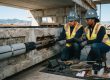
Many modern homes in Parker and Colorado Springs are built on post-tension (PT) slabs. These systems use high-strength steel cables stretched to extreme tension within the concrete to provide structural integrity. It’s a highly effective construction method, but it presents a significant risk during restoration. Drilling a single injection hole in the wrong spot can sever a cable, leading to a dangerous and expensive structural failure. Our team integrates comprehensive structural knowledge into every project, ensuring that we map the location of cables before any work begins. If your property relies on post tension installation, you need a partner who understands the technical risks involved. If you’re concerned about the stability of your PT slab, contact our specialists for a high-precision evaluation that protects your home’s structural integrity.
Restoring Safety and Value to Your Property
A settled slab is more than an aesthetic nuisance; it is a significant legal and financial liability. Uneven walkways and sunken porch steps create dangerous trip hazards that can lead to costly personal injury lawsuits or insurance complications. The same polyurethane technology used for slab restoration is equally effective for lifting settled concrete steps back to their original elevation, eliminating these hazards at their source. By choosing professional concrete slab repair without replacement, you effectively mitigate these risks while restoring the safe, navigable environment your property requires. This intervention doesn’t just mask the unevenness. It addresses the structural deficiency that caused the hazard, providing a level surface that meets safety standards and protects you from the stress of potential litigation.
In the competitive Denver real estate market, curb appeal and structural integrity are the primary drivers of appraisal value. A driveway riddled with cracks or a garage floor with visible settlement gaps can significantly detract from a home’s valuation. Prospective buyers are often wary of any sign of ground movement, fearing hidden foundation costs. Providing documentation of professional stabilization shows that you’ve been a responsible steward of the property. It transforms a perceived structural flaw into a verified selling point, assuring buyers that the root cause of the sinking has been expertly resolved using modern engineering standards. Homeowners throughout the Front Range can learn more about region-specific solutions in our comprehensive guide to concrete repair in Denver, Colorado, which details how local soil conditions influence the most effective restoration strategies.
Long-Term Benefits of Professional Stabilization
The durability of modern polyurethane is one of its most compelling advantages for long-term property maintenance. Unlike traditional materials that may degrade or wash away when exposed to the elements, high-density foam is a permanent solution. It remains structurally sound underground, unaffected by the moisture and temperature extremes that characterize the Front Range. This stability prevents future water infiltration, which is the leading cause of soil erosion and secondary settlement. While a DIY patch job might offer a temporary cosmetic fix, it lacks the compressive strength and soil-binding properties of an engineered foam. A professional repair ensures that the slab remains supported for years, backed by a methodology that temporary fixes simply cannot replicate.
Choosing a Specialized Partner in Denver
Selecting the right contractor is a critical step in securing your property’s future. You should look for a partner who demonstrates a deep understanding of both soil mechanics and structural reinforcement. A transparent quote should include a thorough assessment of your soil conditions and a clear explanation of the technical methodology they intend to use. It is vital to hire a team that views your structural issues as a priority, utilizing precision equipment to ensure the lift is accurate and sustainable. Don’t settle for a contractor who only offers a surface-level fix. Ensure your property’s foundation is secure with RiseLock’s professional concrete repair services, where technical mastery meets ethical service to provide lasting peace of mind.
Securing Your Property’s Future with Precision Restoration
Modern structural engineering has transformed how we approach failing concrete. By prioritizing soil stabilization through high-density polyurethane injection, property owners can effectively halt settlement and restore safety without the chaos of a full demolition. This specialized approach to concrete slab repair without replacement addresses the root cause of movement; it ensures your driveway or foundation remains stable despite Colorado’s expansive bentonite clay and aggressive freeze-thaw cycles.
Choosing a partner who understands the technical complexities of post-tension systems and local geology is the most critical decision in the restoration process. Our team combines specialized polyurethane precision with the expertise required as post-tension installation contractors to deliver results that last. We serve the entire Denver Metro and Front Range, viewing every structural challenge as a personal priority that demands high-precision intervention. You don’t have to live with the stress of failing concrete when a surgical, lasting cure is within reach.
Get a Professional Structural Assessment from RiseLock and regain confidence in your property’s stability today.
Frequently Asked Questions
Is concrete slab repair without replacement permanent?
Polyurethane foam provides a permanent structural solution because it is chemically inert and does not degrade over time. Once the material cures, it remains stable underground and is impervious to water erosion. This durability ensures that the soil voids remain filled and the slab stays supported for the life of the concrete. It is a highly reliable method for concrete slab repair without replacement that addresses the root cause of settlement rather than just the surface symptoms.
How much does it cost to lift a concrete slab vs replacing it?
Lifting a slab is generally a significantly more cost-effective option than a full replacement. Total replacement requires extensive expenses for demolition, debris removal, and the procurement of new raw materials. Restoration focuses on stabilizing the existing structure, which reduces labor hours and material overhead. While every project is unique, property owners typically find that professional restoration offers a high-value alternative to the invasive and expensive nature of new construction.
Can all types of concrete slabs be repaired with foam lifting?
Most slabs are excellent candidates for lifting, but those with severe material degradation require replacement. If the concrete exhibits extensive “alligator cracking” or is crumbling due to chemical exposure, it lacks the tensile strength to be lifted safely. However, for slabs that are structurally sound but have simply settled due to soil voids, foam lifting is the preferred restoration method. A professional assessment is required to confirm the slab’s internal integrity before proceeding.
What happens if a post-tension cable is broken in my slab?
A broken post-tension cable is a serious structural concern that requires immediate professional intervention. These cables are under extreme tension and provide the necessary strength for the slab to support the weight of the structure. If a cable snaps, it can compromise the entire foundation and create a safety hazard. Repairing these systems involves specialized equipment and technical knowledge to restore the appropriate tension and secure the building’s long-term structural integrity.
How long does the polyurethane concrete lifting process take?
The polyurethane concrete lifting process is remarkably efficient and typically takes only a few hours to complete. Most residential projects, such as driveways or patios, are finished in a single morning or afternoon. Because the high-density foam reaches its full structural strength within 15 to 30 minutes, there is no need for the extended curing periods required by traditional concrete pours. This speed minimizes the disruption to your daily schedule and property access.
Will the foam injections damage my lawn or landscaping?
This method is designed to be non-invasive and will not damage your lawn or landscaping. Technicians use long hoses to deliver the foam from a specialized truck parked on the street or driveway, eliminating the need for heavy machinery to cross your yard. The only physical changes to the property are the small, penny-sized injection holes in the concrete. These are patched with color-matched cement upon completion, leaving your property clean and undisturbed.
Can I drive on my driveway immediately after the repair is finished?
You can typically drive on your driveway or park in your garage within 30 minutes of the repair’s completion. High-density polyurethane foam cures almost instantly, reaching the majority of its full compressive strength in a very short window. This is a significant advantage of concrete slab repair without replacement compared to traditional pouring, which often requires you to wait several days for the new material to reach its necessary load-bearing capacity.