What if you could restore your home’s sunken driveway or uneven walkway to its original height for a fraction of the cost of a full replacement? Many homeowners assume that once a slab begins to sink, the only solution is a jackhammer and a fresh pour. However, modern residential concrete leveling has evolved far beyond the heavy, temporary fixes of the past. It’s now possible to achieve structural stability through precision technology that addresses the soil beneath the surface without the mess of traditional excavation.
You’ve likely noticed the growing trip hazards or the way water pools toward your foundation after a storm. It’s a source of constant stress, affecting both your family’s safety and your property’s curb appeal. We understand that you want a permanent solution that doesn’t disrupt your daily life or drain your savings. This guide will show you how to identify the root causes of soil settlement and why high-density polyurethane injection is the most durable way to stabilize your surfaces. We’ll examine the technical advantages of modern foam lifting, helping you understand the long-term value of restoration over replacement.
Key Takeaways
- Understand the precision of residential concrete leveling as a structural restoration method that stabilizes sunken slabs without the disruption of a full replacement.
- Discover why lightweight polyurethane foam is superior to traditional mudjacking, preventing further soil collapse by adding minimal weight to the substrate.
- Learn about the efficiency of modern injection technology, which allows for a clean installation and a cure time of just 15 to 30 minutes.
- Identify when to restore your surfaces using the “Rule of Three” to evaluate crack patterns and the overall integrity of the concrete.
- Gain insights into selecting a qualified professional who understands the unique soil conditions and structural requirements of the Colorado region.
What is Residential Concrete Leveling?
Concrete leveling is a specialized restoration technique designed to lift and stabilize sunken slabs by injecting high-density material into the voids beneath the surface. Residential concrete leveling serves as a non-invasive alternative to full slab replacement, allowing homeowners to preserve their existing concrete while correcting structural failure. This process is most effective for common residential surfaces such as driveways, sidewalks, pool decks, and garage floors. By addressing the root cause of the settlement, this method restores the safety and function of the concrete without the cost or mess of traditional demolition.
It’s vital to distinguish this process from surface-level repairs like patching or skim-coating. While patches might temporarily hide a crack or a minor dip, they don’t address the underlying soil instability. Structural leveling restores the slab to its original grade and provides a stable foundation, offering a long-term solution rather than a cosmetic mask. This precision-focused approach ensures that the restored surface can support the weight of vehicles and foot traffic for years to come.
Why Residential Concrete Sinks
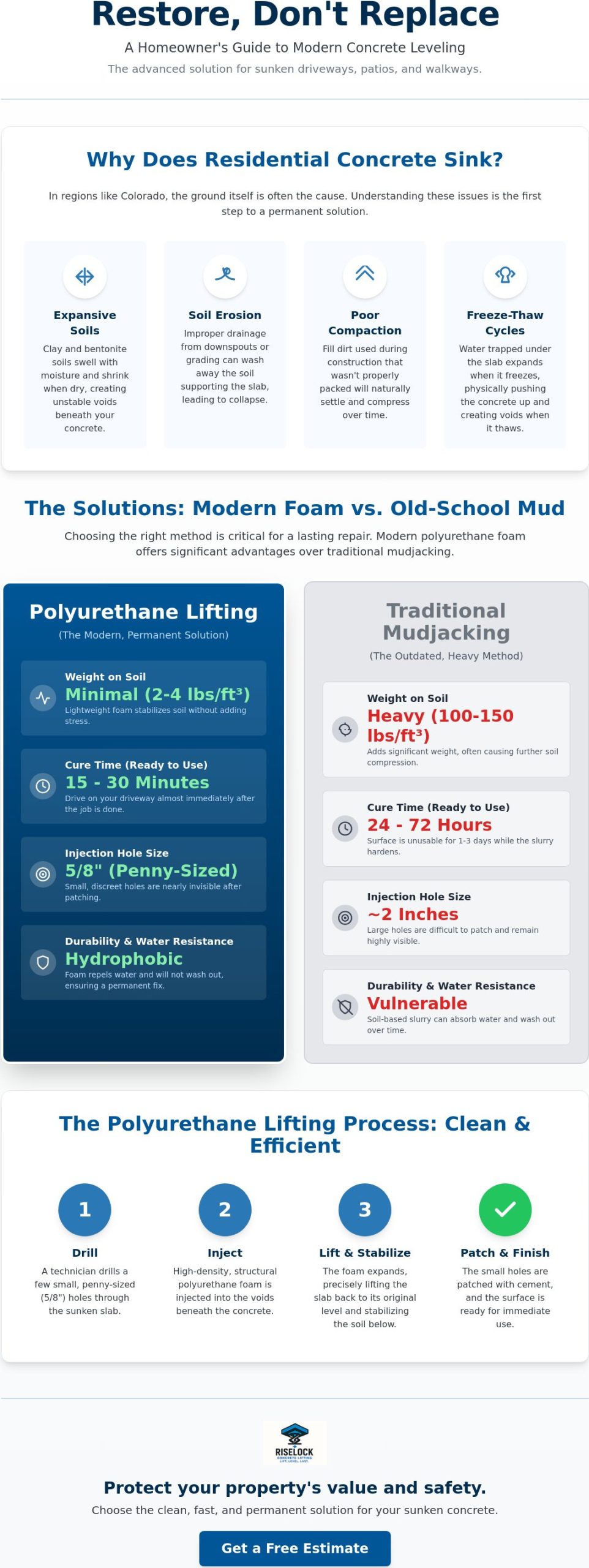
In Colorado, the primary culprit behind sinking concrete is often the soil itself. Our region is known for expansive clay and bentonite soils that react dramatically to moisture levels. When these soils become saturated, they expand; as they dry, they shrink, creating empty pockets or “voids” beneath heavy concrete slabs. This constant movement eventually leads to settlement. Other contributing factors include:
- Soil erosion: Improper drainage or mismanaged gutter runoff can wash away the substrate supporting the slab.
- Poor compaction: Fill dirt used during the initial home construction may not have been properly packed, leading to natural settling over time.
- Freeze-thaw cycles: The intense temperature swings common in the Front Range cause moisture trapped under the slab to expand as it freezes, physically shifting the concrete.
Common Signs You Need Leveling
Identifying the problem early can prevent more extensive damage to your property. If you notice these specific indicators, your home likely requires professional intervention:
- Uneven joints where one slab has dropped below another, creating dangerous trip hazards for family and guests.
- Water pooling toward your home’s foundation after a rainstorm, which suggests the slab’s pitch has reversed and is no longer shedding water correctly.
- Visible gaps or “daylight” appearing beneath the edges of your patio, stairs, or driveway.
Catching these signs early allows for a more efficient repair. Ignoring a settling slab can lead to deep structural cracks that may eventually make the concrete un-repairable.
Polyurethane Foam vs. Traditional Mudjacking
Choosing the right method for residential concrete leveling requires an understanding of the materials involved. Traditional mudjacking has served the industry for decades, but modern engineering has introduced a more precise and durable alternative. The primary difference lies in the material’s weight and how it interacts with the soil beneath your home. While mudjacking relies on a heavy slurry of sand, cement, and water, modern restoration uses high-density polyurethane foam to achieve a permanent lift.
Efficiency is another major differentiator for homeowners. Mudjacking typically requires 24 to 72 hours of cure time before the surface can support weight. In contrast, polyurethane achieves 90% of its full strength within 15 to 30 minutes. This means you can drive your car onto a leveled driveway or walk across a repaired sidewalk almost immediately after the crew finishes. The physical impact on your property is also significantly reduced; mudjacking requires 2-inch holes, while polyurethane uses 5/8-inch holes, which are about the size of a penny.
The Problem with Weight
Adding mass to a failing foundation is often counter-intuitive. Mudjacking mixtures can weigh up to 100 to 150 pounds per cubic foot. When injected under a slab that’s already sinking due to weak or expansive soil, this added weight often accelerates the original problem by crushing the sub-soil further. At RiseLock, we focus on Polyurethane Concrete Lifting because it addresses the structural void without compromising the soil’s load-bearing capacity. Unlike soil-based slurries, polyurethane is hydrophobic. It resists water and won’t wash away during heavy Colorado rains or spring snowmelts, ensuring the repair remains stable for years.
Aesthetics and Cleanliness
Choosing a modern approach to residential concrete leveling means prioritizing both structural integrity and visual preservation. The equipment used for foam injection is compact and non-invasive, which is ideal for quiet residential neighborhoods. Because the injection holes are so small, they’re easily patched and blended with the existing concrete. This “penny-sized” advantage is crucial for decorative or stamped concrete surfaces where large mudjacking holes would leave permanent, unsightly scars. Modern foam technology allows us to preserve your slab’s finish while ensuring it remains level and secure. The material is also environmentally inert, so it won’t leach chemicals into your lawn or landscaping over time.
How the Concrete Leveling Process Works: Step-by-Step
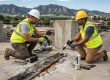
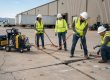
Successful residential concrete leveling begins long before the first hole is drilled. It starts with a rigorous site assessment where our technicians evaluate the specific soil conditions and drainage patterns to confirm that leveling is the appropriate solution. This diagnostic phase ensures we aren’t just treating a symptom, but providing a stable foundation for the long term. Once the assessment is complete, we prepare the area by cleaning debris from the joints and marking the optimal injection points to ensure an even lift across the entire slab.
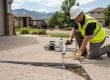
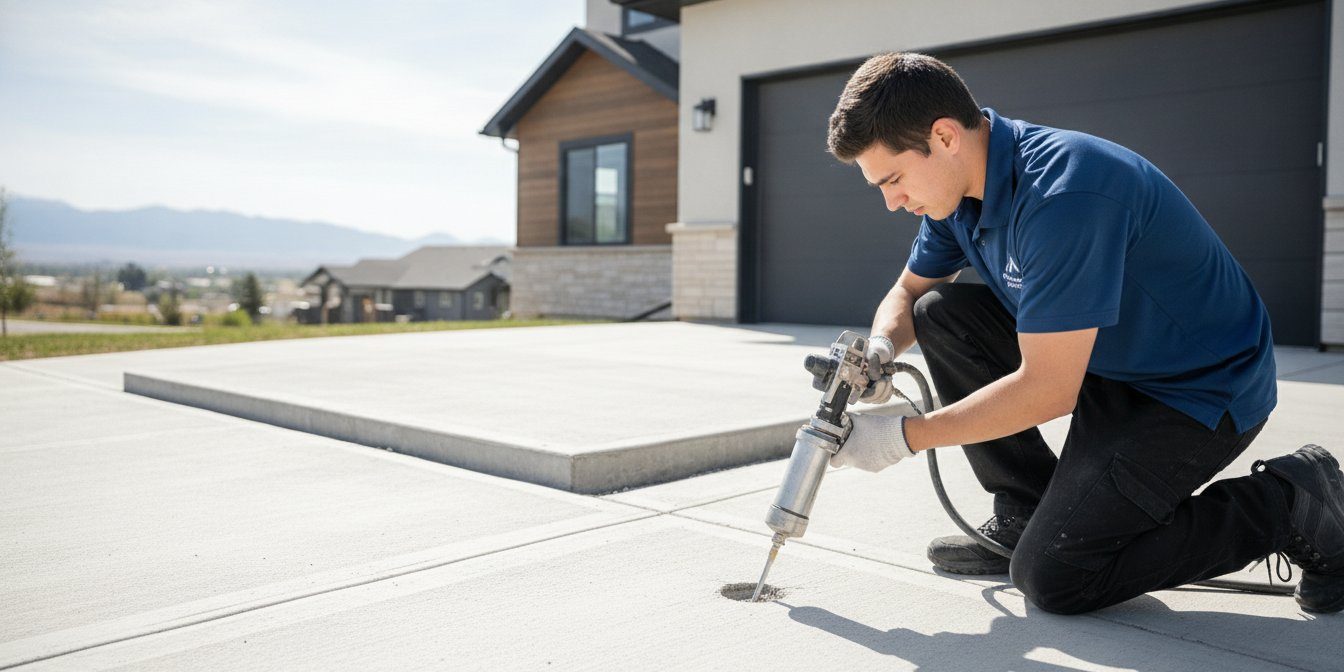
The injection gun technology allows for metered, precise delivery of high-density polymers directly into the sub-surface void. This precision is what differentiates modern restoration from older, less controlled methods. By using a specialized delivery system, we can control the volume of material with extreme accuracy, preventing the over-lifting or cracking that can occur with less sophisticated equipment.
The Injection Phase
As the two-component polyurethane is injected, it undergoes a rapid chemical reaction that causes it to expand 20 to 30 times its original liquid volume within seconds. This expansion force is powerful enough to lift thousands of pounds of concrete, yet the material remains lightweight and won’t stress the underlying soil. We monitor the progression using laser levels that provide sub-millimeter precision, ensuring the slab returns exactly to its intended grade. This isn’t about merely propping up a corner; the foam flows into every hidden crevice, creating a fully supported, uniform base that eliminates the risk of future soft spots or secondary settlement.
Finishing and Sealing
Once the slab is perfectly positioned, the final details ensure the longevity of the repair. We remove the injection ports and patch the small drill holes with a custom-mixed concrete grout that matches your existing surface as closely as possible. We also recommend caulking the joints to prevent water from migrating beneath the slab again, which is a critical step in preventing future erosion or freeze-thaw damage. Because the polyurethane cures so quickly, the entire work area is cleaned and returned to full service immediately. You can host a dinner party or park your car on the restored surface the same afternoon the residential concrete leveling work is completed.
When to Level vs. When to Replace
Deciding between restoration and replacement is a critical step in preserving your home’s value. While residential concrete leveling is a powerful tool, it isn’t a universal cure for every damaged slab. The “Rule of Three” serves as a reliable industry standard: if a single slab has fractured into more than three large pieces, the structural bond is likely too compromised for long-term stabilization. In these cases, a full replacement might be the more ethical recommendation. However, if the slab is largely intact but has simply shifted or sunken, engaging a professional concrete leveling service offers a superior, more efficient path forward.
Residential concrete leveling works best on surfaces that maintain their internal strength. If your concrete is sunken but remains solid, we can restore it to its original grade. Before making a final decision, homeowners benefit from understanding the full concrete leveling cost vs replacement breakdown, as lifting an existing slab typically saves 50% to 70% compared to the labor-intensive process of tearing out and repouring. For homes with specialized foundations, such as those requiring post tension installation, the stakes are higher. These slabs contain high-strength steel cables under extreme tension; attempting traditional demolition without understanding these reinforcements can lead to catastrophic structural failure or injury.
Assessing Structural Damage
Surface appearance tells much of the story. We look for signs of “spalling” or surface scaling, which often indicates that the concrete’s chemical matrix is failing due to age or poor initial mixing. If the surface is crumbling or “rotting,” injection won’t fix the underlying material decay. Deep, structural cracks that run the full depth of the slab also require a careful eye. For homeowners dealing with internal surfaces, our guide on concrete garage floor leveling in Denver provides specific insights into managing indoor slab settlement.
Protecting Your Investment
Leveling is a proactive measure for your home’s foundation. By restoring the correct pitch to your driveway or patio, you ensure that water flows away from your house rather than pooling against the basement walls. The use of foam concrete lifting prevents future soil saturation by filling the voids where water typically collects. Waiting too long to address a sinking slab increases the risk of it breaking under its own weight, eventually moving it from a repairable state to a costly replacement project.
If you’re unsure about the condition of your slabs, we can help you determine the most durable path forward with a professional structural assessment.
Choosing a Residential Leveling Expert in Colorado
Selecting a professional for residential concrete leveling in Colorado requires a partner who understands the unique geological challenges of the Front Range. From the expansive clays of Denver to the shifting soils in Colorado Springs, local expertise is the foundation of a successful repair. You need a contractor who views your property’s structural issues through the lens of long-term stability rather than a temporary cosmetic fix. Choosing the wrong method or an inexperienced provider can lead to recurring settlement, potentially costing more in the long run.
Before you commit to a project, ask potential contractors specific questions about their materials and methodology. Do they use high-density polyurethane, or are they still using heavy cement-based slurries that could further stress your soil? Inquire about the specifics of their warranty and how they handle complex drainage issues. A reliable expert should be able to explain the technical “why” behind their approach, providing you with the confidence that your investment is secure. Precision and technical mastery aren’t just buzzwords; they’re the requirements for a level, safe surface that lasts.
The RiseLock Difference
RiseLock distinguishes itself through a commitment to modern slab restoration and ethical service. We exclusively utilize high-density foam because it offers the precision and longevity our clients expect. Our technicians are trained to handle the diverse residential layouts found from Parker to Boulder, ensuring that every driveway, sidewalk, or patio receives a customized stabilization plan. We believe in a transparent, ethical approach to structural repair. If our assessment reveals that your concrete is too far gone for a viable lift, we’ll tell you directly. We prioritize your home’s safety and your peace of mind over simply closing a sale, ensuring you always receive the most effective solution for your specific situation.
Next Steps for Homeowners
Taking the first step toward a safer property is straightforward. You can help the diagnostic process by identifying the areas of greatest concern and measuring the “drop” or vertical gap at uneven joints. This information allows our team to provide a more accurate initial perspective on the scope of work. Before your technician arrives, ensure the affected slabs are clear of vehicles, debris, or outdoor furniture. This allows for a complete visual inspection of the concrete’s surface and edges. When you’re ready to resolve those trip hazards and protect your home’s value, request a professional assessment from RiseLock to begin your restoration journey.
Secure Your Property with Modern Slab Restoration
Maintaining the concrete surfaces around your home is a long-term investment in safety and structural stability. By choosing high-density polyurethane injection over traditional, heavy alternatives, you ensure that your slabs are supported by a material that won’t wash away or crush the sub-soil. This modern approach to residential concrete leveling provides a precise, permanent solution that addresses the root cause of settlement while preserving the appearance of your existing concrete.
RiseLock specializes in advanced foam technology and structural reinforcement, including the technical management of post-tension slabs. We proudly serve homeowners throughout Denver, Colorado Springs, and the entire Front Range with a focus on precision and ethical guidance. Whether you’re dealing with a sinking driveway or a hazardous walkway, our team is ready to provide a dependable restoration plan tailored to your property’s specific needs.
Get a Professional Concrete Leveling Estimate from RiseLock
You don’t have to live with the stress of uneven surfaces or the fear of expensive replacements. A stable, level home provides peace of mind and long-term security for your family.
Frequently Asked Questions
Is residential concrete leveling permanent?
Residential concrete leveling is considered a permanent solution for the slab itself because the high-density polyurethane foam does not degrade, shrink, or wash away over time. The long-term success of the lift depends on addressing the environmental factors that caused the initial settlement, such as poor drainage or soil erosion. If the underlying soil remains stable after the voids are filled, the concrete will maintain its restored position indefinitely.
How much does it cost to level a concrete driveway in Denver?
The cost of driveway restoration depends on several technical factors, including the total square footage of the affected area and the volume of foam required to fill the subsurface voids. Every project requires a professional site assessment to evaluate the specific soil conditions and the degree of lift needed. Generally, homeowners find that leveling is a significantly more cost-effective alternative to the high labor and material expenses associated with full concrete replacement.
Can you level concrete that has cracks?
You can successfully level concrete with cracks as long as the slab remains structurally sound and isn’t crumbling into small fragments. The injection process fills the empty pockets beneath the fractures, providing a uniform foundation that prevents the pieces from shifting further. While the lift aligns the edges of the cracks to remove trip hazards, we recommend sealing the visible lines afterward to prevent water from infiltrating the substrate.
How long does the polyurethane foam last?
High-density polyurethane is an environmentally inert material designed to last for the entire lifespan of the concrete it supports. It is completely resistant to moisture and won’t break down when exposed to the chemicals often found in residential soils. Unlike traditional soil-based slurries, this modern foam maintains its structural integrity and compressive strength for decades, making it a reliable choice for long-term slab stabilization.
Will the foam injection damage my lawn or landscaping?
The injection process is clean and non-invasive, ensuring your lawn and landscaping remain undisturbed throughout the project. Our technicians use compact equipment that doesn’t require heavy machinery to drive over your grass or gardens. Because the injection holes are only 5/8-inch in diameter, the work area remains tidy, and the small access points are easily patched to blend with your existing concrete finish.
Can I drive on my leveled driveway immediately after the service?
You can return your driveway to full service within 15 to 30 minutes of the completed injection. One of the primary advantages of high-density foam is its rapid cure time, reaching nearly its full load-bearing capacity almost instantly. This efficiency allows you to park your vehicles and use your garage the same day, avoiding the multi-day waiting periods required by traditional concrete pouring or mudjacking methods.
What happens if there are post-tension cables in my slab?
Working with post-tension slabs requires a high level of technical mastery to ensure the internal steel cables aren’t compromised during the drilling process. We utilize specialized detection techniques to map the reinforcement grid before we begin the residential concrete leveling work. Our precision-focused approach allows us to place injection ports safely, preserving the structural tension of your foundation while restoring the surface to its original grade.
Does concrete leveling work in the winter in Colorado?
Concrete leveling can be performed during the Colorado winter provided the ground isn’t frozen deep into the substrate or saturated by heavy snowmelt. The chemical reaction that causes the foam to expand generates its own heat, which allows the material to cure effectively even in colder ambient temperatures. Addressing settlement during the winter months can often prevent further damage caused by the aggressive freeze-thaw cycles common in the Front Range.