
Concrete strength, not the calendar, determines when post-tension tendons can be stressed. For post tension tendon stressing services in Wheatridge, stressing should begin only after the concrete has reached the strength required for the project. The wait is often 3 to 10 days, depending on the mix, temperature, and curing conditions.
Concrete strength matters more than the calendar: stressing too early can put the slab at risk, while waiting until the required strength is reached helps the concrete resist the force transferred through the tendons. A schedule is only a rough guide; strength testing and project-specific requirements determine readiness.
This article explains how concrete strength affects stressing timing, how hydraulic jacks tension tendons, and how crews compare measured elongation with expected performance. It also outlines safety precautions around the stressing area, helping you understand what controlled work involves before tendons are tensioned.
Key Takeaways
- Use concrete strength results, mix characteristics, and curing conditions to understand when stressing can proceed, rather than relying on elapsed time alone.
- Learn how hydraulic jack readings and measured tendon elongation work together to assess whether stressing is progressing as expected.
- Recognize why exclusion zones, barriers, and visible warnings help protect workers during stressing, and what contractor records and references can reveal about experience.
- For settled or uneven concrete, polyurethane concrete lifting may address the surface issue; post-tension installation and concrete repair address different structural needs.
What Is the Minimum Concrete Strength Required Before Stressing?
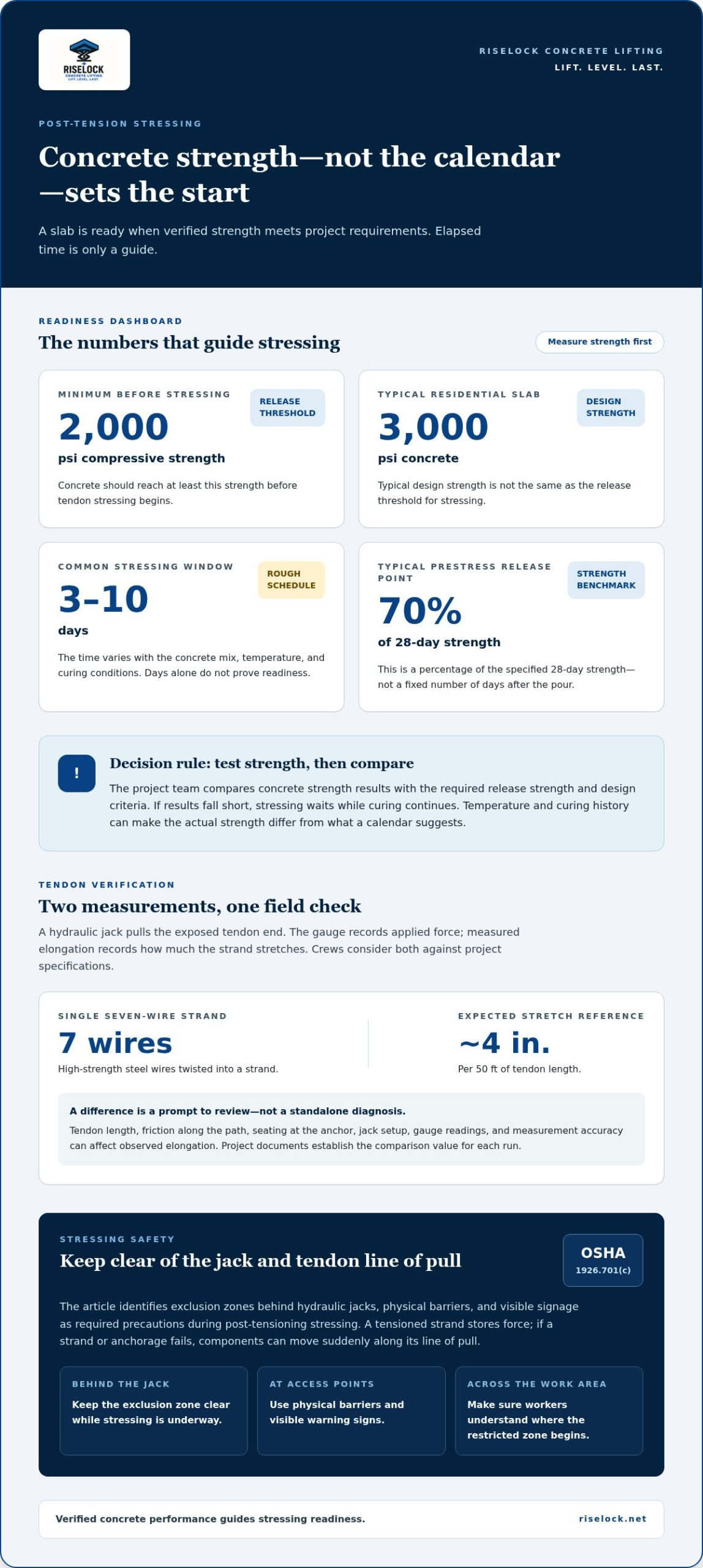
Post-tensioned concrete should reach at least 2,000 psi of compressive strength before stressing begins. A typical residential post-tensioned slab uses 3,000 psi concrete, but that design strength is not the same as the release threshold. The key decision is whether the placed concrete has gained enough strength to resist tendon force without damage.
Curing allows concrete to gain strength as it hardens. The time required to reach stressing strength typically ranges from 3 to 10 days. The concrete mixture, temperature, and curing conditions affect that schedule. As a result, elapsed time alone cannot establish that a slab is ready. Strength results must show the concrete has reached the required threshold before stressing starts.
Prestress is usually released when concrete reaches 70% of its 28-day strength. That percentage compares achieved compressive strength with the concrete’s specified 28-day benchmark. It is not a fixed number of days after a pour. For example, a schedule cannot establish readiness merely because the slab has cured for a planned period. The measured strength at stressing governs the decision.
Each post-tensioning tendon consists of 7 high-strength steel wires twisted into a strand. Once tensioned and anchored, the strand applies compression to the concrete. That compression helps the slab resist tensile forces that could otherwise contribute to cracking. The concrete must therefore have enough strength to withstand the force transferred at the tendon anchorages, not just support its own weight.
Before stressing, the project team compares concrete strength results with the required release strength and design criteria. If the results fall short, stressing must wait while curing continues. Temperature can affect strength development, so a schedule based on days may not reflect actual conditions. In Wheatridge, as elsewhere, timing depends on measured strength, the concrete mixture, and its curing history. Readiness is based on verified concrete performance, not an assumed cure period.
Hydraulic jack stressing and elongation verification
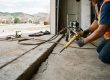
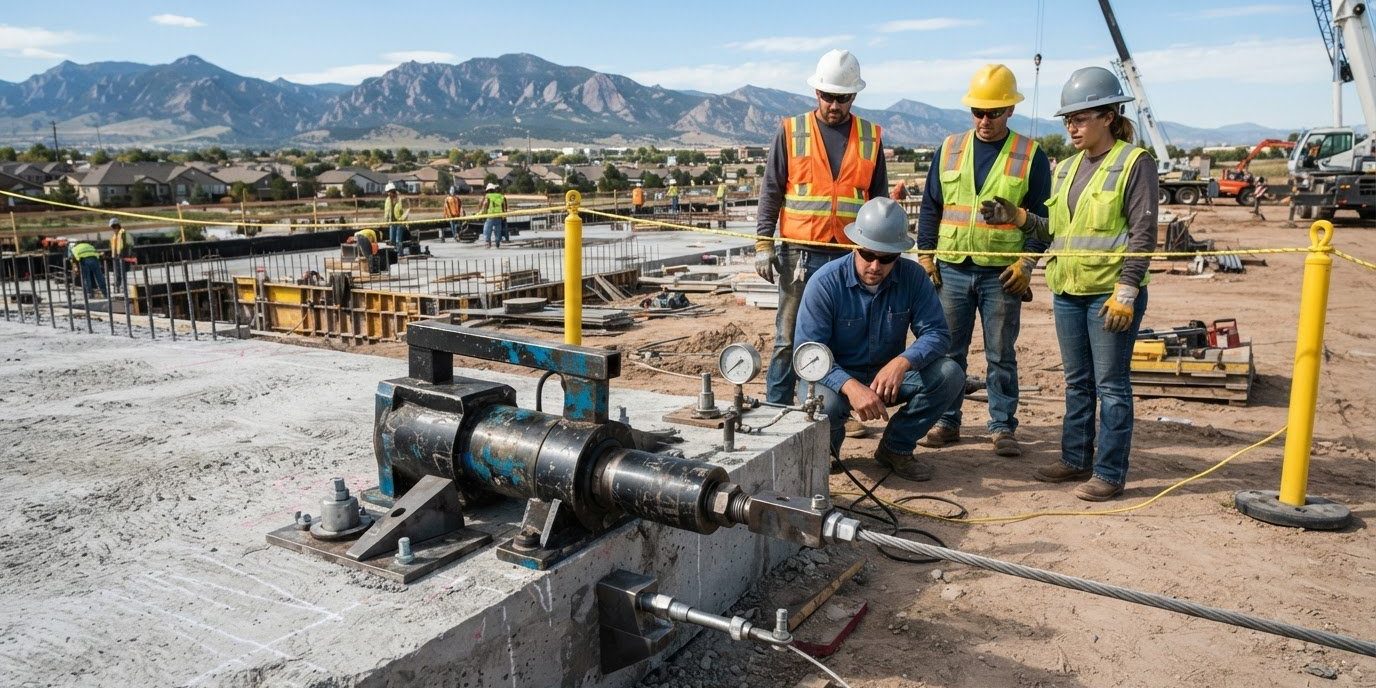
A hydraulic jack grips the exposed tendon end and applies tension in a controlled manner. As the jack pulls, the steel strand stretches and transfers force to the concrete through its anchorage. The gauge reading indicates applied force, while elongation shows how much the strand lengthens. These related measurements provide different checks on stressing progress. Neither one alone describes the full behavior of the tendon and slab.
For a single seven-wire strand, expected stretch is roughly 4 in. per 50 ft of tendon length. The project’s stressing records and tendon details establish the comparison value for each run. A shorter or longer measured elongation can signal a difference between expected and observed behavior. It is a reason to review the reading and conditions, not a standalone diagnosis of a defect.
During stressing, the crew compares jack pressure and tendon elongation with the project’s specified values. The force reading and measured strand extension should be considered together. A consistent relationship supports the review; a mismatch calls for investigation before work proceeds. Tendon length, friction along its path, seating at the anchor, and measurement accuracy can all affect the observed extension.
For example, a 50 ft strand provides a practical reference: roughly 4 in. of elongation is expected. The actual tendon layout and project documents guide the field comparison. If a measurement differs, the crew can review the jack setup, gauge reading, strand path, and recorded elongation. This preserves a traceable record and helps distinguish measurement issues from tendon behavior. It also avoids treating one unexpected reading as proof of a specific cause.
Elongation checks are useful because they test the strand’s response, while jack pressure records applied force. Together, the observations help document whether stressing follows the design intent. If a separate slab concern appears during this work, concrete repair considerations can help clarify the next structural step.
Stressing safety precautions
A tensioned strand stores force, making the area behind a hydraulic jack hazardous during stressing. If a strand or anchorage fails, components can move suddenly along the tendon’s line of pull. Workers should stay clear of the jack’s rear and the strand’s extension path while stressing is underway. Marking these boundaries before equipment applies force helps establish a safer work area.
According to OSHA, 1926.701(c) requires exclusion zones behind hydraulic jacks, physical barriers, and visible signage during post-tensioning stressing. These measures work together: the exclusion zone defines where people must not enter, barriers help control access, and signs warn workers approaching the area. For example, a barrier without clear warning signs may not alert someone unfamiliar with the stressing operation.
Before stressing begins, the crew can establish a restricted area, position barriers, and post visible signs. The jack operator and other crew members should understand the boundary and keep bystanders outside it. If the work area changes, maintain the exclusion zone around the jack and tendon path. Clear communication is especially important when other construction activity is nearby.
- Behind the jack: Keep the exclusion zone clear during stressing.
- At access points: Use physical barriers and visible warning signs.
- Across the work area: Make sure workers understand where the restricted zone begins.
These precautions matter while the jack is loaded, not just during setup. For example, a worker crossing behind the jack to reach tools could enter the hazard area without recognizing the strand’s stored force. Keep tools and routine tasks outside the restricted space whenever possible. If someone enters the exclusion zone, pause work and resume only once the area is clear.
Good safety practice combines equipment positioning, access control, and crew awareness. On a Wheatridge project, visible boundaries help separate stressing from nearby work and reduce the risk of accidental entry. OSHA requirements for barriers and signs provide a framework for protecting people near the stressing operation.
How to verify a post-tension stressing contractor’s experience, certifications, and references in Colorado
Assess experience by comparing completed projects with the structure and stressing scope involved. A contractor experienced with residential slabs may have different expertise from one working on elevated concrete construction. Look for project descriptions that specify the structure, the contractor’s role, and the work performed, rather than relying on broad claims.
Certification documents can show training or qualifications, but their relevance depends on their scope and issuer. Review the credential’s name, issuing organization, expiration status, and covered work. A general construction certificate does not automatically demonstrate post-tension stressing competence. Nor can a credential alone show how a crew records jack pressure, checks tendon elongation, or manages site safety.
Project records provide practical evidence of work methods. Relevant documents may include stressing logs, jack pressure readings, elongation measurements, concrete strength results, and records of discrepancies and their resolution. Check that records clearly identify the project and tendon locations. Organized documentation shows how the contractor tracks quality from setup through final reporting.
References are most useful when they relate to similar post-tension work. Ask about the contractor’s role, communication during stressing, recordkeeping, and response to unexpected readings or site changes. A reference that only confirms completion offers less insight than one that describes the process and closeout documentation.
- Experience: Compare project type and scope with the work required.
- Credentials: Confirm issuer, scope, and current status.
- Records: Review sample stressing and elongation documentation.
- References: Seek details about process, communication, and closeout.
For Colorado projects, assess the work against the contract scope, design documents, and required procedures. Reviewing relevant project experience, qualifications, and traceable stressing records gives owners and project teams a stronger basis for assessing technical fit than relying on a single credential or testimonial.
RiseLock Concrete Lifting: Polyurethane Concrete Lifting
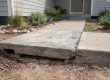
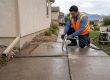
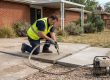
RiseLock Concrete Lifting provides polyurethane concrete lifting for settled or uneven concrete that needs to be raised. This solves a different problem from post-tension stressing: lifting changes the position of existing concrete, while stressing applies force through tendons as part of structural work. If a slab is low or uneven, polyurethane lifting may fit; concrete repair addresses damage, and concrete leveling addresses uneven surfaces.
Start by identifying the problem. A difference in surface height and a concern about tendon performance are not interchangeable, so the solution should match the condition. RiseLock Concrete Lifting also provides post-tension installation for projects involving post-tension systems.
Contact RiseLock Concrete Lifting to discuss which concrete service fits your project.
Move Forward With a Clear Structural Plan
Begin by defining the concrete issue and the outcome you need. For a new structure, identify how post-tension installation fits into the project scope. For existing concrete, distinguish structural concerns from uneven or settled surfaces. This helps focus the discussion on work that addresses the condition instead of treating every concrete problem the same way.
RiseLock Concrete Lifting provides Post Tension Installation, Polyurethane Concrete Lifting, and Concrete Leveling. If you need post tension tendon stressing services in Wheatridge, describe your project goals and the concrete concern you’re addressing. This gives the discussion a clear starting point and helps identify the service that fits.
Contact RiseLock Concrete Lifting to discuss your concrete project. A well-defined next step can make a complex structural decision easier to approach.
Frequently Asked Questions
Post-tension tendon stressing contractors serving Wheat Ridge, Colorado
RiseLock Concrete Lifting provides Post Tension Installation in Wheat Ridge and surrounding Colorado communities. When considering post tension tendon stressing services in Wheatridge, distinguish installation from the specific stressing work required by the project. Compare the proposed scope with the structural plans, stressing records, and project requirements so responsibilities are clear before work begins.
Post-tension tendon stressing services offered near Wheat Ridge
RiseLock Concrete Lifting provides Post Tension Installation, polyurethane concrete lifting, concrete leveling, and concrete repair. Each service addresses a different need: installation involves a post-tension system, while lifting and leveling address settled or uneven existing concrete. A sunken driveway and a new post-tension foundation, for example, require different scopes. Identify the concrete condition and project stage to determine the relevant work.
Post-tension stressing process, equipment, and required site preparation
Stressing uses a hydraulic jack to tension a tendon, with the work area prepared for safe access and clear measurement. Before work begins, the crew needs project drawings, accessible tendon ends, and enough space to position the jack and record readings. Keep unrelated activity and stored materials away from the work zone. A clear layout helps locate tendons and maintain useful closeout records.
When should post-tension tendons be stressed after concrete placement?
Stress tendons only after the concrete reaches the required compressive strength, not simply after a preset number of days. A common minimum is 2,000 psi; reaching it typically takes 3 to 10 days, depending on mix, temperature, and curing conditions. For post tension tendon stressing services in Wheatridge, strength results and project requirements guide readiness, since a calendar date alone cannot establish that concrete is ready.
Post-tension tendon stressing safety risks and quality-control procedures
The main hazard is the force stored in a stressed tendon, which can cause sudden movement if a component fails. Keep people outside the controlled area and maintain clear communication throughout the work. Quality control includes recording jack readings and tendon elongation, matching records to tendon locations, and documenting irregular results and their resolution. These records help project teams review the work against applicable plans.