
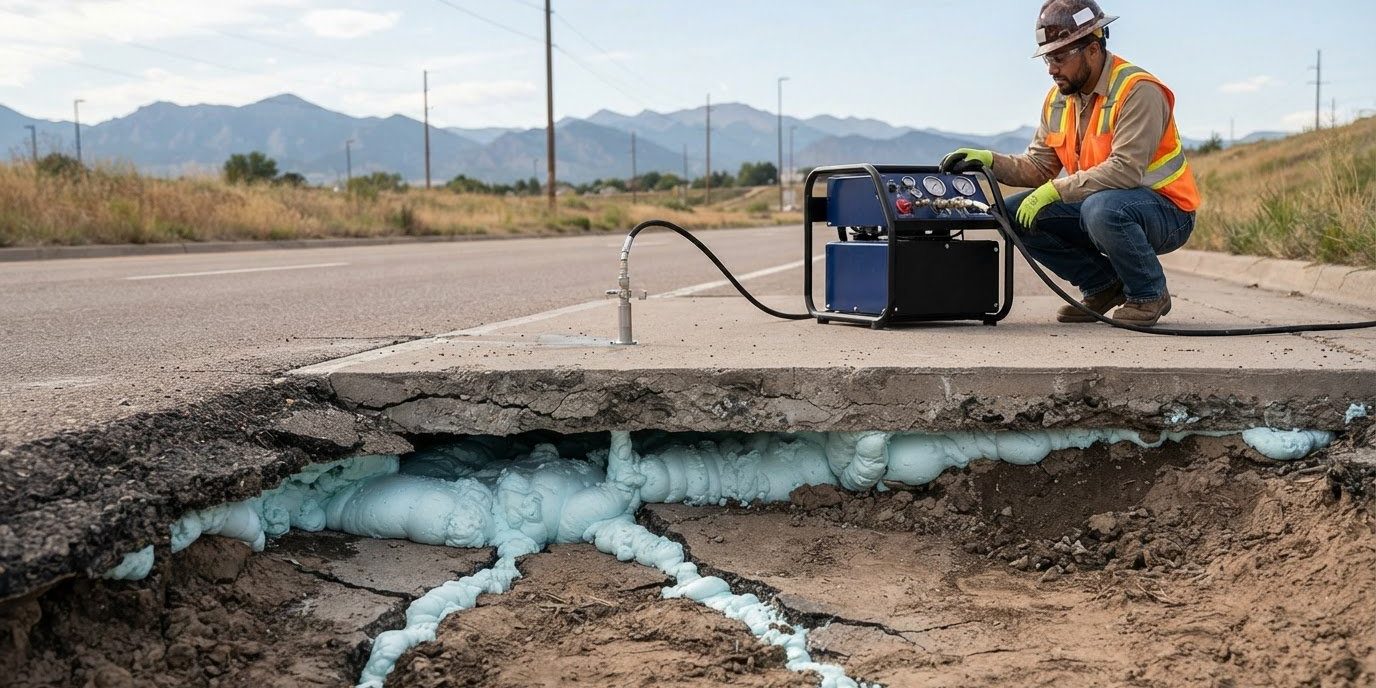
Weak soil doesn’t always have to be excavated to restore support. In Thornton, polyurethane foam for soil stabilization can be injected beneath existing slabs and infrastructure, where it follows weak paths through the soil, fills voids, and increases bearing capacity. The result is a way to support roads and airport runways while working beneath the surface.
It’s reasonable to ask what is happening beneath settled or uneven pavement and whether a repair can address the underlying support problem, not just the visible surface. When considering polyurethane foam for soil stabilization in Thornton, the key factors include how the foam moves through soil, expands into voids, and responds to ground conditions.
This article explains how polyurethane injection stabilizes weak soil, fills cracks and empty spaces, and transfers loads beneath transportation surfaces. It also outlines where the method can help, what its limits are, and how to understand its role in a broader soil-stabilization plan.
Key Takeaways
- Learn how injection ports let polyurethane foam reach targeted areas beneath a slab without broad excavation.
- See how expanding foam can occupy soil cracks and voids, with some geotechnical formulations expanding up to 40 times their original volume.
- Understand why load capacity depends on the soil conditions, foam placement, and the demands of the structure above.
- Explore how injection has been used to address weak support beneath roads and airport runways, including poorly compacted fill.
- Recognize the distinction between stabilizing weak soil and addressing expansive soil movement, which can continue as moisture conditions change.
Polyurethane foam injection for soil stabilization
In Thornton, polyurethane foam for soil stabilization can strengthen weak ground beneath existing slabs and infrastructure without broad excavation. Its use depends on locating unstable soil, voids, and the structure’s support needs.
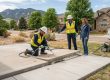
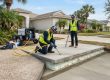
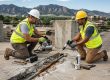
To lift a concrete slab, crews drill small holes at selected points and inject specialized polyurethane foam. It expands into voids beneath the slab, lifts the concrete, then hardens to create a stable, waterproof base. The foam’s movement depends on the available space and surrounding conditions, so careful placement and monitoring help control the lift.
Deep Injection for Soil Compaction
Deep injection places foam below the surface to reinforce weak soil and improve support beneath a structure. It may be considered when shallow treatment cannot reach the unstable layer carrying the load.
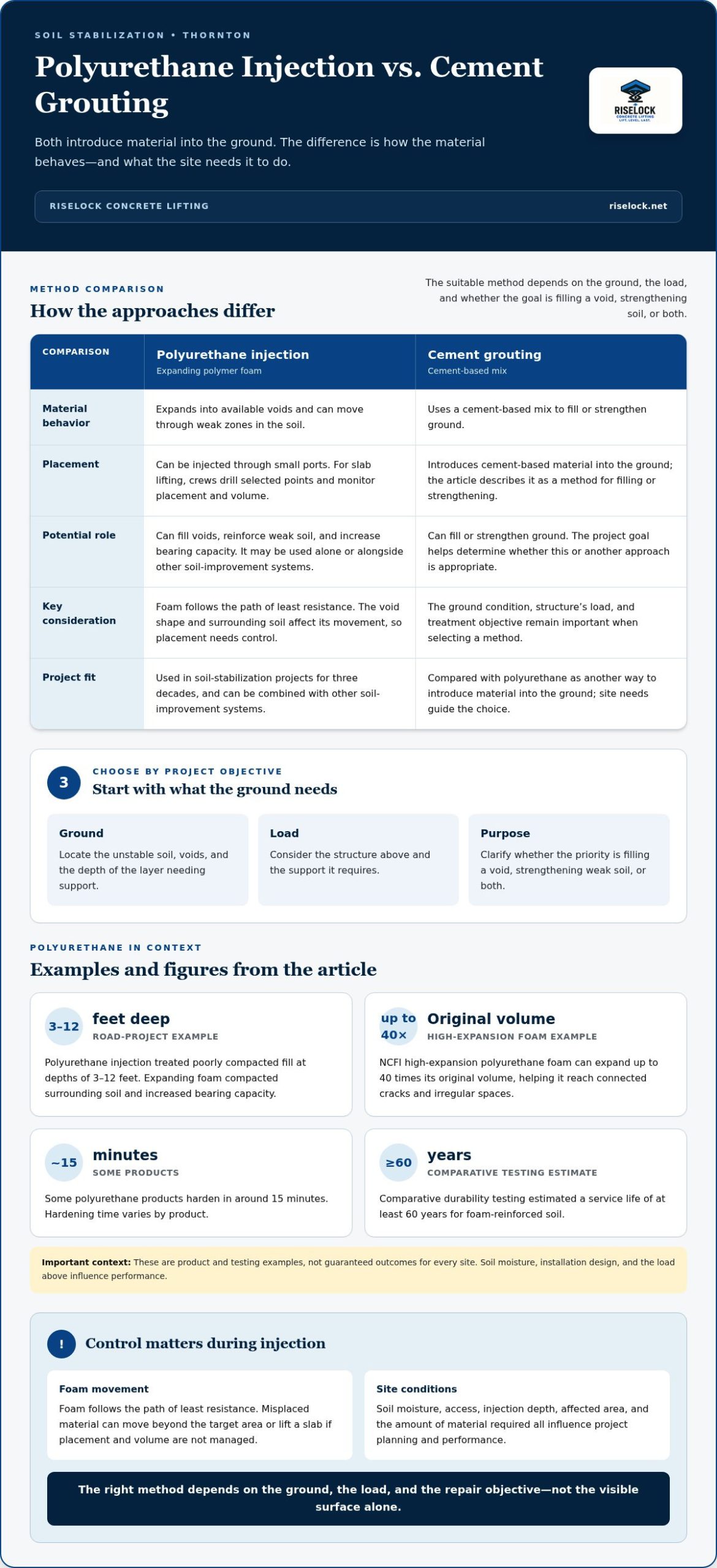
Injection locations and depths are selected to address the soil condition beneath the affected area, rather than just the visible settlement. On a road project, polyurethane injection treated poorly compacted fill at depths of 3-12 feet. As the foam expands through weak zones, it compacts surrounding soil and increases bearing capacity, helping support the construction above.
Comparing Soil Stabilization Methods
Polyurethane injection and cement grouting both introduce material into the ground, but the materials behave differently. Polyurethane foam expands into voids and can be injected through small ports; cement grout uses a cement-based mix to fill or strengthen ground.
That distinction matters where access, excavation, and the location of weak soil shape the repair. Polyurethane foam injection has been used in soil stabilization projects for three decades, and it can be used alone or alongside other soil-improvement systems. The suitable method depends on the ground, the load, and whether the goal is filling a void, strengthening soil, or both.
Project Costs, Curing, and Longevity
Project cost depends on the affected area, soil conditions, injection depth, access, and the amount of material required; the price is determined after a quote request. Some polyurethane products harden in around 15 minutes, while comparative durability testing estimated a service life of at least 60 years for foam-reinforced soil.
Those figures describe product and testing examples, not a guaranteed outcome for every site. Soil moisture, installation design, and the load above influence performance. The foam’s comparatively low weight can also matter: HMI RR401 polyurethane foam typically weighs 4 pounds per cubic foot, reducing the added load during treatment.
Injection requires control. Foam follows the path of least resistance, so misplaced material can move beyond the intended area or lift a slab if placement and volume aren’t managed. In water-sensitive areas, proper containment and application methods address potential ecological risks; polyurethane foam doesn’t filter chemicals into the ground.
Thornton projects must account for applicable local building or public-works requirements, which may differ between private property and roadway work. The site, affected structure, and whether public infrastructure is involved determine the relevant review process. Clearly document the project scope before injection begins.
Homeowners should look for a written scope identifying the target area, injection approach, and intended support outcome, plus clear warranty terms and relevant project qualifications. These details help clarify what the work covers and how performance concerns are handled.
Expanding foam for void filling
Subsurface voids can leave a slab, foundation, or roadway without continuous contact with supporting soil. Expanding polyurethane foam can fill empty spaces beneath concrete and create a more connected support zone. The aim is to address the gap itself, rather than simply cover a surface symptom. Beneath a concrete slab, filling a void can help restore contact between the slab and the ground.
The process starts by identifying where support is missing and where injected material can reach it. Foam follows the path of least resistance, so its movement depends on the void’s shape and the surrounding soil. As it expands, it fills space left by loose soil or erosion. Placement matters: the aim is to fill the gap without causing unwanted movement in the surface above.
Some products are formulated for high-expansion geotechnical void filling. NCFI high-expansion polyurethane foam can expand up to 40 times its original volume. That expansion helps the material reach connected cracks and irregular spaces from an injection point. It also means the required amount cannot be judged by the visible opening alone. A narrow surface crack, for example, may connect to a wider cavity below the slab.
Once the foam cures, the filled area can provide support where the structure previously bridged an empty space. The result depends on the foam reaching the target and the surrounding soil being suitable for the intended load. A void beneath a roadway differs from one near residential foundations: the structure’s load, the gap’s location, and the soil’s resistance to expansion all affect the treatment plan.
Void filling and soil stabilization can overlap, but they address related problems in different ways. Filling a discrete cavity restores contact across an empty space; stabilizing weak ground targets soil that cannot adequately support a load. A project may need foam alone or polyurethane injection alongside other soil-improvement systems. That distinction helps clarify whether the main concern is an identifiable void, weak soil, or both.
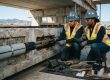
Soil injection is used in settings such as roads, bridges, tunnels, sewage pipes, rain drains, dams, railways, underground tanks, and seawalls. Each presents different access and containment considerations. In water-sensitive areas, proper containment and application methods help address potential ecological risks. For a concrete slab, the practical assessment focuses on where the gap is, how foam can reach it, and what support the surface needs.
Polyurethane foam injection does not stop expansive soil from expanding and contracting as moisture conditions change; this movement is caused by both wetting and drying.
Polyurethane foam compressive strength and load capacity
Compressive strength describes how foam resists pressure. Load capacity concerns the entire support system: the foam, surrounding soil, and structure above. A strong foam product alone does not establish how much weight a site can carry. Soil conditions, treatment depth, foam placement, and load distribution all affect performance.
A grain-bin stabilization project illustrates the loads involved. The bin weighed 4,600 tons and stored 150,000 bushels. At full capacity, its grain load was 2,441 pounds per square foot. Those figures show why evaluating support means considering both the structure and its operating load, rather than treating foam strength as the only design factor.
In that project, contractors used polyurethane to lift the slab by 5 inches. The planned lift was 6 inches. The difference is a useful reminder that a target elevation and the actual movement are distinct project details. A slab’s response depends on where support is restored and how material interacts with the ground beneath it.
A localized void differs from weak soil across a broader area. A gap beneath one part of a slab can concentrate stress at nearby support points, while weak or poorly compacted ground may affect a wider area. Injection planning considers how loads travel through the slab and soil, and where support needs attention.
During treatment, injection placement and volume influence how the foam supports the ground. Material needs to reach the intended zone and integrate with surrounding soil. If the objective includes lifting, crews also manage the slab’s movement as injection progresses. The grain-bin example, with a 5-inch lift under a heavily loaded structure, demonstrates why load requirements and elevation goals belong in the same plan.
For a road, runway, foundation, or industrial slab, the relevant capacity is site-specific. A grain-bin load of 2,441 pounds per square foot is an example, not a universal design value. Different structures impose different loads and distribute them differently. The same foam treatment cannot be assumed to provide identical support across unrelated sites.
Before stabilization, the useful questions are practical: what is loading the surface, where is support deficient, and how much of the soil zone needs treatment? Answers guide injection depth, placement, and the intended outcome. In Thornton, these factors help explain how polyurethane can increase soil bearing capacity without mistaking a material property for a complete load rating.
Applications in roads and airport runways
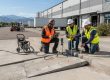
Roads and airport runways depend on continuous ground support beneath pavement. Poorly compacted fill, erosion, or voids can leave sections unsupported, resulting in uneven surfaces and stress across adjoining slabs. Polyurethane injection is one method used to stabilize soil beneath roads, including airport runways. It aims to improve support below the pavement, not replace the pavement itself.
A Highway 1 project shows how injection can address weak ground below an existing roadway. Contractors stabilized a 300-foot section using 37,800 pounds of polyurethane material and completed the work in 15 days. The project treated poorly compacted fill at depths of 3-12 feet. These details show why engineering plans consider both the length of the affected area and the depth of unstable soil.
Bridge approaches are another application. A bridge and the road leading to it can settle differently, leaving an abrupt transition for passing traffic. In one bridge approach slab project, engineers used 19.5 cubic meters of high-density polyurethane to lift the slab. The work was completed in two days. The example illustrates how injection can restore support beneath a specific pavement element without treating an entire roadway length.
For airport runways, the same principle applies: identify where support beneath the paved surface has weakened, then target the affected ground. Runway pavement carries repeated aircraft loads, so a treatment plan must account for the area needing support and the soil below it. Polyurethane injection is one geotechnical approach; it does not determine pavement design or resolve every cause of settlement.
Project planning starts with the surface symptoms and their pattern. A localized dip may point to a limited support problem, while settlement across a longer section may involve a broader weak zone. An engineering assessment connects those observations with ground conditions, injection depth, and pavement access. These factors guide port placement and how material is introduced.
Construction logistics also matter. A 300-foot highway section and a single bridge approach slab require different work layouts and treatment limits. Injection beneath existing infrastructure can reduce the need for broad excavation, while precise placement helps focus work on the affected zone. The material’s expansion must be controlled so support improves without causing unwanted pavement movement.
These applications show how polyurethane foam can support transportation surfaces by treating weak ground below them. The Highway 1 and bridge approach examples demonstrate distinct project scales, from an extended roadway section to a single slab. For each application, the essential decision is where support has been lost and how the ground beneath the pavement should be strengthened.
How polyurethane foam stabilizes weak or unstable soil
Polyurethane can stabilize weak soil by filling low-support zones and improving the ground’s ability to carry loads. After injection, foam follows the path of least resistance through soil and reaches spaces that lack support. As it expands, it can compact nearby soil and help transfer loads from a slab or other infrastructure into a stronger support zone. The treatment needs to address the cause of settlement, not just the surface symptom.
Consider a settled section of pavement. The visible dip shows movement, but the cause may be a void, loose fill, or weak soil. Injection targets areas beneath the surface, where expanding foam fills gaps and reinforces the support zone. If weak ground extends more broadly, the treatment plan needs to address that zone rather than treating one opening as the entire problem.
Soil behavior matters. Polyurethane foam can stabilize weak soil, but it does not stop expansive soil from swelling and shrinking as moisture conditions change. In Thornton, wetting and drying can continue to cause movement even after a void is filled, because the foam does not eliminate the soil’s response to moisture. Identifying the soil type is essential before selecting a stabilization approach.
For expansive soil beneath a house, drill piers or driven piling through the active soil can reduce the effects of ground movement on the structure. Filling alone will not solve expansion and contraction. By contrast, polyurethane injection can improve support beneath concrete slabs affected by voids or weak soil. The distinction matters: improving deficient support and controlling expansive soil movement are different objectives.
Moisture also shapes ground performance over time. A void caused by erosion or poor compaction differs from soil that repeatedly changes volume. The first may respond to filling and reinforcement; the second continues to move with moisture. A useful assessment considers settlement patterns alongside drainage, soil conditions, and the location of the affected slab or infrastructure.
For a project in Thornton, the practical takeaway is to establish whether the problem is weak soil, an empty space, or expansive ground before choosing treatment. That diagnosis informs the injection area and whether another soil-improvement system is needed. If settlement affects a concrete surface, discuss concrete support options for the affected area.
Because polyurethane foam follows the path of least resistance through soil, its route reflects where it can travel, while its role is to fill weak areas. The treatment boundary should be considered in relation to where support is deficient, rather than assuming that nearby ground has the same condition. A route through soil does not establish that every area around it is weak. Connecting the observed settlement with the location of deficient support helps keep stabilization focused on the affected ground.
RiseLock Concrete Lifting: Polyurethane Concrete Lifting
RiseLock provides polyurethane concrete lifting for settled or uneven concrete surfaces where support beneath the slab needs attention. This service addresses concrete leveling, not every type of soil movement. Expansive soil that continues to change with moisture may require a different stabilization approach.
If a driveway, walkway, or other concrete slab has settled, concrete leveling may suit the condition; concrete repair may be relevant when the surface itself is damaged. The right option depends on whether the concern is slab position, surface damage, or support beneath the concrete. Understanding the issue helps identify a practical next step.
For a settled concrete surface in Thornton, contact RiseLock to discuss the affected area and concrete lifting options.
Choose a Practical Next Step for Your Concrete
If you’re assessing polyurethane foam for soil stabilization in Thornton, first separate the ground concern from the concrete concern. Soil movement, a void beneath a slab, and damaged concrete can look similar at the surface, but each points to a different repair objective. Clarifying what needs support helps focus the next decision on the affected structure and its use.
For settled concrete, RiseLock offers polyurethane concrete lifting and concrete leveling. Concrete repair may be suitable when the surface itself is damaged, while post-tension installation addresses a different structural need. Choose the service based on the problem to address, not simply the visible symptom.
Share what you’re seeing and where the concrete has changed, so the discussion can focus on the condition that matters. Contact RiseLock Concrete Lifting to discuss the next step for your project. A clear starting point can make it easier to move toward a sound, practical resolution.
Frequently Asked Questions
What is polyurethane foam soil stabilization and how does it work?
Polyurethane foam soil stabilization injects material to reinforce weak ground beneath a load-bearing surface. The foam expands within soil openings and can improve support where loose ground or a gap has reduced contact. Beneath a settled concrete driveway, for example, the goal is to improve support under the affected slab, not treat unrelated ground elsewhere. Soil conditions and the structure’s load help define the treatment area.
What types of soil and foundation problems can polyurethane foam stabilize?
Polyurethane foam can address weak or poorly compacted soil and voids that contribute to settlement beneath concrete or infrastructure. It does not stop expansive soil from moving as moisture changes, so that cause needs a different approach. RiseLock serves homeowners and property owners in Thornton, Denver, Aurora, Centennial, Parker, Colorado Springs, Englewood, Littleton, Lakewood, Arvada, Wheatridge, Castle Rock, Castle Pines, and Boulder. Its concrete lifting service addresses sunken or uneven slabs.
What are the steps involved in a polyurethane foam soil stabilization project?
A concrete lifting project typically moves through assessment, planning, injection, and review. First, the affected area and settlement pattern are examined to identify the support problem. Next, injection locations and target zones are selected. Crews drill small holes in the slab, inject polyurethane foam in controlled stages, and monitor the surface as it lifts. The foam hardens to create a stable, waterproof base, and the treated area is reviewed against the leveling objective.