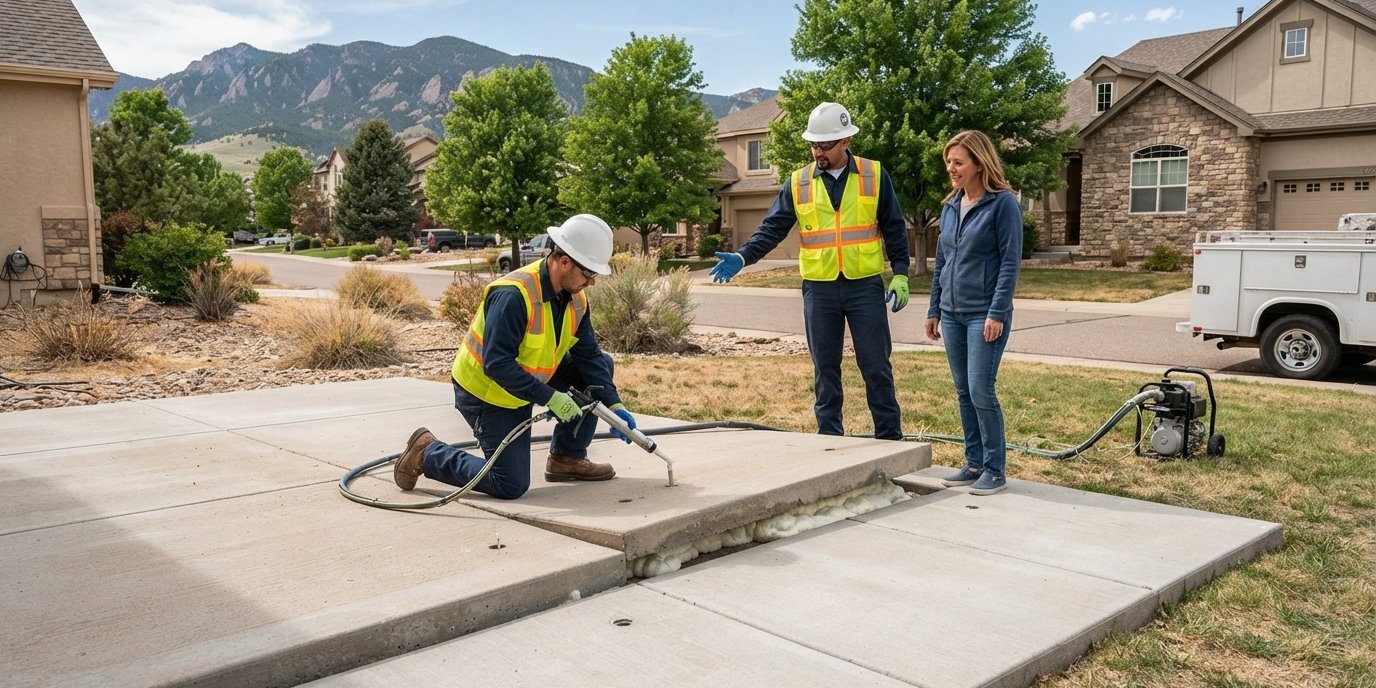
To choose a concrete lifting contractor in Arvada, compare detailed estimates, relevant experience, and customer reviews, then look for a clear explanation of the soil movement or slab void causing the uneven concrete. Three to five years of experience can indicate technical knowledge, but the contractor should also explain how the proposed work addresses the specific problem.
It’s reasonable to want more than a quick promise that a sunken slab can be raised. The cause of the movement matters: lifting concrete without understanding what has shifted beneath it may not address the issue behind the uneven surface. This guide explains how to compare estimates, assess a contractor’s relevant work, and understand how soil conditions and slab voids affect a repair. You’ll find practical criteria for weighing your options and deciding whether concrete lifting may suit your Arvada property.
Key Takeaways
- Compare detailed estimates by scope of work and proposed repair method, not just the bottom-line figure.
- Look for a clear explanation of how soil movement and voids beneath a slab relate to the uneven concrete.
- Use contractor ratings and customer reviews to assess communication, workmanship, and how concerns are handled.
- Understand which permit, insurance, and bonding considerations may apply to your project before work begins.
- Consider how local soil conditions and weather can influence slab movement and the repair approach.
Comparing contractor ratings, hires, and customer reviews
Compare relevant experience, written estimates, and reviews describing concrete lifting work rather than general construction. When deciding how to choose a concrete lifting contractor in Arvada, look for evidence that the contractor considers why the slab sank and explains the proposed approach.
Compare Contractor Ratings and Hires
Ratings offer a starting point, but hiring decisions should rest on project-specific details. Look for feedback about uneven driveways, patios, or sunken walkways. A review describing the original problem, the repair explanation, and the finished surface gives more context than a star score alone.
Consider experience, too. Three to five years of experience can indicate technical knowledge and expertise in concrete leveling. Compare that background with the work described in reviews, such as diagnosing a void beneath a slab rather than merely raising its edge. Ask for a detailed written estimate that identifies the work, its scope, and the factors behind the proposed approach.
Review Customer Feedback and Hiring Risks
Read reviews for patterns across multiple jobs, including whether customers describe clear communication and careful work. A detailed account of a repaired sunken patio can help you judge whether the contractor explains the cause and intended result. Pay attention to how the business responds to criticism, especially when a customer raises concerns about damage or an unfinished repair.
Risks of poorly planned work include misdiagnosing settlement, lifting a slab unevenly, or leaving a void beneath it unresolved. The wrong approach can also worsen cracking or create new trip hazards.
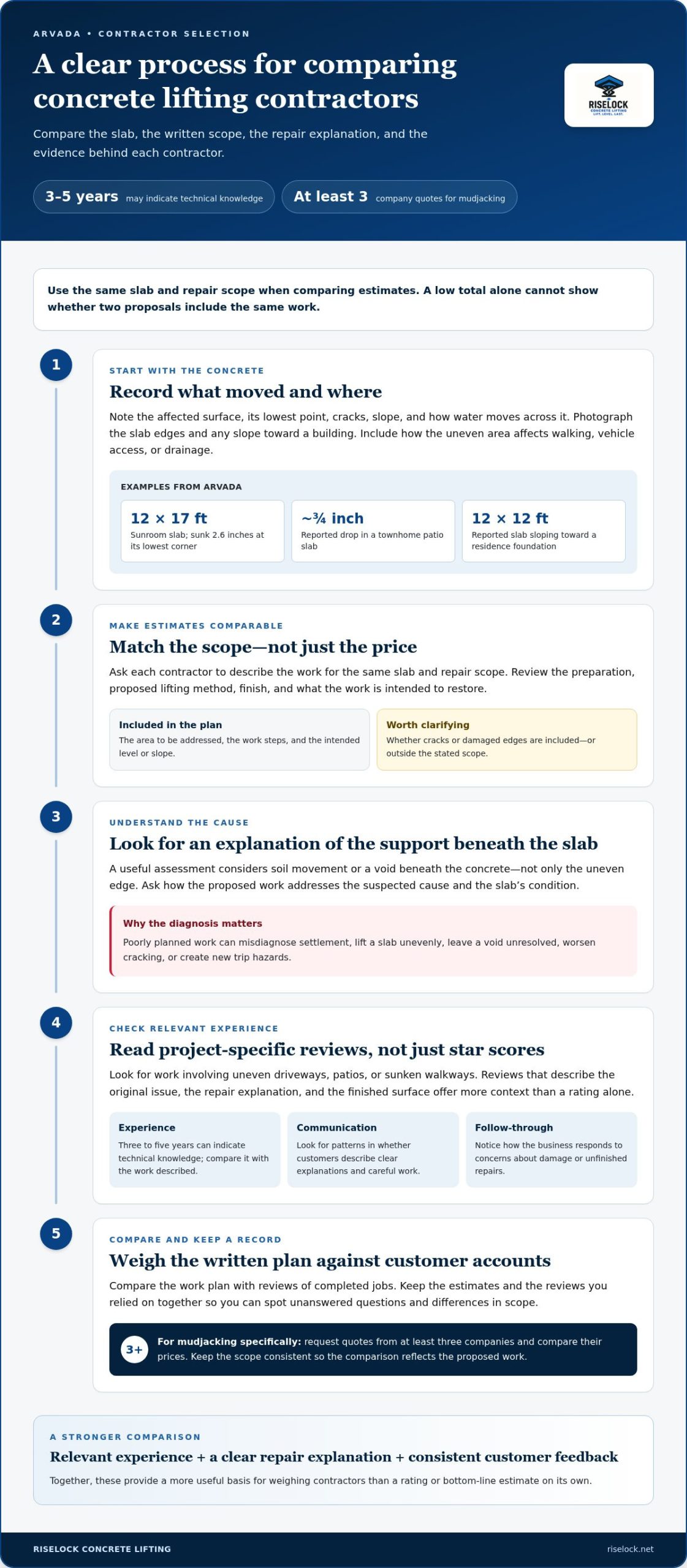
Use a consistent comparison process to make estimates and reviews more useful:
- Match each estimate to the same slab and repair scope.
- Check whether the explanation addresses soil movement and underlying voids.
- Compare the written work plan with customer accounts of completed jobs.
- Note whether the estimate explains what the proposed work will restore.
A low total alone cannot show whether two estimates cover the same work. Compare the described preparation, lifting method, and finish, then note any omitted steps. If an estimate recommends raising a slab but does not explain the suspected soil movement or voids, it leaves an important question unanswered.
For mudjacking specifically, homeowners should request quotes from at least three companies and compare their prices. That fact applies to mudjacking; for any estimate comparison, keep the scope consistent so differences reflect the proposed work rather than different assumptions.
Keep the estimate and the reviews you relied on together. This record helps you compare the written scope with the contractor’s explanation and identify unanswered questions before hiring. Relevant experience, a clear repair plan, and consistent customer feedback offer a more useful basis for choosing than a rating alone.
Concrete lifting for sunken or uneven surfaces
Sunken concrete can indicate a void or shifting support beneath a slab. In Arvada, the surface’s shape, slope, cracks, and nearby drainage can help explain what needs attention. A sound assessment looks beyond the visible edge and considers why the concrete moved.
Local examples show why measurements matter. One Arvada sunroom slab measured 12 by 17 feet and had sunk 2.6 inches at its lowest corner. Another homeowner described a townhome patio slab that had dropped about 3/4 of an inch. Those conditions differ in both size and degree of settlement, so they call for project-specific evaluation.
A driveway may show a different pattern. Arvada residents have described driveways sinking about two inches, a driveway pad down about 1 inch, and cracks wider than 1/2 inch alongside an uneven area. These details help distinguish a height change from cracking or surface damage. Record where the slab sits low and how water moves across it.
- Note which concrete surfaces have shifted, such as a patio, porch, or driveway.
- Measure the sunken area and record the lowest point.
- Photograph cracks, slab edges, and slopes toward buildings.
- Describe whether the uneven section affects walking, vehicle access, or drainage.
Direction matters as much as depth. An Arvada homeowner reported a 12-foot by 12-foot slab sloping toward a residence foundation. That slope deserves attention because runoff follows the surface grade. A 12-foot by 12-foot back patio was also the subject of a leveling request, illustrating why the use and position of each slab belong in the assessment.
Concrete lifting is intended for slabs that have settled but remain suitable for repositioning. An assessment should identify the area to raise, the low points, and the concrete’s condition. Lifting is not a substitute for every kind of concrete repair. Severely broken surfaces or continuing structural movement may call for a different repair plan.
Ask for an explanation of how the proposed work responds to the slab’s condition and suspected loss of support. A practical scope identifies the affected section and intended level or slope. It should also clarify whether cracks or damaged edges are included, rather than leaving expectations unstated.
For an Arvada property, start with clear measurements and photos, then discuss the slab’s movement and use. If the surface remains intact but has settled, concrete lifting for uneven surfaces may be a relevant next step. The key is matching the approach to the slab’s condition and the reason it became uneven.
An Arvada customer requested a contractor visit on May 23rd in the morning for shifting porch and patio concrete. That kind of visit can help connect the observed movement with the slab’s condition and intended use. Before the appointment, keep the measurements, photos, and drainage notes together, and point out where the porch or patio feels uneven. A clear walkthrough can help establish which areas need evaluation and what outcome the proposed lifting work is meant to achieve.
How can I verify an Arvada concrete lifting contractor’s license, insurance, and bonding?
Consider local licensing requirements, current insurance, and any bond required for the work as separate checks. A license or bond does not replace insurance verification. In Arvada, first identify the exact work, such as lifting a driveway slab or repairing a sidewalk.
For licensing, check the requirements that apply to the project and location. Many states require contractors to be licensed or bonded, and the Federal Trade Commission recommends checking local licensing requirements with the building department or consumer protection agency. Ask which license applies to the work, then compare the contractor’s name and license details with the relevant local record. Don’t assume a license for one type of construction covers every concrete task.
Insurance matters because concrete work involves workers, equipment, and property around the slab. A concrete repair contractor should have workers’ compensation and general liability insurance coverage. Request current proof showing the insured business name and coverage period. Then contact the contractor’s insurance company directly to verify coverage and its time frame. This helps establish whether the policy is active for the scheduled work, rather than relying only on a document supplied earlier.
Bonding is a separate safeguard, not a substitute for liability coverage. Requirements can depend on the local rules and project type. Ask the building department whether a bond applies to your specific work, then request the bond details if required. Check that the named contractor matches the business preparing your estimate. For sidewalk work, clarify whether the project falls under a separate local process before signing an agreement.
Keep the verification focused and documented:
- Write down the project address and the concrete work involved.
- Ask the local building department or consumer protection agency about applicable licensing rules.
- Match the contractor’s legal business name to license, insurance, and bond documents.
- Call the insurer to verify coverage and its time frame.
- Save records of responses alongside the estimate and written scope.
Resolve mismatches before work begins. If an estimate names one business but an insurance document names another, request corrected paperwork identifying the contracting business. If the insurer confirms coverage for a different period, make sure the dates align with the planned work. These checks clarify who is responsible and which protections apply to the project.
Does Arvada require permits for concrete lifting or sidewalk repairs?
Don’t assume the same permit requirements apply to every concrete project in Arvada. Raising a private patio slab differs from replacing sidewalk concrete beside a street. When asking Arvada officials about permits, provide the work’s location, scope, and effect on public space. This helps you get an answer suited to the actual project, not a general description of “concrete work.”
Start by identifying where the slab sits. A backyard patio or driveway is on private property, while a sidewalk may border the public right-of-way. Then describe the planned work precisely. Lifting an existing slab differs from removing and replacing it, changing its shape, or altering how it meets a path or driveway. Describe the actual task when asking about permits.
For an Arvada sidewalk, establish whether the work affects the public right-of-way. Give the relevant city department the project address, the location of the sidewalk, and a plain description of the proposed repair. Ask whether an approval, permit, or inspection applies to that scope. Avoid relying on a neighbor’s experience; a sidewalk replacement and a private walkway lift may follow different processes.
Use this sequence to make the inquiry useful:
- Mark the repair area on a simple site sketch or photograph.
- State whether the slab is a driveway, patio, private walkway, or public-facing sidewalk.
- Explain whether the work raises existing concrete, replaces it, or changes its layout.
- Ask Arvada which approvals apply and whether inspections are part of the process.
- Keep the city’s response with the estimate and project documents.
For example, describe a sunken patio wholly behind a home differently from a lifted sidewalk panel beside a street. If a driveway apron meets the sidewalk, explain where the property’s concrete ends and the sidewalk begins. A clear location helps identify which part of the work is being reviewed.
Before scheduling, compare the approved scope with the written repair plan. If the plan changes from lifting a slab to removing and replacing concrete, ask Arvada whether that change affects the required approvals. Keep any city instructions available for the person completing the work. This step helps align the repair method, project boundaries, and local requirements without assuming every concrete surface follows one rule.
How does Colorado weather and soil affect concrete lifting and repair?
In Colorado, changing moisture and temperatures can affect the ground supporting a concrete slab. Water entering soil can change its support, while freezing conditions can affect damp ground near slab edges. These forces may contribute to uneven concrete, but the pattern of movement matters more than a general description of the climate.
Look at where water collects around the surface. A driveway that slopes toward a downspout, for example, may receive repeated runoff along one edge. A patio beside a garden bed may stay damp while the opposite edge dries. Uneven moisture can affect soil support, contributing to a low corner, tilted panel, or gap beneath the slab.
Temperature changes are another factor to discuss during an assessment. Moisture near concrete can freeze and thaw as conditions change, affecting the soil and slab edges. A crack near a downspout or a lifted edge beside a shaded walkway offers useful context. The visible symptom alone doesn’t explain the cause, so note nearby drainage and exposure.
Soil conditions also vary from one property to another. A contractor evaluating an Arvada driveway should consider the slab’s slope, surrounding ground, drainage paths, and signs of settlement. A patio with one sunken corner may have a different support issue than a walkway with several uneven sections. The repair plan should account for those differences rather than assume every slab moved for the same reason.
Before discussing a repair, gather practical observations:
- Photograph low points, cracks, and gaps beside the concrete.
- Note downspouts, irrigation, and places where runoff collects.
- Record whether the slab slopes toward a building or away from it.
- Describe whether movement appears isolated or continues across adjoining panels.
These details help connect soil movement with the concrete’s condition. A driveway panel dipping near a discharge point, for instance, suggests a different drainage pattern from a patio settling beside a dry walkway. Neither observation proves the cause by itself, but both help frame a focused site assessment.
Ask the contractor to explain how the observed conditions shape the repair approach. A useful explanation connects the slab’s movement, soil support, and water flow. It also distinguishes lifting from concrete repair when cracking or deterioration affects the slab itself. Surface height matters, but so do restoring a usable grade and considering contributing conditions.
For a Colorado property, discuss drainage and soil observations alongside the slab measurements. Share photos taken after rain or snowmelt if they show where water travels. To discuss a settled slab and its surrounding conditions, request an assessment of concrete movement.
RiseLock Concrete Lifting: Polyurethane Concrete Lifting
RiseLock Concrete Lifting provides polyurethane concrete lifting and straightening for slabs that have settled or become uneven. It may suit a driveway, patio, or walkway that remains intact but sits lower than intended. RiseLock’s process uses small holes to inject expanding polyurethane foam, which fills voids, lifts the slab, and hardens into a stable, waterproof base.
For surfaces needing additional attention, RiseLock also offers Concrete Leveling and Concrete Repair. The right approach depends on whether the issue is settlement, surface damage, or both. Share the affected area and what you’ve observed so the project can be discussed clearly.
Contact RiseLock to discuss your concrete lifting needs and request an estimate.
Take the Next Step Toward Stable Concrete
A useful next step is to turn your observations into a focused conversation about the surface you want to restore. Knowing how to choose a concrete lifting contractor in Arvada helps you move from comparing options to defining what a successful repair should accomplish for your property.
Consider how you use the affected area, what has changed, and what you want to improve. That context can help define the scope of work. RiseLock provides polyurethane concrete lifting and leveling for settled slabs, along with post-tension installation and tendon repair or replacement for post-tensioned structures.
Share your concrete concerns and discuss a practical path forward with RiseLock Concrete Lifting. Contact RiseLock Concrete Lifting to start the conversation and take a considered step toward more dependable concrete.
Frequently Asked Questions
What services do concrete lifting contractors in Arvada offer?
Concrete lifting contractors may raise and stabilize settled slabs, level concrete, or repair damaged surfaces; some also install post-tension systems. RiseLock provides concrete lifting and straightening with polyurethane foam, concrete repairs for post-tensioned structures, post-tension installation, and damaged tendon locating, repair, and replacement. RiseLock serves Denver, Aurora, Centennial, Parker, Colorado Springs, Englewood, Littleton, Lakewood, Arvada, Thornton, Wheatridge, Castle Rock, Castle Pines, and Boulder. Match the service to the surface and structural issue.
How much does concrete lifting cost in Arvada, Colorado?
Concrete lifting cost in Arvada depends on the slab’s size, access, degree of settlement, underlying voids, and related repair work. RiseLock provides estimates based on the project. For a useful comparison, describe the affected surface and request a written estimate that defines the work included. Compare estimates with the same project scope, not just their totals.
What questions should I ask before hiring a concrete lifting contractor?
Ask what conditions could make a slab unsuitable for lifting, how the contractor will determine its target position, and what the written scope includes. Clarify whether the estimate covers adjacent panels or only the visibly sunken section. Ask how the work area will be accessed and what preparation you need to handle. These details help set expectations without relying on general assurances.
What warranties do concrete lifting contractors in Arvada provide?
Review the written agreement for coverage, conditions, exclusions, and the process for addressing concerns. RiseLock states, “we guarantee the job is done right.” Read the project documents to understand the terms that apply to your work. Don’t assume every contractor offers the same assurance or that a verbal promise defines the full agreement.
How do I compare concrete lifting quotes and project scopes?
Compare quotes by aligning the work descriptions, not simply the totals. Check whether each scope identifies the affected slab, areas included, intended result, and any related repair work. An estimate covering one driveway panel, for example, isn’t directly comparable to one covering several adjoining panels. Note exclusions and assumptions, then request a revised written scope if the estimates describe different work.