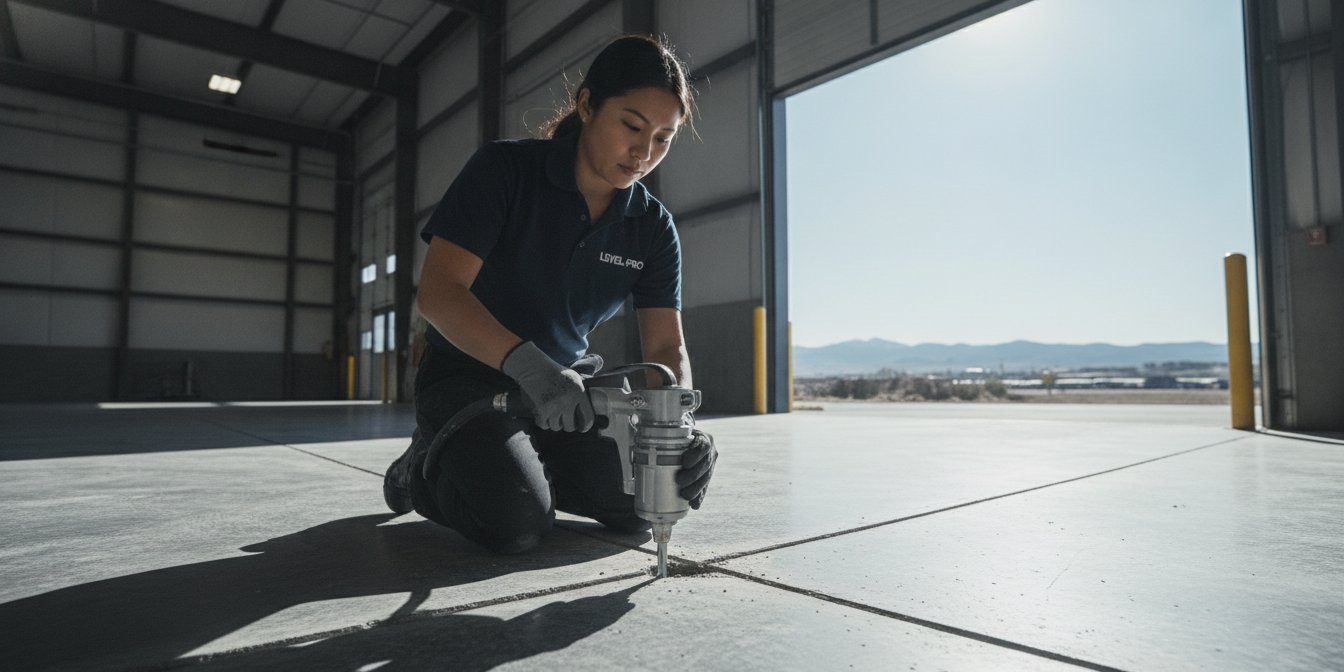
A single quarter-inch trip hazard on your warehouse floor can cost more in legal liabilities and equipment repairs than the price of a permanent structural fix. In the South Metro Denver area, shifting soils aren’t just a nuisance; they’re a direct threat to your operational efficiency. You’ve likely noticed cracks widening or forklifts jarring as they cross uneven joints. It’s a frustrating reality that impacts both safety and your bottom line. Precision commercial concrete slab leveling Centennial properties require involves more than just filling a gap; it’s about stabilizing the foundation of your business.
You shouldn’t have to choose between a safe workspace and maintaining your production schedule. We’ll show you how high-density polyurethane injection restores structural integrity with zero downtime, allowing your team to stay productive while we work. This article details the technical mastery behind modern slab restoration, including how these methods align with the 2021 International Building Code standards adopted by the City of Centennial. You’ll learn why advanced foam solutions provide a cleaner, faster, and more durable alternative to older, more invasive techniques, ensuring your facility remains a secure environment for years to come.
Key Takeaways
- Understand how the geological transition from clay to sand in Arapahoe County dictates the specific settlement patterns of your commercial foundation.
- Discover why high-density polyurethane provides superior structural support without the risk of further settlement caused by heavy, traditional slurry.
- Explore the role of GPR mapping and engineered injection patterns in restoring uniform support to high-traffic commercial floors.
- Learn how the commercial concrete slab leveling Centennial businesses trust restores structural integrity with zero operational downtime.
- Evaluate the significant ROI of early intervention and strategic void filling compared to the high cost of total slab replacement.
The Challenge of Commercial Concrete Settlement in Centennial
For commercial property owners, concrete settlement represents a significant structural liability rather than a mere cosmetic concern. When a slab begins to sink, it compromises the load-bearing capacity of the entire floor, leading to uneven surfaces that threaten both safety and operational efficiency. In a high-traffic environment, these shifts create OSHA trip hazard liabilities and cause expensive wear-and-tear on material handling equipment like forklifts. While the general concrete leveling procedure provides a framework for repair, commercial applications in Centennial require a deeper understanding of local geological stressors.
Choosing total slab replacement is often the least efficient path for local businesses. Tearing out and repouring concrete involves significant downtime, messy demolition, and a high price tag. More importantly, replacement doesn’t address the underlying issue: the soil. Without stabilizing the sub-grade, a new slab is likely to settle just as the old one did. Effective commercial concrete slab leveling Centennial services focus on addressing the root cause of the movement, providing a permanent fix that keeps your facility running without interruption.
Centennial sits on a geological split that presents unique challenges for heavy commercial slabs. The western portion of Arapahoe County is characterized by expansive clay, while the eastern regions often transition into sandier compositions. Clay soils expand aggressively when wet and shrink as they dry, creating a constant “pumping” action beneath the concrete. Conversely, sandy soils are prone to erosion and washout. Both conditions lead to voids that leave slabs unsupported, eventually causing them to crack under the weight of heavy machinery or inventory. Implementing the precise commercial concrete slab leveling Centennial properties demand requires a partner who understands these specific soil behaviors.
Centennial’s Soil and the Freeze-Thaw Cycle
The extreme temperature swings common in Colorado further complicate sub-grade stability. During the winter, moisture trapped in the soil freezes and expands, a process known as frost heave that can lift even heavy commercial slabs. When the ground thaws, the soil often fails to return to its original density, leaving gaps behind. High-density polyurethane is specifically designed to counteract these cycles. It provides a lightweight yet incredibly strong foundation that doesn’t add significant weight to the already stressed Centennial soils.
Identifying Commercial Slab Failure
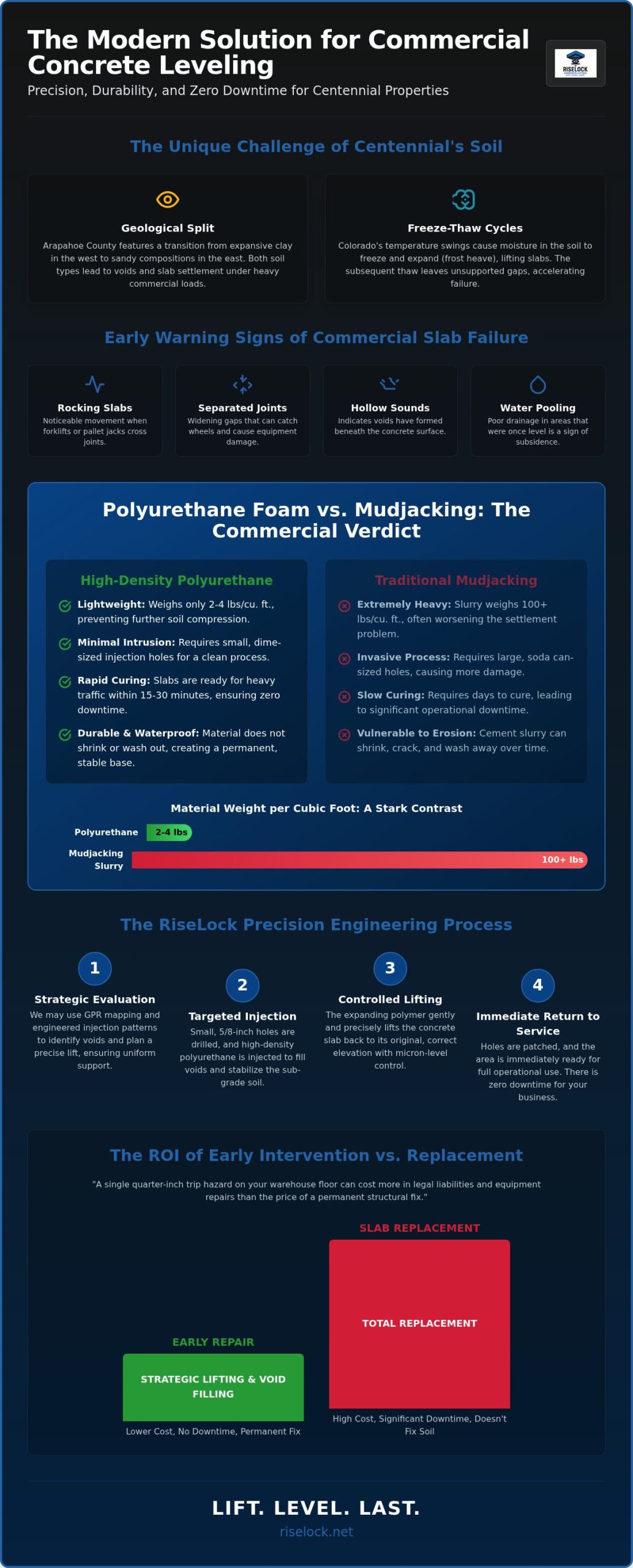
Early detection is the key to preventing a minor dip from becoming a structural catastrophe. You might notice slabs that rock slightly when driven over or joints that have separated enough to catch a pallet jack wheel. One of the most reliable indicators of trouble is a “hollow” sound when walking or driving over certain areas, suggesting that a void has formed beneath the surface. Slabs may also show signs of poor drainage, with water pooling in areas that were previously level. Slab subsidence is the result of sub-grade erosion or compaction failure.
Polyurethane Foam vs. Mudjacking: The Commercial Verdict
Choosing the right material for structural restoration isn’t just a matter of cost; it’s a decision based on structural physics and soil mechanics. High-density polyurethane foam provides a sophisticated solution for the commercial concrete slab leveling Centennial facilities require, offering a level of precision that older methods simply cannot match. While traditional mudjacking relies on a heavy mixture of sand, cement, and water, modern foam lifting utilizes advanced chemical reactions to create a lightweight, high-strength support system. This technical shift is essential for Centennial properties where the goal is to stabilize the sub-grade without adding unnecessary stress to already failing soils.
The weight analysis of these two materials reveals why foam is the industry standard for commercial applications. High-density polyurethane weighs approximately 2 to 4 pounds per cubic foot. In contrast, mudjacking slurry often exceeds 100 pounds per cubic foot. Adding thousands of pounds of heavy wet slurry to unstable ground often accelerates the very settlement it was intended to fix. By utilizing a lightweight material, we can lift slabs and fill voids without risking secondary subsidence caused by overburdening the soil.
Material Science: High-Density Polyurethane
Modern architectural foams are engineered through a precise chemical reaction between two components that, when mixed, expand to fill every micro-void beneath a slab. This material is non-biodegradable and non-toxic, ensuring it won’t break down or leach into the environment over time. According to technical standards maintained by the Spray Polyurethane Foam Alliance, these materials are also hydrophobic. This means the foam remains completely stable even during Centennial’s wet spring seasons, as it won’t absorb water or wash away like traditional soil-based fills. It’s a permanent, rigid structure that effectively seals the underside of the concrete against moisture.
Why Mudjacking Fails Centennial Commercial Properties
Mudjacking presents several significant drawbacks for a professional environment. Because the slurry is water-based, it’s prone to erosion during Colorado’s intense storm cycles, eventually leaving the slab unsupported once again. The installation process is also invasive, requiring large holes (often 1.5 to 2 inches in diameter) that leave unsightly scars on the warehouse floor. Polyurethane injection uses precision ports only 5/8-inch in diameter, which are nearly invisible once patched. If you’re concerned about the longevity of your facility’s floors, exploring precision foam lifting provides a path toward permanent stabilization.
For operations managers, the most critical factor is often the return to service. Mudjacking requires days of cure time before heavy machinery can be used on the surface. High-density polyurethane cures almost instantly, allowing forklifts and heavy equipment to resume operations in as little as 15 minutes. This near-zero downtime ensures that your logistics and production schedules remain on track while your structural integrity is fully restored.
Strategic Evaluation of Centennial Commercial Slabs
Effective structural restoration begins with a comprehensive analysis of the specific stresses a facility endures. Commercial environments in Centennial operate under dynamic loads that residential surfaces never face. Constant forklift traffic, heavy inventory racking, and industrial machinery create localized pressure points that can accelerate sub-grade failure. Because of this, commercial concrete slab leveling Centennial professionals must prioritize void filling over simple aesthetic leveling. If the space beneath the concrete isn’t fully supported, the slab remains a structural liability regardless of how flat it looks on the surface.
Joint stability is another critical factor in large-scale Centennial warehouses. Large concrete pours are susceptible to “slab curl,” a phenomenon where the edges of a slab lift or drop due to moisture and temperature differentials between the top and bottom of the concrete. This creates jarring transitions at every joint, damaging equipment and slowing down operations. Integrating polyurethane concrete lifting into your facility’s long-term maintenance plan allows for early intervention. By stabilizing these joints before they fail, you prevent the high costs associated with full-depth repairs or slab replacement.
Loading Docks and High-Traffic Zones
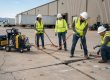
Loading docks are the most high-stress areas of any commercial property. They experience constant vibration and impact from heavy freight vehicles and the repetitive motion of forklifts crossing the threshold. When approach slabs settle, they create a step-down that can damage vehicle suspensions and lead to worker fatigue. Precision leveling ensures these transitions remain seamless. Our high-density foam provides the necessary compressive strength to withstand these repetitive impacts, maintaining a safe and efficient workflow for your logistics team.
Warehouse and Industrial Flooring
Modern industrial facilities often rely on automated picking systems that require strict adherence to Floor Flatness (FF) and Floor Levelness (FL) standards. Even a minor shift in the slab can cause an automated robot to malfunction or a high-reach forklift to become unstable at height. High-density foam is the ideal solution for stabilizing rocking slabs beneath heavy racks without the need for heavy equipment that could damage nearby inventory. Because the process is nearly dust-free, it is suitable for clean-room environments and food-grade facilities where hygiene is a top priority.
The RiseLock Process: Precision Engineering for Commercial Slabs
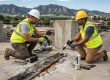
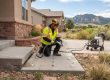
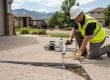
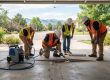
Precision engineering transforms a standard repair into a permanent structural restoration. For commercial concrete slab leveling Centennial projects, we begin with a rigorous site assessment that moves beyond visual inspection. We utilize Ground Penetrating Radar (GPR) or physical probes to map the exact dimensions of sub-slab voids. This data-driven approach eliminates guesswork, allowing our technicians to visualize structural deficiencies before any work begins. By understanding the specific geometry of the failure, we design a custom injection pattern that ensures a uniform lift and long-term stabilization.
During the injection phase, we maintain 1/10th-inch precision through real-time laser monitoring. This level of accuracy is vital for maintaining the strict floor flatness requirements of modern industrial facilities. Our technicians monitor every movement of the slab, adjusting the injection rate to ensure the high-density foam fills every micro-void without creating new stress points in the concrete. This technical mastery is why we are the preferred choice for commercial concrete slab leveling Centennial property managers rely on for high-stakes repairs.
Navigating Post-Tensioned Slabs
Many modern Centennial commercial builds utilize post-tensioned (PT) slabs, which contain high-strength steel cables under immense tension. Drilling into these cables can cause catastrophic structural failure and poses a severe safety risk to onsite personnel. Our deep expertise in post-tension installation allows us to identify PT markers and implement safe-drilling zones with total confidence. We view this specialized technical knowledge as a non-negotiable requirement for any contractor working on contemporary commercial foundations. If you are managing a facility with specialized structural needs, consult with our engineering team to ensure a safe restoration.
Injection and Stabilization
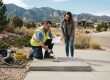
The lifting process requires a controlled chemical expansion to achieve the desired height. We manage the injection to avoid over-correction, which can lead to secondary cracks or drainage issues. Our primary goal is 100% contact between the slab and the new support foam, creating a solid, monolithic structure that resists future settlement. Once the slab is leveled, we remove the injection ports and seal the 5/8-inch holes with color-matched concrete. The result is a clean, near-invisible finish that allows your facility to return to full service immediately.
Investing in Long-Term Structural Security
The decision to address concrete settlement is an investment in the longevity of your business infrastructure. When evaluating the ROI of concrete leveling versus total slab replacement, the advantages of restoration are clear. Slab replacement requires extensive demolition, debris removal, and long curing periods that can halt operations for weeks. In contrast, high-precision commercial concrete slab leveling Centennial property owners choose allows for an immediate return to service, preserving both your capital and your schedule. By choosing to stabilize rather than replace, you’re opting for a solution that addresses sub-grade failure without the waste and disruption of new construction.
Proactive intervention is the most effective way to manage facility costs. Many managers wait until a slab cracks or a forklift is damaged before seeking help, but early stabilization can extend a commercial slab’s life by decades. Addressing a minor void today prevents the mechanical stress that eventually leads to structural failure. Our approach focuses on creating a stable foundation that resists the seasonal soil shifts typical of Arapahoe County, ensuring your floors remain reliable through years of heavy use.
The Cost of Inaction
Ignoring settlement issues often leads to a cascading series of structural problems. Uneven slabs can cause doors to misalign, plumbing lines to shear, and cracks to migrate into load-bearing walls. Beyond physical damage, there’s a significant financial risk; uneven floors are a primary cause of workplace accidents, which can lead to increased liability insurance premiums and OSHA citations. Maintaining a level, safe surface isn’t just about maintenance; it’s a critical component of risk management for any modern commercial enterprise.
Choosing a Professional Partner
Selecting a contractor for commercial concrete slab leveling Centennial requires finding a partner who values technical mastery over marketing hype. Local expertise in the Centennial and Denver Metro area is essential because our soil conditions are unique. You need a team that understands the difference between western clay and eastern sand deposits. We take professional pride in being a dependable guide for our clients, treating every structural challenge as a personal priority. Our commitment to high standards and ethical service provides the long-term security your business deserves. If you’re ready to secure your facility’s future, contact RiseLock for a professional commercial assessment to determine the best path forward for your property.
Securing Your Facility’s Structural Future
Restoring the structural integrity of your facility requires a partner who understands the intersection of advanced material science and local geological conditions. We’ve detailed how high-density polyurethane injection provides a superior alternative to traditional methods by offering high-precision lift with zero operational downtime. By addressing the specific soil behaviors in Arapahoe County and utilizing technical mastery in post-tensioned systems, you can eliminate liabilities and protect your equipment from the jarring effects of uneven floors.
Securing your facility against the risks of slab subsidence is a strategic decision that pays dividends in long-term durability and safety. RiseLock provides the specialized expertise required to stabilize industrial loads while protecting the complex internal reinforcements of your building. We’re ready to act as your professional guide, leading you away from the stress of structural damage toward the peace of mind offered by specialized intervention. Request a Professional Commercial Concrete Assessment from RiseLock today. Let’s ensure the commercial concrete slab leveling Centennial property owners rely on is executed with the precision your business deserves.
Frequently Asked Questions
Is polyurethane foam strong enough to support heavy commercial machinery?
High-density polyurethane is specifically engineered to support the immense compressive loads of industrial machinery and heavy warehouse racking. Once the chemical reaction is complete, the foam creates a rigid, lightweight structure that doesn’t compress or lose its shape under pressure. This makes it an ideal solution for facilities where heavy equipment traffic is constant. It provides a stable foundation that effectively distributes weight across the sub-grade without risking secondary settlement.
How long will my Centennial business be closed during the leveling process?
Your Centennial business won’t need to close for days or even hours. One of the primary advantages of high-density foam is its rapid cure time. Most slabs are ready for full weight-bearing traffic within 15 to 30 minutes of the final injection. This speed allows for precise commercial concrete slab leveling Centennial managers can schedule between shifts. It ensures that your production or logistics operations continue without any significant business interruption.
Can you level a commercial slab that has post-tension cables inside?
We can safely level post-tensioned slabs by utilizing specialized mapping techniques and our deep background in post-tension installation. Drilling into a PT cable is a catastrophic safety risk that can compromise the entire building’s structural integrity. Because we understand the placement and physics of these cable systems, we can identify safe-drilling zones. This technical mastery ensures the leveling process is completed without damaging the critical internal reinforcement of your facility.
What causes commercial concrete to sink in the Centennial area?
Commercial concrete settlement in Centennial is primarily driven by the region’s diverse soil composition and intense freeze-thaw cycles. Expansive clays in the western part of the city swell with moisture and shrink during dry periods, creating voids beneath the slab. In the eastern sandy areas, erosion from heavy storms often washes away the sub-grade. These geological shifts, combined with extreme temperature swings, eventually leave heavy commercial slabs unsupported and prone to cracking.
How does foam concrete leveling compare to traditional mudjacking for businesses?
High-density foam is superior for commercial use because it addresses the root cause of settlement without adding excessive weight. Traditional mudjacking uses a heavy cement slurry that can weigh over 100 pounds per cubic foot, often causing the soil to sink further under the new load. Polyurethane weighs only a few pounds per cubic foot and requires much smaller injection holes. This results in a cleaner, more durable repair that is less invasive.
Will the polyurethane foam wash away if my facility has drainage issues?
Polyurethane foam is hydrophobic, meaning it doesn’t absorb water and won’t wash away, even if your facility has ongoing drainage challenges. Once the foam has expanded and cured, it becomes a non-biodegradable solid that is impervious to moisture. It effectively seals the underside of the concrete slab, preventing water from further eroding the sub-grade. This characteristic makes it a permanent solution for Centennial properties facing wet spring seasons or irrigation leaks.
What is the typical lifespan of a polyurethane commercial slab repair?
A professional polyurethane repair is designed to last for the remaining lifespan of the concrete slab itself. Because the material is non-biodegradable and chemically stable, it won’t break down or lose its structural integrity over time. When combined with proper joint maintenance and drainage management, this method provides a long-term fix. It stops the cycle of settlement by providing a permanent, rigid support structure that isn’t affected by moisture or biological decay.
How do I know if my slab needs leveling or a full replacement?
Leveling is almost always the preferred choice unless the concrete has suffered extensive structural spiderweb cracking or total surface degradation. If the slab is mostly intact but has simply tilted or sunk, commercial concrete slab leveling Centennial is a more cost-effective and faster solution than replacement. A technical assessment can determine if the underlying soil can be stabilized. If the concrete’s surface integrity is still sound, we can typically restore it to its original position.