What if the “Colorado lean” affecting your front entrance is more than just an aesthetic flaw, but a calculated warning from the expansive bentonite clay beneath your home? In Aurora, where soil can swell significantly when wet and shrink during our dry spells, your porch is often the first victim of this geological tug-of-war. You’ve likely noticed the growing trip hazard at your front door or felt the unease of watching rainwater pool directly against your foundation. Understanding how to fix a sinking concrete porch Aurora homeowners often struggle with requires looking beneath the surface at these unique soil conditions. It’s a common frustration, yet ignoring the issue often leads to more invasive and costly structural repairs later.
We understand that you want a level porch that stays level without sacrificing your carefully maintained landscaping. This precision guide details the most durable, non-invasive methods to restore height and structural integrity. We’ll move past the temporary fixes of the past to examine the technical superiority of high-density polyurethane foam. You’ll discover why this modern restoration method is the ethical, long-term alternative to total replacement, ensuring your home regains its curb appeal through professional engineering rather than brute force demolition.
Key Takeaways
- Aurora’s expansive bentonite clay creates a cycle of soil movement that destabilizes concrete porches; this requires solutions that specifically address the underlying subgrade.
- High-density polyurethane foam provides a lightweight, water-resistant alternative to traditional methods. It offers permanent stabilization without adding excessive weight to fragile Colorado soils.
- Learning how to fix a sinking concrete porch Aurora homeowners deal with involves a precise assessment of gaps and slopes to prevent water from damaging the home’s foundation.
- Modern concrete lifting is more efficient than total replacement. It often costs between 50% and 70% less while preserving your existing landscaping and curb appeal.
- A professional three-step restoration process ensures that your porch remains level and structurally sound against the region’s intense freeze-thaw cycles.
Why Front Porches Sink in Aurora: The Colorado Soil Factor
Porch settlement is a physical reality for many homeowners in the Denver metro area. It occurs when the subgrade soil can no longer support the significant weight of the concrete slab. In neighborhoods across Aurora, this structural failure often presents as a visible gap between the porch and the house siding. Understanding how to fix a sinking concrete porch Aurora residents find themselves managing requires an objective look at the geological conditions unique to the Front Range.
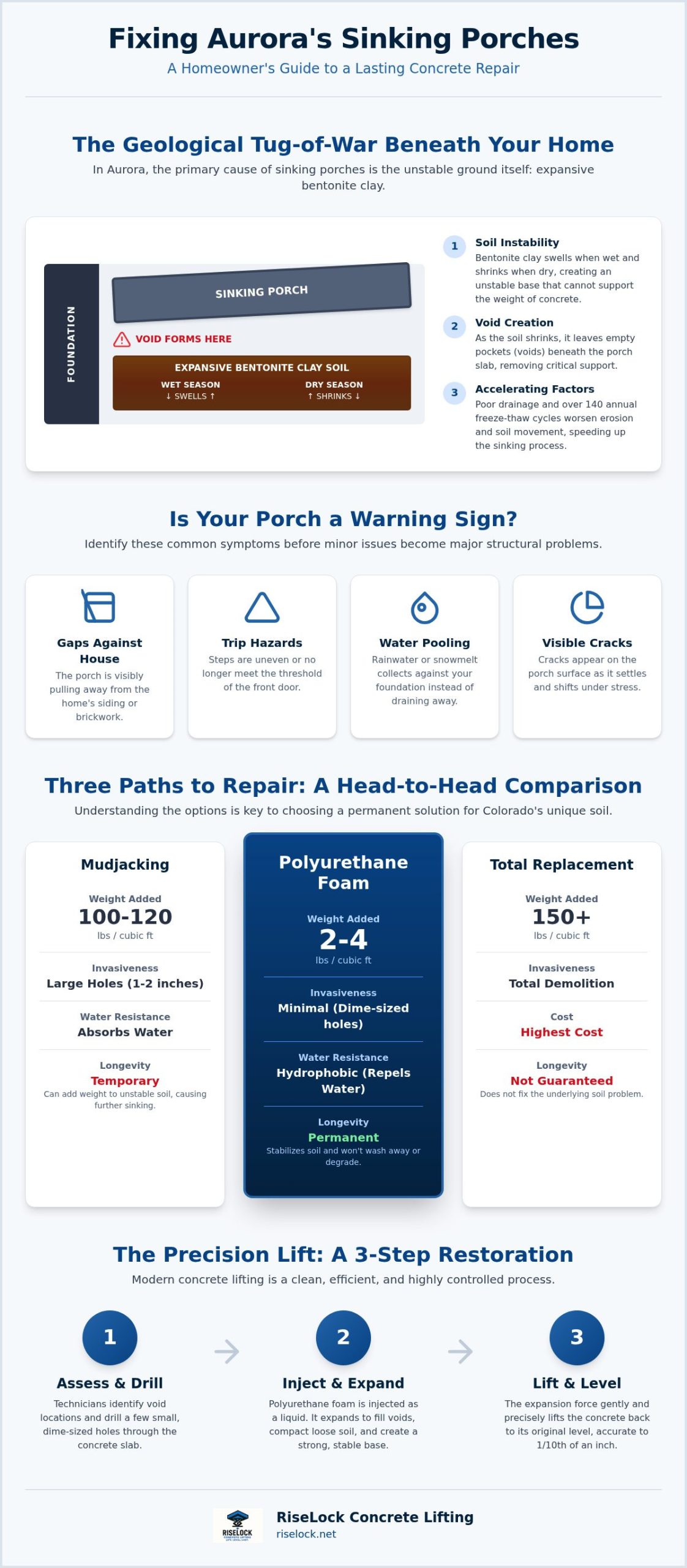
The primary culprit is bentonite clay. This expansive soil is common in southeast Denver and Aurora neighborhoods. It acts like a sponge, swelling to many times its dry volume when saturated and shrinking dramatically during our semi-arid dry spells. This constant movement creates a cycle of instability. Traditional concrete leveling methods like mudjacking often fail here because they add thousands of pounds of heavy slurry to soil that is already struggling to remain stable.
Expansive Clay vs. Concrete Stability
When bentonite clay shrinks, it leaves behind empty pockets or voids. These voids remove the necessary support from beneath the concrete. Without a solid foundation, the porch slab eventually cracks or tilts under its own weight. Subgrade consolidation in new Aurora developments occurs when the loosely packed soil placed during initial construction naturally settles and densifies over time, leaving the porch slab unsupported. This issue is often exacerbated by the 140 plus freeze-thaw days Aurora experiences annually.
Drainage Issues and the ‘Moisture Trap’
Water management is the most critical factor in porch longevity. We frequently find that downspouts pointing directly at a porch corner cause 90% of settlement issues. This concentrated water flow washes away the fine particles of the subgrade, accelerating erosion. Snowmelt cycles also play a role, as moisture seeps under the concrete during the day and freezes at night, exerting hydrostatic pressure that pushes the slab out of alignment.
Identifying the ‘Colorado Lean’ early can save thousands in repair costs. Look for common patterns like the porch pulling away from the brickwork or steps that no longer meet the threshold of the front door. These aren’t just cosmetic issues; they are indicators that the soil has reached its limit. When homeowners ask how to fix a sinking concrete porch Aurora specialists often identify these visual cues as the first diagnostic sign. A sinking porch is often a symptom of a larger drainage problem. This must be addressed to ensure a permanent repair.
The Modern Solution: Polyurethane Concrete Lifting
High-density polyurethane concrete lifting represents the most advanced intervention for structural settlement. This method utilizes a two-part polymer that undergoes a controlled chemical reaction upon injection. When homeowners research how to fix a sinking concrete porch Aurora specialists often point to this technology because it addresses the core issue without adding significant weight. While traditional materials can weigh upwards of 120 pounds per cubic foot, high-density foam weighs only 2 to 4 pounds per cubic foot. This lightweight profile is essential given the fragile nature of Colorado’s expansive soils, which are already prone to shifting under heavy loads.
The “Precision Lift” process allows technicians to monitor the rise of the slab in real-time. By injecting the material in small, calculated increments, we control the movement to within 1/10th of an inch. This level of accuracy ensures that your porch returns to its original height without over-lifting or causing secondary stress fractures in the concrete. It’s a surgical approach to structural repair.
How Polyurethane Stabilizes the Subgrade
The restoration begins beneath the surface. As the liquid foam is injected, it travels through the path of least resistance to fill the voids created by soil shrinkage and erosion. Once these pockets are occupied, the foam expands with enough force to compact the surrounding loose soil. This creates a dense, reinforced base that supports the slab from the bottom up. Because polyurethane is hydrophobic, it remains entirely waterproof. It won’t wash away or degrade during heavy rain or snowmelt, effectively sealing the subgrade against future moisture-related settlement.
What to Expect During the Injection Process
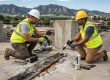
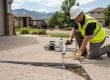
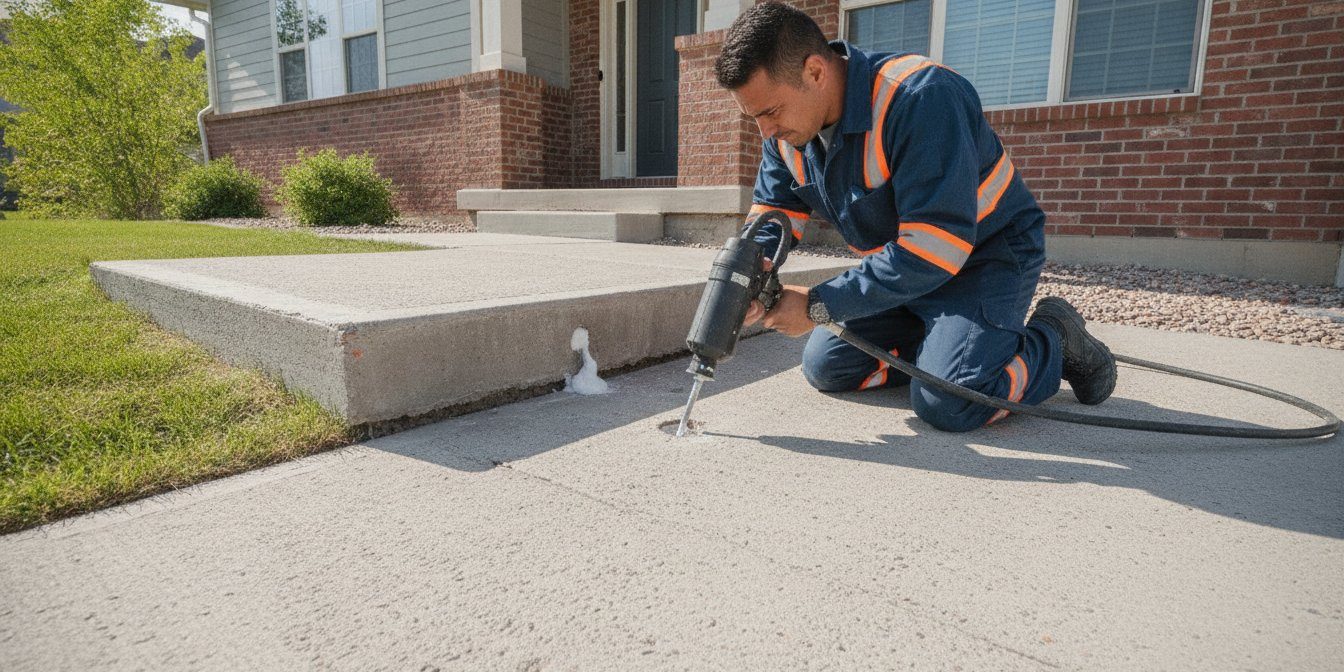
Precision repair shouldn’t be a disruptive event. Our technicians use specialized equipment to drill small, “penny-sized” holes into the concrete, which are far less invasive than the large ports required for older methods. The process is remarkably clean and quiet, avoiding the need for heavy machinery that could damage your lawn or driveway. If you’re ready to secure your home’s entrance, you can schedule a professional assessment to determine the best path forward for your specific property.
Efficiency is a hallmark of this modern approach. The polymer cures almost instantly, reaching 90% of its full load-bearing capacity within minutes. You can walk on your porch just 15 minutes after the repair is complete. This speed, combined with the lack of dust and debris, makes it the preferred choice for Aurora homeowners who value both technical excellence and convenience.
Polyurethane vs. Mudjacking vs. Replacement
Choosing the correct restoration method is the difference between a permanent fix and a recurring expense. When evaluating how to fix a sinking concrete porch Aurora homeowners often compare three distinct paths: polyurethane injection, traditional mudjacking, and total replacement. While mudjacking has been the industry standard for decades, it often fails in the Front Range due to the sheer mass of the materials involved. Mudjacking relies on a heavy slurry of sand, soil, and cement that can weigh over 100 pounds per cubic foot. In Aurora, adding this much weight to already compromised clay soils frequently leads to secondary settlement, where the new material causes the porch to sink even further.
Modern concrete leveling using high-density polyurethane offers a surgical alternative. Because the foam weighs only a fraction of traditional slurry, it stabilizes the porch without overloading the subgrade. This technical advantage ensures longevity, making it a “one and done” solution that typically costs 50% to 70% less than tearing out and re-pouring the concrete.
Why We Don’t Recommend Mudjacking in Aurora
Traditional mudjacking is a messy, invasive process. It requires drilling large, two-inch holes that are difficult to patch discreetly. Beyond the aesthetics, the risk of “slurry blowouts” is high, where the pressurized mud escapes through cracks or siding. At RiseLock, we abandoned traditional mudjacking because we refuse to apply a heavy, temporary patch to a geological problem that requires a lightweight, permanent solution. The heavy material simply isn’t compatible with the “heave and shrink” cycles of local bentonite clay. It provides a temporary lift but fails to address the long-term stability of the underlying soil.
When Replacement is the Only Option
While most sinking porches are candidates for lifting, there are instances where the concrete itself has failed. We look for “spiderweb” cracking, which indicates the slab has lost its internal structural integrity and can no longer be lifted as a single unit. If the concrete surface is scaling or crumbling due to severe freeze-thaw damage, a lift will not restore its appearance or safety. Replacement is a significant undertaking that involves the hidden costs of city permits, potential damage to landscaping, and several days of downtime while the new pour cures. If your porch is structurally sound but simply out of level, lifting remains the most ethical and efficient recommendation.
How to Inspect Your Sinking Porch: A Homeowner’s Checklist
Determining the structural health of your entrance starts with a methodical inspection. While professional intervention is necessary for a permanent repair, you can identify the primary areas of concern using basic tools. This checklist empowers you to understand the scope of the issue before seeking professional guidance on how to fix a sinking concrete porch Aurora homeowners often require. You’ll gain a clearer picture of whether the movement is localized or part of a larger structural challenge.
- Step 1: Check the ‘Gap’. Examine the junction where the porch meets the house siding or brickwork. A widening separation indicates the slab is pulling away, which often results from the subgrade erosion discussed in previous sections.
- Step 2: The Level Test. Place a 4-foot level on the slab, moving from the house toward the steps. Any slope exceeding 1/4 inch per foot suggests significant settlement that requires correction to ensure proper drainage.
- Step 3: Visual Crack Inspection. Differentiate between hairline surface cracks and structural breaks. Structural cracks typically run through the entire thickness of the slab and are wider than 1/8 inch.
- Step 4: Drainage Audit. Locate your downspouts. If they discharge within five feet of the porch, they’re likely the primary cause of soil instability.
- Step 5: Trip Hazard Assessment. Identify vertical offsets between concrete sections. Any ledge greater than 1/4 inch is a safety hazard and an indicator of uneven subgrade support.
Measuring the Severity of the Sink
You can track the rate of settlement by using a tape measure to record the gap width at a specific point. Mark the location with a pencil and check the measurement again after 30 days. Active movement, characterized by a measurable change within a month, requires faster intervention than historic settlement that’s remained stable for years. If the gap at the house wall is accompanied by cracks in the foundation itself, the issue might involve the home’s primary structural support rather than just the porch slab.
Red Flags That Require Immediate Professional Attention
Certain indicators suggest a high-risk situation. Learning how to fix a sinking concrete porch Aurora residents deal with involves identifying these specific red flags. If you notice cracks extending from the porch into the basement foundation wall, the structural integrity of the home is at risk. Homes built with post-tensioned slabs require extreme precision, as drilling into a cable can be catastrophic. Additionally, if you can see large voids or empty pockets under the edge of the concrete, the slab is currently “bridging” and could collapse under heavy weight. If you observe these indicators, schedule a professional inspection to prevent further structural degradation.
RiseLock’s Precision Approach to Aurora Porch Repair
At RiseLock, we view structural restoration as a discipline of precision rather than a task of demolition. Our 3-step restoration process—Assess, Inject, Seal—removes the guesswork from how to fix a sinking concrete porch Aurora homeowners face. We begin with a technical evaluation of the slab’s current state and the underlying soil voids. Following this, we utilize high-density, geotechnical grade foam engineered specifically for the moisture and temperature variables of the Front Range. Finally, we seal the injection points and any existing cracks to prevent future water infiltration, ensuring the repair remains a permanent fixture of your home’s integrity.
What sets our approach apart is an integrated understanding of the “skeleton” of your porch. Many modern Aurora homes are built using post-tensioned slabs, which contain high-strength steel cables under immense tension. Generalists often overlook these critical components, but our specialized background in concrete repair Denver Colorado ensures we identify and protect these cables during the injection process. By merging modern chemistry with structural engineering, we provide a stabilization solution that respects the original design of your property.
A Custom Solution for Every Aurora Neighborhood
Settlement patterns in Aurora aren’t uniform. Neighborhoods like Murphy Creek and Tallyn’s Reach often face distinct challenges due to the deep clay deposits of the Denver Formation. We adapt our injection patterns to account for these local geological variances. Professional reliability also means protecting your curb appeal. Our equipment is minimally invasive, allowing us to complete repairs without bringing heavy machinery across your lawn or damaging your landscaping. We maintain a quiet authority on the job site, focusing on efficiency and cleanliness so that your daily routine remains undisturbed.
Getting Started with a Structural Assessment
Restoring your porch begins with a detailed site visit. During this assessment, a RiseLock specialist will map the settlement, identify drainage failures, and determine the exact volume of geotechnical foam required for a level finish. We provide a clear, no-nonsense estimate that explains the technical “why” behind the stabilization plan. This transparent communication helps you understand how to fix a sinking concrete porch Aurora weather has compromised without the stress of hidden fees or invasive construction. If you’re ready to secure your front entrance and eliminate trip hazards, Schedule your Aurora porch inspection with RiseLock today.
Securing Your Aurora Home’s Structural Future
Aurora’s unique geological landscape demands more than a temporary patch. You’ve seen that the cycle of expansion and contraction in local bentonite clay is the primary driver of structural settlement. Successfully addressing how to fix a sinking concrete porch Aurora homeowners face requires a shift toward modern, lightweight materials that stabilize the subgrade without adding the destructive mass of traditional mudjacking. By choosing non-invasive polyurethane technology, you preserve your property’s curb appeal while ensuring a level, water-resistant foundation for your front entrance.
RiseLock brings specialized expertise in both precision leveling and complex post-tension structural repair to every project. We understand the technical nuances of Colorado’s soil and provide the ethical, high-standard intervention your home deserves. It’s time to move past the stress of trip hazards and foundation gaps toward a permanent state of structural security. Restore your porch’s safety and value—get a free estimate from RiseLock.
Your home is your most significant investment. Taking proactive steps today ensures that your entryway remains a safe and welcoming space for years to come.
Frequently Asked Questions
How much does it cost to fix a sinking porch in Aurora?
The total investment for a professional repair depends on several technical variables. These include the square footage of the porch, the depth of the voids beneath the concrete, and the total volume of high-density polyurethane required to achieve a level finish. While minor stabilization is more affordable than total replacement, complex structural lifts involving heavy loads require more material. A precise site assessment is the only way to determine an accurate project scope.
Is polyurethane concrete lifting permanent?
Polyurethane injection is considered a permanent structural solution because the material is hydrophobic and does not degrade over time. Unlike traditional organic fillers or soil, high-density foam remains unaffected by moisture and won’t wash away during Aurora’s heavy snowmelt or rain cycles. Once the foam expands and cures, it creates a stable, lightweight base that maintains its structural integrity for the life of the concrete slab itself.
Can I fix a sinking concrete porch myself with DIY foam?
Attempting a DIY repair with off-the-shelf spray foam is not a viable solution for structural lifting. Professional how to fix a sinking concrete porch Aurora projects require specialized geotechnical-grade polymers and high-pressure injection systems that aren’t available to the general public. DIY foams lack the compressive strength needed to support thousands of pounds of concrete and will quickly compress, leading to secondary settlement and more expensive professional repairs later.
How long does the porch lifting process take?
Most residential porch stabilization projects are completed within two to four hours. The efficiency of polyurethane technology allows for a rapid return to service that traditional methods cannot match. Because the polymer reaches 90% of its full load-bearing capacity within approximately 15 minutes of injection, you can walk on your porch and move patio furniture back into place almost immediately after our technicians finish the final cleanup.
Will lifting my porch fix the cracks in the concrete?
Lifting the slab often closes the large structural gaps caused by uneven settlement, but it won’t “heal” the actual cracks in the concrete surface. Once the porch is returned to its original height, we recommend a professional concrete repair to seal any remaining hairline cracks. This prevents water from seeping into the subgrade, which is a critical step in maintaining the long-term stability of the newly leveled entrance.
What happens if I don’t fix my sinking porch?
Ignoring a sinking porch leads to progressively worsening structural and safety issues. Beyond the obvious trip hazards at your front door, a sloped porch often directs rainwater and snowmelt toward your home’s foundation rather than away from it. This concentrated moisture can cause basement leaks and foundation cracks. Over time, the unaddressed void beneath the slab can lead to a complete structural failure, necessitating a full, costly replacement.
Does insurance cover sinking concrete porches in Colorado?
Standard homeowners insurance policies in Colorado typically exclude coverage for damage caused by “earth movement” or “settlement.” Since most porch issues in Aurora result from the natural expansion and contraction of bentonite clay, they are generally viewed as maintenance items rather than sudden, accidental losses. It’s always advisable to review your specific policy or consult with your insurance agent to see if you have any relevant endorsements or riders.
Can you lift a porch that has a roof or pillars attached?
We can successfully lift porches that support roofs, pillars, or heavy masonry. High-density polyurethane foam is engineered with immense compressive strength, allowing it to lift both the concrete slab and the structural load it carries simultaneously. Our technicians monitor the lift with extreme precision to ensure the roofline and pillars remain aligned, preventing secondary stress on your home’s exterior while restoring the porch to its correct elevation.