The most expensive concrete repair isn’t the one with the highest initial quote; it’s the one you’re forced to perform twice because of shifting Colorado soils. If you’ve noticed a sinking walkway or a settled garage floor, you’re likely weighing the liability of a trip hazard against the daunting expense of a full replacement. It’s common to feel overwhelmed by fluctuating estimates, especially when trying to pinpoint the polyurethane concrete lifting cost per square foot Denver specialists charge for high-density foam intervention.
We understand that your property’s structural integrity is a personal priority that demands precision rather than guesswork. This guide identifies the specific technical factors that drive regional pricing, including void volume and the specialized requirements of post-tension slabs. You’ll learn how this modern, non-invasive method restores your surfaces in minutes and why it serves as a superior investment compared to traditional, heavier alternatives. We will also examine how to calculate your project’s long-term return on investment to ensure your repair remains stable for a decade or more. By the end of this article, you’ll have the clarity needed to move from the stress of structural damage to the peace of mind offered by a permanent fix.
Key Takeaways
- Understand why calculating the polyurethane concrete lifting cost per square foot Denver homeowners see in initial estimates is often just a baseline, as total material volume determines the final investment.
- Learn how the expansive bentonite clay found in Aurora and Littleton requires specialized stabilization techniques to prevent future slab settlement.
- Discover the importance of precision when working with modern post-tension slabs, where an expert approach prevents damage to internal structural cables.
- Evaluate the significant return on investment offered by polyurethane repairs, which typically cost a fraction of a full tear-out and replacement.
- Gain insights into the rapid recovery of your property, as foam-lifted surfaces are ready for use in as little as 15 minutes.
Understanding the Polyurethane Concrete Lifting Cost per Square Foot Myth
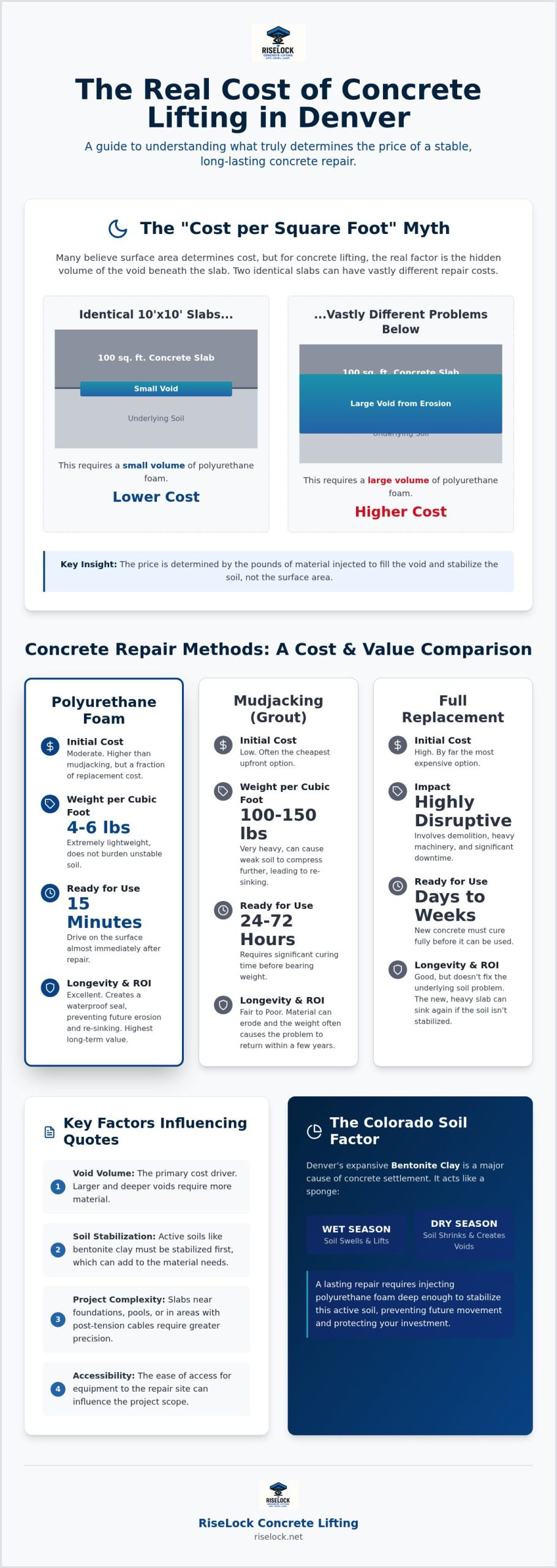
Many homeowners start their search by looking for a flat polyurethane concrete lifting cost per square foot Denver rate. It’s a logical starting point, but it rarely reflects the technical reality of structural restoration. Unlike painting a wall or laying carpet, where surface area dictates material needs, lifting a settled slab is a three-dimensional challenge. The primary variable isn’t how much concrete we see, but how much empty space exists beneath it.
Professionals price these projects by the pound or by the “set” of material injected. High-density polyurethane expands to fill the specific geometry of the void. Because of this, two driveways with identical surface dimensions can require vastly different amounts of foam. One might have a minor hairline gap while the other sits atop a massive cavern caused by erosion. We view every project as a unique structural puzzle where the solution is dictated by cubic volume rather than surface measurements.
Why Denver Homeowners Should Look Beyond Surface Area
Consider a standard 10×10 slab. If that slab has dropped two inches, the volume of foam required is manageable. However, if that same slab has settled six inches, the material demand triples even though the surface area remains 100 square feet. In the Denver metro, our expansive bentonite clay often creates irregular, deep pockets that consume more material than a simple surface measurement suggests. Volume serves as the primary cost driver in 2026 because it accounts for the actual raw material consumed to achieve a stable, permanent lift.
The Premium of Polyurethane vs. Traditional Methods
It’s true that the initial investment for polyurethane is often higher than traditional Concrete leveling methods like mudjacking. This premium reflects the advanced chemistry and precision equipment required for foam injection. However, the long-term ROI is significantly higher. Traditional grout is heavy, often weighing 100 to 150 pounds per cubic foot. This added weight can actually cause the underlying soil to consolidate further, leading to a “re-sink” within a few seasons.
Polyurethane is lightweight, typically weighing between 4 and 6 pounds per cubic foot. It doesn’t burden the soil. Instead, it expands to fill every micro-void, creating a waterproof seal that prevents future erosion. You aren’t just paying for a flat surface; you’re paying for a stabilized foundation that won’t require a second fix in three years. This precision ensures that your property remains safe and level without the disruption of recurring repairs.
Key Factors Influencing Concrete Leveling Quotes in Denver
Every structural repair estimate in the Front Range is shaped by the unique geological and architectural landscape of the region. While a polyurethane concrete lifting cost per square foot Denver estimate provides a baseline, the final quote reflects the technical demands of your specific site. Our experts look beyond the surface to assess the subterranean environment and the structural composition of the slab itself.
Colorado Soil: The Bentonite Factor
The presence of expansive bentonite clay in areas like Aurora, Littleton, and Castle Rock is a primary driver of repair complexity. This soil behaves like a sponge, swelling when wet and shrinking during our dry seasons. This constant movement creates massive underground voids that require significant material volume to fill. High-density foam must first stabilize these “active” soils before any upward lift can occur. Understanding Denver’s soil and foundation problems is essential for any contractor providing an accurate quote. If a technician doesn’t account for soil stabilization, the repair won’t last through the next seasonal cycle.
Complexity and Structural Obstacles
The physical location of the settled concrete also dictates the level of precision required. Lifting a slab adjacent to a swimming pool or a home’s foundation carries higher stakes than a standalone sidewalk section. Accessibility plays a role too; if our equipment must reach an interior garage or a restricted backyard, the logistics can influence the project scope.
Modern Denver homes frequently utilize specialized reinforcement. We provide expert care in post tension installation areas, where high-tension steel cables are embedded within the concrete. A standard lifting approach can risk snapping these critical structural components. Our team uses high-precision injection patterns to ensure the slab rises evenly without compromising the internal tension system. This level of technical mastery prevents catastrophic damage and ensures your home’s structural integrity remains intact. If you’re concerned about how your home’s specific reinforcement might affect repair needs, it’s best to consult with professionals who specialize in complex Denver foundations.
Finally, we distinguish between void filling and lifting. Stabilizing the ground is the first priority; once the base is secure, we apply the final controlled lift. This two-stage process ensures that the polyurethane concrete lifting cost per square foot Denver homeowners pay results in a repair that withstands the test of time and weather.
Polyurethane vs. Mudjacking vs. Replacement: A Cost Comparison
Choosing between restoration and replacement is a pivotal decision for any Denver property owner. While the polyurethane concrete lifting cost per square foot Denver market is competitive, it’s essential to analyze the total life cycle of your concrete. A lower initial price often masks long-term liabilities, whereas a precise technical intervention provides lasting security and structural stability.
The True Cost of Full Concrete Replacement
Full replacement is frequently the most expensive path, often ranging between $15 and $25 per square foot in the Denver metro area once you account for modern labor rates and disposal fees. This figure doesn’t just cover the new pour; it includes the hidden expenses of demolition, municipal permits, and potential damage to your existing landscaping from heavy machinery. Beyond the financial outlay, there’s a significant “downtime” cost. New concrete requires a full 28 days to reach its structural cure, during which your driveway or walkway is completely out of service. Choosing concrete leveling is a more efficient, environmentally conscious choice that preserves existing materials while eliminating the waste associated with a total tear-out.
Why Mudjacking is a Risky Investment in Colorado
Traditional mudjacking is sometimes presented as a budget-friendly alternative, but it carries a fundamental engineering flaw for Colorado’s geography. The slurry used in mudjacking is incredibly heavy, weighing approximately 100 pounds per cubic foot. In contrast, our high-density polyurethane foam weighs only about 3 to 6 pounds per cubic foot. In Denver’s soft or expansive subsoils, adding massive weight on top of already unstable ground often accelerates further sinking. This creates a “patch and pray” cycle where homeowners pay for repeated repairs as the heavy grout continues to settle. The freeze-thaw cycles common in the Front Range also cause traditional mudjacking material to shrink and crack, allowing water to infiltrate the void and wash away the support. High-density foam remains stable and waterproof, providing a permanent seal that traditional methods simply can’t match.
The real value of polyurethane lies in its immediate return to service. While replacement takes weeks and mudjacking takes days to dry, foam-lifted surfaces are ready for vehicle traffic in as little as 15 to 30 minutes. When you calculate the ROI, you aren’t just looking at the fix; you’re looking at decades of stability and the immediate restoration of your property’s safety. This “once-and-done” approach ensures that your initial investment is protected from the volatile soil conditions that characterize the Denver landscape.
Average Price Ranges for Common Denver Concrete Repairs
While we established that volume is the primary technical driver of price, understanding the industry’s average ranges for common projects helps you budget effectively. In the Denver metro area, the polyurethane concrete lifting cost per square foot Denver specialists typically charge reflects the complexity of the local geography. Most residential stabilization projects in 2026 fall between $1,000 and $3,000, though the specific requirements of your property dictate the final investment.
Residential Driveway and Patio Estimates
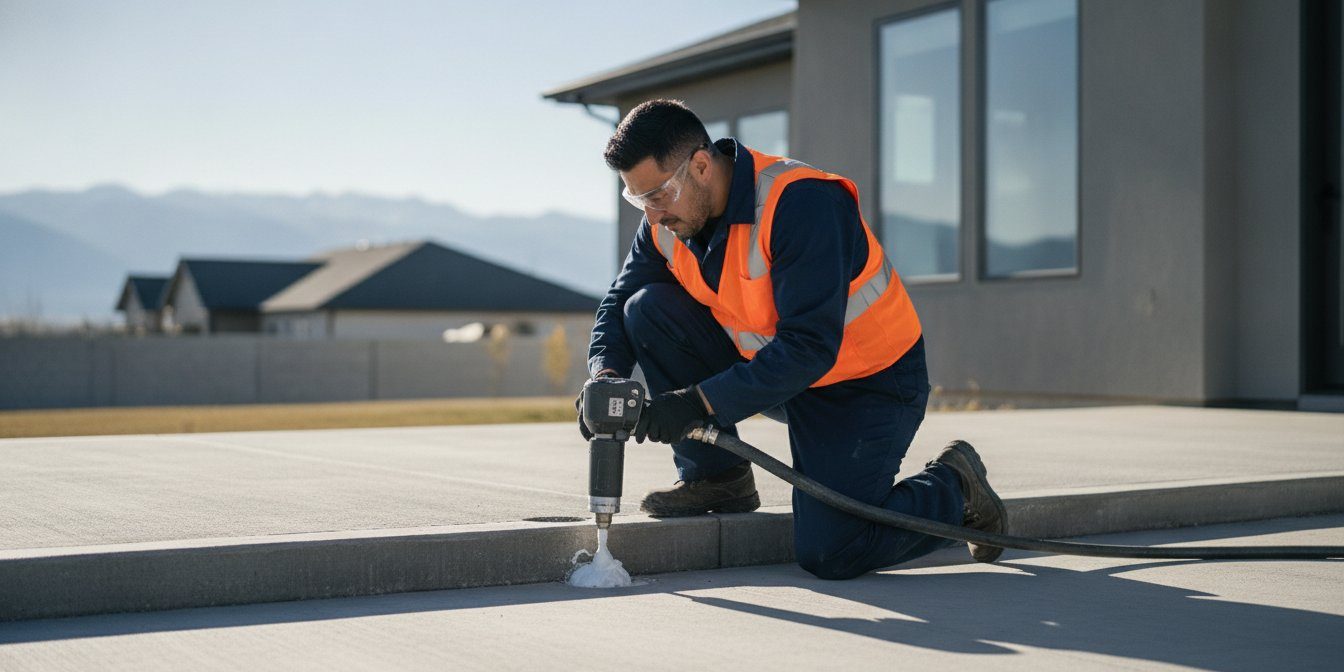
Homeowners in communities like Centennial or Parker often face settlement issues on standard two-car driveways or large backyard patios. For a typical 2 to 4 inch lift on a residential patio, industry data suggests a range that accounts for both the material volume and the precision required for the job. If your property features stamped or decorative concrete, the injection process requires even greater technical mastery. We use penny-sized holes placed strategically within the pattern to ensure the repair is nearly invisible. Addressing a sunken garage floor is another high-priority repair; stabilizing the slab before structural cracks form prevents a much more expensive foundation intervention later. For these standard residential projects, the speed of the fix often provides the highest value, as surfaces are ready for use in minutes.
Sidewalks and Trip Hazard Mitigation
Sidewalk safety is a matter of both property value and legal compliance. Many Denver area municipalities have strict ordinances regarding sidewalk maintenance, placing the liability for trip hazards directly on the property owner. Leveling a single sidewalk slab or step generally requires an investment between $500 and $800. It’s important to note that most professional outfits in Denver maintain a minimum mobilization fee, which can range from $300 to $2,000 depending on the equipment required. While this might seem high for a small area, the return on investment is significant when compared to the cost of a single trip-and-fall liability claim or the price of total section replacement.
Pool deck restoration and commercial warehouse stabilization follow similar logic but prioritize different technical benefits. For pool decks, the waterproof nature of high-density foam is vital, as it won’t wash away with splash-out or seasonal rain. In commercial settings, such as storefronts or warehouses, the ability to stabilize heavy-load slabs without halting business operations is the primary cost-saving factor. If you are ready to secure your property with a precise, long-term solution, request a professional evaluation from our Denver team today.
Why Precision Matters: The RiseLock Approach to Value
Technical mastery is the bridge between a temporary patch and a permanent structural solution. At RiseLock, we view your property’s concrete not just as a surface, but as a complex system of reinforcement and soil interaction. While a generic polyurethane concrete lifting cost per square foot Denver estimate might provide a baseline for your budget, true value is found in the precision of the injection and the expertise of the technician performing the work. We prioritize structural integrity over simple cosmetic leveling.
Safeguarding Your Post-Tension Slab
Many modern homes in the Denver metro area, particularly in developing suburbs, utilize post-tension slabs. These foundations rely on high-strength steel cables tensioned to provide essential structural support. This creates a unique challenge for polyurethane concrete lifting projects. An inexperienced contractor might drill into the slab without understanding the internal cable layout or the tensioning system. Snapping a post-tension tendon can lead to a repair bill exceeding $10,000, turning a standard $2,000 lift into a financial disaster. Our specialized background in post-tension installation allows us to navigate these slabs with technical mastery, ensuring the lift is achieved without compromising the structural skeleton of your home.
Long-Term Security and Warranty
A professional repair should leave your property better than we found it. Our approach emphasizes a “clean” job site with minimal footprint. We don’t use heavy cement trucks that can crack your curb or tear up your lawn. Instead, we utilize high-precision equipment that ensures a non-invasive process from start to finish. Because the high-density foam we use is hydrophobic and does not degrade over time, these repairs are designed to last 10 years or more. This effectively ends the cycle of settlement that plagues properties relying on heavier, traditional materials.
When you schedule a site assessment with us, you aren’t just getting a price; you’re getting a structural evaluation. We analyze the specific void volume, regional soil stability, and reinforcement type to build a quote that reflects the technical reality of your project. This methodical approach ensures that your investment provides long-term security. We lead you away from the stress of structural damage toward the peace of mind offered by specialized, high-precision intervention. Your property is a personal priority, and our commitment to high standards ensures it remains stable for the long term.
Secure Your Property with Precision Stabilization
Restoring your concrete is an investment in the long-term safety and value of your property. We’ve explored why the polyurethane concrete lifting cost per square foot Denver specialists provide is often secondary to the technical volume of the void and the stability of the underlying soil. By choosing high-density foam, you avoid the risks of heavy grout and the extended downtime of full replacement. It’s a precise solution tailored to the unique geological challenges of the Front Range.
As Denver’s experts in post-tension and structural foam, we’ve been serving Aurora, Centennial, and the Front Range since 2026. Our high-density foam is specifically engineered for Colorado expansive soils, ensuring your repair remains stable despite seasonal shifts. Don’t let a sinking slab become a liability or a structural threat. You deserve a repair that prioritizes technical mastery and ethical service. Get a Precision Concrete Lifting Quote from RiseLock and restore your peace of mind today. Your property’s integrity is our priority.
Frequently Asked Questions
Is polyurethane concrete lifting more expensive than mudjacking in Denver?
The initial investment for polyurethane is typically higher than mudjacking, but it offers superior long term value. Mudjacking uses a heavy slurry that adds up to 100 pounds per cubic foot to already unstable soil. High density foam is lightweight and waterproof, weighing only 3 to 6 pounds per cubic foot. This precision prevents the re-sinking common with traditional methods, making it a more cost effective solution for Colorado property owners.
How long does polyurethane foam lifting last in Colorado soils?
A professional foam lift is engineered to provide structural stability for 10 years or more. Unlike traditional grout, high density polyurethane is hydrophobic and chemically stable, meaning it won’t wash away or degrade when exposed to moisture. It maintains its structural integrity despite Colorado’s intense freeze-thaw cycles and the constant movement of expansive bentonite clay. This durability ensures your property remains safe and level for the long term.
Will my homeowners insurance cover the cost of concrete lifting?
Standard homeowners insurance policies rarely cover concrete lifting because settlement is typically classified as a maintenance issue or a result of natural soil movement. Coverage is generally only available if the damage resulted from a covered peril, such as a sudden plumbing failure. It’s best to review your specific policy details or consult with your insurance agent to determine if structural stabilization qualifies for a claim under your current coverage terms.
Can polyurethane foam lift a post-tension slab safely?
Yes, but this process requires technical mastery and specialized knowledge of structural reinforcement. Post tension slabs contain high strength steel cables that provide essential integrity to the foundation. An expert must utilize precision injection patterns to achieve a level surface without interfering with these internal tendons. Our specialized background in post tension installation ensures that the lift is performed safely, protecting your home’s structural skeleton while restoring the slab’s height.
How much does it cost to fix a sunken driveway in Aurora or Centennial?
The cost of driveway restoration depends on the total volume of the void and the degree of settlement. While you might research a flat polyurethane concrete lifting cost per square foot Denver rate, most projects are quoted based on material consumption and technical complexity. In Aurora and Centennial, active clay soils often require additional stabilization material to ensure a permanent fix. Every driveway is a unique structural puzzle that requires a site specific evaluation.
What is the minimum charge for a concrete lifting project in Denver?
Most professional contractors in the Denver metro area maintain a minimum mobilization fee to cover the logistics of transporting specialized equipment and high density materials. This fee ensures that even small repairs, such as a single sidewalk trip hazard, receive the same level of technical precision as large scale commercial projects. This minimum varies based on the site’s accessibility and the specific structural requirements needed to guarantee a lasting result.
How soon can I drive on my concrete after polyurethane lifting?
You can typically return your driveway to full service within 15 to 30 minutes of the final injection. The high density foam reaches 90% of its structural strength almost immediately after expansion. This rapid recovery is a significant advantage over full concrete replacement, which requires a 28 day cure time. It also outperforms traditional methods that may require several days of drying before the surface can safely support the weight of a vehicle.
Does polyurethane concrete lifting work on pool decks?
Polyurethane is an ideal solution for pool deck restoration because it is non invasive and waterproof. We don’t need to bring heavy machinery near the pool’s edge, which prevents accidental damage to the coping or liner. Since the foam is hydrophobic, it creates a permanent seal that won’t wash away from splash out or seasonal rain. This effectively stops the cycle of erosion and settlement that often affects concrete surfaces in the Front Range.