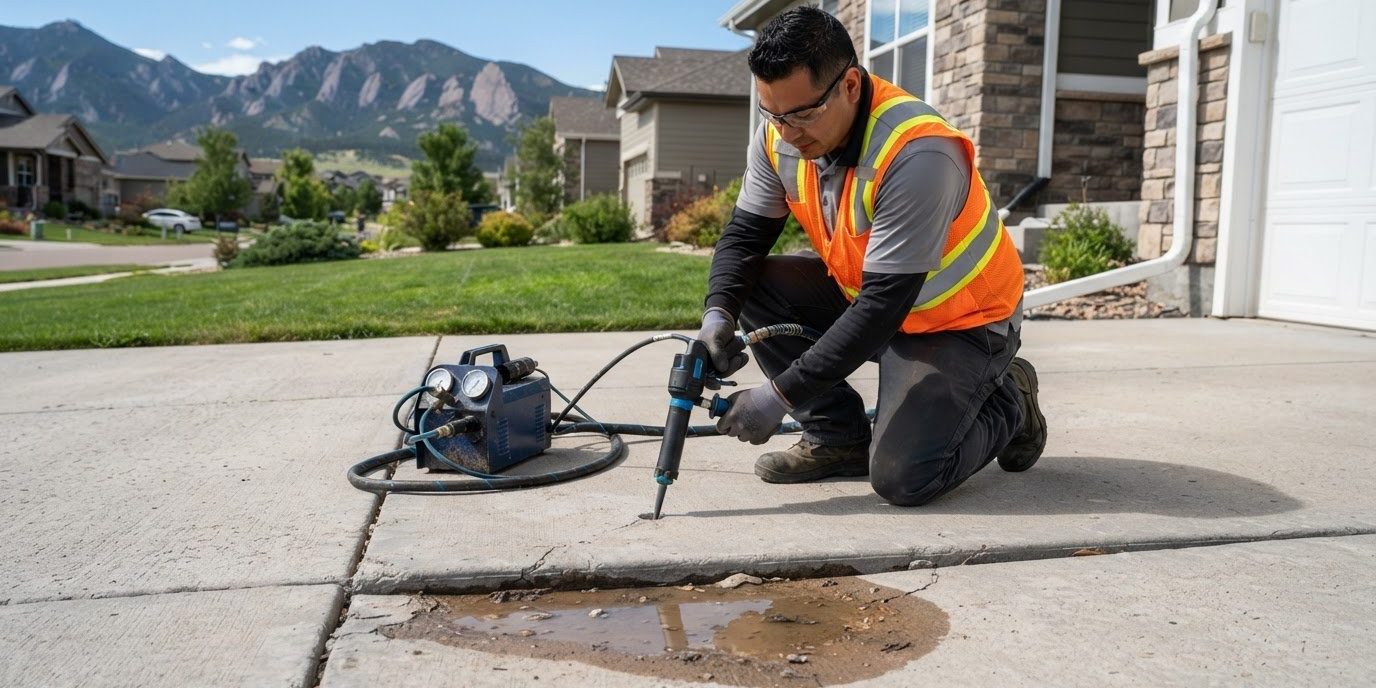
Managing water is the first step in learning how to prevent concrete from sinking further in Colorado Springs. Grade the soil to drain away from slabs, direct downspouts at least five feet from the concrete, and repair leaking pipes or sprinklers that can erode supporting soil. These steps can help limit further damage, but they won’t lift concrete that has already settled.
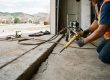
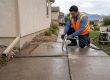
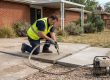
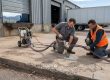
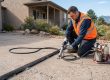
Worried that polyurethane foam injection will make a mess? Small holes are drilled in the slab so expanding foam can be injected underneath, then the holes are patched after lifting. It’s a targeted repair, not a coating applied across the garage floor.
Drainage, soil movement, and existing damage all affect whether a slab may continue to sink. This guide explains what to look for, what influences repair costs and timing, and how concrete leveling compares with replacing a slab when its support needs attention.
Key Takeaways
- Watch for uneven slabs, standing water, sloping floors, or sticking doors; these signs can point to changing support beneath the concrete.
- Colorado’s expansive soils can shift as moisture changes, so consistent drainage and attention to nearby roots can help reduce uneven support.
- Sealing cracks and joints can limit water entry, but tracking whether gaps or slopes continue to change helps reveal when surface maintenance is no longer enough.
- Garage repair timing and cost depend on the slab’s condition, the extent of settlement, and the repair method; leveling may avoid the disruption of replacing the entire slab.
Trip hazards, standing water, and foundation concerns
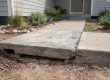
Uneven driveway or garage slabs can create trip hazards, and standing water may point to poor drainage. Water that reaches the foundation or flows beneath concrete can erode supporting soil and allow a slab to settle.
Water Intrusion Beneath Concrete
Subsurface water intrusion occurs when water passes through cracks, joints, or slab edges and collects beneath concrete. Pressure washing can force water into existing cracks and joints, especially at 3,000 to 4,000 PSI. On older or compromised concrete, keep pressure at or below 2,000 PSI and the nozzle at least 12 inches from the surface. These limits reduce water entry where damaged concrete already offers a path underneath.
Wait 48 to 72 hours after heavy rain before pressure washing. Then watch for water collecting beside a driveway or garage slab. Check broken sprinkler heads and leaking pipes, since both can send water below concrete. Direct downspouts at least five feet away from slabs, and keep grading directed away from the foundation. These drainage steps reduce the water reaching vulnerable edges and joints.
Erosion and Freeze-Thaw Effects
Water erosion occurs when runoff carries soil from beneath or alongside a slab, leaving voids and reducing support. In Colorado Springs, the airport station averages 52.2 freeze-thaw cycles a year, based on 1988 to 2017 data. Water beneath concrete can freeze and expand during cold weather, then shrink as temperatures rise. Repeated movement can contribute to gaps and settlement.
Watch for standing water, widening gaps at slab edges, or a driveway that feels uneven underfoot. If a section shifts when you walk on it, the support beneath it may need attention, not just a surface repair. Runoff flowing along open slab edges can also carry soil away, so keep the area draining properly and prevent water from pooling there.
These problems can compound: poor drainage sends water beneath a slab, erosion removes support, and seasonal weather changes can further disturb the soil. Monitor trip hazards and recurring puddles around sidewalks, patios, and garage entrances. Correcting the water source helps limit further erosion, while persistent movement calls for assessing the slab and its support. Pressure washing or surface cleaning won’t fix a slab that continues to settle.
Colorado expansive clay soil and seasonal movement
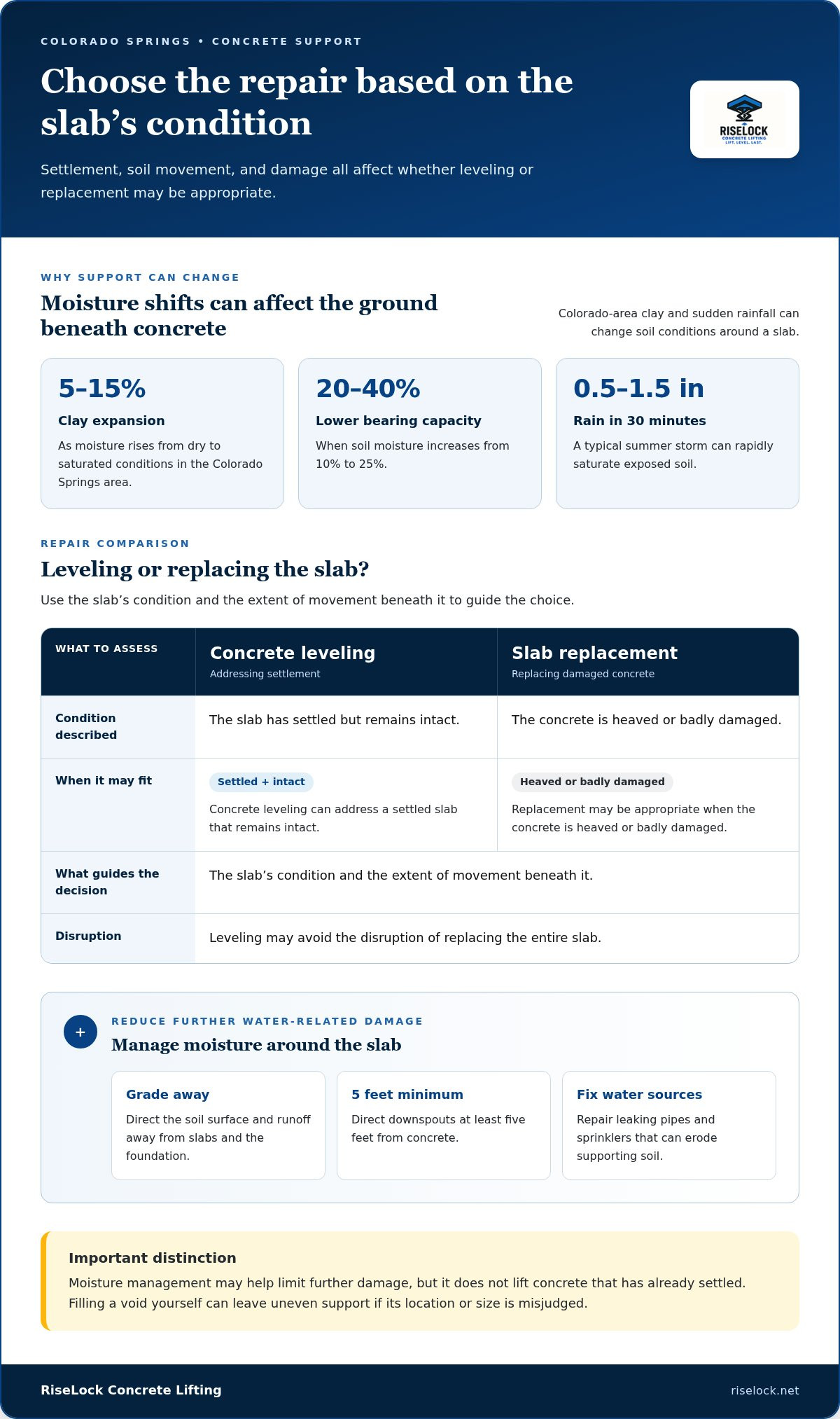
For homeowners asking how to prevent concrete from sinking further in Colorado Springs, managing moisture and monitoring slab movement are practical first steps. Concrete leveling can address a settled slab that remains intact, while replacement may suit heaved or badly damaged concrete. Filling a void yourself can leave uneven support if you misjudge its location or size.
Seasonal Soil Movement
Seasonal soil movement is the expansion and contraction of ground as its moisture changes. In the Colorado Springs area, clay may expand by 5 to 15 percent as moisture rises from dry to saturated conditions. When soil moisture increases from 10 percent to 25 percent, its bearing capacity can drop by 20 to 40 percent. That can leave a concrete slab unevenly supported.
A typical summer storm can bring 0.5 to 1.5 inches of rain in 30 minutes, rapidly saturating exposed soil. As saturated ground dries, gaps may form beneath concrete; seasonal freezing can add movement. A practical plan for how to prevent concrete from sinking further in Colorado Springs includes limiting sudden moisture changes around slabs.
Roots and Soil Voids
Tree roots and large shrubs can disturb the soil supporting concrete by displacing it, drying it, or changing how moisture reaches it. This can leave voids beneath a slab even when the surface looks intact. Watch for gaps near established trees, a patio edge that drops, or sidewalk sections that no longer meet evenly.
You can pack soil along open slab sides to help limit water flowing underneath. Keep the fill level, and avoid directing runoff toward the exposed edge. This maintenance may protect the supporting ground, but it won’t fill an existing void or correct settlement. Managing water and soil conditions is part of how to prevent concrete from sinking further in Colorado Springs.
Preventing Further Driveway, Patio, and Sidewalk Sinking
To reduce further sinking, manage moisture around driveways, patios, and sidewalks, keep runoff from collecting at slab edges, and maintain soil beside open sections. Observe whether movement continues after those conditions improve. Concrete leveling can suit a settled slab that remains intact; replacement may be appropriate when concrete is badly damaged. The slab’s condition and the extent of movement beneath it guide the choice.
DIY lifting or filling can leave support uneven if the void’s location and extent are misjudged, potentially worsening movement or creating trip hazards. For persistent settlement, a professional assessment of slab movement can help clarify the repair approach.
Cracks, gaps, sloping floors, and sticking doors
Cracks can signal changes in the concrete or movement in the ground beneath it. Pay attention to a crack that widens, a gap opening beside a step, or a floor that slopes toward a wall. Sticking doors may occur alongside movement around a building, especially when several signs appear together. Note where each change occurs and whether it progresses after snowmelt or seasonal weather shifts. This record can help distinguish a stable surface crack from ongoing settlement.
For narrow cracks and openings, silicone or polyurethane caulk can help block water entry. Apply it to a clean, dry surface and follow the product directions. Seal joints where water could pass through, including gaps between a slab and an adjoining step. Caulk can limit moisture reaching the ground below, but it won’t restore missing support or lift a sunken slab. A crack that keeps reopening needs more than repeated surface sealing.
Settlement can put uneven stress on concrete, causing cracks as sections lose consistent support. A sloping garage floor, a patio pulling away from the house, or a sidewalk with a raised edge are useful signs to track. Compare the same locations over time and note whether doors begin sticking alongside visible concrete changes. These signs don’t identify the cause by themselves, but together they can point to movement beyond a surface defect.
Seal cracks and expansion joints before water enters and reaches the subgrade. After sealing, wait 2 to 3 weeks before pressure washing. Check the repaired area after snowmelt and heavy weather for fresh gaps or renewed cracking. If concrete continues to slope or adjoining sections shift, sealing alone won’t address the underlying movement. A qualified assessment can help determine whether the issue is limited to the joint or involves settlement beneath the slab.
Garage floor leveling costs and repair timing
A sunken garage floor may be suitable for repair when the slab remains intact but has lost support; replacement may be better for concrete that is badly damaged or heaved. Check whether cracks are spreading, sections are separating, or the surface is uneven where vehicles travel. These signs help distinguish a slab that can be lifted from concrete that no longer provides a sound surface. Soil and moisture conditions matter too: replacing concrete without addressing poor support can leave the new slab vulnerable to settlement.
Polyurethane leveling fills voids beneath a slab and lifts the surface toward its former position. Most residential garage floor leveling projects take a few hours, and repaired concrete can often be walked or driven on within hours. Vehicles can typically return the same day. By contrast, replacement requires removing the existing concrete and placing new material, so the repair method affects both disruption and timing.
Concrete leveling costs depend on the slab’s size, the extent of settlement, access, and the condition of the supporting ground. These details determine the work involved, so one figure cannot describe every garage. Compare the scope of lifting with the removal and replacement required for a damaged slab, rather than judging by the visible surface alone.
Before choosing repair, note where the floor dips, whether cracks cross multiple sections, and whether water or moisture collects nearby. A compacted, stable base supports concrete; ongoing soil movement can undermine either a lifted or replaced surface. Addressing drainage and subgrade conditions is part of making the repair decision, especially before winter weather brings freeze-thaw cycles. For a garage slab that has settled, request an assessment of concrete leveling options and discuss the condition, support, and repair scope.
RiseLock Concrete Lifting: Polyurethane Concrete Lifting
RiseLock Concrete Lifting provides polyurethane concrete lifting for settled slabs that have lost support. The method injects expanding foam beneath the concrete to fill voids and raise the slab toward its original position. It may suit a driveway, patio, sidewalk, or garage floor that has settled but remains intact. Heaved concrete is different: adding foam can worsen the problem, so removal and replacement is generally the better approach.
For uneven concrete, RiseLock also provides Concrete Leveling and Concrete Repair. The appropriate approach depends on the slab’s condition and whether settlement, damage, or heaving is present. Contact RiseLock Concrete Lifting to discuss a concrete concern.
Choose a Clear Next Step for Your Concrete
Choose a repair based on what the concrete needs to do reliably: provide safe footing, support vehicle access, or connect adjoining surfaces. For homeowners deciding how to prevent concrete from sinking further in Colorado Springs, consider not only how the slab looks today but also whether its movement affects how the space works.
Keep the repair goal specific. A garage floor, walkway, and structural slab serve different purposes, so the concrete’s condition and function should guide the plan. Clear observations help turn uncertainty into a focused discussion about the right repair approach.
RiseLock Concrete Lifting can help assess concrete concerns and discuss an appropriate next step. Contact RiseLock Concrete Lifting to start that conversation. A measured decision can help you move forward with greater confidence and a clearer plan for your property.
Frequently Asked Questions
How does concrete slab jacking or polyurethane foam lifting work?
Polyurethane foam lifting raises settled concrete by injecting expanding foam beneath the slab. The foam fills gaps, lifts the concrete, and hardens into a stable, waterproof base without removing the existing slab. This method may suit a settled driveway, sidewalk, patio, or garage floor when the concrete remains usable. The distinction is important: lifting restores the slab’s position, but it doesn’t replace severely damaged or heaved concrete.
Can homeowners prevent concrete from sinking with drainage and soil improvements?
Yes. Homeowners can reduce water-related soil movement by directing runoff away from concrete, correcting irrigation that keeps soil saturated, and maintaining the grade around the slab. In Colorado Springs, these steps can help limit moisture changes in expansive soils. They may reduce conditions that contribute to settlement, but they can’t raise concrete that has already sunk. If the surface remains uneven after drainage improvements, RiseLock’s polyurethane concrete leveling can restore an intact settled slab.