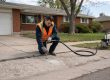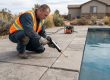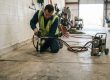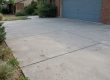
A pool deck can become uneven when the soil beneath it shifts, even if the concrete itself has not worn down. In Colorado Springs, polyurethane foam injection for pool decks fills voids beneath settled slabs and lifts them toward a more even position, helping reduce trip hazards without removing large sections of concrete.
A visible crack or raised edge is only part of the picture. Water can wash away supporting soil, poorly compacted ground can settle unevenly, and freeze-thaw cycles can shift slabs. Tree roots and excess weight can also affect the deck.
This guide explains how these conditions lead to uneven pool decks and how foam injection supports and lifts settled concrete. You’ll learn what the repair can address, how it can reduce abrupt changes in slab height, and when an underlying issue may need attention.
Key Takeaways
- Learn how water, soil movement, roots, and freeze-thaw cycles can contribute to an uneven pool deck.
- Understand when leveling may address settled concrete and when the condition of the slab may call for replacement.
- See how injected polyurethane foam expands beneath a slab to fill voids and lift settled sections.
- Recognize why uneven slab edges can create trip hazards and how leveling can help correct height differences.
What Is Pool Deck and Patio Leveling?
Pool deck leveling supports settled concrete from beneath and raises low sections. The repair focuses on the slab and its soil base, whether the deck surrounds a concrete, gunite, shotcrete, or fiberglass pool.
Settlement Signs and Causes
Look for slab edges at different heights, widening gaps, cracks, or water collecting where the deck should drain. These changes can indicate movement beneath the concrete. In Colorado Springs, water can wash away supporting soil, poorly compacted soil can settle unevenly, and freeze-thaw cycles can shift slabs. Tree roots may push sections upward, while excess weight can contribute to sinking or cracking. These signs help show where the deck has moved.
Repair or Replacement Decisions
Leveling may suit a slab that remains structurally sound but has settled, cracked, or lost support beneath part of its surface. Replacement is a different consideration when the concrete itself is too damaged to serve as a stable slab. The decision depends on the slab’s condition, movement pattern, and the underlying cause. Before hiring a contractor, ask what repair approach fits the observed damage, how the cause will be assessed, and whether the proposed work addresses support beneath the concrete.
Cracks, Drainage, and Sub-slab Voids
Foam injection fills voids beneath settled slabs and lifts sections that have lost support. Restoring support may help with cracks associated with settlement, but filling beneath the concrete does not repair every crack. Drainage problems also need attention at their source: raising a slab may improve its position, but continued water flow that washes away soil can lead to further movement. The pool type matters less than the deck’s condition. This approach focuses on supporting concrete deck slabs, rather than addressing every part of a pool structure—where comprehensive design and engineering teams like CPS Outdoors handle broader aquatic construction and complete renovations.
Drilling, Filling, and Slab Lifting
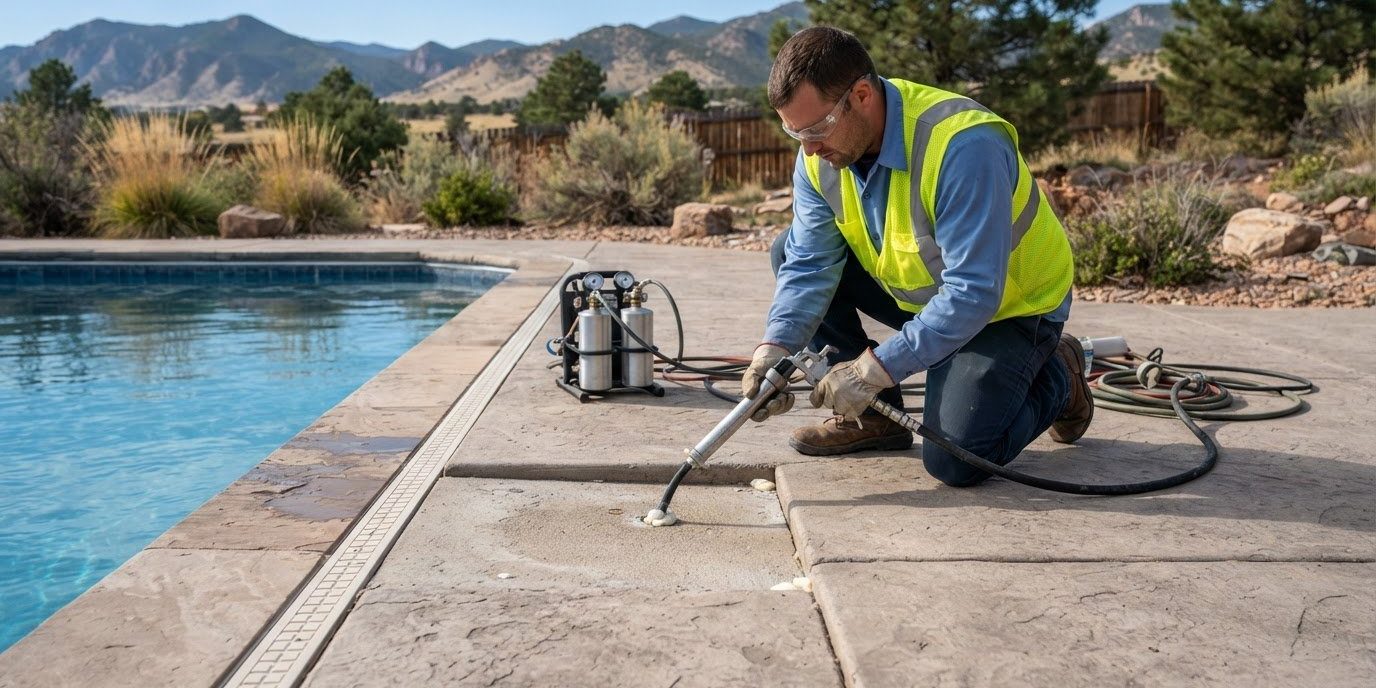
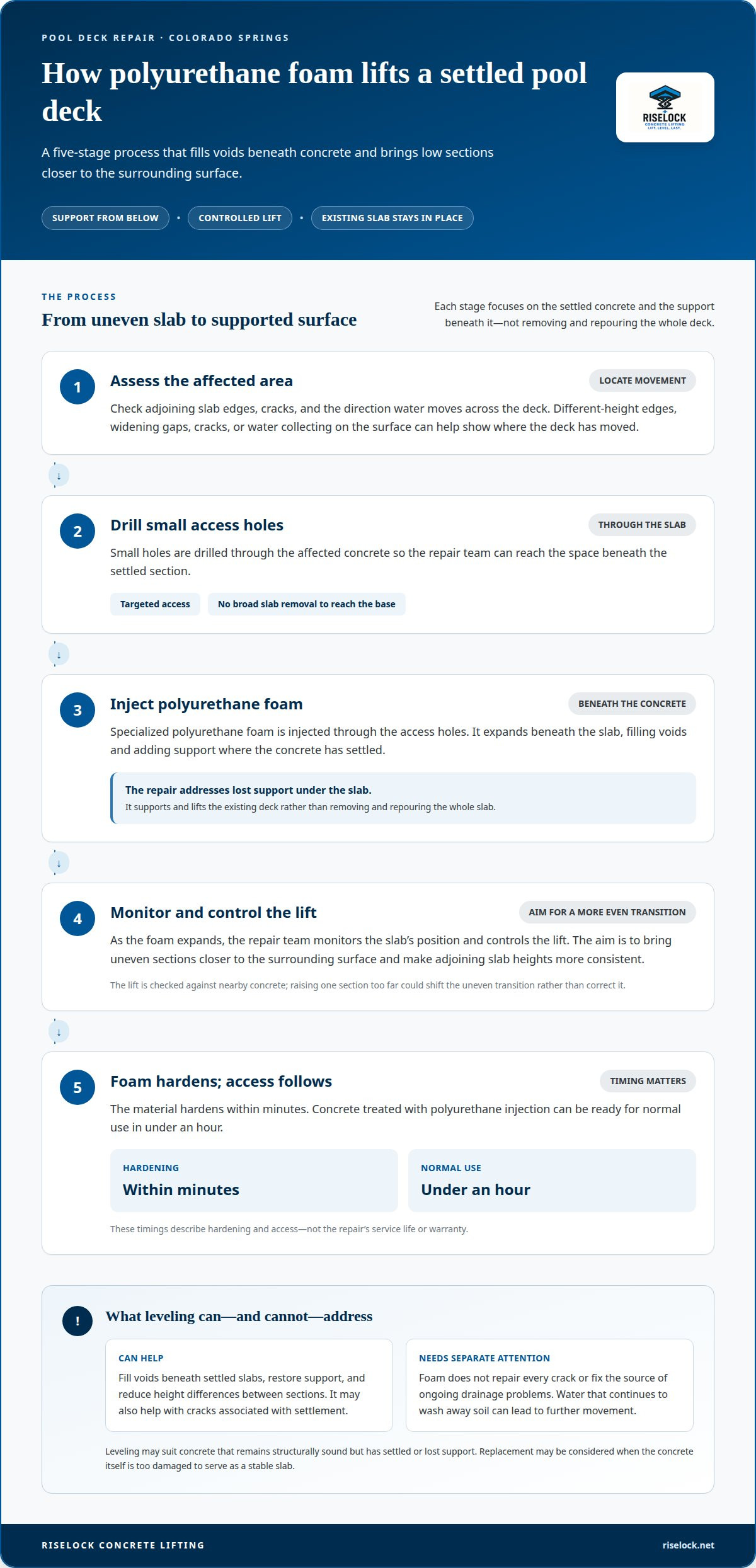
The process starts by drilling small holes through the affected concrete. Specialized polyurethane foam is injected beneath the slab, where it expands to fill voids and lift the concrete. The repair team monitors the slab as it rises, aiming to bring uneven sections closer to the surrounding surface. This approach supports and lifts the existing deck rather than removing and repouring the whole slab, limiting disturbance to the surface.
How polyurethane foam injection levels settled pool decks and patios
Foam injection repairs settled concrete; it does not establish a blanket permit exemption or replace HOA requirements. For polyurethane foam injection for pool decks in Colorado Springs, the work focuses on lifting and supporting affected concrete, not general paving.
The Lifting and Leveling Process
The process begins with small holes drilled through the settled pool deck. Specialized polyurethane foam is injected beneath the concrete, where it expands to fill voids and lift low sections. The repair team monitors the slab’s position during injection to control the lift. This method supports the concrete from below without removing large sections to reach the base.
As the foam expands, its movement can be directed toward areas needing support. The material hardens within minutes, and concrete treated with polyurethane injection can be ready for normal use in under an hour. That describes hardening and access, not how long a particular repair will last or what warranty applies. Service life and warranty terms are separate from curing time.
Cost Savings from Foam Leveling
Potential savings come from repairing a settled slab rather than replacing concrete that remains suitable for lifting. Injection uses small drilled openings, which can reduce the need to remove and dispose of broad sections of the deck. It also fills cavities beneath the slab, addressing lost support while preserving more of the existing surface. The practical comparison is between targeted lifting and the removal, replacement, and related work a damaged deck may require.
Foam is lightweight and high-density, so the lifting material adds less weight beneath the pool deck than a heavier fill. Its expansion helps fill voids and create support where the slab has settled. For homeowners considering polyurethane foam injection for pool decks Colorado Springs, the method’s potential savings depend on slab condition, access, and the affected area. These factors shape the repair scope; they don’t establish a fixed price or mean lifting costs less in every case.
The polyurethane foam used for pool deck repair is described as non-toxic and as not emitting harmful chemicals into soil or water. That addresses soil and water exposure, but does not make every foam product interchangeable. Controlled injection also matters near landscaping and structures because the material expands beneath the slab. The available repair facts do not establish a universal Colorado Springs permit rule or HOA approval requirement; foam injection alone should not be treated as an exemption.
Correcting trip hazards and uneven slabs
A raised edge between pool deck slabs can catch a toe, while a low section can collect water or interrupt the walking surface. Uneven concrete creates tripping hazards and can increase the risk of accidents and injuries. The concern is especially clear where a walking route crosses a slab joint or passes beside pool steps.
Assessment starts by identifying height changes and affected sections. A technician checks adjoining slab edges, cracks, and the direction water moves across the deck. For example, a settled panel beside a stable one creates a sharper transition than a broad, gradual slope. These details help determine whether lifting can address the unevenness or whether the damaged concrete needs another repair.
With foam lifting, small drilled access points allow material to reach beneath the settled area. As polyurethane expands, it fills voids and raises the slab in a controlled manner. The lift is monitored against nearby concrete: raising one section too far could shift the uneven transition rather than correct it. The aim is a more consistent surface between adjoining slabs.
Leveling can improve the walking surface, but it does not erase every crack or correct every drainage problem. If water continues to wash away supporting soil, movement may recur. A severely deteriorated slab may also be unsuitable for lifting. Both the concrete’s condition and the support beneath it matter when choosing a repair.
After lifting, check how the repaired section meets the surrounding deck. A smooth transition at a joint can reduce the abrupt edge that creates a trip point. Consider the repaired area alongside nearby steps, gates, and the pool edge, where changes in level affect how people move through the space.
Foam-treated concrete can be ready for normal use in under an hour. That timing concerns access after injection, not a guarantee that every hazard has been eliminated. The slab’s final position, remaining surface damage, and ongoing water movement determine what the repair has addressed. Distinguishing those issues helps set realistic expectations for safer poolside access.
Common causes of uneven pool decks
An uneven pool deck often reflects movement in the ground beneath it. The slab’s condition is visible, but water, soil conditions, vegetation, and loading can all affect its support. Identifying the cause matters because lifting corrects the slab’s position, while continued soil movement can affect its stability again.
Water is a frequent source of lost support. Runoff or a leak can wash soil away from beneath one section, leaving a void that lets the slab settle. A low area beside the deck may collect water, while runoff along a joint may carry soil away below the surface. The resulting movement can show up as a tilted panel or widening crack.
Poorly compacted soil can also settle unevenly beneath a pool deck. If one part of the base compresses more than another, adjacent sections lose support at different rates. The concrete may then slope toward the settling area, even if its surface initially appeared sound. A repair plan should account for this variation rather than treating every crack as the same problem.
Freeze-thaw cycles can also cause movement. Water in the supporting ground can freeze and expand, shifting a slab; thawing can leave some soil less supportive. Repeated seasonal movement may contribute to uneven joints or cracking. Tree roots can push sections upward, while excess weight can contribute to sinking or cracking. Causes can overlap, such as a root shifting concrete near an area also affected by water.
A useful assessment traces the pattern: note where the deck slopes, where water flows, and whether nearby slabs have shifted in the same direction. One raised edge differs from several panels settling along a runoff route. That distinction helps identify whether the main issue is lost support, upward pressure, or uneven soil compression. The repair should address the movement pattern, not only the most visible crack.
If changing levels or cracks are appearing around your pool, request an evaluation of the concrete to identify the likely source of movement.
RiseLock Concrete Lifting: Polyurethane Concrete Lifting
RiseLock Concrete Lifting provides polyurethane concrete lifting for settled pool decks and patios. This approach suits slabs that have shifted but remain suitable for lifting, restoring a more even surface by supporting the concrete from beneath. The repair team assesses the affected concrete and underlying movement to determine whether leveling addresses the problem or concrete repair is more appropriate.
Small injection points allow expanding foam to fill voids and lift settled sections with controlled pressure. Correcting a poolside slab’s position can help reduce abrupt height changes that create trip hazards. The right approach depends on the concrete’s condition and the cause of settlement; replacement may be more appropriate when a slab is too deteriorated to lift effectively.
If your pool deck has settled or developed uneven joints, contact RiseLock Concrete Lifting to discuss the concrete leveling work.
Choose a Practical Next Step for Your Pool Deck
A settled pool deck needs an assessment that considers more than its visible surface. The cause and condition of the concrete help determine whether lifting is suitable or another approach is needed. For homeowners considering polyurethane foam injection for pool decks in Colorado Springs, the next step is to discuss the affected area and how the slab has changed.
RiseLock Concrete Lifting offers Polyurethane Concrete Lifting and Concrete Leveling for settled concrete, as well as Post Tension Installation. The appropriate service depends on the project’s needs. Share where the deck has shifted, whether cracks have appeared, and how water moves across it to start a focused conversation about the repair.
Addressing the issue with a clear understanding of the slab and its support can help you make a considered repair decision. Start a conversation with RiseLock Concrete Lifting about your pool deck and the leveling options available for the concrete.
Frequently Asked Questions
What Causes Uneven Pool Decks?
Uneven pool decks usually result from movement or lost support beneath the concrete. Water can wash soil away, poorly compacted ground can settle, and freeze-thaw cycles can shift slabs. Tree roots may push sections upward, while excess weight can contribute to sinking or cracking. In Colorado Springs, the pattern matters: one tilted panel may point to localized support loss, while several shifted sections suggest broader ground movement.
Why Polyurethane Foam Instead of Mudjacking or Replacement?
Polyurethane foam injection lifts concrete through small access holes, while replacement involves removing and repouring the affected slab. The choice depends on the slab’s condition and the repair needed. Foam may suit concrete that remains liftable but has lost support; replacement may be appropriate when the slab is too deteriorated for lifting. Mudjacking uses a different lifting material and process, so the comparison should consider the deck and site conditions.
What Is Polyurethane Foam Injection for Lifting and Leveling Pool Decks?
It is a concrete repair method that injects expanding polyurethane beneath settled sections of a pool deck. The material forms from two components mixed during application, then expands into cavities and supports the slab as it rises. Its lightweight, high-density structure can provide support beneath the concrete. The aim is to correct the slab’s position, not to repair every surface crack or resolve every source of water movement.
How Much Does Polyurethane Foam Pool Deck Leveling Cost in Colorado Springs?
RiseLock states its lifting is 50 %-75 % less than replacement. The actual cost depends on the affected area, concrete condition, access, and the amount of support needed beneath the slab; a project-specific quote follows a request. RiseLock serves Colorado Springs as well as Denver, Aurora, Centennial, Parker, Englewood, Littleton, Lakewood, Arvada, Thornton, Wheatridge, Castle Rock, Castle Pines, and Boulder.
How Does Polyurethane Foam Injection Compare With Mudjacking for Pool Decks?
The methods use different materials and procedures to lift settled concrete. Polyurethane injection delivers expanding foam through small openings, while mudjacking uses a different fill material. Foam expands to fill voids beneath the slab as the repair team adjusts the lift. The appropriate method depends on the deck’s condition, access, and support needs, not simply the name of the lifting technique.
What Is the Process and How Long Does Pool Deck Foam Injection Take?
The repair involves drilling small access holes, injecting foam beneath the affected area, and monitoring the slab as it lifts. The foam hardens within minutes, and concrete treated with polyurethane injection is typically ready for normal use in under an hour. The work duration depends on the repair area and site conditions, so hardening time should not be confused with the total time needed to complete a project.