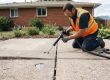
A settled concrete foundation slab may be lifted with polyurethane foam injection when the slab and conditions beneath it suit the method. For polyurethane foam injection for foundation slabs in Thornton, expanding foam is injected below the concrete to fill voids, lift the slab, and create a stable base. It can restore support, but it does not automatically correct every cause of soil or moisture movement.
Uneven floors and settlement can disrupt a home or commercial space. A sound repair addresses the support beneath the concrete, not just the visible surface. The right method depends on the slab’s condition and what support it needs.
This article explains how foam injection works, which commercial properties may suit it, and how it compares with mudjacking. It also covers what affects the repair approach and why identifying the cause of settlement matters before lifting a slab.
Key Takeaways
- Learn which signs of slab settlement can make foam lifting worth considering and why the condition beneath the concrete matters.
- See how warehouses, retail centers, loading docks, and other commercial spaces may benefit from slab leveling.
- Compare foam injection with mudjacking, including differences in typical return-to-use timing and how each method supports the slab.
- Follow the professional injection process, from small access holes to controlled lifting and sealing the holes afterward.
Can polyurethane foam injection lift a house foundation?
Yes. Foam injection can fill voids beneath a concrete slab and lift settled areas, but it may not correct every cause of soil movement. In Thornton, polyurethane foam injection for foundation slabs can address settlement when the concrete is suitable for lifting and the support conditions fit the repair.
Residential and Commercial Applications
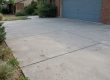
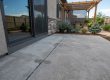
In Thornton homes, slab lifting may address settled garage floors, uneven patios, and concrete floors that have dropped over weak or washed-out soil. Commercial applications can include warehouse floors, loading areas, and other slabs where uneven concrete disrupts access or operations. Lifting can restore an existing slab without replacing the entire surface.
Suitability depends on the slab’s condition and the support needed underneath it. Polyurethane foam is a two-part expanding material; it fills gaps and compacts weak soil as the concrete rises. Foam used for concrete support can remain stable and effective for 10 to 20 years or longer.
Signs for Choosing Foam Injection
Foam injection may suit settled concrete when the slab remains intact but has lost support below it. A dip, a gap beneath an edge, or uneven adjoining sections can indicate voids or weak soil. These signs suggest a support problem, but the cause and slab condition guide the repair choice. Polyurethane foam injection for foundation slabs in Thornton should be matched to the property’s site conditions.
Cracked or badly damaged concrete may need concrete repair or replacement instead of lifting alone. Movement caused by deeper structural issues can also require a different foundation repair design. An assessment helps distinguish a liftable slab from damage that needs another approach.
Mudjacking pumps a cement-based mixture beneath a settled slab to fill space or raise it. Foam injection uses expanding polyurethane foam, while replacement removes and reconstructs the concrete. Replacement alone may leave underlying soil movement unresolved. Foundation piers and other structural systems are not universal fixes; their design depends on site and structural findings.
For Thornton slab repairs, permit and code requirements depend on the project scope and structural work involved. Foam lifting, concrete replacement, and pier installation can involve different work, so the repair design helps determine which requirements apply.
Foam-injection cost depends on slab size, settlement extent, access, and the support conditions below the concrete; pricing is provided after a quote request. A useful contractor assessment documents the slab, identifies likely voids, and explains whether lifting, replacement, or another foundation repair approach fits the findings.
Commercial properties suited to foam injection
Commercial foam injection can lift settled concrete at warehouses, distribution centers, retail centers, offices, industrial facilities, loading docks, and parking lots. These properties rely on level slabs for access, storage, and movement of goods. A dip beneath a warehouse aisle, for example, can affect equipment movement. At a loading dock, settled concrete can create an uneven transition between the building and the approach.
Structural-grade polyurethane foam is engineered to support heavy commercial loads. Its expanding material fills voids beneath concrete and compacts weak soil, helping restore slab support. The foam is also moisture-resistant, which can matter where moisture reaches the slab. However, foam injection does not necessarily correct every cause of soil or moisture movement, so the source and depth of settlement matter.
An assessment should connect the visible slab problem to how the property is used. Relevant examples include:
- Warehouses and distribution centers: assess uneven floor areas along storage and movement routes.
- Retail centers and offices: identify settled concrete that affects entrances, walkways, or occupied floor areas.
- Industrial facilities: consider whether the slab and supporting soil suit the loads involved.
- Loading docks and parking lots: locate settlement where vehicles or people cross concrete surfaces.
When an assessment identifies deeper settlement, commercial foam injection may be coordinated with warehouse floor leveling and commercial foundation repair. Lifting addresses the slab’s position and support, while deeper soil movement may require a broader repair design. The affected area, slab condition, access, and intended loading all shape the scope. A single uneven section and widespread settlement across a facility are different repair problems.
For a commercial slab with settled areas, a commercial concrete leveling assessment can help determine the relevant repair scope and support needs. The goal is to match the lifting approach to the property’s slab conditions, load demands, and settlement pattern, rather than treating every floor or dock as the same project.
Foam injection compared with mudjacking
Both methods lift a settled concrete slab by filling space beneath it. Mudjacking pumps a cement-based mixture below the surface; polyurethane foam expands after injection to fill voids and support the slab. The materials behave differently, so the repair choice depends on access, slab condition, and the support needed underneath.
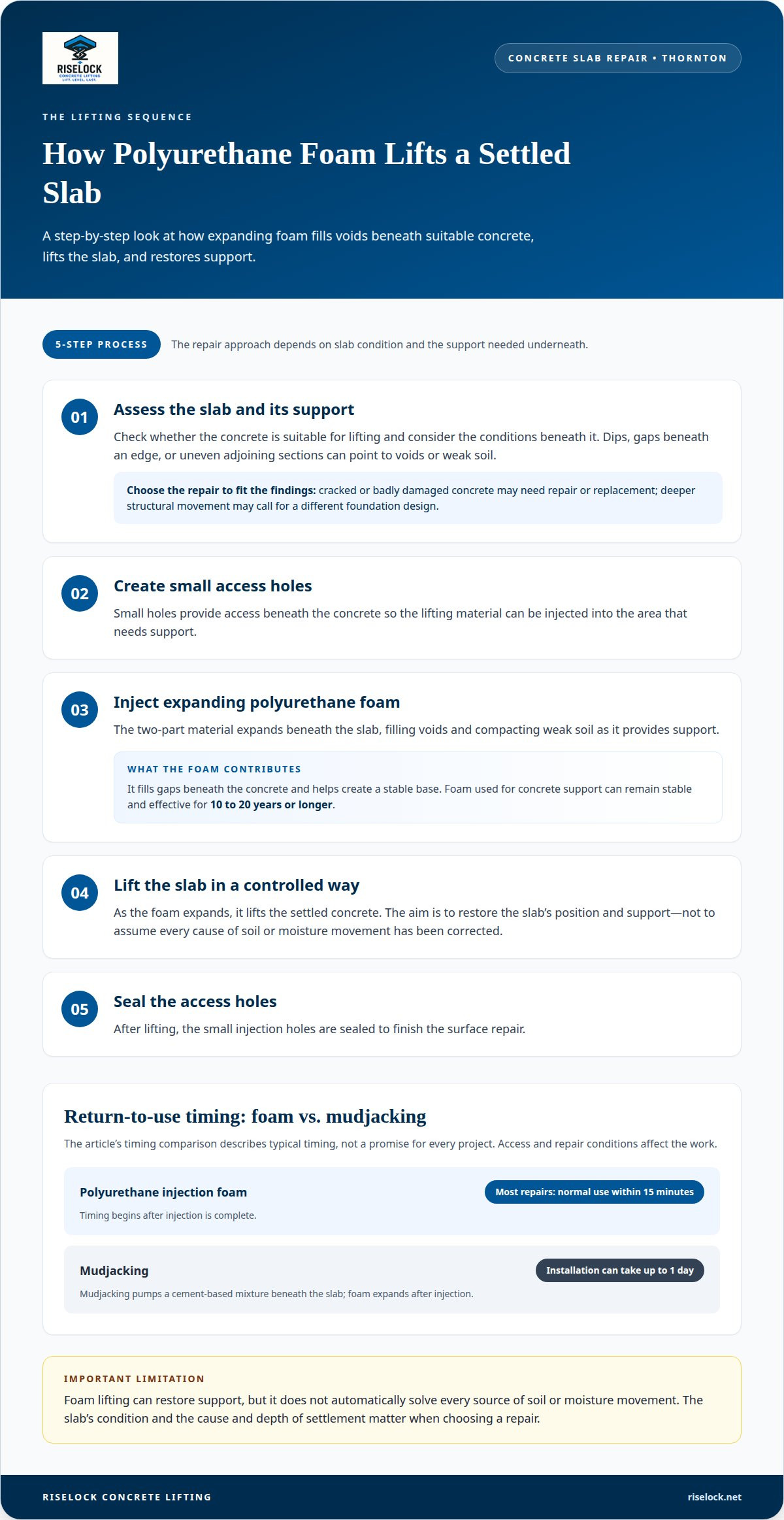
Timing can affect how a repair fits a building’s schedule. Most concrete repairs using polyurethane injection foam are ready for normal use within 15 minutes after injection is complete. Mudjacking installation can take up to 1 day. Those timings provide a comparison, not a promise for every project; slab access and repair conditions influence the work.
Moisture is another factor to consider. Waterproof polyurethane foam won’t wash out or break down over time. This can help stabilize concrete where moisture reaches the supporting material, but it does not correct every drainage or soil movement issue. If water continues washing soil away, the underlying condition still matters for lasting support.
Foam injection has limitations: it may lift and stabilize a slab, but it does not necessarily correct every cause of settlement. The chemicals used in polyurethane foam can be harmful if mishandled, so careful application matters. A damaged slab may need concrete repair or replacement instead of lifting alone.
Replacement removes the existing concrete and installs a new surface, while injection methods work beneath the slab. The choice depends on whether the concrete can remain in place and whether its support can be restored. An assessment should consider cracks, voids, drainage patterns, and intended use. A settled walkway and a heavily used loading surface, for example, have different support demands.
Neither method is a universal fix. A repair plan should identify the settlement pattern, assess the slab, and consider moisture pathways before selecting a method. This helps match the repair to the cause instead of treating only the visible surface.
How polyurethane foam injection works
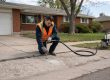
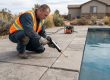
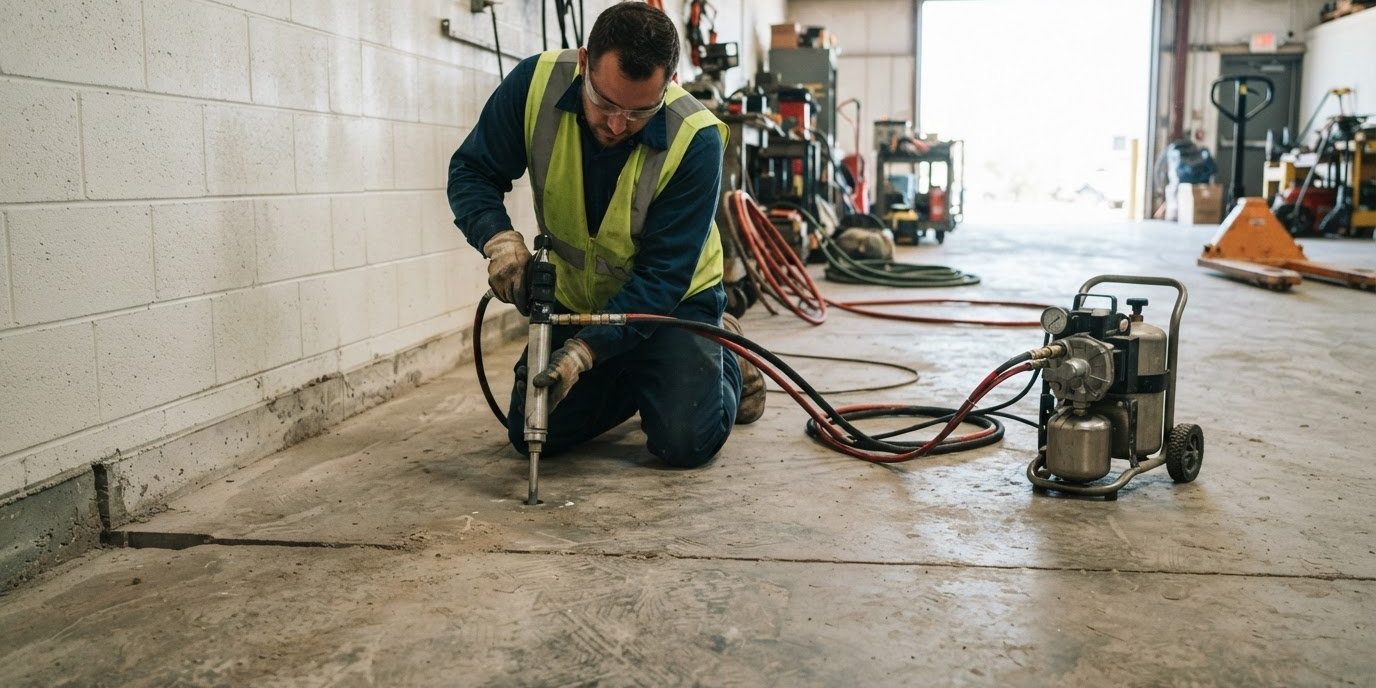
Foam injection involves examining the uneven concrete, drilling small holes, and injecting expanding polyurethane foam beneath the slab. The foam fills voids, lifts the concrete, and hardens to form a stable base. The aim is to improve support, not simply conceal cracks with a surface patch.
- Assess the slab: The professional examines settled areas, visible cracks, and changes in floor elevation to locate affected sections.
- Drill access holes: Penny-sized holes are made through the concrete at selected injection points, creating access beneath the slab.
- Inject the foam: Expanding polyurethane enters the voids, fills gaps, and compacts loose soil beneath the concrete.
- Control the lift: The professional monitors the slab’s response during injection, adjusting placement to raise the affected surface toward level.
- Seal the openings: After injection, grout fills the drilled holes, leaving the concrete surface closed.
The expansion does more than occupy empty space. As foam expands beneath a settled slab, it presses against loose soil and increases load-bearing support. It can also strengthen soil beneath concrete and block moisture. That support can help stabilize floors, but injection does not necessarily correct every source of soil or moisture movement.
Project conditions influence the result and timing. The cure time varies by foam product and site conditions, so product-specific instructions guide the next use of the slab. Installation is estimated at 1-2 hours, though the work required depends on the affected area and access. Deep settlement or continuing drainage problems may call for a broader repair plan beyond surface leveling.
For a slab with uneven floors or settled sections, discuss your concrete leveling project and the support needed beneath it. A careful assessment connects the injection pattern to the slab’s condition, so the repair addresses both the lift and the soil support.
RiseLock Concrete Lifting: Polyurethane Concrete Lifting
RiseLock Concrete Lifting provides polyurethane concrete lifting for settled slabs that need renewed support beneath the surface. It’s a practical next step when an assessment indicates that lifting can address the slab’s position and support needs. For uneven concrete that needs adjustment, concrete leveling may also suit the repair scope.
Each project starts with the condition of the concrete and its settlement pattern. Cracks, extensive damage, or movement linked to deeper structural concerns can call for a different repair approach. Foam concrete lifting and post-tension installation address distinct needs, so the right service depends on the work involved.
If a settled slab is affecting your home or commercial property, contact RiseLock Concrete Lifting to discuss the repair.
Choose the Next Step for Your Slab
Choosing polyurethane foam injection for foundation slabs in Thornton starts with understanding what the settlement indicates. The visible dip is only part of the picture. The concrete’s condition, the support beneath it, and ongoing soil or moisture movement all shape a sound repair decision. An assessment can help distinguish a slab that needs lifting from one requiring a different structural approach.
RiseLock Concrete Lifting provides polyurethane concrete lifting and concrete leveling for settled or uneven concrete. Post-tension installation is also available for projects that need it. The appropriate next step depends on the slab and the work required, not a one-size-fits-all method.
Bring your questions and describe how settlement affects your home or property. Contact RiseLock Concrete Lifting to discuss a practical direction for the repair. A careful next step can make the path forward clearer.
Frequently Asked Questions
Why You Should Repair It Now?
Address a settled slab once unevenness begins affecting safe, practical use. A raised edge at a walkway, a growing gap beside a garage floor, or a change in how a door meets its frame gives a professional concrete repair assessment useful context. Early evaluation can identify whether the visible change involves the slab alone or points to a broader foundation concern.
Does foam injection prevent future settlement?
Foam injection can improve support when voids beneath a slab are causing settlement, but it cannot prevent every future movement. If soil or moisture conditions continue changing, the slab may still be affected. For example, lifting a section beside an unresolved drainage path addresses the slab’s position, not the continuing water source. The repair plan should distinguish those issues.
How quickly can areas reopen after injection?
Many polyurethane injection repairs are ready for normal use within 15 minutes after injection is complete. That timing refers to the period after the work, not necessarily the full project schedule. For a garage floor, the professional also considers the foam product’s cure instructions and the project conditions before advising when normal use can resume.
Is polyurethane foam strong enough for commercial slabs?
Yes. Polyurethane foam is engineered to support heavy commercial loads, making it suitable for projects such as warehouse floors and loading areas when site conditions fit. An assessment needs to account for the slab’s condition and the loads it carries. A surface affected by deeper settlement may need a broader repair plan instead of slab lifting alone.
Why Choose Polyurethane Foam for Concrete Repair?
Polyurethane foam provides a way to lift and stabilize sunken concrete without removing the existing slab. The expanding foam fills voids beneath the surface, and waterproof foam won’t wash out or break down over time. RiseLock Concrete Lifting serves Denver, Aurora, Centennial, Parker, Colorado Springs, Englewood, Littleton, Lakewood, Arvada, Thornton, Wheatridge, Castle Rock, Castle Pines, and Boulder.
Will foam injection stop foundation movement caused by drainage problems?
No. Foam injection can fill voids and support concrete, but it does not necessarily correct drainage problems that continue moving soil or moisture. If water keeps washing soil from beneath a slab, lifting the concrete alone may leave the underlying cause active. An assessment should consider both the slab’s support and the drainage-related movement affecting it.