A settled patio doesn’t automatically need replacement. Foam jacking for patios in Aurora can lift intact concrete by injecting polyurethane beneath the slab. The patio’s condition, affected area, and degree of settlement shape the estimate. RiseLock provides a project-specific estimate after a quote request.
It’s reasonable to want a clear picture of the repair before deciding what to do. This guide explains how polyurethane foam lifts a patio, what the repair involves, which concrete surfaces can be leveled, and what affects an estimate.
You’ll also learn why the slab’s condition matters and what information helps make an estimate specific to your patio. The aim is to explain the process and the factors that influence the decision, without treating every uneven surface as the same repair.
Key Takeaways
- Foam lifting can suit settled, intact patio slabs; the condition of the concrete helps determine whether lifting is appropriate.
- The repair process uses small injection points to raise the slab, followed by patching the openings.
- Uneven walkways, driveways, porches, and pool decks may also be candidates for concrete leveling.
- An estimate depends on factors such as the affected area, the degree of settlement, and the work required to restore the surface.
Is it possible to level concrete with polyurethane foam?
Yes. Polyurethane foam can lift settled concrete when the slab remains intact. Loose or extensively broken pieces need a different repair assessment.
Patio and Slab Foam Lifting
Foam jacking for patios in Aurora can address settled patio slabs, as well as other intact surfaces such as garage floors and walkways. The key consideration is the concrete itself: a continuous slab can often be lifted, while loose fragments can’t be raised as one stable surface. Inspect the slab’s cracks and edges, and note how it meets nearby steps, before estimating the work.
Permit, building-code, and HOA requirements are separate considerations. Whether they apply depends on the project and local or association rules, so include them when discussing the proposed patio work.
Foam Injection Process
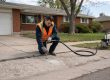
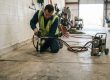
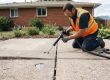
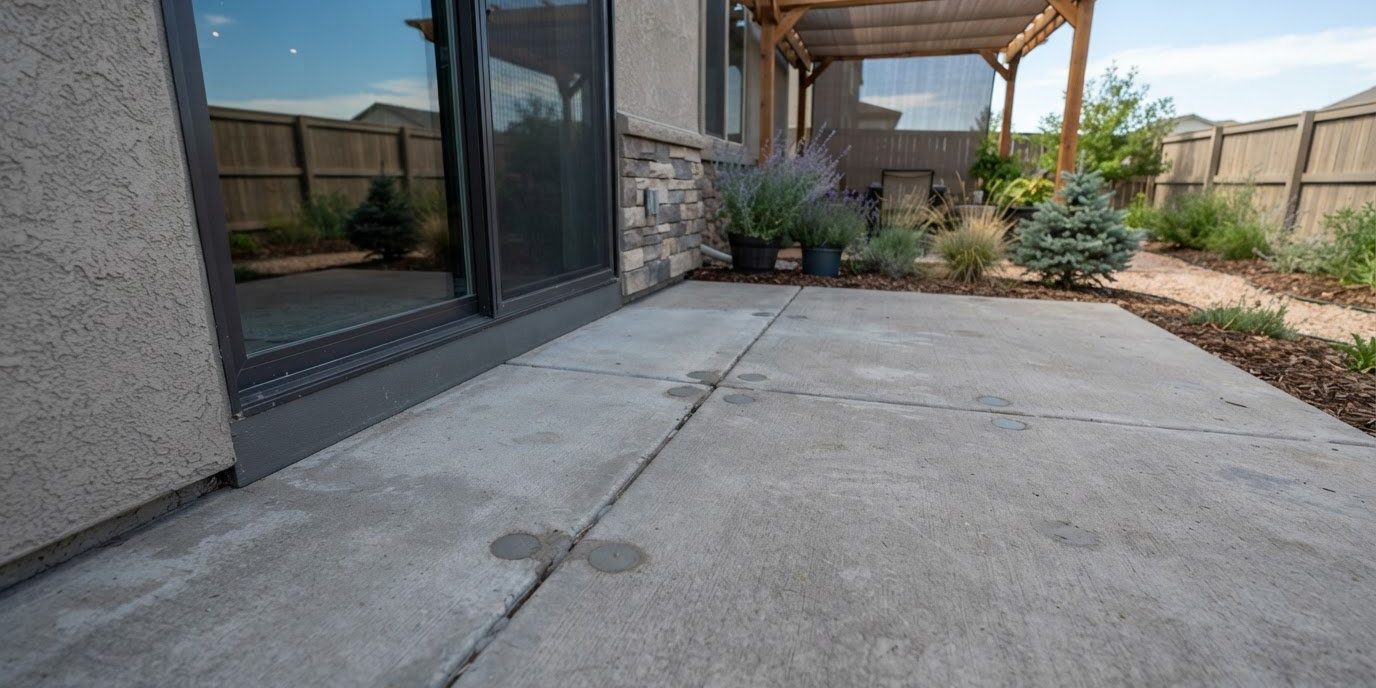
The technician drills small access holes through the slab, then injects expanding polyurethane beneath it. The foam fills voids and lifts the slab as it expands. Controlled injection helps bring the surface toward the intended level. After lifting, the holes are patched. Their placement and the slab’s response help guide the repair.
For an estimate, ask which slab conditions the technician assessed, how the lift will be controlled, and how the injection holes will be patched. These questions clarify the proposed work without assuming every patio needs the same treatment.
Foam Compared With Mudjacking
Polyurethane foam and mudjacking both raise settled concrete by filling space beneath a slab, but they use different materials. Foam used for lifting weighs a few pounds per cubic foot and adds much less weight to settled soil than traditional mudjacking slurry. That lower added load can matter when the soil already supports a settled patio. The concrete’s condition still determines whether lifting is suitable.
Drainage and Soil Limitations
Drainage and soil conditions matter because water movement and changes in support can contribute to settlement. Foam can fill a void, but lifting alone doesn’t correct a drainage path that continues to carry water beneath the patio. A technician should consider where runoff flows, whether the slab slopes toward the home, and whether the supporting soil appears unstable.
Foam lifting has a clear limit: a slab broken into loose pieces isn’t suitable for lifting as one unit. Discuss visible cracks, recurring settlement, and drainage concerns during the estimate so the repair plan addresses the patio’s condition, not only its height. Foam may remain in place under suitable conditions, though its long-term performance can depend on installation and site conditions.
Three-step concrete lifting process: drill, pump, and patch
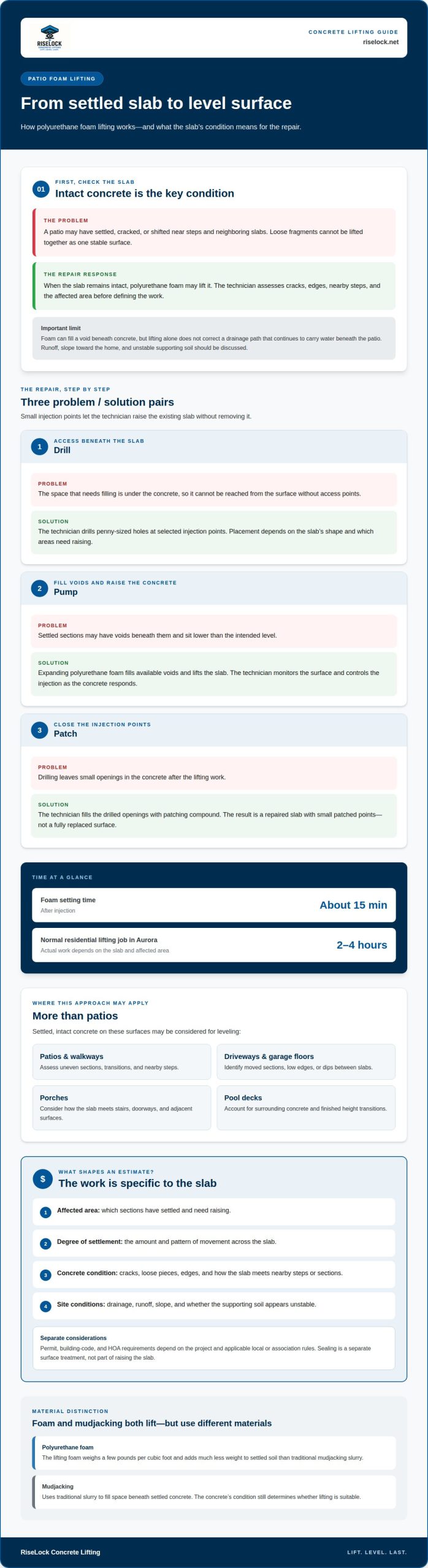
Polyurethane concrete lifting follows three controlled steps: access the space beneath the slab, raise the concrete, then close the injection points. The technician monitors the surface as expanding foam fills voids, helping level uneven patio sections without removing the entire slab.
- Drill. The technician drills penny-sized holes through the concrete at selected injection points. Their placement depends on the slab’s shape and the areas that need raising, such as a low corner beside a patio step.
- Pump. Polyurethane foam is injected beneath the slab, where it expands and fills available voids. The technician controls the injection while observing how the concrete responds, adjusting the lift to bring uneven sections closer to the intended level.
- Patch. After lifting, the technician fills the drilled openings with patching compound. The result is a repaired surface with small patched points rather than a fully replaced slab.
Foam sets in about 15 minutes after injection. A normal residential concrete lifting job in Aurora typically takes two to four hours, though the work involved depends on the slab and affected area. This process can address settled concrete around patios, garage floors, and walkways; sealing is a separate surface treatment, not part of raising the slab.
Concrete leveling and replacement address settlement differently. Lifting raises existing concrete when the slab is suitable for repair; replacement removes and installs new concrete. Cracks, loose pieces, and continuing movement affect which approach makes sense. An estimate should explain the proposed repair and how the technician plans to address the slab’s condition.
For Aurora, look for a contractor who can provide current licensing details and proof of insurance for the proposed work. Review those documents alongside the technician’s assessment of the slab and the planned lifting steps.
To understand the work involved, explore this concrete lifting process.
Repairing uneven walkways, driveways, porches, and pool decks
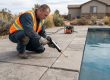
Concrete raising can address settled slabs beyond patios, including walkways, driveways, porches, and pool decks. The repair plan depends on the slab’s condition, the location of uneven areas, and how the surface meets nearby steps or structures.
Uneven Walkway and Driveway Repairs
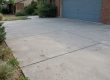
On a walkway, a settled panel can create a height difference where people cross between sections. A driveway may have a low edge near the garage or a dip where separate slabs meet. During assessment, the technician considers which sections have moved and whether the concrete remains sound enough to lift. Those details help define the repair area.
For a porch or pool deck, the technician also considers transitions at stairs, doorways, and surrounding surfaces. Lifting one section without accounting for adjacent concrete can leave an abrupt change in height. The estimate should describe which slabs are included and how their finished levels relate to nearby edges.
Sunken or Tilted Patio Slabs
A sunken or tilted patio slab may be suitable for raising if it remains intact. The technician evaluates the slope, visible cracks, and the slab’s connection to neighboring sections. A localized drop beside a stair differs from a broad tilt across the patio, so the repair area and lifting plan should reflect the actual movement.
Concrete repair may involve lifting settled sections rather than replacing the entire patio. If the slab is broken into loose pieces, lifting it as one unit may not be suitable. That distinction affects the scope and estimate for a patio repair.
Polyurethane foam sets in about 15 minutes after injection, but setting time is not the same as a promised return-to-use time. The repair plan should explain the expected timing for the specific surface and any conditions affecting access after work.
Warranty terms are separate from repair timing. A written warranty should identify the work it covers, its duration, and any stated exclusions. Don’t assume foam curing time defines warranty coverage. These details clarify the scope of a patio, driveway, or pool deck project.
Patio leveling costs and estimate factors
A patio leveling estimate reflects the work needed to raise a specific slab, not a universal rate. The price depends on the case and is provided after a quote request. Key factors include the affected area, degree of settlement, slab condition, and injection needed to support it.
For example, a single sunken corner differs from several low sections across a large patio. The technician assesses the slab’s dimensions, uneven edges, cracks, and relationship to steps or the home. These details help define the repair area and show whether lifting can address the settlement. A slab with loose, broken pieces may need a different approach from intact sunken concrete.
Injection needs also affect the estimate. A section that has dropped farther may require more foam to fill the supporting void and raise the concrete. Soil conditions and gaps beneath the slab can affect how injection proceeds. The estimate should connect these observations to the proposed work, rather than rely on patio size alone.
A written estimate helps homeowners understand what the project covers. It should identify the concrete sections included, describe the planned repair, and clarify whether patching the injection points is part of the work. If sidewalks or adjoining slabs have also settled, listing them separately distinguishes the patio scope from nearby leveling needs.
Compare lifting with replacement by considering the slab’s condition and how much concrete would need removal. Lifting addresses settlement in suitable existing slabs; replacement involves removing and installing concrete. The estimate should explain which condition supports the recommended approach and what work it includes.
Most concrete lifting projects are completed in hours, though the patio’s size and repair requirements affect timing. The estimate should account for access, the affected area, and site conditions. These factors can make two patios of similar dimensions different projects.
For an estimate tailored to your patio, request a patio leveling estimate.
RiseLock Concrete Lifting: Foam Concrete Lifting
RiseLock provides polyurethane foam lifting for settled patio slabs and other concrete surfaces suitable for lifting. It can be a next step when a patio has uneven sections, but the slab’s condition and the cause of settlement should guide the repair plan. If the concrete is broken into loose pieces, lifting it as one slab may not be appropriate.
For an estimate, describe which areas have settled and note visible cracks, tilted edges, or nearby steps. This helps frame the work around the patio’s actual condition rather than assuming every project needs the same repair. RiseLock also provides concrete leveling for surfaces that need attention.
To discuss a settled patio and its repair, contact RiseLock Concrete Lifting.
Plan the Next Step for Your Patio
Choosing foam jacking for patios in Aurora starts with a practical decision: whether the existing slab is suitable for lifting and what repair scope fits its condition. A clear assessment helps you plan around the patio’s use, surrounding concrete, and concerns such as movement near steps or the home. That gives you a useful basis for deciding how to proceed.
RiseLock offers polyurethane concrete lifting and concrete leveling for surfaces that need attention. Post-tension installation is also available when relevant to the project. The right next step depends on the work your property requires, not on choosing a service by name alone.
If you’re ready to discuss your patio, contact RiseLock Concrete Lifting. A focused conversation about the settled area can help move your repair decision forward with clarity.
Frequently Asked Questions
Do you offer concrete lifting near me?
Yes. RiseLock serves Aurora and nearby Colorado communities, including Denver, Centennial, Parker, Colorado Springs, Englewood, Littleton, Lakewood, Arvada, Thornton, Wheatridge, Castle Rock, Castle Pines, and Boulder. Its concrete lifting work addresses settled residential and commercial surfaces, including patios, sidewalks, driveways, and garage floors. The surface’s condition helps determine the appropriate repair approach.
Does leveling concrete work for most customers?
Concrete leveling is a practical option when settlement has left an intact slab uneven but the concrete remains suitable for lifting. For example, a patio panel that has dropped beside an adjoining panel may be a candidate. A slab broken into loose pieces presents a different repair problem. The surface condition, settlement pattern, and underlying support all affect whether lifting is suitable.
What Does Concrete Lifting Cost in Aurora?
Concrete lifting costs in Aurora depend on the project, and a specific price is provided after a quote request. The estimate reflects the size and condition of the affected area, how far the concrete has settled, and the injection work needed. For instance, one sunken patio section differs from several connected slabs with uneven edges. A project-specific estimate clarifies the scope without assuming a standard charge.
What is the difference between Mudjacking and Polyurethane Concrete Raising?
Mudjacking raises concrete by pumping slurry beneath the slab, while polyurethane concrete raising uses injected foam that expands beneath it. The methods differ in their fill materials and the weight added beneath settled concrete. RiseLock provides polyurethane concrete lifting, not traditional mudjacking. The slab’s condition and repair requirements help determine whether foam lifting is suitable for a particular surface.
What’s the lifting process like?
A technician first assesses the settled surface and identifies where lifting is needed. The work involves creating injection access, raising the concrete in a controlled manner, and closing the access points afterward. For a driveway, the technician considers how the affected slab meets the garage entrance and adjoining panels. The proposed work should account for those transitions, not just the lowest spot.
What is foam jacking for concrete patios, and how does the process work?
Foam jacking raises a settled concrete patio by injecting expanding polyurethane beneath a slab that remains suitable for lifting. The foam fills space below the concrete and lifts the surface; the technician then patches the injection openings. A patio with drainage concerns also needs attention to water flow, since lifting alone doesn’t correct a drainage problem. The surface’s condition helps determine whether this method fits.