
A concrete scan is a map, not a diagnosis. In a post-tension cable structural assessment in Wheat Ridge, tendons typically appear at consistent spacings of 24 to 48 inches on center in one or both directions, while rebar shows a different reinforcement pattern. That pattern helps identify what may be inside the slab, but it doesn’t confirm whether a tendon is corroded or damaged.
Rust staining, cracking, or concrete breaking away near a slab edge or anchorage deserves attention. For a post tension cable structural assessment in Wheatridge, scan results can help locate tendons, but they cannot diagnose corrosion on their own. This guide explains how to interpret scans alongside visible changes, structural records, and site conditions, and why cable locations matter before cutting or coring. The goal is to help you understand what an assessment can establish and how its findings can inform next steps.
Key Takeaways
- Scan patterns can help distinguish post-tension tendons from rebar, but locating reinforcement is not the same as diagnosing its condition.
- Rust staining, cracking, and concrete breaking away can signal deterioration; moisture and air in tendon voids can contribute to corrosion.
- A cable assessment considers the tendon, anchorage, and surrounding concrete to determine the extent of damage and what repairs may be needed.
- GPR scanning helps locate cables before cutting or coring, while inspection and maintenance can guide appropriate next steps.
Distinguishing PT tendons from rebar in scan results
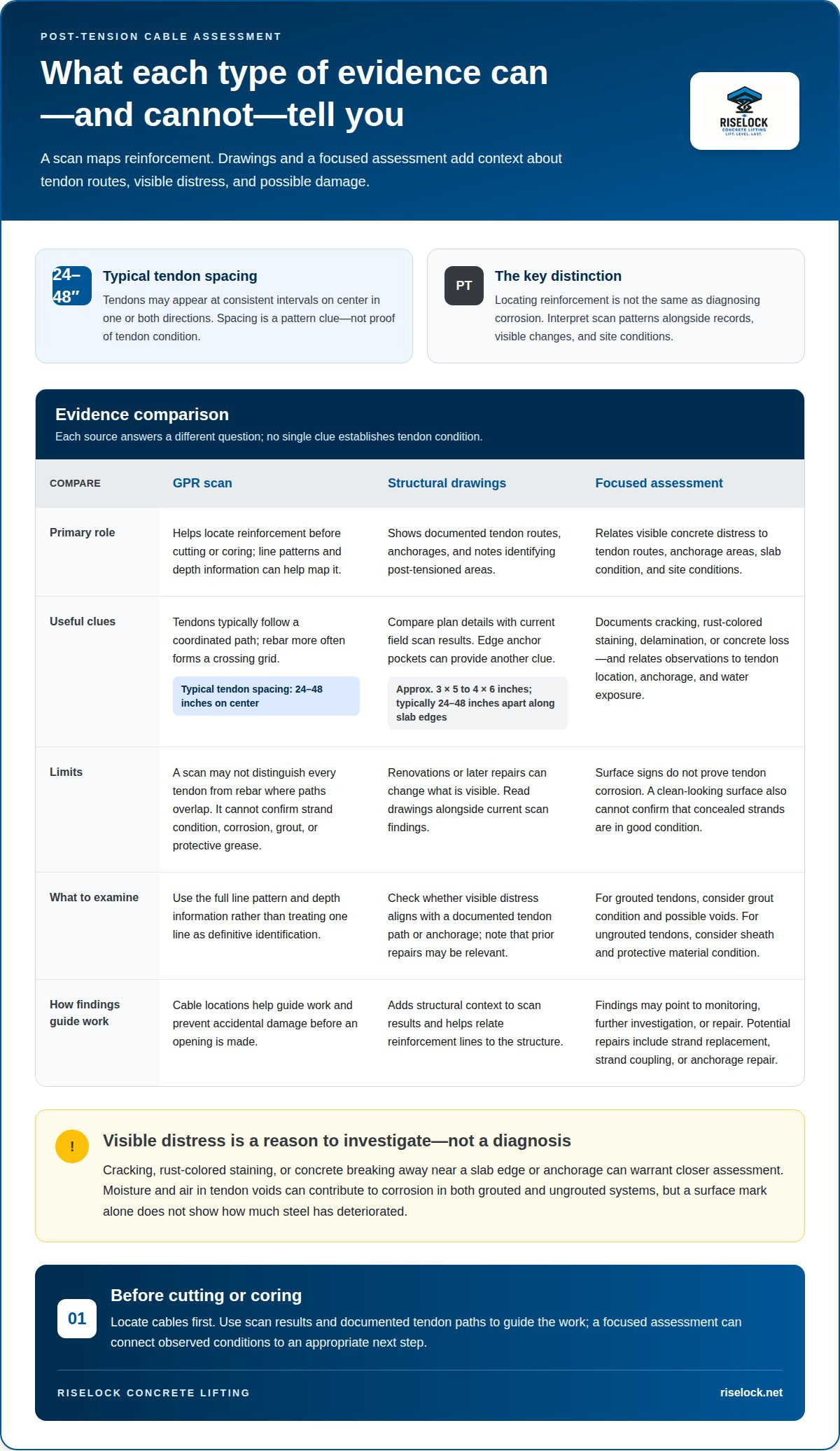
A scan shows reinforcement locations, but the pattern helps distinguish a post-tension tendon from conventional rebar. Tendons typically appear at consistent spacings of 24 to 48 inches on center in one or both directions. Rebar more often forms a crossing grid, while tendons may follow a coordinated path through the slab. These patterns are clues, not proof of a cable’s condition.
Structural drawings add context to the scan. Review the slab or framing plans for tendon routes, anchorages, and notes identifying post-tensioned areas, then compare those details with field scan results. Edge anchor pockets can provide another clue: they are approximately 3 by 5 inches to 4 by 6 inches and typically spaced 24 to 48 inches apart along slab edges. Renovations or later repairs can alter what is visible, so a drawing should be read alongside current scan findings.
Ground-penetrating radar (GPR) scanning helps locate cables before cutting or coring. Its line patterns and depth information can help map reinforcement, while structural drawings show how those lines relate to the structure. A scan image may not clearly distinguish every tendon from a reinforcing bar, especially where paths overlap. Interpreting the full pattern is more useful than treating one line as a definitive identification.
Scan results do not show whether a tendon contains grout, protective grease, or corrosion. Grease injection and tendon impregnation relate to protection or maintenance, not identification of steel in an image. A scan can locate a tendon, but cannot confirm the condition or protective material inside its sheath. Structural records and a focused assessment provide context for interpreting those details. Before opening or repairing the slab, use the cable location and documented tendon path to guide the work and prevent accidental damage.
Post-tensioned concrete deterioration and corrosion
Cutting or drilling into a post-tensioned slab without locating its cables can damage a tendon. The key concern is avoiding damage to concealed cables during work. A damaged tendon can affect the slab’s structural performance, so cable locations matter before making an opening.
Corrosion occurs when post-tensioning strands deteriorate, and moisture or air in tendon voids can contribute. This applies to both grouted and ungrouted systems. Grout or grease protects the tendon, but voids can expose strands to conditions that promote corrosion. The process may not cause visible damage immediately.
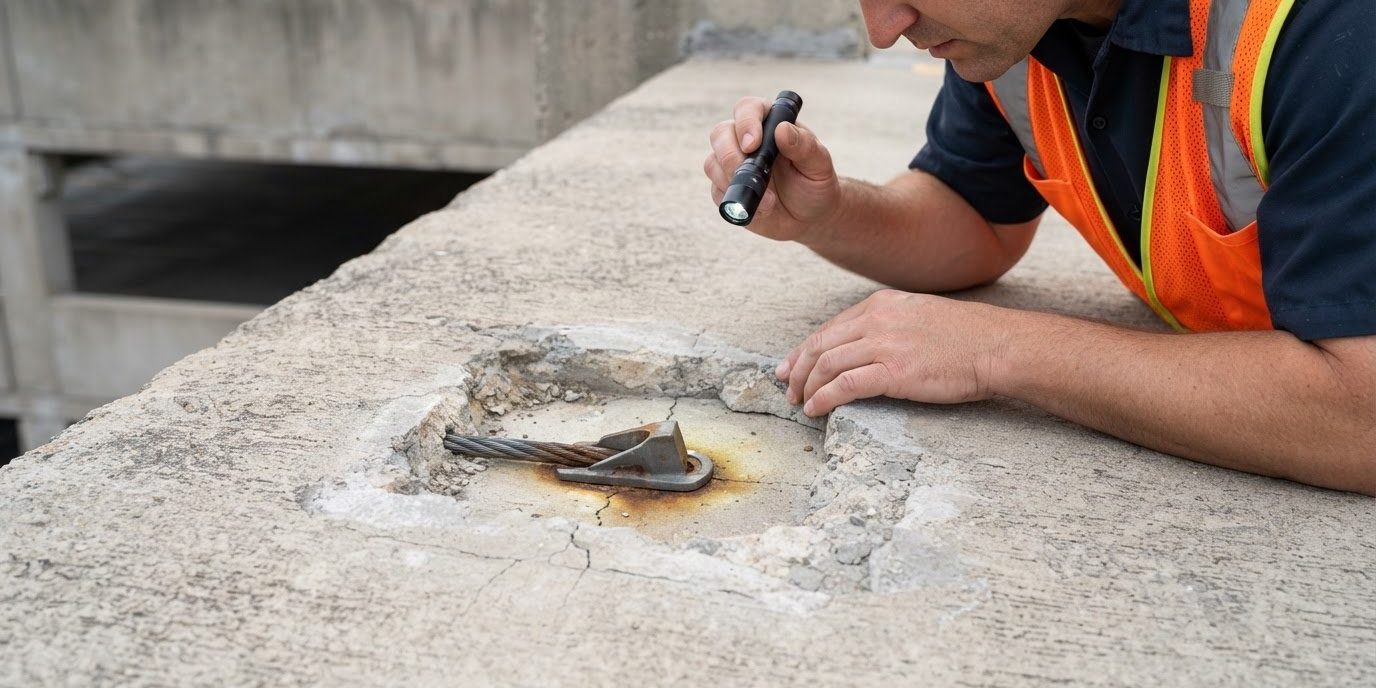
Consider the concrete and its surroundings together. Cracking, rust-colored staining, or concrete breaking away near an anchorage, for example, can warrant closer assessment. These signs do not prove tendon corrosion: other concrete or steel components may also cause surface changes. The signs’ location and pattern help guide a focused inspection.
Moisture can enter through cracks, failed seals, or water reaching an anchorage area. When air and moisture occupy voids along a tendon, corrosion can progress out of sight. A clean-looking surface cannot confirm that concealed strands remain in good condition. Likewise, a surface stain alone does not show how much steel has deteriorated.
For a Wheatridge property, note whether damage clusters near slab edges or anchorages, or appears in areas exposed to recurring moisture. These observations give an assessment useful context without treating appearance as a diagnosis. If work requires coring or drilling, locate cables first. Distinguishing signs of concrete distress from evidence about tendon condition helps determine whether further investigation or repair is appropriate.
Assessment of corrosion in post-tension cables
A corrosion assessment relates visible concrete distress to the condition of concealed tendons. The evaluator considers tendon routes, anchorage areas, slab condition, and available structural drawings together. For example, a crack near an anchorage has added context if it aligns with a documented tendon path. A scan can help locate reinforcement, but cannot establish strand condition by itself.
Assessment starts with the broader slab and then focuses on suspected damage. The evaluator documents cracking, staining, delamination, or concrete loss, then relates each observation to tendon locations and water exposure. Records of earlier repairs can show whether a crack or leak is recurring. This process helps distinguish general concrete deterioration from signs that warrant focused tendon investigation.
When closer examination is needed, the cable’s protective system and anchorage matter. Grouted tendons are assessed for grout condition and possible voids; ungrouted tendons are assessed for the condition of their sheath and protective material. Moisture and air in tendon voids can contribute to corrosion in either system. Findings should describe the location of deterioration and how it relates to the affected strand and surrounding concrete.
An assessment should guide a repair decision, not infer an entire tendon’s condition from one surface mark. Depending on observed strand damage and anchorage condition, findings may point to monitoring, further investigation, or repair. Damaged cables may require strand replacement, strand coupling, or anchorage repair. For projects requiring comprehensive structural rehabilitation, specialist contractors such as TRD Remedial illustrate how professional concrete repair and remediation practices restore degraded slabs. In Wheatridge, a written record of locations and observed conditions connects the assessment to planned structural work and helps distinguish unrelated slab defects from tendon corrosion.
Post-tension cable inspection and maintenance
In Wheatridge, inspection and repair must account for applicable building requirements and project documents. Requirements depend on the building and proposed work, so establish them during assessment and before repair begins.
Inspection and Maintenance Activities
Inspection documents cable locations, visible concrete conditions, and signs of moisture or damage. GPR scanning helps locate tendons before cutting or coring, while records and site observations help focus the assessment. Post-tension cable drying replaces moist air inside a cable with dry, non-corrosive air; treatment ends once the dry condition is confirmed. If evaluation identifies damage, repair may involve strand replacement, strand coupling, or anchorage repair. These findings help define the work without treating surface symptoms as a complete diagnosis.
Engineer and Inspector Qualifications
A qualified inspector understands post-tension systems, tendon paths, anchorages, and the difference between scan information and direct evidence of cable condition. That expertise matters because a scan can locate reinforcement but cannot establish corrosion or determine a repair on its own. The assessment should relate observations to drawings, site conditions, and the structural role of the affected slab. Clear documentation of findings and repair recommendations helps property owners understand the proposed scope.
Assessment and Repair Duration
Assessment and repair duration depends on access, the area being evaluated, the findings, and the repair method. Locating tendons and documenting visible conditions are different from investigating concealed damage or carrying out strand or anchorage repairs. Cable drying also requires confirmation that the dry condition has been reached. These factors shape the schedule, so no single duration fits every project. A defined scope and documented findings clarify the work sequence and what must be completed before repair is finished.
For a post-tension project, discuss post-tension installation needs as part of planning the structural work.
RiseLock Concrete Lifting: Post Tension Installation
RiseLock provides Post-Tension Installation for projects requiring post-tensioned concrete construction. A cable assessment clarifies existing slab conditions; installation is for projects that call for a new post-tension system, not simply because a scan identifies a tendon or possible corrosion.
For uneven or damaged concrete, Concrete Leveling or Concrete Repair may be more appropriate. Matching the work to the structural need keeps installation and repair decisions distinct. Assessment findings, project scope, and concrete condition all inform that choice.
If you’re planning post-tension work in Wheat Ridge, contact RiseLock Concrete Lifting to discuss your project.
Make the Next Structural Decision with Confidence
A useful assessment leads to a clear decision about what happens next. For a post-tension cable structural assessment in Wheatridge, connect the findings to the planned work, whether that means preserving the existing slab, repairing damaged concrete, or planning new construction. This helps prevent a repair decision based on one isolated sign or scan result.
Before work proceeds, make sure the scope reflects the structure’s observed condition and the project’s purpose. When findings point to concrete repair or leveling, RiseLock offers services for those needs. For a new post-tension system, RiseLock’s installation service can support the project.
Contact RiseLock Concrete Lifting to discuss the concrete work you’re planning. A well-defined next step can help you move forward with a clearer understanding of the work ahead.
Frequently Asked Questions
What is a post-tension cable structural assessment?
A post-tension cable structural assessment in Wheatridge evaluates a slab and its tendons to inform decisions about structural work. It relates available drawings and scan results to observed concrete conditions rather than treating any one source as a complete diagnosis. Findings help clarify whether a concern involves the slab, tendon, anchorage, or several components.
When should post-tension cables be inspected or assessed?
Arrange an assessment when concrete distress raises concern about a tendon, or before planned work could affect a post-tensioned slab. For example, cable locations need to be considered before drilling for a renovation. Recurring moisture near an anchorage or newly exposed steel also warrants attention. A post-tension cable structural assessment in Wheatridge can help define the project scope before concrete is opened or repairs are planned.
What inspection methods are used to assess post-tension cables?
GPR scanning helps locate cables, while structural drawings provide design context. A condition assessment also considers visible concrete and accessible anchorage areas. These methods answer different questions: scanning maps reinforcement, while inspection documents observable distress. If a scan shows a cable beneath a planned opening, that location can guide project planning, but the scan alone cannot establish strand condition.
What are signs of post-tension cable failure or corrosion?
Possible warning signs include rust-colored deposits, cracking, concrete loss, or visibly corroded steel at an exposed anchorage. Location matters: damage near a tendon route or anchorage deserves focused attention. These observations do not establish cable failure, and a concealed tendon may show no surface symptoms. Note where changes appear and whether they recur so an assessment can consider their context.
What steps are involved in repairing or replacing damaged post-tension cables?
Use GPR to locate cables before cutting or coring, then assess and document the tendon, anchorage, and surrounding concrete. Depending on the findings, repairs may involve strand replacement, strand coupling, or anchorage repair.